
REVIEW · SAMURAI, NINJA AND SWORD EXPERIENCES
Tokyo: Samurai Sword Academy in the Hometown of the Last Samurai
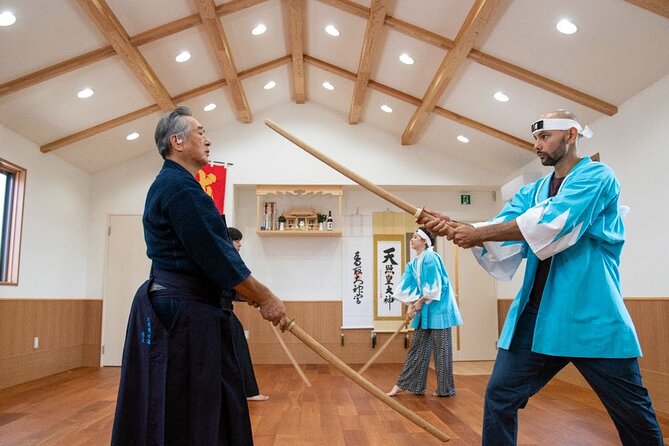
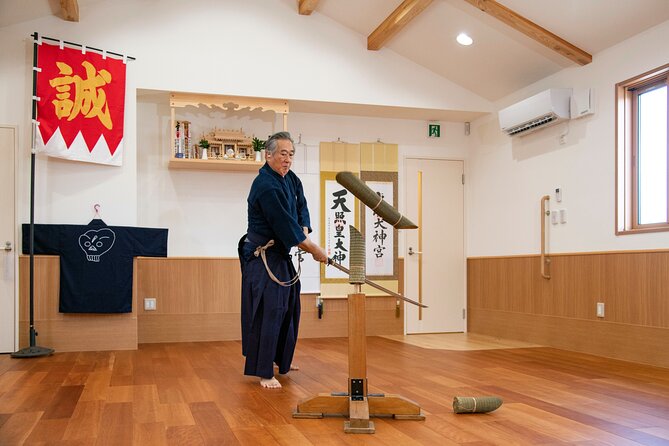
Sword lessons in a real dojo feel different. You practice Tennen Rishin-ryu, a sword style traced to the Edo period, in the setting of the Tennen Rishin-ryu Hino Dojo, where the Shinsengumi story comes alive. I also really like that the experience is led by Masao Inoue, chairman of the dojo and a descendant tied to the Shinsengumi leadership.
I love that you get hands-on instruction right down to sword handling, not just watching from the sidelines. The class runs in a small group, capped at 4 travelers, which helps you get personal corrections, and English support is referenced in participant feedback (Yu Ma). The main drawback is that this is stance and technique work in a dojo setting, so you’ll want to be comfortable with moderate physical fitness and the physical focus it takes to learn safely.
In This Review
- Key highlights to know before you go
- Why Hino, Tokyo Is the Right Place for Samurai Training
- Starting at Genzaburo Inoue Shiryokan: Set Your Context Fast
- Tennen Rishin-ryu: What You Actually Learn in 2 Hours
- Handling a Japanese Sword: Etiquette, Posture, and Control
- Master Inoue and Yu Ma: Teaching That Bridges Skill and Language
- The Shinsengumi Connection: Why the Story Matters to Your Practice
- Timing, Training Flow, and What to Do With Your Remaining Afternoon
- Price and Value: Does $118.60 Make Sense?
- Who Should Book This Samurai Sword Academy Experience
- Should You Book It? My Practical Take
- FAQ
- What is the price per person?
- How long is the experience?
- Where does the experience start?
- What time does it start?
- Is it limited to small groups?
- Will I be able to use the sword during the lesson?
- Is there an English-speaking guide or English support?
- What physical condition do I need?
- Can I get a full refund if I cancel?
Key highlights to know before you go
- Real dojo training in Tennen Rishin-ryu, not a tourist demo
- Led by Masao Inoue, with lineage connected to the Shinsengumi
- English guidance from Yu Ma is mentioned in participant feedback
- Small group size (max 4) for more direct coaching
- Etiquette, sword posture, kata, and 試し斬り (test cutting) are part of the experience
- You begin at Genzaburo Inoue Shiryokan to ground the session in local context
Still weighing up options in Tokyo Prefecture? These are the ones our reviewers rated highest.
- Tokyo: Samurai Sword Academy in the Hometown of the Last Samurai
★ 5.0 · 24 reviews - Tokyo: Mt. Takao Tour with Ramen and Tattoo-Okay Hot Spring
★ 5.0 · 12 reviews
Why Hino, Tokyo Is the Right Place for Samurai Training
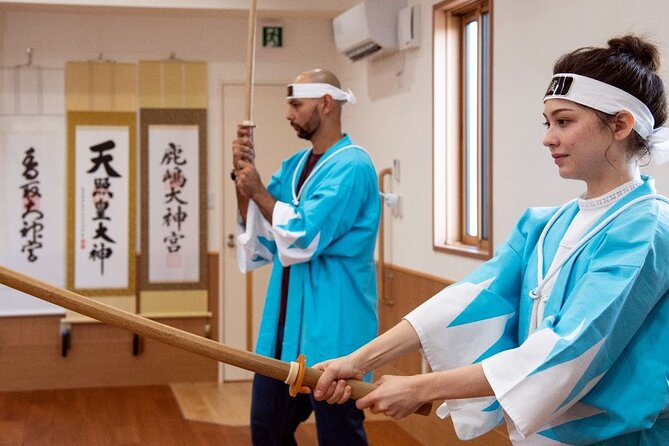
Most Tokyo “samurai” activities are about costumes, photos, or a quick show. This one aims at something more grounded: learning the core of a named sword style in the place where it’s practiced today.
Hino City is closely linked to the Shinsengumi, the fighters people often call the strongest swordsmen of the late Edo period. The dojo’s story also emphasizes that connection through people like Genzaburo Inoue, tied to Shinsengumi leadership. If you like your travel with a sense of location, this is a strong fit.
Starting at Genzaburo Inoue Shiryokan: Set Your Context Fast
Your session begins at Genzaburo Inoue Shiryokan in Hinohonmachi. You’ll meet right in that neighborhood (Tokyo Hino, Hinohonmachi 4-chome 1112), and the tour ends back at the meeting point, so you’re not spending your time hopping around the city.
What I like about starting at a place named for a key figure is how quickly it frames your learning. Before you pick up a sword, you get a chance to absorb the idea that this is not abstract history, it’s tied to real people and a real dojo lineage. Even if you’re not reading every detail on the spot, the “why here” story lands.
Tennen Rishin-ryu: What You Actually Learn in 2 Hours
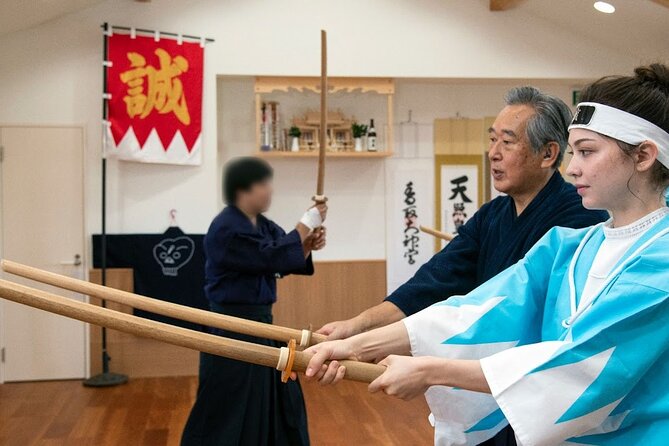
This is hands-on kenjutsu training, and that matters. You’re not just learning trivia about samurai. You learn basics of the Tennen Rishin-ryu forms, then you try handling a Japanese sword as part of the training.
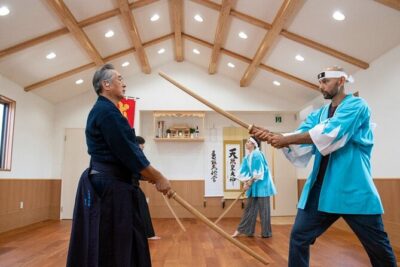
The experience is designed to feel like you’re joining a real practice session, just with a visitor-friendly structure. You start with fundamentals, including things like bowing and etiquette, then sword posture and kata work. After that, the session moves into more intense practice elements, which participants describe as having real tension and focus.
Two hours sounds short until you remember what skill training requires. Stances, footwork, and blade angle are physically specific. In a small group, that time can actually produce visible improvement, even for first-timers.
Handling a Japanese Sword: Etiquette, Posture, and Control
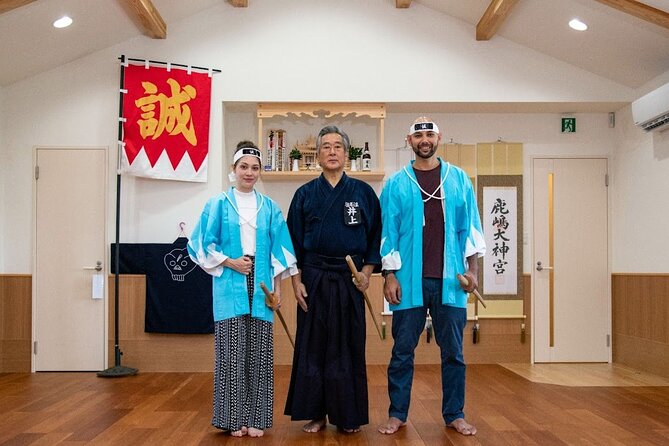
You’re explicitly encouraged to handle a Japanese sword, described as a symbol of samurai spirit. That doesn’t mean “just swing it around.” The training is centered on correct form, controlled movement, and the respectful basics that come before speed.
From participant feedback, instruction includes:
- Reiho style礼儀作法 (etiquette)
- how to hold the sword and set your posture
- kata practice to build the “shapes” of technique
- more advanced practice elements such as 試し斬り (test cutting)
This is where the “authentic dojo” part shows. In many classes, safety and handling are generic. Here, it’s tied to the style’s real practice approach, and it’s taught step-by-step. You’ll likely feel how much of sword work is discipline, not just force.
One practical note: you should go in ready to follow directions closely and stay focused. This isn’t a casual break from sightseeing. The point is concentration, and the dojo setting reinforces that.
Master Inoue and Yu Ma: Teaching That Bridges Skill and Language
The experience is led by Masao Inoue, chairman of the Tennen Rishin-ryu Hino Dojo and described as a descendant of Genzaburo Inoue. That lineage detail isn’t just branding. In dojo training, the instructor’s role usually includes preserving methods and teaching them the same way they’re taught locally.
English support is referenced in feedback, including Yu Ma. Even if you know some Japanese, you’ll probably appreciate having someone help translate key instructions and stop you from making a small technique mistake that affects everything after.
What I like about a program like this is that it tends to create a clearer learning loop. You can see the technique, you can ask or process corrections, and you can try it again quickly while the details are still fresh in your mind. In a group of up to 4, that loop is faster.
The Shinsengumi Connection: Why the Story Matters to Your Practice
The Shinsengumi link is not just a marketing line in this experience. The program frames Tennen Rishin-ryu as carrying forward a style practiced historically in the Hino area, and it ties those sword traditions to the Shinsengumi’s reputation.
When you learn forms and etiquette under that umbrella, it changes how you think about the movement. Instead of seeing kata as random exercises, you start to see them as recorded technique patterns meant to be practiced, corrected, and repeated.
That’s the real value for me: you’re learning movement with a sense of purpose. History becomes physical. And because you’re in Hino, the story feels less like a distant chapter and more like local culture.
Timing, Training Flow, and What to Do With Your Remaining Afternoon
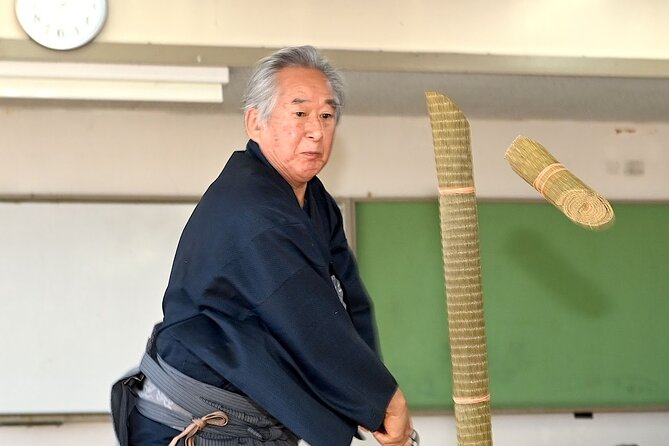
Your start time is 1:00 pm, and the experience ends back where you started. It runs about 2 hours, so it slots nicely into a day without wrecking your whole schedule.
Because it ends at the meeting point, you can easily plan lunch or snacks nearby afterward. I’d treat the session as part exercise, part cultural lesson. You’ll want water, and you’ll probably feel it in your legs and shoulders afterward from stance work and blade handling practice.
Mobile ticketing is listed as a feature, which is convenient. In a dojo setting, speed matters. The less time you spend figuring out confirmations, the more time you can spend paying attention during instruction.
Price and Value: Does $118.60 Make Sense?
At $118.60 per person, this is not a budget “try it once” activity. But it also isn’t priced like a big, multi-stop tour bus day. For your money, you’re buying something specific: real dojo instruction tied to a named sword style, led by Masao Inoue, with a small group limit.
Here’s the value math I see:
- Small group (max 4) means more direct coaching than typical group lessons.
- A real dojo structure means you’re learning etiquette, posture, kata, and additional practice elements like 試し斬り rather than only watching.
- Named leadership and lineage connection gives the experience real grounding, not just a generic “samurai theme.”
If you want to collect photos, you can find other options. But if you want a focused skill experience in an authentic setting, the price starts to feel fair.
Who Should Book This Samurai Sword Academy Experience
This is a great match if you:
- want hands-on learning of Japanese sword technique, even if you’re a complete beginner
- like lessons that teach both physical form and etiquette
- want a Shinsengumi and Edo-period connection that feels practical, not staged
It may be less ideal if you:
- have low tolerance for standing or kneeling stances
- expect a casual, low-focus activity with lots of free roaming
The listing calls for moderate physical fitness, which is a helpful warning. You do not need to be an athlete, but you should be ready to participate actively.
Should You Book It? My Practical Take
I think you should book this if you’re the kind of traveler who likes training, repetition, and instruction that actually changes what you can do with your hands. The combination of Tennen Rishin-ryu fundamentals, small-group coaching, and the leadership of Masao Inoue makes it feel like more than a gimmick.
You should also book it if you want a Tokyo experience that’s not just urban sightseeing. Hino gives the story room to breathe, and the dojo setting keeps it grounded.
If you dislike structured activities or you’re uncomfortable with moderate physical effort, then you might want to choose a softer cultural experience instead. Otherwise, this one is the real deal.
FAQ
What is the price per person?
The price is $118.60 per person.
How long is the experience?
The duration is about 2 hours.
Where does the experience start?
You meet at Genzaburo Inoue Shiryokan, Tokyo 191-0011, Hino, Hinohonmachi, 4-chome 1112.
What time does it start?
The start time is 1:00 pm.
Is it limited to small groups?
Yes. The experience has a maximum of 4 travelers.
Will I be able to use the sword during the lesson?
Yes. You can actually handle a Japanese sword and learn basic forms as part of the training.
Is there an English-speaking guide or English support?
English guidance is referenced in participant feedback, including Yu Ma.
What physical condition do I need?
You should have a moderate physical fitness level.
Can I get a full refund if I cancel?
Yes. There is free cancellation, and you can cancel up to 24 hours in advance of the experience start time for a full refund.
Newest Tokyo Prefecture write-ups from the Loving Japan desk
Samurai, Ninja and Sword Experiences, side by side.
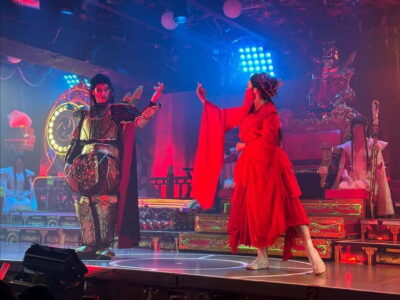 ★ 4.5Samurai Restaurant Show Ticket with 2 DrinksFrom $551,307 reviews
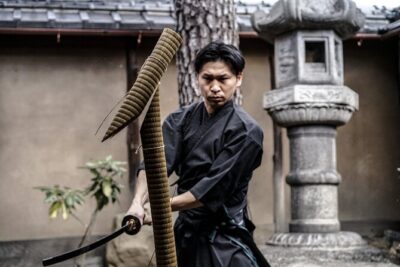 ★ 5.0Kyoto Samurai ExperienceFrom $1191,294 reviews
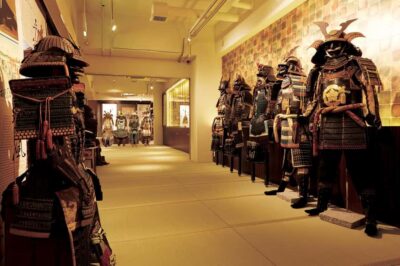 ★ 4.6Samurai Ninja Museum Guided tour and ExperienceFrom $271,010 reviews
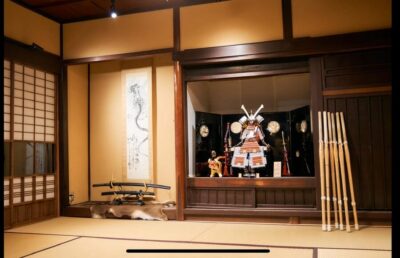 ★ 4.9Kendo and Samurai Experience with Uniform and GearFrom $103815 reviews
 ★ 4.9Samurai Sword Class by Experts in Traditional ArtsFrom $64657 reviews
 ★ 4.5Skip the lines Basic Ticket at SAMURAI NINJA MUSEUM KYOTOFrom $28632 reviews
 ★ 5.0Samurai Sword & Archery Class from Samurai DescendantFrom $193603 reviews
 ★ 5.0Samurai Training Experience KENDO in OsakaFrom $131515 reviews
Filed on these lists too