
REVIEW · SHIBUYA, SHINJUKU AND HARAJUKU WALKS
Tokyo: Shibuya and Shinjuku Streets Guided Go-Karting Tour
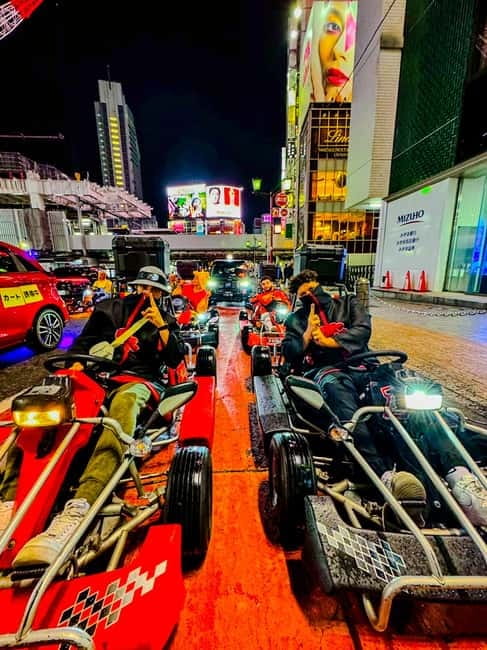
Go-kart chaos meets Tokyo icons. You’ll drive through Shibuya Scramble and Shinjuku with a guide who photographs your ride, then hit photo-friendly districts like Harajuku and Kabukicho.
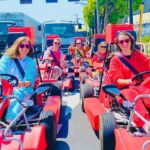
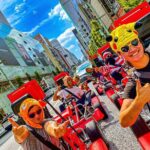
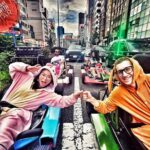
I love the small group size, limited to 8, which keeps the pace sane and the safety talk actually useful. I also love the free costumes and the action-shot photos, so you come away with more than just blurred phone snaps.
One possible drawback: the driving requirements are strict. If your international driving permit or document set is not accepted, you can be turned away with no refund.
Small group, big attention. Up to 8 people means less waiting and more guidance.
Your guide is also your photographer. You get lots of action photos taken during the ride.
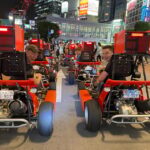
Hit the big districts in one hour. Shinjuku, Shibuya Scramble, Harajuku, Kabukicho, and more.
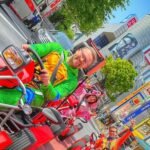
Free costume option. It adds fun fast, especially for night-lit streets.
Strict license rules. You need the right 1949 Geneva Convention IDP and supporting documents where required.
In This Review
- Tokyo Go-Karting Through Shibuya and Shinjuku: Why This Route Works
- Price and What You Get for $72 Per Person
- Before You Drive: Japan License Paperwork (This Is the Real Gate)
- Getting There: The Shinjuku Central Park Meeting Spot
- Safety Briefing and First Moves: How Nervous Drivers Feel Okay
- Yoyogi Park Stop: A Calm Reset Before Shibuya Scramble
- Shibuya Scramble and the Crosswalk Energy
- Harajuku and Kabukicho: Style Meets Nightlife Foot Traffic
- Back Through Shinjuku: Scenic Views and Built-In Photo Timing
- Your Guide and Photos: The Part You Will Actually Thank Yourself For
- What to Wear for a Go-Kart Ride in Tokyo
- Route Highlights You’ll Feel More Than You’ll Remember on Paper
- Who This Tour Fits Best (And Who Should Pass)
- Should You Book This Shibuya and Shinjuku Go-Kart Tour?
- FAQ
- How long is the Tokyo Shibuya and Shinjuku Streets go-kart tour?
- How many people are in a group?
- Where is the meeting point?
- Is hotel pickup and drop-off included?
- Do I need a driver’s license to drive the go-kart?
- Are all IDPs accepted?
- Do I get photos during the tour?
- Are costumes included?
- What if the weather is bad?
Tokyo Go-Karting Through Shibuya and Shinjuku: Why This Route Works
This is one of those Tokyo activities that feels oddly freeing, even with all the rules. You go from crosswalk chaos to skyscraper canyons in a controlled way, and the city hits you from street level instead of behind glass.
What makes the experience feel worth your time is the mix of places that are visually different every few minutes. One moment you’re near Shibuya Scramble, then you’re cutting through areas where fashion and nightlife dominate, like Harajuku and Kabukicho. The guide also builds in photo stops so you can park your kart briefly, frame a shot, and then move on before the city changes again.
Speed matters too, at least emotionally. The reviews clearly point to the thrill of getting a little extra pace, while still feeling safe. That balance is the whole game here: a fast Tokyo fantasy, without turning it into a risky stunt.
And yes, costumes help. You’ll look like you belong in the streets you’re driving through, not like you’re stuck in tourist mode.
Other routes through the west side of Tokyo, compared
- Tokyo: Shinjuku Food Tour (13 Dishes at 4 Local Eateries)
★ 5.0 · 6,603 reviews - Tokyo Bar Hopping Tour in Shinjuku (All-You-Can-Drink + Dinner)
★ 5.0 · 3,587 reviews - Official Street Go-Kart in Shibuya
★ 5.0 · 3,435 reviews - Tokyo: Shinjuku Food Tour (15 Dishes and 4 Eateries)
★ 4.9 · 2,033 reviews
Price and What You Get for $72 Per Person
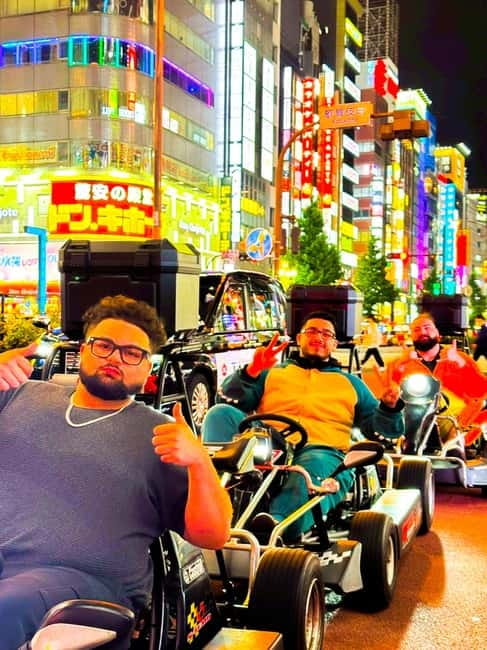
At $72 for about 1 hour, this isn’t the cheapest thing you can do in Tokyo. But you’re not just paying for a kart rental. You’re paying for the guided route, the safety briefing, the guide who actively takes photos, and the ability to access multiple iconic districts without wasting time navigating on your own.
The value improves if you care about photos. Several people mention that the guide took lots of pictures and shared them, which is exactly what you want for action driving. Instead of you chasing the moment with a shaky selfie, someone else is capturing it while you focus on driving and timing.
Another value point is the small group limit of 8. That matters in Tokyo, where big group tours can feel like a conveyor belt. Here, you’re more likely to get clear instructions and steady attention before you move off.
If your budget is tight, weigh this against slower, cheaper activities. But if you want one high-impact Tokyo story, this hour can deliver it.
Before You Drive: Japan License Paperwork (This Is the Real Gate)
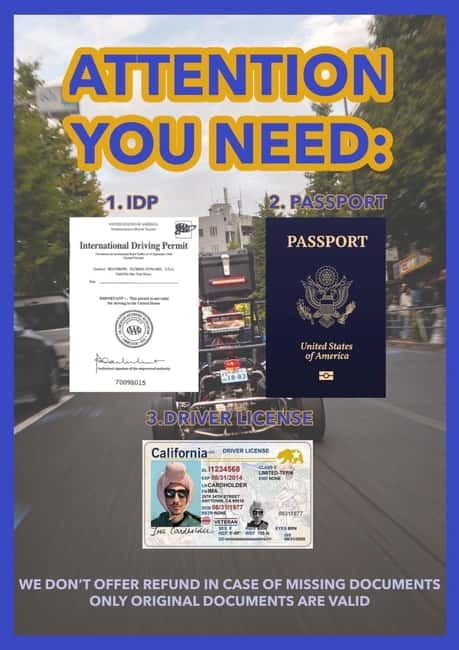
This tour is fun, but it is not forgiving about documents. Japan requires the right driving license setup, and the operator is explicit that you must show a valid license under the 1949 Geneva Convention with the correct IDP format.
You’ll need:
- Original driving license
- International Driving Permit (IDP) that is booklet type, under the 1949 convention
- Passport
Important details that can trip people up:
- IDPs from China, Indonesia, Pakistan, Saudi Arabia, Bahrain, Kuwait, and Qatar are not valid in Japan for driving on this tour.
- Some nationalities (including Switzerland, Germany, France, Belgium, Monaco, and Taiwan) must bring an original domestic license plus an Official Japanese translation from an authorized organization, plus your passport, and all three documents are required.
- If your documents are incorrect or invalid on the day, there is no refund.
So here’s your practical move: check the Japan Automobile Federation guidance before you travel, and confirm your IDP is the correct 1949 convention type. If you’re unsure, ask your IDP issuer. This is one of those cases where two minutes of checking can save you a ruined day.
Getting There: The Shinjuku Central Park Meeting Spot
You meet at 4-chōme-18-2 Nishishinjuku, near Shinjuku Central Park, behind The Knot Tokyo Shinjuku. The tour notes say it is about a 20-minute walk from Shinjuku Station, so plan for that on travel days.
Why I like this meeting area: it puts you close to central Shinjuku landmarks, so you’re not relying on complicated subway transfers just to start. You’ll be in the right part of town to kick off quickly and begin moving toward the other districts.
When you arrive, expect a short setup flow before you ride. The day starts with a safety briefing lasting about 15 minutes. That’s good news for first-timers, because you’ll learn how to handle the kart, where to look, and how the group will manage starts and stops.
One practical tip, based on how the tour is structured: arrive with time cushion. You’re not just showing up to drive, you’re going to be briefed, equipped, and organized.
Different circuits, same licence rules. Compare the karts
- Flagship 2-Hours Official Street Go-Kart Tour – Tokyo Bay Shop★ 5.0 · 4,974 reviews
- Official Street Go-Kart in Shibuya★ 5.0 · 3,435 reviews
- Tokyo: Street Kart Experience in Shibuya★ 4.9 · 1,484 reviews
- Shibuya Official Street Go-Kart in Shibuya Annex★ 5.0 · 972 reviews
- Tokyo: Asakusa, Skytree & Akhihabara Go-Kart City Experience★ 4.7 · 761 reviews
Safety Briefing and First Moves: How Nervous Drivers Feel Okay
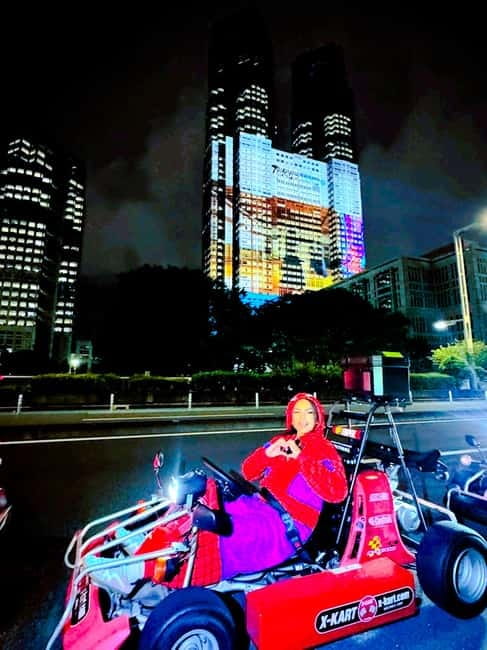
Even if you’re not an adrenaline person, the tour is designed to ease you in. You get a safety briefing first, then you start the ride with a guided rhythm.
The group is small, and the guide is responsible for keeping everyone together. In some cases, groups may be divided into smaller groups for safety and quality. That’s not a downgrade. It usually means clearer pacing and less bunching up on busy streets.
From the reviews, one standout theme is the guide being patient, especially with nervous riders. That’s exactly what you want. Go-kart driving in a dense city is different from driving in an empty lot. You need coaching on spacing, turning, and how to handle the constant Tokyo visual noise.
Also, conditions matter. The tour requires good weather. If conditions are poor, they may cancel and offer a full refund or a reschedule. So if you’re visiting in rainy season, have a backup plan for your Tokyo schedule.
Yoyogi Park Stop: A Calm Reset Before Shibuya Scramble
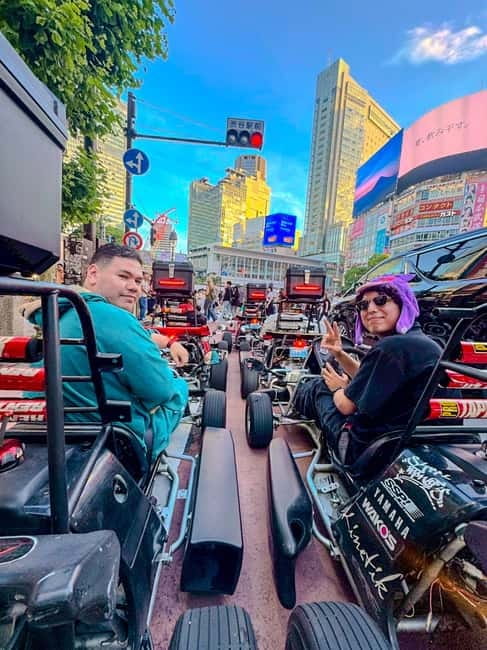
Right after you begin, you head toward Yoyogi Park. You’ll do a photo stop and sightseeing, then continue on with the guide.
This stop is a clever pacing tool. Yoyogi Park gives you a break from the hardest urban visuals before you hit one of Tokyo’s most famous traffic-and-crosswalk scenes. It helps you mentally switch from setup mode into camera-and-driving mode.
Look at Yoyogi as the warmup moment. You’ll have time to get used to how your kart feels, then you’ll be ready for the more intense part of central Tokyo.
What to watch for: photo opportunities here are part of the plan, not random. Since the guide is photographing you, it helps if you listen for cues about where to pose, where to look, and when to slow down.
Shibuya Scramble and the Crosswalk Energy
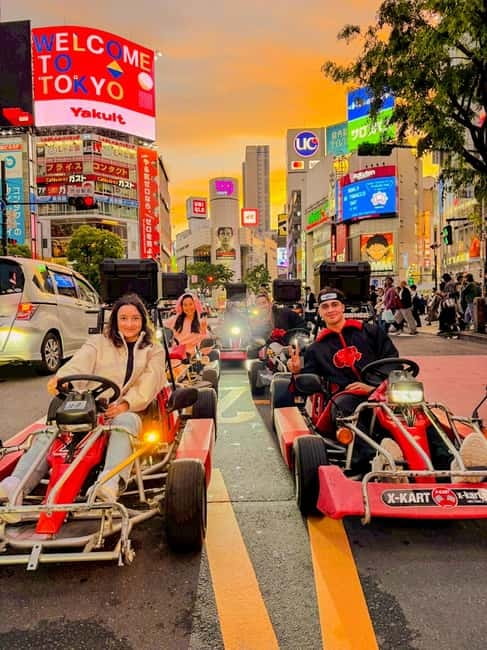
This is the star stop. Shibuya Scramble Crossing is listed as a photo stop and sightseeing moment, and the whole ride builds toward it for a reason.
Driving near a landmark like this feels like stepping inside a movie scene. It’s one of the easiest places in Tokyo to understand from street level why the city looks the way it does. Tall buildings loom close, the street grid is tight, and the crowd energy is constant even when you’re in a moving lane.
Here’s the practical payoff: because it’s a photo stop, you get structured moments to capture the setting. That reduces the pressure on you to figure out timing while driving.
If you’re someone who likes iconic locations but hates standing in line for photos, this works. You get that Shibuya hit without spending your day stuck behind people holding phones at arm’s length.
Harajuku and Kabukicho: Style Meets Nightlife Foot Traffic
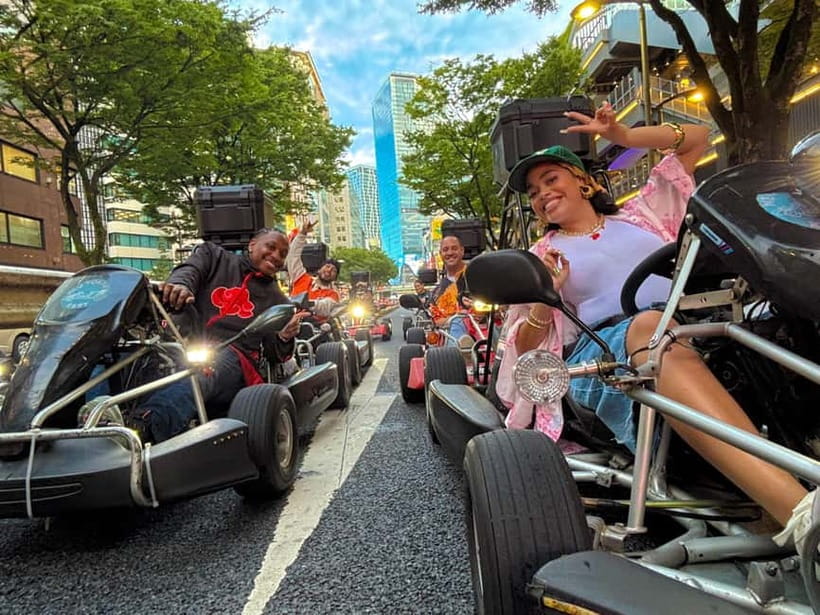
After Shibuya, you move through Harajuku for another set of photo stops and guided sightseeing, then continue to Kabukicho.
Harajuku often signals style and youth fashion, while Kabukicho signals nightlife, neon signs, and entertainment energy. The tour’s route uses both so you’re not stuck seeing the same “Tokyo street” look over and over.
The benefit for you is variety in a short time. You’ll see how Tokyo shifts mood by neighborhood, and you’ll probably spot how the architecture and signage change the moment you turn.
These stops are also great if you’re traveling with someone who likes photos but isn’t sure where to go. Your guide handles the order, the timing, and the visual framing.
One caution: don’t overthink clothing or props here. Wear what you can drive safely in. The costume element is fun, but comfort matters more for the ride.
Back Through Shinjuku: Scenic Views and Built-In Photo Timing
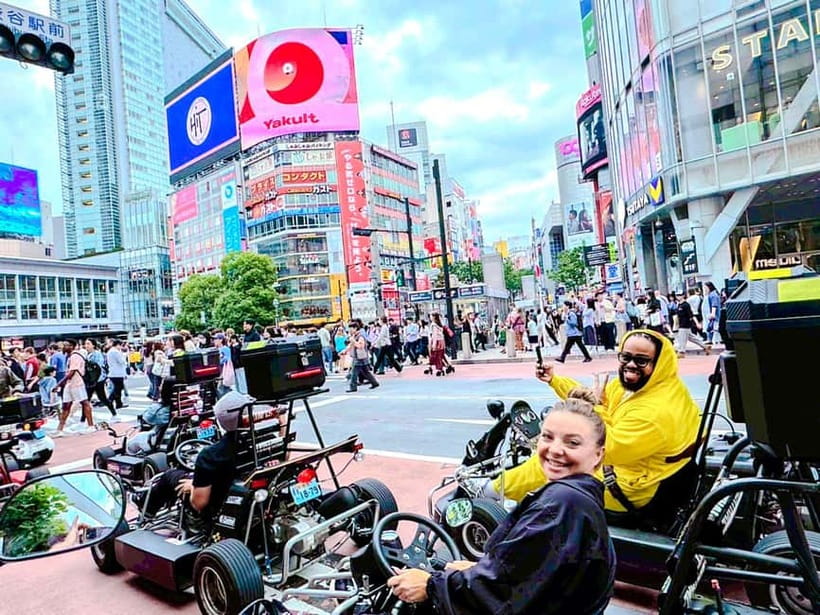
Your route loops back through Shinjuku, with another photo stop and scenic drive notes along the way. Since Shinjuku has a dense cluster of big buildings, it’s a good finale.
This is the moment when your brain stops worrying about driving and starts appreciating what you’re seeing. You’ve already been trained, you’ve already tackled the toughest landmark area, and now you’re mostly in cruise mode with photo opportunities.
If you book later in the day, the experience can look even better. One review mentions a 6pm time slot offering a mix of daytime and night time driving, with lit-up Tokyo scenery. That’s not guaranteed for every departure, but evening slots tend to give you more lighting drama, which is a real difference for photos.
Also, the tour returns you to the same starting area. That reduces the headache of figuring out how to get back after an action activity.
Your Guide and Photos: The Part You Will Actually Thank Yourself For

The tour guide is doing more than pointing. They’re also acting as your photographer. That’s a major reason this ranks highly for many people.
Look for guide names in your booking or day of confirmation, because some staff are repeatedly mentioned as especially good. Shingo is one name that shows up in the reviews, and people highlighted his photo-taking and attention.
What does that mean for you? It means you can drive without turning into a full-time cameraman. Someone else is capturing your turns, your stops, and the action moments when you would normally miss the best angle.
It also helps with nerves. If you’re anxious, having the guide direct you and handle photo moments reduces decision fatigue. You just follow instructions, then enjoy the ride.
And yes, gloves can matter. One review explicitly mentioned gloves being provided for cold weather. Even if the temperature catches you off guard, you’re likely to be better off than you would be with just street clothes.
What to Wear for a Go-Kart Ride in Tokyo
Go-karting is physical, even for an hour. You’ll be leaning slightly, turning your head to scan, and holding steady while the kart moves.
Dress for comfort and control:
- Wear shoes that grip well.
- Bring a layer if you’re riding in cooler months.
- If the weather is cold, gloves can be a lifesaver, and some people report getting gloves.
Costumes are included. That means you can keep your own outfit simple and add personality with what they provide. The reviews mention costumes as part of the fun, and it can make the whole thing feel more like an event than a chore.
If you’re tempted to wear something risky, like slick shoes or dangling accessories, don’t. This is a driving activity first. Style comes second.
Route Highlights You’ll Feel More Than You’ll Remember on Paper
Even without getting lost in details, you can expect the ride to hit a clear set of Tokyo “mood shifts.” Here’s what you’ll experience as the kart moves:
- A calm start near the central Shinjuku meeting area
- Yoyogi Park photo and sightseeing for a breather
- Shibuya Scramble, where the city looks like it’s all happening at once
- Harajuku, for a different vibe and more visual variety
- Kabukicho, for neon and entertainment energy
- Back to Shinjuku, for big-building views and scenic photo moments
Because the stops are planned, you also avoid the risk of trying to chase landmarks on foot at the worst possible times.
The whole thing is short enough that you won’t feel exhausted, but long enough that it doesn’t feel like a quick stunt. It’s a full city hit.
Who This Tour Fits Best (And Who Should Pass)
This tour is best for you if:
- You want one memorable Tokyo experience that feels active
- You like iconic neighborhoods and photos, not just a lecture-style walk
- You’re okay with a short driving intro and following safety directions
- Your group enjoys lighthearted fun, including costumes
It may not be ideal if:
- You don’t have the required driving documents. The rules are strict, and the tour notes are clear about consequences.
- You’re strongly uncomfortable driving in traffic-like areas, even with a briefing and guide support.
- You’re traveling with someone who won’t enjoy a fast-paced, photo-stop format.
The good news is the guide-led structure helps nervous drivers more than you might expect. Many reviews praise patient instruction, and that matters.
Should You Book This Shibuya and Shinjuku Go-Kart Tour?
Book it if you want a high-impact Tokyo story in one hour, and you care about getting action photos without managing them yourself. The combination of Shibuya Scramble, Harajuku, and Kabukicho in a single guided ride is hard to replicate on your own without spending extra time planning and coordinating.
Skip or postpone it if your driving documents are uncertain. In this experience, paperwork is not a footnote. It is the entire entry ticket.
If you can drive legally with the right IDP and license setup, and you’re ready to follow the guide closely, this is a fun, practical way to see central Tokyo from a perspective most tourists never get. It’s fast, it’s silly in the best way, and your photo set is one less thing you’ll worry about when you get home.
FAQ
How long is the Tokyo Shibuya and Shinjuku Streets go-kart tour?
The tour lasts 1 hour.
How many people are in a group?
The tour is limited to a small group, up to 8 participants.
Where is the meeting point?
Meet at 4-chōme-18-2 Nishishinjuku near Shinjuku Central Park, behind The Knot Tokyo Shinjuku.
Is hotel pickup and drop-off included?
No. Hotel pickup and drop-off are not included.
Do I need a driver’s license to drive the go-kart?
Yes. To drive legally, you must provide a valid license under the 1949 Geneva Convention. You also need an International Driving Permit (IDP) and your passport.
Are all IDPs accepted?
No. The tour notes say it is not available for Brazilian, Chinese, Indonesian, Mexican, Qatari, Saudi Arabian, and Bahrain International driving permit holders. It also notes specific IDPs that are not valid in Japan.
Do I get photos during the tour?
Yes. The guide provides photos taken during the ride, and photo stops are built into the route.
Are costumes included?
Yes. Free costumes are included.
What if the weather is bad?
The tour requires good weather. If canceled due to poor conditions, you will receive a full refund or the option to reschedule.
Karts, Circuit by Circuit
West Tokyo on Foot: Seven More

Newest Tokyo write-ups from the Loving Japan desk
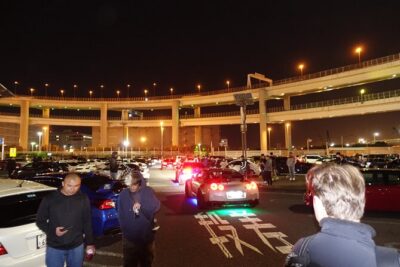
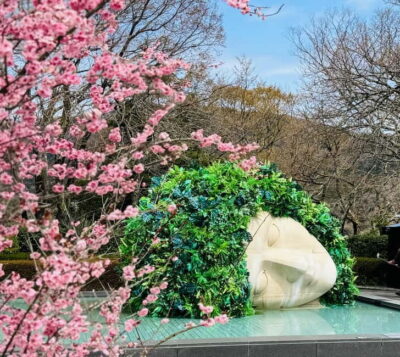
Shibuya, Shinjuku and Harajuku Walks, side by side.
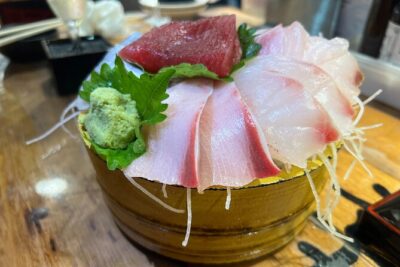 ★ 5.0Shinjuku Food Tour (13 Dishes at 4 Local Eateries)From $866,603 reviews
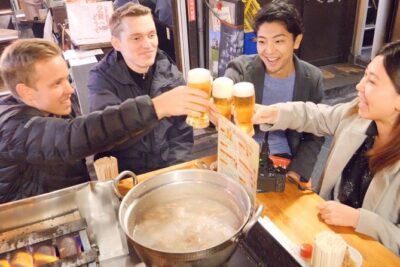 ★ 5.0Tokyo Bar Hopping Tour in Shinjuku (All-You-Can-Drink + Dinner)From $1063,587 reviews
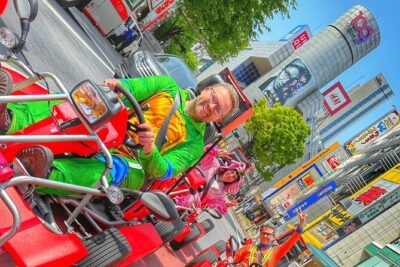 ★ 5.0Official Street Go-Kart in ShibuyaFrom $763,435 reviews
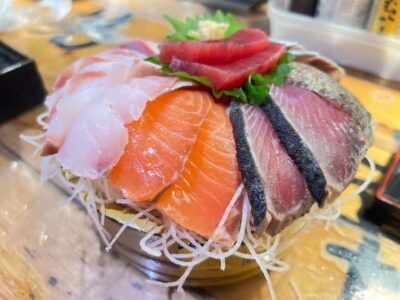 ★ 4.9Shinjuku Food Tour (15 Dishes and 4 Eateries)From $852,033 reviews
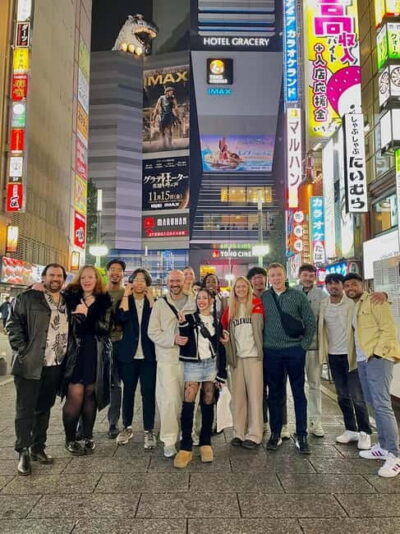 ★ 4.9Shinjuku Local Bar and Izakaya Guided Walking TourFrom $341,794 reviews
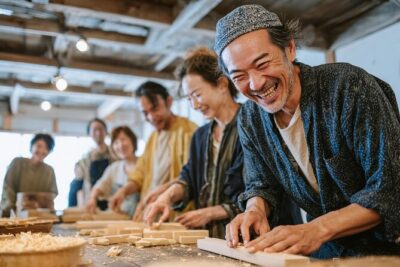 ★ 5.0Tokyo Shinjuku Chopsticks Making ClassFrom $201,763 reviews
 ★ 5.0Tokyo Shinjuku Sumo Show & Experience with PhotoFrom $791,750 reviews
 ★ 4.9Street Kart Experience in ShibuyaFrom $741,484 reviews
Filed on these lists too