
REVIEW · 1-DAY TOURS
10 Must-see Spots in Kyoto One Day Private Tour (up to 7 people)
Kyoto, packed into one stress-free day. This private 8-hour tour hits 10 iconic stops, from Kinkaku-ji to Fushimi Inari-taisha, with an English-speaking guide handling the flow between neighborhoods.
I love the private format for up to 7 people, so your group stays together and you can ask questions without feeling rushed. I also like the way the route clusters sights that make sense for a first full day, so you spend less time figuring out transit and more time seeing real Kyoto.
The possible drawback is cost creep once you add it up: the tour price covers the guide, but you’ll still pay temple entrances, public transit, and sometimes taxis, and many places do not take credit cards.
In This Review
- Key Things I’d Plan Around Before You Go
- How the 9:00am Kyoto Day Runs, Start at Kitaoji and End in Gion
- Golden Pavilion (Kinkaku-ji): The Shogun-Era Spark You Remember
- Arashiyama Bamboo Forest and Tenryu-ji: A Reset Between Big Names
- Togetsukyo Bridge and the Arashiyama Kimono Cylinder Photo Stop
- Fushimi Inari-taisha Torii Gates: The Best 1 Hour for Big Photos
- Kiyomizu-dera and the Hill Streets of Sannenzaka and Ninenzaka
- Yasakanoto Pagoda View and Gion’s Classic Alleys
- Price and What You Still Need to Pay in Yen
- The Guide Factor: Names Like Tammy, Akemi, and Yoshi Keep Coming Up
- Walking Reality Check: Expect a Big Step Day
- Hot-Weather Plan B: Fewer Steps, Still Classic Kyoto
- Should You Book This 10-Stop Private Kyoto Tour?
- FAQ
- How many people are in this private tour?
- How long is the tour?
- What time does the tour start?
- Where do I meet the guide?
- What’s included in the price?
- Are temple entrance fees included?
- Do I need to pay for transportation during the tour?
- Do temples and taxis accept credit cards?
- What happens on very hot summer days?
- Can I cancel for a full refund?
Key Things I’d Plan Around Before You Go
- A guided “hits-the-main-stuff” day, built for time-tight schedules, not slow wandering
- 10 famous Kyoto stops in one loop, from Golden Pavilion to Gion alleys
- Photo-ready timing at big landmarks like Fushimi Inari-taisha’s torii gates
- Cash and IC card friendly planning, since cards are often not accepted
- Up to 7 people, private group only, so the day stays calmer than big tours
- Hot-weather Plan B that swaps in Chishakuin Temple and Sanjusangendo Temple to reduce walking steps
Still weighing up options in Kyoto? These are the ones our reviewers rated highest.
- PERFECT KYOTO 1-Day Bus Tour
★ 5.0 · 13,518 reviews - Kyoto: Fushimi Inari, Kinkakuji, Bamboo Grove 1 Day Bus Tour
★ 4.8 · 4,316 reviews - Kyoto: Tea Ceremony in a Traditional Tea House in Kiyomizu
★ 4.9 · 3,519 reviews - Kyoto Geisha Walking Tour: Gion District & Hidden Gems
★ 4.7 · 3,273 reviews
How the 9:00am Kyoto Day Runs, Start at Kitaoji and End in Gion
This is an 8-hour private tour that starts at 9:00am near Kitaoji Station (Kita Ward) and ends in Gion. You meet your English-speaking professional guide first, then you move from place to place without having to map out routes or time bus connections yourself.
Because this is private for just your party (up to 7 people), you get a calmer pace at crowded sights. The guide also helps you with the “what next” problem. That matters in Kyoto, where one wrong turn can cost you time and stamina.
There’s also a clear vibe to the day: you’ll see major landmarks, but you’ll also get some time on traditional streets and back alleys. That’s often what makes the photos look real, not just like a scrapbook of famous spots.
Golden Pavilion (Kinkaku-ji): The Shogun-Era Spark You Remember
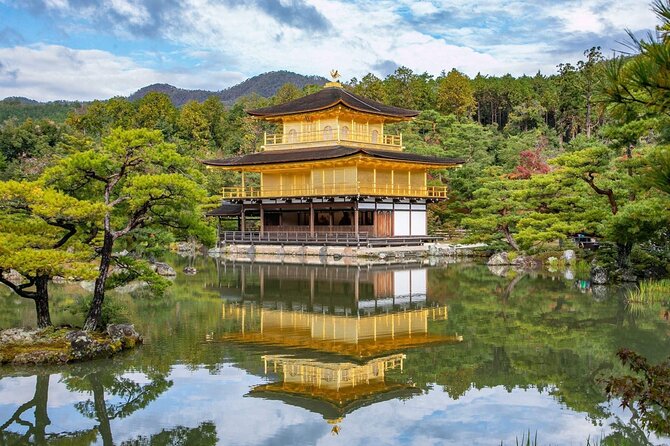
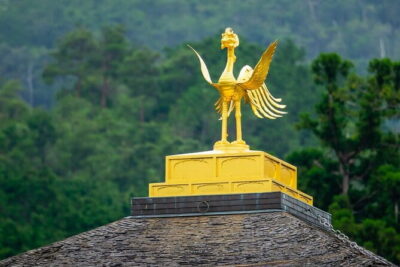
Kinkaku-ji, also known as the Golden Pavilion, is the kind of Kyoto scene that makes even first-timers stop mid-walk. You’ll spend about 40 minutes here, enough time to take in the gleaming pavilion and get the big historical context from your guide.
This site matters because it’s more than a pretty building. You’ll hear how it used to connect to political power in the shogun era, which gives the gold a stronger meaning than simple decoration.
What I’d watch for: the temptation to photograph constantly. Give yourself a few minutes to just look, then go back for photos from a spot where the reflections and lines feel balanced. If you arrive when it’s busy, you’ll still be able to get your moments, but you may have to be patient.
Drawback to consider: admission is not included, so plan for temple fees. Also, like most Kyoto highlights, it can be photo-crowded.
Arashiyama Bamboo Forest and Tenryu-ji: A Reset Between Big Names
After Kinkaku-ji, the day shifts into Arashiyama mode. You’ll go through the bamboo forest street for about 20 minutes, then head to Tenryu-ji Temple for roughly 30 minutes.
The bamboo walk is short, on purpose. In Kyoto, you often get only a limited window before you hit crowds or fall behind schedule. Here, the timing gives you that classic “Kyoto poster” moment without turning it into a half-day hike.
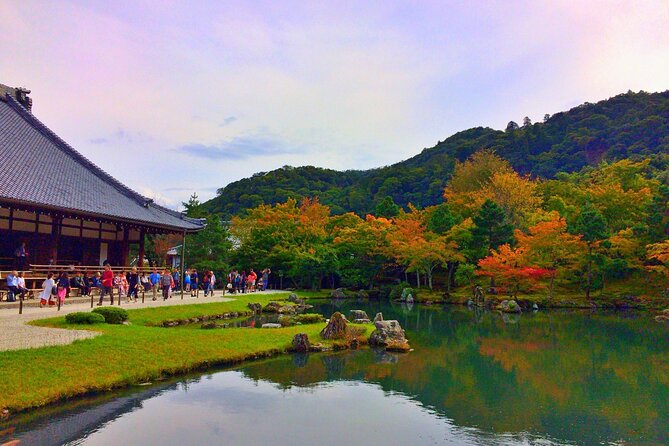
Tenryu-ji adds the more grounded experience. It’s known for a traditional landscaped garden and a pond setting that your guide can explain so you know what you’re looking at. If you’ve ever wondered why Japanese gardens feel so intentional, this stop gives you a few clues.
The practical angle: wear shoes you can move in. Even “just” walking between stops can add up fast.
Possible drawback: admission is also not included for Tenryu-ji. Budget for it, and don’t count on paying with a card.
- PERFECT KYOTO 1-Day Bus Tour★ 5.0 · 13,518 reviews
- Kyoto: Fushimi Inari, Kinkakuji, Bamboo Grove 1 Day Bus Tour★ 4.8 · 4,316 reviews
- Kyoto: Tea Ceremony in a Traditional Tea House in Kiyomizu★ 4.9 · 3,519 reviews
- Kyoto Geisha Walking Tour: Gion District & Hidden Gems★ 4.7 · 3,273 reviews
- Kyoto: Tea Ceremony Ju-An at Jotokuji Temple★ 4.9 · 3,207 reviews
Togetsukyo Bridge and the Arashiyama Kimono Cylinder Photo Stop
Next up is Togetsukyo Bridge (about 10 minutes). This is a straightforward photo-and-view stop, and it works well inside a one-day plan because you get a famous Arashiyama perspective quickly.
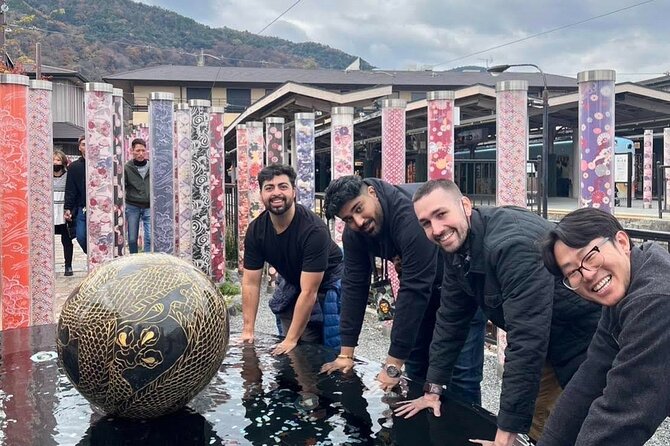
Then comes something a little unusual: the Arashiyama Kimono Forest. It’s an art installation made of 600 cylinders covered with kimono designs. You get about 10 minutes here, which is enough time to snap your photos and enjoy the playful contrast to the real temple and bamboo scenes around it.
Why this stop is worth your time: it’s visual, it’s quick, and it breaks up the heavier history stops with something light and very “Kyoto today,” especially if you like taking photos.
Consideration: it’s popular and very camera-driven, so if you hate crowds, you’ll want to keep your expectations realistic.
Fushimi Inari-taisha Torii Gates: The Best 1 Hour for Big Photos
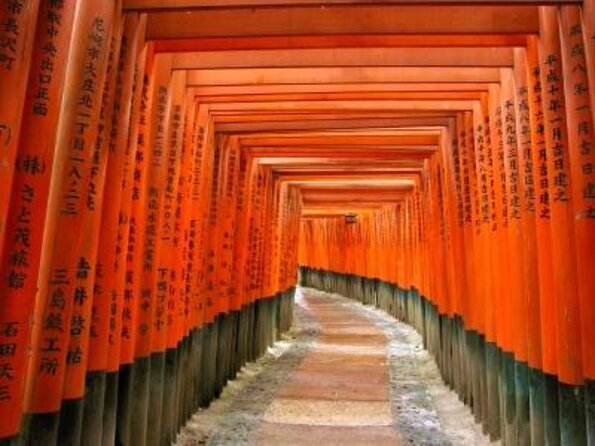
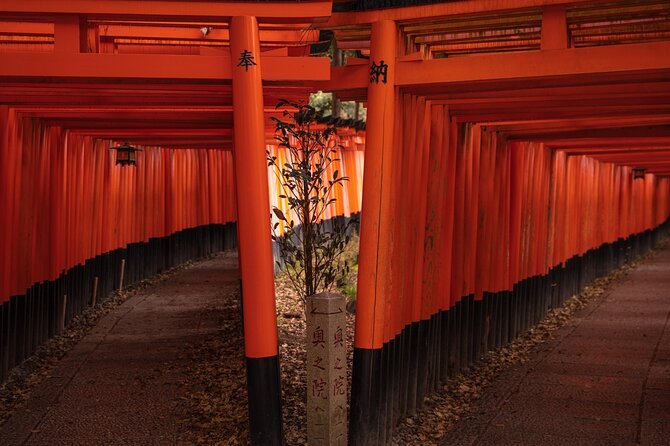
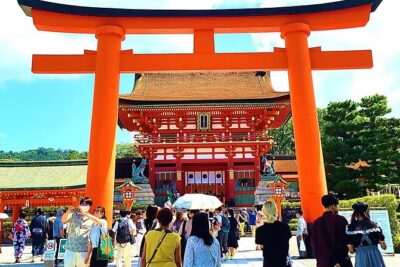
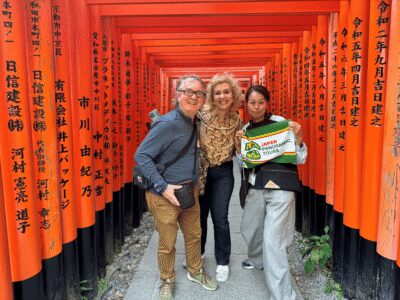
The highlight stop for many people is Fushimi Inari-taisha, with about 1 hour on site. This shrine is famous for its thousand torii gates, and it’s the kind of place where you feel the difference between looking at photos and seeing it in motion.
You’ll walk through the torii path with time to capture the stepped rhythm of the gates and the way the tunnel effect changes as you move.
How to make it better: pace yourself. Even without doing a full climb, the torii area is active and easy to overshoot. Build in a few pauses so your photos come out steady, not rushed.
Possible drawback: it can be busy, and the experience depends on your walking stamina. One practical tip from the tour’s past experiences: bring yen cash and an IC card, and expect you might log a lot of steps in a single day.
Kiyomizu-dera and the Hill Streets of Sannenzaka and Ninenzaka
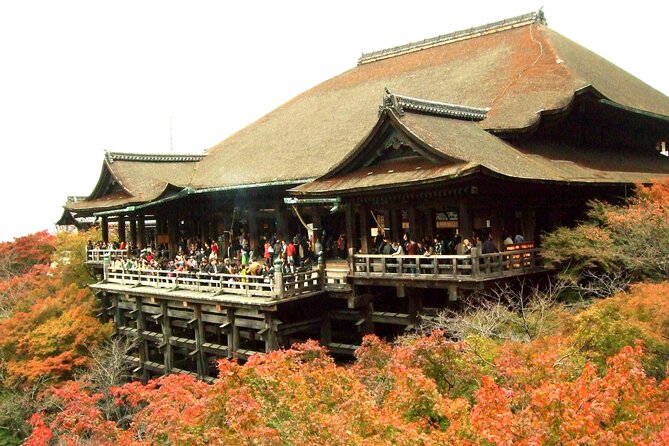
From Fushimi Inari, you head to Kiyomizu-dera Temple for about 1 hour. Kiyomizu-dera is another UNESCO World Heritage site, and it’s especially famous for the expansive balcony area and panoramic views.
This is one of those places where your guide’s story can change how you feel about it. Instead of just looking at the structure, you’ll understand what makes the spot culturally important, which helps the day feel more than a checklist.
After that, you’ll have about 1 hour exploring Sannenzaka and Ninenzaka. These slopes are lined with traditional wooden buildings and shops, and the time works best for browsing for small gifts, snacks, or anything you want to bring home that feels tied to Kyoto street life.
Why I like this pairing: Kiyomizu-dera gives you the big viewpoint energy, and the hill streets bring it down to human scale.
Drawback to plan around: like the other major temples, Kiyomizu-dera admission is not included. Also, street areas can slow you down if you stop often to browse.
Yasakanoto Pagoda View and Gion’s Classic Alleys
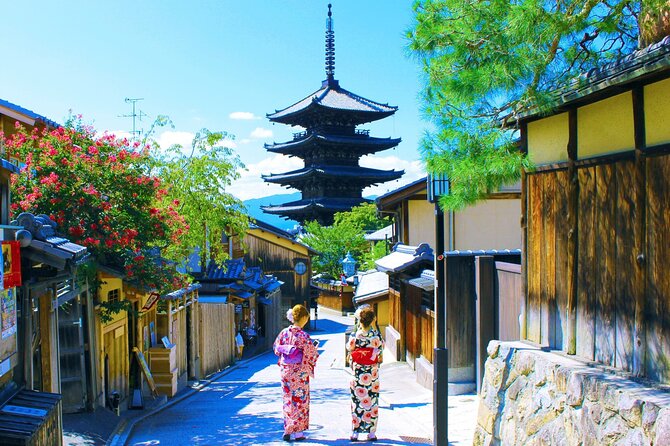
Near the end, you’ll stop at Yasakanoto, a landmark five-story pagoda. The time is short, about 5 minutes, and the tour focuses on viewing it from outside rather than going deep into a long site visit.
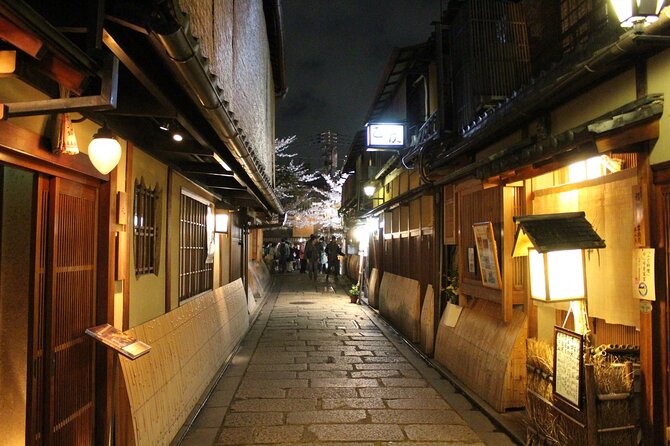
Then the tour finishes in Gion, with about 20 minutes to walk the traditional alleys. This is where you get that historic Kyoto street atmosphere, and your guide can help you move through without getting trapped in the densest areas.
If you’re lucky, you may catch a glimpse of geiko or maiko in Gion. Even if you do not, the alley rhythm and nighttime-style look (depending on the season) is still worth it as a final note.
Practical reality: Gion is a photo magnet. Keep your phone charged and your expectations friendly. Some moments are quick.
Price and What You Still Need to Pay in Yen
At $179.07 per person, the headline price can look high or reasonable depending on how you travel. Here’s the value logic I’d use:
- You pay for an English-speaking guide plus coordinated routing and timing across far-flung neighborhoods in one day.
- You’re not paying extra per attraction for the guidance itself, which is the expensive part for time-tight planning.
- You still pay for what you access: temple admissions and transportation.
The tour data lists several add-ons:
- Temple entrance fees: about 1,500 yen per person for temples.
- Public transportation: about 1,000 yen per person.
- Taxi costs if needed: around 7,000 to 9,000 yen per cab for rides, and if your group is 4 or more, you need two taxis.
This is where you should do your budgeting math early. You might also reduce taxi use by leaning into public transit where timing works best, but that depends on your group size and the day’s pace.
My advice: bring enough cash. Many temples and taxis do not accept credit cards. One very practical tip that came up in past tour experiences is to have at least 10,000 yen on hand, plus an IC card such as Suica or another regional option with at least 1,500 yen to start.
The Guide Factor: Names Like Tammy, Akemi, and Yoshi Keep Coming Up
A one-day Kyoto tour lives or dies on the guide. In the guide pool for this experience, certain names show up repeatedly in positive comments: Tammy, Akemi, Kumi, Hiro, Mieko, Hiromi, and Yoshi among them.
What people praise most is not just facts. It’s performance:
- Efficient timing, so you don’t feel like you’re sprinting for no reason
- Patience, especially when someone gets stuck in a crowd or needs an extra minute for photos
- Flexibility, including adjusting based on what your group cares about
- Clear help with transit, including using the right route so you feel guided, not stranded
If you care about photos, the better guides help you find positions for shots where you can get pictures of your whole group, not just one person in front of a landmark.
If you have food restrictions, tell the provider when you book. That’s explicitly noted as something you can communicate ahead of time.
Walking Reality Check: Expect a Big Step Day
Even with taxis or public transit, this is a dense one-day route across Kyoto. One past experience summed it up with around 20,000 steps walked. That won’t be exact for every group, but it’s a good reality check for planning.
Here’s what helps:
- Comfortable shoes you can wear all day
- A small bag so you can move quickly at photo points
- Water and a snack, even if you plan to buy food on the way
- Willingness to do short walks between transit and entrances
This tour is best for people who want to maximize their time and can handle a packed schedule. If you prefer slow mornings and long rests, you might want fewer stops.
Hot-Weather Plan B: Fewer Steps, Still Classic Kyoto
Kyoto in peak summer can feel brutal. The tour data includes a recommendation for very hot days: a Plan B course that takes you to Chishakuin Temple and Sanjusangendo Temple instead, with fewer steps.
That’s useful because it keeps you seeing major cultural stops while reducing physical strain. Chishakuin Temple is described as an indoor option, and Sanjusangendo is famous for a forest of Buddhist statues, so you’re not losing the “wow” factor.
If you’re traveling in summer, this alone is worth paying attention to. It’s a sign the tour is designed to stay workable when weather changes your energy levels.
Should You Book This 10-Stop Private Kyoto Tour?
Yes, you should book if:
- You only have one day in Kyoto or your schedule is tight
- You want 10 major sights without navigating on your own
- You value a guide who can explain what you’re seeing and keep you moving efficiently
- You like a balance of big landmarks and traditional streets at a human pace
I would not book if:
- You hate crowds and don’t want a packed schedule
- You’re looking for a slow, flexible day with lots of downtime
- Your group can’t handle walking and standing for extended stretches, since this is a dense loop
If you do book, I’d go in prepared: wear good shoes, bring yen cash and an IC card, and keep your expectations focused on one-day efficiency rather than a leisurely Kyoto weekend.
FAQ
How many people are in this private tour?
It’s a private tour for your group only, with a maximum of up to 7 people.
How long is the tour?
The tour lasts about 8 hours.
What time does the tour start?
The start time is 9:00am.
Where do I meet the guide?
The meeting point is near Kitaoji Station in Kyoto, and the end point is in the Gion area (571 Gionmachi Minamigawa, Higashiyama Ward).
What’s included in the price?
The price includes an English-speaking professional guide. Infants under 3 years old are free of charge.
Are temple entrance fees included?
No. Entrance fees for temples are listed as 1,500 yen per person.
Do I need to pay for transportation during the tour?
Yes. Public transportation is listed as 1,000 yen per person, and taxi rides may be used with an estimated 7,000 to 9,000 yen per cab. If you have 4 or more people, two taxis are required.
Do temples and taxis accept credit cards?
The tour notes that many temples and taxis do not accept credit cards, so it’s a good idea to have Japanese yen ready.
What happens on very hot summer days?
On very hot summer days, the tour recommends switching to a Plan B course that takes you to Chishakuin Temple and Sanjusangendo Temple, which requires fewer steps.
Can I cancel for a full refund?
Yes. You can cancel up to 24 hours in advance for a full refund. If weather cancels the experience, you’ll be offered a different date or a full refund.
Newest Kyoto write-ups from the Loving Japan desk

1-Day Tours, side by side.
 ★ 5.0Mt Fuji and Hakone 1-Day Bus Tour Return by Bullet TrainFrom $16326,383 reviews
 ★ 5.01-Day Tokyo Bus TourFrom $12914,250 reviews
 ★ 5.0PERFECT KYOTO 1-Day Bus TourFrom $12913,518 reviews
 ★ 4.0Mt Fuji & Hakone Cruise, Drum Show Bullet Train 1 Day from TokyoFrom $1497,413 reviews
 ★ 5.0Peaceful Hiroshima & Miyajima UNESCO 1 Day Bus TourFrom $1295,309 reviews
 ★ 4.8Fushimi Inari, Kinkakuji, Bamboo Grove 1 Day Bus TourFrom $1224,316 reviews
 ★ 4.5DisneySea 1-Day PassportFrom $572,726 reviews
 ★ 4.6Tokyo Disneyland 1-Day PassportFrom $572,512 reviews