
REVIEW · CYCLING TOURS
Discover Kyoto by Bike Full Day Tour
Pedal through Kyoto’s quiet streets. This full-day bike tour mixes iconic stops like Toji and Gion with calmer, lesser-visited corners such as Honen-in and the hillside temple lanes near the river. It’s built for a relaxed pace, with lots of photo breaks and a local guide who helps you make sense of what you’re seeing.
Two things I like a lot: you get the classic highlights without feeling trapped in the biggest traffic jams, and the route spends real time in places big buses usually cannot reach. One thing to plan for is the physical side. You’ll need to be fit enough to ride about 32 km and maneuver safely on narrow paths, and lunch isn’t included.
In This Review
- Key highlights at a glance
- E-bike Kyoto: why it changes how the day feels
- Starting at Toji, then slipping into greener Kyoto
- Nishi Honganji and the temple rhythm you can actually enjoy
- Miyagawacho-style alleys and the art of seeing Gion without the chaos
- Heian Shrine, Lake Biwa Canal, and Nanzen-ji’s jaw-dropping scale
- Philosopher’s Path to Honen-in: hillside calm in the middle of the day
- Ginkaku-ji, the Silver Pavilion, and the final glide into Gion
- How Jaime turns a bike route into real context
- Price and value: what you get for $128.48
- Who should book, and who might want a different plan
- Final call: should you book this Kyoto bike tour?
- FAQ
- How long is the Discover Kyoto by Bike full day tour?
- Where does the tour start and when does it begin?
- Is lunch included?
- What type of bike do I use?
- Is this a private tour?
- How much riding do I need to do?
- Which admission fees are included?
- What happens if the weather is bad?
- What is the cancellation deadline?
Key highlights at a glance
- E-bike support for a long day, starting with an easy-then-steady flow
- Toji plus UNESCO temples like Nishi Honganji, with clear explanations from guide Jaime
- Riverside riding on the Kamo River, a calmer stretch than most sightseeing routes
- Big Zen moments at Nanzen-ji, including the massive Sanmon gate and the red brick aqueduct
- Ginkaku-ji and Gion handled in a way that keeps the day moving, not rushed
Still weighing up options in Kyoto? These are the ones our reviewers rated highest.
- PERFECT KYOTO 1-Day Bus Tour
★ 5.0 · 13,518 reviews - Kyoto: Fushimi Inari, Kinkakuji, Bamboo Grove 1 Day Bus Tour
★ 4.8 · 4,316 reviews - Kyoto: Tea Ceremony in a Traditional Tea House in Kiyomizu
★ 4.9 · 3,519 reviews - Kyoto Geisha Walking Tour: Gion District & Hidden Gems
★ 4.7 · 3,273 reviews
E-bike Kyoto: why it changes how the day feels
Kyoto is lovely, but it can be hard on your feet. This tour solves that with an electric bicycle, so you can focus on sights, not suffering. The ride is also paced for comfort, with the guide keeping an eye on the group so you do not feel like you are sprinting between checkpoints.
That said, e-bike still means you are cycling. The good part is you will be able to cover distance without wrecking your legs. The important part is the safety requirement: you need to be comfortable riding about 32 km and handling turns on narrower streets and pathways. If you feel unsure on a bike, this may not be the best fit.
Another practical plus is speed control. E-bikes let you glide through slower stretches, then maintain a steady pace when the route opens up. That makes the day feel more like moving through neighborhoods, not just hopping between monuments.
Starting at Toji, then slipping into greener Kyoto
The tour begins at 9:00 am at a 7-Eleven near Kyoto’s Minami Ward, and it returns to the same meeting point at the end. That is handy because you do not need to figure out a second transit puzzle after a long day.
Your first stop is Toji, a UNESCO site famous for its five-story pagoda. It is known as the tallest wooden tower in Japan, and even if you have seen photos, the scale reads differently when you are there. You also get a peaceful stroll through the temple grounds, which matters because it sets the tone. You start with something important, but you do not start in a loud, packed rush.
From there, you move toward Umekoji Park, and the feeling shifts fast. One moment you are dealing with city energy, and the next you are in wide open green space with shady trees, a serene pond, and seasonal flowers. This break is not just pretty. It gives your body a breather before temples, alleyways, and longer riding.
You then pass by Ryukoku University Omiya Campus, where the vibe is less tourist and more daily Kyoto. Seeing a historic religious connection through a modern institution helps you understand how Buddhism and education sit side by side in this city. Even if you only pause briefly, it adds context.
Nishi Honganji and the temple rhythm you can actually enjoy
Next up is Nishi Honganji, another UNESCO site and a major temple of Jodo Shinshu Buddhism. The highlight here is the architecture and the courtyard scale. You get time to walk and absorb how large the spaces feel, and the guide explains the temple’s influence so it does not become just another big building in your photos.
Temples in Kyoto can blur together if you only skim. What makes this stop work is the guided interpretation, paired with a manageable pace. You are not being pushed. You have just enough time to look closely, then move on before fatigue hits.
After that, you ride along the Kamo River, a favorite place for locals to relax and move through the city. This is one of those stretches that makes you realize cycling is not only faster, it is also calmer. The river edge tends to feel more human, and you get the sense of Kyoto balancing urban life with nature.
- PERFECT KYOTO 1-Day Bus Tour★ 5.0 · 13,518 reviews
- Kyoto: Fushimi Inari, Kinkakuji, Bamboo Grove 1 Day Bus Tour★ 4.8 · 4,316 reviews
- Kyoto: Tea Ceremony in a Traditional Tea House in Kiyomizu★ 4.9 · 3,519 reviews
- Kyoto: Tea Ceremony Ju-An at Jotokuji Temple★ 4.9 · 3,207 reviews
- Kyoto: 45-Minute Tea Ceremony Lesson Experience★ 4.3 · 2,378 reviews
Miyagawacho-style alleys and the art of seeing Gion without the chaos
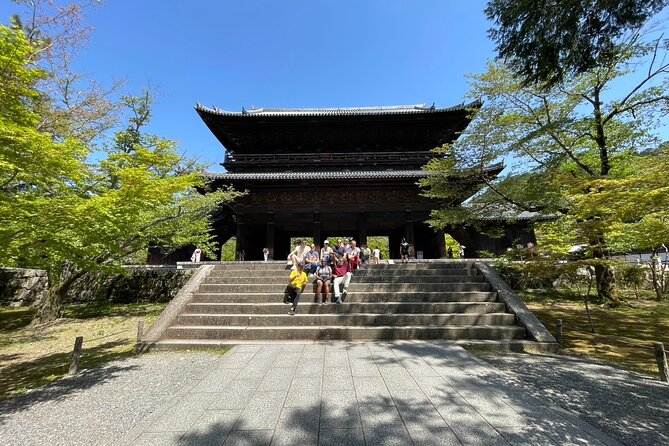
Kyoto’s famous geisha district, Gion, is the obvious draw. But the tour does something smart before you reach the loudest lanes: it includes a quieter geisha district near Gion and cycles through narrow alleyways with a slower feel.
That matters because Gion can get crowded, especially at peak times. The route here keeps you moving through lesser-used streets first, so when you do reach the best-known area, it feels like you are arriving rather than fighting for space. The guide also provides context about geiko and maiko culture, which helps you interpret what you see in machiya townhouses and lantern-lit lanes.
Even when a street is famous, the photo angle changes when you approach it from a calmer side. And with cycling, you can pause at the right spots without waiting for sidewalks to clear. It is a practical way to get the best of the famous sights while still feeling like you are exploring.
Heian Shrine, Lake Biwa Canal, and Nanzen-ji’s jaw-dropping scale
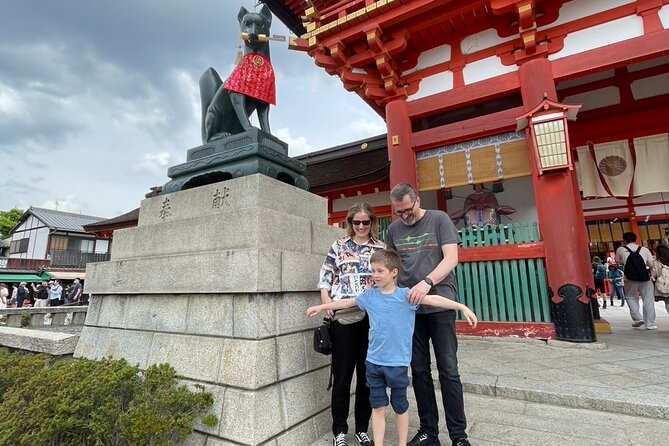
One of my favorite parts of the day is how it mixes religious sites with a bit of engineering and civic storytelling.
At Heian Shrine, you get the bright vermilion gate and buildings modeled after an ancient Imperial Palace. It was built in 1895 to mark Kyoto’s 1,100th anniversary, so the design is both symbolic and theatrical. There’s also a nearby large torii, which is one of those Kyoto moments where the scene looks designed for a photo, but it still feels spiritual when you stand in the right spot.
Then you visit the Biwa Aqueduct Museum at the Lake Biwa Canal area. This is a small museum, and that can be a blessing. It gives you a clear, focused story about how the canal project from the 1890s helped bring water and electricity to Kyoto. You start thinking beyond gardens and temples, and you remember that big culture is powered by big systems.
After that comes Nanzen-ji, one of Kyoto’s most important Zen temples, founded in the 13th century. The temple’s massive wooden Sanmon gate is the star at first glance, but the whole complex is worth your attention. You get peaceful Zen gardens and, in a very Kyoto way, the red brick aqueduct runs right through the temple grounds. Standing near it, you can see how this city mixes old faith, practical infrastructure, and aesthetic design into one place.
The time allowance here is long enough to slow down. You get to look, then ride out without feeling like you missed the best angle.
Philosopher’s Path to Honen-in: hillside calm in the middle of the day
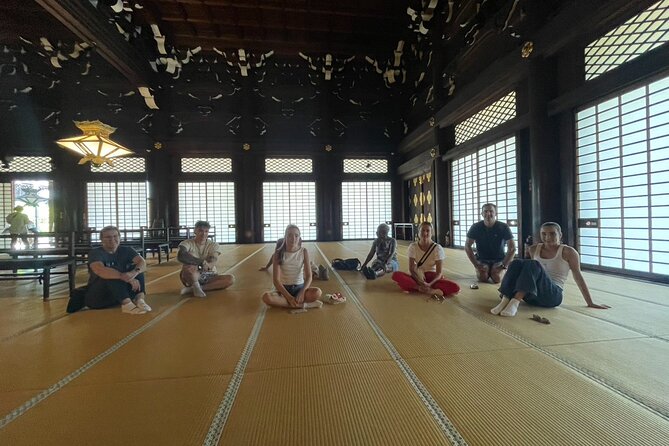
Not every Kyoto walk needs to be a big checklist. A good bike day includes at least one quiet moment, and this one delivers.
You follow the Philosopher’s Path, a stone walkway beside a canal lined with cherry trees. The name comes from philosopher Nishida Kitaro, a Kyoto University professor who used to walk here while meditating. That detail gives the path a different feeling than a standard scenic corridor. Even if you are not traveling in peak cherry season, it helps you notice the way water and stone shape the experience.
Next is Honen-in, a quieter temple tucked into the hills. This is a Pure Land sect site founded in the 1600s to honor the priest Honen. The atmosphere is built from small textures: a mossy gate, white sand elements, and a calm approach that feels removed from the main tourist circuits.
If you like Kyoto when it is subtle, this stop is a highlight. It also works as a mental reset, so your energy stays good for the final approach to Ginkaku-ji and Gion.
Ginkaku-ji, the Silver Pavilion, and the final glide into Gion
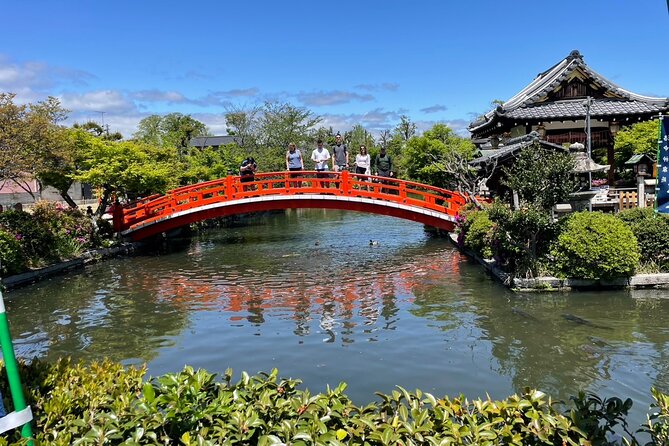
The last temple anchor of the day is Ginkaku-ji, the Silver Pavilion. It was built in the late 1400s by shogun Ashikaga Yoshimasa, and yes, it is called silver, but it was never actually covered in silver. That fact alone is a helpful reminder to look past the nickname and focus on what is actually there.
You get time to walk around and see the pavilion area at a measured pace. Admission is listed as included for this stop, so you do not need to budget extra fees here. And because you are arriving later in the day, you often find the rhythm more manageable than a pure first-thing visit.
From there, the ride moves into Gion. You explore the famous geisha district with machiya houses and the cultural story behind geiko and maiko. You also ride through lantern-lit lanes, with photo stops built in so you can capture the look without turning it into a frantic dash.
The way cycling fits this finale is simple: you can keep the atmosphere of the area, then leave without losing time to transfers. It is an efficient ending that still feels like you were part of the neighborhood, not just parked in front of it.
How Jaime turns a bike route into real context
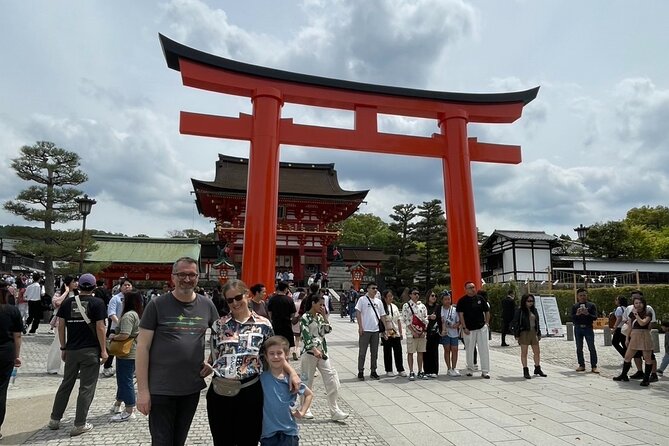
Guide Jaime is a big reason people rate this so highly. The recurring theme is friendliness and clear explanations. When you have a guide who can connect temple architecture, religious traditions, and local neighborhood structure, the day feels more than scenic.
I also like that the tour keeps the pace relaxed. That matters when you are mixing short temple walks with longer riding stretches. A relaxed pace means you can actually enjoy details like architecture, gardens, gates, and the feel of each street instead of racing through them with your mind on the next stop.
Photo stops are another quality-of-life item. If the route did not build in breaks, you would either rush your shots or stop wherever you can. Here, the guide helps you pause at appropriate points, which saves time and keeps the group together.
Price and value: what you get for $128.48
At $128.48 per person, this is not a bargain-basement option. But it prices like a full-day experience with real components:
- An e-bike is included, so you are not paying separately for rental or fighting through bike logistics.
- Admission is included at Ginkaku-ji, and the other listed stops are marked with free admission.
- You get a 7 to 8 hour day, which is long enough to see major Kyoto areas without packing them into a stressful half-day.
- It is a private tour, meaning only your group participates. That usually improves pacing and makes it easier to stop for photos or ask questions.
The main value tradeoff is lunch isn’t included. That is not unusual on a tour, but it does affect planning. Bring snacks if you know you get hungry mid-ride, or plan to buy lunch during the day if there is time for it.
If you want Kyoto in one coherent route, powered by an e-bike and explained by a guide who handles both big sights and quieter corners, the price starts to make sense.
Who should book, and who might want a different plan
This tour makes the most sense if you:
- Want to combine iconic Kyoto with calmer neighborhoods and river paths
- Are comfortable riding roughly 32 km and navigating narrower streets safely
- Like walking for short periods inside temple areas without turning every stop into a marathon
- Appreciate a guide’s context, not just a list of landmarks
It may be a tough fit if you:
- Prefer to avoid cycling for long stretches
- Struggle with bike handling or sustained riding time
- Need lunch to be included and planned end-to-end, since lunch is not listed as included
Also note the weather requirement. The experience requires good weather, and if it is canceled due to poor weather, you should expect an alternate date or a refund.
Final call: should you book this Kyoto bike tour?
If your ideal Kyoto day includes Toji, Zen temples, Ginkaku-ji, and Gion, but you also want stretches that feel more local, I think this is a strong choice. The e-bike reduces strain, and the mix of major sights with quieter stops like Umekoji Park and Honen-in makes the route feel balanced instead of repetitive.
Book it if you are reasonably fit and can handle about 32 km of riding. Skip it if cycling is not your thing or if you want an itinerary built around zero bike riding.
Overall, I like the way this tour respects time, builds in photo moments, and lets you move through Kyoto like you belong there, not like you are chasing a checklist.
FAQ
How long is the Discover Kyoto by Bike full day tour?
The tour runs about 7 to 8 hours.
Where does the tour start and when does it begin?
It starts at 7-Eleven, 44-1 Higashikujō Kamitonodachō, Minami Ward, Kyoto, with a start time of 9:00 am. The tour ends back at the meeting point.
Is lunch included?
No, lunch is not included.
What type of bike do I use?
The tour includes use of an e-bike.
Is this a private tour?
Yes. It is listed as private, so only your group will participate.
How much riding do I need to do?
You need to be fit enough to ride 32 kilometers and maneuver safely on narrow paths.
Which admission fees are included?
Ginkaku-ji admission is included. The other listed stops are marked as free.
What happens if the weather is bad?
The experience requires good weather. If it is canceled due to poor weather, you will be offered a different date or a full refund.
What is the cancellation deadline?
You can cancel for free up to 24 hours in advance of the experience’s start time for a full refund.
Newest Kyoto write-ups from the Loving Japan desk
Cycling Tours, side by side.
 ★ 5.0Hidden Kyoto E-Biking tourFrom $1161,843 reviews
 ★ 5.0Tokyo Guided Small-Group Biking TourFrom $1061,250 reviews
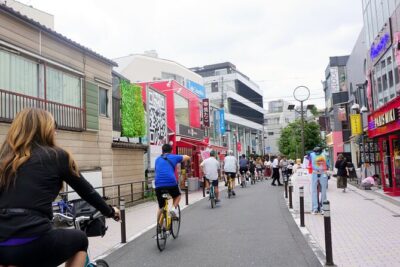 ★ 5.0Tokyo Great Cycling TourFrom $99811 reviews
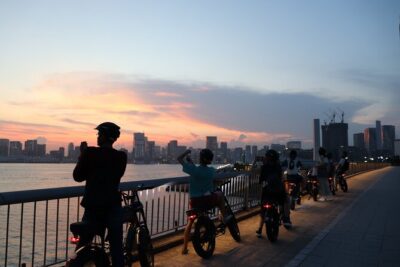 ★ 5.0Tokyo Top Highlights 3h Guided E-bike TourFrom $63714 reviews
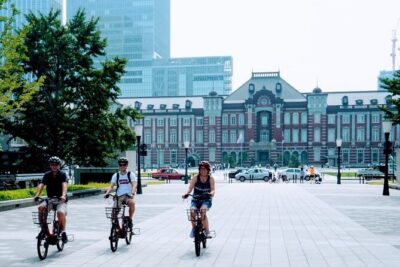 ★ 5.03h Tokyo E-Bike Tour: Hidden Gems, and Local Life with guideFrom $63670 reviews
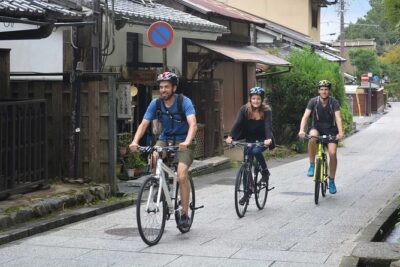 ★ 5.0Arashiyama Bamboo Forest & Hidden Gems Bike Tour (Early Bird)From $106613 reviews
 ★ 5.0Hiroshima in a Nutshell: Morning Bike AdventureFrom $72524 reviews
 ★ 5.05 Top Highlights of Kyoto Full Day Bike Tour (E-bike option)From $172511 reviews
Filed on these lists too