
REVIEW · NARA DEER PARK AND TODAI-JI
From Tokyo to Kyoto and Nara: A Captivating Full-Day Private Tour
One train, two cities, zero ticket headaches. This private day tour helps you save time on the bullet-train logistics while still covering the big Kyoto and Nara highlights, with your guide meeting you at your arrival station so you can start sightseeing fast. I also love the flexibility your guide brings to how you spend your time at each stop. The main consideration: the bullet train fare and key temple entrance fees are extra, and you’ll also handle lunch and local transport costs.
This is designed for people who want an efficient Japan day without wrestling with ticket websites or complicated connections. It runs about 10 hours, is private for your group (up to 10 people), and you receive a mobile ticket so day-of logistics stay simple. It is often booked about 57 days in advance, which hints that many first-time visitors plan early.
You’ll see Nara first, then shift into Kyoto for temples, historic neighborhoods, and one of Japan’s most iconic shrine walks. Lunch is planned around Kyoto Station’s Porta Dining area, but you pay for food yourself.
In This Review
- Key highlights at a glance
- The real payoff: seeing Kyoto and Nara in one smooth 10-hour day
- Price and logistics: what you pay upfront versus what comes later
- How the bullet train is handled, and what that means for you
- Nara Park: deer encounters with a calm, walkable start
- Todaiji Temple and the Great Buddha Hall focus
- Kinkaku-ji (Golden Pavilion) in a tight, one-hour window
- Kyoto Station and Porta Dining: the lunch break that keeps you sane
- Gion in one hour: historic streets, careful pacing, good photos
- Fushimi Inari-taisha: torii gates without getting lost
- Why private guiding matters more than you think
- Who should book this tour, and who might prefer something else
- Tips to make the most of your 10 hours
- Should you book this Tokyo to Kyoto and Nara private tour?
- FAQ
- How long is the tour from Tokyo to Kyoto and Nara?
- What does the tour cost?
- Is this tour private?
- Are the bullet train tickets included in the price?
- Are the entrance fees included?
- Is lunch included?
- Do I need cash for anything during the tour?
- Do I get a ticket on my phone?
- What is the cancellation policy?
- Is the tour physically demanding?
Key highlights at a glance
- Nara Deer Park for an easy start that sets the tone right away
- Todaiji and Kasuga Shrine area focus around the Great Buddha Hall
- Kinkaku-ji Golden Pavilion plus gardens time, without rushing across town
- Gion and Fushimi Inari-taisha in the same day for maximum wow per hour
- Kyoto Station Porta Dining lunch break in a convenient, low-stress spot
- Guides like Ahmed Abu Tayeh, Yuka, Moto, Midori-san, and Yuji Hino get praised for story, flexibility, and pacing
Still weighing up options in Tokyo? These are the ones our reviewers rated highest.
- Mt Fuji and Hakone 1-Day Bus Tour Return by Bullet Train
★ 5.0 · 26,383 reviews - 1-Day Tokyo Bus Tour
★ 5.0 · 14,250 reviews - Tokyo: teamLab Planets TOKYO Digital Art Museum Entry Ticket
★ 4.6 · 9,779 reviews - Mt Fuji & Hakone Cruise, Drum Show Bullet Train 1 Day from Tokyo
★ 4.0 · 7,413 reviews
The real payoff: seeing Kyoto and Nara in one smooth 10-hour day
If you only have a short window in Japan, this kind of day plan is a lifesaver. You’re not just “visiting Kyoto,” you’re adding Nara on the same trip, which means you get temple scale, shrine drama, and old-town atmosphere without losing a full day to transit.
The value is not only in the checklist of sights. It’s in what gets removed from your plate. Your guide handles the bullet-train arrangements, so you’re not spending your limited time in Japan standing in lines or translating ticket instructions. Then your guide stays with you through the sightseeing blocks, which means you’re less likely to waste time figuring out where to go next.
The day is also structured enough to work even if you are jet-lagged or new to the country. You get set meeting points and clear stops: Nara Park, Todaiji, Kinkaku-ji, Gion, and Fushimi Inari-taisha. That rhythm matters when your time is tight and you still want a real experience, not a blur.
Price and logistics: what you pay upfront versus what comes later
The headline price is $490 per group, up to 10 people. For groups, that can be good value because the guide time is shared. But you should do one quick math check before you book, because a few big line items are not included in the tour price.
From the tour data, here’s what you should budget separately:
- Bullet train fare (Tokyo to Kyoto and back): not included. It depends on ticket type, with a listed reference of about ¥28,000 per person.
- Entrance fees: Todaiji Temple and Kinkaku-ji entrance are listed as ¥1,300 per person, not included.
- Lunch: not included.
- Local transportation (cash): up to ¥100,000 for up to 5 travelers, and ¥100,000 per booking if your group is larger, based on the provided note.
- Tokyo station pickup guide cost (cash): ¥60,000 per booking if you choose Tokyo Station pickup.
Two practical takeaways here. First, the tour price covers guiding services and tour management, plus transport arrangement. Second, you can still end up paying a meaningful total once bullet trains and entrances are added, so decide early if this is truly cheaper and easier for you than booking on your own.
If you’re traveling solo, the group price can feel high unless the guide time is worth it for you. If you’re a small group, it often becomes a smarter deal because guide time and coordination get split.
How the bullet train is handled, and what that means for you
The best part is that you avoid the most annoying part of train travel planning: the ticket hunt. The tour promises help with bullet train ticket booking, and your guide will meet you at your arrival station so you can walk straight into sightseeing.
One careful note. Bullet train tickets themselves are not included in the tour price. So you are still paying the rail fare, just not doing all the stressful parts alone.
This setup works well for first-time visitors. Even if your Japanese is decent, train stations and ticket rules can still chew up time and energy. A dedicated guide helps you get your bearings fast and keeps the day moving.
Also, schedules can shift in real life. One guide feedback mentioned accommodating a delayed train schedule. That is exactly what you want from a private, guided day plan when you are relying on the clock.
- Mt Fuji and Hakone 1-Day Bus Tour Return by Bullet Train★ 5.0 · 26,383 reviews
- 1-Day Tokyo Bus Tour★ 5.0 · 14,250 reviews
- Tokyo: teamLab Planets TOKYO Digital Art Museum Entry Ticket★ 4.6 · 9,779 reviews
- Mt Fuji & Hakone Cruise, Drum Show Bullet Train 1 Day from Tokyo★ 4.0 · 7,413 reviews
- Tokyo Mt Fuji 5th St & Hakone Cruise Bus Tour w/Bullet Train★ 4.4 · 5,024 reviews
Nara Park: deer encounters with a calm, walkable start
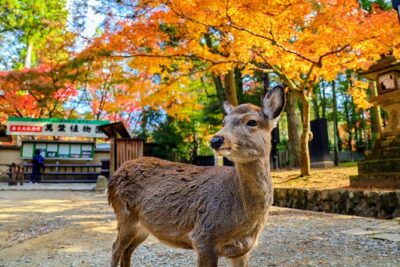
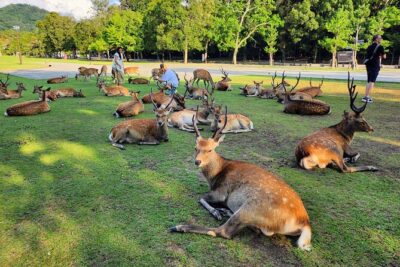
The day begins at Nara Park for about an hour. This is your easy first hit: open space, shade, and lots of deer roaming freely. If you’ve ever seen photos of Nara deer and wondered if it’s really as charming in person, this is the moment.
What I like about starting here is pacing. Nara Park gives you a low-pressure intro before you go into temple interiors and Kyoto crowds. You get time to stroll, look around, and soak up the atmosphere without sprinting.
A practical consideration: Nara deer are friendly, but they’re still wild animals. Use your guide as your sanity check for what to do around them. If you plan to get close, keep your focus on safety and your footing, because uneven ground plus excited animals is not the combo you want.
Admission here is listed as free for this stop, which is another small value win for the day.
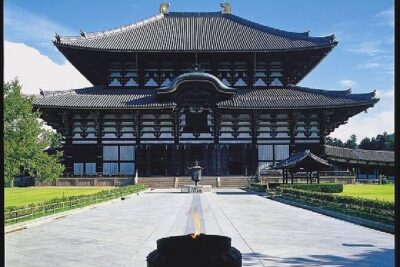
Todaiji Temple and the Great Buddha Hall focus
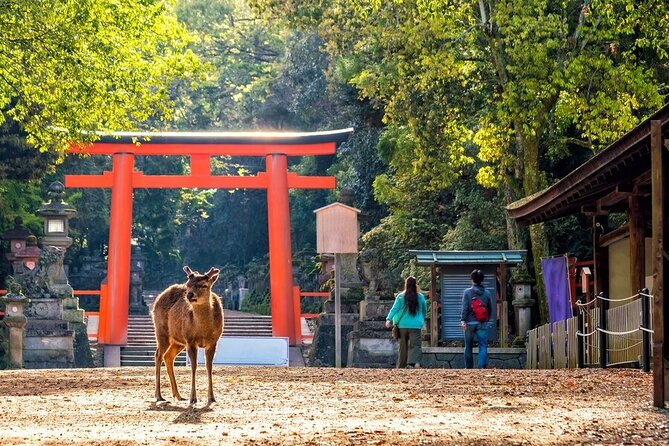
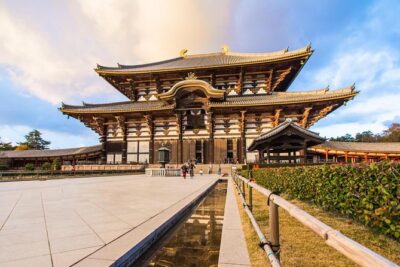
Next up is the Todaiji Temple Cultural Center area, around one hour. This is where the “Japan is big on symbolism” idea stops being a slogan and starts feeling real.
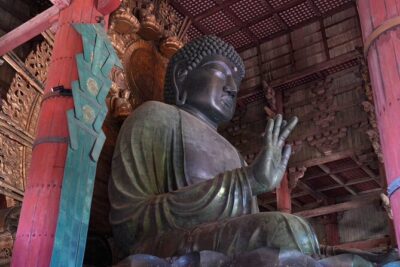
At Todaiji, you’ll be in the orbit of the Great Buddha Hall, known for housing one of the world’s largest bronze Buddha statues. That scale is hard to describe until you stand there. Even if you’re not a “temple person,” you’ll probably feel the impact because the space and object are so monumental.
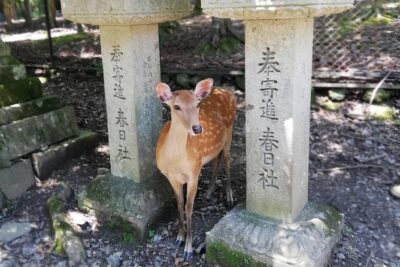
Your tour route also pairs this with the nearby shrine area, including Kasuga Shrine. In practical terms, that means you’re not just ticking one address. You’re getting a more complete feel for how religious life and landscape connect in Nara.
One review detail that’s especially useful: guide Yuji Hino reportedly explained where the pathway stones came from and why they were arranged the way they were. That’s the kind of context you lose if you show up alone and rely only on signage.
The downside to plan for: entrance fees for Todaiji are not included, listed at ¥1,300 per person. So keep cash or a payment method ready for that portion of your day.
Kinkaku-ji (Golden Pavilion) in a tight, one-hour window
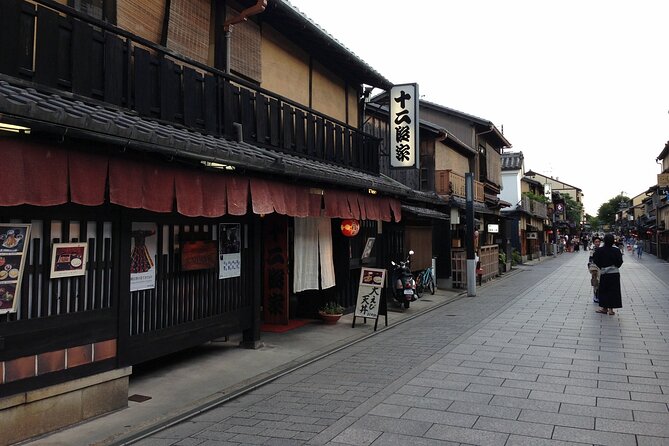
After Nara, you shift back into Kyoto with Kinkaku-ji, the iconic Golden Pavilion, for about one hour. This is one of the most photographed sights in Japan for a reason. The building’s look against its pond backdrop reads instantly, even if you’ve never studied Japanese temple architecture.
Here’s how to get the most from the time you have. Treat that hour like two mini missions:
1) Take in the exterior and pond view from your best angles.
2) Then slow down in the gardens and interior areas as allowed, because the details are where meaning shows up.
The realistic drawback: you’re not going to get a long, leisurely afternoon here. This is a full-day itinerary. If you love architecture and could spend hours, you may feel the clock.
The good news is that guides can help you prioritize. Multiple guide stories highlighted pacing and ensuring you get enough time at each stop. So if you care about Kinkaku-ji more than the rest, tell your guide early.
Entrance here is also not included, again listed at ¥1,300 per person for the temple fees.
Kyoto Station and Porta Dining: the lunch break that keeps you sane
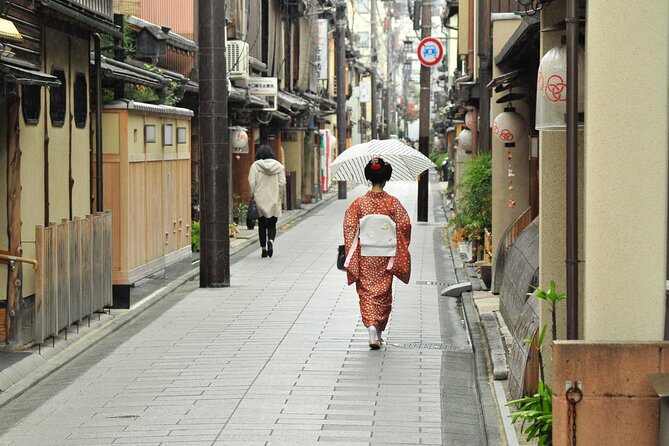
Lunch happens around Kyoto Station Building at Porta Dining, with about one hour allotted. This is a smart choice for a day like this, because Kyoto Station is a transportation hub and it reduces your risk of wasting time crossing the city for a quick meal.
Porta Dining is under the station, so it’s easier to handle weather swings and keep your day on track. In other words, it’s not about finding the most famous restaurant in Kyoto. It’s about getting good food fast, then getting back to sightseeing without stress.
Lunch itself is not included, but the plan gives you a dedicated break rather than hoping you can eat between train changes. That matters when you’re visiting big-ticket spots like Gion and Fushimi Inari later.
Gion in one hour: historic streets, careful pacing, good photos
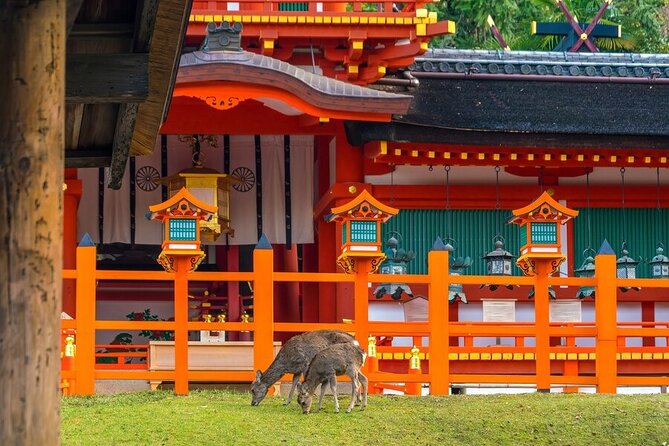
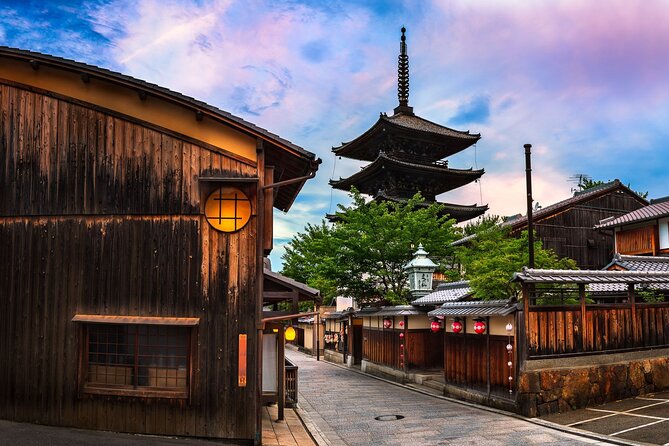
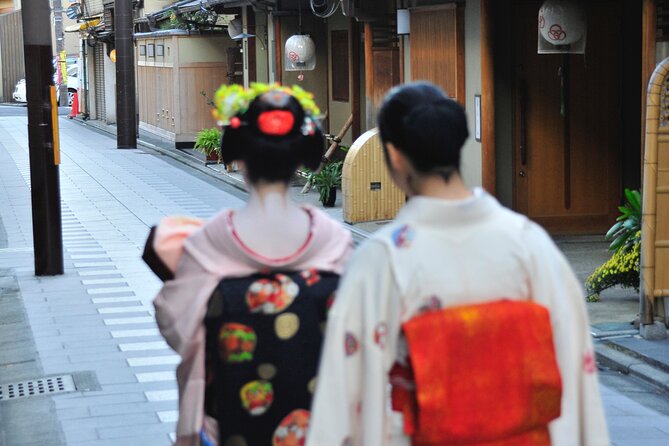
The itinerary includes Gion for about one hour. This is Kyoto’s best-known geisha district area, recognized for traditional wooden machiya houses and old-town street atmosphere.
What I like about doing Gion after temples is energy control. You go from large-scale religious monuments to a neighborhood where you can slow down, look up at buildings, and catch street scenes. For photography, this timing can help because you are not starting the day under the heaviest crowd pressure.
A private guide also helps you keep expectations realistic. You’ll see the area, you’ll walk key streets, and you’ll get context for what you’re looking at. But because it’s Gion, you should assume it can feel busy at times depending on the day and hour.
This is also a good stop to ask your guide to adjust your pacing. Several guides in feedback were praised for being accommodating, including adapting when train schedules were delayed. That mindset is useful when crowds change how fast you can walk.
Admission is listed as free for this stop, so you’re spending your time, not your money.
Fushimi Inari-taisha: torii gates without getting lost
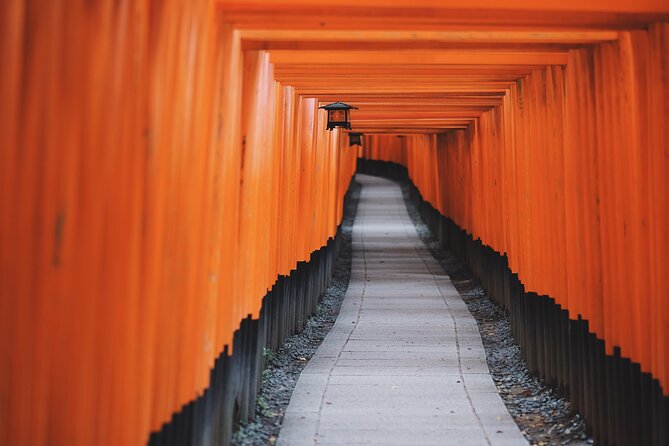
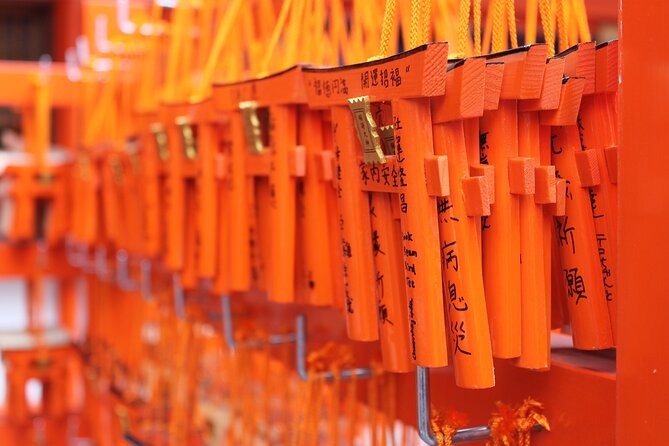
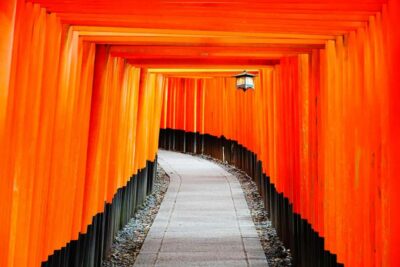
Finish strong with Fushimi Inari-taisha Shrine, about one hour. This is the shrine walk famous for its thousands of red torii gates that form a corridor through forest trails.
Even if you’ve seen the photos, the experience is about flow. The “wow” here comes from moving forward under repeating gates until your brain stops trying to count and starts noticing rhythm and perspective.
Because you only have one hour, you’ll want a smart plan. The best move is to let your guide steer. Ask them what they recommend as your goal point within the time limit. That way, you get the iconic portion without burning time on an out-and-back that ends up too short.
Admission is listed as free for this stop. That helps the day balance out, since you have paid entrances at Todaiji and Kinkaku-ji.
Why private guiding matters more than you think
This tour is private, so the guide isn’t trying to manage a large mixed group. That makes a difference in Kyoto and Nara, where small navigation mistakes can eat up time.
Feedback also points to a pattern: guides are described as warm, attentive, and story-forward. Names that show up include Moto, praised for family-friendly handling with a five-year-old, and Midori-san, praised for warmth and attentiveness. Ahmed Abu Tayeh is also listed as the experience provider, and Ahmed is mentioned multiple times for history and flexible pacing.
There’s also a practical skill you should value: handling timing issues. One review highlighted that the guide adapted to a delayed train schedule. On a day built around trains, that flexibility protects your day.
Finally, your guide can help you customize the feel. The tour explicitly mentions flexibility to tailor your itinerary to your interests. If you care more about temples, ask for extra focus there. If you want more old streets and views, you can steer the time allocation.
Who should book this tour, and who might prefer something else
I think this tour is a great match if:
- You want Kyoto and Nara in one day from Tokyo.
- You hate the idea of booking trains alone and then trying to navigate in a second language.
- You’re traveling with family and want a guide who can adjust pacing.
- Your trip window is tight and you’re aiming for big highlights rather than deep study.
You might think twice if:
- You want a slow, lingering day at temples and gardens.
- You already enjoy planning train tickets and you’re comfortable figuring out transport yourself.
- You’re traveling solo and the extra rail and entrance costs make the full day price hard to justify.
Tips to make the most of your 10 hours
Here are a few simple moves that match how this day is paced:
- Wear comfortable walking shoes. You’ll cover multiple neighborhoods and shrine paths.
- Decide early what you care about most, then tell your guide. That helps them protect your time at the stops that matter to you.
- Plan your day around train timing, not just attraction time. The day’s rhythm depends on smooth transitions.
- Bring a payment method for the entrance fees, rail fare, lunch, and the local transport cash portion.
Also, keep weather in mind. The experience data says it requires good weather. If conditions are poor, the tour may be adjusted or you’ll be offered a different date or a refund.
Should you book this Tokyo to Kyoto and Nara private tour?
I’d book it if your goal is to check off the Kyoto and Nara classics efficiently, without turning your limited trip into a logistics project. The private guide part is the real engine here, especially with bullet train help and a planned route that hits Nara Deer Park, Todaiji, Kinkaku-ji, Gion, and Fushimi Inari-taisha.
Just do one thing before you commit: price it out fully in your head. The tour price is $490 per group up to 10, but bullet train fare, temple entrance fees for Todaiji and Kinkaku-ji, lunch, and local transport costs will shape the true total. If that math still looks good, this is a strong way to get a big Japan day with less stress and more story.
FAQ
How long is the tour from Tokyo to Kyoto and Nara?
It runs about 10 hours.
What does the tour cost?
The price is $490 per group, up to 10 people.
Is this tour private?
Yes. It is a private tour, and only your group participates.
Are the bullet train tickets included in the price?
No. Bullet train costs are not included. The provided reference is about ¥28,000 per person depending on the ticket type you choose.
Are the entrance fees included?
Entrance fees are not included for Todaiji temple and Kinkaku-ji. The listed entrance fee is ¥1,300 per person for both. Nara Park and the other listed stops have free admission per the stop details.
Is lunch included?
Lunch is not included.
Do I need cash for anything during the tour?
Yes. Transportation cost is not included and is listed as cash: up to ¥100,000 for up to 5 travelers, and the note says to let the provider know if there are more than 5, with ¥100,000.00 per booking stated. If you choose Tokyo Station pickup, there is also a guide cost of ¥60,000 cash to the guide per booking.
Do I get a ticket on my phone?
Yes. The tour uses a mobile ticket.
What is the cancellation policy?
You can cancel for a full refund up to 24 hours in advance. If it is canceled due to poor weather, you will be offered a different date or a full refund.
Is the tour physically demanding?
It requires a moderate physical fitness level. The day includes walking at multiple stops and shrine paths.
Newest Tokyo write-ups from the Loving Japan desk






Nara Deer Park and Todai-ji, side by side.
 ★ 5.0World Heritage Kyoto & Nara Uji Authentic Matcha ExperienceFrom $1291,573 reviews
 ★ 4.7Kyoto/Osaka: Nara, Fushimi Inari Taisha, Arashiyama Bus TourFrom $521,275 reviews
 ★ 5.0Nara Half Day Trip Walking Tour (Private Option Available)From $105937 reviews
 ★ 4.4Osaka/Kyoto: Arashiyama, Nara & Fushimi Inari Shrine w/LunchFrom $61754 reviews
 ★ 5.0Nara Early Morning Tour (Kyoto or Osaka Departure Available)From $61676 reviews
 ★ 4.5Kyoto and Nara Day Trip from KyotoFrom $194445 reviews
 ★ 5.0Full Day Guided Tour to Kyoto and Nara from Osaka by VanFrom $106420 reviews
 ★ 4.5Nara Afternoon Tour from Kyoto or OsakaFrom $102390 reviews
Filed on these lists too