
REVIEW · NARA DEER PARK AND TODAI-JI
Kyoto and Nara Day Trip from Kyoto
A full day, two cities, zero stress. This Kyoto and Nara day trip strings together the big UNESCO hits with a licensed English guide and air-conditioned transport between stops. I especially love the tight morning lineup, Nijo Castle and Kinkaku-ji, which lets you see Kyoto’s most photogenic icons without getting lost in the logistics. One thing to factor in: the schedule is packed, so you will be moving a lot, with less time to wander on your own.
The day is built for clarity. You start at Kyoto Station, meet your guide at the JTB desk, and follow a route that is heavy on “what this place meant” rather than just “what it looks like.” Based on how the day runs, I think it works best when you like structure and want a guided hit list more than a slow, boutique temple day.
Group size is capped at 40, and seats are not guaranteed, so if you like a window view, get settled early. Also, this is Japan, so you should plan for shoe rules at certain stops and calm patience with crowds.
In This Review
- Key highlights that make this day trip worth it
- First things first: what a “10 to 11 hour” tour really feels like
- Kyoto morning: Nijo Castle (shoe rules) and Kinkaku-ji (gold pavilion photos)
- Nijo Castle: power, protection, and the Tokugawa era
- Kinkaku-ji: the Golden Pavilion and its pond setting
- Kyoto Imperial Palace stop: what to see, and why Mondays can change the plan
- The Nara drive: why air-conditioned transport is more than comfort
- Todai-ji and the Great Buddha Hall: the size you feel in your chest
- Kasuga Grand Shrine: 3,000 lanterns and a calmer kind of wonder
- Nara Park and the deer finish: cute, but respect the space
- Time management: why this tour works best for “I want the highlights” travelers
- Guide quality makes or breaks the day
- Price and value: is $194.85 a fair deal?
- Lunch options and dietary limits: choose what you can actually eat
- Logistics you can plan for: meetings, mobile tickets, and the end at Kyoto Station
- Who should book this Kyoto and Nara day trip from Kyoto?
- Should you book this tour?
- FAQ
- What time does the tour start?
- How long is the Kyoto and Nara day trip?
- Where is the meeting point?
- What are the main stops on the tour?
- Is lunch included?
- Is there a mobile ticket?
- What happens if Kyoto Imperial Palace is closed?
- What if Nijo Castle is closed?
- Where does the tour end?
- Can I cancel for a full refund?
Key highlights that make this day trip worth it
- Nijo Castle plus Kinkaku-ji in the morning so you get the most iconic Kyoto sites before traffic and fatigue set in
- Todai-ji and Nara Park to see the Great Buddha and then finish with the famous deer roaming around
- Kasuga Grand Shrine with its interior lined by more than 3,000 lanterns
- Licensed English guide interpretation that helps you read the buildings, rituals, and symbols faster
- Air-conditioned transport between Kyoto and Nara so you lose less time to commuting
- Mobile ticket for simpler check-in and fewer paper hassles
A half day in Nara goes several ways
- Kyoto/Osaka: Nara, Fushimi Inari Taisha, Arashiyama Bus Tour
★ 4.7 · 1,275 reviews - Osaka/Kyoto: Arashiyama, Nara & Fushimi Inari Shrine w/Lunch
★ 4.4 · 754 reviews - Kyoto and Nara Day Trip from Kyoto
★ 4.5 · 445 reviews - Full Day Guided Tour to Kyoto and Nara from Osaka by Van
★ 5.0 · 420 reviews
First things first: what a “10 to 11 hour” tour really feels like
On paper, this is a 10 to 11 hour day. In practice, it is the kind of full-day plan where you will likely spend most of your time indoors for temples and outdoors for shrine grounds and parks. That is not a complaint, it is the point. If you want a “see it all” day that still includes meaningful guidance, this is that style.
Each stop has a set window (for example, Nijo Castle is 50 minutes, Kinkaku-ji is 45 minutes, Todai-ji is 1 hour 10 minutes). That timebox keeps the day moving and helps you cover both Kyoto and Nara without a second transport day. The tradeoff is obvious: you will not have hours and hours to linger at one single site.
Kyoto morning: Nijo Castle (shoe rules) and Kinkaku-ji (gold pavilion photos)
This tour starts strong with two Kyoto icons that many first-timers try to squeeze into one day on their own. Here, the route does the heavy lifting.
Nijo Castle: power, protection, and the Tokugawa era
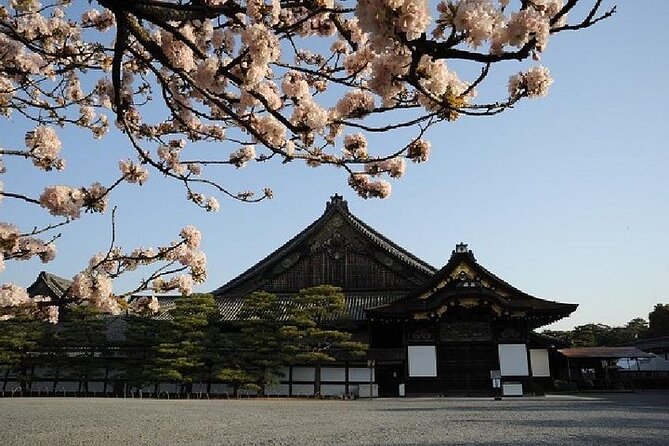
You start at Nijo Castle, a World Heritage site completed in the 1600s era. It was built for the Tokugawa shogun, and it also acted like a protective presence for the nearby imperial seat. The contrast here is part of the experience: a solemn exterior with an intricate, impressive interior.
A practical note: expect shoe removal inside areas where required. That is one of those small details that can slow you down if you forget, so wear easy-to-manage footwear.
- PERFECT KYOTO 1-Day Bus Tour★ 5.0 · 13,518 reviews
- Kyoto: Fushimi Inari, Kinkakuji, Bamboo Grove 1 Day Bus Tour★ 4.8 · 4,316 reviews
- Kyoto: Tea Ceremony in a Traditional Tea House in Kiyomizu★ 4.9 · 3,519 reviews
- Kyoto Geisha Walking Tour: Gion District & Hidden Gems★ 4.7 · 3,273 reviews
- Kyoto: Tea Ceremony Ju-An at Jotokuji Temple★ 4.9 · 3,207 reviews
Kinkaku-ji: the Golden Pavilion and its pond setting
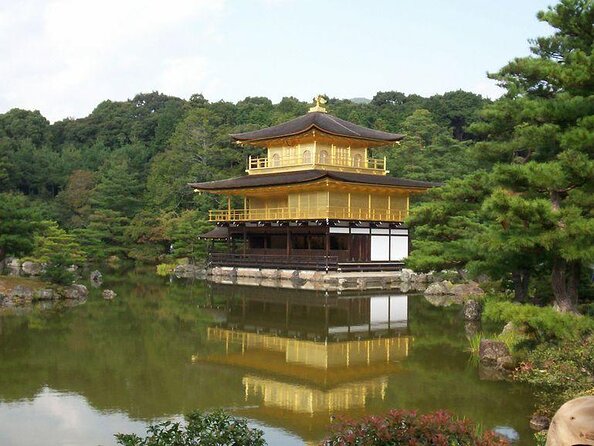
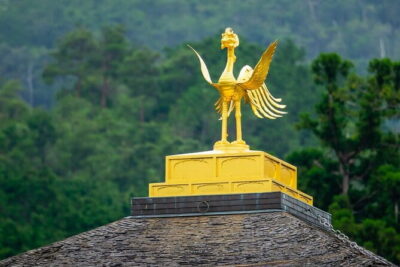
Next is Kinkaku-ji, Kyoto’s famous temple with the Golden Pavilion. You get about 45 minutes, enough time to see the pavilion, take photos, and walk the surrounding paths that highlight the pond and garden framing.
If you care about photos, this stop is a highlight because the pavilion is naturally “made for cameras.” If you care more about meaning, the guide time helps you connect the gold-leaf look to the temple’s status and reputation as one of Kyoto’s most recognized religious sites.
Kyoto Imperial Palace stop: what to see, and why Mondays can change the plan
After the golden and the grand, the tour moves to the Kyoto Imperial Palace area. You are there for around 40 minutes. You may get a chance to view the Shishin-den, which relates to important state ceremonies, and you can wander the palace grounds.
Now the real-world complication: the Imperial Palace is closed to visitors on Mondays (and also on days with Imperial Household Agency events). If your tour day hits a closure, the plan swaps in Kitano Tenmangu Shrine instead. If the closure day falls on the 25th, the tour visits Nishi Hongan-ji Temple.
This is one of those “read the fine print” moments that actually matters. If seeing the palace is your top reason for booking, check your calendar before you go. If not, the backup sites still belong on a classic Kyoto checklist.
The Nara drive: why air-conditioned transport is more than comfort
The trip shifts from Kyoto to Nara by bus, and the included air-conditioned transport is a genuine quality-of-life feature. A road trip in Japan can be quick, but it still adds up in heat and fatigue. Having the ride handled means you can stay focused on being ready for the next stop instead of managing transfers.
On top of that, the timing is built around arriving before many people decide to move. That is why the morning Kyoto stops are so important. You are using your day efficiently.
Todai-ji and the Great Buddha Hall: the size you feel in your chest
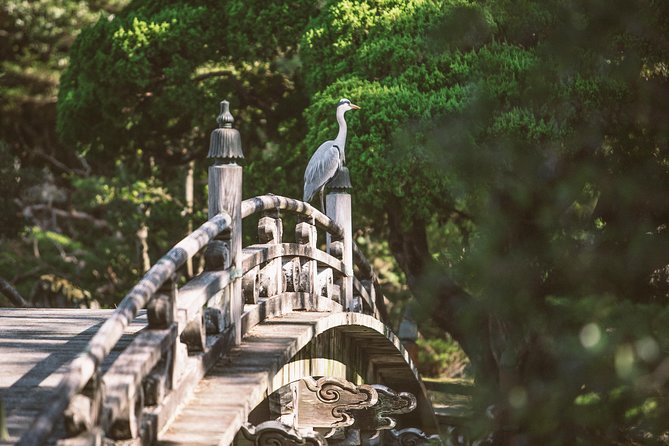
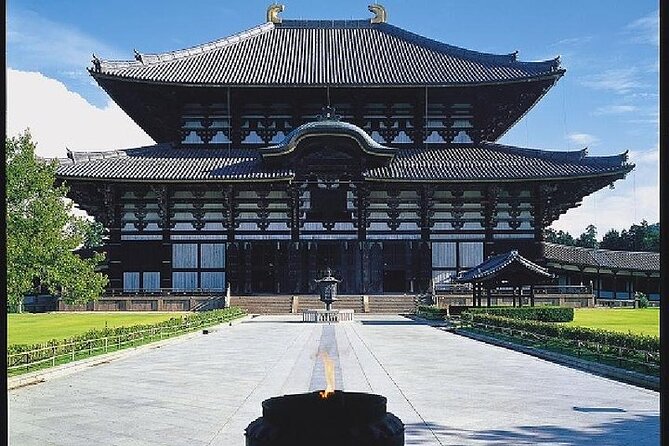
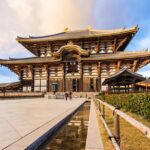
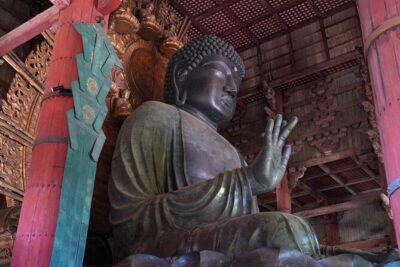
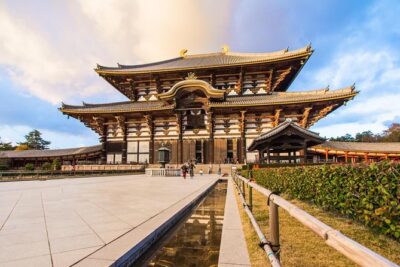
In Nara, the tour anchors on Todai-ji Temple, a World Heritage site and a symbol of the Nara period. You get about 1 hour 10 minutes, which is a good amount of time to take in the main hall and the Great Buddha area without sprinting.
The headline is the Great Buddha. The hall and bronze figure are famous for scale, and even if you already saw photos, seeing it in person changes how you experience it. It is one of those moments where you understand why this place became a religious and cultural center.
Todai-ji sits next to a broader area that includes Nara Park, and after Todai-ji the tour moves you along to what is basically the fun payoff.
Kasuga Grand Shrine: 3,000 lanterns and a calmer kind of wonder
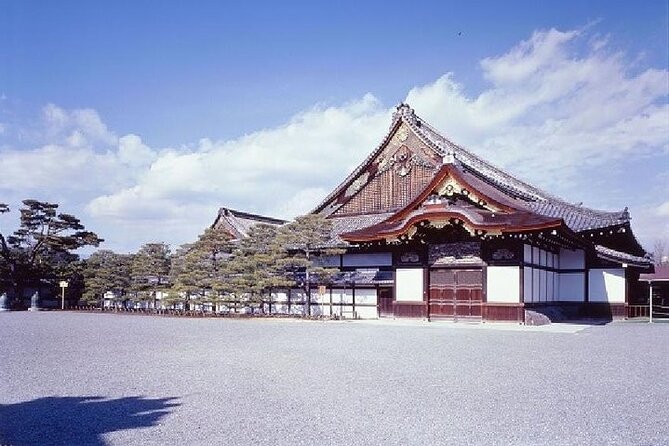
Next comes Kasuga Grand Shrine for about 1 hour. The big visual detail here is the shrine interior lined with more than 3,000 lanterns. This is not the “huge and loud” kind of attraction. It is more like a slow sensory scene, where the lanterns and the shrine spaces create a very particular atmosphere.
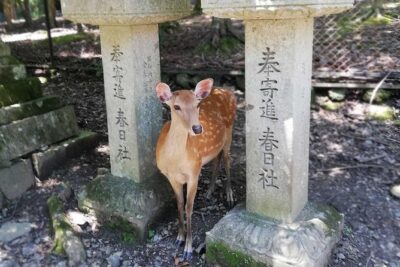
Kasuga also has meaning tied to the natural world. The tour explains the connection between the deer of Nara Park and the shrine, where the deer are considered messengers. That theme flows nicely into your final stop.
Nara Park and the deer finish: cute, but respect the space
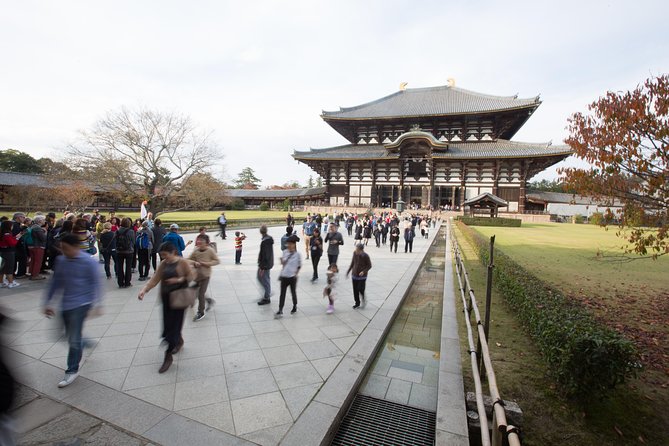
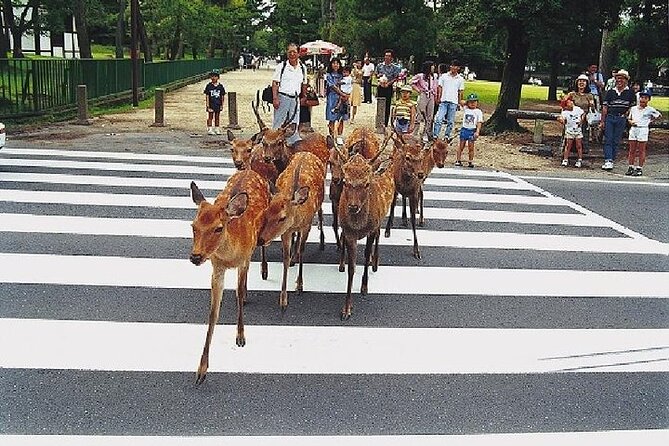
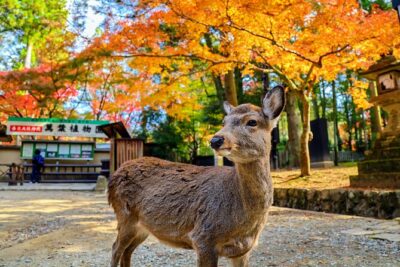
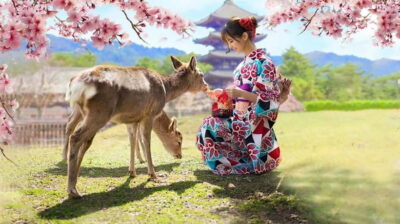
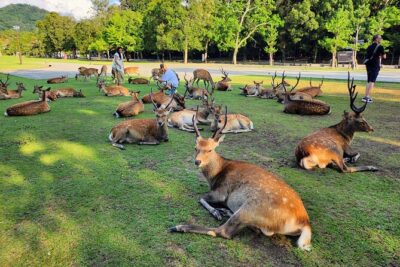
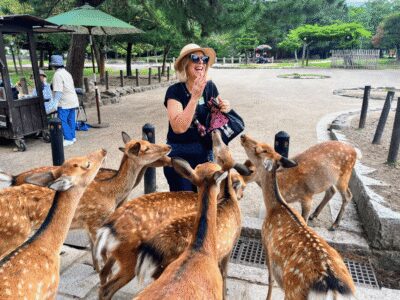
You end in Nara Park with time in the area known for the free-roaming deer. This is the part many people imagine before they even book, and it is still fun in real life. But go in with the right mindset: deer here are not just stuffed-animal cute. They are wild animals used to people, and they can get pushy if you treat them like a photo prop.
One useful way to enjoy it more: keep your distance, do not block pathways, and pay attention to what your guide says about safe behavior. If you feel something is getting too close, step back early.
Also, note the final stretch can involve more walking than you expect. Some people find the end-of-day return path a bit long, so wear shoes you can stand in for a while.
Time management: why this tour works best for “I want the highlights” travelers
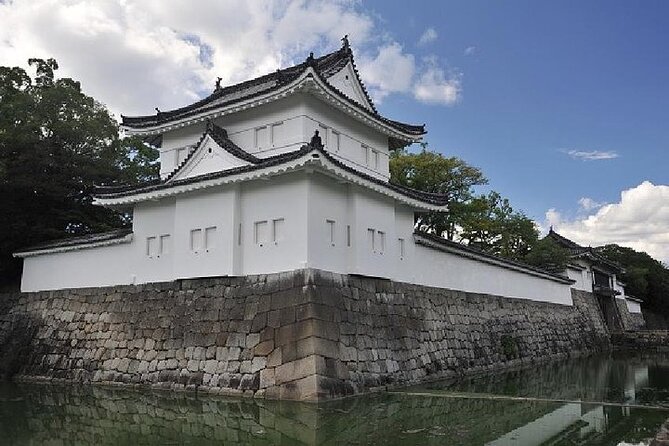
The structure is simple: you hit a logical order, you get timed entry windows, and you keep moving. That is exactly what you want if you are the type who otherwise spends half the day on your phone checking transit and opening maps.
But it is not ideal if your travel style is slow, late, and spontaneous. If you like reading every plaque and soaking in one temple until it feels like it is yours, this plan may feel rushed. The stops are fixed, and you will be pulled along to keep the day on schedule.
That said, the guide time helps. A good guide can turn a 40 to 60 minute stop into something much more memorable by explaining what you are seeing and why it matters.
Guide quality makes or breaks the day
This tour is powered by its licensed English guide interpreter, and the guide personality is a real factor. Across departures, guides with names like KC, Momo, Yuki, Yoshito, Etsuko, Keicy, and Tammy have led the route. Many guests highlight humor, clear explanations, and a steady rhythm that keeps groups moving without feeling rude.
What I take from that for your decision: if you book, show up on time, listen at the start, and let the guide set the pace. The best experience happens when you do not treat the tour like a checklist you can ignore.
Also, the driver matters more than you might think on a day this long. One guest called out Mr. Kawabata for being especially polite, and that matters when you are switching areas and dealing with crowded roads.
Price and value: is $194.85 a fair deal?
At $194.85 per person, this is not a bargain-basement option, but it can be good value if you weigh what is included.
You get:
- Licensed English guide interpretation
- Admission fees for the listed paid stops
- Transportation costs
- Optional lunch (only if you choose the lunch option)
- A mobile ticket for easier check-in
If you were doing this solo, you would pay for transit, train or taxi time, entrance fees, and likely spend real hours piecing together routes across Kyoto and Nara. This day trip packages that into one timed plan. That is where the money goes.
For me, it is a “yes” price when you want a first pass at Kyoto and Nara without building an itinerary from scratch. If you already know exactly what you want and you travel slowly, you could probably do it cheaper on your own, but you would trade away the convenience and the explanation.
Lunch options and dietary limits: choose what you can actually eat
Lunch depends on the option you select. The tour offers:
- With Western-style lunch: a Western-style set menu
- With Indian thali lunch: a vegetarian-friendly thali with multiple curries, vegetable pakora, yogurt, naan or roti, rice, salad, and a non-alcoholic drink
Important limitations from the provided information:
- Halal, gluten-free, and other meal requests are not available.
- Vegetarian requests for Western-style lunch must be provided at reservation time, and same-day changes cannot be accepted.
- Lunch details differ by option, and people choosing different lunch types are served in separate dining areas on the day.
One guest who booked the Western lunch option described it as Italian-style, so in at least some departures the Western menu leans in that direction. Still, the safest planning move is to treat the lunch as a set menu, not a customizable meal.
If you have severe allergies, this is the biggest part to think through carefully. The data does not say the tour can handle many special dietary needs, so confirm what is possible before you commit.
Logistics you can plan for: meetings, mobile tickets, and the end at Kyoto Station
The meeting point is not at some vague corner of Kyoto Station. It is specific: the JTB SUNRISE TOURS DESK KYOTO at Avanti (B1F), located near the Kyoto Station area.
The tour starts at 8:20 am and ends around 6:30 pm at Kyoto Station. There is no hotel drop-off, so plan to get back on your own.
Also:
- The tour uses a mobile ticket.
- Seats are not designated, so arrive early if you care about where you sit.
- The group max is 40 travelers.
- The tour notes that the order and arrival times can shift based on road conditions and congestion.
If you are not familiar with Kyoto Station, I recommend doing one quick map check the night before and giving yourself extra time on arrival day. Some people find the meeting point unclear when they first arrive.
Who should book this Kyoto and Nara day trip from Kyoto?
Book this if you:
- Want a first-timer introduction to Kyoto and Nara highlights
- Like having a guide explain what you are seeing as you go
- Prefer organized transport over juggling trains and walking routes
- Are okay with a packed day and timed stops
Consider a different style if you:
- Want long, quiet time at only one or two temples
- Get stressed by walking between multiple major sites in one day
- Have dietary needs beyond the stated lunch options
Should you book this tour?
Yes, if you want an efficient, guided one-day sampler of Kyoto and Nara’s top World Heritage sights, and you like the idea of having admissions and transport handled. The strong pairing of Nijo Castle + Kinkaku-ji in the morning, then Todai-ji + Kasuga Shrine, ends in a satisfying payoff with Nara Park deer time.
No, if your ideal day is slow and unstructured, or if your main goal is deep exploration at one site. This trip is built for coverage, not for lingering.
If you do book, do two things that make a big difference: arrive a little early at the Avanti JTB desk, and be ready for shoe rules and the reality of walking at the end of the day. Then you can enjoy the day for what it is: a well-timed route through two of Japan’s most memorable cultural worlds.
FAQ
What time does the tour start?
The tour start time is 8:20 am.
How long is the Kyoto and Nara day trip?
The duration is approximately 10 to 11 hours.
Where is the meeting point?
Meet at JTB SUNRISE TOURS DESK KYOTO inside Avanti (B1F), at Kyoto, Minami Ward, Higashikujō Nishisannōchō, 31 B1F AVANTI.
What are the main stops on the tour?
The tour includes stops at Nijo Castle, Kinkaku-ji, Kyoto Imperial Palace, Kasuga Grand Shrine, and Todai-ji, plus time at Nara Park to see the deer area.
Is lunch included?
Lunch is included only if you choose the booking option with lunch. There are Western-style set menu and Indian thali options. If you choose no lunch, you get free time to eat on your own around Kyoto Station.
Is there a mobile ticket?
Yes, the tour uses a mobile ticket.
What happens if Kyoto Imperial Palace is closed?
If the Kyoto Imperial Palace is closed to visitors, the tour will visit Kitano Tenmangu Shrine instead. If the closure date falls on the 25th, it will visit Nishi Hongan-ji Temple. The tour notes there are no refunds for these alternative destinations.
What if Nijo Castle is closed?
If Nijo Castle is closed (including certain Tuesdays and specific date ranges), the tour will visit Ryoan-ji Temple instead. The tour notes there are no refunds for alternative destinations.
Where does the tour end?
The tour ends at Kyoto Station around 6:30 pm. There is no drop-off service to hotels.
Can I cancel for a full refund?
Yes. You can cancel for a full refund if you cancel at least 24 hours before the experience start time. If you cancel less than 24 hours before, the amount paid is not refunded.
Half a Day in Nara



Newest Kyoto write-ups from the Loving Japan desk

Nara Deer Park and Todai-ji, side by side.
 ★ 5.0World Heritage Kyoto & Nara Uji Authentic Matcha ExperienceFrom $1291,573 reviews
 ★ 4.7Kyoto/Osaka: Nara, Fushimi Inari Taisha, Arashiyama Bus TourFrom $521,275 reviews
 ★ 5.0Nara Half Day Trip Walking Tour (Private Option Available)From $105937 reviews
 ★ 4.4Osaka/Kyoto: Arashiyama, Nara & Fushimi Inari Shrine w/LunchFrom $61754 reviews
 ★ 5.0Nara Early Morning Tour (Kyoto or Osaka Departure Available)From $61676 reviews
 ★ 5.0Full Day Guided Tour to Kyoto and Nara from Osaka by VanFrom $106420 reviews
 ★ 4.5Nara Afternoon Tour from Kyoto or OsakaFrom $102390 reviews
 ★ 4.6From Kyoto: Nara Guided Morning TourFrom $77335 reviews
Filed on these lists too