
REVIEW · NARA DEER PARK AND TODAI-JI
World Heritage Kyoto & Nara Uji Authentic Matcha Experience
Nara meets Uji in one efficient day. You get a guided loop through World Heritage Nara highlights, then slide into tea country for a hands-on matcha moment. It is a great way to see Kyoto-area icons without spending your whole day figuring out trains and meeting points.
Two things I really like are the comfortable pace and the built-in structure. An English-speaking guide keeps the day flowing, and multilingual audio guidance on the bus helps you follow along even during transfers. One thing to watch for is the walking, with stairs and hills at multiple stops, plus potential heat in summer.
In This Review
- Key things that make this tour worth your time
- Why this Nara and Uji day trip works when time is tight
- Meeting point and the 7:50 am start that shapes your whole day
- Kasuga Taisha Shrine: lantern magic and a strong first anchor
- Nara Park deer time: cute, iconic, and occasionally pushy
- Nandaimon South Gate: a quick hit of scale and tradition
- Todai-ji Temple and the Great Buddha, plus the World Heritage palace area
- Uji River lunch: a calm reset before the tea work
- Byodoin Temple: Phoenix Hall on 10 yen fame
- Making matcha in Uji: the hands-on workshop that most people remember
- Price and value: what $129.25 really buys you
- Group size, comfort, and the pacing you should plan for
- Best for who, and who should skip
- Should you book this Kyoto to Nara and Uji matcha tour?
- FAQ
- Where is the meeting point?
- What time does the tour start?
- Do I need a hotel pickup?
- Is the tour admission free for every stop?
- Is lunch included?
- Can I request a vegetarian lunch?
- What is included in the matcha experience?
- Does the tour include WiFi and language support?
- How much walking should I expect?
Key things that make this tour worth your time
- English-speaking guide plus multilingual audio so you stay oriented all day
- Air-conditioned coach with WiFi on board for long travel between stops
- World Heritage hits in Nara including Todai-ji and the Great Buddha area
- Nara Park deer time paired with clear expectations on how to handle them
- Uji matcha making at a historic tea shop plus time to enjoy matcha sweets
Sit down somewhere quieter. Other tea rooms we booked
- World Heritage Kyoto & Nara Uji Authentic Matcha Experience
★ 5.0 · 1,573 reviews - Nara:Authentic Tea Ceremony(Max 5 ppl) -Master Matcha Making
★ 5.0 · 119 reviews - Nara:5 Type of Tea Tasting & Mindful Tea Ceremony
★ 5.0 · 28 reviews
Why this Nara and Uji day trip works when time is tight
If you only have one full day and you want the big names, this plan is efficient. You are not bouncing between individual tickets and complicated bus routes. Instead, you ride in an air-conditioned vehicle and show up at each location when it makes sense, with an English-speaking guide to translate the meaning behind what you are seeing.
I also like that it connects two different vibes. Nara is all about temples, gates, and that famous deer park energy. Uji is quieter and tea-focused, with the kind of slow craftsmanship that makes your taste buds feel like they are learning something new.
Meeting point and the 7:50 am start that shapes your whole day
The tour starts at 7:50 am at Tully’s Coffee, Kyoto Avanti (the Avanti building, first floor). You end back at the same meeting point, so you do not have to plan a separate return.
This early start matters because it helps you beat the worst crowds at the first World Heritage sites. It also means you should plan an easy morning in Kyoto, like breakfast nearby and not a last-minute train dash. If you arrive late, joining midway is not feasible, so treat the clock seriously.
The day is about 8 hours 30 minutes, and the tour can take you through enough walking and stairs that a moderate fitness level helps. Bring comfortable shoes. Also bring something for weather, since traffic and conditions can shift the exact order of stops.
Kasuga Taisha Shrine: lantern magic and a strong first anchor
Your morning begins at Kasuga Grand Shrine, one of Nara’s most celebrated shrines. The time here is short (about 30 minutes), so you want to use it like a sprint with purpose. Focus on the areas that immediately catch your eye, then let the atmosphere slow you down as you go.
Kasuga is known for its lantern-lined feel, and even with limited time, you get that instant sense you are somewhere special. If you like sacred spaces that feel lived-in rather than overly staged, this is a strong opening.
Practical tip: since you will later climb through other temple grounds, keep your first steps light and quick. Save your longer wandering for the stops where you get more time.
A half day in Nara goes several ways
- Nara Half Day Trip Walking Tour (Private Option Available)★ 5.0 · 937 reviews
- Nara Early Morning Tour (Kyoto or Osaka Departure Available)★ 5.0 · 676 reviews
- Kyoto/Osaka: Kinkakuji, Bamboo Forest, and Nara Deer Park★ 4.4 · 265 reviews
- Nara 6hr Private Tour with Government-Licensed Guide★ 5.0 · 219 reviews
- E-Bike Nara Highlights – Todaiji, Knives, Deer, Shrine★ 4.8 · 186 reviews
Nara Park deer time: cute, iconic, and occasionally pushy
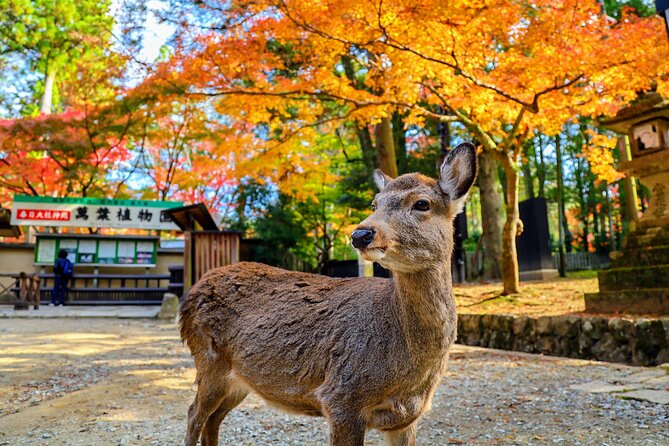
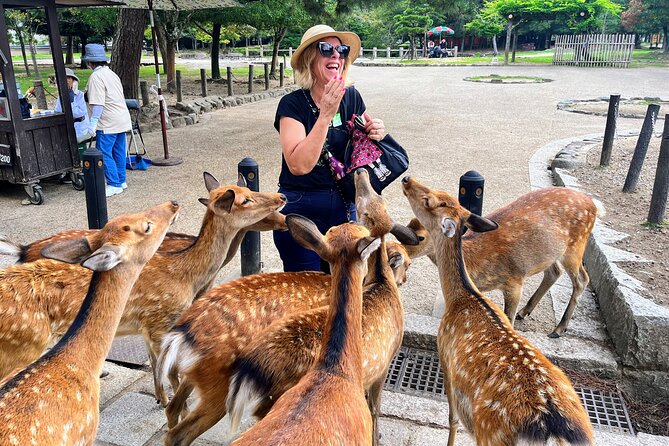
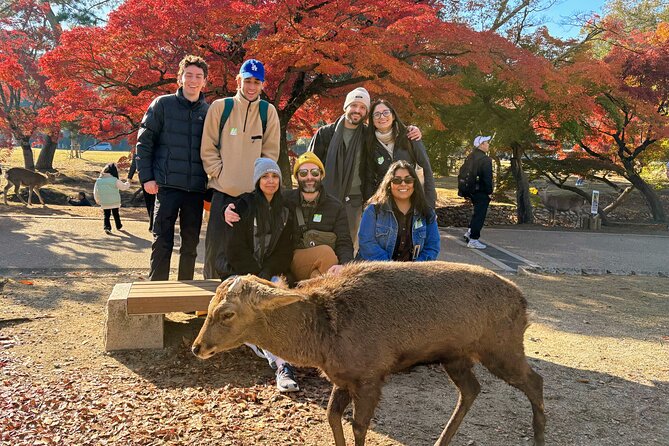
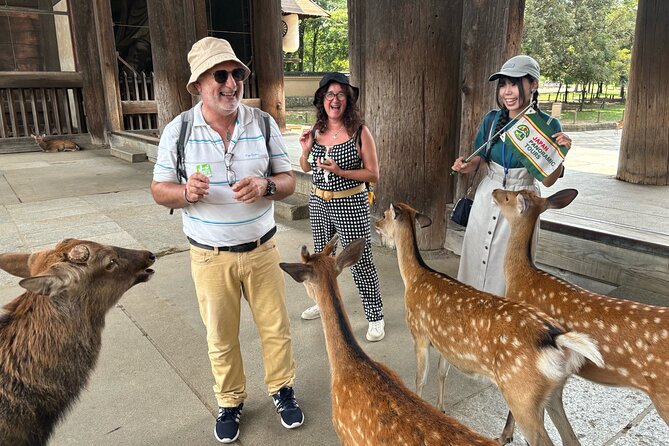
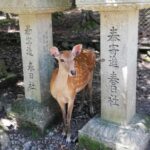
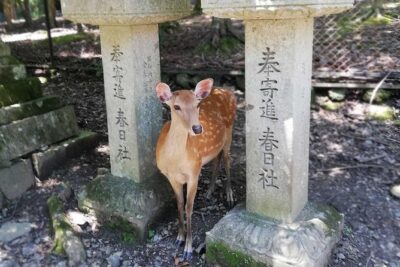
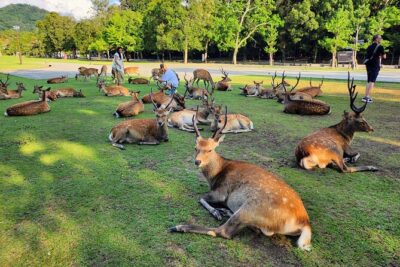
Then you hit Nara Park, home to around 1,400 deer. This stop is also about 30 minutes, which is enough time to see them in all directions, take photos, and still not feel rushed.
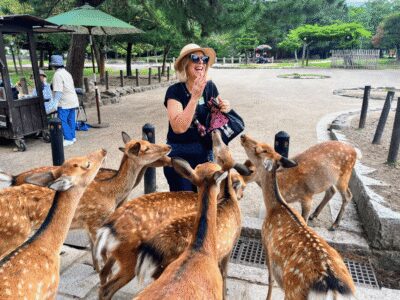
The deer are famously tame, but do not treat them like stuffed mascots. They can be bold. One smart tip from experience: bring some yen for deer crackers if you want to feed them. Even when they are not aggressive, they may nip or pinch if you ignore them while holding food or if you get too close without paying attention.
A good approach is simple:
- Keep your hands and snacks controlled.
- If a deer approaches, stand still and let it pass or follow your guidance from the area staff and your guide.
- Avoid sudden movement when they get very close.
This is the part of the day most people remember because it is personal. You are not just looking at history. You are surrounded by living, curious animals that make Nara feel like a real place, not a museum.
Nandaimon South Gate: a quick hit of scale and tradition
Next up is Nandaimon, the Great South Gate. The time here is very brief, around 5 minutes, but gates matter. Nandaimon gives you the sense of arrival and hierarchy, like stepping from everyday space into temple space.
Even in a short window, you can appreciate the traditional architecture and the historic weight of the structure. This is a good stop for photos, but also pay attention to how it frames the route onward. It is not just a photo op, it is a navigational cue for how the temple complex works.
If you are the type who likes to understand layout, take 20 seconds to look around first, then take the photo after you find the cleanest angle.
Todai-ji Temple and the Great Buddha, plus the World Heritage palace area
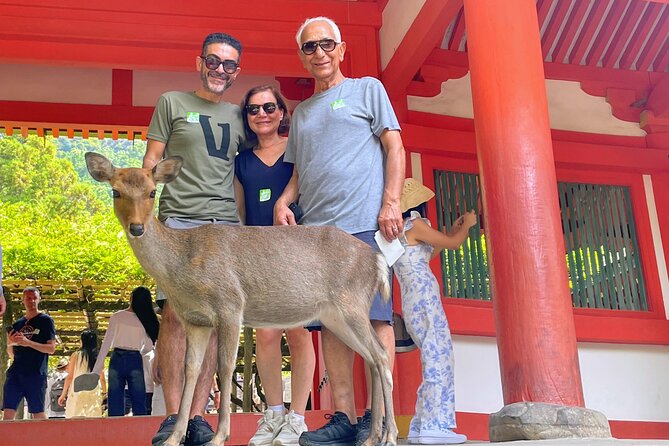
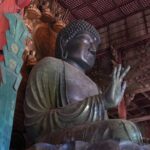
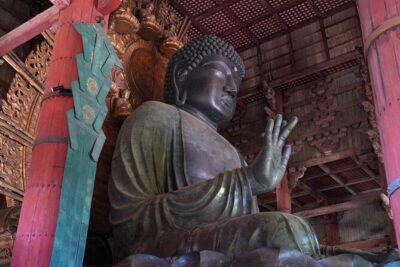
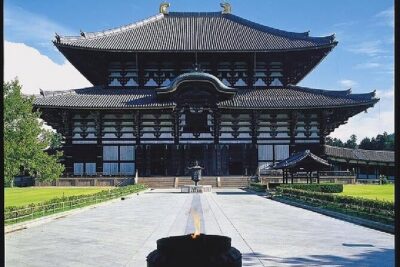
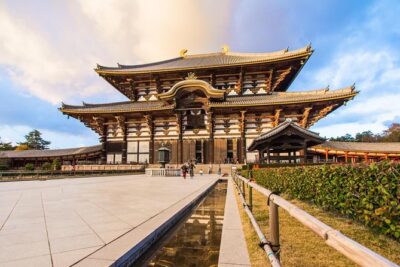
At Todai-ji Temple, you get about 40 minutes, with admission included. This is one of the world’s largest wooden buildings and it houses the Great Buddha of Nara. This is the stop where Nara stops feeling like a stroll and starts feeling like a world-class site.
Todai-ji can overwhelm you if you only rush. Instead, try this: walk in, let your eyes adjust, then pick one main element to anchor on (the hall scale, the Buddha presence, or the surrounding details). When you have an anchor, the rest makes more sense.
You also get access related to the palace site as part of the World Heritage areas of Nara. That connection helps you understand that this was not only a temple town. It was part of a bigger political and cultural system.
Practical drawback: with heat and humidity, 40 minutes in a temple complex can feel longer than you expect, especially if you are climbing or moving between spaces. Bring water, and pace yourself. You will feel better at the next stops.
Uji River lunch: a calm reset before the tea work
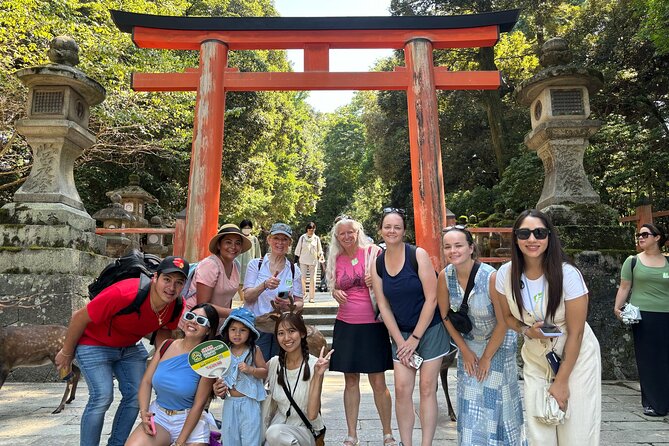
After Nara, the tour shifts to Uji, famous for tea and for that Kyoto-adjacent slow travel mood. If you choose lunch, you get a Japanese-style set meal at a restaurant along the Uji River.
You have about 50 minutes here, so it is not just a scarf-and-go meal. This break also matters psychologically. Nara is visually intense and deer-adrenaline can spike your energy. Lunch gives you a chance to sit down and cool off.
Vegetarian options are available if you indicate it when booking, with arrangements requested up to 2 days before the tour date. If you book late, you may receive a regular meal. So if diet is important, plan early or write it clearly during booking.
What to expect: the included lunch is designed to be easy to handle within the tour schedule, not a long, multi-course experience. Still, it is a solid way to try a traditional meal without having to hunt one down that day.
Byodoin Temple: Phoenix Hall on 10 yen fame
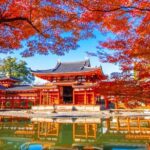
Next comes Byodoin Temple, about 40 minutes, with admission included. It is famous because the Phoenix Hall appears on the 10 yen coin.
This is one of those places where the coin image actually helps you. Once you see the real scale and setting, you start to understand why it became an icon. The goal at this stop is not only photos, it is perspective: how Uji’s setting supports the temple’s look and mood.
If you like details, you will want to slow slightly inside the grounds. But since you are on a day tour, do not fight the schedule. Use the time you have, then take a breath and head into the matcha portion of the day.
Making matcha in Uji: the hands-on workshop that most people remember
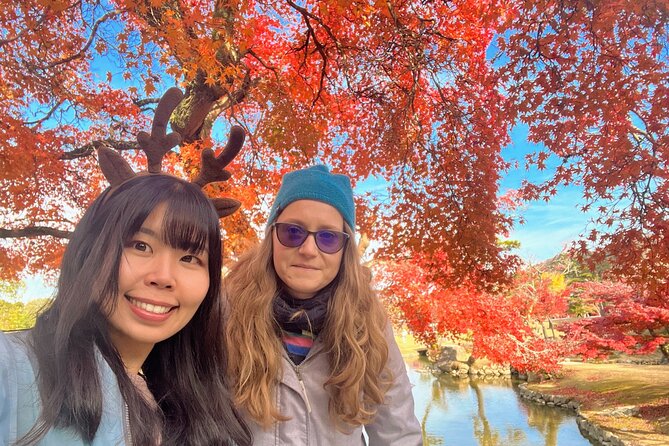
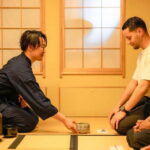
Now the tour turns into your biggest sensory payoff. You get a matcha making experience at a historic tea shop with over 500 years of tradition. The time is about 30 minutes.
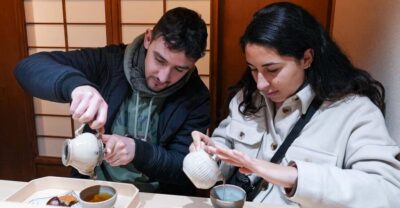
This part is not just watching someone do it. You prepare your own bowl of matcha and learn the proper traditional way to drink it. That means you leave with a better understanding of how matcha differs from the sweet, bottled version you might have tried before. You also get a taste of how ceremony can be practical, not only performative.
After the workshop, you get to head to Byodoin Omotesando for a short walk and taste matcha sweets. This is where you can compare flavors and decide what you want to take home.
Matcha is usually easy to buy, but easy to get wrong too. If you plan to bring gifts back, pay attention during the workshop tasting. What you liked in the ceremony is your better guide than whatever looks cutest in the shop window.
Price and value: what $129.25 really buys you
At $129.25 per person, this is not a cheap day trip. But value is about what is included and how much hassle it removes.
Here is what you are getting without extra planning stress:
- An air-conditioned coach plus WiFi on board
- A professional English-speaking guide
- Entry for Todai-ji Temple and Byodoin Temple
- The Uji matcha making experience
- A Japanese set lunch in Uji if you select it, with vegetarian option available in advance
Also, you are covering multiple top stops in one go: Kasuga Taisha, Nara Park with deer, Nandaimon, Todai-ji, then the Uji tea sequence. If you tried to build the day on your own, you would likely spend more time on ticket planning and timing, and you could still end up with gaps.
So the question for you is simple: do you want structure and included admissions, or do you want freedom to linger wherever you feel like it? If you prefer stress-free, guided flow, the price starts looking fair.
Group size, comfort, and the pacing you should plan for
This tour has a maximum of 38 travelers. That is big enough to feel like a bus day trip, but small enough that a guide can still manage the flow and point people clearly.
The vehicle is air-conditioned, and some guides and drivers get praise for keeping things smooth. People often call out that the bus feels comfortable, and in at least some cases, riders mention outlets too. Even without relying on that, you can expect the main comfort win to be the AC, which matters in hot weather.
Pacing is a mix of guided and walk-around time. Several stops are around 30 to 40 minutes, which is short enough that you should not expect deep wandering. You are here for the key moments, not for studying every detail for hours.
Best for who, and who should skip
This tour is ideal if:
- You want a single-day plan that hits major Nara and Uji highlights
- You like the idea of organized time, especially with a guided explanation
- You are interested in matcha and want a hands-on workshop
It may be a poor fit if:
- You cannot handle hills and stairs, since the tour includes walking at each place
- You dislike structured schedules and prefer long solo exploration
- You get overwhelmed by lots of movement in one day, especially in heat
If you are traveling as a family or with mixed ages, it still can work, but pick your shoes and pace wisely. One family-friendly note that comes up in feedback is that the deer and matcha can keep kids interested, as long as you manage the walking portion.
Should you book this Kyoto to Nara and Uji matcha tour?
Book it if you want an easy, guided day that stitches together World Heritage Nara highlights and a genuinely hands-on Uji matcha moment. You are paying for convenience, included admissions, and the workshop experience, not just transportation.
Skip or adjust expectations if you know you will struggle with walking. This is a full day with multiple stops, and the schedule is designed to cover ground, not to let you linger forever.
My final advice: bring comfortable shoes, a bit of yen for deer crackers if you want that experience, and go in ready to move. If that sounds like your style, this is a strong value way to get two sides of Kansai, temple scale in Nara and tea craft in Uji, without planning a thing yourself.
FAQ
Where is the meeting point?
You meet at Tully’s Coffee – Kyoto Avanti Japan, located at Kyoto Avanti building, 1st floor.
What time does the tour start?
The start time is 7:50 am.
Do I need a hotel pickup?
No. The tour does not supply hotel pick up or drop off. You return to the same meeting point at the end.
Is the tour admission free for every stop?
No. Admission is included for Todai-ji Temple and Byodoin Temple, while Kasuga Grand Shrine and Nara Park stops are listed as free.
Is lunch included?
Lunch is included if you select the Japanese-style lunch option during booking. It is a set meal along the Uji River.
Can I request a vegetarian lunch?
Yes. A vegetarian option is available if you indicate this in the notes when making your booking, and arrangements can be made up to 2 days before the tour date.
What is included in the matcha experience?
You visit a historic tea shop for matcha making, where you prepare your own bowl and learn how to drink it properly. Matcha making is included.
Does the tour include WiFi and language support?
WiFi is available on board. Multilingual audio guidance is available on the bus in English, Spanish, French, Italian, Germany, Portuguese, and Ukrainan.
How much walking should I expect?
You should expect a lot of walking, including stairs and hills at multiple places. A moderate physical fitness level is recommended.
Half a Day in Nara


Kyoto by the Bowl
Newest Nara write-ups from the Loving Japan desk
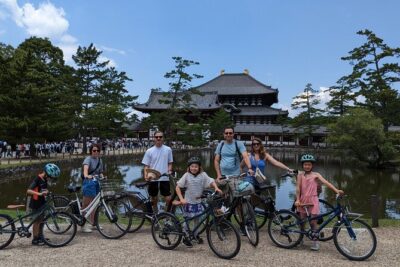
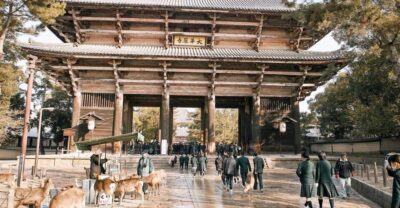
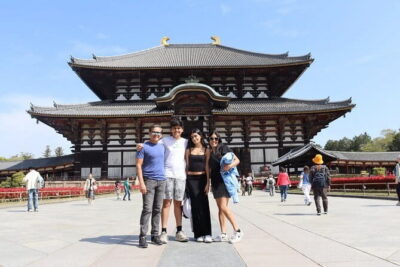
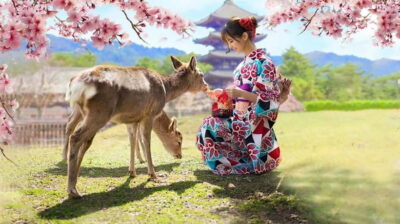
Nara Deer Park and Todai-ji, side by side.
 ★ 4.7Kyoto/Osaka: Nara, Fushimi Inari Taisha, Arashiyama Bus TourFrom $521,275 reviews
 ★ 5.0Nara Half Day Trip Walking Tour (Private Option Available)From $105937 reviews
 ★ 4.4Osaka/Kyoto: Arashiyama, Nara & Fushimi Inari Shrine w/LunchFrom $61754 reviews
 ★ 5.0Nara Early Morning Tour (Kyoto or Osaka Departure Available)From $61676 reviews
 ★ 4.5Kyoto and Nara Day Trip from KyotoFrom $194445 reviews
 ★ 5.0Full Day Guided Tour to Kyoto and Nara from Osaka by VanFrom $106420 reviews
 ★ 4.5Nara Afternoon Tour from Kyoto or OsakaFrom $102390 reviews
 ★ 4.6From Kyoto: Nara Guided Morning TourFrom $77335 reviews
Filed on these lists too