
REVIEW · NARA DEER PARK AND TODAI-JI
Nara Early Morning Tour (Kyoto or Osaka Departure Available)
Crisp mornings change Nara. This early start gets you into Kofuku-ji, Kasuga Grand Shrine, and Nara Park before the biggest day-tripper waves hit.
I love the small-group size (max 12). I also like how the tour mixes major sights with stops that are free, so your money mostly goes to the one paid highlight at Todai-ji.
One consideration: you’ll walk about 10,000 steps, and Todai-ji has a separate ¥800 admission fee, so budget for that.
In This Review
- Key takeaways before you go
- Why Nara feels different before the crowds
- Getting to Nara from Kyoto or Osaka without the stress
- Stop 1, Kofuku-ji Temple and the five-storied pagoda
- Stop 2, Kasuga Grand Shrine lanterns that make the whole place glow
- Stop 3, Nara Park deer and how to handle the moment
- Stop 4, Todai-ji and the Great Buddha, plus the ¥800 fee
- How guides shape the experience (and why it matters)
- Walking plan: 10,000 steps and moderate stamina
- Price and value: what you’re really paying for
- Who should book this Nara early morning tour
- Should you book the Nara Early Morning Tour from Kyoto or Osaka?
- FAQ
- Where does the tour start and end?
- How long is the Nara Early Morning Tour?
- Is pickup available from Kyoto Station?
- What’s included in the tour price?
- What is not included?
- Do I need to pay for Todai-ji Temple?
- How much walking should I expect?
- How many people are in the group?
- Can I cancel for a full refund?
Key takeaways before you go
- Early-morning timing to see Nara Park when it feels calmer
- Max 12 people for a more personal pace and plenty of questions
- Kofuku-ji and Kasuga are free stops, plus Nara Park is free too
- Todai-ji entry is extra (¥800), so plan your total cost
- Optional Kyoto Station pickup if you want an easier commute
- Guides who tailor the walk, with favorites like deer feeding tips and photo spots
A half day in Nara goes several ways
- World Heritage Kyoto & Nara Uji Authentic Matcha Experience
★ 5.0 · 1,573 reviews - Nara Half Day Trip Walking Tour (Private Option Available)
★ 5.0 · 937 reviews - Nara Early Morning Tour (Kyoto or Osaka Departure Available)
★ 5.0 · 676 reviews - Osaka: Nara and Uji Day Trip with Deer Park and Hot Spring
★ 4.4 · 302 reviews
Why Nara feels different before the crowds
Nara is one of Japan’s most-visited places, which means the day can turn into a slow shuffle. This tour leans into the smart solution: go early, when the temples are still waking up and the deer roam without the later chaos.
That timing also makes the whole morning feel more relaxed. You’re not constantly playing catch-up with crowds, and you can actually look at details, like pagoda shapes at Kofuku-ji or the lantern glow at Kasuga Grand Shrine.
Getting to Nara from Kyoto or Osaka without the stress
The tour starts and ends at Nara Park, which is convenient because you’re not trying to zigzag across town after sightseeing. If you want pickup, you can add Kyoto Station pickup. There’s also an option to include the transportation fee from Kyoto or Osaka to Nara.
What you should plan for: returning to Kyoto or Osaka is on your own. The tour gives you a smooth start, then you handle your way back when the morning ends.
Stop 1, Kofuku-ji Temple and the five-storied pagoda
Kofuku-ji Temple is tied to Nara’s founding moment. It was established around the time the capital moved to Nara in 710, so the place is more than scenery. You’re basically stepping into the long arc of Japan’s early capital era.
You’ll spend about 30 minutes here, and the admission is free. The big visual is the famous five-storied pagoda, noted as the second tallest wooden pagoda in Japan. It’s only seven meters shorter than the tallest, which is a fun benchmark when you’re looking up.
Practical tip: because this is a shorter stop, keep your questions ready. A good guide can connect what you’re seeing, like why pagodas matter in Buddhist temple design, to what you’ll notice later at Todai-ji.
- Kyoto/Osaka: Kinkakuji, Bamboo Forest, and Nara Deer Park★ 4.4 · 265 reviews
- Nara 6hr Private Tour with Government-Licensed Guide★ 5.0 · 219 reviews
- E-Bike Nara Highlights – Todaiji, Knives, Deer, Shrine★ 4.8 · 186 reviews
- Nara Early Bird Tour (Kyoto Departure Option Available)★ 4.9 · 142 reviews
- Nara:Authentic Tea Ceremony(Max 5 ppl) -Master Matcha Making★ 5.0 · 119 reviews
Stop 2, Kasuga Grand Shrine lanterns that make the whole place glow
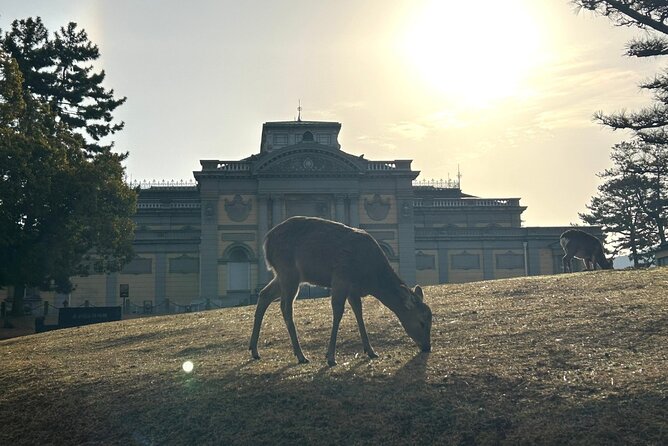
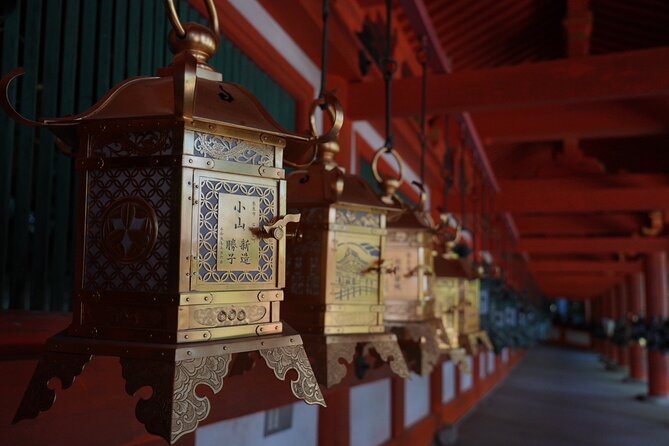
Kasuga Grand Shrine is famous for lanterns donated by worshippers. The tour highlights that you’re looking at around 3,000 stone and bronze lanterns, which is an impressive number until you’re standing among them. The effect is less like a landmark and more like a story made of light.
You’ll have about 1 hour at this stop, and admission is free. The shrine is one of the most historic in Nara, and the lantern theme makes it easy to understand quickly, even if you’re not an expert on Shinto practices.
Why this stop works well on an early tour: the lighting and atmosphere feel gentler when the area is not packed. You can walk slowly, notice different lantern textures, and take photos without constantly sidestepping people.
Stop 3, Nara Park deer and how to handle the moment
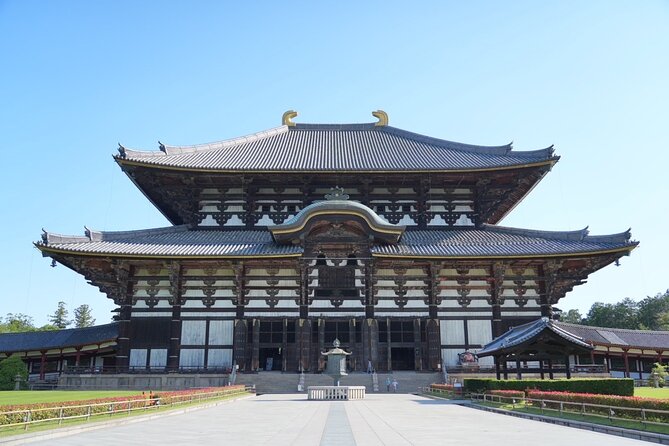
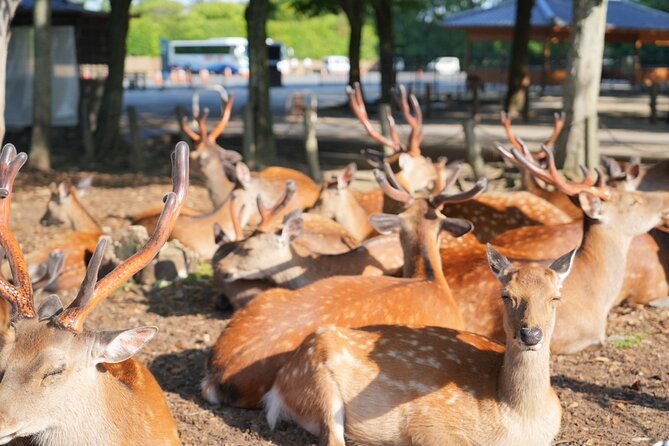
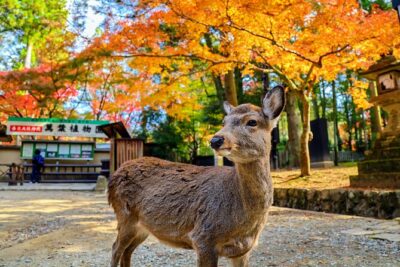
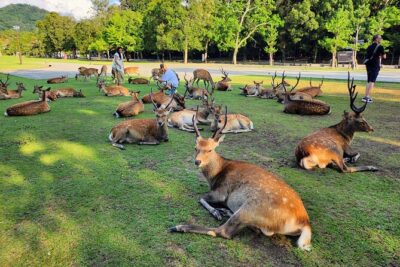
Nara Park is the part most people picture immediately. You’ll be there for about 30 minutes at the center of the deer experience. Admission here is free, and the deer roaming around are considered sacred.
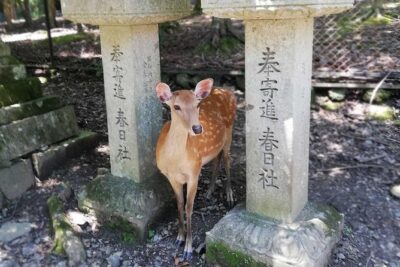
The tour also gives you the link to Kasuga Shrine. One of the four gods connected with Kasuga is said to have ridden a deer to Nara, which is why these animals hold special meaning.
A couple of practical realities to keep in mind:
- Deer can get bold when they sense food. If you buy biscuits in the park, hold them securely and follow your guide’s lead.
- This is a walking park, so even if the time looks short, you’ll want comfortable shoes and patience.
If your guide is like the ones many people remember, you may also get helpful deer-handling tips and quick ways to avoid the busiest pinch points in the park while still seeing the deer up close.
Stop 4, Todai-ji and the Great Buddha, plus the ¥800 fee
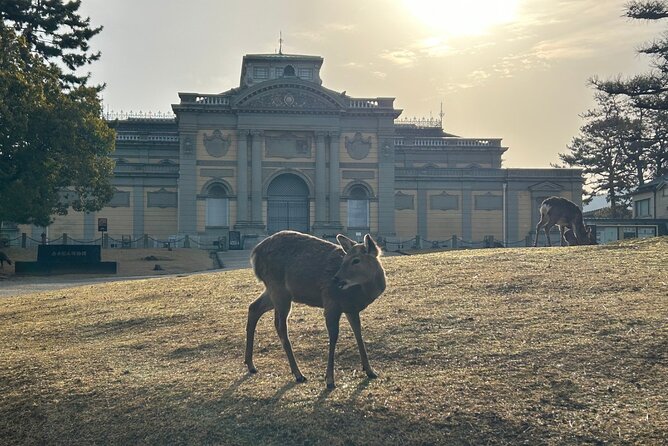
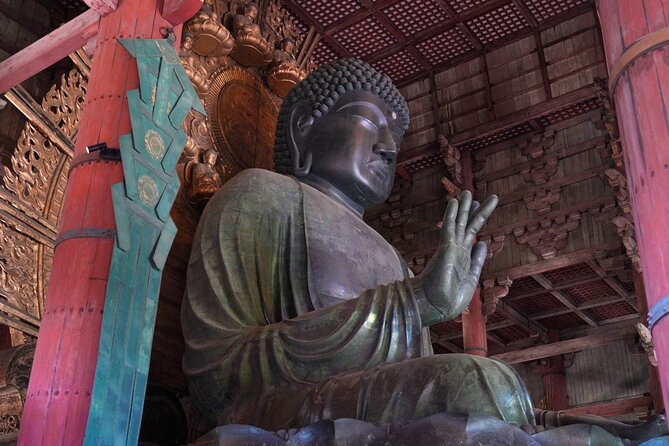
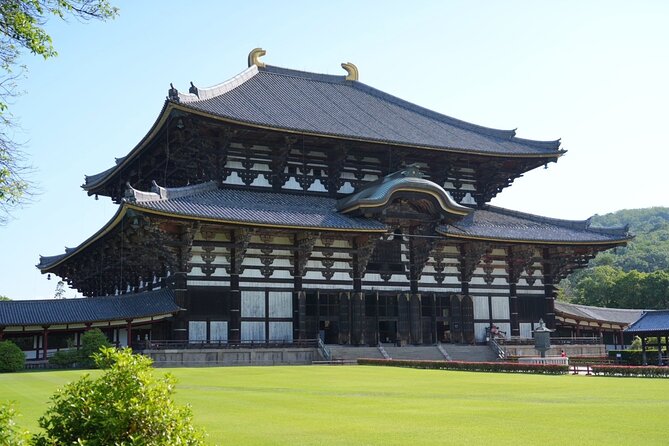
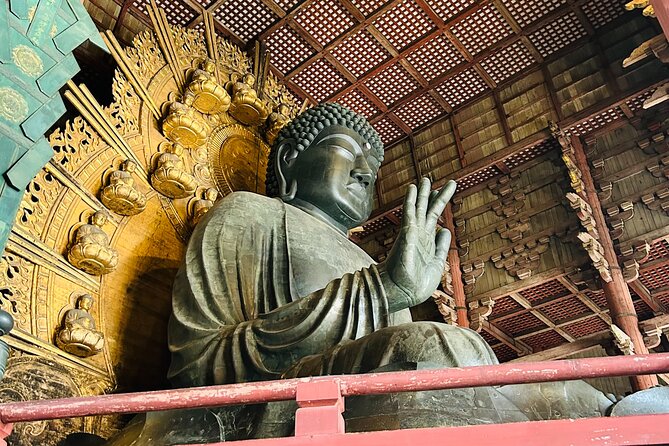
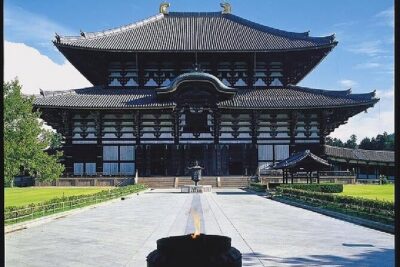
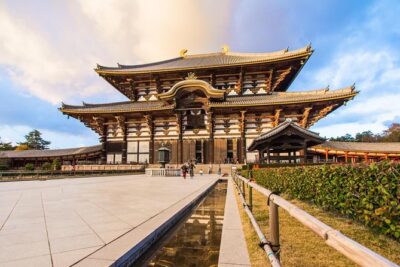
Todai-ji is the headliner. This is where you see the Great Buddha Statue, described as the biggest Buddha statue in Japan. The scale is the main thing, but the architecture matters too.
You’ll spend about 1 hour here, and this is the one paid entry you must plan for. Todai-ji admission is ¥800 per person, which is not included in the tour price.
One neat detail from the description: the temple’s main hall was, until recently, the world’s largest wooden building. So you’re not just looking at a statue. You’re also looking at a structure built to house something enormous.
Practical tip: the paid entrance is easy to overlook when you focus on the tour price. Plan a small budget cushion so you’re not scrambling for cash or card at the gate.
How guides shape the experience (and why it matters)
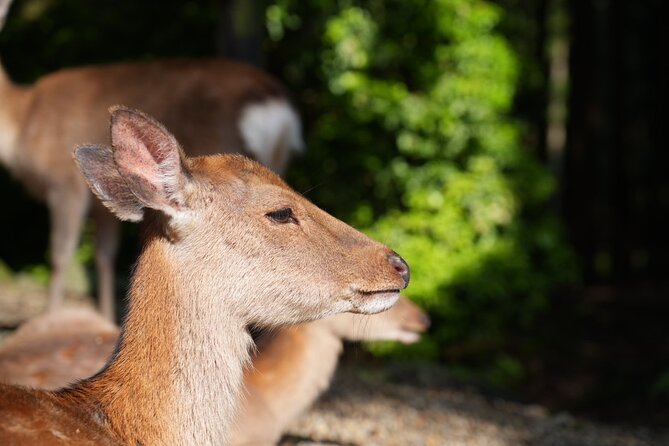
The tour’s biggest strength is the guide relationship. With a small group of up to 12 people, you’re not lost in the back row, and it’s easier to get a direct answer when something doesn’t make sense.
You’ll see a pattern in the guide styles people highlight: friendly pacing, lots of room for questions, and clear explanations that connect history to what you’re looking at. Names that come up often include Nana, Natsuho, Momoka, Haruka, Futaba, Koh, Shin, Kevin, Ginko, Toshiki, Ayame, Itsuku, and Soichiro Toide.
What that can mean for you:
- If you like history, your guide can connect dates and temple roles to the buildings you see.
- If you’re traveling with kids, the pace tends to stay doable, and the group often gets playful moments like deer feeding guidance or fun learning prompts.
- If you care about photos, some guides help you find better angles and timing.
This is also one reason the early morning schedule is worth it. When you’re moving at a calm pace, the temples and park feel like places you’re visiting, not stops you’re rushing through.
Walking plan: 10,000 steps and moderate stamina
This is a walking-focused half-day. You should plan on about 10,000 steps during the tour. The pace is not described as extreme, but it is steady enough that comfortable shoes matter.
The tour also notes a moderate physical fitness level. It’s not recommended for people over 75, and kids under 6 can’t join. If you’re the kind of person who hates long temple stairs or gets tired fast, consider whether you want the full morning walk.
The upside: because it’s a loop that focuses on compact areas, the effort is concentrated into a set route. You’re not doing long cross-city transit during the sightseeing hours.
Price and value: what you’re really paying for
The price is $61.02 per person for about 4 hours 30 minutes. That includes an English-speaking guide. If you choose transportation from Kyoto/Osaka to Nara, that fee can be included too, while your return is still on your own.
Here’s why it tends to feel like good value:
- Several major components are free: Kofuku-ji, Kasuga Grand Shrine, and the Nara Park portion have free admission.
- The one paid place, Todai-ji, is ¥800 and is clearly identified in advance.
- You’re getting a guided morning that covers multiple landmark types, temples plus shrine plus park, instead of piecing it together alone.
Also, the small group and mobile ticket options reduce friction. When your schedule is already tight in Japan, saving time on logistics is part of the value, even if you think you’re only paying for sightseeing.
Who should book this Nara early morning tour
This tour is a great fit if you want:
- A calmer Nara experience that avoids the worst crowds
- A guide-led route that helps you understand what you’re seeing quickly
- A doable half-day format from Kyoto or Osaka
It’s also a good option for families, based on how often guides are noted for keeping kids engaged and pacing the group well.
I’d skip it if:
- You can’t handle a lot of walking.
- You’re expecting a slow, sit-down pace. This is a walking morning.
- You don’t want a separate paid ticket for Todai-ji.
Should you book the Nara Early Morning Tour from Kyoto or Osaka?
If you’re visiting Nara as a day trip, I think this is a smart way to spend your morning. The early start changes the experience, and the small group size helps you slow down enough to actually notice what makes Nara special.
Book it if you want an organized path through the big names, with free entry at Kofuku-ji and Kasuga, a classic deer-park moment at Nara Park, and a clear plan for the Todai-ji fee. Skip it if you’re not up for around 10,000 steps or you strongly prefer to travel at your own pace without a guide.
FAQ
Where does the tour start and end?
The tour starts at Nara Park, Nara, Japan and ends at Nara Park, Nara, Japan.
How long is the Nara Early Morning Tour?
It lasts about 4 hours 30 minutes.
Is pickup available from Kyoto Station?
Yes. There is an option to include pickup at Kyoto Station.
What’s included in the tour price?
Included are an English-speaking guide and the transportation fee from Kyoto/Osaka to Nara if you select that option.
What is not included?
Not included are food and drinks, the transportation fee for returning from Nara to Kyoto/Osaka, and Todai-ji Temple entrance (¥800 per person).
Do I need to pay for Todai-ji Temple?
Yes. Todai-ji admission is ¥800 per person, and it is not included.
How much walking should I expect?
You should plan on walking about 10,000 steps during the tour.
How many people are in the group?
The group size is capped at 12 travelers.
Can I cancel for a full refund?
Yes. You can cancel for a full refund if you cancel at least 24 hours in advance of the experience start time.
Half a Day in Nara


Newest Nara write-ups from the Loving Japan desk

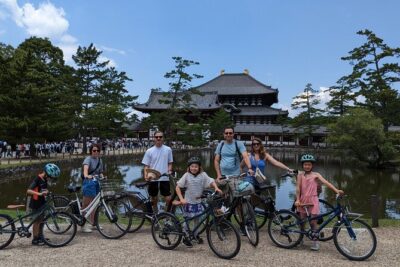
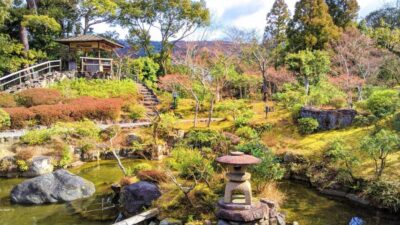

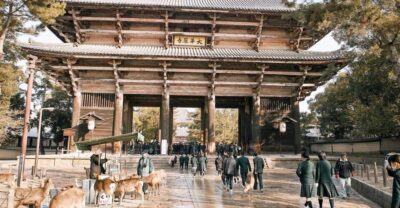
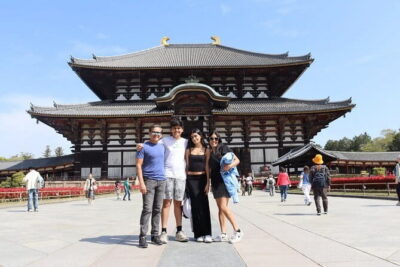
Nara Deer Park and Todai-ji, side by side.
 ★ 5.0World Heritage Kyoto & Nara Uji Authentic Matcha ExperienceFrom $1291,573 reviews
 ★ 4.7Kyoto/Osaka: Nara, Fushimi Inari Taisha, Arashiyama Bus TourFrom $521,275 reviews
 ★ 5.0Nara Half Day Trip Walking Tour (Private Option Available)From $105937 reviews
 ★ 4.4Osaka/Kyoto: Arashiyama, Nara & Fushimi Inari Shrine w/LunchFrom $61754 reviews
 ★ 4.5Kyoto and Nara Day Trip from KyotoFrom $194445 reviews
 ★ 5.0Full Day Guided Tour to Kyoto and Nara from Osaka by VanFrom $106420 reviews
 ★ 4.5Nara Afternoon Tour from Kyoto or OsakaFrom $102390 reviews
 ★ 4.6From Kyoto: Nara Guided Morning TourFrom $77335 reviews
Filed on these lists too