
REVIEW · TOKYO TOWER, GINZA AND THE IMPERIAL PALACE
GINZA: Go Kart Experience with NEO GINZA
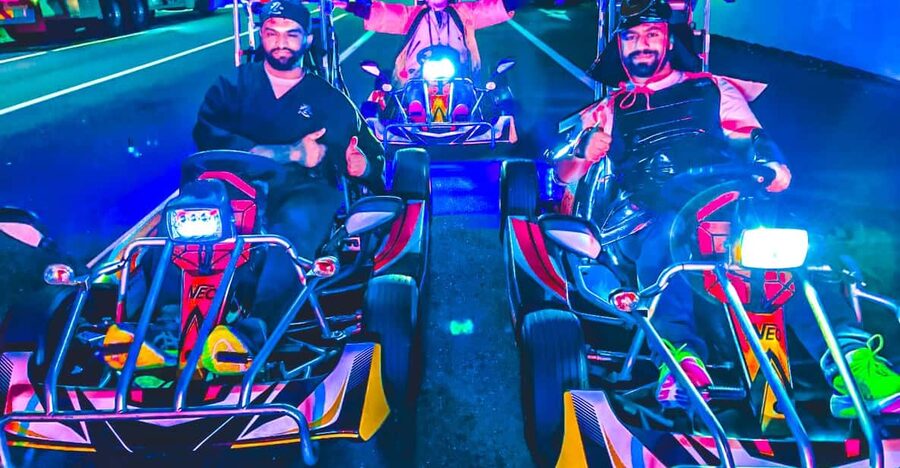
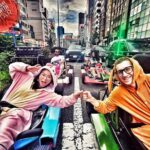
Tokyo from a go-kart feels unreal. In Ginza, you drive a themed kart past major icons with guides who help with photos, timing, and safety.
I like that the ride mixes city landmarks with full-on costume fun, and I also like the small-group format (limited to 6) so the experience stays personal. One thing to consider first is the licensing setup, because you’ll need the right driving documents before you can get behind the wheel.
In This Review
- Key things to watch for before you ride
- Ginza Go-Karts with NEO GINZA, costumes and real Tokyo icons
- Price and what you’re really paying for
- The licensing reality: IDP rules are the make-or-break detail
- Meet point and how the hour actually flows
- Costumes and photos: the part that turns the ride into a memory
- Safety and driving support with two guides
- Zojo-ji Temple stop: where the Tokyo Tower feeling starts
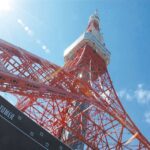
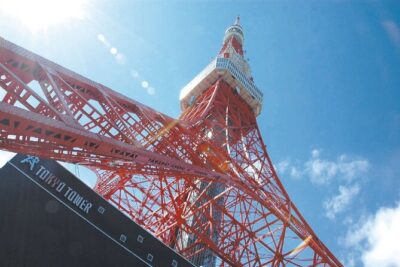
- Tokyo Tower photo stop: the headline moment
- Imperial Palace Outer Gardens: a calmer contrast in the middle
- Tokyo Station and Kabuki-za: big culture energy without extra planning
- The best time to go: day for clarity, night for atmosphere
- Who should book this Ginza go-kart experience
- Quick planning checklist so your hour stays fun
- Should you book NEO GINZA Go Kart in Ginza?
- FAQ
- Where is the starting location for the NEO GINZA go-kart experience?
- How long is the go-kart experience?
- How many people are in the group?
- What languages are the guides?
- What is included in the price?
- Do I need an International Driving Permit (IDP) for Japan?
- What documents do I need to bring?
- Are there restrictions on what I can wear or bring?
- Is a night experience available?
Key things to watch for before you ride
- You need an International Driving Permit (IDP), carried in physical form, plus your passport
- Small group of 6, with two guides supporting safety and the flow
- Costumes included, so you can turn the streets into your own photo set
- Guide-led photo stops, including Tokyo Tower and multiple major sights
- Open-air street driving, so dress for comfort and keep your phone stowed (cellphones aren’t allowed)
Different circuits, same licence rules. Compare the karts
- Flagship 2-Hours Official Street Go-Kart Tour – Tokyo Bay Shop
★ 5.0 · 4,974 reviews - Official Street Go-Kart in Shibuya
★ 5.0 · 3,435 reviews - Official Street Go-Kart Tour – Akihabara
★ 5.0 · 1,578 reviews - Tokyo: Street Kart Experience in Shibuya
★ 4.9 · 1,484 reviews
Ginza Go-Karts with NEO GINZA, costumes and real Tokyo icons
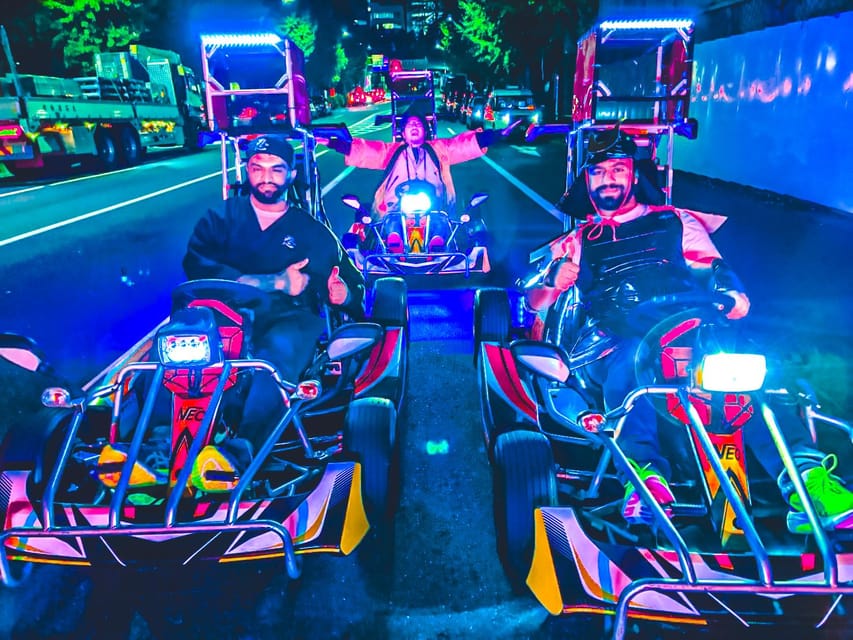
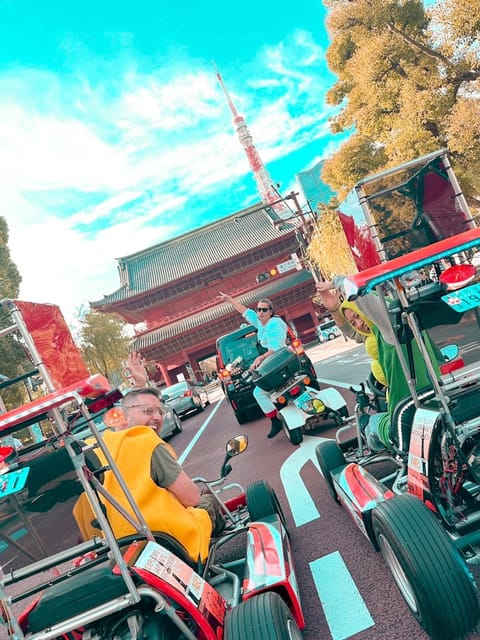
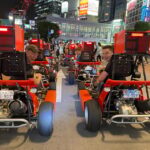
This is not a sit-and-watch bus tour. You’re in a themed go-kart riding the streets near Ginza, with photo stops built in around some of Tokyo’s most recognizable places.
What makes it special is the mix of eras. You’ll pass by religious and historical spots, then roll into the most famous modern landmarks in the same hour. It’s a fast way to see how Tokyo layers old and new.
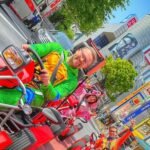
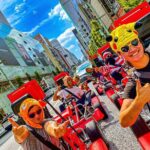
You also get an experience that’s made to be photographed. The guides handle the picture moments, and you choose a costume that instantly changes the vibe of every stop.
Price and what you’re really paying for
At about $64 per person for roughly 60 minutes, this can feel like a splurge until you look at what’s included.
Your price covers: the full go-kart experience time, insurance, a costume, and the photo shooting service. You’re also getting English-speaking and Japanese-speaking staff, which matters in Japan where instructions and driving rules need to be clear.
What’s not included: hotel pickup and drop-off, personal expenses, and extras like GoPro rental and an SD card. So the real value comes down to this, you’re paying for the driving, the gear, and the photos, not for transportation from your hotel.
If you’re already starting near central Tokyo, you’ll likely find this is good value because you’re not paying again for a separate photo tour or a separate transport add-on.
The licensing reality: IDP rules are the make-or-break detail
Before you fall in love with the idea of driving, handle the paperwork. In Japan, you’ll need special documents to drive.
For most countries, you need an International Driving Permit (IDP) issued in the booklet format compliant with the 1949 Geneva Convention. You must get it from the same country that issued your domestic license, and you can’t obtain it online while traveling.
If your license is issued by Switzerland, Germany, France, Taiwan, Belgium, or Monaco, you’ll need a Japanese translation from the Japan Automobile Federation (JAF), not an IDP.
Drivers’ licenses from countries not covered by the 1949 Geneva Convention are not permitted. The information specifically lists examples like China, Indonesia, Mexico, Qatar, Saudi Arabia, and others.
Also plan to carry physical documents: your physical IDP (or domestic license plus official translation for the listed exceptions) and your physical passport. This is not a digital situation.
And one more constraint that matters for planning: it’s not suitable if you don’t have a driver’s license, and drivers under 18 years can’t drive.
The central Tokyo landmarks, reviewed one by one
- Flagship 2-Hours Official Street Go-Kart Tour – Tokyo Bay Shop★ 5.0 · 4,974 reviews
- Tokyo: Imperial Palace and Shogun Historical Walking Tour★ 5.0 · 2,251 reviews
- Tokyo: Meiji Shrine, Asakusa, Skytree Bus Tour and Cruise★ 4.7 · 1,986 reviews
- Chopstick Making Workshop in Ginza★ 4.8 · 1,366 reviews
- Tokyo Panoramic 1 Day: Meiji Shrine, Asakusa, Odaiba and SKYTREE®★ 4.5 · 1,222 reviews
Meet point and how the hour actually flows
Your starting location is 新富町一丁目ビル. That matters because there’s no hotel pickup, so you’ll want to plan your own arrival and leave time for getting there without stress.
The ride itself is structured as a sequence of short photo stops. You’re not stuck waiting a long time at each landmark. The guides keep the pacing moving, and you get a mix of driving time and quick scenic stops so you see a lot without feeling like you’re on a slow clock.
You’ll also have the rule-basis for a smooth experience: high-heeled shoes aren’t allowed, slippers aren’t allowed, alcohol and drugs aren’t allowed, and cellphones aren’t allowed. I’d treat this like you’re going to a controlled activity, not a casual walk with a phone in hand.
Costumes and photos: the part that turns the ride into a memory
This tour leans into the fun. You pick a costume from an array of options, and the whole experience becomes less like commuting Tokyo and more like staging your own mini parade.
The photo service is a big deal for value. The guides capture your moments during the ride, and at the end you get the photos they took. In practice, this means you don’t need to set up your phone for shots over and over.
If you like the idea of a video-game feel, this is the closest you’ll get to a street version of it, without the hassle of finding costumes and sorting out how to shoot and drive.
From what I’ve learned, the guides are also happy to help with little extras like making suggestions for what to do next in Tokyo. For me, that’s the difference between a one-off activity and an experience that helps your whole trip feel smarter.
Safety and driving support with two guides
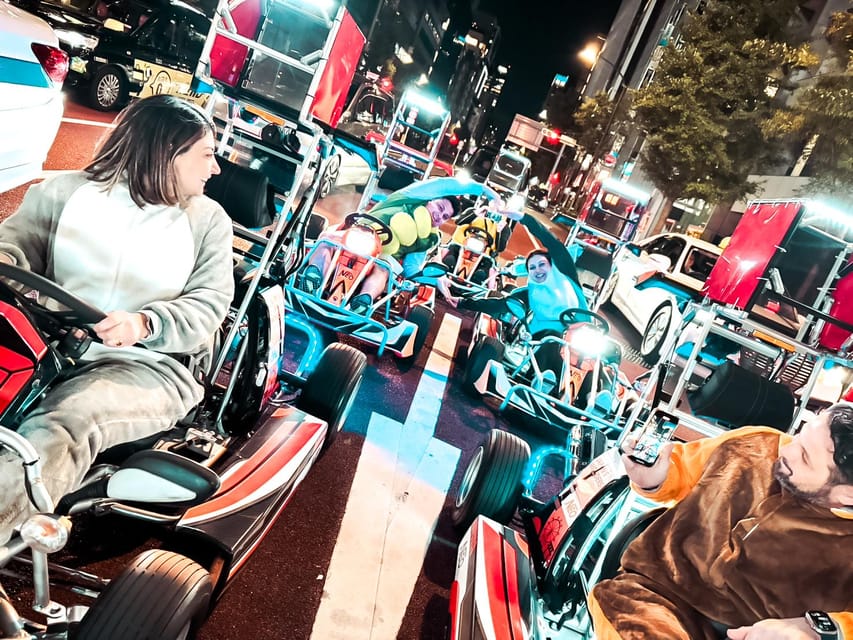
You’re driving in an active city area, so safety matters. The format uses small-group size and two guides to keep things controlled.
In the real world, the biggest stress for first-timers is often not the driving itself, it’s where to look, when to stop, and how to line up for photos without holding up the ride. Here, the guides handle those cues so you can focus on actually enjoying it.
You should expect clear instructions before you start. Once you’re moving, the karts are set up to be easy to drive, and the support team stays engaged so you feel guided rather than just thrown into traffic.
Also, because insurance is included, you’re not left wondering if something small goes wrong.
Zojo-ji Temple stop: where the Tokyo Tower feeling starts
One of the best parts of this tour is that it begins your landmark loop with Zojo-ji Temple. You’ll have a photo stop with a guided tour component, plus scenic drive time.
Why this stop works: Zojo-ji is a classic Tokyo landmark, and it also sets you up for the big skyline moment that’s coming. It’s that good contrast, old stone meets the modern tower vibe.
It’s also a smart placement because your brain is still fresh at the start of the hour. You arrive, get oriented, take a photo, and then you’re ready for the more famous visuals.
The only drawback I can see for some people is timing. Because it’s a photo stop, you won’t have long wandering time. If you want slow temple time, you’ll treat this as a quick taste, then come back later.
Tokyo Tower photo stop: the headline moment
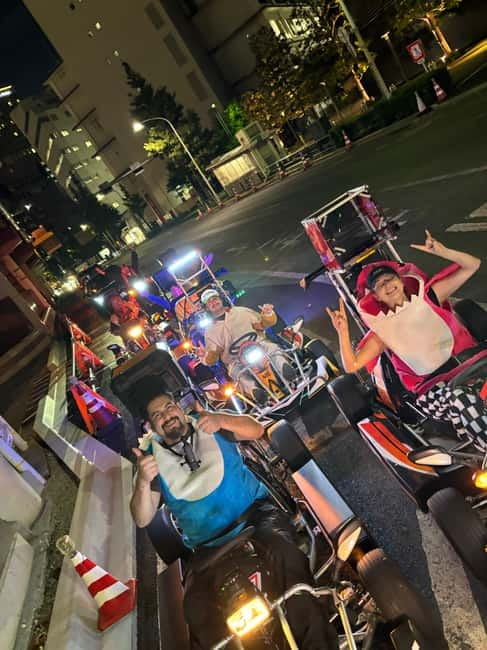
Next comes Tokyo Tower, and yes, this is the moment most people are picturing.
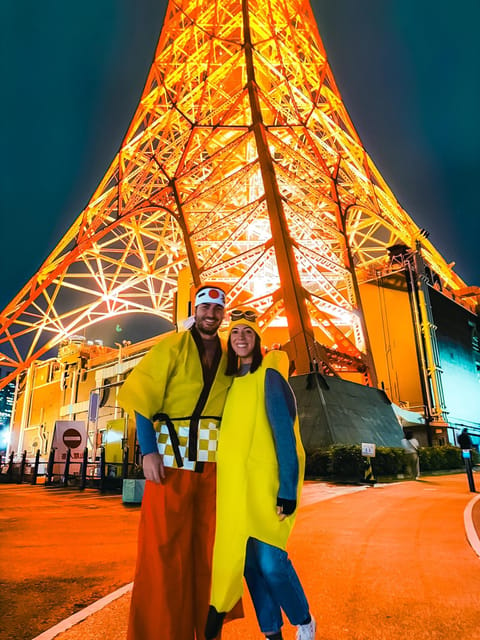
You’ll get a photo stop and guided time, then continue with scenic drive passes. The tower isn’t just something you pass, it’s something you get to frame with a fun perspective because you’re not boxed inside a vehicle.
From experience, this kind of landmark stop feels way more memorable when you’re outdoors and moving, not stuck watching from the window. The kart view and the photo moments turn Tokyo Tower into more than a sight, it becomes a set piece.
If you’re deciding between day and night, the information from actual ride experiences suggests the night version can feel especially surreal, with the tower lit up as a bonus.
Imperial Palace Outer Gardens: a calmer contrast in the middle
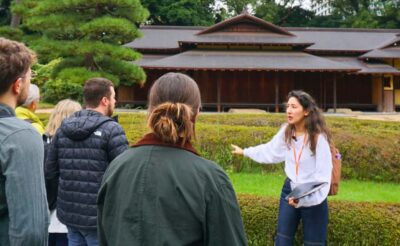
After the skyline hit, you’ll move to the Tokyo Imperial Palace Outer Gardens for another photo stop and guided pass.
This stop is valuable because it changes the texture of what you’re seeing. Instead of only dense city views and big buildings, you get a more open, formal area vibe that gives your eyes a breather.
It’s also a good stop for photos that don’t look like a typical street selfie. With the palace grounds context, even quick pictures feel more intentional.
The trade-off is the same as before: it’s a photo stop, not a long exploration. Think of it as “see it from this angle today,” then go deeper if you want later.
Tokyo Station and Kabuki-za: big culture energy without extra planning
Two more major anchors come next. You’ll pass Tokyo Station and then stop at Kabuki-za for a photo moment.
Tokyo Station is a practical Tokyo symbol. It’s instantly recognizable, and passing it on a route like this helps you understand Tokyo as a place where everything connects, not just landmarks as isolated stops.
Then Kabuki-za brings the performance side of Tokyo. It’s a cultural icon, and when you mix it into the ride you get variety without adding a separate ticketed outing.
One upside here is convenience. You’re packing multiple high-value sights into a single hour. Another upside is how it changes your navigation. After this, you often feel like you can orient yourself around the area much faster.
The best time to go: day for clarity, night for atmosphere
The tour runs on scheduled starting times, and you can choose what fits your trip. Some people specifically mention doing the night experience because Tokyo Tower looks fantastic lit up.
My practical take: if you’re a photo-first person, night can feel like the more cinematic payoff. If you’re more focused on crisp landmark recognition and easier visibility for driving, daytime may feel less stressful.
Either way, you should dress for how Tokyo feels at that time of year and remember you’re outside while driving. This is an active hour, not a warm indoor break.
Who should book this Ginza go-kart experience
This is a great fit if you want a Tokyo highlight that feels like an event. You’ll like it if you:
- enjoy photo moments and want a guide to handle picture timing
- want a costume option that makes the ride feel playful
- like the idea of seeing major sights in an efficient loop
It’s also a good choice for couples and small groups because the ride stays tight with a group limit of 6. Less crowd friction usually means more fun.
Avoid it if you:
- don’t have the right driving license setup (this is the biggest barrier)
- want a slow, in-depth walking tour at each landmark
- need to use your phone during the activity (cellphones aren’t allowed)
Quick planning checklist so your hour stays fun
Here’s what I’d prep before you head to 新富町一丁目ビル:
- Passport and your physical IDP (or the JAF translation path for the specific countries listed)
- Driver’s license, since driving eligibility matters
- Comfortable shoes that aren’t high heels, and not slippers
Also, mentally plan for photos and costume changes. Even if it’s quick, it’s part of the rhythm of the experience.
And because there’s no GoPro rental included, decide in advance if you want extra recording. If you do, you’d have to arrange it separately (GoPro rental and an SD card aren’t included).
Should you book NEO GINZA Go Kart in Ginza?
Book it if you want a fast, high-energy way to hit Tokyo Tower and several iconic stops while wearing a costume and letting the guides run the photo moments. The combination of small-group size, two-guide support, included insurance, and photo shooting service is what makes the price feel reasonable.
Skip or postpone if you’re not confident about the IDP requirements. In Japan, that paperwork isn’t optional, and it’s the one part that can derail the day.
If you do have your documents sorted and you’re excited about an open-air ride, this is one of those Tokyo activities that gives you a story, not just a souvenir.
FAQ
Where is the starting location for the NEO GINZA go-kart experience?
The starting location is 新富町一丁目ビル. Hotel pickup and drop-off are not included.
How long is the go-kart experience?
It lasts about 60 minutes.
How many people are in the group?
The group is limited to 6 participants.
What languages are the guides?
The experience includes a live tour guide in English and Japanese, with English-speaking and Japanese-speaking staff.
What is included in the price?
Included are the 60-minute go-kart experience, insurance, a costume, and a photo shooting service. It also includes English-speaking and Japanese-speaking staff.
Do I need an International Driving Permit (IDP) for Japan?
For most countries, yes. You’ll need an International Driving Permit issued in the booklet format compliant with the 1949 Geneva Convention, plus your passport. Some specific countries require a Japanese translation from JAF instead of an IDP.
What documents do I need to bring?
You need your physical International Driving Permit (or physical domestic license plus official translation for the listed exceptions) and your physical passport.
Are there restrictions on what I can wear or bring?
You can’t wear high-heeled shoes or slippers. Alcohol and drugs are not allowed, and cellphones are not allowed.
Is a night experience available?
Starting times depend on availability, and some ride experiences have been booked at night, including seeing Tokyo Tower lit up.
Central Tokyo Landmarks


Karts, Circuit by Circuit
Newest Tokyo write-ups from the Loving Japan desk
Tokyo Tower, Ginza and the Imperial Palace, side by side.
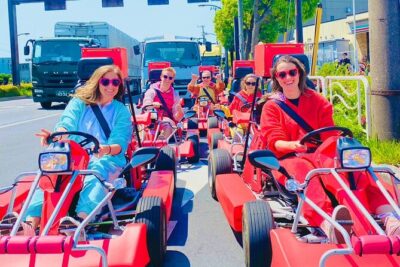 ★ 5.0Flagship 2-Hours Official Street Go-Kart Tour – Tokyo Bay ShopFrom $644,974 reviews
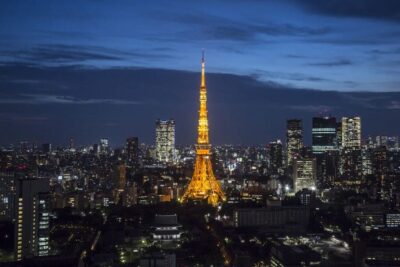 ★ 4.6Tokyo Tower: Admission TicketFrom $93,661 reviews
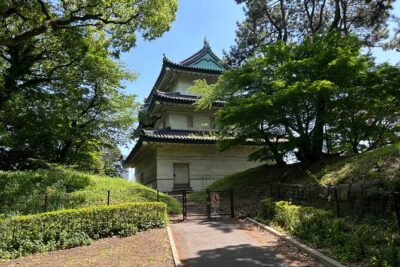 ★ 5.0Imperial Palace and Shogun Historical Walking TourFrom $222,251 reviews
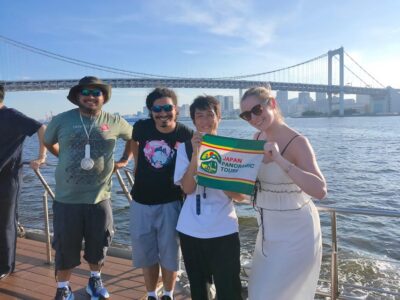 ★ 4.7Meiji Shrine, Asakusa, Skytree Bus Tour and CruiseFrom $1221,986 reviews
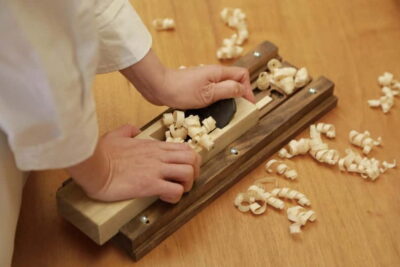 ★ 4.8Chopstick Making Workshop in GinzaFrom $251,366 reviews
 ★ 4.5Tokyo Panoramic 1 Day: Meiji Shrine, Asakusa, Odaiba and SKYTREE®From $851,222 reviews
 ★ 4.9Imperial Palace Japanese History Walking TourFrom $32987 reviews
 ★ 4.9Imperial Palace and Shogun Walking TourFrom $16935 reviews
Filed on these lists too