
REVIEW · KAMAKURA, THE GREAT BUDDHA AND ENOSHIMA
Kamakura and Enoshima: Private Guided Day Tour with Vehicle
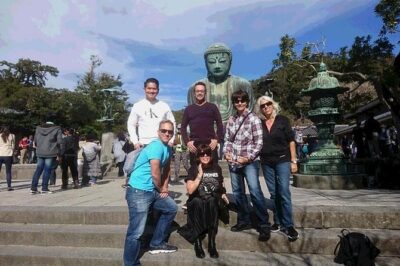
Kamakura and Enoshima in one clean day. I love the photo moment at the Great Buddha and the later payoff of climbing up to the Sea Candle for Mount Fuji views on clear days. The main thing to consider is the walking plus stair climbing, especially if the weather is hot or you’re wearing shoes that aren’t grippy.
This is built for people who want less stress and more meaning: hotel pickup in Tokyo, an English-speaking guide, and a comfortable private vehicle for the moves between sites. In guides I’ve heard named Taka, the best part is the way the stops come with context, not just a checklist.
In This Review
- Key highlights you will actually feel
- Why Kamakura and Enoshima in one day makes sense
- Hotel pickup to Kamakura: the comfort factor matters
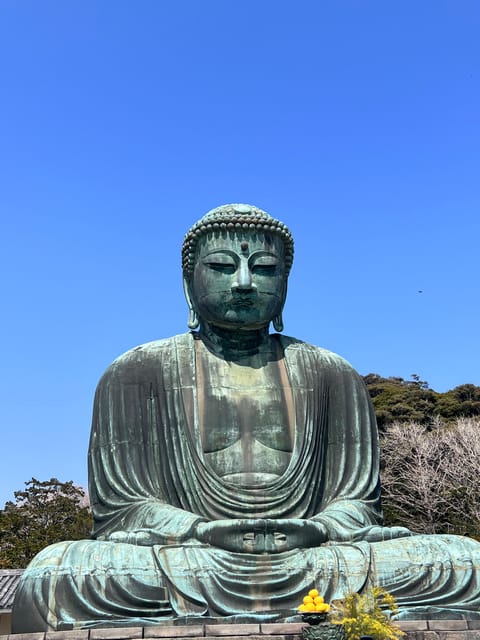
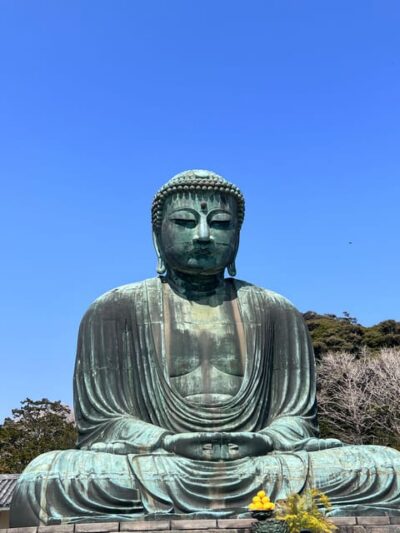
- Kōtoku-in Great Buddha: the 13.35 meter moment
- Hase-dera Temple: gardens, Kannon, and coastline viewpoints
- Tsurugaoka Hachimangu Shrine and spring cherry blossoms
- Hokoku-ji bamboo forest: the calm break that keeps you going
- Enoshima Island: shrine paths, Sea Candle views, and cave time
- Ebisu Cave: the island story you can walk through
- Komachi-dori: street food grazing and shopping time
- Price and value: what you get for $483 per group
- Timing and pacing: how to get the most from every hour
- Practical tips so the day stays easy
- Who this tour suits best
- Should you book this Kamakura and Enoshima day tour?
- FAQ
- How long is the Kamakura and Enoshima private tour?
- Where does the tour start and end?
- What is the maximum group size?
- What sights are included on this day trip?
- What is included in the price?
- Are temple and shrine entry fees included?
- Is the tour wheelchair accessible?
- What should I bring?
- Is there free cancellation?
Key highlights you will actually feel
- Private vehicle + guide, so you move between coastal spots without wrestling trains and transfers
- Great Buddha at Kōtoku-in, with a big 13.35 meter bronze statue moment and a guided intro
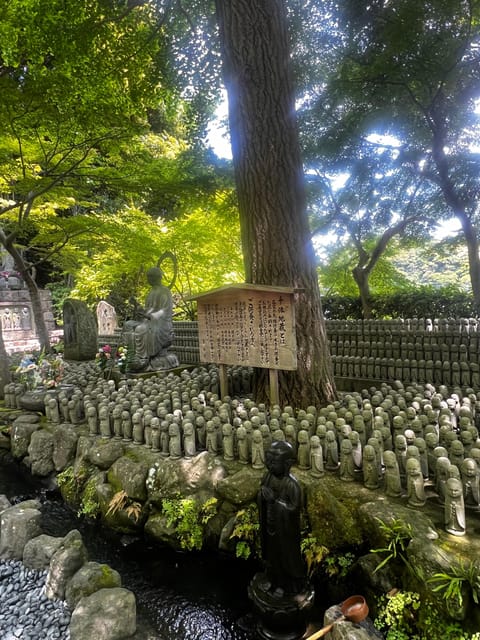
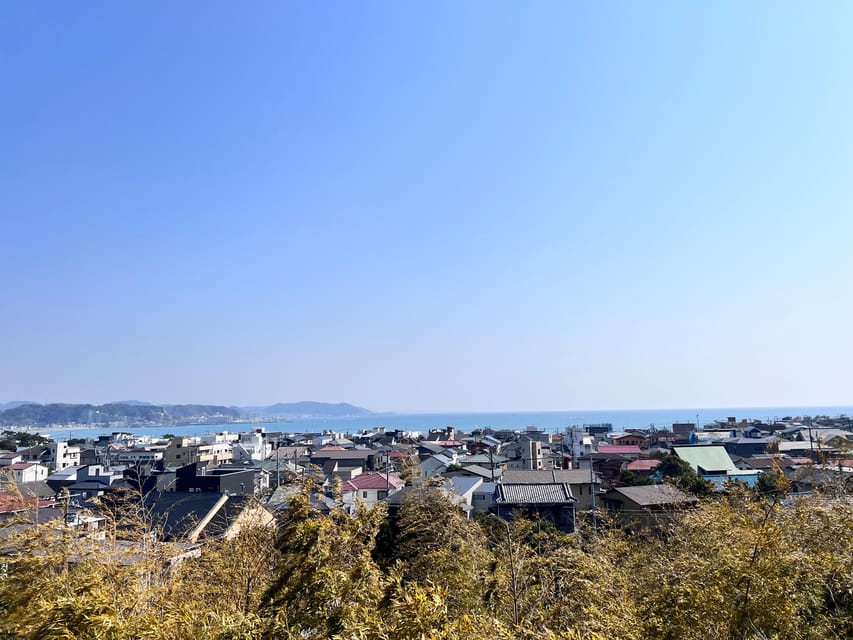
- Hase-dera Temple views and the Kannon statue, paired with garden walks that slow the day down
- Enoshima Sea Candle climb, timed for panoramic views of Mount Fuji when skies cooperate
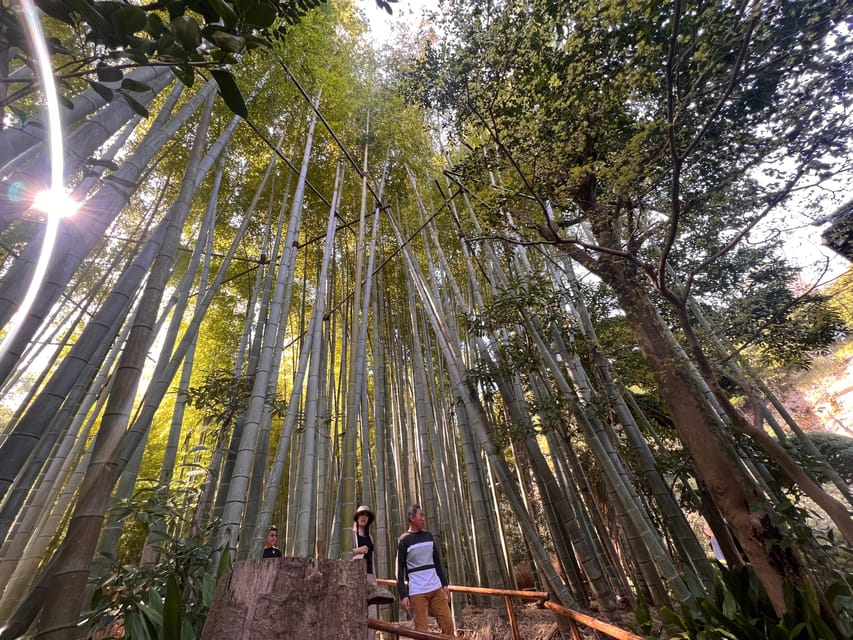
- Hokoku-ji bamboo forest and tea ceremony stop, a calm break that resets your legs
- Komachi-dori street time, where you can graze and shop instead of rushing
Coast and temples south of Tokyo, compared
- Kamakura and Enoshima: Private Guided Day Tour with Vehicle
★ 3.9 · 17 reviews - Tokyo Yokohama Night View Tour With Kamakura And Enoshima
★ 3.5 · 14 reviews
Why Kamakura and Enoshima in one day makes sense
Kamakura and Enoshima sit close enough to do together, yet they feel totally different once you’re there. Kamakura gives you temple steps, shrine courtyards, and that classic coastal-breeze mood. Enoshima gives you islandside paths, caves, and the kind of viewpoint you remember the next day.
The smartest part here is the pacing. A private tour with a vehicle means you spend your energy on walking the sites you want, not on figuring out transit, platforms, and train schedules. Your guide can also shift tiny bits of timing if your group is slower, faster, or more interested in photos versus shopping.
Hotel pickup to Kamakura: the comfort factor matters
Your day starts with pickup from your Tokyo hotel, then you head to Kamakura in a private vehicle. For a 10 hour day, that comfort is not a small detail. It reduces fatigue before you even reach the temples, and it keeps the schedule predictable.
You’ll also have bottled water, plus parking fees are taken care of. That means less decision-making mid-day, more time to look around. The group is private, up to 6 people, which is a sweet spot for keeping the tour personal without it dragging on like a big group.
Practical note: the stops include walks, and you’ll be on your feet a lot more than you might expect from a “coastal sightseeing day.” Comfortable shoes are not optional. Think grip for stairs and uneven pavement.
Kōtoku-in Great Buddha: the 13.35 meter moment
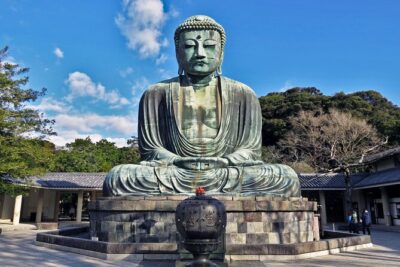
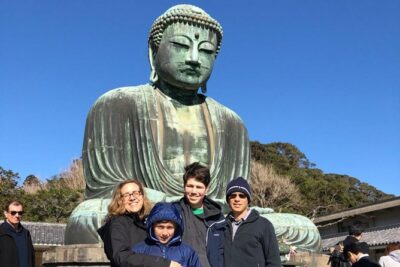
At Kōtoku-in, you get a guided visit and a photo stop for about 30 minutes. The main draw is the bronze Great Buddha statue, 13.35 meters tall. Even in photos, it looks impressive. In person, it’s the kind of scale that makes you naturally step back to take it in all at once.
One of the best values of a guided stop here is context. Your guide can explain what the statue represents and why it’s so tied to Kamakura’s identity. You’ll also be able to ask quick questions while the group is gathered.
Drawback to plan around: entry to Kotoku-in is 300 yen and is not included. Also, you’ll want to watch your footing around crowds when you’re lining up for photos. This is one of those places where your first wide shot matters, then you’ll appreciate the smaller details.
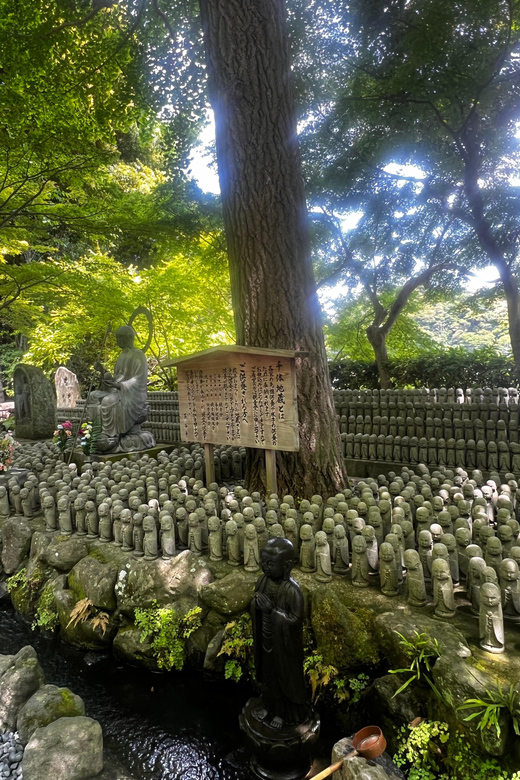
Hase-dera Temple: gardens, Kannon, and coastline viewpoints
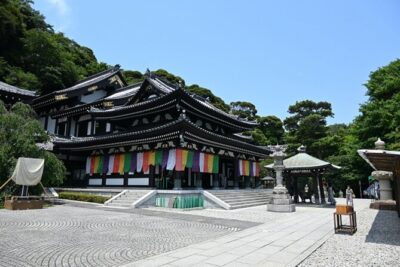
Next comes Hase-dera, with about an hour of guided touring and walking. This is where Kamakura starts to feel more like a slow stroll than a “run from stop to stop” day.
The big highlight is the temple’s massive wooden statue of Kannon, the goddess of mercy. You’ll see the statue as part of the guided path, then you’ll move through temple grounds that are known for gardens and scenic views over the coastline.
Two tips that make a difference:
- Expect steps and some uphill walking, so take your time.
- If the light is good, pause. The views are the payoff, not just the buildings.
Entry to Hase-dera is 400 yen and not included. Bring sunscreen because temple grounds can still leave you exposed, especially when you’re aiming for photos near viewpoints.
Tsurugaoka Hachimangu Shrine and spring cherry blossoms
After Hase-dera, the tour shifts into shrine territory with Tsurugaoka Hachimangu. You get a photo stop plus about an hour that includes guided exploration and walking.
Tsurugaoka Hachimangu is the most important Shinto shrine in Kamakura, and it shows in how the space is arranged and how the area draws people in. In spring, the cherry blossoms can be a major visual highlight. Even if it’s not peak bloom when you go, the shrine setting still makes a strong cultural contrast to the temple stop earlier.
What I like about this part of the day is that it changes the mood. You move from temple serenity into a shrine atmosphere that feels more open and ceremonial. It’s also a nice reset before Enoshima.
Hokoku-ji bamboo forest: the calm break that keeps you going
Hokoku-ji is one of those stops that people love for the atmosphere alone. You’ll have a photo stop and about an hour of guided time here, plus a tea ceremony experience stop.
The bamboo forest is cool, even on warm days. It’s also visually dramatic without needing any special hiking skills. That makes it a practical win during a packed day.
The tea ceremony stop matters too, even if you’re not chasing a formal cultural performance. It gives you a pause while your legs catch up. If you’re the type who likes structure, a guided tea stop can also add meaning, because the guide can connect the ritual to local customs.
Entry to Hokoku-ji is 400 yen and not included. If you’re sensitive to crowds, going earlier in the day tends to feel nicer, but you’ll still get that bamboo forest feeling at any reasonable time.
Enoshima Island: shrine paths, Sea Candle views, and cave time
Then you drive from Kamakura to Enoshima Island, and the whole day changes again. The tour gives you about two hours of guided exploration on Enoshima, followed by free time for shopping and regional food.
You’ll visit Enoshima Shrine and the Sea Candle (the lighthouse). After walking around the island paths, the tour includes the climb to the top of the Sea Candle. On clear days, that’s where the panoramic views of Mount Fuji can appear.
Here’s the real-world consideration: Fuji visibility depends on weather and cloud cover. Even if you do not see Mount Fuji, the viewpoint from Enoshima can still be a satisfying payoff. But you should not schedule a big “Fuji guarantee” mindset.
You’ll also explore caves on the island. That part is where Enoshima feels more mythical than just scenic. You get a glimpse into the island’s natural beauty and local mythology, all in a way that’s easy to experience during a normal day.
Wear shoes you can trust. Cave areas and uneven ground are not the place for slick soles.
Ebisu Cave: the island story you can walk through
Within the Enoshima experience, you’ll also get time at Ebisu Cave. The tour frames it as a chance to see the island’s mythology through something physical you can explore.
I like this style of stop because it’s not just looking at a view. It’s moving through a place that connects local legends to geography. It also breaks up the day visually and physically, since you alternate open air paths with enclosed cave spaces.
Because the tour duration is limited, you’ll want to move at an unhurried pace but keep momentum. Caves tend to slow everyone down, and you still have other highlights ahead.
Komachi-dori: street food grazing and shopping time
Before heading back toward the shrine sites, you’ll also get time on Komachi-dori Street. You’ll spend about an hour here, with guided context, plus free time for shopping and street food.
This is the part I recommend you treat like a buffet. You don’t need to over-plan. If something smells good and you can read what it is, you take the chance. If you’re not sure, your guide can point you toward common regional items.
Komachi-dori is also where you can pick up small souvenirs without doing a dedicated shopping excursion. If your group wants snacks, this is where you satisfy it without breaking the schedule.
Price and value: what you get for $483 per group
This tour costs $483 per group, up to 6 people, for about 10 hours. On paper, it’s not cheap. In practice, it can be great value if your group size is near the top and you care about having a guide plus a vehicle.
Here’s what you’re paying for:
- A private vehicle for the long day and between coastal areas
- An English-speaking guide who can explain what you’re seeing
- Hotel pickup and drop-off in Tokyo
- Bottled water and parking fees
What you’re not paying for:
- Entry to Kotoku-in (300 yen)
- Entry to Hase-dera (400 yen)
- Entry to Hokoku-ji (400 yen)
Those temple entry fees add up, but they are still modest compared with the cost of private logistics, especially when you factor in how much time a guided route saves. If you compare to doing this by yourself with trains and local transit plus ticket lines, the private version starts to look smarter fast.
For solo travelers or couples, it can feel pricey because you’re spreading the group cost across fewer people. But if you’re prioritizing comfort, English interpretation, and a plan that does not fall apart, it can still be worth it.
Timing and pacing: how to get the most from every hour
A 10 hour day has a rhythm. Your guide builds it around photo moments, walking blocks, and short breaks. The key is not to try to “win the itinerary” by sprinting between stops.
Instead, decide what you care about most in advance:
- If it’s viewpoints, you’ll love the Sea Candle climb.
- If it’s temples and statues, you’ll focus on Great Buddha and Hase-dera.
- If it’s atmosphere and photos, the bamboo forest is a big win.
- If it’s strolling and snacks, Komachi-dori is your best friend.
Also, you’ll appreciate that the itinerary can be tailored to your interests. That’s practical. If your group wants more time for shopping or fewer photo detours, a good guide can adjust without turning your day into chaos.
Practical tips so the day stays easy
Here’s what I would bring and do, based on how the tour is set up:
- Comfortable shoes with grip for stairs and uneven ground
- A camera, and give yourself time for Fuji-style viewpoints when conditions are good
- Sunscreen for temple and coastline areas
- A light layer for bamboo and cave sections, where it can feel cooler
One more real-world point. This is a private service, so you’re relying on the operator showing up on schedule. There have been reports of serious no-show problems in the past, including disconnected contact. To protect yourself, confirm the pickup details close to departure and keep your booking info handy. If anything feels off, contact them right away rather than waiting.
Who this tour suits best
This fits best if you:
- Want a first-timer friendly route that hits the big-name sights without stress
- Prefer guided explanations over reading signs on your own
- Like coastal scenery plus classic temple and shrine experiences
- Are traveling as a small group (up to 6) and want a vehicle instead of transit transfers
It might not be the best fit if you:
- Want an all-day hiking-focused plan with long trails
- Hate stairs and uneven surfaces
- Are traveling on a tight budget and cannot spread the group cost
Should you book this Kamakura and Enoshima day tour?
If you’re trying to get the most famous Kamakura and Enoshima highlights into one relaxed day, I think this is a strong option. The private vehicle and the guide support are the reason to choose it. You’re not just seeing places, you’re understanding what you’re looking at as you move between them.
My “book it” checklist is simple:
- You’re okay with walking and stair climbing.
- You’re traveling with enough people to make the per-person cost reasonable.
- You want English guidance at the statues, shrines, caves, and viewpoint stops.
If those boxes match your style, this is the kind of day trip you’ll feel in your bones, especially after the Sea Candle climb when the sky is clear and the view does its job.
FAQ
How long is the Kamakura and Enoshima private tour?
The tour duration is 10 hours.
Where does the tour start and end?
Pickup and drop-off are in Tokyo, with hotel pickup included.
What is the maximum group size?
It is a private group for up to 6 people.
What sights are included on this day trip?
You visit Kōtoku-in (Great Buddha), Hase-dera Temple, Tsurugaoka Hachimangu Shrine, Enoshima Island, Enoshima Shrine, the Sea Candle (with a climb to the top), and Ebisu Cave. You also have time for Komachi-dori Street and a Hokokuji bamboo forest stop with a tea ceremony experience.
What is included in the price?
Included are the private vehicle, an English-speaking guide, hotel pickup and drop-off, bottled water, and parking fees.
Are temple and shrine entry fees included?
No. Entry fees are not included: Kotoku-in (300 yen), Hase-dera (400 yen), and Hokoku-ji (400 yen).
Is the tour wheelchair accessible?
Yes, it is listed as wheelchair accessible.
What should I bring?
Bring comfortable shoes, a camera, and sunscreen.
Is there free cancellation?
Yes, you can cancel up to 24 hours in advance for a full refund.
South to Kamakura and the Coast
Newest Fujisawa write-ups from the Loving Japan desk
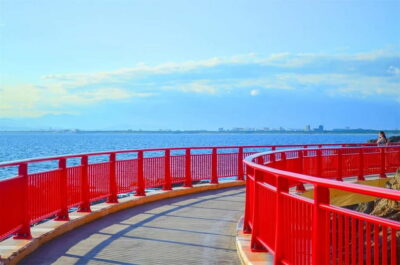
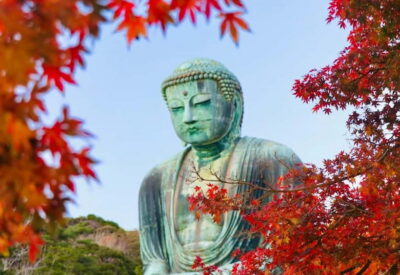
Kamakura, the Great Buddha and Enoshima, side by side.
 ★ 4.5Kamakura & Enoshima Day Trip including Temple TicketsFrom $581,375 reviews
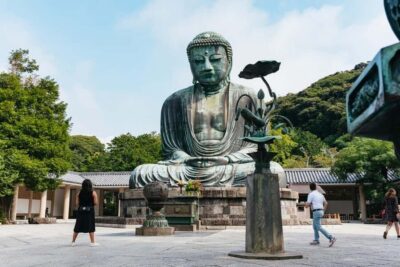 ★ 4.5Mt. Fuji, Kamakura, Big Buddha, & Lake Ashi Day TripFrom $49867 reviews
 ★ 4.5From Tokyo: Kamakura & Enoshima 1-Day Bus TourFrom $66189 reviews
 ★ 5.0Kamakura Historical Walking Tour with the Great BuddhaFrom $98129 reviews
 ★ 5.0Kamakura Private Tour: Temples, Nature, and the Great BuddhaFrom $98121 reviews
 ★ 5.0Kamakura Walking Tour – The City of ShogunFrom $35100 reviews
 ★ 4.9Sea of Mount Fuji, Hakone Ropeway, Ōwakudani, EnoshimaFrom $5084 reviews
 ★ 5.0Kamakura 8 hr Private Walking Tour with Licensed Guide from TokyoFrom $20180 reviews
Filed on these lists too