
REVIEW · PRIVATE
KIYOTO’s Kyoto Private Tour: Highlights & Hidden Gems
Kyoto can feel like a blur of temples. This private guide format turns it into a sensible day, with time for questions and stops beyond the postcard route. You’ll hit big icons like Fushimi Inari-taisha and Kiyomizu-dera, then flow into geisha streets, riverside bridges, and Arashiyama.
What I like most is the personal pace. A guide can steer you around the trickiest moments and help you notice details you would otherwise miss. I also really appreciate that the tour is built around photos, with guides praised for snapping great pictures and even making videos afterward.
One thing to plan for: several top sights require separate admission, and food and drinks are not included. So you’ll want to budget a little extra if you plan to enter everything listed.
In This Review
- Key highlights and practical perks
- Price and logistics: what you really get for $177.90
- Starting at Kyoto Station, Kyo-Navi, and getting your bearings fast
- Pontocho and the Kamo River: atmosphere in the first 10 minutes
- Fushimi Inari-taisha: walking the vermilion gate tunnel
- Kiyomizu-dera and Sannenzaka Ninenzaka: temple views plus old-street strolls
- The curious stop: a machiya Starbucks in Nineizaka
- Yasaka Pagoda, Hokan-ji, and Hanamikoji: geisha district photography with context
- Tatsumi Bridge and the Shirakawa River: the quick scenic reset
- Nishiki Market: snacks, shopping, and a one-hour reset
- Kinkaku-ji and Tenryuji: Golden Pavilion to Zen temple context
- Arashiyama Bamboo Forest, Kimono Forest, and Togetsukyo Bridge
- Guides, pace, and why private feels better than just faster
- Who should book this tour, and who should rethink it
- Should you book Kiyoto’s Kyoto Private Tour?
- FAQ
- How long is KIYOTO’s Kyoto Private Tour?
- Does the tour include pickup in Kyoto?
- What is included in the price?
- What is not included?
- Where does the tour start and end?
- Is this tour mostly walking?
- Can I cancel for free?
Key highlights and practical perks
- Private guide, full attention so you can ask questions and adjust the pace when your group wants more time somewhere
- Photo-focused guiding with people highlighted for taking excellent shots and helping with easy, relaxed posing
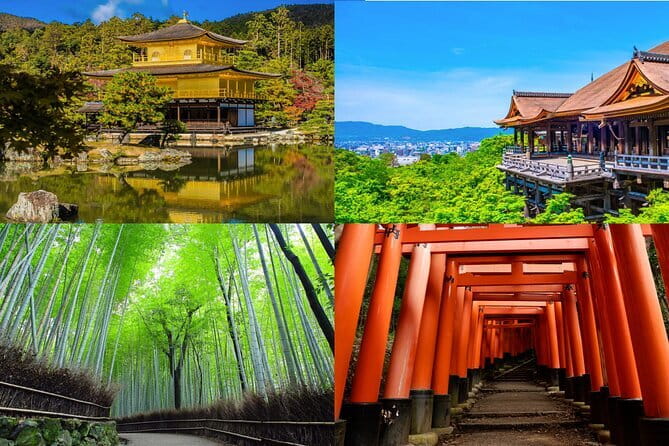
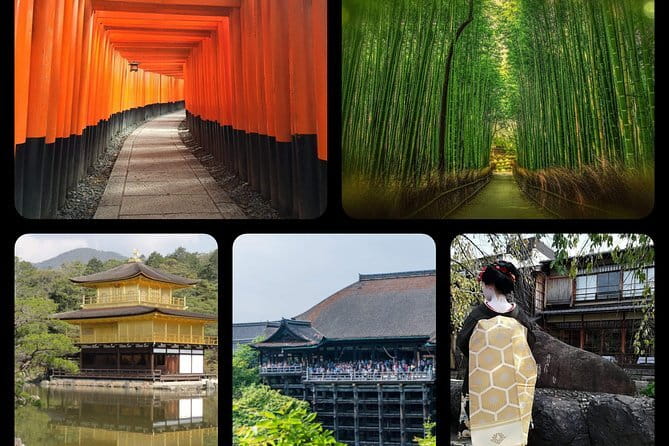
- Top Kyoto in one day including Fushimi Inari, Kiyomizu-dera, Kinkaku-ji, Tenryuji, and Arashiyama
- Mix of old streets and river views with short time blocks that still hit major atmosphere makers like Pontocho and Hanamikoji
- Easy start and finish at Kyoto Station through Kyo-Navi (so you’re not hunting a meeting point)
- Some admissions are on you and transport is mostly walking, with optional public transport that can cost extra
Still weighing up options in Kyoto? These are the ones our reviewers rated highest.
- PERFECT KYOTO 1-Day Bus Tour
★ 5.0 · 13,518 reviews - Kyoto: Fushimi Inari, Kinkakuji, Bamboo Grove 1 Day Bus Tour
★ 4.8 · 4,316 reviews - Kyoto: Tea Ceremony in a Traditional Tea House in Kiyomizu
★ 4.9 · 3,519 reviews - Kyoto Geisha Walking Tour: Gion District & Hidden Gems
★ 4.7 · 3,273 reviews
Price and logistics: what you really get for $177.90
At $177.90 per person, this is not the cheapest way to tour Kyoto. But you are paying for something that matters on a first visit: a guide who can manage your time and keep your day from turning into a chaotic checklist.
Most of the day is walking, with public transport only if your guide decides it helps. That matters because Kyoto’s sights can be spread out. If you are traveling with kids, older relatives, or anyone who tires out fast, you’ll want to be clear at the start about your walking comfort and energy level.
You also get a few useful booking tools. There’s a mobile ticket, and pickup is offered. Plus, there are group discounts if you are traveling with friends. When I’m trying to decide if a private tour is worth it, I look for exactly this, flexibility plus a real itinerary that does not depend on you figuring out everything alone.
Finally, remember what’s not included. You’ll cover food, drinks, and attraction tickets. The tour also says transportation is not included, primarily because this is designed as a walking experience. If you hate surprises, this is where you should do a quick budget check before the day starts.
Starting at Kyoto Station, Kyo-Navi, and getting your bearings fast
The tour meets at Kyoto Tourist Information Center Kyo-Navi Japan, on the second floor of the Kyoto Station building. That’s a smart pick. Kyoto Station is where most people start their day, and it saves you time tracking down a far-flung address.
Ending back at the meeting point is also practical. It means you are not stuck trying to navigate trains or taxis after a long day of sightseeing. For a 4 to 8 hour tour, the less end-of-day hassle you have, the more you enjoy the day.
From there, the route is designed like a guided loop, so you can build momentum. You start with Kyoto’s “flowing street” feeling, then move into the heavy-hitter shrines, then old neighborhoods, then temples, and finally Arashiyama.
Pontocho and the Kamo River: atmosphere in the first 10 minutes
You begin at Pontocho District, a narrow alley along the Kamo River between Sanjo and Shijo streets. Even if you only spend about 10 minutes here, it’s a great early stop because it sets the mood. This area is known as one of Kyoto’s geisha districts, so you’ll see that classic narrow-street rhythm and traditional storefront vibe.
Why it works early: it gets you grounded before you head into the big religious sites. Also, a short stop like this helps you start slow. If your group needs a restroom break or a quick drink, this is an easy moment to handle it.
If you’re visiting during busy periods, expect crowds at major “picture alleys” like this. A good guide helps by choosing where you stop and when you walk through, so you spend time seeing rather than waiting.
- PERFECT KYOTO 1-Day Bus Tour★ 5.0 · 13,518 reviews
- Kyoto: Fushimi Inari, Kinkakuji, Bamboo Grove 1 Day Bus Tour★ 4.8 · 4,316 reviews
- Kyoto: Tea Ceremony in a Traditional Tea House in Kiyomizu★ 4.9 · 3,519 reviews
- Kyoto Geisha Walking Tour: Gion District & Hidden Gems★ 4.7 · 3,273 reviews
- Kyoto: Tea Ceremony Ju-An at Jotokuji Temple★ 4.9 · 3,207 reviews
Fushimi Inari-taisha: walking the vermilion gate tunnel
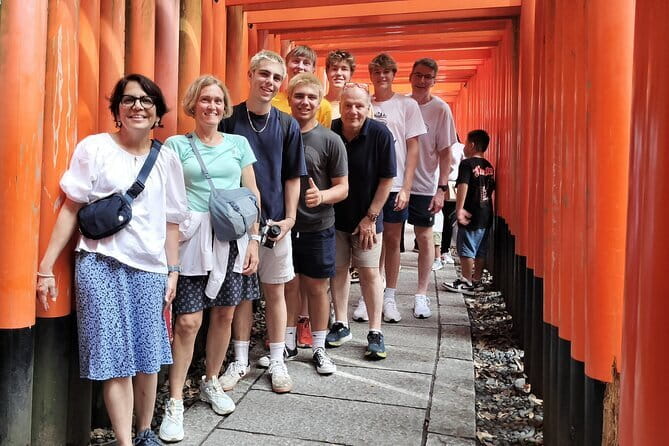
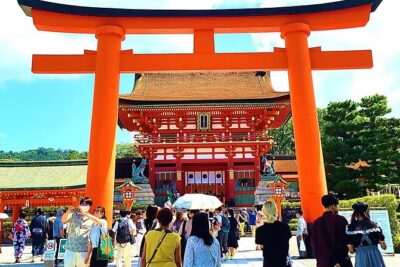
Next is Fushimi Inari-taisha, famous for the Senbon Torii, often called the Thousand Torii Gates. You’ll have about an hour here, plus you’ll be walking through that iconic stretch of red gates.
This stop is one of the best examples of why a private tour beats solo wandering. The shrine complex can be easy to rush through. With a guide, you can pace yourself, learn what you are looking at, and decide whether you want a short route or more time deeper in the grounds.
Admission is free, which helps. The main “cost” is your time and energy, because you are doing a walking route through the gates and surrounding areas. If stairs or uphill paths tire you, tell your guide up front so your route matches your comfort level.
Kiyomizu-dera and Sannenzaka Ninenzaka: temple views plus old-street strolls
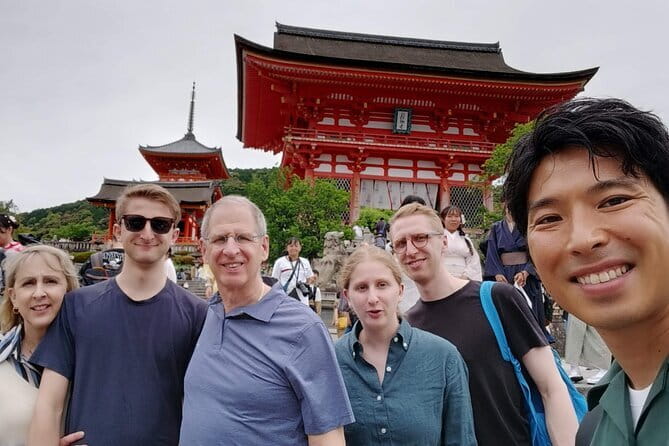
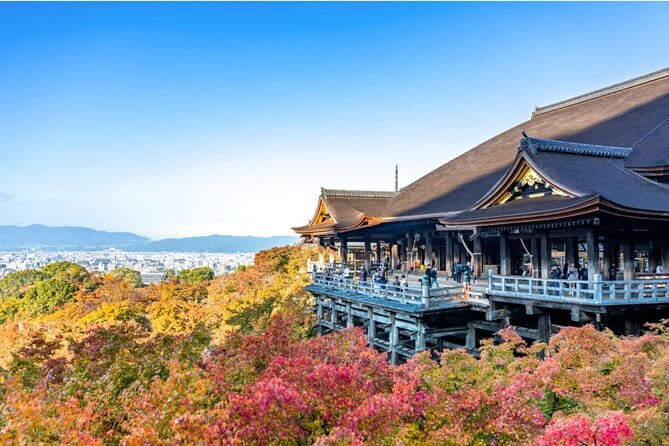
From Fushimi Inari you head toward Kiyomizu-dera, which you’ll visit for about an hour. This is perched on the slopes of Mount Otowa, and it’s the kind of temple that makes you look around even when you think you already know what it looks like.
The big consideration here is tickets. Kiyomizu-dera admission is not included, so plan on paying the entrance fee yourself if you want to go inside. Still, this is exactly the sort of place where a guide improves the experience, because they can point out what to notice and help you understand the layout while you walk.
After Kiyomizu-dera, you move to Sannenzaka and Ninenzaka, the stone-paved streets often described as old Kyoto. You’ll spend about an hour strolling the slopes and lanes that connect the temple area to the surrounding neighborhoods.
This is where you slow down. You can browse, take photos, and just watch daily life in the tourist-heavy parts of the city. If you want the maximum “Kyoto feeling,” this is the part of the day where it matters to take your time rather than speed through.
The curious stop: a machiya Starbucks in Nineizaka
One of the more unusual moments is a very short visit to Starbucks Coffee in Kyoto Nineizaka Yasaka Chaya, described as a machiya-style Starbucks. The tour only sets aside about 5 minutes, and the note says you can explore inside, but you can also leave the tour if you want to stay longer.
Why this is actually useful, not silly: it shows how Kyoto tourist life can blend with local architecture. If you love details, you’ll likely enjoy noticing how the traditional-style building works as a cafe space.
If you’re not interested in coffee stops, treat it as a quick break. But if you are, this micro-stop can break up the more intense temple walking and give you a clear reset.
Yasaka Pagoda, Hokan-ji, and Hanamikoji: geisha district photography with context
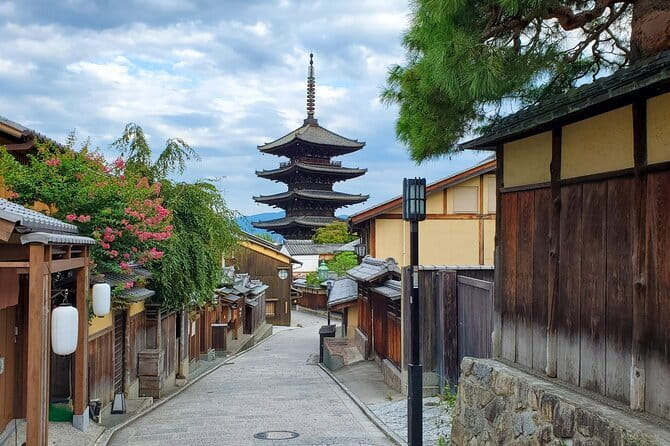
Then you shift into the scenic edges of Higashiyama with a stop at the Yasaka Pagoda (Gojunoto) at Hokan-ji Temple for about 5 minutes. The tour description frames it as an elegant silhouette and calls out the picture-perfect feel of the view.
Right after that is Hanamikoji Street, the narrow stone-paved street in Gion. You get about 5 minutes here, so this is not a long wander. It’s a moment to feel the place, take photos, and move on with a guide keeping your timing efficient.
This portion is good for first-timers because it compresses atmosphere. But it’s also where you should manage expectations. If you want longer time just to stroll without moving, you’ll need to use that private-tour flexibility and ask your guide to extend it.
Tatsumi Bridge and the Shirakawa River: the quick scenic reset
You then make time for Tatsumi Bridge, about 10 minutes. It’s a small wooden bridge along the Shirakawa River, and the tour description emphasizes its charm and photo appeal.
This is the kind of stop that works in the middle of a packed day. The river walk energy lets you cool down mentally after temple clusters and busy streets. It’s short enough that it doesn’t steal your day, but it gives you a different visual scene.
If you’re visiting in rain or heavy heat, this is also where you might appreciate a guide’s timing decisions, since a short stop is easier to adjust when weather changes.
Nishiki Market: snacks, shopping, and a one-hour reset
After the river-side scenery, you’ll spend about 1 hour at Nishiki Market, which is often called Kyoto’s Kitchen. This is a practical stop because it gives you options. You can graze, look at preserved and packaged foods, or just browse for fun.
Food and drinks are not included, so you’ll pay as you go. That said, it’s one of the best places to control your budget. If you want light snacks, you can keep costs down. If you want a bigger tasting moment, you can do that too.
What makes this market stop valuable with a private guide is selection and timing. Instead of bouncing from stall to stall randomly, you can ask what’s worth trying and how to avoid wasting time. Also, your guide can help you decide what to carry if you plan to keep walking afterward.
Kinkaku-ji and Tenryuji: Golden Pavilion to Zen temple context
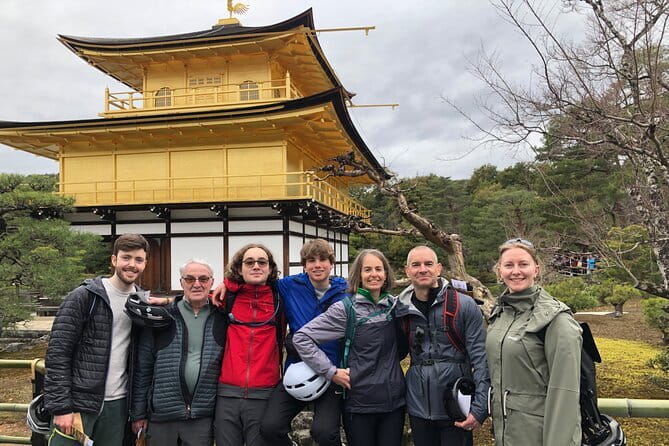
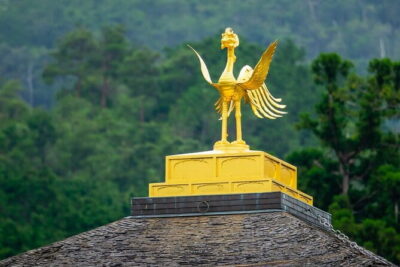
Next, you head to Kinkakuji Temple, also known as the Golden Pavilion, with about an hour allocated. Admission is not included, so you’ll need to factor in the ticket cost. The tour description highlights the pavilion’s three-story structure and the sense of gold everywhere you look.
This is a must-stop if you want Kyoto’s iconic “wow” moment, but it’s also a place where crowds can be a thing. A private guide helps you move with purpose, so you spend more time at the key viewpoint areas and less time stuck in line tangles.
After that, you visit Tenryuji Temple in Arashiyama for about 30 minutes. The tour description includes real historical specifics: it was founded in 1339 by Ashikaga Takauji, and it was built on the site of a former imperial villa to honor Emperor Go-Daigo.
That kind of context is exactly why a guided stop pays off. Even if you only have half an hour, you get meaning while you look around. If you love learning but hate getting stuck in museum-style lectures, this is a good balance.
Admission for Tenryuji is not included either, so again, expect to pay for entry.
Arashiyama Bamboo Forest, Kimono Forest, and Togetsukyo Bridge
The day’s final stretch is Arashiyama, and it’s planned like a sequence of “different moods” rather than one long straight line.
First is the Arashiyama Bamboo Forest, about 30 minutes. The tour description calls it an iconic path about 400 meters long. If you’ve ever wondered why people stop and stare in bamboo groves, this is the answer. The scale of the path makes it feel like the trees go on forever.
A note for your comfort: you’ll walk that path, which means you should wear shoes you can handle for a half-day of uneven surfaces and crowds.
Next is the Arashiyama Kimono Forest, about 10 minutes. This is an art installation near Randen Arashiyama Station featuring about 600 cylindrical pillars, roughly 2 meters tall. It’s an easy stop because it’s short, and it adds variety after the natural bamboo atmosphere.
Then you finish at Togetsukyo Bridge, about 10 minutes. The tour description says it spans 155 meters across the Oi River and is a historic landmark with scenic views. This ending matters. After the temples and forest walking, you get open river views and a chance to watch the area without being boxed into a ticketed site.
Guides, pace, and why private feels better than just faster
One theme that shows up in how this tour is described is that guides are active and friendly, and they’re not shy about photo help. People highlighted guides such as Yuhey, Kiyoto-san, Akiyo, and Paren for being kind, flexible, and good at making the day feel smooth.
That matters because Kyoto days can go two ways. Either you plan everything and still feel rushed, or you show up and hope you figure it out. This private format is built for the second problem, you get someone to keep you on track and help you adjust when the group wants more time somewhere.
You should also expect flexibility at the micro-level. One of the attractions includes a short Starbucks stop with an optional leave if you want to stay longer. That’s the vibe, quick permission to tailor small things without breaking the whole plan.
Who should book this tour, and who should rethink it
This tour is a strong fit if you:
- Want a first-time Kyoto day that hits major classics plus calmer scenic moments
- Prefer a guide who can answer questions instead of reading every sign
- Like photo stops and appreciate someone who helps you time pictures
- Travel as a couple or family and want control over pacing
You might want to rethink it if you:
- Hate walking, since the tour is primarily on foot
- Don’t want to pay additional admission fees for multiple temples
- Want long hours at only one area, because the itinerary is designed to cover many sights
Should you book Kiyoto’s Kyoto Private Tour?
If you want a smooth Kyoto highlight day without the mental load of figuring everything out, I think this is a good buy. The 4.9 rating and high recommendation rate suggest most people leave happy, and the private-guide setup is exactly where value shows up in Kyoto.
Book it if you’re okay paying for tickets and meals on top of the tour price, and you can handle a full, mostly-walking day. Skip it if you want a totally budget-in-control trip, or if you only want one or two sites at a deep level.
If you do book, do one simple thing that pays off. At the start, tell your guide what you care about most and how much walking you can handle. That’s the moment your private tour becomes personal, and you’ll feel it all the way through Arashiyama.
FAQ
How long is KIYOTO’s Kyoto Private Tour?
The tour runs about 4 to 8 hours, depending on the flow of the day.
Does the tour include pickup in Kyoto?
Pickup is offered.
What is included in the price?
You get a private tour with a guide, plus the tour includes certain stops. Food, drinks, and attraction tickets are not included.
What is not included?
Food and drinks are not included, and attraction admissions are not included for sites that require entry. Transportation is also not included, with public transport possible at an additional cost.
Where does the tour start and end?
The tour starts at Kyoto Tourist Information Center Kyo-NaviJapan in the Kyoto Station building, and it ends back at the same meeting point.
Is this tour mostly walking?
Yes. It is primarily a walking experience, and public transport may be used for an extra cost.
Can I cancel for free?
Yes. You can cancel up to 24 hours in advance for a full refund.
Newest Kyoto write-ups from the Loving Japan desk

Private, side by side.
 ★ 5.0Tokyo 6hr Private Tour with Government-Licensed GuideFrom $1553,902 reviews
 ★ 5.0Private Tour to Mt. Fuji and Hakone (Fully Licenced Operator)From $4971,910 reviews
 ★ 4.9Mount Fuji Full-Day Private Tour from Tokyo (Customizable)From $3931,470 reviews
 ★ 4.8Private City Highlights Tour with Local GuideFrom $1061,433 reviews
 ★ 5.0Private Custom Tour: Tokyo in a DayFrom $1591,432 reviews
 ★ 5.0Kyoto 6hr Private Tour with Government-Licensed GuideFrom $1551,369 reviews
 ★ 5.0Tokyo Customized Private Tour: See Top Attractions in 1 DayFrom $1451,351 reviews
 ★ 4.9Hotspots & Hidden Gems Walking Tour Private or GroupFrom $331,300 reviews