
REVIEW · JAPANESE COOKING CLASSES
Little EDO Sushi Making workshop in Kawagoe
Sushi lessons in old Kawagoe feel personal. You’ll make nigiri and sushi rice in a 140-year-old building that used to serve rice trade, guided by an English-speaking Japanese sushi chef. The class is capped at a small group size, and the venue sits just a few minutes’ walk from KASHIYA YOKOCHO, so your evening in Kawagoe feels easy to build around.
One watch-out: getting to the workshop involves stairs, so plan ahead if you’d rather avoid them.
In This Review
- Quick highlights from Little EDO Sushi Making in Kawagoe
- A 140-year-old sushi workshop steps from Kashiya Yokocho
- The class format: small group, English guidance, and real practice
- What you actually make: nigiri and maki (plus the rice that binds it)
- Inside Musubiya: staircase cabinets, beams, and the calm of an old shop
- What’s included: ingredients, meal, and practical take-home skills
- Dietary options in advance: vegan, gluten-free, halal, and allergy limits
- Price and value: $84.08 for a focused, small-group craft lesson
- Booking timing and weather: what to expect before you go
- Who should book this sushi making workshop
- Should you book Little EDO Sushi Making in Kawagoe?
- FAQ
- Where is the meeting point for the sushi making workshop?
- How long is the class?
- What will I learn to make during the workshop?
- Will the class be in English?
- Can I request vegetarian or other dietary options?
- Are there allergy restrictions I should know about?
- Is the venue wheelchair friendly since it has stairs?
- Is the meal included, and are drinks included?
- What is the cancellation policy?
Quick highlights from Little EDO Sushi Making in Kawagoe
- 140-year-old former rice merchant space with staircase cabinets and ceiling beams that make the class feel like a time capsule
- Hands-on nigiri and maki practice, not just watching the chef work
- Sushi rice know-how you can repeat at home, the base skill behind both styles
- Small group cap of 6, which helps you get real attention as you form and roll
- Dietary requests handled in advance for vegan, vegetarian, gluten-free, halal, and certain allergy cases
- Meal included with ingredients, so you get to eat what you make, not just take notes
Still weighing up options in Kawagoe? These are the ones our reviewers rated highest.
- Kawagoe Japanese Food Tour : Unagi Kaiseki and Sake near Tokyo
★ 5.0 · 30 reviews - Kawagoe Private Custom Tour with Local Guide
★ 5.0 · 29 reviews - Kawagoe 4hr Private Tour with Licensed Guide (Kawagoe Dep)
★ 5.0 · 13 reviews
A 140-year-old sushi workshop steps from Kashiya Yokocho
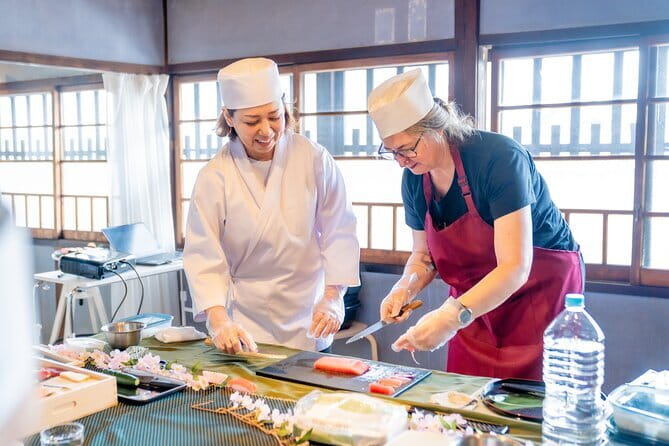
This is the kind of Kawagoe experience you remember because it feels grounded in place. The workshop takes place in a 140-year-old historic building that was once a rice wholesaler, now a beloved local cafe. When you walk in, the details do the storytelling for you, especially the staircase cabinets and the impressive ceiling beams that bring back that old merchant-era vibe.
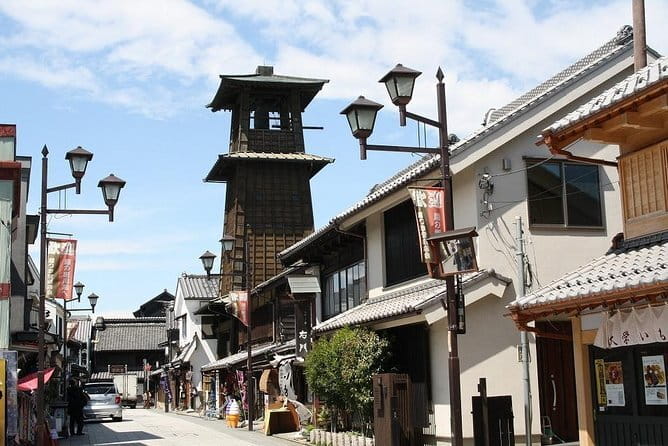
Location matters here because Kawagoe is best when you can wander before and after. The workshop is about a 3-minute walk from KASHIYA YOKOCHO, a famous alley area known for local food and snacks. So you can plan an easy rhythm: class first, then stroll nearby afterward, or do it the other way if your schedule fits.
The setting also makes the craft feel more serious. Sushi is precise, but it’s also everyday food. Learning it in a former rice trading space puts you in the right mindset: you’re not just copying a recipe, you’re learning the logic behind it, especially around rice.
The class format: small group, English guidance, and real practice
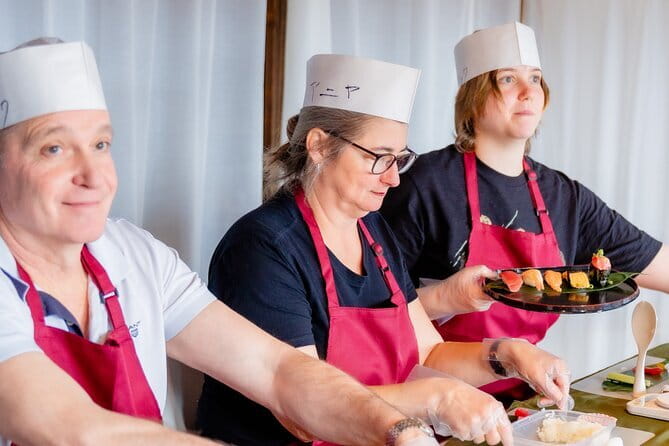
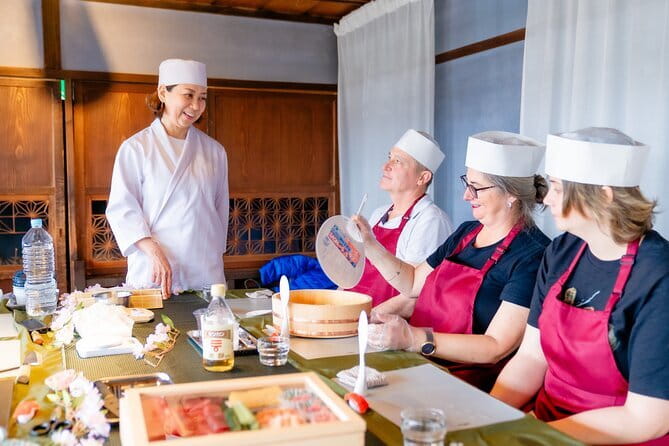
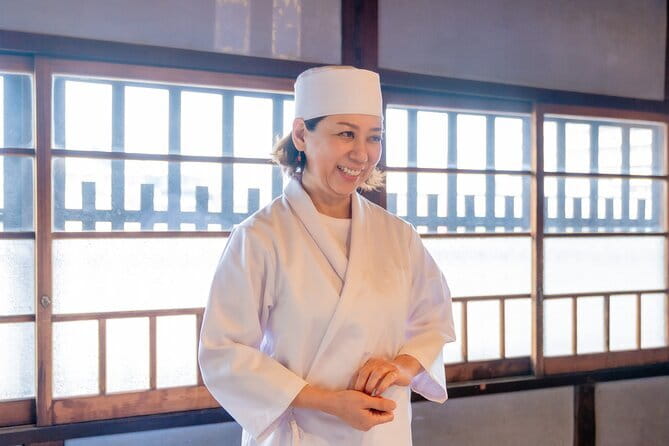
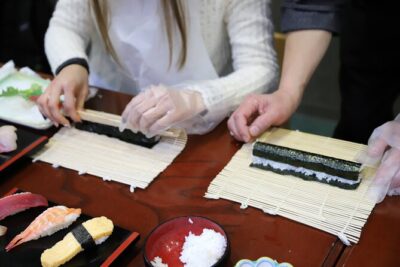
This workshop is built for hands-on learning. You’ll be working directly on your own sushi, guided by an enthusiastic, English-speaking Japanese sushi chef. That’s a big deal, because sushi technique is mostly about muscle memory and small adjustments, like how you press, spread, and roll.
Group size stays small, with a maximum of 6 travelers. That typically means you spend less time waiting and more time getting corrections. It also helps with pacing. You’re not rushed through a demo. You learn, practice, and then move on to the next step.
Time-wise, you’re looking at about 1.5 hours (approx.). The schedule shows Monday sessions running from 12:00 PM to 1:30 PM and again from 3:00 PM to 4:30 PM. Some class descriptions also frame it as a longer hands-on session, so treat it as a single, focused block where you’ll do prep and eating as part of the experience.
One more practical note: you’ll get a mobile ticket, so it’s easy to organize. This is the kind of activity that fits well into a day that includes walking and eating, since you’re not tied to a hotel pickup or a long transfer.
What you actually make: nigiri and maki (plus the rice that binds it)
The two big skills are nigiri and maki. You’ll learn how to make:
- Nigiri sushi (hand-formed)
- Maki sushi (roll sushi) with fillings
Here’s what makes this more than a “try sushi” activity. The class puts heavy focus on sushi rice. You learn how to make sushi rice that you can recreate at home, and that matters because rice quality and seasoning drive the entire experience. Even if your topping is simple, good rice makes it feel like real sushi.
You’ll also learn technique that shows up in real sushi work. In the class, you’ll get guidance on things like shaping and handling. One former participant specifically pointed out learning about the history, sushi rice, how to cut neta, and how to make nigiri sushi. If you’re the type who cares about the details, you’ll appreciate how the class talks about technique, not just end results.
For maki, rolling is where patience comes in. The class format gives you a chance to practice how to roll and assemble properly, not just assemble a single finished roll. The goal is to leave with confidence, so your at-home rolls don’t end up like sushi-shaped accidents.
And yes, you also get cultural context while you work. Nigiri sushi is noted as having been created in Japan about 300 years ago, which gives the craft a timeline. It’s a quick history lesson, but it helps you understand why the form and handling matter.
Inside Musubiya: staircase cabinets, beams, and the calm of an old shop
The physical space is part of the learning. This workshop is housed in a historic rice merchant building, and the design elements are the kind you can only appreciate in person. You’ll see the staircase cabinets and ceiling beams that highlight how the space functioned before it became a cafe.
Why does this matter? Because it turns the class into something you can focus on. Cooking classes sometimes happen in modern rooms that feel interchangeable. Here, the room has character, and it supports the idea that food traditions are built over time, not invented in a single kitchen.
There are practical details too. Access involves stairs. If stairs could be a problem for you, you should tell them in advance. The venue can make alternative arrangements if you communicate your needs ahead of time, so you can keep your day smooth.
Finally, the historic setting pairs well with the neighborhood. Since you’re near KASHIYA YOKOCHO, the area around the workshop is already geared for walking and casual food stops. So you can extend the experience with a meal or snack after class without needing a big commute.
What’s included: ingredients, meal, and practical take-home skills
You get what you need to cook, and you also get to eat. The experience includes:
- Ingredients for the cooking class
- The meal (so you can savor what you made)
Beverages are not included, so plan to either buy something nearby or bring water if that’s your style. No hotel pickup is included either, so you’ll want to treat this as a walk-in activity from the local transit area.
What you learn is the real value. The class is explicit about sushi rice, and that’s the skill that lets you go home and make sushi with less guessing. If you’ve ever tried to recreate sushi rice at home and wondered why it didn’t taste right, this is the part you’ll want to pay attention to. Even small changes in seasoning and technique can turn rice from bland to sushi-worthy.
You’ll also pick up how to handle key steps in sushi making. A past participant noted learning how to cut neta and make nigiri, and that kind of feedback matters because it suggests you’re not just rolling a basic demo. You’re learning the steps that would actually show up if you made sushi for friends.
And if you’re the type who enjoys seasonal traditions, there’s a hint of that energy too. One participant said they wanted to join the ehomaki period again, which fits well with maki practice. If you’re planning ahead for that kind of seasonal roll, this is a good confidence builder.
Dietary options in advance: vegan, gluten-free, halal, and allergy limits

If you have dietary needs, this workshop is set up to help, as long as you request changes when booking. The class is vegetarian-friendly by default, and they ask you to inform them of allergies in advance.
They list options you can request:
- Vegan
- Vegetarian
- Gluten-free
- Halal
They also spell out allergy limits. They say they cannot accommodate allergies involving meat, nuts, fruits, or dairy. That’s important, so double-check your specific needs before you book.
Two practical takeaways:
- Submit menu changes early. The class is clear that you cannot make changes on the day of the session.
- Don’t assume substitutions will be easy for every allergy category. The stated exclusions are the rule, so if your allergy includes items beyond those allowed categories, you’ll want to plan accordingly.
If you’re traveling with a group and want everyone to eat confidently, this kind of upfront dietary handling is exactly what you want. It reduces stress and keeps you focused on learning.
Price and value: $84.08 for a focused, small-group craft lesson
At $84.08 per person, this isn’t a bargain-bin cooking class. But you are paying for a few things that add up quickly.
First, the workshop includes ingredients and the meal. That alone makes the price feel more complete, since you’re not adding food costs on top.
Second, you’re getting a small class with a max of 6 people. That usually means more attention and less time stuck waiting for the next step. Sushi technique benefits from correction, and small groups help you get it.
Third, you’re learning two styles, nigiri and maki, with emphasis on rice, which is the core skill for making sushi taste right. A lot of “sushi experiences” stop at rolling or tasting. Here, the workshop aims at actual cooking technique you can repeat.
Finally, the setting is not generic. The historic building, staircase cabinets, and old merchant atmosphere contribute real atmosphere and comfort, especially compared with a modern kitchen that could be anywhere.
If you compare this to a longer cooking class with more dishes, it’s a shorter commitment. But for a tight itinerary day, it’s good value because it’s focused and delivers skills you can use again.
Booking timing and weather: what to expect before you go

This workshop uses a mobile ticket, and you’ll receive confirmation at booking. It’s also noted that the experience requires good weather. If weather causes cancellation, you’ll be offered a different date or a full refund.
One more planning detail: on average, this experience is booked about 19 days in advance. That’s a useful signal. If you’re traveling during popular weeks or you want a particular time slot on Mondays, book early so you’re not forced into a less convenient hour.
Who should book this sushi making workshop
You’ll probably love this if you:
- Want hands-on sushi skills in a way that feels practical for at-home cooking
- Like learning cultural food context, not just technique
- Appreciate small-group attention while you cook
- Are traveling with dietary needs and can request them ahead of time
- Plan to spend time around Kawagoe’s KASHIYA YOKOCHO area and want an activity that fits walking distance
If you mainly want a big-food tour where you sample dozens of dishes, this is likely not that. It’s focused on teaching you to make sushi well.
Should you book Little EDO Sushi Making in Kawagoe?
Yes, I’d book it if your goal is to come home with skills, not just a meal and a photo. The combination of nigiri and maki practice, a strong emphasis on sushi rice, and a small-group format makes it a smart value for the price. Add the historic 140-year-old setting and the close-by KASHIYA YOKOCHO location, and it turns into an easy, satisfying Kawagoe day plan.
If stairs are a concern, message the venue in advance. Otherwise, this is the kind of workshop that makes sushi feel doable, even if you’ve never rolled a maki before.
FAQ
Where is the meeting point for the sushi making workshop?
You start at 結家 -MUSUBIYA-Japan in Kawagoe, Saitama. The address given is 1-6-7 Ishiharacho, Kawagoe City, Saitama, Japan (350-0824).
How long is the class?
The class lasts about 1 hour 30 minutes (approx.).
What will I learn to make during the workshop?
You’ll learn to make two classic sushi types: nigiri sushi (hand-formed) and maki sushi (roll sushi).
Will the class be in English?
Yes. The chef leading the class is described as English-speaking.
Can I request vegetarian or other dietary options?
Yes. The workshop offers a vegetarian menu, and you can request vegan, vegetarian, gluten-free, or halal options when booking.
Are there allergy restrictions I should know about?
They can accommodate allergies in advance, but they list exclusions for Meat, Nuts, Fruits, and Dairy. Requests must be made in advance, and changes are not accepted on the day of the class.
Is the venue wheelchair friendly since it has stairs?
The venue has stairs to access. If you prefer to avoid stairs, you should let them know in advance so alternative arrangements can be made.
Is the meal included, and are drinks included?
The ingredients for the cooking class and the meal are included. Beverages are not included.
What is the cancellation policy?
You can cancel for a full refund up to 24 hours before the experience start time. Free cancellation is allowed if you meet that cutoff.
Newest Kawagoe write-ups from the Loving Japan desk
Japanese Cooking Classes, side by side.
 ★ 5.0Sushi Making Tokyo Roll and Authentic Japanese Sushi ClassFrom $593,971 reviews
 ★ 4.9Roll and Authentic Sushi Making Class in AsakusaFrom $581,957 reviews
 ★ 5.0Ramen Cooking Class at Ramen Factory in KyotoFrom $1311,937 reviews
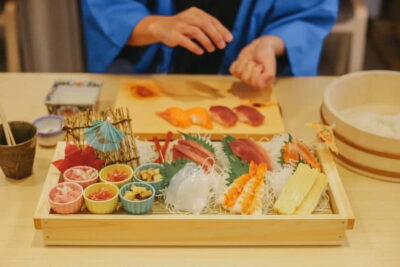 ★ 4.9Sushi Making Class in a Happi Coat near a Famous SpotFrom $421,377 reviews
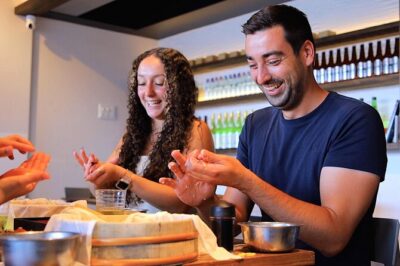 ★ 5.0Sushi Making Osaka Roll and Authentic Japanese Sushi ClassFrom $311,220 reviews
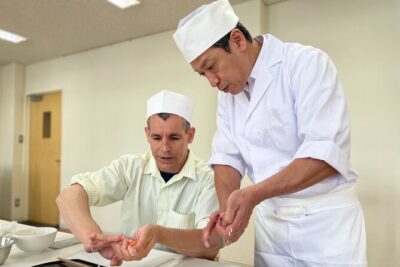 ★ 5.0Tokyo Sushi Making Class in Tsukiji with Professional ChefFrom $491,177 reviews
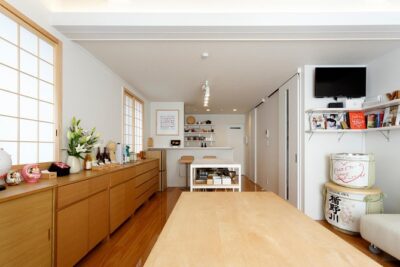 ★ 5.0Ramen & Gyoza Cooking Class in Tokyo with Local Supermarket VisitFrom $122823 reviews
 ★ 5.0Tsukiji Fish Market Guided Tour and Sushi Making with Pro ChefFrom $104775 reviews