
REVIEW · JAPANESE COOKING CLASSES
Ramen & Gyoza Cooking Class in Tokyo with Local Supermarket Visit
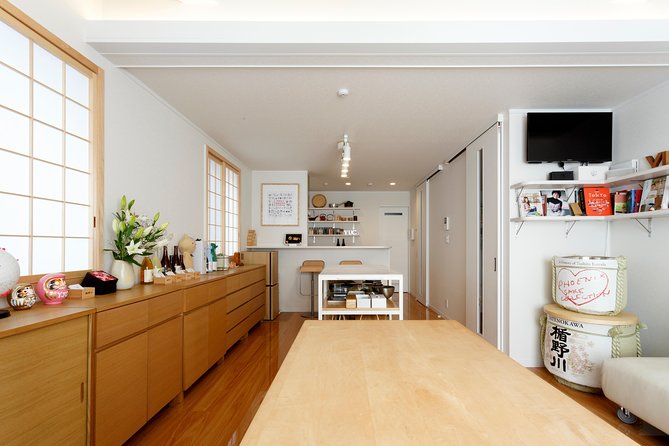
Ramen gets personal in Tokyo. This small-group class in YUCa’s home kitchen teaches you to build ramen and gyoza from scratch. I love YUCa’s warm explanations and the fact that you get to eat what you make. The one thing to think about is that the supermarket tour is optional, so if you want it, plan for 12:30 to 13:00.
You start at 10:00 am near public transportation in Nishiogu (Arakawa City), then you get a short talk about Japanese home cooking and daily life before you cook. I also like the max group size of 7 travelers, which keeps the vibe friendly and helps you follow along.
Diet is handled with a clear option: a vegetarian version is available if you ask when you book, and you should share any dietary needs ahead of time. The whole experience runs about 2 hours 30 minutes.
In This Review
- Key points to know before you go
- Home-Kitchen Ramen and Gyoza: why this class feels different
- Finding YUCa’s Japanese Cooking in Nishiogu, Arakawa City
- The 10:15 home cooking lecture: technique plus everyday life
- 10:30 to 12:30 cooking and tasting: making gyoza and ramen from scratch
- What you can expect in the cooking session
- Gyoza: the texture lesson
- Ramen: building a bowl you can repeat later
- Tasting while it’s still fresh
- Optional 12:30 supermarket tour: shopping like a Tokyo local
- Vegetarian needs and what to tell YUCa when booking
- Small-group dynamics: how attention works with a max of 7
- Price and value at $122.70 per person
- Should you book this ramen and gyoza class in Tokyo?
- FAQ
- How long is the ramen and gyoza cooking class?
- Where does the class start?
- Is the supermarket tour included?
- Do they offer a vegetarian option?
- How large is the group?
- Are there dietary accommodations?
Key points to know before you go
- Max group size 7 keeps the class interactive and easy to follow
- YUCa’s home kitchen means real neighborhood cooking, not a demo hall
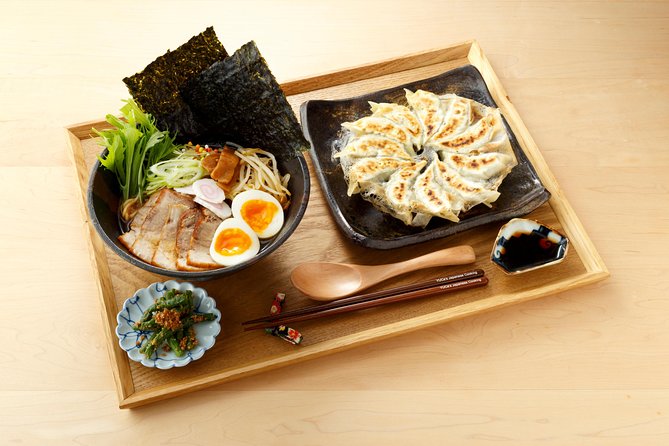
- Ramen and gyoza together so you learn two core Japanese comfort foods
- 10:15 home cooking talk adds context for ingredients and techniques
- Optional supermarket tour (12:30 to 13:00) can boost your independence later
- Vegetarian option available if you request it at booking
Cook it yourself instead. Other kitchens in Tokyo
- Tokyo: Roll and Authentic Sushi Making Class in Asakusa
★ 4.9 · 1,957 reviews - Tokyo: Sushi Making Class in a Happi Coat near a Famous Spot
★ 4.9 · 1,377 reviews - Tokyo Sushi Making Class in Tsukiji with Professional Chef
★ 5.0 · 1,177 reviews - Ramen & Gyoza Cooking Class in Tokyo with Local Supermarket Visit
★ 5.0 · 823 reviews
Home-Kitchen Ramen and Gyoza: why this class feels different
Tokyo has plenty of food tours. This one is about the stuff that makes the food work: technique, timing, and how Japanese home cooks think about ingredients.
In the kitchen with YUCa, you’re learning how to prepare ramen and gyoza like an expert. The class is designed to be quick and focused (about 2 hours 30 minutes), so you are not spending half the day just waiting around. You also get a chance to taste what you create in a fun, relaxed setup, not in a rush-between-stops way.
I like that the experience is built as more than just recipes. There’s a short lecture on Japanese home cooking and lifestyle at 10:15 to 10:30, then you move into cooking and tasting from 10:30 to 12:30. That structure helps the lesson stick, because you’re not memorizing steps in a vacuum.
Price-wise, it’s $122.70 per person. In plain terms, you’re paying for: (1) a small-group class with a local chef, (2) guided preparation of ramen and gyoza, (3) eating the results, and (4) the option of a neighborhood supermarket visit. For Tokyo, that’s a reasonable trade when you care more about doing than just watching.
Finding YUCa’s Japanese Cooking in Nishiogu, Arakawa City
The meeting point is YUCa’s Japanese Cooking, 2-chōme-34-8 Nishiogu, Arakawa City, Tokyo 116-0011. The location is listed as near public transportation, which matters because Tokyo walking distances can be a little sneaky if you are going for early morning.
One practical advantage is that this is not set up in central tourist Tokyo. The class happens in a residential neighborhood outside the usual inner-core flow, which tends to make the experience feel more like everyday Japan. If your goal is authenticity over convenience, this suits you.
If you are using a ride-hail app, you might find it easy to get there directly. Still, I would plan to handle public transit comfortably, since the tour states it is near transit. Start on time at 10:00 am so you do not feel rushed during the first lecture.
The 10:15 home cooking lecture: technique plus everyday life
From 10:15 to 10:30, you have a lecture about Japanese home cooking and lifestyle. It’s short by design, but it sets expectations for what you are about to do next.
Why this matters: ramen and gyoza look simple until you try to recreate them. The lecture helps you understand the logic behind ingredient choices and the way home cooks approach flavor and texture. Even if you consider yourself a beginner, that context helps you follow what the chef is showing during the cooking segment.
It also changes how you taste at the end. Instead of eating and saying, great, the flavors are strong, you get a better idea of what you did that created the outcome.
This is also the moment where you can ask questions in a low-pressure way. With a smaller group, you are more likely to get direct answers rather than hearing one comment repeated for everyone.
A bowl somewhere else in Tokyo
- Ramen & Gyoza Cooking Class in Tokyo with Local Supermarket Visit★ 5.0 · 823 reviews
- Tokyo: Ramen Tasting Tour with 6 Mini Bowls of Ramen★ 4.9 · 432 reviews
- Tokyo: Easy Ramen Cooking Experience in Kabukicho, Shinjuku★ 4.6 · 321 reviews
- Ramen and Sushi Cooking Class with Sake Pairing Set in Tokyo★ 5.0 · 291 reviews
- Professional Ramen & Gyoza with Ramen Chef in a restaurant!★ 5.0 · 223 reviews
10:30 to 12:30 cooking and tasting: making gyoza and ramen from scratch
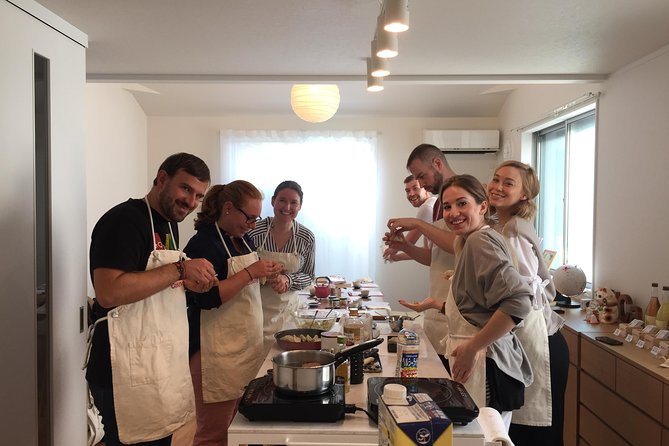
The heart of the class is 10:30 to 12:30, and that’s where the day earns its keep. You’ll work on dumplings and noodle soup, including ramen and gyoza using different vegetables and meat.
What you can expect in the cooking session
- You’ll be guided through steps for ramen preparation and gyoza preparation.
- The process includes cooking and assembling, not just eating restaurant-style food.
- You should expect an organized flow, with clear instructions and a chef who explains what you are doing and why.
Now, here’s the balanced part. Some reviews note that the class can be more guided than fully hands-on at every step, with moments where you might do smaller tasks like adding an ingredient while the chef leads the rest. Other reviews describe it as interactive, with people given roles and involved in making dumplings by hand. So the real takeaway for you: go in expecting a supported lesson where you participate, not a DIY cooking marathon.
Gyoza: the texture lesson
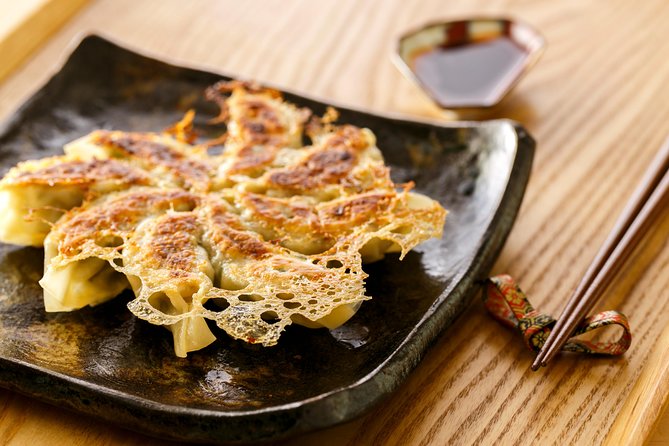
Gyoza is the dish that rewards patience and attention to detail. The class focuses on minced pork dumplings, and you’ll learn how to assemble and cook them. Dumplings are very technique-driven, so even when you are not doing every single step alone, you still get to learn how the pieces come together.
Ramen: building a bowl you can repeat later
Ramen is the comfort-food centerpiece, and the class teaches how to prepare noodle soup. The included tasting is the payoff. You’ll see how the seasoning choices and preparation steps affect the final flavor, and that makes it easier to recreate later.
Tasting while it’s still fresh
Eating what you made is not just a nice ending. It’s part of how you learn. You can connect your actions to the result while everything is still hot and at its best.
Optional 12:30 supermarket tour: shopping like a Tokyo local
After cooking and tasting, the schedule shows an optional local supermarket tour from 12:30 to 13:00.
This stop can be a big value add for you if you want to cook again at home. Seeing the ingredients in a real neighborhood store helps you understand what options exist for noodles, dumpling wrappers, sauces, and the vegetables that make each recipe work. You also get the chance to ask the chef about items that seem strange at first glance.
Two practical cautions based on the overall trip info:
- Because it is optional, you should treat it as a bonus rather than guaranteed main course time.
- If supermarket shopping is your top reason for booking, line up your calendar so you can stay for the 12:30 to 13:00 window.
Some people have felt disappointed when the store visit did not happen exactly as expected. That’s not rare in optional add-ons, so the best move is simple: confirm your plan ahead of time so you do not end up with a time gap after the class.
Vegetarian needs and what to tell YUCa when booking
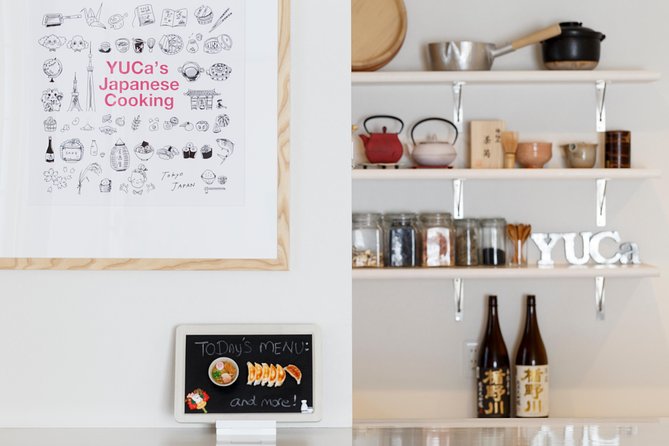
The tour info says a vegetarian option is available. You need to request it when you book, and you should advise any specific dietary requirements at the time of booking.
That’s the right approach for two reasons:
- Japanese recipes often rely on specific ingredients for flavor, even when a dish is veggie-friendly.
- A chef can only plan substitutions properly if they know what you need ahead of time.
If you have allergies or a more complex restriction, the safest move is to clearly communicate it during booking. The experience notes that you should advise dietary requirements then, so you’re using their process, not improvising on the day.
Small-group dynamics: how attention works with a max of 7
This experience has a maximum group size of 7 travelers. In a kitchen, that number matters a lot. Big groups can turn cooking classes into watching from the side. Smaller groups tend to keep the energy conversational and help the chef manage pace.
Based on the feedback in the provided materials, YUCa tends to make people feel welcome and encourages participation. Many people highlight the friendly, warm hosting style, and several mention that the class works well for different ages and different cooking levels.
Still, balance it in your mind: it is a home kitchen with one main space, so the class may not be perfectly uniform hands-on time for everyone. If you want maximum participation in every step, go in with the attitude of teamwork and roles, and you’ll likely feel more satisfied.
Price and value at $122.70 per person
Let’s talk about what you are actually buying for $122.70.
You get:
- A short lecture on Japanese home cooking and lifestyle (10:15 to 10:30)
- A main cooking and tasting session (10:30 to 12:30)
- Training from a local chef in ramen and gyoza preparation
- The chance to eat what you made
- An optional supermarket tour (12:30 to 13:00)
When you break it down, this is less like a ticket to a show and more like a structured food workshop in a real kitchen. The value is strongest if you want to leave with something practical: a ramen and gyoza method you can repeat at home, plus ingredient ideas you can shop for.
Also, the pricing being per person makes it a smart move for couples and small groups. With a max group size of 7, you’re not paying to be packed in and ignored.
Should you book this ramen and gyoza class in Tokyo?
You should book if you want:
- A small-group home cooking experience instead of a crowded restaurant meal
- A lesson that includes both ramen and gyoza
- Culture context, not just recipes
- A chance to visit a neighborhood supermarket if you can stay for the optional 12:30 to 13:00 stop
You should think twice if:
- Your schedule is tight after noon, because the optional supermarket tour is its own 12:30 to 13:00 block
- You expect fully hands-on, step-by-step cooking for every minute. Some parts may be more guided depending on the flow and group size
If your goal is learning Japanese comfort food in a way you can recreate, this class is a strong fit. The combination of a home kitchen, a local chef, and food you eat on the spot is exactly the kind of Tokyo experience that turns into a real skill, not just a memory.
FAQ
How long is the ramen and gyoza cooking class?
The experience runs about 2 hours 30 minutes. It starts at 10:00 am and includes a lecture from 10:15 to 10:30, cooking and tasting from 10:30 to 12:30, with an optional supermarket tour from 12:30 to 13:00.
Where does the class start?
The meeting point is YUCa’s Japanese Cooking, 2-chōme-34-8 Nishiogu, Arakawa City, Tokyo 116-0011, Japan. The activity ends back at the meeting point.
Is the supermarket tour included?
The local supermarket tour is listed as optional and scheduled for 12:30 to 13:00 after the cooking and tasting.
Do they offer a vegetarian option?
Yes. A vegetarian option is available. You need to request it at the time of booking.
How large is the group?
This activity has a maximum of 7 travelers.
Are there dietary accommodations?
The tour instructions say you should advise any specific dietary requirements at the time of booking. A vegetarian option is also available if requested.
One More Bowl


Kitchens You Can Book Into

Newest Tokyo write-ups from the Loving Japan desk




Japanese Cooking Classes, side by side.
 ★ 5.0Sushi Making Tokyo Roll and Authentic Japanese Sushi ClassFrom $593,971 reviews
 ★ 4.9Roll and Authentic Sushi Making Class in AsakusaFrom $581,957 reviews
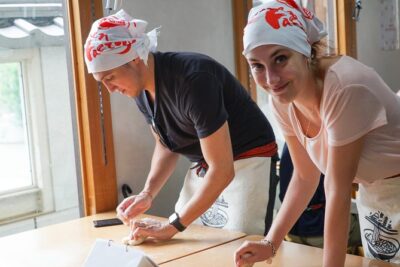 ★ 5.0Ramen Cooking Class at Ramen Factory in KyotoFrom $1311,937 reviews
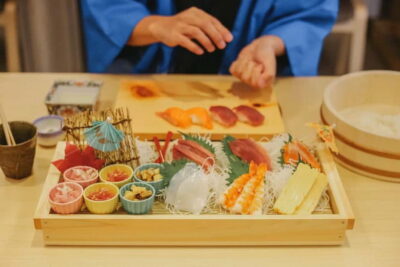 ★ 4.9Sushi Making Class in a Happi Coat near a Famous SpotFrom $421,377 reviews
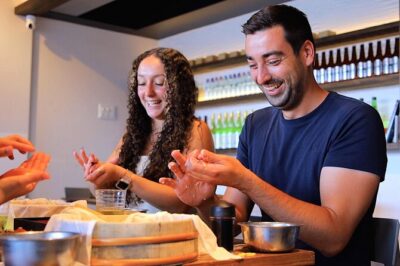 ★ 5.0Sushi Making Osaka Roll and Authentic Japanese Sushi ClassFrom $311,220 reviews
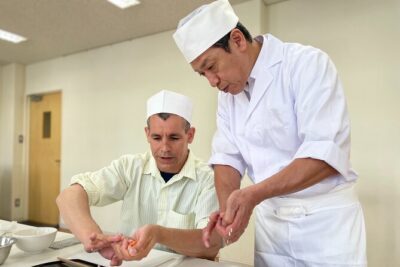 ★ 5.0Tokyo Sushi Making Class in Tsukiji with Professional ChefFrom $491,177 reviews
 ★ 5.0Tsukiji Fish Market Guided Tour and Sushi Making with Pro ChefFrom $104775 reviews
 ★ 5.0Sushi Making in Kyoto! Same-day bookings welcome!From $53713 reviews
Filed on these lists too