
REVIEW · JAPANESE COOKING CLASSES
Sushi Making Osaka Roll and Authentic Japanese Sushi Class
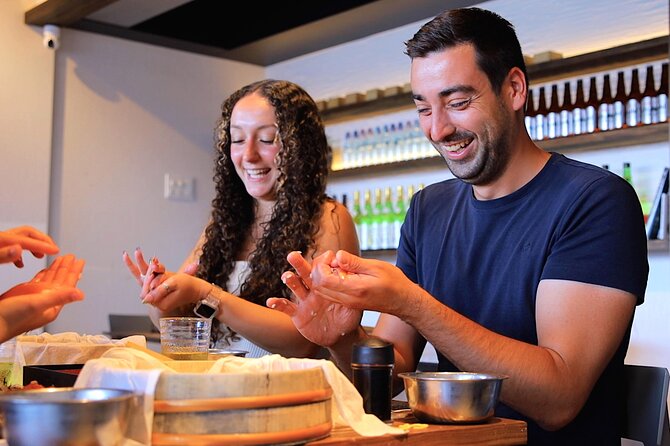
Sushi class in Osaka sounds fun, but this one is practical too, with step-by-step maki roll and nigiri coaching plus enough time to eat what you make. I really like the fact that your ingredients are prepped and ready, so you spend less time fussing and more time learning technique. I also like that it runs near Dotonbori and Shinsaibashi, making it an easy add-on to a food-heavy day. One possible drawback: a few people felt the pace could be a bit tight, so if you care most about photos and lingering over the meal, plan your expectations for a focused session.
This is a hands-on, beginner-friendly class (no cooking experience needed) capped at 20 people, led by English-speaking instructors. You’ll mix, roll, shape, learn what to do and why, then enjoy your own sushi while you’re still excited. If you’re picky about ingredients or have dietary needs, it pays to confirm details up front, since swapping items is not always guaranteed.
In This Review
- Key Points You’ll Actually Care About
- A Fun Osaka Food Stop That Teaches Skills, Not Just Snacks
- Where You Meet, and Why Location Matters in Osaka
- What You Make: Maki Roll and Nigiri (Including That Osaka Roll Focus)
- How the Class Works: Prepped Ingredients, Step-by-Step Coaching
- The Meal Part: You Actually Eat Your Sushi
- Photos and Timing: What to Expect If You Want Memories
- Price and Value: Is $31.01 a Good Deal?
- Who This Class Fits Best (And Who Might Want Something Else)
- Small Details to Watch Before You Go
- Quick Decision: Should You Book This Osaka Sushi Class?
- FAQ
- How long is the sushi making class in Osaka?
- Where is the meeting point?
- Is hotel pickup or drop-off included?
- Is an experienced cook required?
- What language is the instruction?
- What’s included in the price?
- How big are the groups?
- Is cancellation free if I change my plans?
- Are service animals allowed?
Key Points You’ll Actually Care About
- All ingredients are prepped for you, so class time goes to technique, not chopping and measuring
- You make both maki rolls and nigiri, not just one style
- Small group size (max 20) helps the instructor see what you’re doing
- English-speaking instruction keeps things smooth for international visitors
- Near Dotonbori and Shinsaibashi, so you can pair it with Osaka street food and shopping
- You eat what you make, with a portion that a lot of people describe as plenty
Cook it yourself instead. Other kitchens in Osaka
- Sushi Making Osaka Roll and Authentic Japanese Sushi Class
★ 5.0 · 1,220 reviews - Osaka Sushi Making Experience
★ 5.0 · 400 reviews - Osaka: Ramen and Gyoza Cooking Class in Dotonbori
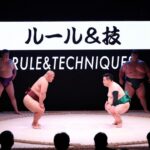
★ 5.0 · 378 reviews - Osaka: Sumo Stage Show with Bento or Snack + Fight & Photo
★ 4.3 · 364 reviews
A Fun Osaka Food Stop That Teaches Skills, Not Just Snacks
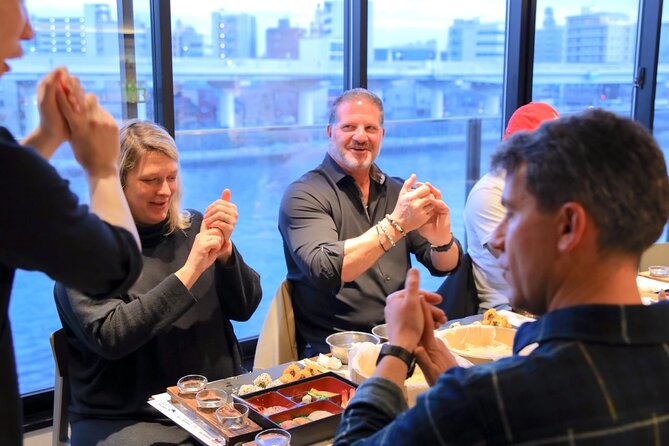
Osaka is a city of eating, but it’s also a place where food culture is easy to feel. This sushi class works because it gives you a skill you can carry home, not just a sit-down meal. In about 1 hour 40 minutes (approx.), you learn the basics of rolling and shaping, then eat your results.
What makes it especially workable is that the ingredients come ready for you to use. You’re not standing there trying to decode prep stations. You’re learning the motion and the sequence, which is what matters if you want to repeat sushi at home later.
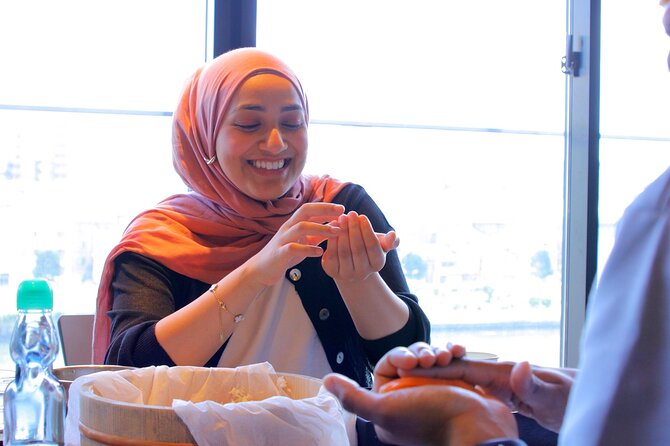
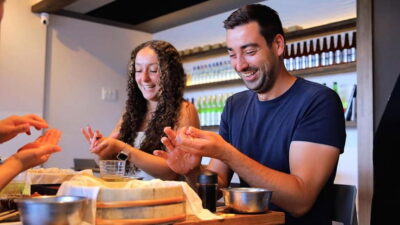
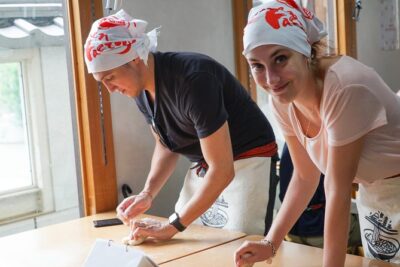
The teaching style is hands-on and beginner-friendly. Even if you’ve never tried sushi-making, you’re guided through it step by step, and the instructors are there to answer questions. Some classes include quick cultural context too, so you’re not only copying moves, you’re understanding what the style is aiming for.
Where You Meet, and Why Location Matters in Osaka
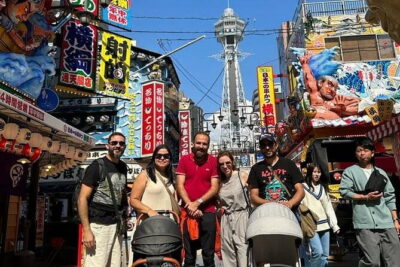
The meeting point is at Sushi Making Osaka, Cooking Class in Japan, 1-chōme-16-20 Higashishinsaibashi, Chuo Ward, Osaka (542-0083). It’s in the same general area as Dotonbori and Shinsaibashi, so you can plan your day without hopping across town.
This matters because Osaka days often get scheduled around food clusters. Dotonbori is known for street-level energy and sights, while Shinsaibashi is a big shopping corridor where you’ll find plenty of places to eat before or after class. Being close to both makes it easier to slot the workshop between meals, rather than forcing a whole travel detour.
One small practical note: some people found the location a bit tricky to spot, so I’d give yourself extra time to find the door and get settled. A mobile ticket is used, and the activity ends back at the meeting point, so you’re not dealing with a complicated route afterward.
What You Make: Maki Roll and Nigiri (Including That Osaka Roll Focus)
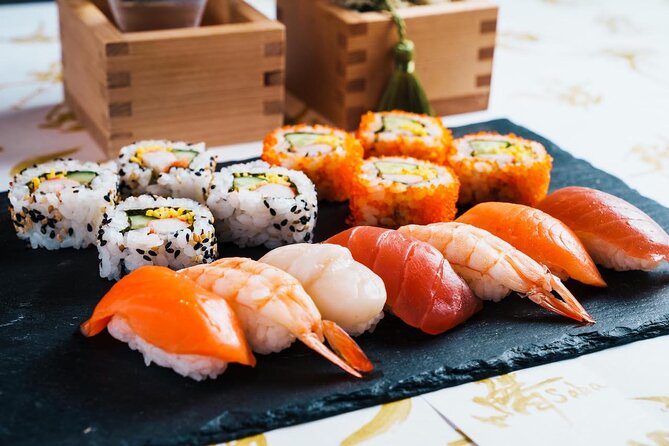
The class centers on sushi rolls and nigiri, with step-by-step practice for each. You’ll learn how to assemble a maki roll (often referred to as the Osaka roll in the class name) and also shape nigiri properly. If you’ve only eaten sushi and assumed it’s mostly about the fish, this is where your perspective shifts.
Maki roll is the skill of balance. You’re trying to get even rice distribution, control the filling amount, and roll cleanly without overstuffing. Nigiri is the opposite feeling. It’s less about layers and more about shaping, handling rice gently, and matching the bite size to what you want to eat.
Instructors also cover little technique points that are easy to miss when you’re just watching restaurant sushi chefs. The goal is that you leave knowing what to do next time, even if your first attempt at a tight roll is more wonky than perfect.
For food options, a few people mention vegetarian and fish choices being available. That’s a good sign if you’re flexible, but if you have strong ingredient restrictions, you should flag it early when you book.
Counters and courses we sat at around Osaka
- Osaka: Roll and Authentic Sushi Making Class in Dotonbori★ 4.9 · 239 reviews
- Osaka: Sushi Class in Dotonbori★ 4.9 · 160 reviews
- Osaka Dotonbori: Sushi Making Experience★ 4.9 · 122 reviews
- Osaka: Sushi Making in Spacious Studio (SAME-DAY OK!)★ 5.0 · 75 reviews
- Sushi and Japnese foods cooking class in Osaka★ 5.0 · 51 reviews
How the Class Works: Prepped Ingredients, Step-by-Step Coaching
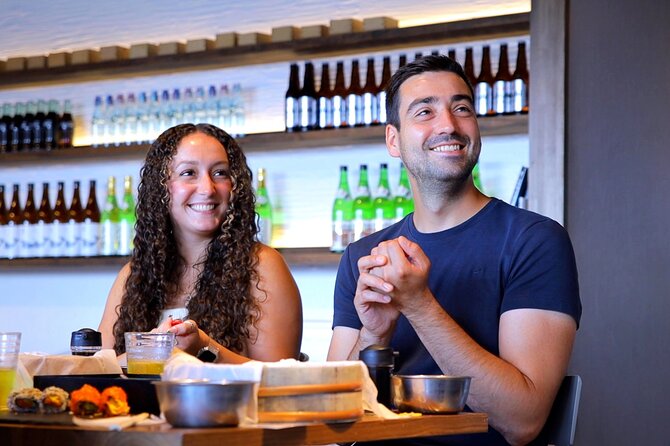
A big reason this class feels approachable is that your ingredients are prepped and ready. That changes the whole experience. Instead of scrambling to get everything chopped while you’re learning, you can focus on timing and technique.
You’ll work with an English-speaking instructor who stays engaged and checks in on what you’re doing. People mention friendly, energetic teaching, and some even name instructors like Reika and Fuko in their feedback. Others called out hosts such as Aina and Arisa, and Fujiko san was also mentioned with praise for a welcoming atmosphere.
The pacing is typically structured: instruction, hands-on practice, then tasting. The class is designed so you can eat what you made without waiting forever. Still, a small number of comments mention feeling rushed, especially around photos or lingering during the meal. If that’s your top priority, you might want to arrive settled and ready to go, rather than arriving late and trying to catch up.
The Meal Part: You Actually Eat Your Sushi
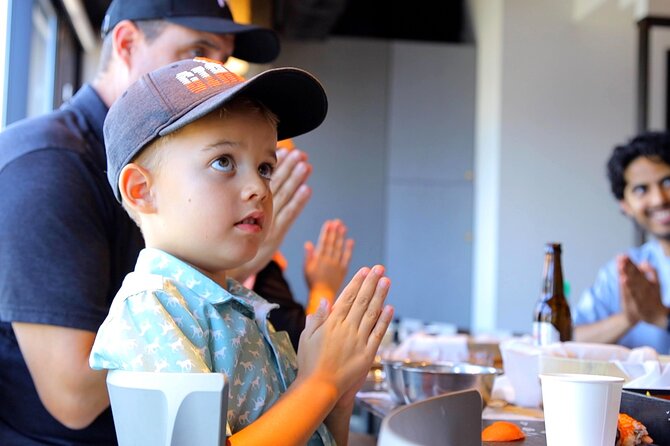
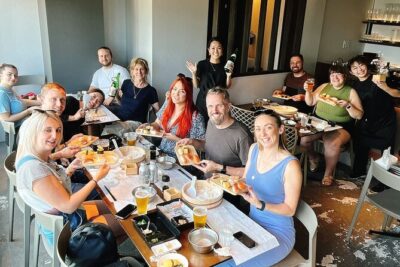
This is not a show-and-tell class where you watch others eat. You make sushi, then you eat it. Many people highlight that there’s a good portion, described as enough for lunch, depending on how fast you work through the steps.
That matters for value. For a price around $31 per person, you’re paying for instruction plus ingredients plus the meal. When a cooking class ends with eating your own output, it’s easier to justify the cost, because you’re not paying extra to taste something someone else already prepared.
Also, eating right after you make it is part of the magic. The rice and assembly are still fresh in your mind, and you can connect what you felt while rolling with how it tastes. It’s the fastest way to learn without needing a kitchen full of gear.
One thing to consider: a couple of people raised concerns about food being at room temperature for a while, specifically fish being left out during the session. That’s not called out as a universal issue in the info you have, but if you’re sensitive to food temperature, it’s smart to ask your instructor on arrival how the ingredients are being handled that day.
Photos and Timing: What to Expect If You Want Memories
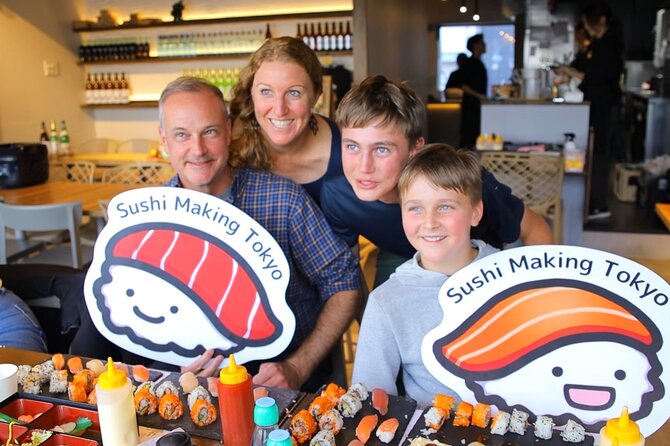
You’re encouraged to take photos, and plenty of people seem to enjoy sharing the results. But time is still time. Several comments mention not getting much room to linger, take lots of videos, or enjoy slowly, particularly if you’re still eating while the next group is getting set.
So I’d treat this as a focused workshop first, and a photo-op second. If you want great photos, come early enough to settle, set your phone up quickly, and don’t wait for the exact moment you think will be perfect.
Lighting is another practical issue. One person mentioned the room lighting was not ideal for photos, with shadows coming through in their pictures. That doesn’t stop the experience, but it’s a reminder that the class setup is built for cooking, not for a studio-grade photo shoot.
Price and Value: Is $31.01 a Good Deal?

At $31.01 per person, this sits in the “worth it” range for a beginner-friendly cooking class. Here’s why: it includes an English-speaking instructor, cooking ingredients, and the sushi meal. You’re also not paying for hotel pickup, since it starts and ends at the meeting point.
The value is best if you want:
- A guided way to learn sushi you can replicate at home
- A meal that feels like part of the activity, not an add-on
- A class that fits into a day near Dotonbori and Shinsaibashi
It might feel less like a bargain if your expectation is a long, slow, social meal with lots of sitting around. A couple of people felt the experience was a bit rushed for the price. That doesn’t mean it’s bad, just that the format is efficient, not leisurely.
Who This Class Fits Best (And Who Might Want Something Else)
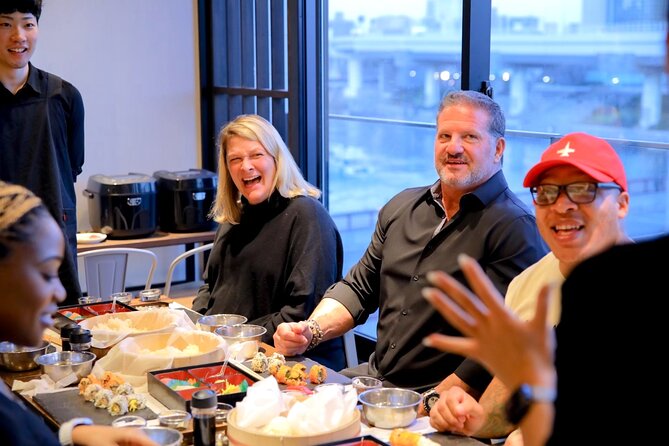
This class is a strong match for beginners, families, and anyone who wants a fun, interactive Osaka activity that ends in dinner. A few comments specifically point out it working well for kids and teens, with instructors described as patient and able to keep youngsters engaged.
It’s also good if you want a cultural add-on without a heavy academic tone. You’ll learn both how to make sushi and some context about sushi itself. People highlighted that there’s history included, and instructors bring energy to the lesson, so it doesn’t feel like a dry lecture.
Where it may not be ideal:
- If you’re very sensitive to food-temperature handling, it’s worth asking about how ingredients are stored during your session
- If you want a long photo-and-eat hangout, the timing may feel tight
- If you require specific ingredient swaps, confirm those needs before you arrive
Small Details to Watch Before You Go
If you want this to go smoothly, focus on a few practical prep steps.
First, check your dietary preferences during booking. One comment said they couldn’t swap out shrimp for another fish when requested late, and they wished it had been noted at reservation time. If you’re avoiding seafood or specific ingredients, address it upfront.
Second, plan your arrival time. Since the location can be a little hard to find, arriving early helps you avoid rushing through check-in and starting the class off stressed.
Third, decide what matters most to you. This is skill-building plus eating, not a long social feast. If that fits your style, you’ll likely have a great time.
Finally, remember what the class gives you: instruction and ingredients. If you want extra drinks or a full meal experience beyond sushi, that’s not indicated in the provided info. I wouldn’t count on sake or beer during the workshop.
Quick Decision: Should You Book This Osaka Sushi Class?
I’d book it if you want an easy, beginner-friendly way to learn sushi techniques in a prime Osaka location, with your own hands-on practice and a meal included. The mix of maki roll and nigiri, the English-speaking instruction, and the small group size make it feel like a true class rather than a tourist performance.
I would hesitate if you know you need lots of time to eat slowly and take tons of photos, or if you have very specific ingredient requirements that might require substitutions. In that case, ask questions early and align your expectations with a focused 1 hour 40 minutes format.
FAQ
How long is the sushi making class in Osaka?
It runs for about 1 hour 40 minutes (approx.).
Where is the meeting point?
The class meets at Sushi Making Osaka, Cooking Class in Japan, 1-chōme-16-20 Higashishinsaibashi, Chuo Ward, Osaka, 542-0083, Japan.
Is hotel pickup or drop-off included?
No, hotel pickup and drop-off are not included. The activity ends back at the meeting point.
Is an experienced cook required?
No. No cooking experience is required, and the class is described as beginner-friendly.
What language is the instruction?
The class includes an English-speaking instructor.
What’s included in the price?
The price includes the English-speaking instructor, the ingredients of the cooking class, and the meal.
How big are the groups?
The tour has a maximum of 20 travelers.
Is cancellation free if I change my plans?
Yes. Free cancellation is available. You can cancel up to 24 hours in advance for a full refund.
Are service animals allowed?
Yes, service animals are allowed.
Counters and Courses


Kitchens You Can Book Into
Newest Osaka write-ups from the Loving Japan desk



Japanese Cooking Classes, side by side.
 ★ 5.0Sushi Making Tokyo Roll and Authentic Japanese Sushi ClassFrom $593,971 reviews
 ★ 4.9Roll and Authentic Sushi Making Class in AsakusaFrom $581,957 reviews
 ★ 5.0Ramen Cooking Class at Ramen Factory in KyotoFrom $1311,937 reviews
 ★ 4.9Sushi Making Class in a Happi Coat near a Famous SpotFrom $421,377 reviews
 ★ 5.0Tokyo Sushi Making Class in Tsukiji with Professional ChefFrom $491,177 reviews
 ★ 5.0Ramen & Gyoza Cooking Class in Tokyo with Local Supermarket VisitFrom $122823 reviews
 ★ 5.0Tsukiji Fish Market Guided Tour and Sushi Making with Pro ChefFrom $104775 reviews
 ★ 5.0Sushi Making in Kyoto! Same-day bookings welcome!From $53713 reviews
Filed on these lists too