
REVIEW · NIKKO SHRINES AND WATERFALLS
Nikko Full-Day Private Walking Tour with Government-Licensed Guide (Tokyo DEP.)
Nikko feels bigger when you have a plan. I like how this tour pairs a government-licensed guide with a flexible 3 to 4 stop route, so you can match Nikko to your interests instead of being locked into a rigid checklist. The main tradeoff is simple: it is a walking day, and entrance fees and transport are not included.
I also really like the time-saving focus. Your guide handles navigation between major sites, plus you get pickup and drop-off options that reduce stress in Tokyo and at the end of the day. In practice, it keeps the day moving without you worrying about wrong turns or wasted time.
One more thing to think through is the weather and your comfort with short walks. Several classic Nikko spots are outdoors, and winter conditions can make paths slick or crowded with leftovers like snow footprints. If your group hates walking, this format may feel like too much.
In This Review
- Key highlights worth planning around
- A Tokyo-to-Nikko day built around your priorities
- Price and what $224 buys you in Nikko time
- How the day runs: 30-minute stop rhythm and real walking time
- Nikko Tosho-gu and Taiyūin: Tokugawa power in stone
- Rin’nōji Temple: Nikko’s Buddhist roots in context
- Kegon Falls, Lake Chuzenji, and Kirifuri Waterfall
- Kegon Falls: the 97-meter drop moment
- Lake Chuzenji: nature with a human past
- Kirifuri Waterfall: the two-tier option near the highlands
- Senjogahara and Kanmangafuchi Abyss: short walks with big mood
- Futarasan Shrine and Shinkyo Bridge: your sacred entry walk
- Tamozawa Imperial Villa, Kanaya Hotel History House, and Akechidaira Plateau
- How to choose your 3 to 4 stops without feeling rushed
- Guide quality you can feel in the details
- Should you book this Nikko private walking tour from Tokyo?
Key highlights worth planning around
- Flexible 3 to 4 stop route: choose from major Nikko shrines, temples, waterfalls, and garden areas before the day starts
- Government-licensed English guidance: guides such as Seizo Kamiuto, Yoshii Kenichi, Kazu, Nobu, Mari Noda, Hiro, and Yuki are praised for smooth communication
- Nikko in “chunks”: many stops are timed at about 30 minutes, which helps you actually see things instead of sprinting
- Nature plus culture options: pair Kegon Falls, Lake Chuzenji, Kirifuri Waterfall, or Kanmangafuchi Abyss with Tokugawa-era sites
- Ropeway reality check: Akechidaira’s ropeway is closed for maintenance from Jan 16, 2026 to Aug 31, 2027
- You stay in charge: this is private, so your guide builds the itinerary around what you pick from the site menu
Up into the Nikko hills by another route
- Nikko: Kegon Falls, Lake Chuzenji & Toshogu Temple
★ 4.6 · 1,577 reviews - Tokyo: Nikko Toshogu Shrine and Kegon Waterfall Tour
★ 4.5 · 1,266 reviews - From Tokyo: Nikko World Heritage Site Private Full-Day Trip
★ 4.9 · 243 reviews - Nikko: Edo Wonderland Edomura Cultural Theme Park Ticket
★ 4.3 · 205 reviews
A Tokyo-to-Nikko day built around your priorities
This tour is designed for people who want Nikko, without the usual day-trip chaos. You pick a small set of sites from a larger menu, and then your licensed guide builds a schedule that fits those choices.
The starting point is Tokyo, near Asakusa Station, and the guide meets you inside a designated area, then coordinates the day from there. Depending on the option you select, pickup is available, and you are also able to ask for a drop-off at your hotel or another location in Tokyo afterward. That door-to-door flexibility matters because Nikko days can eat up energy if you have to manage trains, transfers, and timing alone.
Because it is private, the pace is yours. That is a big deal when Nikko is busy. You are not stuck waiting in someone else’s group rhythm, and you can spend a bit longer where your eyes keep returning.
Price and what $224 buys you in Nikko time
At about $224.02 per person, the headline price can look high at first. But when you break it down, you are paying for (1) a private guide and (2) less time lost to navigation and logistics.
What the price does not cover is also clear. Transportation fees, entrance fees, lunch, and other personal expenses are not included. Private transportation is also not included. That means your real day cost is the base price plus how you handle getting to Nikko and paying to enter specific sites.
There is also mention of the NIKKO PASS (4,520 JPY per person) for area coverage. The tour data notes it as an additional cost item, so you will want to decide early if that pass matches the sites you plan to prioritize. If your plan is only 3 to 4 carefully chosen spots, it might or might not pay off, but the key point is that you should budget for it if you see yourself using a lot of regional transport.
For value, this tour shines when you care about two things at once: major historical sights and the time it takes to get between them. If you want to see everything in one day, the private format will not magically create extra hours. Still, it helps you make the hours count.
How the day runs: 30-minute stop rhythm and real walking time
Your schedule is built around short, focused segments. The itinerary blocks show many stops at about 30 minutes each, which tells you how this day is meant to work. You will see the headline features, have time for photos and reading, and then move on.
This is not a slow, wander-with-coffee kind of tour. It is a walking experience, and your guide is keeping the route tight so you do not waste time figuring things out. That can feel great if you like momentum.
The flip side is that outdoors time adds up. One guide-led day had road and walkway conditions impacted by snow footprints left from a previous day. So if you go in colder months, plan for surfaces that can be uneven or slick, and consider bringing footwear you trust.
Licensed guides working the same ground
- Tokyo 6hr Private Tour with Government-Licensed Guide★ 5.0 · 3,902 reviews
- Tsukiji Food and Toyosu Market with Government-Licensed Guide★ 5.0 · 158 reviews
- Toyosu Market Morning Tuna Auction and Tsukiji Food Tour with Licensed Guide★ 4.5 · 146 reviews
- Tokyo 8hr Private Tour with Government-Licensed Guide★ 5.0 · 121 reviews
- Private Tokyo Tour with Licensed Guide & Vehicle (Max 15 persons)★ 5.0 · 107 reviews
Nikko Tosho-gu and Taiyūin: Tokugawa power in stone
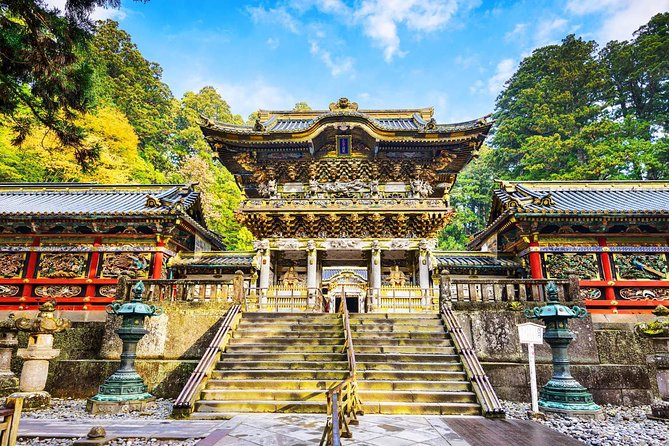
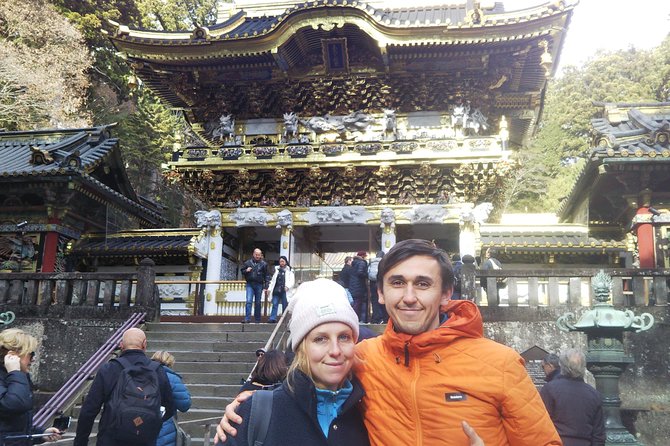
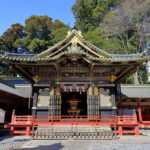
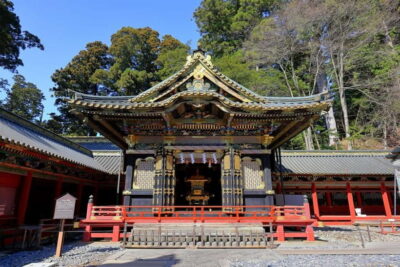
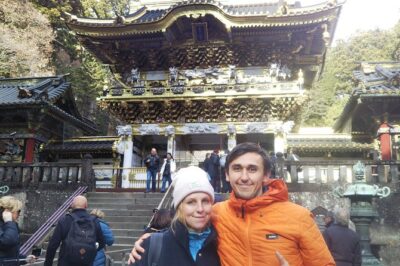
If you choose one “anchor” for Tokugawa history, Nikko Tosho-gu is the obvious pick. It is described as the final resting place of Tokugawa Ieyasu, founder of the Tokugawa Shogunate, and it also connects to nearby shrines and a temple. Even from the structure of the stop, it is framed as the place people mean when they say Nikko is different after you see it.
What to do with your time there: treat it like an orientation stop. Spend your first minutes getting the layout into your head, then slow down for the details that stand out to you personally. Because you are in a private format, you can ask your guide what to notice first, rather than trying to decode it while walking past the crowd.
If you want more Tokugawa, Rin’nōji Taiyū-in (the Mausoleum of Iemitsu) is the natural companion. It is the mausoleum of the third Tokugawa shogun, Iemitsu, and its complex is described as lavish and similar in layout to Toshogu. It is a great choice if you like seeing how power and style get repeated across sites.
One practical thing: if you are picking 3 or 4 stops total, decide whether you want both Toshogu and Taiyuin. They serve related interests, so stacking them can be great, but you may feel the overlap. If your group is split, it can also be a smart move to give one person history priorities and another person more nature priorities, then use your stop choices to satisfy both.
Rin’nōji Temple: Nikko’s Buddhist roots in context
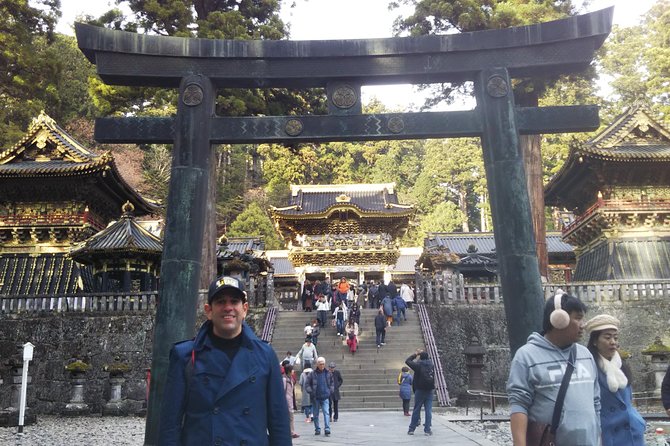
Rin’nōji Temple is described as Nikko’s most important temple. It was founded by Shodo Shonin, the Buddhist monk who introduced Buddhism to Nikko in the 8th century. The tour data also points to its main building, Sanbutsudo, which gives you something concrete to focus on.
Why this stop helps: Nikko often gets talked about through the Tokugawa shrines, but Rin’nōji gives you the older religious thread. If you spend only a few hours in Nikko, this kind of grounding can make the whole day feel less like separate monuments and more like one layered place.
If your group is sensitive to crowds, or you simply want a slower-feeling moment between big wow stops, Rin’nōji can play that role. It is still important, but it is not framed as a one-and-done photo stop in the way waterfalls can be.
Kegon Falls, Lake Chuzenji, and Kirifuri Waterfall
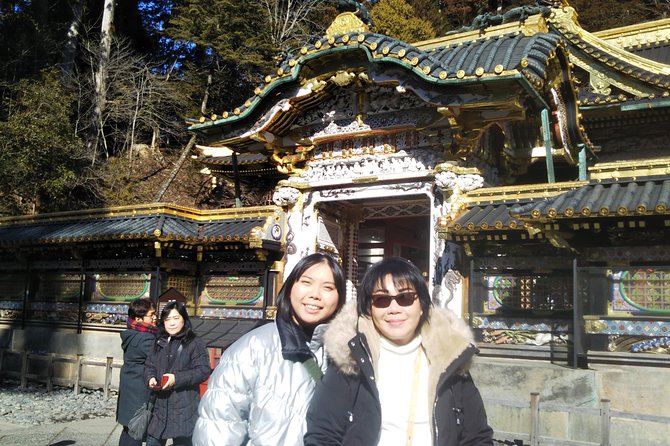
For nature lovers, Nikko has a strong lineup, and this tour makes it easy to pick your favorites without swallowing the whole day.
Kegon Falls: the 97-meter drop moment
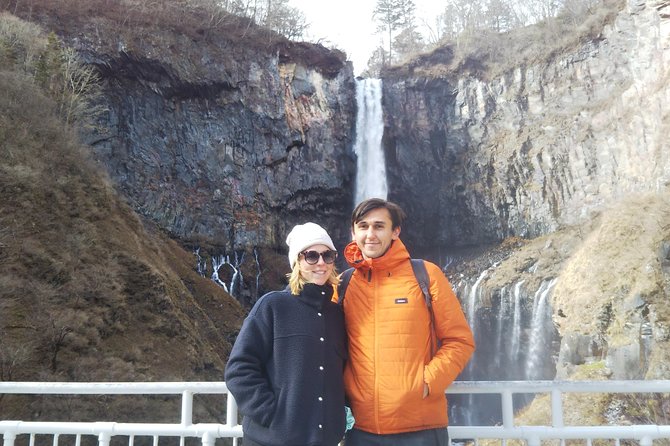
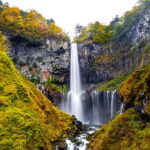
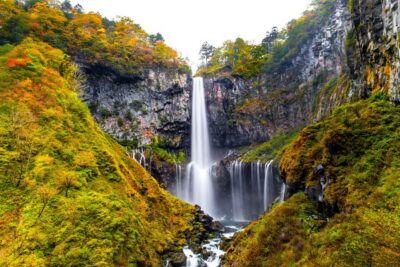
Kegon Falls is described as the most famous of Nikko’s 48 waterfalls. Water from Lake Chuzenji falls 97 meters straight down, creating a dramatic view. There is also a note that a special lift takes visitors, which is worth considering because it can affect how you plan your arrival and walking.
If your group wants one waterfall that feels like a headline, this is it. Because your stop time is limited, I recommend treating this as the moment you do not rush. Look first, then read, then take photos, then go. Trying to do all three at once usually turns into chaos.
Lake Chuzenji: nature with a human past
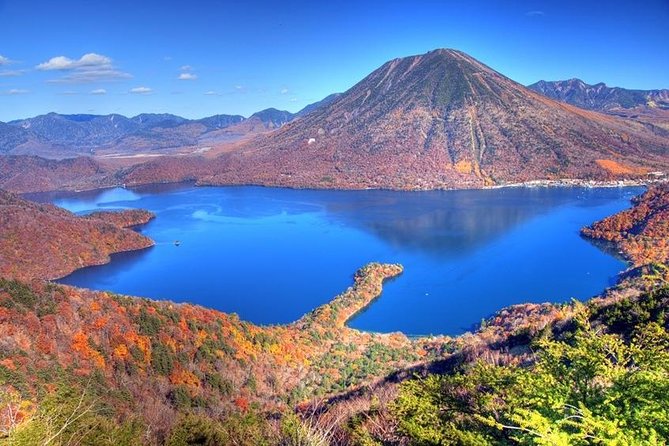
Lake Chuzenji is described as the largest lake in Tochigi, framed by 25 kilometers of incredible nature. The area is also noted as a summer resort for foreigners in the late 19th to early 20th centuries, and it mentions villas of French owners. That gives Lake Chuzenji more texture than just scenery.
If your group likes atmosphere, this is where you can soften the day. The lake stop being free in the details also makes it a low-friction add-on if you are trying to keep entrance fees under control.
Kirifuri Waterfall: the two-tier option near the highlands
Kirifuri Waterfall is described as a 75 meter high, two-tier waterfall below the Kirifuri Highlands, a few kilometers northeast of the temples and shrines. This stop is also marked as impressive and worth seeing, even if you skip the most famous falls.
This is a good choice if you already have Kegon on your list and want a second waterfall with a different visual feel. It also helps you spread nature stops around, rather than stacking only one type of view.
Senjogahara and Kanmangafuchi Abyss: short walks with big mood
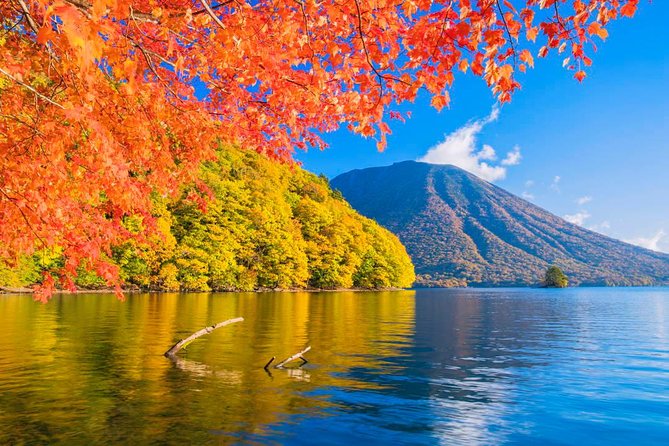
Two of the most interesting nature-flavored stops in the menu are also compact and easy to fit.
Senjogahara Field translates to battlefield, tied to a mythical story about gods from Mount Nantai and Mount Akagi fighting over neighboring lakes. Even though it sounds like legend, it gives the landscape a story layer, which is helpful when you are splitting your attention between multiple stops.
Then there is Kanmangafuchi Abyss. It was formed by an eruption of Mount Nantai. The gorge is only a few hundred meters long, and you can enjoy it from a riverside walking trail. This is a good pick if you want movement that still feels manageable, rather than a long hike.
If you want a simple decision rule: Senjogahara fits groups who love folklore. Kanmangafuchi fits groups who like a walk with a clear endpoint.
Futarasan Shrine and Shinkyo Bridge: your sacred entry walk
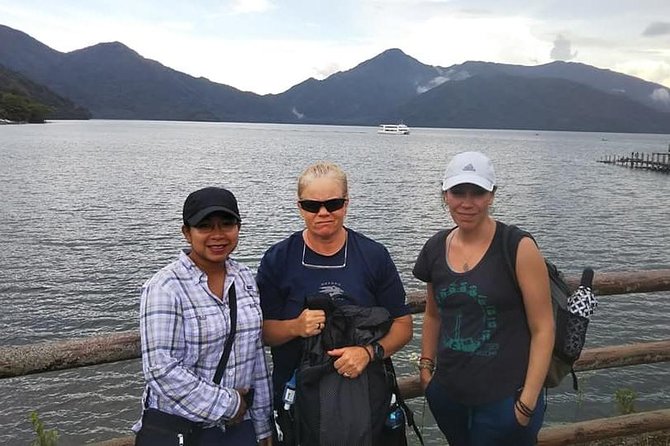
Nikko’s shrine and temple area is anchored by two connected names: Futarasan Shrine and Shinkyo Bridge.
Futarasan Shrine stands next to Toshogu in central Nikko and is described as older than its more lavish neighbor. It was founded in 782 by Shodo Shonin, the same monk tied to Buddhism’s introduction to Nikko. That shared thread can make your day feel more coherent.
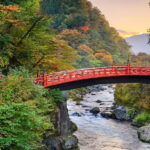
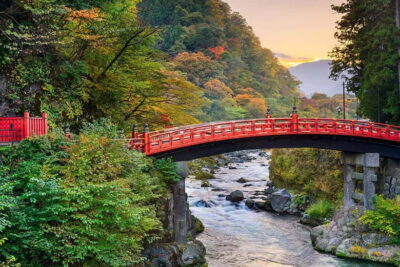
Next to it, the Shinkyo Bridge is described as a sacred bridge and technically belongs to Futarasan Shrine. It is also ranked as one of Japan’s three finest bridges. This stop works because it is visually strong, and it functions like a natural transition point as you enter or approach the shrine area.
If you only have a limited number of stops, Shinkyo Bridge is often a smart “connector” choice. It can bridge between your history focus and your nature focus without feeling like a random add-on.
Tamozawa Imperial Villa, Kanaya Hotel History House, and Akechidaira Plateau
Not every Nikko day needs only shrines and waterfalls. This menu also includes culture and viewpoint options that can break up the day.
Nikko Tamozawa Imperial Villa Memorial Park blends traditional Edo and early Meiji Period architecture. The villa is described as having 106 rooms, erected in Nikko in 1899, and it was built using parts of a residence that the text only partially describes. Still, the basics are enough to plan: this is an architecture stop if your group wants something beyond religious structures and natural scenery.
Kanaya Hotel History House is a historical building that served as the predecessor of the famous Kanaya Hotel. It is open for public exploration, and it gives you a chance to see Nikko through a more everyday, modern history lens.
Then there is Akechidaira Observation Area near the top of Irohazaka Slope. Here you need to pay attention to timing. The ropeway is closed for maintenance from Jan 16, 2026 until Aug 31, 2027. If Akechidaira is high on your list, plan around that reality, because it can change how easy the viewpoint feels to reach.
This is where your private guide really earns their keep. If a specific feature is harder to access because of maintenance, your guide can steer you to the best alternative stops from your chosen set.
How to choose your 3 to 4 stops without feeling rushed
You only get a few picks, so selection matters. The trick is to build a loop that alternates mood, not just geography.
A culture-heavy day might start with Nikko Tosho-gu, add Rin’nōji Temple, and then choose either Rin’nōji Taiyū-in if you want more Tokugawa, or swap one history stop for a nature hit like Kegon Falls. This gives your day a strong narrative, without turning it into a single long temple sprint.
A nature-focused day can center on Kegon Falls plus Lake Chuzenji as your primary “wow” pair, then add Kirifuri Waterfall if you want a second waterfall stop. If you prefer something story-driven instead, swap one waterfall for Senjogahara Field.
If your group wants a balanced mix, a strong combination is Shinkyo Bridge plus Futarasan Shrine for your sacred entry moment, then build the nature side around Kanmangafuchi Abyss for an easy walk with a clear ending, and finish with either Lake Chuzenji or Kirifuri Waterfall depending on how much standing and walking you want.
Finally, remember this is a walking experience. Even if each stop is around 30 minutes, travel time and foot movement between sites are real. Choose stops that match your group’s energy level, not just your wishlist.
Guide quality you can feel in the details
The most consistently praised aspect is the guide itself. Multiple named guides are described as fluent in English, and at least one is noted as also speaking French. What matters for you is not just language, but how the day stays smooth.
Guides like Seizo Kamiuto and Yoshii Kenichi are praised for excellent communication and for building an itinerary that fits preferences. Kazu is specifically highlighted as government-licensed and fluent enough for travelers who want more than basic English support. Yusuke is praised for staying in contact and adjusting timing based on what you want. Nobu is praised for being efficient with transportation logistics so the day does not turn into a puzzle.
If you like structure, this tour delivers it through planning. If you like flexibility, it still delivers because your guide is creating the flow from your chosen site list.
One extra real-life tip from a guide experience in the supplied material: some guides are the kind who also point you toward local food, like yuba soba noodles. That is not an included activity, but it is a nice example of how a good guide helps you enjoy Nikko as a place, not just a set of stamps.
Should you book this Nikko private walking tour from Tokyo?
Book it if you want Nikko with less stress and more control. This format is a great fit when you care about picking the exact mix of shrines, temples, waterfalls, and nature, and when you do not want to manage navigation between sites on your own.
Skip it, or at least rethink your stop choices, if your group wants to cover everything at a slow pace. The day is built around short stops, and entrance fees plus transport will add up on your side. Also, because it is walking and outdoor time is involved, weather can change how comfortable the day feels.
If you go into it planning 3 to 4 thoughtful stops and using the guide to handle the routing, you are likely to end the day feeling like you saw Nikko on purpose, not by accident.
Licensed Guides on the Same Ground


Nikko, Up the Hill
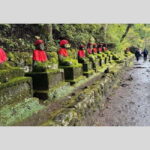
Newest Tokyo write-ups from the Loving Japan desk
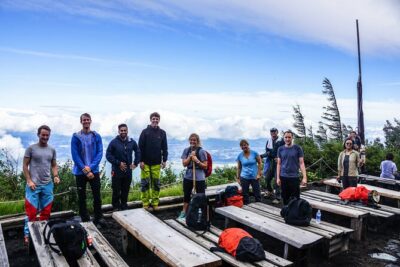
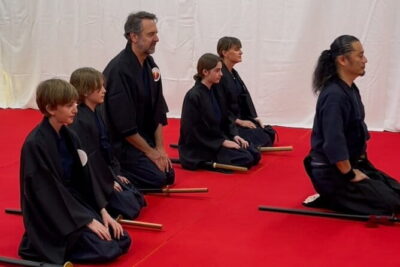
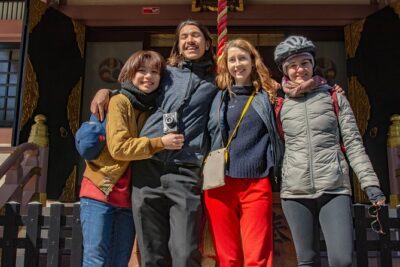

Nikko Shrines and Waterfalls, side by side.
 ★ 4.6Nikko: Kegon Falls, Lake Chuzenji & Toshogu TempleFrom $891,577 reviews
 ★ 4.5Nikko Toshogu Shrine and Kegon Waterfall TourFrom $841,266 reviews
 ★ 5.0Nikko Full-Day Private Tour with Government-Licensed GuideFrom $155259 reviews
 ★ 4.9From Tokyo: Nikko World Heritage Site Private Full-Day TripFrom $483243 reviews
 ★ 4.3Nikko: Edo Wonderland Edomura Cultural Theme Park TicketFrom $35205 reviews
 ★ 4.8Nikko World Heritage Private Day Trip Hotel Pick-upFrom $390145 reviews
 ★ 4.9Nikko – Beautiful Full-Day Personal and Private TourFrom $364119 reviews
 ★ 5.0Chartered Private Tour – Tokyo to Nikko, Toshogu, Edo WonderlandFrom $1,286105 reviews
Filed on these lists too