
REVIEW · TOURS WITH GOVERNMENT-LICENSED GUIDES
Tokyo 8hr Private Tour with Government-Licensed Guide
Tokyo makes sense fast with a real guide. This private 8-hour walking tour pairs a government-licensed local guide with hotel meet-up so you spend less time figuring things out and more time seeing the city. I especially like the 4 to 6 site customization, and how the route can cover classic temples and modern Tokyo in one day. The main drawback is simple: it is a lot of walking, and some top sights have entrance fees you should budget for.
The best way to use this day is as an orientation tour. Pick the areas that match your interests, then let your guide smooth out trains, customs, and practical visit flow, like how to approach shrines and temples respectfully. If you hate long days on foot, consider splitting your sightseeing into two shorter half-days.
In This Review
- Key things I’d plan around before you book
- A licensed guide, a hotel start, and an 8-hour day that actually works
- How to choose your 4 to 6 stops without burning the day
- Asakusa and Senso-ji: start with old Tokyo energy
- Imperial Palace area: impressive grounds, no inside access
- Shibuya Crossing and Shinjuku Gyoen: modern chaos plus a calm reset
- Meiji Jingu, Harajuku, and Yoyogi Park: sacred calm near youth culture
- Tsukiji Fish Market: quick taste of an old-food powerhouse
- Akihabara: tech shops and pop-culture shopping time
- Tokyo National Museum: history and art, with a realistic time window
- Gardens that slow you down: Koishikawa Korakuen, Hama Rikyu, Rikugien
- Old-meets-local Tokyo: Nezu and Shibamata
- Shinjuku Golden Gai: small bars, big atmosphere
- Tokyo Tower and Odaiba: views and waterfront modern Tokyo
- Practical value and pricing: what $201.51 per person really buys
- Who should book this 8-hour Tokyo walking tour
- Should you book this private Tokyo orientation day?
Key things I’d plan around before you book
- You choose 4 to 6 stops from a menu, so your day fits your pace and interests
- Meet near your hotel and start on foot, not by private vehicle
- Imperial Palace inside access is not included, but the East Garden area is part of the visit flow
- Some major entrances are not included (gardens, museum, and Tokyo Tower top deck)
- You can cover traditional and modern Tokyo in one coordinated day, with help navigating the rail system
Licensed guides working the same ground
- Tsukiji Food and Toyosu Market with Government-Licensed Guide
★ 5.0 · 158 reviews - Toyosu Market Morning Tuna Auction and Tsukiji Food Tour with Licensed Guide
★ 4.5 · 146 reviews - Tokyo 8hr Private Tour with Government-Licensed Guide
★ 5.0 · 121 reviews - Private Tokyo Tour with Licensed Guide & Vehicle (Max 15 persons)
★ 5.0 · 107 reviews
A licensed guide, a hotel start, and an 8-hour day that actually works
Tokyo is big, and first-day sightseeing can feel like chaos. What makes this tour practical is the structure: you get a government-licensed English-speaking local guide, plus a hotel meet-up that gets you moving quickly. You also get to choose your stops, which matters because Tokyo can overwhelm you fast if your plan is too rigid.
Because it is a private tour, your pace is your pace. You can ask questions, pause to take photos, and tweak the order to match crowds and weather. Several guides highlighted in customer feedback also helped with transit basics, like how to use the subway efficiently, and even how to handle quick payments using transit cards.
One thing to keep in mind is the tour format. It is a walking tour, and the “pickup” is on foot within a designated area. So this is not the kind of day where you hop in a car every time you cross the city.
How to choose your 4 to 6 stops without burning the day
The biggest advantage here is selection. You are not locked into a huge checklist, which is good news when you are traveling with kids, have limited mobility, or just want a day that feels personal. Your guide will help you pick a route that makes sense geographically and logistically, so you spend less time backtracking.
Here is the mental trick I recommend: choose one anchor area for tradition and one anchor area for modern Tokyo, then add one “slow” stop (a garden) and one “learning” stop (like a museum). That mix gives you contrast without exhausting you.
Also, watch the entrance fee pattern. Some stops are listed as free, like Asakusa, Senso-ji, and Shibuya Crossing, while others like Shinjuku Gyoen or Tokyo National Museum are not included. If you want to keep costs predictable, lean toward the free stops and treat paid entrances as optional upgrades.
Asakusa and Senso-ji: start with old Tokyo energy
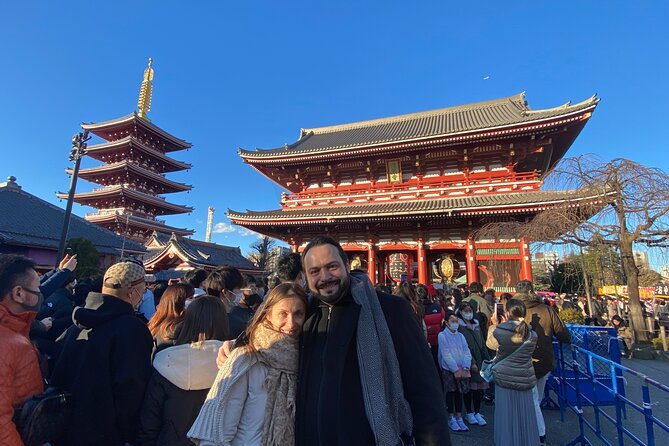
If you want a fast introduction to traditional Tokyo, Asakusa is a great anchor. The area is centered on Senso-ji Temple, and it is one of those places where you instantly understand why Tokyo has such a strong sense of layers: history close to crowds, tradition close to modern life.
A stop in Asakusa also usually works well early in the day because you can enjoy the temple area before lines and congestion peak. You get a free visit component here, which helps your budget. The trade-off is that Asakusa can get busy, so plan to accept some crowd flow and keep moving at a comfortable pace.
Senso-ji itself is a short visit stop on this route, but it is packed with atmosphere. Your guide can also explain temple customs, which makes your visit more than just photos.
- Mt Fuji and Hakone 1-Day Bus Tour Return by Bullet Train★ 5.0 · 26,383 reviews
- 1-Day Tokyo Bus Tour★ 5.0 · 14,250 reviews
- Tokyo: teamLab Planets TOKYO Digital Art Museum Entry Ticket★ 4.6 · 9,779 reviews
- Mt Fuji & Hakone Cruise, Drum Show Bullet Train 1 Day from Tokyo★ 4.0 · 7,413 reviews
- Tokyo: Shinjuku Food Tour (13 Dishes at 4 Local Eateries)★ 5.0 · 6,603 reviews
Imperial Palace area: impressive grounds, no inside access
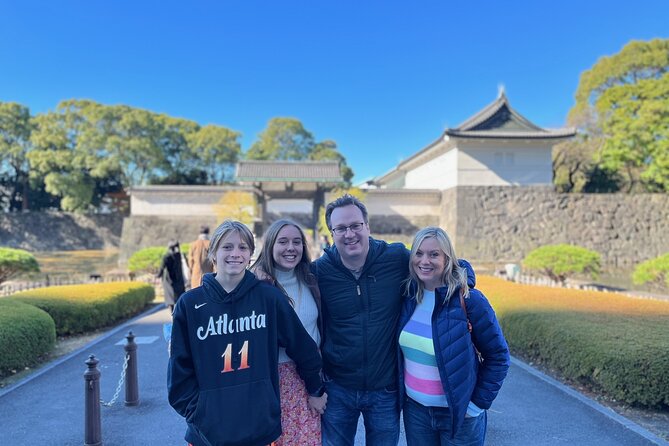
This tour includes time in the Imperial Palace area, focused on the park grounds. The key detail: you do not get access to the inside of the Imperial Palace itself. You will, however, be able to appreciate the former Edo Castle setting through the surrounding moat and stone wall vibe from the outside and the garden flow that is part of the visit plan.
For many people, this is a welcome contrast after dense city neighborhoods. The time block is short, so treat it like a “reset stop” where you slow down, take in the scale, and learn what used to stand here.
If your main interest is stepping inside historic buildings, you may feel slightly limited by the no inside access rule. If you mostly want the feel of the space and the history behind it, this is still a strong addition.
Shibuya Crossing and Shinjuku Gyoen: modern chaos plus a calm reset
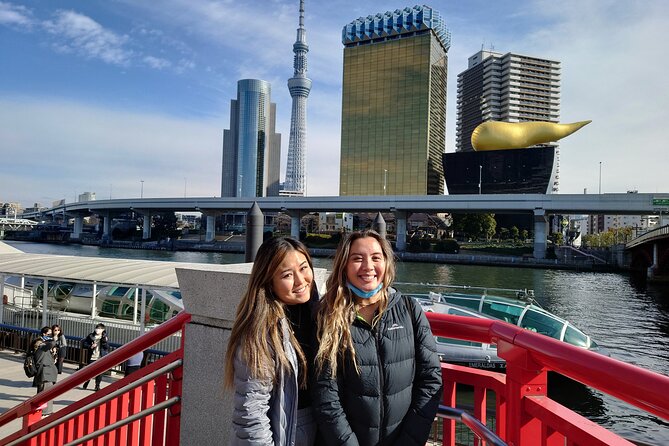
Shibuya Crossing is the modern Tokyo hit. It is a free stop and it is the kind of place where you can’t help but look up, around, and absorb the speed of the city. Even if you have seen it in photos, standing there changes the scale. Your guide can also point out how to cross smartly and how to time your view so you do not just stand in the busiest moment.
Then you add a breather: Shinjuku Gyoen National Garden. This is not a quick walk-through park. It is one of Tokyo’s largest popular gardens, with lawns and paths that feel like a different city setting. The entrance is not included, so budget for it if you choose this stop.
That pairing, modern intensity plus garden calm, is what makes Tokyo work on a single-day plan. It also gives you variety that keeps the day from feeling repetitive.
Meiji Jingu, Harajuku, and Yoyogi Park: sacred calm near youth culture
Meiji Jingu Shrine is one of those places where Tokyo becomes quiet fast. It is beside the busy Harajuku area, yet the shrine grounds create a strong sense of separation. The stop is short and the entrance is free, so it is an efficient way to add spiritual and historical context without losing too much time.
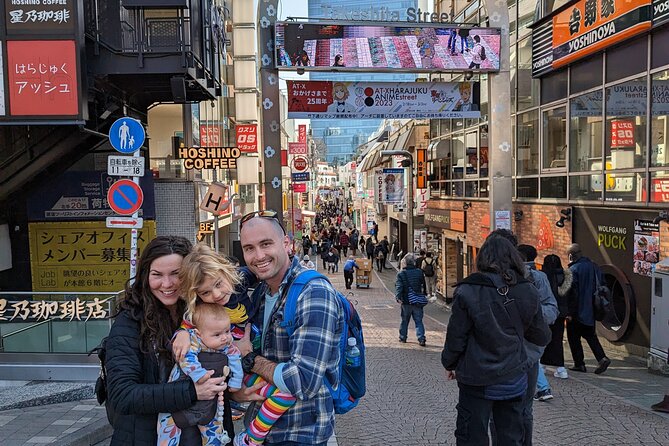
From there, you can pivot into Takeshita Street in Harajuku. This is a free stop and it is famously youth-focused, with fashion and snack energy everywhere. It is also a place where you should manage expectations. It can feel chaotic, and it is not the kind of street where you “browse slowly” unless you have patience and a plan.
Right nearby, Yoyogi Park can balance your route. It is a big city park, free, and great for a rest break, light walking, or just sitting for a few minutes to recharge.
If you choose Meiji Jingu plus Harajuku plus Yoyogi Park, watch the walking load. This area is compact by Tokyo standards, but it is still an active day segment.
Tsukiji Fish Market: quick taste of an old-food powerhouse
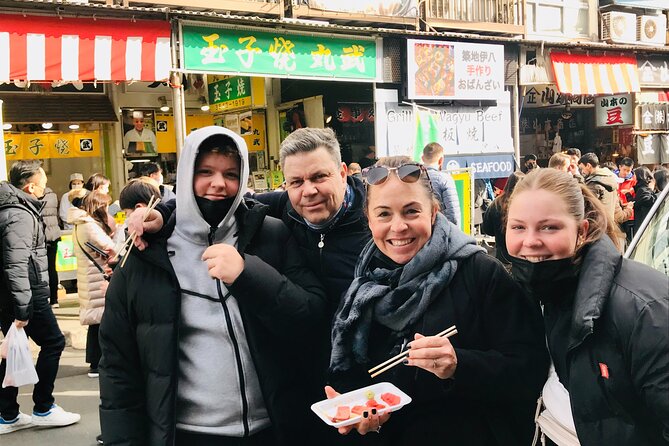
Tsukiji Fish Market is on this tour as a short stop with free admission listed. The visit block is only about 30 minutes, so you should treat it like a taste stop rather than a long exploration.
This is a good choice if you want food culture without turning your whole day into market time. Your guide can also help you decide what is worth trying, and how to move through the area efficiently.
One consideration: if you are traveling with a group that loves slow wandering, 30 minutes may feel short. In that case, pick market time if you love food, and skip one of the other neighborhoods that would otherwise add walking weight.
Akihabara: tech shops and pop-culture shopping time
Akihabara is the electronics and pop-culture district, free to access as part of the stop list. It is a natural fit if your group includes teens, anime fans, or anyone who loves gadgets and niche retail.
On a private tour, Akihabara is especially useful because your guide can tailor what you prioritize. Some guests in feedback wanted specific “must-see” shopping or picture stops, and guides worked with that kind of flexibility.
The only downside is that Akihabara can turn into a long shopping drift if you are not careful. With a 4 to 6 stop limit, it is smart to plan Akihabara as one of your key time sinks.
Tokyo National Museum: history and art, with a realistic time window
The Tokyo National Museum is not included for entrance fees on this route. Still, it is a solid pick if you want Tokyo’s culture in a more structured, indoor format.
You get about 35 minutes on the stop schedule, which means you are not doing the entire museum. You are doing a focused visit, which is exactly what you want on a day with multiple neighborhoods. Your guide can help you prioritize what matters, like key galleries or a quick thematic route.
If the weather is rough, the museum becomes a comfort stop that keeps the day from getting miserable.
Gardens that slow you down: Koishikawa Korakuen, Hama Rikyu, Rikugien
Tokyo has a special talent for switching moods. If you add one garden to your day, you get a calmer tempo. Add two, and your whole trip pace changes.
Here is what each garden stop brings:
- Koishikawa Korakuen: one of the oldest Japanese gardens, entrance not included, with a classic Edo-period feel. It is about 35 minutes, so it is best for people who enjoy wandering paths and taking in layout.
- Hama Rikyu Gardens: by Tokyo Bay, with seawater ponds that change with tides, plus a teahouse setting. Entrance not included, about 35 minutes.
- Rikugien: another top garden option, often considered one of Tokyo’s most beautiful alongside Koishikawa Korakuen. Entrance not included, about 30 minutes.
All three are worth considering, especially if you want a break from train stations and shopping crowds. The drawback is money and time. Two garden entrances can add cost quickly, and each garden requires real walking time even if the visit blocks are short.
If your budget is tight, pick the one garden that best matches your vibe, not all of them.
Old-meets-local Tokyo: Nezu and Shibamata
If you want a calmer slice of “old Tokyo,” add Nezu. The stop is free and short. It is part of the shitamachi old-downtown spirit, and the appeal is the texture of everyday streets and the sense of continuity even after wars and disasters.
Then consider Shibamata, which keeps an old-school charm feel. It is free, short, and it adds variety because it sits on the eastern end of Tokyo, near the Edogawa River border area.
These neighborhood stops work best when you already plan a big anchor area like Asakusa or Shibuya. They add local atmosphere without turning your day into a single long “suburb style” trek.
Shinjuku Golden Gai: small bars, big atmosphere
Shinjuku Golden Gai is a unique nightlife area made of tiny lanes and small venues. It is listed as a free stop, and it is about as short as it gets in the schedule, but it can be memorable.
This is not for everyone. If you prefer daytime sights only, you can still enjoy walking the lanes and learning the area’s backstory. If your group likes food and drinks, it’s a good place to get a sense of Tokyo’s adult social culture.
Tokyo Tower and Odaiba: views and waterfront modern Tokyo
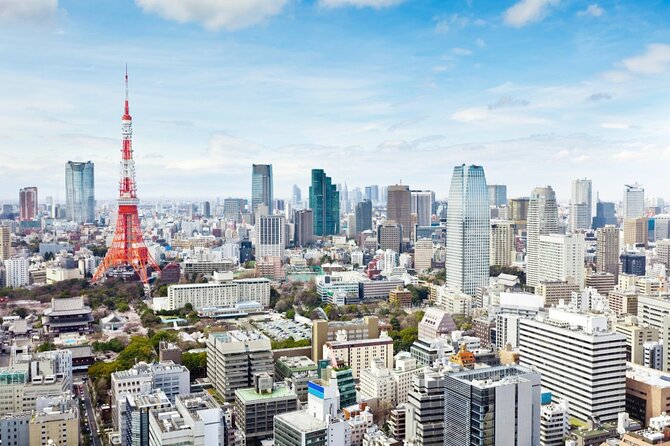
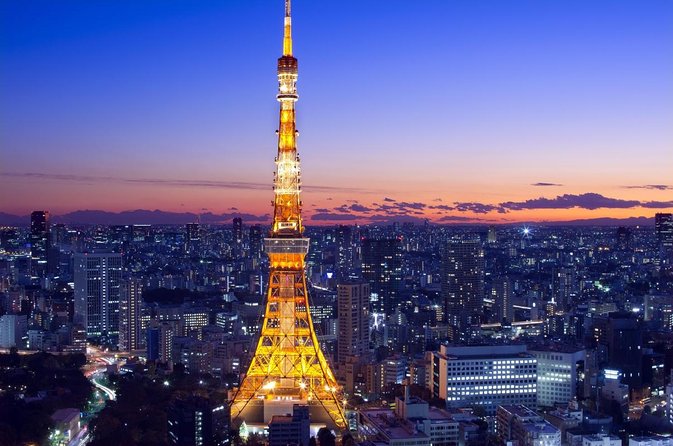
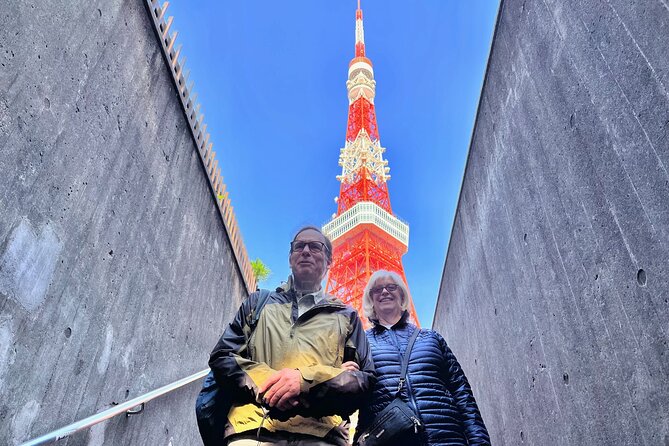
If your group wants a “Tokyo skyline” feel, add Tokyo Tower. Important detail: you only get access up to the main deck. The top deck is not included.
The stop is short, so again, it is a quick view stop, not a long observation session. It is still a good option for first-time visitors because it gives you a landmark that is easier to recognize than some newer towers.
Then there is Odaiba District, a popular shopping and entertainment area on a man-made island by Tokyo Bay. Admission is free as listed, and the stop is short.
Odaiba is best if you want modern views and shopping energy, not if you want deep history. It also pairs well with Tokyo Tower if you like the skyline theme.
Practical value and pricing: what $201.51 per person really buys
At $201.51 per person, this is not a “budget group bus” style tour. You are paying for a private, government-licensed local guide, plus a route that you can adapt to your interests. In Tokyo, that kind of time-savings and decision support is often worth real money, especially on a first trip.
What you should still budget for is entrances and food. Transportation fees are not included, and lunch is not included. Also, several major sights have entrance fees not covered, like Shinjuku Gyoen, Koishikawa Korakuen, Hama Rikyu, Tokyo National Museum, Rikugien, and Tokyo Tower top deck.
So the best value strategy is to choose a mix. If you pick mostly free stops, you keep your total day costs lower. If you pick one or two paid stops, the guide still feels like a good investment because you avoid wasting time and you get context that turns “seeing” into understanding.
Based on feedback, guides like Yuri (Julie), Kenji, Taka, Koba, Izumi, Nori, Yoshii, Seky, An, and Masa are often praised for being flexible and helping with real on-the-ground navigation, including subway basics and making photo moments easier. That practical help is a big part of why this price can feel fair.
Who should book this 8-hour Tokyo walking tour
This tour fits best if you are:
- First-time visitors who want a structured day across multiple neighborhoods
- Families who want one plan and flexible stop choices
- Couples who want a day that balances temples, modern streets, and a couple of “slow” breaks
- Anyone who wants help with navigating trains and local customs, not just a checklist
It is less ideal if:
- You want minimal walking or you struggle with long city walking
- You only care about a single neighborhood type, like pure nightlife or pure museum time
- You cannot handle entrance fees for multiple gardens or the museum
A smart tip: if it is hot in summer or icy in winter, consider choosing fewer stops that are spread out, and prioritize transit-friendly clusters.
Should you book this private Tokyo orientation day?
Yes, if you want a guided Tokyo introduction that you can shape to your interests. The biggest reasons to book are the private format, the government-licensed guide, and the ability to choose 4 to 6 stops instead of rushing through everything.
Before you book, do two quick checks. First, confirm that you are comfortable with a walking day, since the tour starts on foot and stays that way. Second, decide which paid entrances you truly want, because gardens and museums can shift the day budget quickly.
If that fits your trip style, this is one of the most efficient ways to start Tokyo with confidence.
Licensed Guides on the Same Ground


Newest Tokyo write-ups from the Loving Japan desk

Tours with Government-Licensed Guides, side by side.
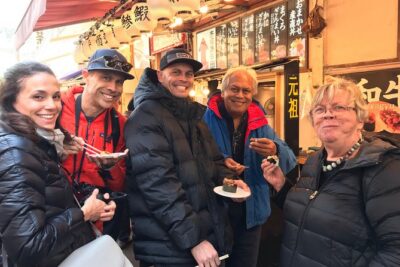 ★ 5.0Tokyo 6hr Private Tour with Government-Licensed GuideFrom $1553,902 reviews
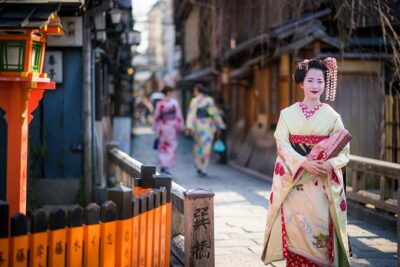 ★ 5.0Kyoto 6hr Private Tour with Government-Licensed GuideFrom $1551,369 reviews
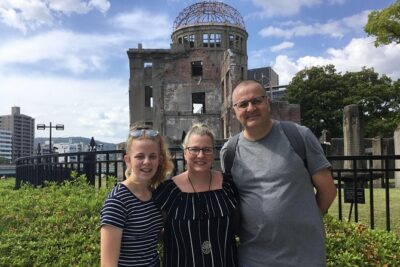 ★ 5.0Hiroshima / Miyajima Full-day Private Tour with Government Licensed GuideFrom $2021,298 reviews
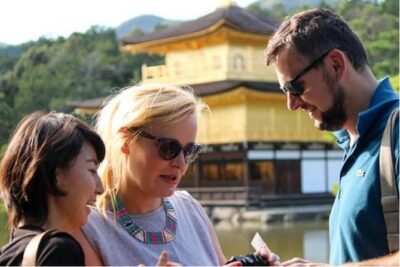 ★ 5.0Kyoto 4hr Private Tour with Government-Licensed GuideFrom $109629 reviews
 ★ 4.8Private Tour with Local Licensed GuideFrom $106463 reviews
 ★ 5.0Hiroshima City 4hr Private Walking Tour with Licensed GuideFrom $122437 reviews
 ★ 5.0Private Kyoto Tour with Licensed Guide & Vehicle (Max 15 persons)From $634417 reviews
 ★ 5.0Osaka 4hr Private Tour with Government-Licensed GuideFrom $109359 reviews
Filed on these lists too