

REVIEW · WALKING TOURS
Osaka 4-Hour Walking Tour: Hotspots and Hidden Gems
A half-day walk that feels like Osaka in fast-forward.
This 4-hour guided stroll threads together Namba Yasaka Shrine, Nipponbashi (Den-Den Town), Kuromon Market, and Dōtonbori, then slows down at Hōzenji Temple with lantern-lit alleys. It is a smart mix of legend, street life, and pop culture, all paced so you are not sprinting between stops.
I especially love two things: first, how the guide turns myths into something you can picture, not just facts to memorize. Second, you get a real “Osaka day” rhythm, from shrine fortune rituals to stopping for fun like gachapon capsule toys.
One drawback to consider is timing. On peak dates like New Year, you can run into longer lines at the shrine, so arriving early and keeping your expectations flexible helps.
In This Review
- Key Highlights You Will Feel Immediately
- Why This 4-Hour Osaka Walk Works (Even if It’s Your First Time)
- Namba Yasaka Shrine’s 12-Meter Lion Head: Fortune, Photos, and How to Participate
- Den-Den Town (Nipponbashi) and Gachapon: Anime Streets With Real-World Fun
- Kuromon Market, Osaka’s Kitchen: How to Eat Without Getting Stuck in the Crowd
- Dōtonbori Neon and the Glico Sign: Seeing Osaka’s Show Side
- Hōzenji Temple: The Lantern-Lit Letdown That Feels Like a Reward
- Price and Value: Is $40 a Smart Use of Half a Day?
- Meeting Point, Timing, Pace, and Group Size: Plan Like You Mean It
- Who This Tour Suits Best (and Who Might Want Something Else)
- Should You Book This Osaka 4-Hour Walking Tour?
- FAQ
- How long is the Osaka walking tour?
- What time does the tour start?
- How much does the tour cost?
- Where do I meet the guide, and where does the tour end?
- Are admission tickets required for the main stops?
- Is this a small group tour?
- Will I receive a mobile ticket?
- Can I cancel and get a full refund?
- Is the tour suitable for most people?
Key Highlights You Will Feel Immediately
- Small group size (max 10) makes it easier to ask questions and hear stories clearly
- Legend to street culture flow goes shrine, pop culture, food market, neon canal, temple quiet
- Guide-led details include how to pray at a shrine and local language flavor from the guide
- Photo stops with meaning at the 12-meter lion head and the Glico running man sign
- Food market time with options so you can sample without getting overwhelmed
Still weighing up options in Osaka? These are the ones our reviewers rated highest.
- Osaka Go Karting Tour with Funny Costume
★ 5.0 · 2,658 reviews - Osaka Castle: Museum and Tower Entry Ticket
★ 4.5 · 2,380 reviews - Osaka: Shinsekai Food Tour with 13-15 Dishes at 5 Eateries
★ 4.8 · 2,204 reviews - Osaka Food Tour: 13 Dishes at 5 Local Eateries
★ 5.0 · 2,149 reviews
Why This 4-Hour Osaka Walk Works (Even if It’s Your First Time)
This tour is built around a simple idea: Osaka is not only monuments. It is also rituals, jokes, shopping energy, and the everyday sounds that spill out of markets and side streets. In four hours, you get a guided path through the city’s main moods.
I like that the pace respects your time. It is long enough to cover several neighborhoods, but short enough that you still have daylight energy left to explore afterward. The tour also ends in a spot where you can keep walking and eating on your own.
Because the group is small, it tends to feel less like following a bus and more like walking with someone who knows where to look. That matters most at the “in-between” moments, the little turns where the city feels real.
Namba Yasaka Shrine’s 12-Meter Lion Head: Fortune, Photos, and How to Participate
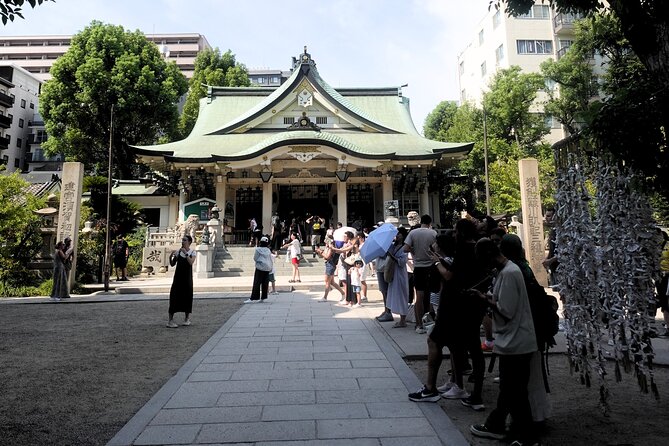
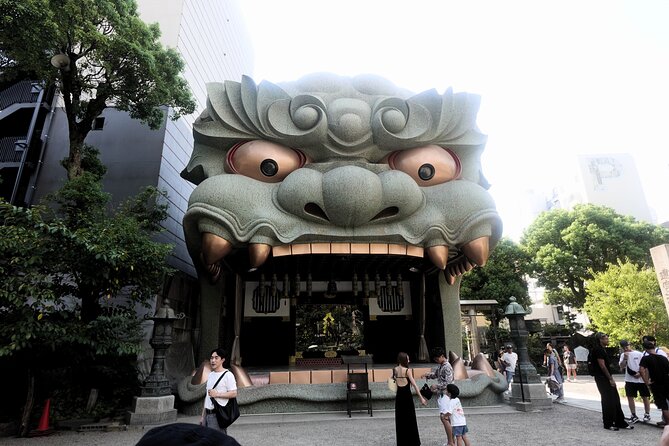
You start in Namba, heading to Namba Yasaka Shrine, tucked into backstreets instead of right on a wide boulevard. The headline attraction is the giant 12-meter lion head stage, described as swallowing evil spirits and bringing good fortune. Even if you only catch a quick look at the details, it is the kind of sight that makes Osaka feel playful and myth-powered at the same time.
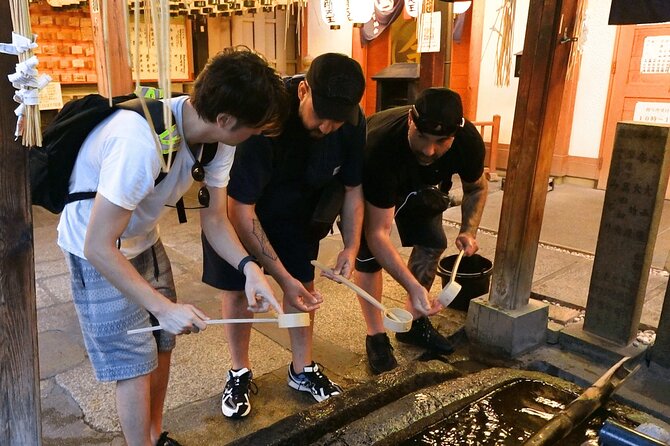
This is also a practical stop for learning. I found the shrine part works best when you know what you are looking for, like what people are doing as they pray and why the story is tied to luck. The guide, Ai, shares guidance on shrine etiquette, so you are not guessing.
For photos, aim to take at least one wide shot and one close-up before crowds thicken. If you are visiting during busy seasonal moments, you might face lines, so build in a little patience at this first major stop. It is worth it, because the lion head is the kind of image you will remember the rest of the trip.
Den-Den Town (Nipponbashi) and Gachapon: Anime Streets With Real-World Fun
Next comes Nipponbashi, also known as Den-Den Town, Osaka’s pop culture hub. Think anime and manga shops, retro games, and electronics stores stacked together in a way that feels both nostalgic and oddly futuristic. The streets are made for browsing, and the guide helps you spot the places that match the stories you are hearing.
What I like here is the hands-on, low-pressure fun. You can try a gachapon capsule machine, which is basically a tiny ritual: drop in a coin, twist the knob, and get a surprise toy inside. That is not just entertainment for kids. It is a simple way to connect with how everyday culture can be playful.
Shopping can get intense if you are not sure what you want, and Den-Den Town is the type of place where you can easily lose 45 minutes. The tour keeps you moving, but it still gives you time to look around, especially if you enjoy collecting, electronics, or retro game culture.
If you are picky about where you spend money, set a small budget before you start browsing. Capsule toys and small accessories add up fast, and it helps to have a cap in mind.
- Hungry Osaka Street Food Tour:15 Tastings & 3 Drinks with a Local★ 5.0 · 1,727 reviews
- Osaka: Tea Ceremony Experience★ 4.9 · 1,426 reviews
- Osaka Kickstart: Hotspots & Hidden Gems Tour★ 5.0 · 1,306 reviews
- Osaka: Hotspots & Hidden Gems Walking Tour Private or Group★ 4.9 · 1,300 reviews
- Deep Backstreet Osaka Tours (Option to add Dinner)★ 5.0 · 1,290 reviews
Kuromon Market, Osaka’s Kitchen: How to Eat Without Getting Stuck in the Crowd
Kuromon Market is called Osaka’s Kitchen for a reason. As you walk through the covered arcades, you see seafood, produce, and local ingredients in an up-close, no-frills way. The stalls are bright, vendors are calling, and it feels like you are watching daily life run in real time.
This stop is valuable because it teaches you how to navigate the market vibe. You are not just being dropped at a big food hall and told good luck. You get time to stroll, check what looks good, and learn what makes the market feel like Osaka rather than just another place to eat.
I also like that this tour encourages you to sample with guidance instead of stress. The guide can help you try something like takoyaki, and you might also find other bite-size options such as wagyu skewers. You do not have to commit to one “big meal.” You can pick two or three small things and still feel satisfied.
One practical tip: wear shoes you can stand in for a while. Market floors can be busy, and you will likely do more slow walking and stopping than you expect.
If you are sensitive to strong smells from seafood and grilling, take short pauses, step back from the hottest stall lines, and keep your plan flexible. The market atmosphere is part of the experience, not a separate activity.
Dōtonbori Neon and the Glico Sign: Seeing Osaka’s Show Side
Then you hit Dōtonbori, the entertainment district where neon lights, busy streets, and the canal scene create an instantly recognizable Osaka look. This is the part of town that feels like a movie set, especially around the Glico running man sign.
Even with the crowds, this stop works because you are not only there for photos. The guide shares context that helps you understand what you are seeing. Osaka loves to mix humor and spectacle, and Dōtonbori is where that personality becomes visible at full volume.
For your own photo planning, take a moment to step to a safe spot before you start shooting. People move in clusters, and you will do better if you pick one or two vantage points and stay there rather than marching up and down the same stretch.
If you want canal shots, time them with a calm minute rather than right when the loudest rush is passing. You will still get good images, and you will waste less energy trying to “thread the needle” through foot traffic.
Hōzenji Temple: The Lantern-Lit Letdown That Feels Like a Reward
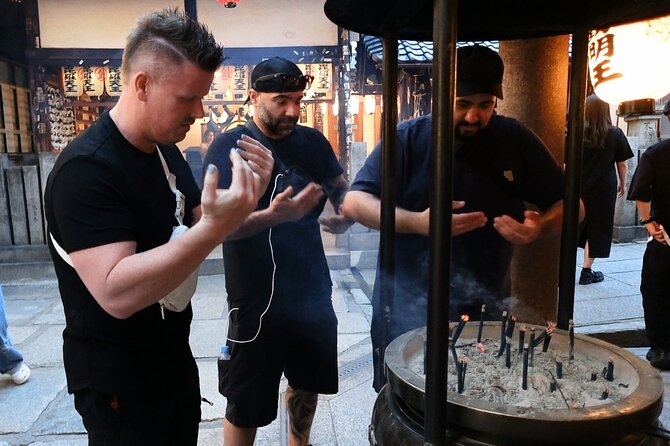
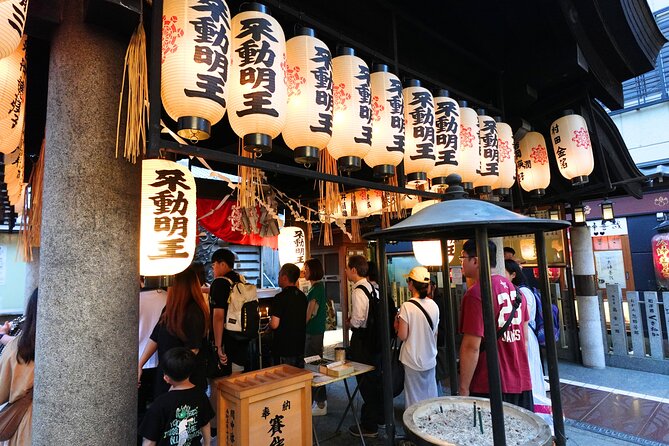
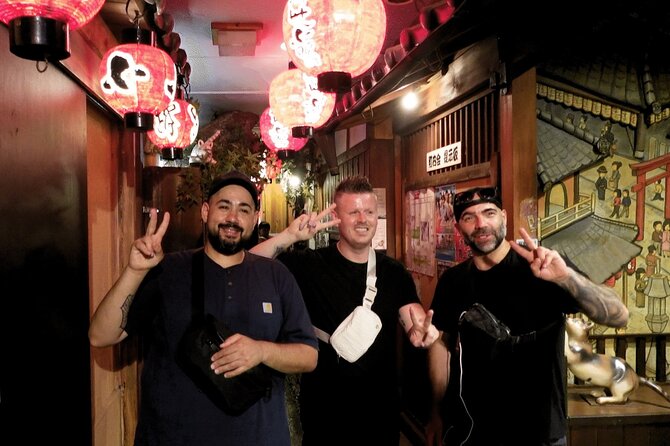
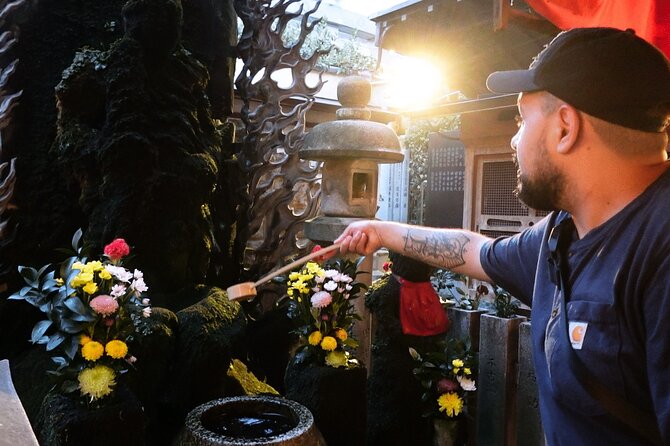
After the neon energy, the tour shifts gears to Hōzenji Temple, a quieter end note that gives Osaka some emotional contrast. You will notice the moss-covered statue and the feel of lantern-lit alleys, like you stepped away from the modern street noise for a short, gentle moment.
I like these moments because they stop your brain from treating Osaka as only lights and shopping. The guide’s stories and the slower surroundings make the place feel intentional, not just scenic.
This is also a nice ending if you want a “finish strong” memory. You get the big Osaka visuals, then you get a calm last impression you can keep thinking about on your walk back toward dinner.
Price and Value: Is $40 a Smart Use of Half a Day?
At $40 per person for about four hours, the price can feel very reasonable, mainly because so many of the major stops have free admission. That means your money is paying for time, pacing, and interpretation, not ticket fees.
You are also not just getting directions. The guide, Ai, is part storyteller, part local translator, and part pace-setter. Based on what you will hear during the walk, that adds real value, especially if you want to understand what the signs and rituals mean instead of only seeing them.
This tour makes best sense if you want a structured overview but still want the freedom to wander a bit. If you already know Osaka well and you love building your own day from scratch, you might not need a guide.
But if Osaka is new to you, or you want the “best of different sides of the city” in one afternoon, this is a strong match for the cost.
Meeting Point, Timing, Pace, and Group Size: Plan Like You Mean It
The tour starts at 2:00 pm and runs for about 4 hours. You meet at Namba in the Naniwa Ward area, at South Hills Namba Daisan-kan (Shikitsunishi, 2-chōme). The walk ends in Dōtonbori at Ebisubashi, which is a great launching point for more food and sightseeing after the tour.
The group limit is up to 10 travelers, which keeps things manageable. In practice, that means you are less likely to get lost in a giant line, and you can hear the guide better at each stop.
Because it is near public transportation, you should be able to reach the start area with normal city transit. Still, I suggest arriving a few minutes early to settle in, especially because the tour begins promptly at its set time.
One more practical point: bring some cash or a small payment method that works for market bites and capsule toys. Most big sights are covered by the walk, but food and small shopping are naturally extra.
Who This Tour Suits Best (and Who Might Want Something Else)
This is a good fit if you want Osaka that mixes myth and modern street life. The shrine and temple give you meaningful tradition, while Den-Den Town keeps it fun with pop culture and quirky shopping. Kuromon Market adds the taste of day-to-day Osaka, and Dōtonbori gives you the neon energy most people picture.
It is also a strong option if you like learning how to do small things the right way. Ai’s explanations include shrine etiquette and even help with trying local food like takoyaki, which is perfect for first-timers who do not want to feel awkward.
You might consider another style of tour if you prefer deep, stop-by-stop museum time. This walk is more about movement, storytelling, and atmosphere than sitting down for long lectures.
Should You Book This Osaka 4-Hour Walking Tour?
If you want a quick, guided “feel” for Osaka, I would book it. The itinerary hits multiple neighborhoods that people usually pick apart on separate days, and the four-hour length keeps it realistic. You also end in a food-heavy area, so you can keep the momentum going.
The only real reason to skip is if you hate crowds or you are visiting during a holiday period when lines can form at popular shrines. If you can handle that, you get a compact mix of photo-worthy landmarks and practical local flavor, with a guide who makes the stories easy to follow.
Go with comfortable shoes and a flexible appetite. If you do, you will leave with Osaka images in your camera and in your head.
FAQ
How long is the Osaka walking tour?
It runs for about 4 hours.
What time does the tour start?
The start time is 2:00 pm.
How much does the tour cost?
The price is $40.00 per person.
Where do I meet the guide, and where does the tour end?
You start at South Hills Namba Daisan-kan in Naniwa Ward and you end at Ebisubashi in Dōtonbori.
Are admission tickets required for the main stops?
The stops listed include free admission, such as Namba Yasaka Shrine and the other major sightseeing points mentioned.
Is this a small group tour?
Yes. It has a maximum of 10 travelers.
Will I receive a mobile ticket?
Yes, the tour uses a mobile ticket.
Can I cancel and get a full refund?
Yes. You can cancel for free up to 24 hours before the experience start time for a full refund.
Is the tour suitable for most people?
The information provided says most travelers can participate, and it is near public transportation.
Newest Osaka write-ups from the Loving Japan desk



Walking Tours, side by side.
 ★ 4.7Kyoto Geisha Walking Tour: Gion District & Hidden GemsFrom $253,273 reviews
 ★ 5.0Tokyo Tsukiji Fish Market Food and Culture Walking TourFrom $993,184 reviews
 ★ 4.9Gion Magical Night Walking Tour with Geisha TriviaFrom $242,393 reviews
 ★ 5.0Imperial Palace and Shogun Historical Walking TourFrom $222,251 reviews
 ★ 4.7Gion Geisha District Walking Tour – Stories of GeishaFrom $202,187 reviews
 ★ 4.5Night Walk in Gion: Kyoto’s Geisha DistrictFrom $212,003 reviews
 ★ 4.9Shinjuku Local Bar and Izakaya Guided Walking TourFrom $341,794 reviews
 ★ 5.0Tsukiji Fish Market Food and Walking tourFrom $301,724 reviews