
REVIEW · WALKING TOURS
Osaka: Castle History Walking Tour / Castle Tower Admission
Osaka Castle has a combat brain. This 90-minute English-guided walk keeps things moving while you learn how skip-the-line access and a final tower stop reveal the fortress logic behind the sights. You get the city views from the top, but you also understand why the place was built to hurt an attacker’s momentum.
I especially like how the tour points out the largest stone and explains 16th-century transport tricks, not just trivia. One possible drawback: if you want a floor-by-floor guided lecture inside the castle museum, this experience mainly focuses on the defenses and key areas, so you will do some parts self-guided.
In This Review
- Key things you’ll notice on this Osaka Castle tour
- Where Osaka Castle really shines: the fortress brain, not just the postcard
- Meeting at Lawson S Otemae Rest House Store, then getting ahead of the lines
- Moats, layered gates, and the art of slowing an enemy
- Masugata corners and zigzag routes under fire
- Hokoku Shrine: a calm stop that adds meaning to the climb
- The largest stone and hidden craftsmanship you can actually spot
- The castle tower: command post thinking, arrow slits, and the power of symbols
- Why Osaka Castle fell in 1614 to 1615, and why that matters
- Price and value: is $33 a good deal for this fortress-focused tour?
- Who should book this Osaka Castle walking tour
- Should you book this Osaka Castle tour?
- FAQ
- How long is the Osaka Castle History Walking Tour?
- What does the tour include?
- Is there skip-the-line entry?
- Where is the meeting point?
- What time do we spend at Osaka Castle during the tour?
- Do I get a guided tour of each floor in the Osaka Castle museum?
- Is the tour in English?
- What should I bring?
- Can I cancel, and what happens if I do?
- What is the price per person?
Key things you’ll notice on this Osaka Castle tour

- Skip-the-line tower entry: You use a separate route so the ticket bottleneck matters less.
- Triple moats and layered defenses: You see how attackers were slowed, split up, and forced into bad angles.
- Masugata gate traps: Those right-angle turns are not random. They were a weapon.
- Largest stone, real logistics: You learn how craftsmen moved and fitted heavy stones in the 1500s.
- Tower as command post: Arrow slits, gun ports, and symbolic choices like gold are explained in plain terms.
- Clear story of 1614 to 1615: You connect the castle’s design to the Toyotomi vs Tokugawa power struggle.
Still weighing up options in Osaka? These are the ones our reviewers rated highest.
- Osaka Go Karting Tour with Funny Costume
★ 5.0 · 2,658 reviews - Osaka Castle: Museum and Tower Entry Ticket
★ 4.5 · 2,380 reviews - Osaka: Shinsekai Food Tour with 13-15 Dishes at 5 Eateries
★ 4.8 · 2,204 reviews - Osaka Food Tour: 13 Dishes at 5 Local Eateries
★ 5.0 · 2,149 reviews
Where Osaka Castle really shines: the fortress brain, not just the postcard
Osaka Castle is one of those places where a quick stop can feel like a photo and a walk around. This tour changes the tempo. You start seeing the site like a defensive system, built to manage time, space, and fear.
I like that the experience is built around walking and looking. The guide has you watch for small clues like wall angles and stone placements that explain why the fortress was hard to attack. You’ll enjoy it most if you like architecture that has a job, not just architecture that looks impressive.
Meeting at Lawson S Otemae Rest House Store, then getting ahead of the lines
You meet in front of Lawson S Otemae Rest House Store. The helpful detail here is that there are multiple Lawson stores in the area, so you should confirm the exact one on Google Maps before you go. Look for the Local Guide Stars sign, and plan to arrive a bit early so you can match the group quickly.
Once you’re with the guide, the pace is practical. You’re not wandering while the group is trying to locate the start point. And because you have tower admission included with skip-the-line access through a separate entrance, you trade waiting time for time spent learning what you’re looking at.
If you’re someone who hates delays and prefers a plan that runs like clockwork, this matters. The castle can get crowded, and the tour’s structure helps you use that energy wisely.
Moats, layered gates, and the art of slowing an enemy
The big idea is simple: Osaka Castle is designed to make attackers lose rhythm. You’ll see outer defense areas and the moats that create multiple lines of resistance. The guide helps you connect what you see on the ground to how fighters would have moved under pressure.
The tour covers triple moats, multi-layer gates, and the way different defense layers delay and divide attackers. That means you get more than a scenic loop. You understand the thinking behind zigzags, chokepoints, and barriers that force people into slower, less organized movement.
One of my favorite parts of this style of tour is how it gives you a mental map. When you later walk around on your own, you don’t just see walls. You see the sequence, like a maze where every turn was meant to cost time.
- Osaka Go Karting Tour with Funny Costume★ 5.0 · 2,658 reviews
- Osaka Castle: Museum and Tower Entry Ticket★ 4.5 · 2,380 reviews
- Osaka: Shinsekai Food Tour with 13-15 Dishes at 5 Eateries★ 4.8 · 2,204 reviews
- Osaka Food Tour: 13 Dishes at 5 Local Eateries★ 5.0 · 2,149 reviews
- Hungry Osaka Street Food Tour:15 Tastings & 3 Drinks with a Local★ 5.0 · 1,727 reviews
Masugata corners and zigzag routes under fire
If you’ve ever wondered why some Japanese castle approaches look weirdly indirect, this is where the explanation clicks. The tour focuses on masugata entrances, plus those zigzag routes that once faced attackers under fire.
Here’s what’s useful for you: you can stand at a gate and immediately understand why it wasn’t built for convenience. It was built to break formation, reduce the attacker’s options, and put defenders in a better position. The guide’s approach makes the fortress feel less like history class and more like battlefield engineering.
You also learn how walls and stonework were built to be difficult to climb. Even without doing anything active, you start noticing angles and construction choices that make the place look intimidating from the ground level.
Hokoku Shrine: a calm stop that adds meaning to the climb
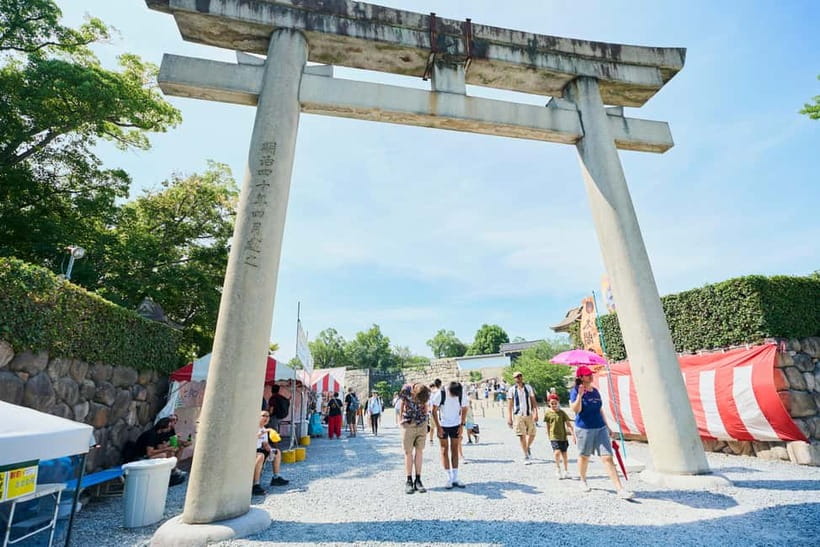
Right in the flow of fortress exploration, you stop at Hokoku Shrine for a guided visit. It’s a brief break from the heavy defensive talk, but it doesn’t feel tacked on.
This stop helps you shift perspective. Instead of only viewing the castle as military infrastructure, you get a sense that Osaka Castle is also a cultural anchor point where people still find meaning today. If you’re prone to information overload, this pause is a relief.
It’s also a smart timing choice. You’re not rushing from one hard concept to another without any reset.
The largest stone and hidden craftsmanship you can actually spot
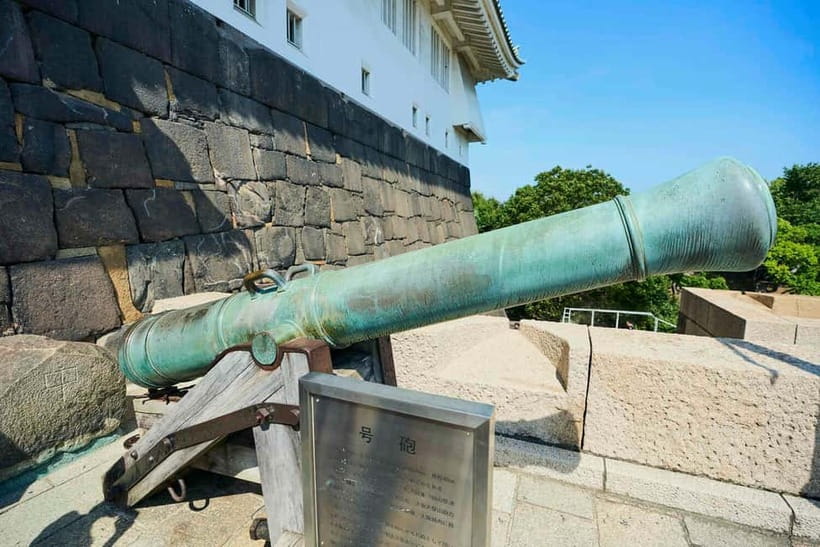
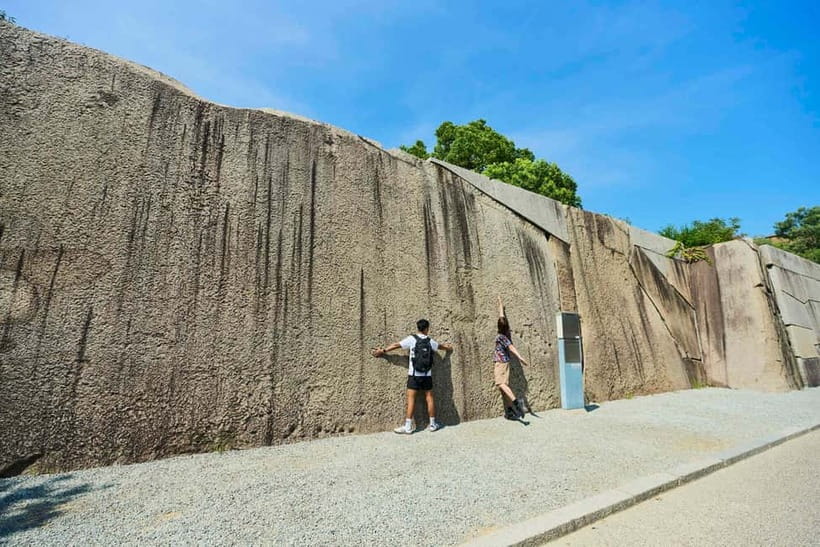
This tour makes space for the details people miss when they go on their own. A standout moment is seeing the castle’s largest stone and learning how it was transported in the 16th century.
What I like about this kind of explanation is that it humanizes the engineering. It’s not just, look at the wall. It’s, look at the problem, and now think about what it took to move and place a massive stone without modern tools.
You also learn about hidden stone marks and how master craftsmen left subtle signs in the stonework. The guide helps you spot those traces so the masonry doesn’t become just texture. You start seeing proof of skilled labor and careful planning.
And the wall angle discussion fits right into this. When you understand how stone was arranged and how surfaces were shaped, the idea of an unclimbable fortress becomes more believable.
The castle tower: command post thinking, arrow slits, and the power of symbols
Once you reach the tower, you get the payoff view plus the story of what the top was for. The guide explains the tower as a command post and last defense, not just a lookout platform.
You’ll hear about arrow slits and gun ports, and the tour connects those features to the way defenders could respond even when attackers reached the most critical area. It’s a different kind of sightseeing. You’re not only admiring height, you’re understanding function.
The tour also mentions gold used as psychological warfare. That’s one of those details that’s easy to miss if you don’t know to look for symbolism. With the context, the design choices stop feeling decorative and start feeling intentional.
The view from the top of the castle is a real reward. You get city views that help you appreciate Osaka’s flat geography, and you can see why controlling vantage points matters.
Why Osaka Castle fell in 1614 to 1615, and why that matters
A tour can either stop at, look how strong this fortress is, or it can explain reality. This one includes the uncomfortable truth: Osaka Castle was considered invincible, but it fell in 1614 to 1615.
The guide ties the collapse to the fierce rivalry between Toyotomi Hideyoshi’s legacy and Tokugawa Ieyasu’s ambition. That turns the castle from a standalone monument into a piece of a much larger political picture.
For you, this is the takeaway that sticks. Even the best-designed defenses can be outweighed by power shifts, resources, and political outcomes. The fortress becomes a lens for understanding how Japan’s era changed, not just a set of walls.
Price and value: is $33 a good deal for this fortress-focused tour?
At $33 per person for a 90-minute experience, this sits in the category of good value, especially if you care about context. You’re paying for an English-speaking guide plus Osaka Castle tower admission. You’re also paying to skip the line, which can matter a lot at busy times.
If you only wanted the view, you could probably buy a ticket and wander. But the real value here is that the guide translates the design into something you can understand while you’re standing there, staring at moats and gates that otherwise just look old and tall.
Two things tilt it in your favor:
- The tour uses the most important parts of the fortress layout, so you’re not paying to walk to random spots.
- Multiple guides, including names like Saya, Mao, Spike, and Yuta, are repeatedly praised for being friendly, clear, and engaging, which usually means better learning per minute.
One thing to consider before you book: the castle museum inside the tower is not the main focus. The tour includes admission, but it is not advertised as a guided tour of each floor. If you love museum galleries and want a room-by-room interpretation, you may still want some extra time after the tour to read and explore.
Who should book this Osaka Castle walking tour
Book it if:
- You love military architecture and want explanations that connect walls to strategy.
- You care about skip-the-line access and hate wasting time in ticket lines.
- You want a guided experience but still like doing some self-guided time once you’re inside.
You might skip it if:
- You want a slow, museum-first experience with a guided talk for every floor.
- You prefer reading on your own with minimal structure.
Should you book this Osaka Castle tour?
I’d say yes if you’re going to Osaka Castle anyway and you want more than a photo circuit. The fortress details are exactly the kind of thing a guide helps you decode fast, from moats and gates to the tower’s defensive purpose.
It’s also a smart buy because you’re getting the key parts in about 90 minutes, plus tower entry without the worst of the crowd pressure. If you’re the type who likes understanding the why behind the walls, this tour is a solid choice.
If you’re on the fence, do this simple check: would you pay extra for a guide to explain fortress design while you’re standing in front of it? If yes, book it. If your main goal is a relaxed wander and museum reading, you might want a different style of visit.
FAQ
How long is the Osaka Castle History Walking Tour?
The experience lasts about 90 minutes.
What does the tour include?
You get a professional English-speaking guide and admission to the Osaka Castle tower.
Is there skip-the-line entry?
Yes. You enter through a separate entrance to help you skip the main line.
Where is the meeting point?
Meet in front of Lawson S Otemae Rest House Store. There are multiple Lawson stores nearby, so check Google Maps to confirm the correct one. Look for the Local Guide Stars sign.
What time do we spend at Osaka Castle during the tour?
You spend guided time at Osaka Castle, then you have additional time for photos and exploring, including time in and around the tower area.
Do I get a guided tour of each floor in the Osaka Castle museum?
No. Admission is included, but it does not include a guided tour of each floor in the museum.
Is the tour in English?
Yes, it is an English live guide.
What should I bring?
Bring comfortable shoes and weather-appropriate clothing, since you will be walking.
Can I cancel, and what happens if I do?
Free cancellation is available up to 24 hours in advance for a full refund.
What is the price per person?
The price is $33 per person.
Newest Osaka write-ups from the Loving Japan desk



Walking Tours, side by side.
 ★ 4.7Kyoto Geisha Walking Tour: Gion District & Hidden GemsFrom $253,273 reviews
 ★ 5.0Tokyo Tsukiji Fish Market Food and Culture Walking TourFrom $993,184 reviews
 ★ 4.9Gion Magical Night Walking Tour with Geisha TriviaFrom $242,393 reviews
 ★ 5.0Imperial Palace and Shogun Historical Walking TourFrom $222,251 reviews
 ★ 4.7Gion Geisha District Walking Tour – Stories of GeishaFrom $202,187 reviews
 ★ 4.5Night Walk in Gion: Kyoto’s Geisha DistrictFrom $212,003 reviews
 ★ 4.9Shinjuku Local Bar and Izakaya Guided Walking TourFrom $341,794 reviews
 ★ 5.0Tsukiji Fish Market Food and Walking tourFrom $301,724 reviews
Filed on these lists too