
REVIEW · WALKING TOURS
Osaka: Dark Side of Osaka Night Walking Tour
Osaka keeps two faces after dark. This night walk takes you through Shinsekai and Tobita Shinchi, where street scenes meet the social realities Japan hides in plain sight. It is equal parts sightseeing and careful explanation, so you leave with more understanding than photos.
I especially like the way the guides connect old Osaka to what you see now, using examples you can actually spot on the street. I also like the structure of the walk, moving from Shinsekai toward Nishinari and then into the big red-light district, with stops like Tsutenkaku and Jyanjyan Yokocho along the way.
One thing to consider: the Tobita Shinchi area is adult entertainment territory, and the topic can feel confrontational. If you have a lower tolerance for sensitive subjects, or you are traveling with kids, this is not the tour for you.
In This Review
- Key things to know before you go
- Entering Osaka after dark, with context not shock
- Where to meet your guide at MEGA Don Quijote Shinsekai
- Shinsekai: the New World built with Paris and Coney Island ideas
- Nishinari: walking the edge where Osaka’s class history shows
- Jyanjyan Yokocho: a nostalgic alley near Tsutenkaku
- Tobita Shinchi: Osaka’s largest red-light district, up close and regulated
- The guide makes or breaks the tour, and several stand out
- Price and value: what $25 buys in a 2-hour night walk
- Weather, shoes, and the small stuff that affects your experience
- Who should book this tour, and who should skip it
- Should you book Osaka’s Dark Side of Osaka Night Walking Tour?
- FAQ
- Where is the meeting point for the tour?
- How long is the tour?
- How much does the tour cost?
- What language is the tour guide?
- What is included in the ticket price?
- What is not included?
- Is the tour suitable for children or wheelchair users?
- Are there any rules during the tour?
Key things to know before you go
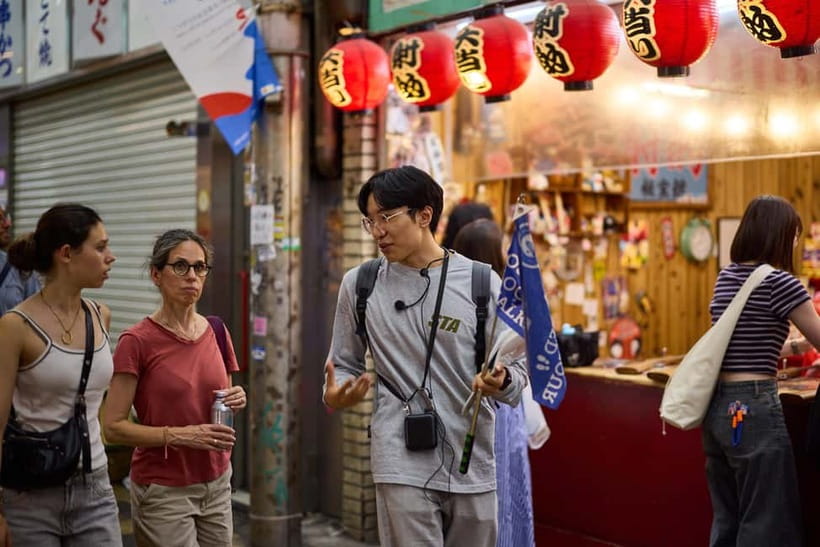
- MEGA Don Quijote Shinsekai meeting point: meet at the Under the Giant Penguin spot, with your guide holding a GetYourGuide sign.
- A short, focused 2-hour route: you cover multiple neighborhoods at a walking pace that still leaves time to ask questions.
- Shinsekai’s Western design story: the area was planned in 1912 with Paris and Coney Island influences.
- Jyanjyan Yokocho alley near Tsutenkaku: expect a nostalgic dining and shopping street vibe.
- Tobita Shinchi red-light district etiquette: you are shown a real slice of city culture, with discretion emphasized.
- English live guide: the tour is run in English, with time for questions on sensitive topics.
Still weighing up options in Osaka? These are the ones our reviewers rated highest.
- Osaka Go Karting Tour with Funny Costume
★ 5.0 · 2,658 reviews - Osaka Castle: Museum and Tower Entry Ticket
★ 4.5 · 2,380 reviews - Osaka: Shinsekai Food Tour with 13-15 Dishes at 5 Eateries
★ 4.8 · 2,204 reviews - Osaka Food Tour: 13 Dishes at 5 Local Eateries
★ 5.0 · 2,149 reviews
Entering Osaka after dark, with context not shock
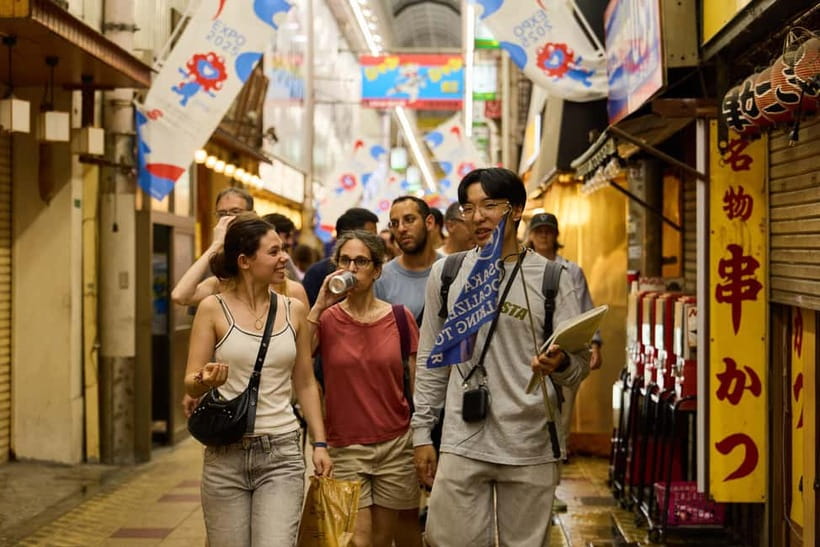
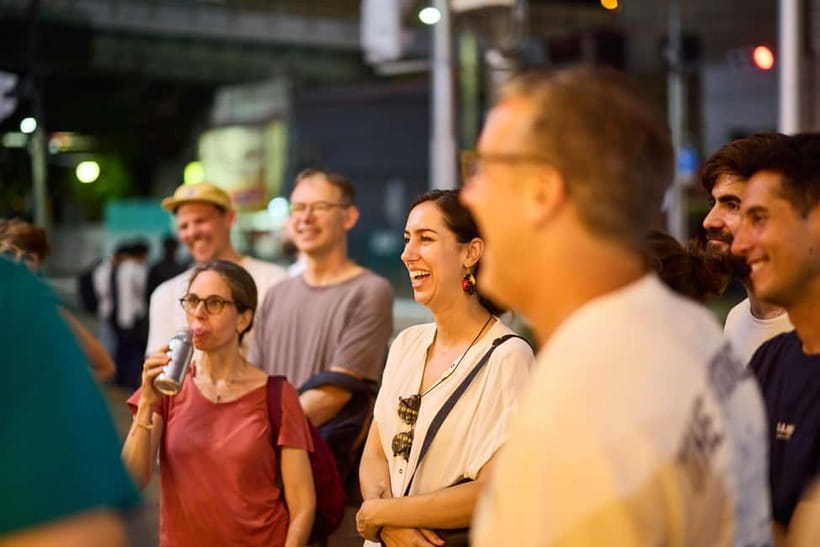
Osaka at night is not only neon and snacks. This tour works because it gives you a guide-led lens on what you are seeing, especially in places most visitors skip because it feels awkward. You walk through districts tied to work, leisure, and the way social rules get enforced in public.
The best part is balance. You are not asked to sensationalize anything. Instead, you get a practical sense of how different neighborhoods developed, why they changed, and how today’s Osaka still carries those traces.
Where to meet your guide at MEGA Don Quijote Shinsekai
You start at MEGA Don Quijote Shinsekai, at the Under the Giant Penguin area. Your guide waits there holding a sign that says GetYourGuide, so you can find the group without guessing.
This matters more than it sounds. Shinsekai is busy, and the faster you get your bearings, the more you enjoy the walk. Bring your own sense of direction, but rely on the meeting spot to reduce stress at the start.
Shinsekai: the New World built with Paris and Coney Island ideas
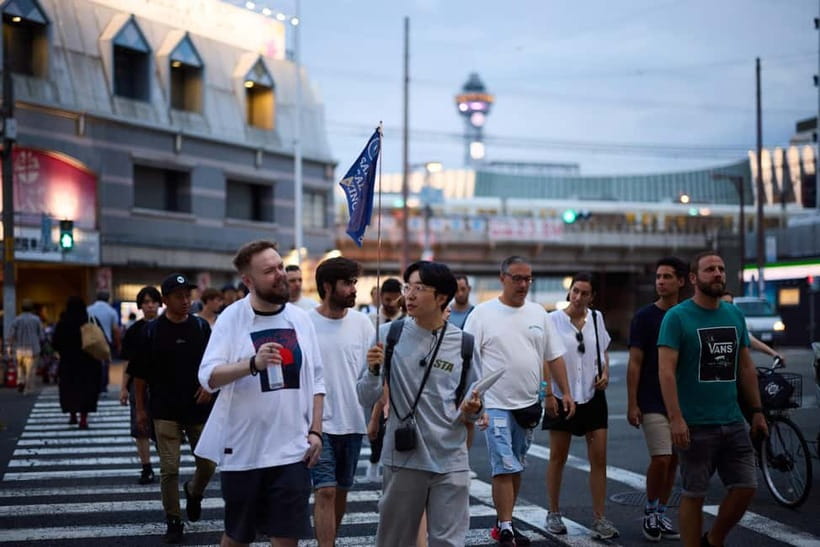
Your first neighborhood stop is Shinsekai, which means New World. The area was established in 1912 as an entertainment district designed with Western inspiration in mind, with the southern half modeled after Paris and the northern half referencing New York’s Coney Island.
Even if the original grand plan faded, the area still has that odd, memorable character that makes it feel like a snapshot of an earlier Osaka. You will walk streets where nostalgia is not staged, it is just part of the architecture and the nighttime flow.
In many cases, you will also see Tsutenkaku as a visual anchor. This tower is a landmark that helps you understand why Shinsekai attracts repeat visits, including from people who want retro atmosphere with a real neighborhood feel.
What to watch for here:
- Notice how the street design supports the entertainment district purpose.
- Look for the contrast between old signage, older-style storefronts, and what is changing around them.
- Osaka Go Karting Tour with Funny Costume★ 5.0 · 2,658 reviews
- Osaka Castle: Museum and Tower Entry Ticket★ 4.5 · 2,380 reviews
- Osaka: Shinsekai Food Tour with 13-15 Dishes at 5 Eateries★ 4.8 · 2,204 reviews
- Osaka Food Tour: 13 Dishes at 5 Local Eateries★ 5.0 · 2,149 reviews
- Hungry Osaka Street Food Tour:15 Tastings & 3 Drinks with a Local★ 5.0 · 1,727 reviews
Nishinari: walking the edge where Osaka’s class history shows
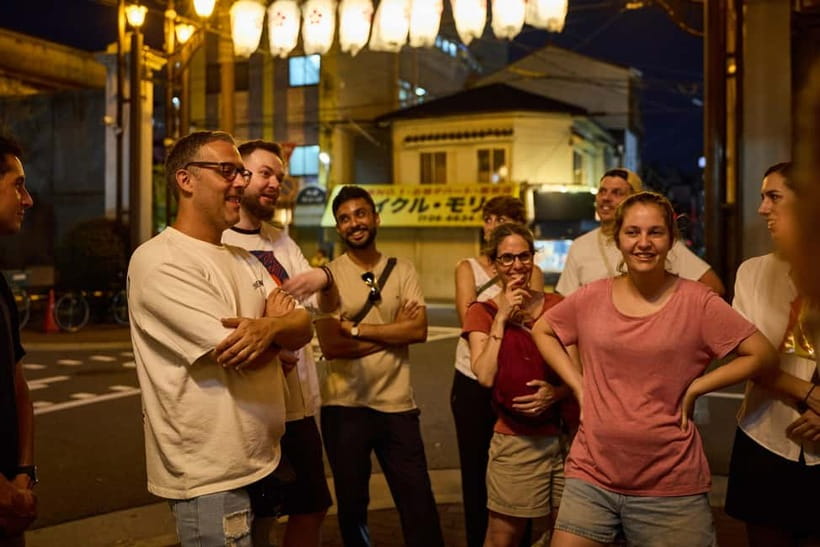
Next you move into Nishinari, in southern Osaka. The area has long been tied to working-class life, including a past centered on day laborers and a community that shaped Osaka from the ground up.
In recent years, the neighborhood has also become a draw for budget travelers and urban explorers. That shift creates an interesting tension. You can see everyday life, but you can also feel how outsiders now interact with places that have always had their own internal logic.
Your guide’s job matters most in Nishinari. This is where a respectful, careful tone makes the difference between learning and turning people into a spectacle. In the experience reports I read, guides like Rico and Matt were praised for being diplomatic about sensitive parts of Osaka life, and for staying respectful toward the people connected to these spaces.
Practical tip: if you want photos, take them, but also remember this is not a theme park. Keep your eyes open for context first, then use the camera.
Jyanjyan Yokocho: a nostalgic alley near Tsutenkaku
A highlight stop is Jyanjyan Yokocho, a narrow shopping and dining street in the Shinsekai area right near Tsutenkaku. This is the kind of place where the street itself does the storytelling.
The alley is known for a retro feel, taking you back toward mid-20th century Osaka with old-school eateries, bars, and shops. The narrow layout also helps the mood. You do not get a wide boulevard view; you get close, street-level glimpses of how nightlife used to be paced.
A key detail: food and drinks are not included on the tour. That is actually useful, because you can choose what you want based on your diet and your comfort level.
What you can do here:
- Use this stop to sample at your own pace.
- Take note of what looks open and active, so you can return later on your own.
Tobita Shinchi: Osaka’s largest red-light district, up close and regulated
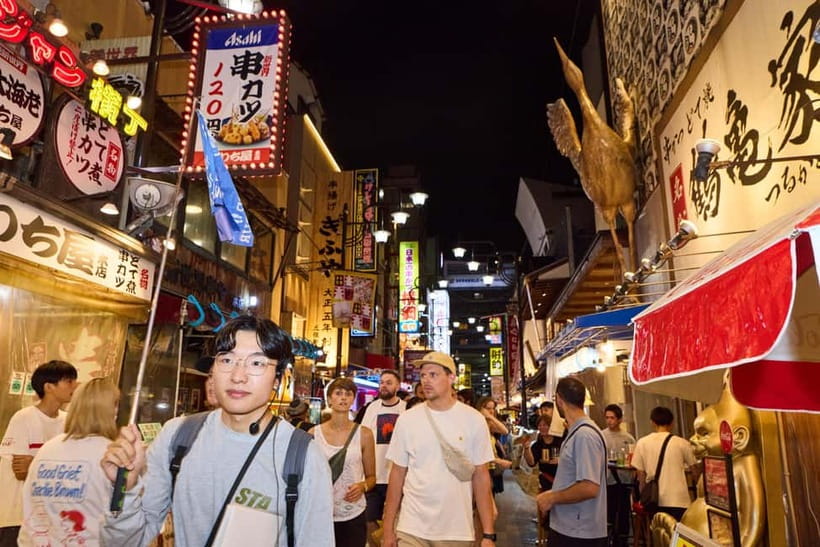
The final major area is Tobita Shinchi, Osaka’s most famous and largest red-light district. It has a history dating back over a century, and it is known for a unique architectural style plus a tightly regulated environment.
Walking through Tobita Shinchi is where the tour earns the name Dark Side of Osaka. But the “dark” part is not about cheap thrills. It is about how a city handles adult entertainment within rules, boundaries, and social discretion.
You are likely to notice:
- Dense nightlife lighting and signage.
- A built environment that is designed for this specific function.
- The sense that behavior is expected to stay within boundaries.
This is also the part that can feel confronting. Even in the positive accounts, people emphasize that the guide approaches the topic with respect. The explanations are the point, not the shock value.
Etiquette you should follow without being told:
- Be discreet with conversation and phone use.
- Keep your group moving. Slow stops can block the flow.
- Treat the area like a neighborhood, not a show.
The guide makes or breaks the tour, and several stand out
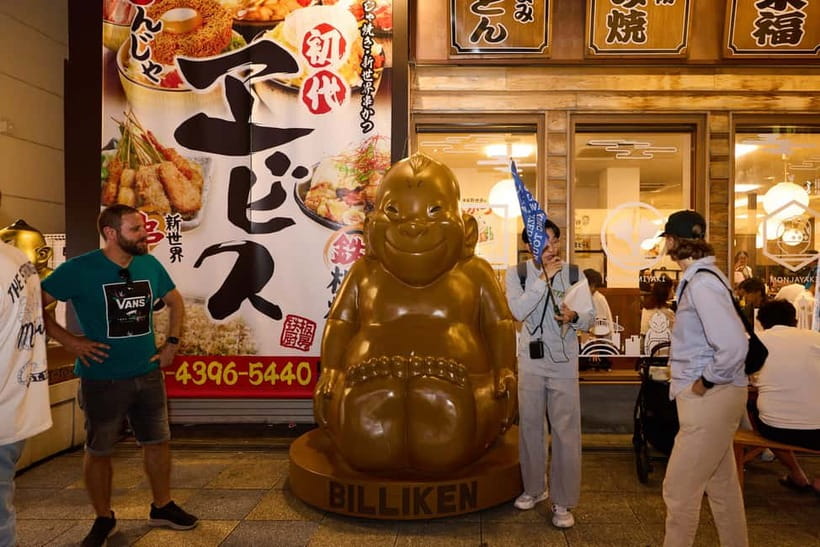
This tour lives or dies by the guide, and you can see that in the consistently high ratings. Guides including Jay, Rico, and Matt receive praise for history plus real street observation.
What I see as the common theme across strong reports:
- Guides spend time answering questions instead of rushing past sensitive points.
- They use a calm tone for uncomfortable topics.
- They add extra city context beyond the route, including practical recommendations afterward.
There is also a recurring idea that the time moves fast because the guide keeps the pacing lively. One report mentioned a small group size, around six people, which is exactly what you want on a walking tour that covers heavier social material. Small groups make it easier to ask questions and easier to follow along.
One more useful bonus: guides sometimes share restaurant suggestions in Osaka. Food is not part of the ticket, but your guide’s recommendations can help you eat well without wasting time.
Price and value: what $25 buys in a 2-hour night walk

At $25 per person for a 2-hour guided walking tour, you are paying for three things: an English-speaking guide, access to an explanation-rich route, and efficient night-time use of your time.
You do not get food included, so the value is not about a meal. The value is about interpretation. Without a guide, Tobita Shinchi can feel confusing or uncomfortable, and Shinsekai can feel like random retro scenery. With the guide, you get the “why” behind the sights.
A walking tour also saves money compared with taxis or multiple paid attractions. If you would otherwise spend your evening wandering without direction, this is a structured way to spend the same hours with clearer meaning.
If you are the type who likes asking questions, you will feel the price better. The best tours are not only about where you walk, but about how well the guide helps you understand what you are looking at.
Weather, shoes, and the small stuff that affects your experience
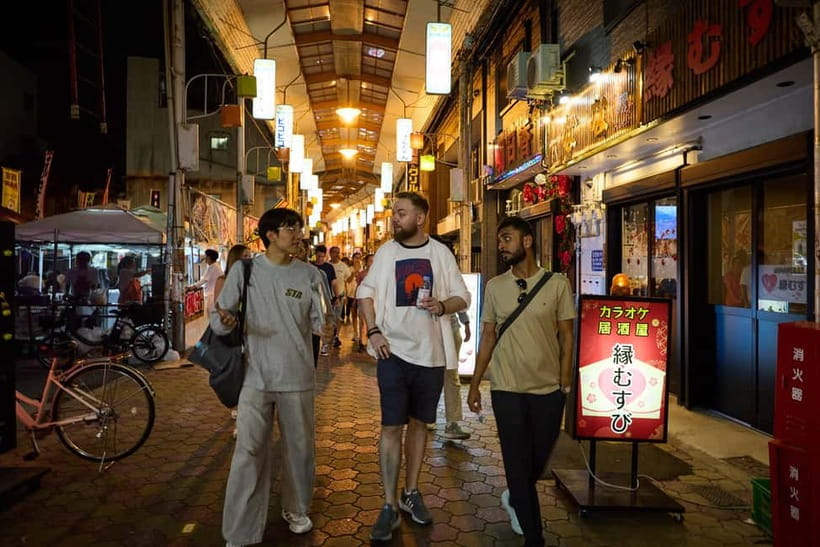
This is a night walking tour, so your comfort matters. Wear comfortable walking shoes because you are covering several areas on foot. You should also expect various weather conditions, so bring a layer you can handle if the temperature shifts or rain starts.
Also note basic rules that affect how you plan your night:
- Smoking is not allowed during the tour.
- Alcoholic drinks in the vehicle are not allowed.
Those rules are simple, but they help keep the walk focused and respectful.
And because this tour is about sensitive urban culture, mental readiness counts. If you are prone to feeling overwhelmed by adult entertainment areas, decide that before you buy. The tour is handled respectfully, but the subject is real.
Who should book this tour, and who should skip it
This tour suits you if you want Osaka beyond the postcard version. It is ideal for adults who like social history, street-level city stories, and night wandering with guidance.
It also fits well if you enjoy asking questions, because the guide interaction is a major part of the experience. If you are the kind of traveler who wants to understand how neighborhoods work, not just what they look like, you are in the right place.
On the skip side:
- It is not suitable for wheelchair users.
- It is not suitable for children under 18.
- If you have a low tolerance for confrontational topics, this is best passed on.
Should you book Osaka’s Dark Side of Osaka Night Walking Tour?
Book it if you want a 2-hour night walk that combines famous Osaka landmarks with a less comfortable look at how the city organizes nightlife and class history. Guides like Jay, Rico, and Matt are repeatedly praised for being respectful and for making room for questions, even when the topic gets heavy.
Skip it if you are traveling with kids under 18, need wheelchair access, or you know you will feel distressed by red-light district content. Even with a careful guide, Tobita Shinchi is still an adult entertainment area.
If you are an adult traveler who likes real cities and honest context, this is strong value for $25. It gives you more than a route. It gives you a way to look at Osaka with clearer understanding after the lights come on.
FAQ
Where is the meeting point for the tour?
You meet at MEGA Don Quijote Shinsekai, at the Under the Giant Penguin location. The guide will be holding a sign that says GetYourGuide.
How long is the tour?
The tour lasts 2 hours.
How much does the tour cost?
The price is $25 per person.
What language is the tour guide?
The live tour guide speaks English.
What is included in the ticket price?
The ticket includes a live tour guide and a walking tour of Osaka’s historic getto area and red-light district, including exploration of Shinsekai, Nishinari, and other key areas.
What is not included?
Food and drinks are not included, and there is no hotel pickup or drop-off.
Is the tour suitable for children or wheelchair users?
It is not suitable for children under 18 and not suitable for wheelchair users.
Are there any rules during the tour?
Smoking is not allowed, and alcoholic drinks in the vehicle are not allowed.
Newest Osaka write-ups from the Loving Japan desk



Walking Tours, side by side.
 ★ 4.7Kyoto Geisha Walking Tour: Gion District & Hidden GemsFrom $253,273 reviews
 ★ 5.0Tokyo Tsukiji Fish Market Food and Culture Walking TourFrom $993,184 reviews
 ★ 4.9Gion Magical Night Walking Tour with Geisha TriviaFrom $242,393 reviews
 ★ 5.0Imperial Palace and Shogun Historical Walking TourFrom $222,251 reviews
 ★ 4.7Gion Geisha District Walking Tour – Stories of GeishaFrom $202,187 reviews
 ★ 4.5Night Walk in Gion: Kyoto’s Geisha DistrictFrom $212,003 reviews
 ★ 4.9Shinjuku Local Bar and Izakaya Guided Walking TourFrom $341,794 reviews
 ★ 5.0Tsukiji Fish Market Food and Walking tourFrom $301,724 reviews
Filed on these lists too