
REVIEW · WALKING TOURS
Osaka Food Adventure Tour: Walking with a Local Guide
Osaka tastes better with a local guide. In about 3 hours, you walk through Osaka’s Shinsekai and Dotonbori areas, guided step by step, while working your way through 6 to 10 local eats (plus a drink).
I love the bite-sized mission, trying 6 to 10 local dishes with an included choice of alcoholic or non-alcoholic drink, timed for when you’re actually hungry (lunch or dinner). I also like that the guide helps you figure out public transit, so you are not just sightseeing, you are learning how to move around.
One thing to plan for: some admission costs are not included, and there’s a ¥190 subway fee from the Shinsekai area to Namba.
In This Review
- Key Takeaways for This Osaka Food Adventure Tour
- What You’ll Eat on This Osaka Food Tour (6 to 10 Dishes)
- Meeting at Ebisucho Station, Then Getting Around With Your Guide
- Tsutenkaku First: Icon Views, With Admission That’s Not Included
- Shinsekai Food Streets: Retro Neon, Kushikatsu Energy, and Longer Time
- Takashimaya Osaka Depachika Stop: Department Store Food Hall, Osaka Style
- Hozenji Yokocho Alley Walk: Traditional Atmosphere and Sweet Stops
- Dotonbori Finale by the Glico Sign: Street Food at Full Volume
- Public Transit Help and the ¥190 Fare You Should Budget
- Dietary Limits: What to Check Before Booking
- Guide Energy: Why Small-Group Food Tours Feel Personal
- Price and Value: Is $79.28 a Good Deal?
- Who This Tour Works Best For
- Should You Book This Osaka Food Adventure Tour?
- FAQ
- How long is the Osaka Food Adventure Tour?
- How many dishes will I try?
- Is lunch included, or is it dinner?
- Is a drink included?
- What is the maximum group size?
- Who will guide the tour, and what languages are offered?
- Where do I meet the guide and where does the tour end?
- Are admission tickets included?
- Is the subway fee included?
- What if I have allergies or dietary restrictions?
Key Takeaways for This Osaka Food Adventure Tour
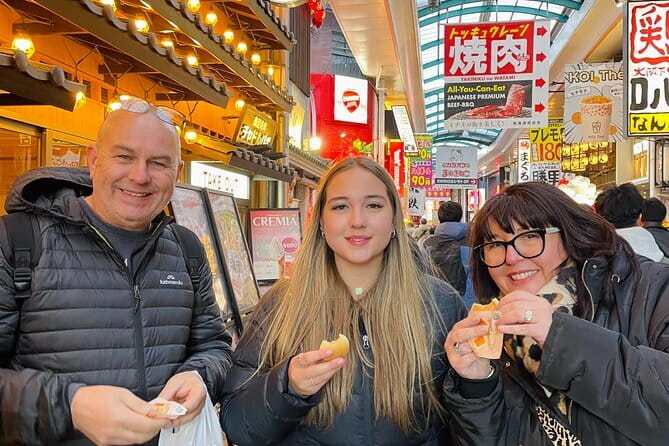
- Small-group cap (max 8) keeps the pacing human and the food stops flexible
- 6 to 10 local dishes plus 1 drink means you’re eating meals, not collecting a few samples
- Public transportation help saves time and stress when you want to keep exploring after
- Shinsekai + Hozenji Yokocho + Dotonbori covers real-everyday food streets and famous neon corridors
- Some admissions and a ¥190 fare are extra so your budget should include a little overhead
Still weighing up options in Osaka? These are the ones our reviewers rated highest.
- Osaka Go Karting Tour with Funny Costume
★ 5.0 · 2,658 reviews - Osaka Castle: Museum and Tower Entry Ticket
★ 4.5 · 2,380 reviews - Osaka: Shinsekai Food Tour with 13-15 Dishes at 5 Eateries
★ 4.8 · 2,204 reviews - Osaka Food Tour: 13 Dishes at 5 Local Eateries
★ 5.0 · 2,149 reviews
What You’ll Eat on This Osaka Food Tour (6 to 10 Dishes)
This is not a “taste one thing per stop and call it a day” style of tour. You’re set up to eat a proper range of local foods, and the plan is built around reaching spots where you can actually order, sit, and sample without wasting time.
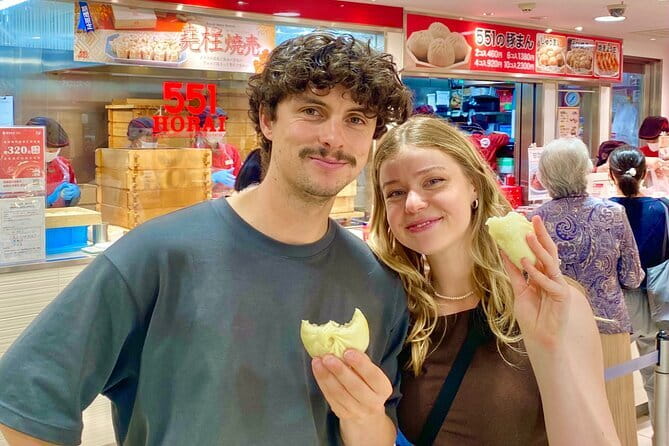
You should expect a menu mix that can include classics like kushikatsu (deep-fried skewers) from the Shinsekai area, takoyaki (octopus balls) from an older shop in Osaka, and sweet bites like wagashi from a long-running sweets store. You may also run into items such as steamed meat buns (butaman) and croquettes from a historic butcher shop. The exact lineup can vary based on what you prefer and what’s available.
Here’s the practical part: with 6 to 10 dishes in a 3-hour walk, the tour naturally helps you handle Osaka’s biggest challenge, ordering. You get help with what to order and when to slow down, so you’re not stuck staring at a menu while your stomach keeps judging you.
I also like that lunch or dinner timing is part of the design. If you book it for dinner time, Dotonbori’s neon energy fits the mood. If you do it at lunch time, it’s a great way to reset your day and still have energy left for the evening.
Meeting at Ebisucho Station, Then Getting Around With Your Guide
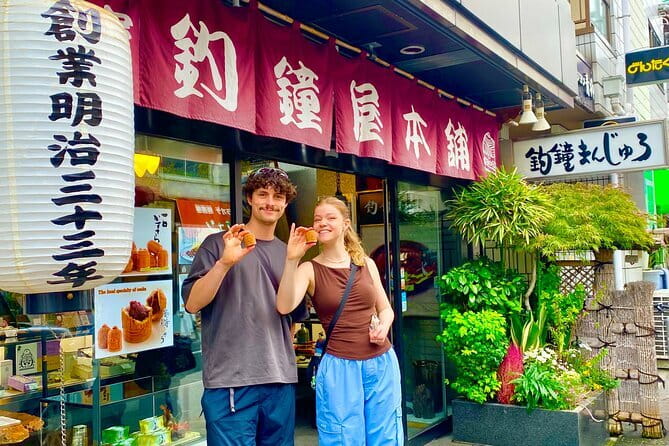
You’ll start near Ebisucho Station, at 5 Chome-13 Nipponbashi, Naniwa Ward. It’s a public-transport-friendly starting point, and that matters because the whole tour is built around moving efficiently between districts.
From the beginning, the guide’s job is more than handing you a checklist. You’ll learn how to use Osaka public transportation as you go, so you get the “how” behind the experience. That’s valuable because after the last stop, you still need to get where you want to go next.
Group size is capped at 8 travelers, which changes the feel. With a smaller group, you can ask questions and adjust on the fly. In the past, guides like Ayako, Chiyoe, Kaoru, Bryan, Sue, Emi, Hiro, and Sumiyo have shown up in this tour’s guide lineup, and the through-line is clear: they communicate clearly, explain what you’re eating and why, and keep things fun while you’re navigating crowds.
Also, plan on moderate walking. The route is not listed as extreme, but you are moving through multiple neighborhood sections, and you’ll be eating while you walk.
Tsutenkaku First: Icon Views, With Admission That’s Not Included
The tour kicks off at Tsutenkaku Tower, a landmark that rises 103 meters. It was originally built in 1912 and reconstructed in 1956, and it’s one of those Osaka symbols that you recognize even if you have never studied a map.
You’ll spend about 30 minutes here, and the observation option is your choice. The itinerary notes that the admission ticket is not included for Tsutenkaku, so if you want the higher-level city views, you’ll need to pay separately.
What I like about starting here is that it gives you an anchor. Once you see Tsutenkaku, the rest of the day makes more sense. You’re not just chasing food, you’re moving through neighborhoods with identity.
If you skip the tower ticket, you still get the vibe and the photo moment, then you move on to the food streets right away. That’s a good call if you want your appetite to drive the day, not your schedule.
- Osaka Go Karting Tour with Funny Costume★ 5.0 · 2,658 reviews
- Osaka Castle: Museum and Tower Entry Ticket★ 4.5 · 2,380 reviews
- Osaka: Shinsekai Food Tour with 13-15 Dishes at 5 Eateries★ 4.8 · 2,204 reviews
- Osaka Food Tour: 13 Dishes at 5 Local Eateries★ 5.0 · 2,149 reviews
- Hungry Osaka Street Food Tour:15 Tastings & 3 Drinks with a Local★ 5.0 · 1,727 reviews
Shinsekai Food Streets: Retro Neon, Kushikatsu Energy, and Longer Time
Next comes Shinsekai, a district that earned its name, New World, from its early 20th-century roots. It’s known for a retro feel, with neon lights and old-school eateries that keep showing up in Osaka food memories for a reason.
This is the longest portion, about 1 hour 30 minutes, and admission is listed as included. That extra time gives you room to stop, eat, and take in the street texture without feeling like you are power-walking through photos.
This is also where you’ll likely find one of Osaka’s most famous fried comfort foods: kushikatsu. It’s deep-fried skewers, usually served hot and meant to be eaten right away, while your skin still feels the heat from the kitchen.
The best way to enjoy Shinsekai on this tour is to go with your guide’s rhythm. Let them steer you to the order that makes sense for your taste. With a small group, you’re more likely to get adjustments, like skipping what you do not want and spending a little longer where the food hits.
Also, Shinsekai sits right in the middle of Osaka’s “food first” style. Even if you think you already know what takoyaki or fried skewers are, you’ll still be surprised at how different each shop and sauce can feel.
Takashimaya Osaka Depachika Stop: Department Store Food Hall, Osaka Style
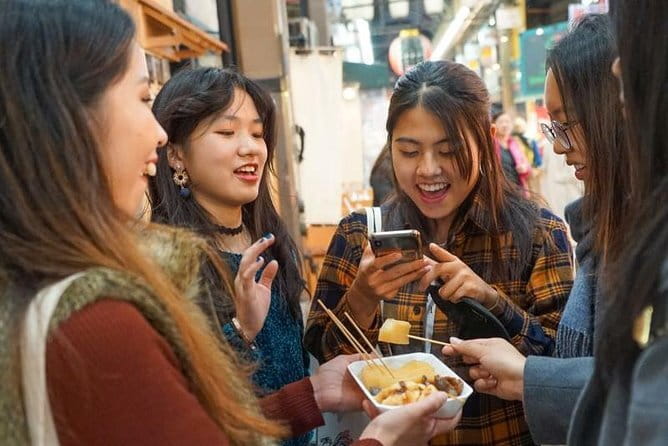
Then you’ll head to Takashimaya Osaka Store, where the food basement, called depachika, is the main attraction. Depachika is a Japanese department store food hall, and it can be surprisingly exciting. Think of it as a curated place where you can sample high-quality bites in one compact zone.
You’ll spend about 15 minutes here, and admission is listed as not included. That means you should treat this stop like a sampling window, not a paid attraction.
What makes this stop valuable is variety. A depachika can show you how serious Osaka is about food, even inside a very mainstream mall environment. You can grab small items and understand the range of what people buy for everyday eating or gifts.
In a tour like this, the depachika stop is also a practical break from pure alley-style walking. It’s a good moment to pause, reset your pace, and keep building your “what Osaka eats” mental map.
Hozenji Yokocho Alley Walk: Traditional Atmosphere and Sweet Stops
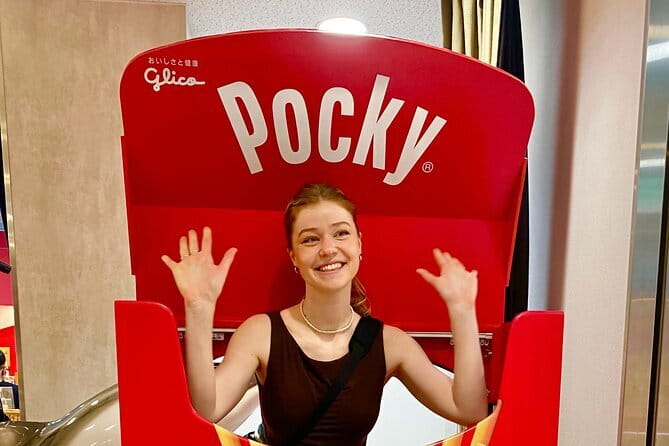
Your next move is to Hozenji Yokocho, a narrow alley near Hozenji Temple. This kind of street is what makes Osaka feel like Osaka, not just another city with generic street food.
The stop is about 10 minutes, and admission is listed as included. Even if the time feels short, the point is not just sightseeing. It’s the feeling of stepping into a smaller pocket of the city where the food culture is right in front of you.
You may run into a sweet moment here, such as wagashi from a 200-year-old sweets store. That matters because wagashi is not just dessert. It’s part of how Japanese food culture treats seasonal flavor and texture.
This is also a good stop for photos that actually feel old and human. Keep your expectations realistic: the alley is narrow, and you’ll be walking with a group. Go slow, step aside when needed, and let your guide handle the “when to order, where to stand, how to move” part.
Dotonbori Finale by the Glico Sign: Street Food at Full Volume
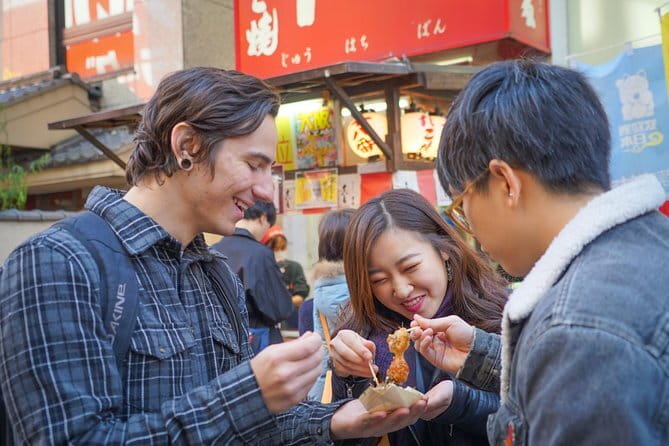
The tour finishes in the Dotonbori District, famous for neon lights, big billboards, and the Canal-side energy that turns dinner into a show.
You’ll get about 30 minutes here, and admission is listed as included. Your official end point is by the bridge in front of the Glico Sign, so you get that iconic Osaka moment as a capstone.
If you booked for dinner time, Dotonbori tends to match the mood perfectly. You’ll likely encounter one more “Osaka must-eat” item like takoyaki from a long-running shop. That’s a smart finish, because by the time you reach Dotonbori, your taste memory is fresh and your stomach is ready for one last round.
One practical note: Dotonbori is crowded. The guide helps you weave through people so you keep moving and keep eating, instead of losing time to congestion.
When the tour ends, you’ll have two advantages. First, you’ve eaten real Osaka flavors across multiple neighborhoods. Second, you’ve learned transit cues earlier, so you’re less likely to burn time figuring out how to leave.
Public Transit Help and the ¥190 Fare You Should Budget
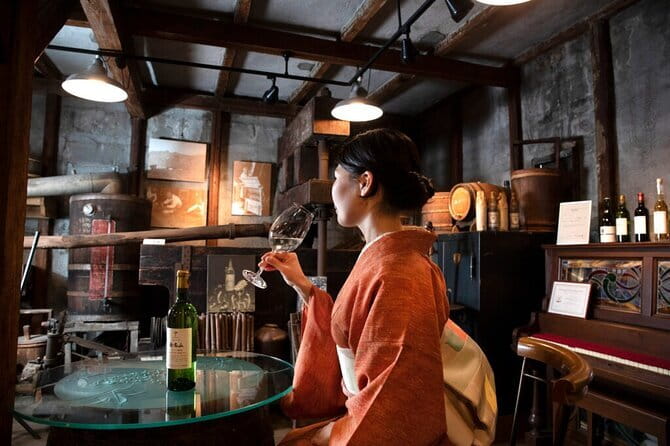
The guide includes help with public transportation throughout the experience. That’s not just comfort. It’s also the difference between “I saw Osaka” and “I can navigate Osaka.”
Still, there’s one fare you should know upfront. The itinerary includes a subway fee from the Shinsekai area to Namba, ¥190 per person, and it’s not included in the tour price.
I treat this kind of extra fare as normal travel math. Once you know it exists, it stops being a surprise. You can load money onto your transit card, or be ready to pay when the guide signals it.
If you want to get the most out of the transit part, pay attention during the first ride segment. Watch for station exits, the order of stops, and how the guide keeps you oriented. Then, after the tour, you can build on it for your remaining Osaka time.
Dietary Limits: What to Check Before Booking
Osaka food tours are fun, but your body is not an optional detail. The tour notes that the dishes may include ingredients such as meat, seafood, wheat, and dairy.
If you have allergies or dietary restrictions, you should contact the tour provider in advance to ask what accommodations are possible. This matters because the tour’s tasting selection can vary depending on your preferences and shop availability, but the ingredient types still need to be checked against your needs.
I also recommend you do a quick personal reality check before booking. If you’re strict about vegetarian, seafood-free, or gluten-free, you might need special handling. The tour can help, but you should not assume it will automatically meet every restriction without planning.
And if you’re just a picky eater, this tour is still likely a win. The small group setting makes it easier for guides to ask what you like and steer accordingly.
Guide Energy: Why Small-Group Food Tours Feel Personal
A big reason this tour scores high is the guide factor. In the tour’s guide stories, people consistently mention clear communication, humor, and the way guides point out details that you would miss on your own.
Names that show up often include Ayako and Chiyoe. Guides like Kaoru have also been noted for going above basic guiding, including help navigating onward travel after the tour. Others, like Bryan, Sue, Emi, Hiro, and Sumiyo, are described as friendly, funny, and focused on explaining the neighborhood food culture rather than just reading off menu items.
You’ll feel this in small moments. For example, a guide can help you choose the right shop, tell you what to expect in a dish, and keep you from ordering something you do not want. With a cap of 8 travelers, those little adjustments actually happen.
It also makes the tour feel lighter. When food is involved, the best guides keep the pace friendly, so you’re tasting, learning, and walking without feeling rushed.
Price and Value: Is $79.28 a Good Deal?
The price is $79.28 per person, for about 3 hours. What makes it feel fair is what’s included: 6 to 10 local foods and 1 drink, plus a tour guide and the small-group experience.
If you were to piece this together yourself, you would likely spend time searching for places that match your tastes, and you might still end up missing the local ordering shortcuts. This tour bundles that problem-solving into the guide’s job.
Admission is partially included depending on the stop. Some parts like Tsutenkaku and the Takashimaya depachika are listed as not included, and you also have the ¥190 subway fare. That means your total out-of-pocket could be a bit higher than just the tour price.
Still, in my view, the value is strong when you treat this as guided eating plus neighborhood context. You are paying for access to the food flow, not just the food itself.
Also, it’s booked on average 30 days in advance. That’s another sign to lock in your plan early if you want a specific time slot, especially around busy travel seasons.
Who This Tour Works Best For
This is a great fit if you want an Osaka food plan that feels structured without being stiff. I’d especially recommend it if you:
- Like walking tours but want someone to handle the route logic
- Want to eat multiple local dishes in one half-day stretch
- Prefer lunch or dinner plans that reduce decision fatigue
- Appreciate smaller groups when you want questions answered
It’s also smart for first-time Osaka visitors. Dotonbori and Shinsekai are famous, but without local help, you can end up in the “lots of signs, not enough substance” trap. This tour is designed to keep you focused on where locals eat and how to order confidently.
If you have limited walking tolerance, consider the moderate fitness note. The route is not described as punishing, but you are still moving through several areas and stopping for tastings.
Should You Book This Osaka Food Adventure Tour?
Book it if you want a practical, food-first Osaka introduction with a guide who helps you order and navigate. The combination of 6 to 10 local dishes, a included drink, and public transport help makes it efficient in a city where getting from place to place can eat up your time.
Skip or reconsider if you know you need very specific allergy handling, or if you prefer to control every single decision yourself. Also remember that Tsutenkaku admission and the ¥190 subway fare from Shinsekai to Namba are extra, so your budget should allow for small add-ons.
If you want a satisfying start to an Osaka day that ends with Dotonbori and the Glico Sign, this tour is a strong choice.
FAQ
How long is the Osaka Food Adventure Tour?
It’s about 3 hours.
How many dishes will I try?
You’ll try 6 to 10 local foods.
Is lunch included, or is it dinner?
The tour is described as a lunch or dinner-time experience, so it’s scheduled around when you’re most hungry.
Is a drink included?
Yes, 1 drink is included, and you can choose between alcoholic or non-alcoholic.
What is the maximum group size?
The tour has a maximum of 8 travelers.
Who will guide the tour, and what languages are offered?
The tour includes a guide in English and Japanese.
Where do I meet the guide and where does the tour end?
You start at Ebisucho Station (near 5 Chome-13 Nipponbashi, Naniwa Ward). The tour ends at the Glico Sign area in Dotonbori, at the bridge in front of the sign.
Are admission tickets included?
Admission ticket inclusion varies by stop. Tsutenkaku admission is not included, while admission is listed as included for Shinsekai, Hozenji Yokocho, and Dotonbori.
Is the subway fee included?
No. There is an extra subway fee from the Shinsekai area to Namba of ¥190 per person.
What if I have allergies or dietary restrictions?
The tour notes that meals may include meat, seafood, wheat, and dairy. They advise contacting the provider in advance to discuss possible accommodations.
Newest Osaka write-ups from the Loving Japan desk

Walking Tours, side by side.
 ★ 4.7Kyoto Geisha Walking Tour: Gion District & Hidden GemsFrom $253,273 reviews
 ★ 5.0Tokyo Tsukiji Fish Market Food and Culture Walking TourFrom $993,184 reviews
 ★ 4.9Gion Magical Night Walking Tour with Geisha TriviaFrom $242,393 reviews
 ★ 5.0Imperial Palace and Shogun Historical Walking TourFrom $222,251 reviews
 ★ 4.7Gion Geisha District Walking Tour – Stories of GeishaFrom $202,187 reviews
 ★ 4.5Night Walk in Gion: Kyoto’s Geisha DistrictFrom $212,003 reviews
 ★ 4.9Shinjuku Local Bar and Izakaya Guided Walking TourFrom $341,794 reviews
 ★ 5.0Tsukiji Fish Market Food and Walking tourFrom $301,724 reviews
Filed on these lists too