
REVIEW · WALKING TOURS
Osaka Food Walking Tour with Market Visit
Food in Osaka hits different, especially at market pace. This half-day walk brings you into the Osaka-Kizu Wholesale Market for fresh sashimi, seasonal fruit, and possible street-snack stops, then sends you to Shinsekai for a traditional lunch that fits Osaka comfort-food cravings. I especially like the guided tasting style, with time built in so you are not just walking past stalls, and the small-group feel with a top cap of six people. One consideration: you will pay for public transit (¥410 per person), so factor that in if you are budgeting tight.
The day moves on foot first, then uses the subway to connect neighborhoods, which keeps the route realistic. I also like the practical flow, you start near Daikokucho Station at 9:00 am and end near Ebisu Bridge in Dotonbori, so you can keep exploring right after lunch. If you hate being on your feet for a few hours, this might feel like more movement than you want.
In This Review
- Key Highlights You Should Care About
- From Daikokucho to 9:00 am: Starting Easy, Eating Fast
- Osaka-Kizu Wholesale Market: Sashimi You Can Actually Taste the Difference
- Shinsekai Lunch: Okonomiyaki Comfort Food Plus Tea Culture
- Ebisu Bridge and Dotonbori: Turning Lunch Into More Osaka
- Price and What Makes It Worth the Money
- Who This Osaka Food Walking Tour Fits Best
- Should You Book This Osaka Food Walking Tour?
- FAQ
- How long is the Osaka Food Walking Tour with Market Visit?
- What is included in the tour price?
- Where does the tour start and where does it end?
- Is public transportation included?
- How big is the group?
- What is the minimum age for this tour?
- What is the cancellation window?
Key Highlights You Should Care About
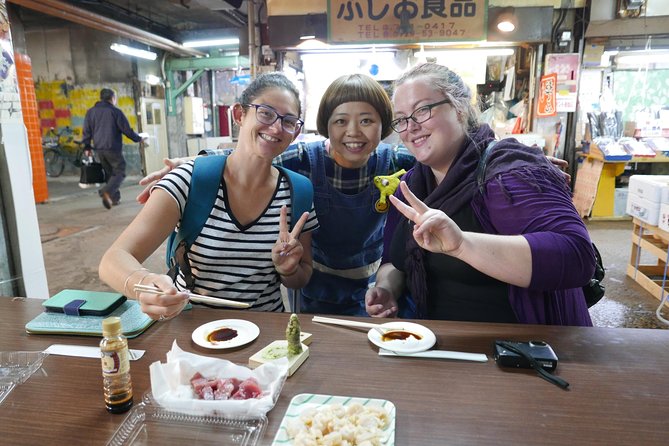
- Kizu Wholesale Market tastings focused on fresh sashimi and market-style bites
- Shinsekai lunch with Osaka comfort food, including okonomiyaki cabbage pancakes
- Tea time plus a kitchen knife shop stop, so you see food culture beyond eating
- Very small group size, up to six people per booking, with a private tour feel
- Easy handoff after the tour, ending near Ebisu Bridge and Dotonbori
Still weighing up options in Osaka? These are the ones our reviewers rated highest.
- Osaka Go Karting Tour with Funny Costume
★ 5.0 · 2,658 reviews - Osaka Castle: Museum and Tower Entry Ticket
★ 4.5 · 2,380 reviews - Osaka: Shinsekai Food Tour with 13-15 Dishes at 5 Eateries
★ 4.8 · 2,204 reviews - Osaka Food Tour: 13 Dishes at 5 Local Eateries
★ 5.0 · 2,149 reviews
From Daikokucho to 9:00 am: Starting Easy, Eating Fast
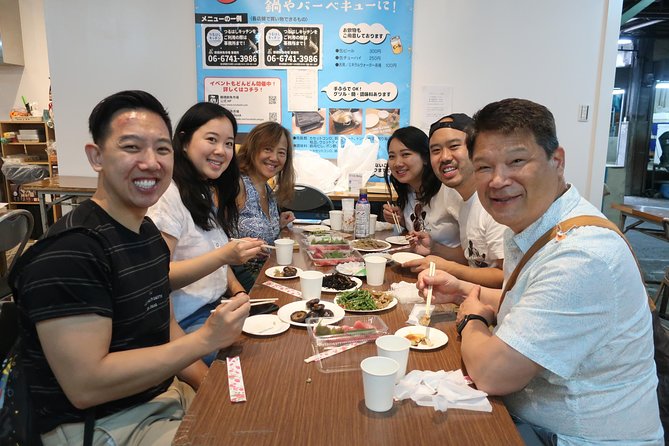
The whole point of this tour is getting you to the food quickly, with just enough structure to keep things from feeling random. You meet near Daikokucho Station around 9:00 am. That early start matters in Osaka, because markets and small eateries tend to work on tight daily rhythms. Starting on time also helps you taste things while ingredients are at their best, instead of showing up when vendors are winding down.
The tour is built for a small group, maximum six people per booking, and it is private for your group only. That has two big benefits for you. First, it is easier to ask questions, especially in a market where you might not know what to look for. Second, your guide can slow down for your pace, not just steamroll the group into the next photo spot.
You will move mostly on foot, then take the subway connection to Shinsekai. Public transportation is not included, and the cost listed is ¥410 per person, so be ready with cash or a transit card. Also note the tour includes food samples for lunch, lunch itself, and snacks, but alcohol is not included. If you want beer or highballs with food, you will need to handle that on your own.
Last practical bit: you get a mobile ticket, which helps when you are bouncing between stations and street entrances. One more detail that feels small but matters, the tour has limited spots and is often booked about 38 days in advance, so if you are traveling in peak season, lock it in earlier rather than later.
Osaka-Kizu Wholesale Market: Sashimi You Can Actually Taste the Difference
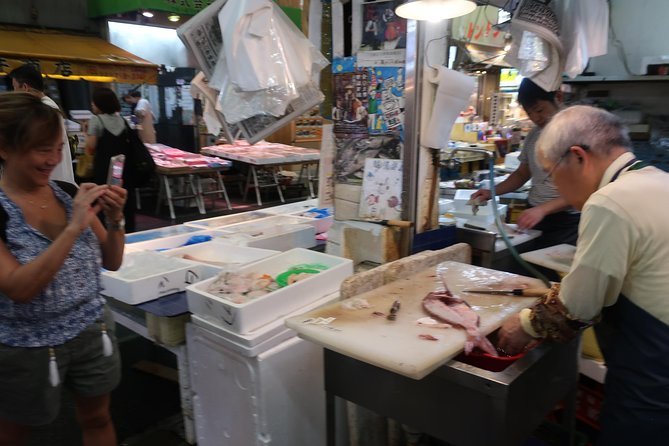
The market stop is the heart of the whole experience. This is Osaka-Kizu Wholesale Market, a big seafood-focused place where restaurant buyers and sellers think in terms of quality first. With a local guide, you explore the market and taste fresh sashimi plus market snacks, and you also get seasonal Japanese fruit. That fruit detail is worth your attention, because it is one of those Osaka touchpoints that gets overlooked by people who only chase salt and seafood flavors.
You will also hear guidance while you walk, not just what to eat, but how to notice why it tastes good. In a market like this, freshness is not a marketing word. It is the whole point. The tastings are designed so you can compare textures and flavors, instead of treating everything as one long food blur.
There are a couple ways the market visit can land well for you:
- If you like learning while you eat, the guide helps you decode what you are seeing.
- If you simply want the best bites, you are not wandering blindly through a place that can feel chaotic.
One practical consideration: markets can be busy and not every aisle is wide. Even if the tour says most travelers can participate, you should still be comfortable standing and moving for about an hour here. If you plan to do this on a day when you are also doing heavy sightseeing, keep your other commitments lighter.
From the reviews, one name comes up for the guide, Ichiro-san, and people praise how he explains areas and history, and how patient he is while leading the group through the market. That kind of guiding really changes the experience, because the best part of a market is not only what you sample, it is understanding what makes one stall’s product stand out.
Shinsekai Lunch: Okonomiyaki Comfort Food Plus Tea Culture
After the market, the tour shifts you to Shinsekai, a neighborhood known for bold food energy and classic Osaka comfort staples. This is where you stop for lunch and slow down a bit.
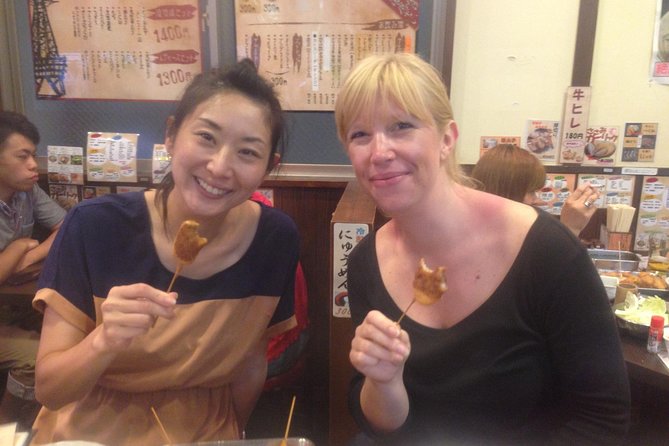
The menu focus is Osaka. You are set up to try things like okonomiyaki cabbage pancakes, which is one of those dishes that tastes like it was made for hungry walking days. Okonomiyaki is also a great “shared table” food, so it works well in a small group. You can watch how it is cooked, see how toppings change the flavor, and then compare bites without needing to order a separate meal plan for everyone.
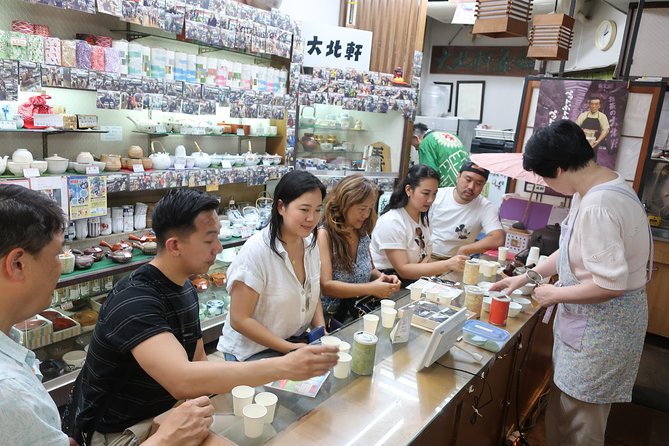
You do not just eat, though. The guide takes you to a tea shop where you can compare different types of Japanese tea. This matters because it gives you a palate reset between savory bites. It also expands the story beyond seafood and sweets. You get food culture, not just food.
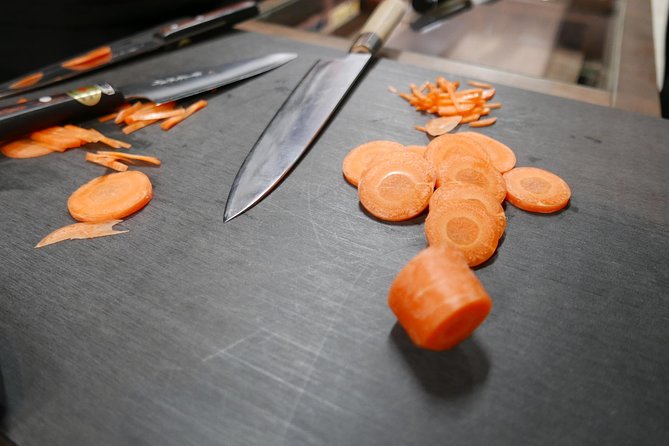
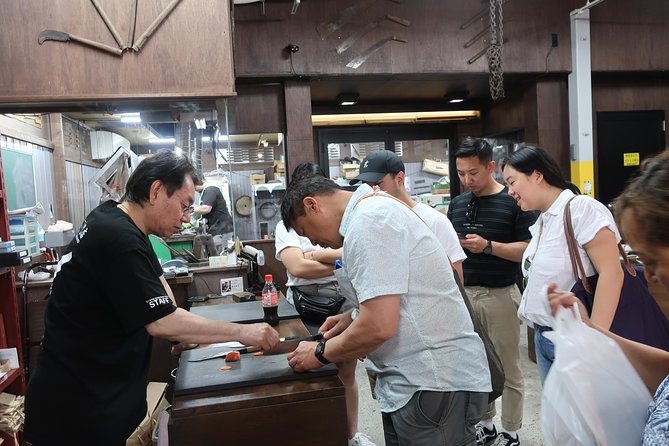
Another stop in this area is a kitchen knife shop. That sounds odd until you connect it to what you just ate. Japanese knives are part tool, part craft, and part food-knowledge. Even if you are not buying one, you get a sense of how serious people are about preparation in everyday cooking.
Time-wise, Shinsekai is about an hour on the tour. That feels right for lunch without turning the afternoon into a food marathon. One note to consider: the tour includes lunch and snacks, but not alcohol. If you usually pair your meal with drinks, plan for that cost separately.
Also pay attention to pacing in Shinsekai. The point is to eat, learn a little, and keep moving. You are not stuck in a single restaurant for ages. That keeps the tour feeling like a walk through flavors rather than a long sit-down.
- Hungry Osaka Street Food Tour:15 Tastings & 3 Drinks with a Local★ 5.0 · 1,727 reviews
- Osaka: Tea Ceremony Experience★ 4.9 · 1,426 reviews
- Osaka Kickstart: Hotspots & Hidden Gems Tour★ 5.0 · 1,306 reviews
- Osaka: Hotspots & Hidden Gems Walking Tour Private or Group★ 4.9 · 1,300 reviews
- Deep Backstreet Osaka Tours (Option to add Dinner)★ 5.0 · 1,290 reviews
Ebisu Bridge and Dotonbori: Turning Lunch Into More Osaka
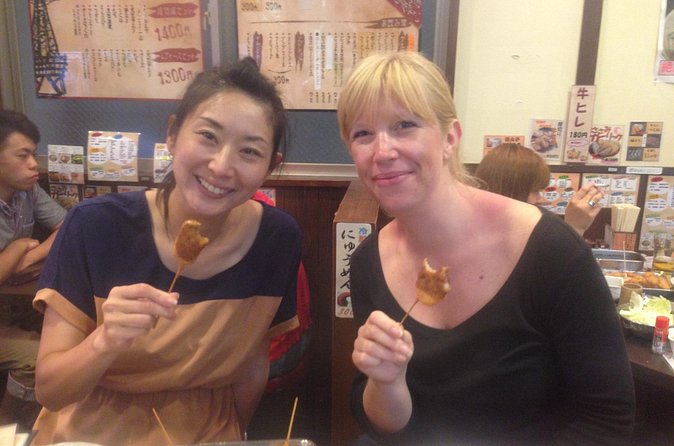
The tour ends with a short stop at Ebisu Bridge, near the Dotonbori area. The route is designed so you finish in a place you can continue enjoying immediately. Ebisu Bridge is one of those “you are here” Osaka landmarks that connects food and nightlife energy to street-level sightseeing.
The guide basically sets you up to extend your day. After you finish, you are in the right zone for more wandering, browsing, and finding your next meal. Dotonbori is famous for a reason, and ending there is smart if you like having a built-in plan for the second half of your day.
The time at the bridge is brief, around 10 minutes. That is enough for orientation and a quick sense of place, not enough to replace doing your own exploring. If you want photos, plan to stay in the area after the tour rather than expecting the stop to cover everything.
This end location is also practical for transit. You finish near Namba and Dotonbori, where you can usually connect to other parts of the city without too much hassle. So even though the tour is about 4 hours total, it does not end your day. It gives you a launch point.
Price and What Makes It Worth the Money
At $130.64 per person, you are paying for a guided food day that includes tastings, lunch, and snacks, plus a guide-driven route between two key food neighborhoods. You are not just buying plates. You are buying someone to help you navigate a market setting and make Shinsekai food feel less intimidating and more informed.
Small-group size is part of the value here. Maximum six people means you are more likely to get direct attention, quick answers, and tastings that actually land at your pace. That matters more than people expect, especially in a wholesale market where the environment is not designed for casual wandering.
What is not included is also important for your planning. Public transport is listed as ¥410 per person, and alcoholic beverages are not included. Insurance is also not included. Those items are not dealbreakers, but they do affect the final total cost.
I think the best way to judge the value is this: you start in a seafood wholesale market, sample multiple things, and then you get a structured lunch in Shinsekai with tea comparison and a knife shop visit. If you tried to do that on your own, you could piece parts together, but it would be a lot harder to get the same flow and the same amount of tasting time without guesswork.
Also, the tour uses a mobile ticket, which is a small efficiency gain on a day with multiple stops.
Finally, the quality signals are there. The tour has a 4.7 rating and 93 percent recommended. The reviews specifically praise the guide, including Ichiro-san, for explaining areas and history and being patient. That kind of guidance is often the difference between a good meal and a great memory.
Who This Osaka Food Walking Tour Fits Best
This is a good fit if you want food that feels local and current, not just generic sightseeing meals. The market side is especially useful if you like seafood but do not know where to start. You get fresh sashimi and fruit, plus an explanation layer that helps you understand why those bites taste the way they do.
It also works well if you like Osaka comfort food with context. Shinsekai can be easy to enjoy on your own, but pairing it with okonomiyaki and a tea stop makes the lunch feel like part of a theme, not just another restaurant break.
Because it is a small-group tour and private to your group, it is also a solid option for couples or small friend groups who prefer fewer people around them. If you are traveling with kids, it says the minimum age is 1 year old, and children must be accompanied by an adult. Still, think about your child’s tolerance for standing in a market.
If you are someone who hates organized food tastings or wants complete freedom to choose everything, this tour might feel like less control than you want. You are following a plan, and you will be offered set foods. For most people, that is a feature. For a few, it is not.
Should You Book This Osaka Food Walking Tour?
You should book it if you want a well-paced half day built around Osaka’s biggest food stories, wholesale seafood quality and Shinsekai comfort food, and you want a guide who can help you read what you are seeing. I especially like the combination of market tastings, fresh sashimi and seasonal fruit, then a lunch that includes okonomiyaki cabbage pancakes, plus the extra culture touches like tea comparison and a kitchen knife shop.
Skip it if you dislike market settings, you want an all-you-can-order restaurant lunch, or you cannot handle being on your feet for a few hours. Also, if your budget does not allow for the extra transit cost, do the math before you commit.
If you do book, you will set yourself up for an easy rest of the day, because the tour ends near Ebisu Bridge and Dotonbori where you can keep exploring without having to change plans.
FAQ
How long is the Osaka Food Walking Tour with Market Visit?
It runs about 4 hours total, with stops that last around 1 hour at the market, about 1 hour in Shinsekai, and about 10 minutes at Ebisu Bridge.
What is included in the tour price?
Food samples for lunch, lunch, and snacks are included. Alcoholic beverages are not included.
Where does the tour start and where does it end?
You meet near Daikokucho Station in Naniwa Ward, and the tour ends near Ebisu Bridge in Dotonbori (Namba area).
Is public transportation included?
No. Public transportation is listed as ¥410 per person and is not included in the tour price.
How big is the group?
It is a small-group experience with a maximum of six people per group, and it is private for your group only.
What is the minimum age for this tour?
The minimum age is 1 year old, and children must be accompanied by an adult.
What is the cancellation window?
You can cancel for a full refund if you cancel up to 24 hours in advance of the experience start time.
Newest Osaka write-ups from the Loving Japan desk


Walking Tours, side by side.
 ★ 4.7Kyoto Geisha Walking Tour: Gion District & Hidden GemsFrom $253,273 reviews
 ★ 5.0Tokyo Tsukiji Fish Market Food and Culture Walking TourFrom $993,184 reviews
 ★ 4.9Gion Magical Night Walking Tour with Geisha TriviaFrom $242,393 reviews
 ★ 5.0Imperial Palace and Shogun Historical Walking TourFrom $222,251 reviews
 ★ 4.7Gion Geisha District Walking Tour – Stories of GeishaFrom $202,187 reviews
 ★ 4.5Night Walk in Gion: Kyoto’s Geisha DistrictFrom $212,003 reviews
 ★ 4.9Shinjuku Local Bar and Izakaya Guided Walking TourFrom $341,794 reviews
 ★ 5.0Tsukiji Fish Market Food and Walking tourFrom $301,724 reviews
Filed on these lists too