
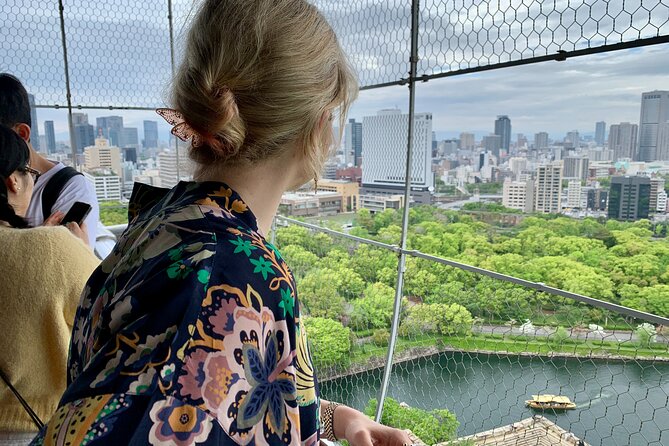
REVIEW · WALKING TOURS
Osaka Highlights: 4Hrs Guided Walking Tour with a Native Expert
Osaka hits fast in four hours. This guided walking route strings together Osaka Castle, Tsutenkaku, Hozen-ji, and Dotonbori, so you get the big landmarks plus the street-level feel of the city in one morning-style loop, with short train links between areas. Along the way, your native guide keeps the story clear and the pace realistic, so you are not just collecting photos, you are building a mental map.
I love that Osaka Castle main tower admission is included, which matters in a timed tour when you do not want to waste time buying tickets. I also like the small group size (up to 12), which makes it easier to ask questions and actually hear answers.
One thing to think about first, this is a walking-focused itinerary (moderate fitness level) and it requires good weather. If rain hits hard, you may need to adjust your day anyway, because the tour can change dates if conditions are poor.
In This Review
- Key things you will notice on this Osaka highlights tour
- Why this 4-hour Osaka highlights route works (and feels tight)
- Osaka Castle and Hokoku Shrine: the best starting point for first-timers
- Tennoji Park: a calm pause near the zoo, museum, and Keitakuen Garden
- Tsutenkaku and Janjan Yokocho: views plus street-food context
- Hozen-ji Temple’s Mizukake Fudō: a short stop with real participation
- Dotonbori to Ebisu Bridge: finishing where Osaka tells its stories
- Price and value: what $62.05 buys you, and what it does not
- Small-group guiding: Aki, Tatsuya, and Yuya style
- Meeting point and flow: how to keep the day smooth
- Should you book this Osaka Highlights guided walking tour?
- FAQ
- How long is the Osaka highlights guided walking tour?
- What major stops are included on the route?
- Is the admission ticket for Osaka Castle included?
- Is public transportation included in the price?
- Where do I meet the guide?
- Where does the tour end?
- How big is the group?
- What kind of fitness level is required?
- What happens if the weather is bad?
- How does cancellation work?
Key things you will notice on this Osaka highlights tour
- Osaka Castle ticket included, so you spend your time on the views and details inside, not ticket logistics
- A short 10-minute train hop that keeps the route efficient and avoids backtracking
- Tsutenkaku plus Janjan Yokocho, with retro alley energy and Edo-period stone-paved streets
- Hozen-ji Temple’s Mizukake Fudō, where you pour water over a moss-covered statue as an offering
- Dotonbori walking with back-alley detours, including a stop near Ebisu Bridge for a classic Osaka finish
- Native guides with strong English, including examples like Aki, Tatsuya, and Yuya in the guide lineup
Still weighing up options in Osaka? These are the ones our reviewers rated highest.
- Osaka Go Karting Tour with Funny Costume
★ 5.0 · 2,658 reviews - Osaka Castle: Museum and Tower Entry Ticket
★ 4.5 · 2,380 reviews - Osaka: Shinsekai Food Tour with 13-15 Dishes at 5 Eateries
★ 4.8 · 2,204 reviews - Osaka Food Tour: 13 Dishes at 5 Local Eateries
★ 5.0 · 2,149 reviews
Why this 4-hour Osaka highlights route works (and feels tight)
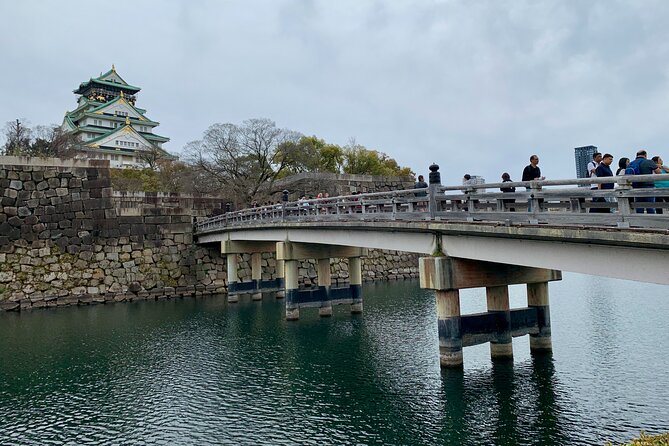
Osaka is spread out, and if you only have a half-day, you can burn time just moving between far-apart neighborhoods. This tour solves that with a smart sequence: history at Osaka Castle first, then a quick train transfer, then temple time and classic Osaka street scenes. It is not trying to do everything in town. It is picking a handful of stops that help you understand how Osaka thinks and how it celebrates.
Timing is the real trick. The route is built around about four hours total, with walking segments and brief transitions. You get one train ride of about 10 minutes between major areas, which keeps the day from dragging. If you are the type who likes structure, this kind of plan is a relief.
Osaka Castle and Hokoku Shrine: the best starting point for first-timers
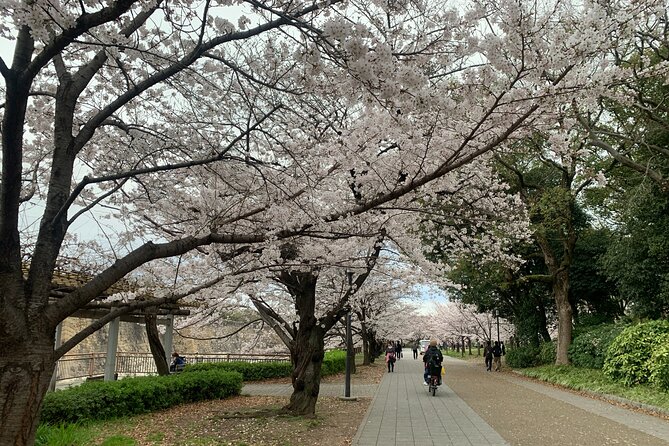
The tour starts with a walk toward Osaka Castle’s main tower. This is the moment to settle in. You are not just arriving and rushing inside. You are learning how the castle connects to the city before you climb, which makes the architecture and viewpoints feel like more than a postcard.
Once you reach the main tower, you enter with your guide, and the admission is included. Plan for about 1 hour 20 minutes here. In practical terms, this is long enough to see the highlights inside and still have time to look out at the city views from the top.
Right in Osaka Castle Park, you also get Hokoku Shrine, a short stop about 15 minutes. The shrine is dedicated to Toyotomi Hideyoshi, the warlord credited with unifying Japan in the late 16th century. The listing notes the shrine was originally built in 1879. Even if you do not memorize dates, this stop helps connect the castle area to the people and beliefs Osaka ties to that period.
If you want to get the most out of this part, look at it like a foundation. After castle time, everything else on the route starts to make more sense. Street scenes in later stops feel less random when you know what the city is proud of and what it preserves.
Tennoji Park: a calm pause near the zoo, museum, and Keitakuen Garden
After Osaka Castle, the tour moves you toward Tennoji Park, with the day shifting from castle grounds to a larger public area near Tennoji Station. This stop is listed as part of the route, around 15 minutes.
Tennoji Park is described as a historic public park established in 1909. It also includes Tennoji Zoo and the Osaka City Museum of Fine Arts, plus Keitakuen Garden. That mix is useful for visitors because it gives you a break from landmark-to-landmark intensity without feeling like you are wasting time. Even in a short visit, you get a sense that Osaka is not only about street life and big attractions.
There is also a mention of the modern Tenshiba area around the park. The listing does not spell out details in the excerpt you have, so I would treat that as a clue rather than a promise. The practical takeaway is simple: Tennoji is a natural area to pause, reset your legs, and then head toward Tsutenkaku.
- Hungry Osaka Street Food Tour:15 Tastings & 3 Drinks with a Local★ 5.0 · 1,727 reviews
- Osaka: Tea Ceremony Experience★ 4.9 · 1,426 reviews
- Osaka Kickstart: Hotspots & Hidden Gems Tour★ 5.0 · 1,306 reviews
- Osaka: Hotspots & Hidden Gems Walking Tour Private or Group★ 4.9 · 1,300 reviews
- Deep Backstreet Osaka Tours (Option to add Dinner)★ 5.0 · 1,290 reviews
Tsutenkaku and Janjan Yokocho: views plus street-food context
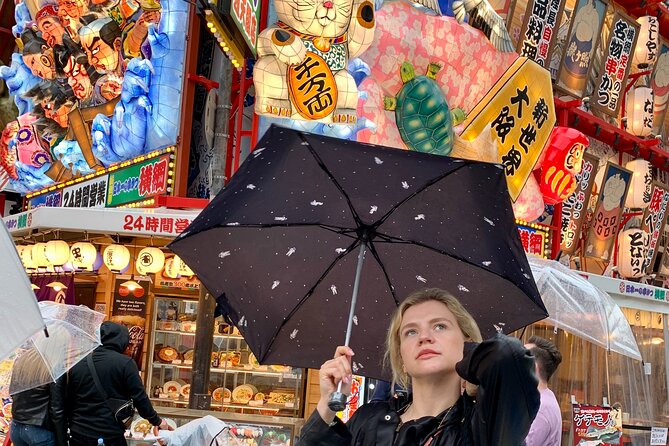
Tsutenkaku is next, and this is where your tour stops being museum-like and becomes street-smart. After Osaka Castle, you take a train for about 10 minutes to the next sightseeing area, then walk from the station toward Tsutenkaku. This walking time is about 50 minutes total for the stop.
Tsutenkaku itself is presented as a symbol of resilience and innovation, with views from the tower area. Even if you skip any extra viewing options you might encounter nearby, the guided history helps you understand why this tower matters in Osaka’s self-image.
Then comes Janjan Yokocho in the Shinsekai area. The listing calls it a lively alley with a retro atmosphere, famous for street food and deep local culture. It also explains the name: Janjan comes from the sound of shamisen music used in the area. That is the kind of detail that makes the alley feel like a living place, not just a corridor of shops.
A second detail you are pointed toward is a stone-paved alley preserved since the Edo period. That is a neat contrast. You get old street materials in the middle of a modern entertainment district, and your guide helps connect those layers.
Quick tip for this section: if you want snacks, keep an eye on the timing. The tour has a schedule, and food lines can slow you down. If you stay flexible, you will get both the culture story and at least a taste.
Hozen-ji Temple’s Mizukake Fudō: a short stop with real participation

Hozen-ji Temple is one of those “small time, big feeling” stops. You are there for about 15 minutes, with admission listed as free.
The main attraction here is the Mizukake Fudō, a moss-covered statue of Fudō Myōō (also referred to as Acala). The offering action is simple: visitors pour water over the statue as a wish or prayer. That participation element matters, because it is not just sight-seeing. Even for people who do not practice, it is an easy way to take part respectfully and quietly.
If you like temple stops that feel authentic rather than overly choreographed, this one fits. It is short enough to keep momentum, but the ritual is distinct enough that you will remember it later when you think about Osaka’s spiritual side.
Dotonbori to Ebisu Bridge: finishing where Osaka tells its stories
Your final big stop is Dotonbori. The walking time is about 1 hour 10 minutes, and the listing says the guide will explain Dotonbori’s history while you move through the area. You also get detours through back alleys, including something called Ura-Namba, plus a detour to show you a temple.
This is the part of the tour where the city shifts from landmark focus to vibe and flow. Dotonbori is the kind of place where you can easily get lost, because there are many streets and layers to the entertainment scene. The detours are not random. They are there to help you see Osaka’s street patterns and small religious details that many first-time visitors miss.
The tour ends at Ebisu Bridge in Dotonbori. That is a strong finish point because it puts you right into the action, but it also gives you a clear place to regroup. From there, you can keep wandering on your own with fewer wrong turns, since you have already learned the general layout.
Price and value: what $62.05 buys you, and what it does not
The price is listed as $62.05 per person, for a tour around four hours with a local guide. The biggest value point is not just the guide. It is that Osaka Castle admission is included.
That changes the math. Many half-day tours look similar on paper, but when you add attraction tickets, the cost creeps up. Here, your castle entry is already covered, and Osaka Castle is a major anchor stop on the route.
Public transportation is not included, and the listing estimates ¥430 per person. That is normal for a tour that uses short train segments. So you should plan to pay that on the day.
For who this is good value: first-timers with limited time, people who want a clear route without over-planning, and anyone who benefits from a native guide sorting out what matters. If you are traveling with someone who hates standing in lines or making decisions on the spot, this tour is a stress-reducer.
Small-group guiding: Aki, Tatsuya, and Yuya style
What gets praised most is the guides themselves. Names that come up include Aki, Tatsuya, and Yuya. Across their comments, the tone is consistent: patient pacing, lots of answering, and a friendly approach.
In practical terms, that means the tour is easier for real humans. If you pause to ask something, you do not feel rushed. If you have questions about why a place looks the way it does, you get context instead of a quick one-liner.
There is also mention of flexibility during light rain, including help with shelter from an umbrella. The tour also notes that good weather is required, but the guide response in tricky moments is part of the value. You are not left on your own to guess what to do next.
Meeting point and flow: how to keep the day smooth
You meet at a 7-Eleven in Osaka, listed as 7-Eleven Osaka Tanimachi 3-chome (3-chōme-1-17 Tanimachi, Chuo Ward, Osaka 540-0012). The tour ends at Dotonbori, Chuo Ward, at Ebisu Bridge.
This matters because Osaka has many station exits and many street layers. A specific convenience store meeting point helps you locate the group fast. It also makes it easier if you are arriving from another area of town and need a clear landmark.
You also get a mobile ticket. In a city where you are likely using transit and maps all day, a phone ticket keeps things simple.
Finally, remember the physical reality. This is walking with several stops, plus short train segments. The listing asks for moderate physical fitness. Wear comfortable shoes and plan for a day that is more active than a typical bus tour.
Should you book this Osaka Highlights guided walking tour?
Book it if:
- you want a tight, guided route through Osaka’s top areas in about four hours
- you appreciate a native guide connecting sites with context
- you like history and temples, but you also want street-life time at Tsutenkaku and Dotonbori
- you would rather pay for guidance than spend your limited hours figuring out logistics
Skip it or consider alternatives if:
- you hate walking or you have mobility limitations that make repeated standing uncomfortable
- you are visiting during uncertain weather, since the tour depends on good conditions and can be rescheduled
- you already know Osaka well and want a fully self-directed route with more time in only one neighborhood
My take: this is a smart “see the key stuff, get oriented fast” tour. The mix of Osaka Castle admission, Hokoku Shrine context, Tsutenkaku and Janjan Yokocho street culture, Hozen-ji’s Mizukake Fudō ritual, and a Dotonbori finish at Ebisu Bridge gives you a rounded first-day picture. If four hours is what you have, this one uses your time well.
FAQ
How long is the Osaka highlights guided walking tour?
The tour lasts about 4 hours.
What major stops are included on the route?
The route includes Osaka Castle, Hokoku Shrine, Tennoji Park, Tsutenkaku, Janjan Yokocho and related alley areas, Hozen-ji Temple, and Dotonbori (ending at Ebisu Bridge).
Is the admission ticket for Osaka Castle included?
Yes. Osaka Castle admission is included in the tour price.
Is public transportation included in the price?
No. Public transportation is not included, and the listing estimates ¥430 per person.
Where do I meet the guide?
You meet at 7-Eleven Osaka Tanimachi 3-chome (3-chōme-1-17 Tanimachi, Chuo Ward, Osaka).
Where does the tour end?
The tour ends in Dotonbori, Chuo Ward, at Ebisu Bridge.
How big is the group?
The tour has a maximum of 12 travelers.
What kind of fitness level is required?
You should have a moderate physical fitness level, since it is a walking tour.
What happens if the weather is bad?
The tour requires good weather. If it is canceled due to poor weather, you will be offered a different date or a full refund.
How does cancellation work?
You can cancel for free up to 24 hours in advance for a full refund. If you cancel less than 24 hours before the start time, the amount paid is not refunded.
Newest Osaka write-ups from the Loving Japan desk



Walking Tours, side by side.
 ★ 4.7Kyoto Geisha Walking Tour: Gion District & Hidden GemsFrom $253,273 reviews
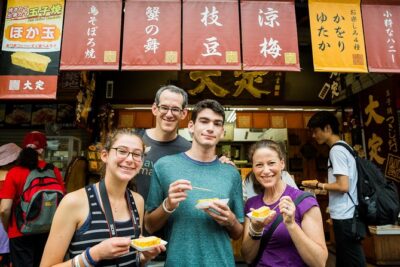 ★ 5.0Tokyo Tsukiji Fish Market Food and Culture Walking TourFrom $993,184 reviews
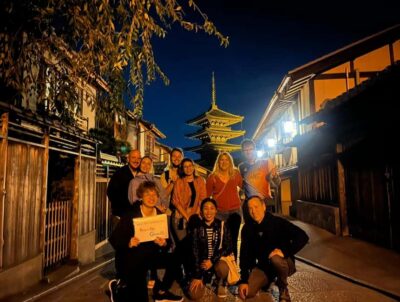 ★ 4.9Gion Magical Night Walking Tour with Geisha TriviaFrom $242,393 reviews
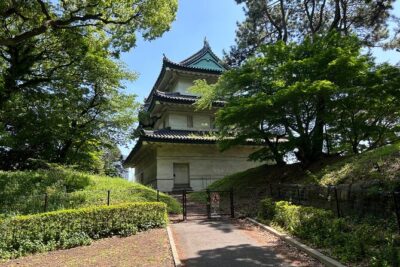 ★ 5.0Imperial Palace and Shogun Historical Walking TourFrom $222,251 reviews
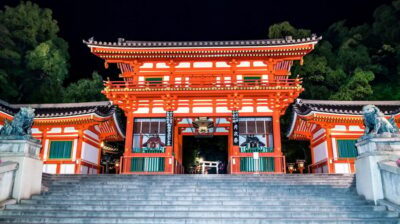 ★ 4.7Gion Geisha District Walking Tour – Stories of GeishaFrom $202,187 reviews
 ★ 4.5Night Walk in Gion: Kyoto’s Geisha DistrictFrom $212,003 reviews
 ★ 4.9Shinjuku Local Bar and Izakaya Guided Walking TourFrom $341,794 reviews
 ★ 5.0Tsukiji Fish Market Food and Walking tourFrom $301,724 reviews