
REVIEW · WALKING TOURS
Osaka: Main Sights and Hidden Spots Guided Walking Tour
Osaka snaps into focus in four hours. I love how Osaka Castle Park sets the stage with big, imposing views and Shogun-era stories, and I love how Harukas 300 gives you a high, clear picture of how the city is laid out. Add in neighborhood walking that feels local, not like a checklist.
One possible drawback: this is a smart sampler, not a theme park. You will admire Osaka Castle from the outside, and there is no sit-down food stop, so you will want snacks on the side if you get hungry.
In This Review
- Key highlights you will feel fast
- A four-hour Osaka starter pack that actually helps you plan
- Starting at Tanimachiyonchome Exit 2, then letting the guide do the map work
- Osaka Castle Park: why you skip the inside and still get the point
- Tsuruhashi Korea Town: maze-like streets with real history behind the signs
- Abeno Harukas 300: the city view you need, then a food hall under your feet
- Shinsekai: Osaka’s older character, with a little decay that looks honest
- Namba and Dotonbori: where shopping, dining, and noise all share the same sidewalk
- Kuromon Ichiba and Doguyasuji: food districts without the scripted restaurant stop
- Is $59 good value, and what you still need to budget?
- Logistics that make or break your comfort
- Who this tour fits best, and who should double-check expectations
- Should you book this Osaka Main Sights and Hidden Spots tour?
- FAQ
- How long is the Osaka walking tour?
- Where do I meet the guide?
- Do we go inside Osaka Castle?
- Is food included in the tour price?
- Do I need to use a subway pass?
- Does the tour run in bad weather?
- What languages are available for the live guide?
- Is the tour wheelchair accessible?
- What is the cancellation policy?
Key highlights you will feel fast
- Osaka Castle Park exterior time with history told in plain, human terms
- Tsuruhashi Korea Town alleys where old commercial streets still make sense
- Harukas 300 viewpoint plus the underground department-store food hall
- Shinsekai in time-capsule mode with that slightly crumbling, old Osaka vibe
- Dotonbori and Kuromon for the energy of modern Osaka and real food shopping culture
Still weighing up options in Osaka? These are the ones our reviewers rated highest.
- Osaka Go Karting Tour with Funny Costume
★ 5.0 · 2,658 reviews - Osaka Castle: Museum and Tower Entry Ticket
★ 4.5 · 2,380 reviews - Osaka: Shinsekai Food Tour with 13-15 Dishes at 5 Eateries
★ 4.8 · 2,204 reviews - Osaka Food Tour: 13 Dishes at 5 Local Eateries
★ 5.0 · 2,149 reviews
A four-hour Osaka starter pack that actually helps you plan
This tour is built for orientation. Osaka is big, and the neighborhoods have different personalities, so it helps to see the main shapes first, then know where to wander later. In four hours, you get a story arc: from medieval power, to cross-cultural merchant life, to today’s lights and food.
I also like the pacing because it is not just nonstop walking. You get short guided segments, then you are walking long enough to notice details, like street shapes, signage, and how crowds flow.
Starting at Tanimachiyonchome Exit 2, then letting the guide do the map work
You meet above ground at Tanimachiyonchome Station, Exit 2. If you are arriving by taxi, the intersection name is tanimachi 3-chome. This matters because Osaka station exits can be confusing, and you want to start with zero stress.
You are also asked to buy a subway day pass and use it to get to the meeting point and during the tour. I think that is good advice, since it reduces decision fatigue on a day when you will already be tracking steps, streets, and platforms.
Osaka Castle Park: why you skip the inside and still get the point
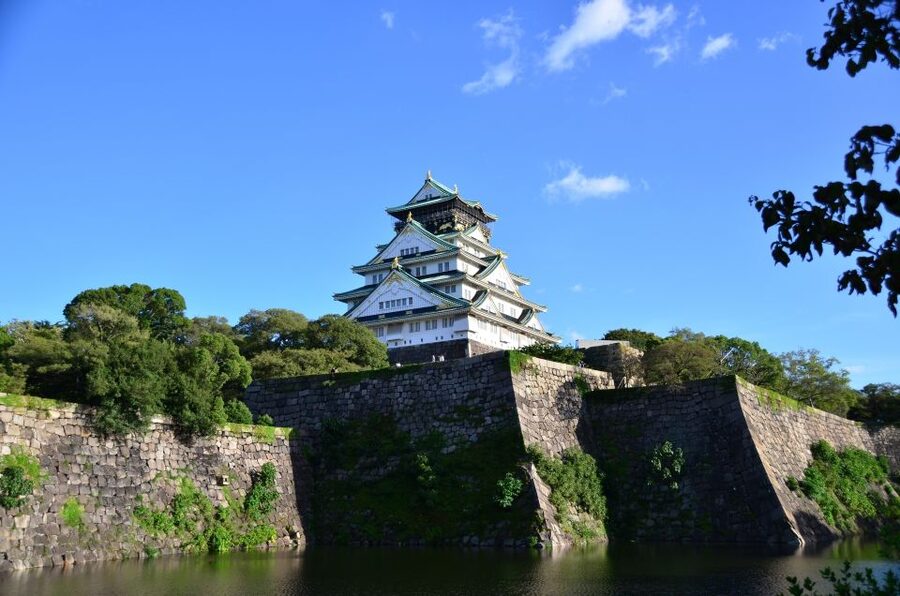
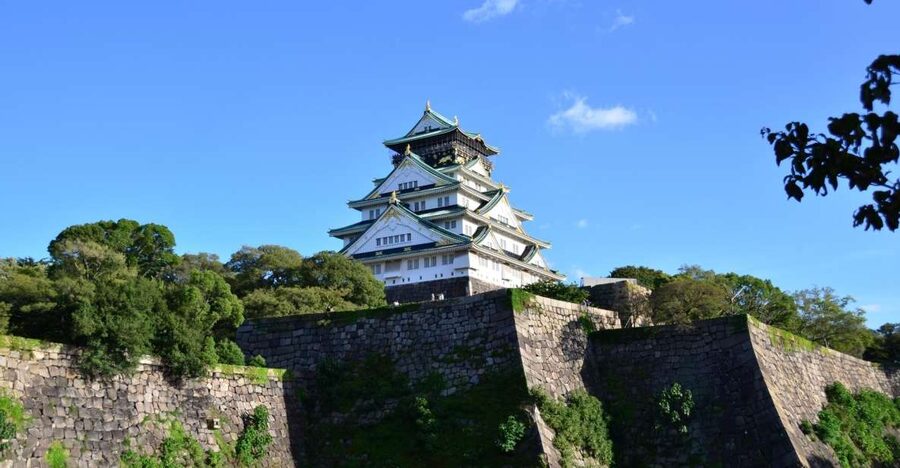
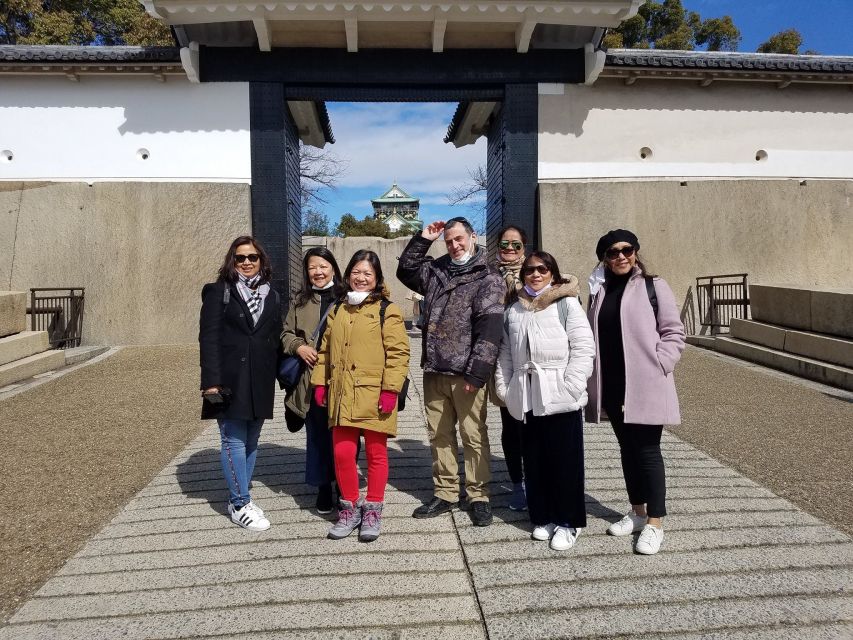
Your first stop is Osaka Castle Park for about 75 minutes. You do not go inside the castle, but you do get to admire the grand exterior and walk the surrounding park space.
This is where the tour earns its value. The guide explains why this site mattered, including stories about conflict and how Osaka’s power was contested centuries ago. One past guide, Ferdinand, was specifically praised for narrating stories around the Shogun period, which is exactly what makes a castle exterior worth slowing down for.
Practical note: there is walking on uneven park paths, so comfortable shoes are not optional.
- Osaka Go Karting Tour with Funny Costume★ 5.0 · 2,658 reviews
- Osaka Castle: Museum and Tower Entry Ticket★ 4.5 · 2,380 reviews
- Osaka: Shinsekai Food Tour with 13-15 Dishes at 5 Eateries★ 4.8 · 2,204 reviews
- Osaka Food Tour: 13 Dishes at 5 Local Eateries★ 5.0 · 2,149 reviews
- Hungry Osaka Street Food Tour:15 Tastings & 3 Drinks with a Local★ 5.0 · 1,727 reviews
Tsuruhashi Korea Town: maze-like streets with real history behind the signs
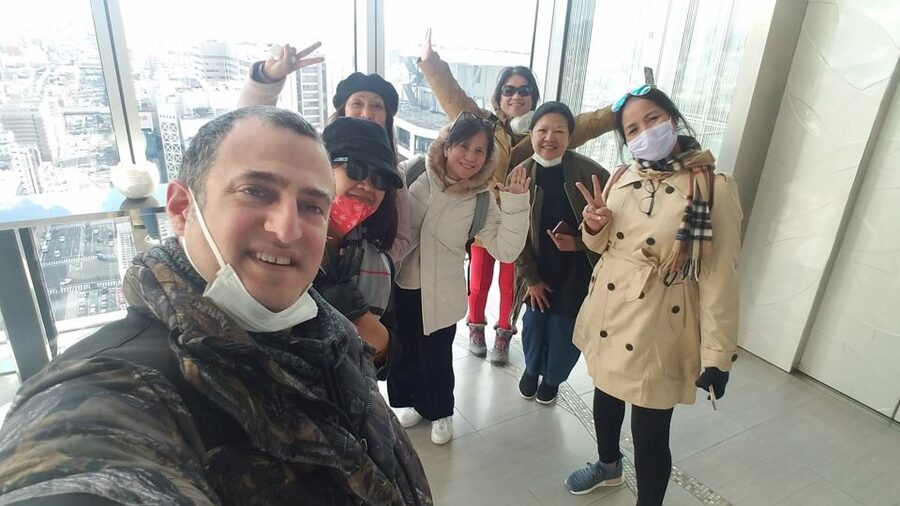
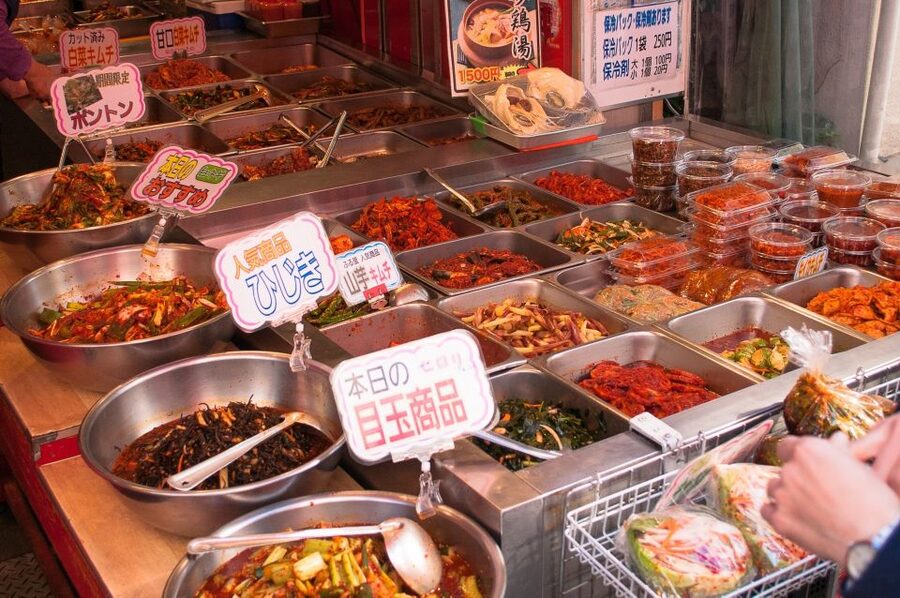
From Osaka Castle, you take a quick train ride to Tsuruhashi, where you explore the Korea Town area for about 45 minutes. This is not just “see the market,” it is about understanding how old commercial streets functioned before modern shopping corridors took over.
You will spend time in the narrow streets and alleys of a pre-war district. That means you will notice more than the headline attractions, like how storefronts cluster, how foot traffic moves, and where people actually pause.
If you like street-level travel, this part is the payoff. In past tours, guides like Brian and Kevin were praised for finding both famous stops and less typical side streets, and Tsuruhashi is one of the places where that difference is obvious.
Abeno Harukas 300: the city view you need, then a food hall under your feet
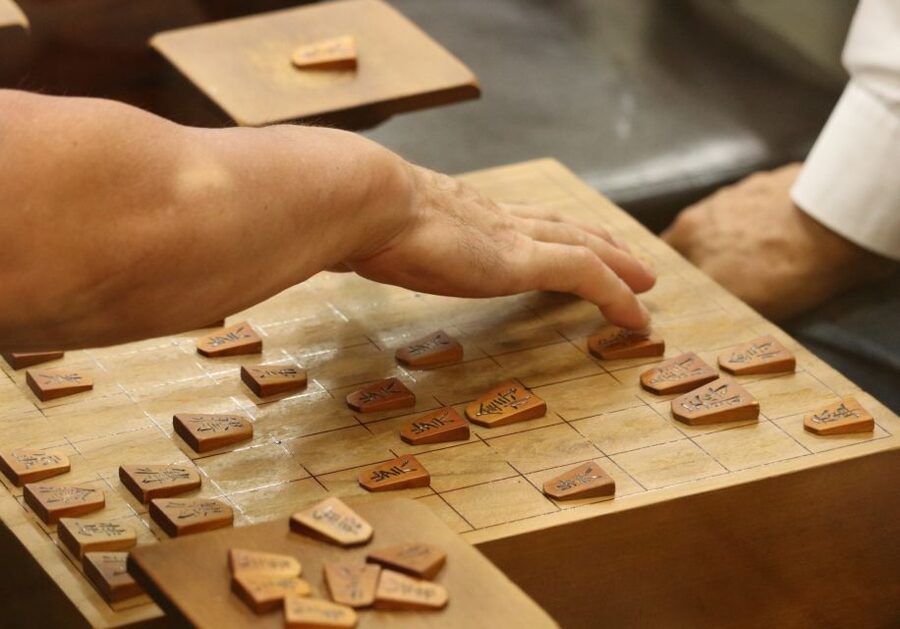
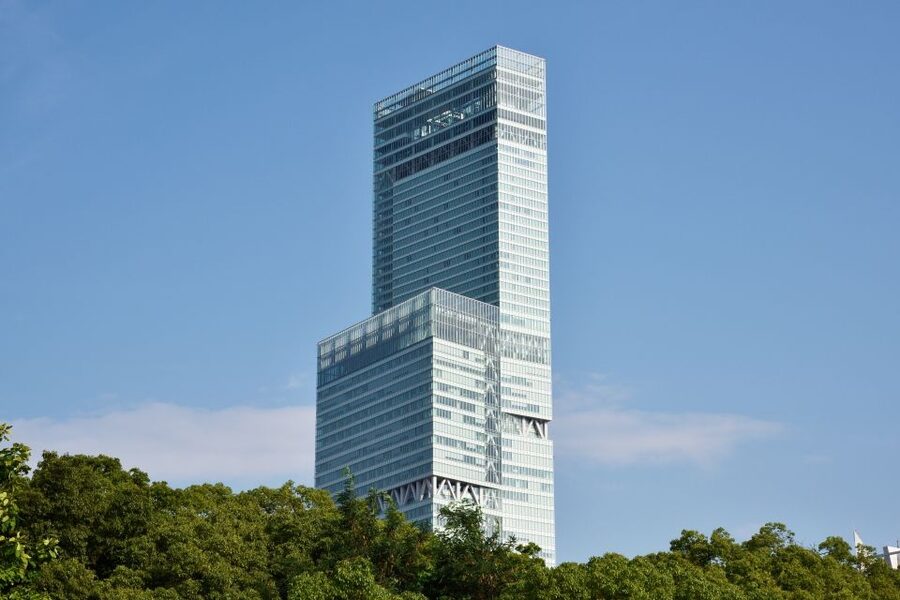
Next is Harukas 300 in the Abeno Harukas building. You get around 30 minutes for the high-floor view, then you head underground to the department store’s food hall.
Why this works: the skyline view helps you “read” Osaka. Once you see how districts stack and connect, later wandering feels less random. Then the underground food hall grounds the view in daily life, because you are surrounded by products people actually buy, including items like puffer fish and Kobe beef.
This stop is also a great time for photos. More than once, guides have been called out for steering people to good photo angles and helping with quick shots so you do not end up with blurry group photos and regret.
Shinsekai: Osaka’s older character, with a little decay that looks honest
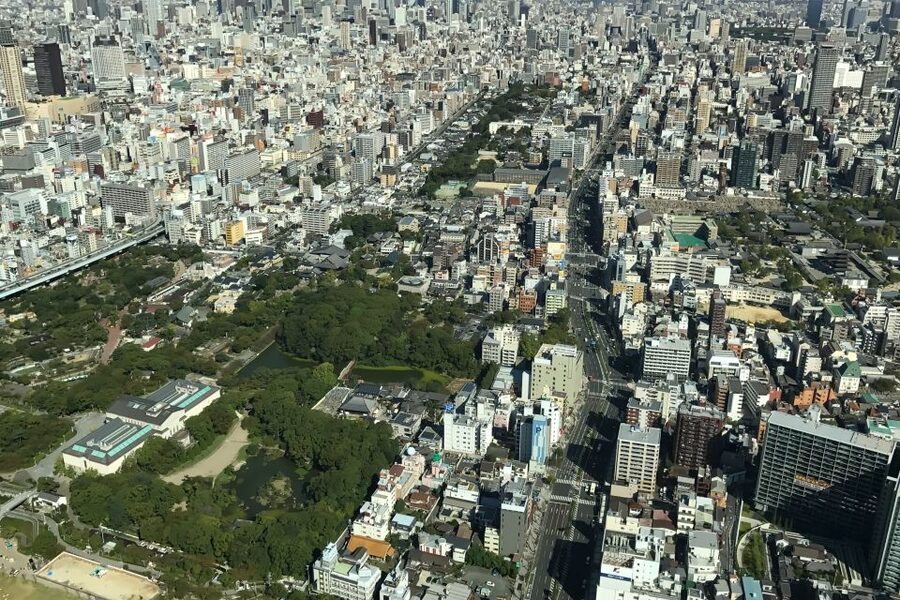
After Harukas, you move to Shinsekai for about 30 minutes. This district is described as having highlights that feel slightly crumbling, like Osaka’s past frozen mid-sentence.
I love districts like this because they show you how a city ages. Neon still exists, but it is layered on top of older urban fabric, and the guide helps translate that into context, not just sightseeing.
Shinsekai is also a good reset. By this point, you have walked, you have listened, and now you get to simply look. If you are the type who loves noticing how neighborhoods tell their own stories, you will get a lot out of this brief stop.
Namba and Dotonbori: where shopping, dining, and noise all share the same sidewalk
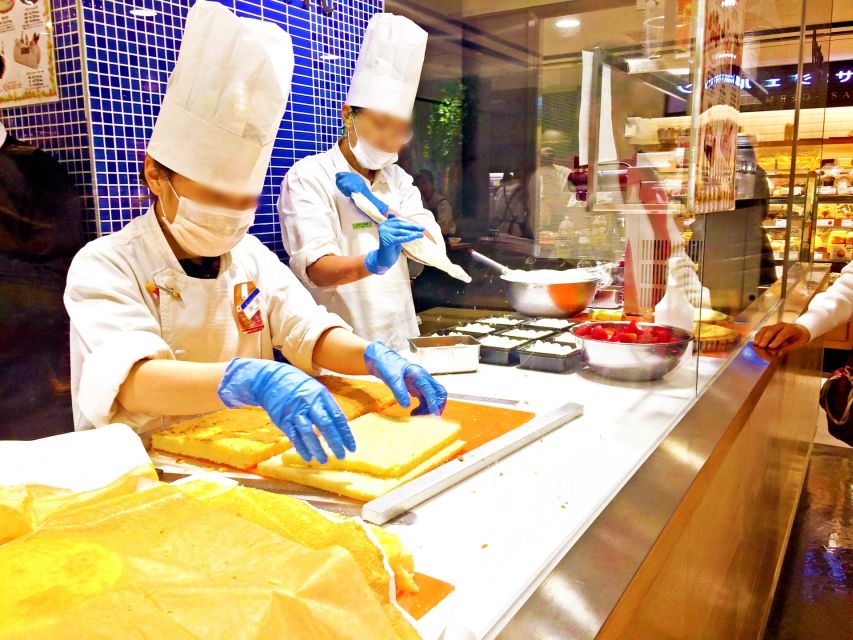
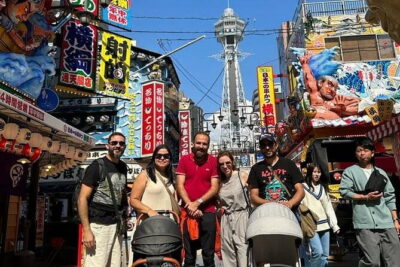
You then reach Namba, about 30 minutes, and then continue into Dotonbori. Dotonbori is Osaka’s version of Times Square in spirit, with that high-energy entertainment vibe, but you will also be guided through quirky back streets that have their own character.
This is where you start to feel Osaka as a living, food-driven city. Even without a formal meal stop, you get the chance to buy snacks here and there, which helps keep the tour doable on a full stomach or a mildly hungry one.
If you like practical travel, Namba is also a useful anchor. It is a central hub for shopping and dining, so after the tour you know where to return when you want convenience.
Kuromon Ichiba and Doguyasuji: food districts without the scripted restaurant stop
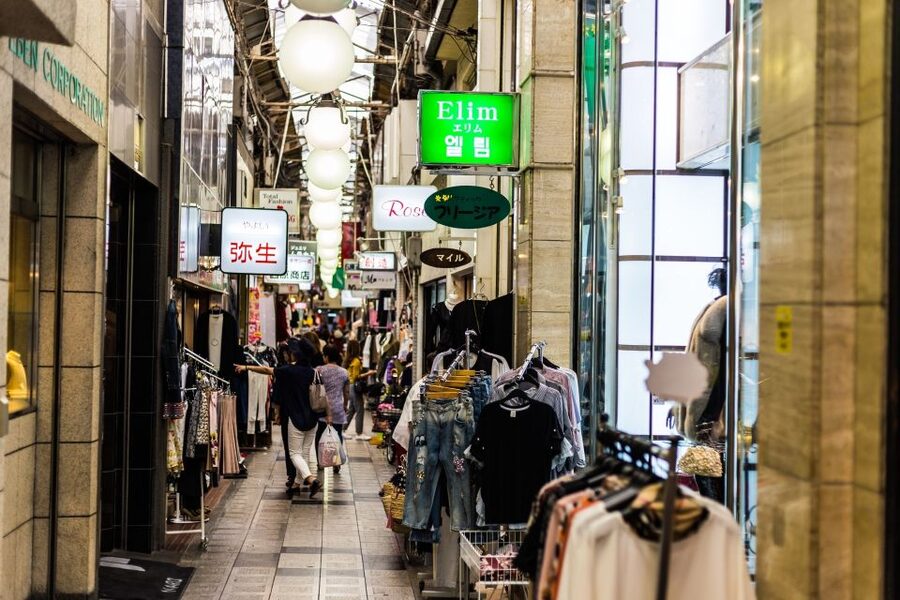
The tour includes Kuromon Ichiba, a fresh fish market that has played a role for more than 150 years. You are not just walking past stalls, you are seeing how a market neighborhood functions as a long-term food engine.
You will also explore Doguyasuji, a kitchen and cooking district. Expect wax food models, noren curtains at kitchen entrances, and big pottery displays. Even if you do not buy anything, this is one of the most fun ways to see what Japanese kitchens look like from the street.
Keep expectations realistic on food. There is no guaranteed food stop, but there are chances to grab snacks. So bring your snack mindset, not your restaurant mindset.
Is $59 good value, and what you still need to budget?
At $59 per person for a 4-hour guided walking tour, this is fairly strong value if you want structure. The cost covers the guide and the walking experience, which is the hard part to replicate on your own when you have limited time.
What is not included is key:
- Transportation within the day (you handle it with your own subway pass)
- Food and drink (you buy snacks as you go)
There is also an important solo traveler reality check: the tour aims not to charge extra solo, but if the minimum group number is not met, you get options like an alternate date, a 4000 yen solo supplement, or a full refund. That is common for small-group tours, and it is worth factoring in when you book.
Logistics that make or break your comfort
This tour runs rain or shine, so plan for weather you cannot control. A light rain layer is worth it, even when the forecast looks friendly.
You will also want to plan around time and energy. The route involves walking plus quick train rides between neighborhoods, and you will likely rack up a lot of steps. If your legs hate you, you will feel it most in the park area and the market streets.
One more practical note: pickup is available for an additional 5000 yen, paid in cash to the guide on tour day or through a secure payment link. Central Osaka pickup and port pickup at Tempozan Ferris wheel are listed options.
Who this tour fits best, and who should double-check expectations
This is a great fit for first-timers or anyone who wants a guided “Osaka map in motion.” You get both headline sights and neighborhoods that helped build Osaka’s merchant reputation. In past guide praise, the standout theme was storytelling plus practical direction, including photo help and navigation help.
It is also friendly for people traveling with questions. Several guides were described as answering lots of questions, keeping the pace relaxed, and even adjusting on the fly for slower members in the group.
About mobility: the tour is marked wheelchair accessible, but it also states it is not suitable for people with mobility impairments. If you have mobility needs, it is smart to ask the operator what the walking surfaces and stair situations look like before you go.
Should you book this Osaka Main Sights and Hidden Spots tour?
I would book it if you have limited time and you want your Osaka day to feel coherent. The mix of Osaka Castle Park, Tsuruhashi, Harukas 300, Shinsekai, Namba, and Dotonbori gives you a full city snapshot without dragging you into long museum detours.
Skip it if you want a castle interior, a fixed restaurant itinerary, or a low-step day. This tour is for movement, street viewing, and guided context, not for sitting down all afternoon.
If you want an Osaka intro that helps you wander confidently later, this is a strong choice.
FAQ
How long is the Osaka walking tour?
It lasts about 4 hours.
Where do I meet the guide?
Meet above ground at Tanimachiyonchome Station Exit 2. If you arrive by taxi, the intersection is tanimachi 3-chome.
Do we go inside Osaka Castle?
No. You admire Osaka Castle from the outside and stroll around the surrounding park.
Is food included in the tour price?
No. There are no food stops, though you may have chances to buy snacks along the way.
Do I need to use a subway pass?
The tour recommends buying a subway day pass and using it to reach the meeting point and during the tour.
Does the tour run in bad weather?
Yes. It takes place rain or shine.
What languages are available for the live guide?
The guide is available in English, French, and Spanish.
Is the tour wheelchair accessible?
It is listed as wheelchair accessible, but it also notes it is not suitable for people with mobility impairments, so you should check your specific needs before booking.
What is the cancellation policy?
You can cancel up to 24 hours in advance for a full refund.
Newest Osaka write-ups from the Loving Japan desk


Walking Tours, side by side.
 ★ 4.7Kyoto Geisha Walking Tour: Gion District & Hidden GemsFrom $253,273 reviews
 ★ 5.0Tokyo Tsukiji Fish Market Food and Culture Walking TourFrom $993,184 reviews
 ★ 4.9Gion Magical Night Walking Tour with Geisha TriviaFrom $242,393 reviews
 ★ 5.0Imperial Palace and Shogun Historical Walking TourFrom $222,251 reviews
 ★ 4.7Gion Geisha District Walking Tour – Stories of GeishaFrom $202,187 reviews
 ★ 4.5Night Walk in Gion: Kyoto’s Geisha DistrictFrom $212,003 reviews
 ★ 4.9Shinjuku Local Bar and Izakaya Guided Walking TourFrom $341,794 reviews
 ★ 5.0Tsukiji Fish Market Food and Walking tourFrom $301,724 reviews
Filed on these lists too