
REVIEW · DOTONBORI AND OSAKA STREET FOOD
Osaka Okonomiyaki Cooking Class “Learn here and make it at home”
Your dinner starts with sizzling batter and octopus. This Osaka class teaches okonomiyaki and takoyaki step by step, with real cooking guidance in multiple languages and an easygoing meal at the end.
I especially like the hands-on pacing. You get a short orientation and then a long cooking block, so you are not just watching, you are making. I also like that you leave with written recipes and ingredient packaging hints, which makes the at-home repeat feel realistic.
One consideration is logistics. It is a 3-hour food-focused class in a central area, so you will want to plan transit in advance since private transportation is not included and the session ends back at the meeting point.
In This Review
- Key Highlights You’ll Feel From Minute One
- What You’ll Cook in Osaka, and Why It’s Worth Your Evening
- Price and Timing, What $70 Buys in Real Cooking Time
- Where the Class Happens, Near Shinsaibashi and Honmachi
- Your 30 Minutes of Prep, Setup, and First Tastes of the Process
- 1.5 Hours Cooking Okonomiyaki and Takoyaki Like a Pro
- The Tasting Hour With Sake, Beer, and Soft Drinks
- What You’ll Take Home for Recreating These Dishes
- Who This Cooking Class Suits Best
- The Best Way to Get Value From This Class
- Should You Book the Osaka Okonomiyaki Cooking Class?
- FAQ
- What dishes will I learn to make?
- How long is the cooking class?
- What does the class schedule look like?
- Are drinks included?
- Is alcohol served to everyone?
- Do I need to bring ingredients or kitchen tools?
- Is the class suitable for vegetarians or people with food allergies?
- Where is the meeting point and how far is it from public transportation?
- What is the group size limit?
Key Highlights You’ll Feel From Minute One
- Make both dishes: okonomiyaki pancakes and takoyaki dough balls, not just one
- Small group limit of 8 for more back-and-forth help
- Three-language support with English and additional Japanese or Spanish upon request
- Ingredient packaging tips that help you shop smarter at a supermarket
- Tasting hour with drinks including sake and beer for age-eligible travelers, plus soft drinks
Still hungry on Dotonbori? A few more crawls
- Osaka: Shinsekai Food Tour with 13-15 Dishes at 5 Eateries
★ 4.8 · 2,204 reviews - Osaka Local Foodie Walking Tour in Dotonbori and Shinsekai
★ 5.0 · 985 reviews - Osaka: Dotonbori District River Cruise with Drink Discount
★ 4.2 · 876 reviews - Ultimate Osaka Walking Tour: Castle, Dotonbori & Hidden Gems
★ 5.0 · 862 reviews
What You’ll Cook in Osaka, and Why It’s Worth Your Evening
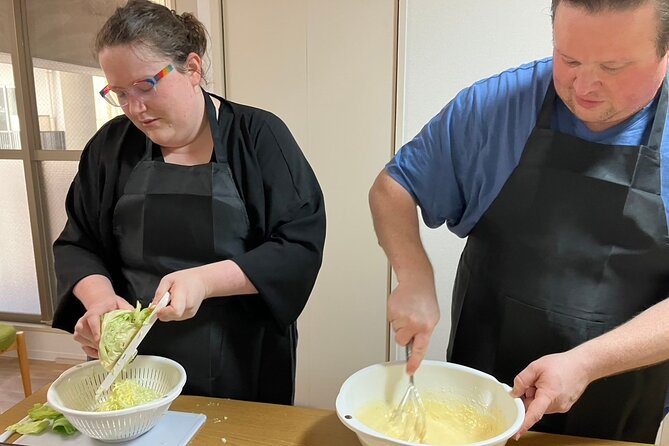
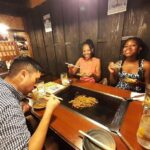
This class is built around two icons that people actually eat in Osaka, not tourist food that exists only on menus. You’ll work with a batter-based okonomiyaki that includes cabbage plus fillings such as pork and seafood. You’ll also make takoyaki, fried savory dough balls filled with octopus, then finished with sauce, bonito flakes, and seaweed powder.
The value here is the structure. You start with prep and orientation, then you cook, then you eat what you made. That rhythm matters, because it turns a lesson into dinner you can share right away.
And the “from scratch” part is practical. You are not just learning what goes into these dishes, you are handling the tools, portioning ingredients, and following the cooking flow while someone can correct you in real time.
Price and Timing, What $70 Buys in Real Cooking Time
At $70 per person for about 3 hours, you are paying for more than “instructions.” You are paying for the full setup: ingredient sourcing for the dishes, kitchen tools, gloves and aprons, and an instructor-led process where you finish a meal.
Timing is also honest here. The session has a 30-minute orientation and preparation block, then 1.5 hours of cooking, and then a 1-hour tasting with drinks. If you show up hungry and ready to stay, you get a full evening experience without having to add extra reservations or activities.
One more plus is how the class size can feel. Even with a maximum of 8 travelers, smaller turnouts can make it more intimate, which is exactly when you tend to get the most helpful corrections.
Where the Class Happens, Near Shinsaibashi and Honmachi
The kitchen is in central Osaka, about a 5-minute walk from both Shinsaibashi and Honmachi stations on the Osaka Metro. That location helps you pair the class with normal Osaka exploring, since you can come straight from shops, streets, or dinner plans earlier in the day.
The setting also has a practical side. The kitchen is in the heart of the city, but it is described as a quiet, peaceful neighborhood. For a cooking class, that balance is important. You want to hear the instructor, focus on your station, and not feel like you are shouting over traffic noise the whole time.
The meeting point is listed at 南船場コレット9044-chōme-3-1 Bakurōmachi, Chuo Ward, Osaka, 541-0059, Japan. Your class ends back at the meeting point, so take a quick look at the route you’ll use for transit before you leave your hotel.
Cook it yourself instead. Other kitchens in Osaka
- Sushi Making Osaka Roll and Authentic Japanese Sushi Class★ 5.0 · 1,220 reviews
- Osaka Sushi Making Experience★ 5.0 · 400 reviews
- Osaka: Ramen and Gyoza Cooking Class in Dotonbori★ 5.0 · 378 reviews
- Osaka: Sumo Stage Show with Bento or Snack + Fight & Photo★ 4.3 · 364 reviews
- Osaka Cooking Class: Okonomiyaki &Japanese cuisines experience★ 5.0 · 261 reviews
Your 30 Minutes of Prep, Setup, and First Tastes of the Process
The first 30 minutes are orientation and preparation. This is where the class earns its keep, because it prevents the usual “I’m lost already” feeling that happens in cooking lessons. You get guided start-up: what you are making, what order you’ll do things, and how the kitchen expects you to work at your station.
You also get set up correctly. You’ll be provided with aprons and disposable plastic gloves, plus the tools you need for the cooking part. That means you can focus on technique and timing instead of worrying about what to bring or whether you packed the right utensil.
This is also a good moment to ask questions. Since the instructors are fluent in English (and also Japanese and Spanish depending on request), you can switch from big-picture questions to fine details quickly. If you learn best by seeing and doing, this is a nice ramp-up.
1.5 Hours Cooking Okonomiyaki and Takoyaki Like a Pro
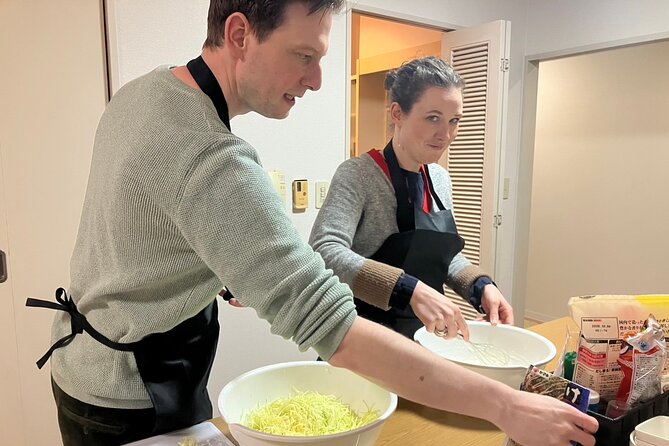
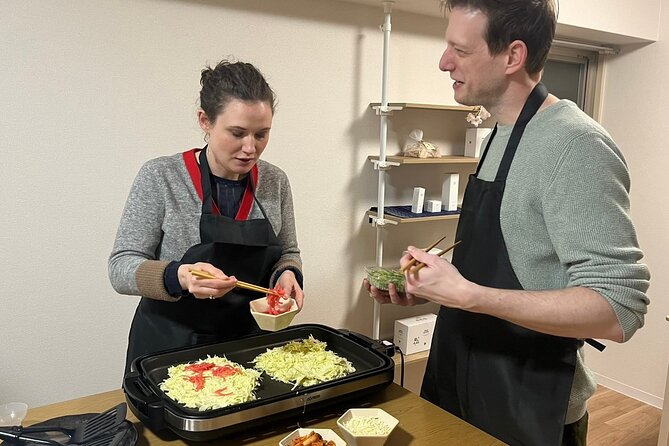
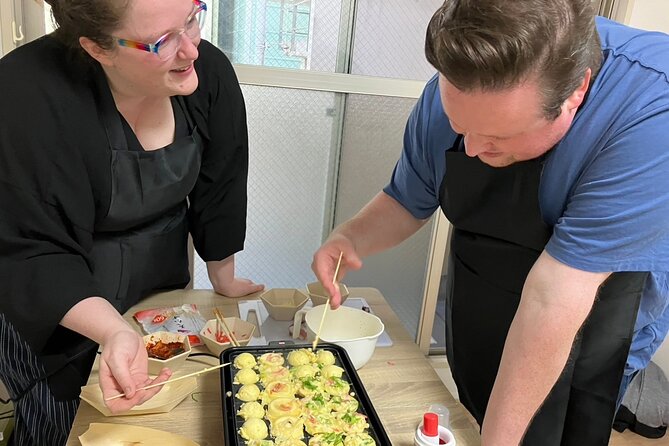
Then comes the main event: about 1.5 hours of cooking. This is where you make two different textures and cooking styles, so you get a real sense of how each dish behaves.
For okonomiyaki, you’ll use batter plus cabbage, along with fillings like pork or seafood. After cooking, it is topped with sauce and bonito flakes. Even if you have watched okonomiyaki online before, the hands-on part changes everything because you learn how the batter and cabbage come together at your station.
For takoyaki, the focus shifts. You’ll form fried savory dough balls filled with octopus. After cooking, they are topped with sauce, bonito flakes, and seaweed powder. This dish is all about control and timing, because it’s fried and portioned, not mixed and served.
What makes this section feel rewarding is the step-by-step approach. You are not left alone with a pan and a guess. Instructors can guide you through what to do next, and if your technique needs adjusting, you can correct it while you still have time to finish well.
The Tasting Hour With Sake, Beer, and Soft Drinks
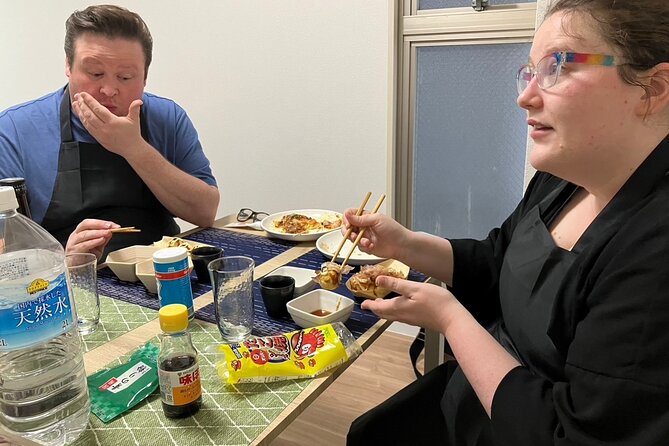
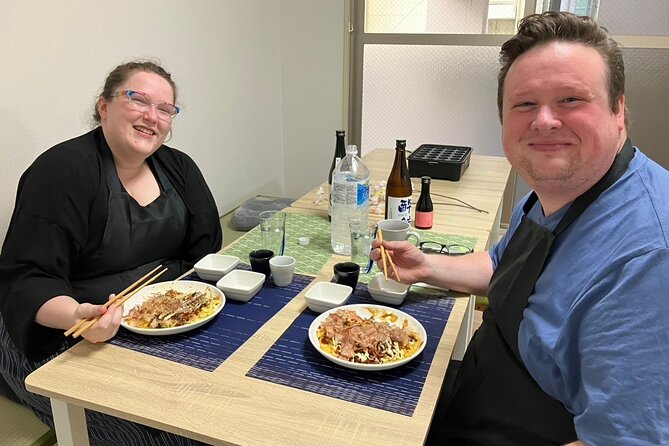
After you cook, you get to relax for a full hour tasting what you made, paired with drinks. The tasting includes sake, beer, and soft drinks, and it is a big part of the experience because it lets you judge your results while everything is still fresh.
There’s also an important detail for planning. Alcoholic drinks are only served for travelers age 20 and above. If you’re under 20, you’ll be served non-alcoholic drinks instead. That keeps the class comfortable and predictable for mixed-age groups.
This tasting hour is where the learning locks in. Seeing how your finished okonomiyaki and takoyaki look and taste helps you remember what matters: sauce balance, topping distribution, and how each dish finishes after cooking. It’s also a social break, which matters when you spend the prior 1.5 hours working in a kitchen.
What You’ll Take Home for Recreating These Dishes
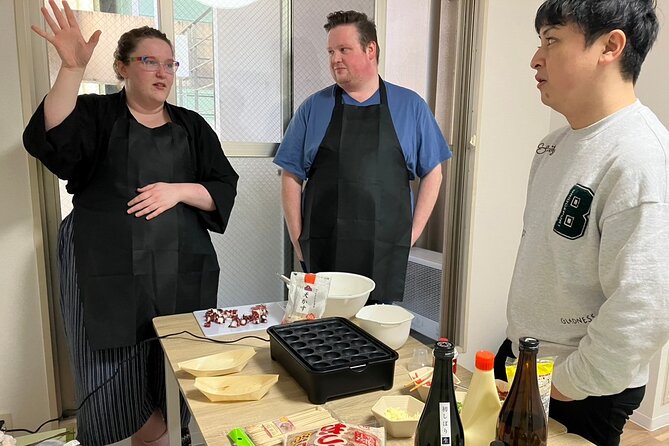
This class has a “cook it again at home” angle, and you can feel it in the way the lesson is described. You get written recipes, and you also get help that goes beyond vague ingredient lists. One highlight is being able to see the packaging for different ingredients, which makes it much easier to match what you made in class with what you can find later.
That packaging tip is underrated. Osaka supermarkets can be simple once you know the item names and what the packages look like. When you have that in your notes, you waste less time hunting and more time cooking.
The practical win is that you’ll learn what to buy, not just what the dish is called. With okonomiyaki and takoyaki, that can be the difference between a one-time souvenir meal and a repeat dinner you actually enjoy making.
Who This Cooking Class Suits Best
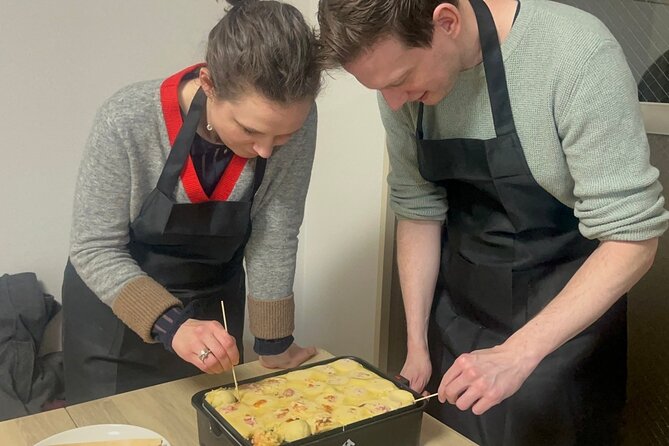
This is a great fit if you want something hands-on in Osaka that still feels relaxed. The format is interactive but not chaotic, and with a maximum of 8 travelers you’re not dealing with a huge crowd.
It’s also a good choice if you care about language support. English-speaking instruction is included, and Japanese or Spanish instructors are available upon request. That flexibility matters for visitors who want clarification without struggling through a language barrier.
If you’re traveling with kids, it can work well too. The experience has been noted as working even with younger kids, which suggests the pace and the teaching approach can handle mixed groups. Just remember the drink policy, since alcoholic beverages are restricted by age.
The Best Way to Get Value From This Class
To get the most out of the experience, treat it like a cooking workshop, not a show. Come ready to cook, and focus on doing each step as instructed. If you stop paying attention to timing, fried food will remind you quickly.
Also, be proactive with questions during prep. You’ll get the most benefit when you ask things like what ingredient substitutes might look like at home or how to recognize ingredient packaging. The class is set up to give you those hooks, so take them.
Finally, plan your evening so you are not rushing. The class runs about 3 hours and ends back at the meeting point. If you try to stack it between other time-sensitive plans, you’ll lose the relaxed feeling that makes the tasting hour worthwhile.
Should You Book the Osaka Okonomiyaki Cooking Class?
I think you should book this if you want a true Osaka food experience you can repeat later. You get both dishes, a structured cooking lesson, and an end-of-class tasting with drinks, which is a complete package for an $70 price tag. The small group limit of 8 and the language support are also big advantages if you want real guidance, not just generic tips.
Skip it only if you prefer sightseeing-heavy evenings. This is focused on cooking, and you should expect to spend most of your time at your station. If you want a quick taste with minimal participation, you might feel like the hands-on approach takes up too much of your schedule.
If you’re the type who likes to go home with written recipes and real ingredient knowledge, this class hits the target. It’s a solid, practical way to learn Osaka’s flavors, then bring them back to your own kitchen with confidence.
FAQ
What dishes will I learn to make?
You will learn to make okonomiyaki (a Japanese savory pancake) and takoyaki (Japanese savory dough balls).
How long is the cooking class?
The class runs for about 3 hours.
What does the class schedule look like?
It includes 30 minutes of orientation and preparation, 1.5 hours of cooking, and 1 hour of tasting with drinks.
Are drinks included?
Yes. The tasting includes sake, beer, and soft drinks.
Is alcohol served to everyone?
No. Alcoholic drinks are served only to travelers age 20 and above. Minor travelers under 20 will be served non-alcoholic drinks.
Do I need to bring ingredients or kitchen tools?
No. The class provides all ingredients and kitchen tools. You should just bring yourself.
Is the class suitable for vegetarians or people with food allergies?
Vegetarian or food allergy options are available, but you need to contact the provider after booking.
Where is the meeting point and how far is it from public transportation?
The meeting point is at 南船場コレット9044-chōme-3-1 Bakurōmachi in Osaka. The kitchen is about a 5-minute walk from both Shinsaibashi and Honmachi stations on the Osaka Metro.
What is the group size limit?
The class has a maximum of 8 travelers.
Kitchens You Can Book Into

Dotonbori, Still Hungry


Newest Osaka write-ups from the Loving Japan desk



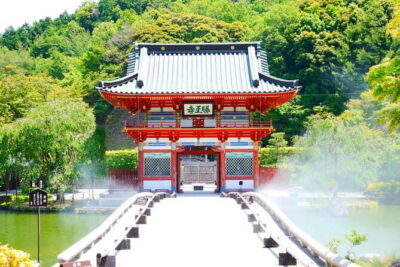
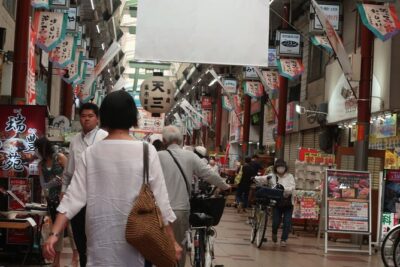
Dotonbori and Osaka Street Food, side by side.
 ★ 4.8Shinsekai Food Tour with 13-15 Dishes at 5 EateriesFrom $532,204 reviews
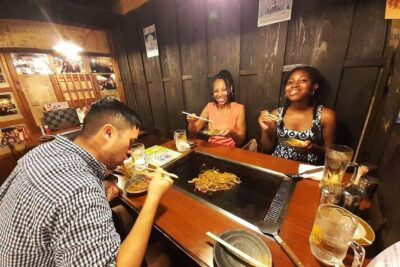 ★ 5.0Osaka Local Foodie Walking Tour in Dotonbori and ShinsekaiFrom $111985 reviews
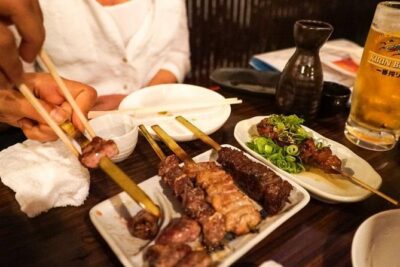 ★ 5.0Osaka Bar Hopping Night Walking Tour in Namba (3 bars, 6 tastes)From $98958 reviews
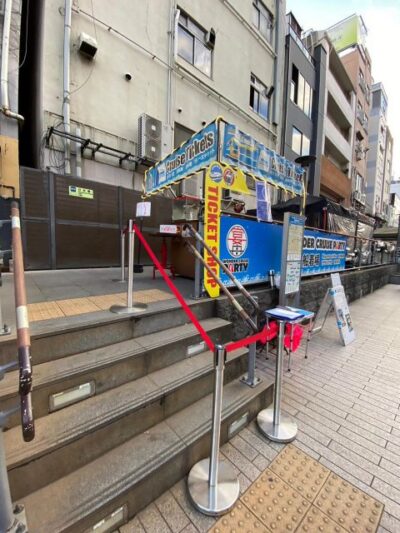 ★ 4.2Dotonbori District River Cruise with Drink DiscountFrom $12876 reviews
 ★ 5.0Ultimate Osaka Walking Tour: Castle, Dotonbori & Hidden GemsFrom $73862 reviews
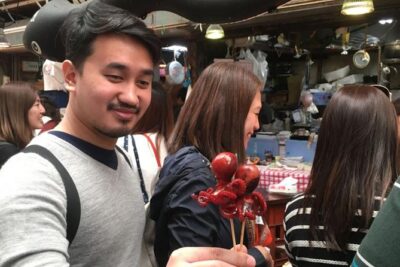 ★ 5.0Kuromon Market Food Walking Tour in Osaka (6 stops, 6 tastes)From $50550 reviews
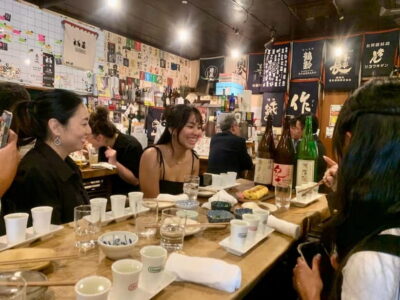 ★ 4.9Namba Pub Bar Crawl with a Local GuideFrom $30424 reviews
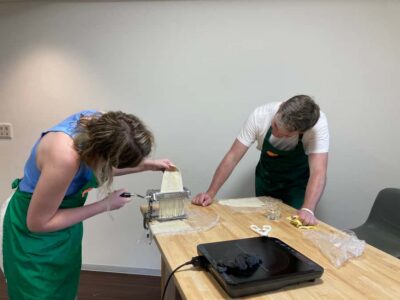 ★ 5.0Ramen and Gyoza Cooking Class in DotonboriFrom $70378 reviews
Filed on these lists too