
REVIEW · DOTONBORI AND OSAKA STREET FOOD
Osaka Okonomiyaki Cooking Experience!
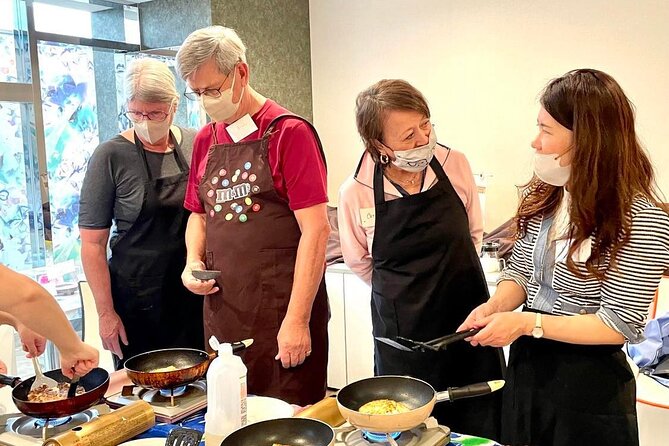
Osaka is famous for food you eat with your hands, and this class teaches you why. In a small hostel setting near Nagahoribashi, you cook Osaka style okonomiyaki with Keiko and help from her mom and assistant Sachiko, plus you make miso soup. I also love that the experience is set up for real conversation with Osaka locals, not just a food stop. The main thing to consider is the note about cross contamination and that ingredients may contain refined sugar.
The vibe is warm, relaxed, and very hands on. The group stays small, you sit down together after cooking, and Keiko explains basics and regional context, including Osaka versus Hiroshima style, so you actually understand what you’re making. If you’re strict about allergies or sugar, message them up front and be ready to plan around those ingredient notes.
In This Review
- Key points to know before you book
- Osaka Style Okonomiyaki, Cooked Like a Local in a Hostel Kitchen
- What You Actually Cook: Miso Soup, Osaka Okonomiyaki, and the Fun Extras
- The Heart of the Experience: Keiko, Mom, Sachiko, and Osaka Local Conversation
- How the 2 Hours Usually Feel, From Meeting to Plate
- Dietary Requests and Ingredient Reality Checks (Vegan, Halal, Sugar, and Cross-Contamination)
- Price and Value: Is $49.55 Worth It in Osaka?
- Where to Meet and How to Plan Your Day Around It
- Practical Tips to Get the Best Okonomiyaki Results
- Who This Class Fits Best
- Should You Book This Osaka Okonomiyaki Cooking Experience?
- FAQ
- How long is the Osaka okonomiyaki cooking class?
- Where does the class meet in Osaka?
- What time does the class start?
- How many people are in the group?
- What will I cook and eat?
- Can the class accommodate dietary preferences?
- Is there any risk of cross-contamination?
Key points to know before you book
- Small group limit of 6 means you get personal attention instead of watching from the sidelines
- Keiko, her mom, and Sachiko guide you through the steps, with time for questions and conversation
- You cook miso soup and okonomiyaki, with extra items mentioned like mochi dessert
- Osaka locals join in through your host’s friends, so you’re practicing the social side of dining too
- Dietary requests are supported (vegan, vegetarian, halal), but refined sugar may be present and cross contamination is possible
- You may get written info/recipe guidance so you can recreate it back home
Still hungry on Dotonbori? A few more crawls
- Osaka: Shinsekai Food Tour with 13-15 Dishes at 5 Eateries
★ 4.8 · 2,204 reviews - Osaka Local Foodie Walking Tour in Dotonbori and Shinsekai
★ 5.0 · 985 reviews - Osaka: Dotonbori District River Cruise with Drink Discount
★ 4.2 · 876 reviews - Ultimate Osaka Walking Tour: Castle, Dotonbori & Hidden Gems
★ 5.0 · 862 reviews
Osaka Style Okonomiyaki, Cooked Like a Local in a Hostel Kitchen
Forget the idea that you have to hunt for the perfect restaurant meal. This is about learning the dish, then understanding it. You start near Nagahoribashi and meet at 1-chōme-1-3 Higashishinsaibashi, Chuo Ward, then return there after the class.
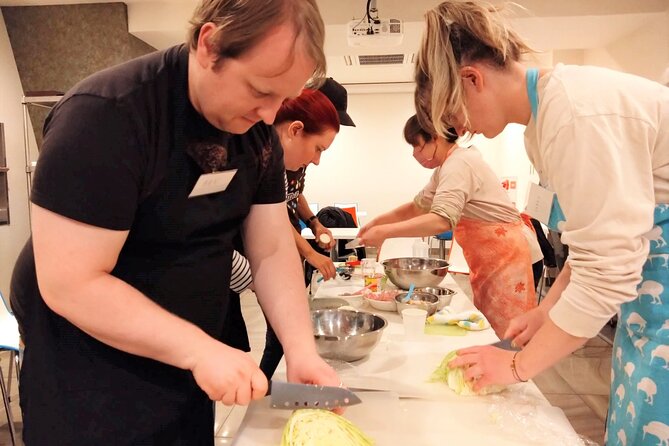
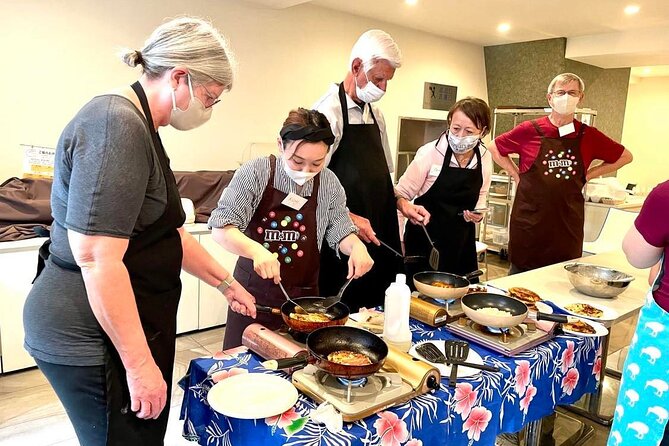
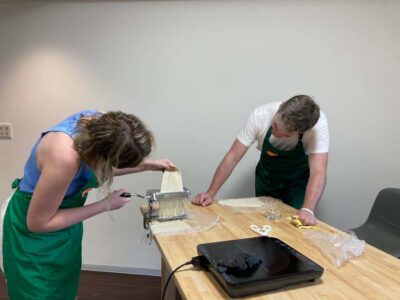
What makes this experience feel authentic is the setting. It’s a small-group cooking class in a hostel space, not a stage-like cooking studio. You’re working at a table with your group, and locals are part of the mix. That changes the energy fast. Instead of ordering, you’re building.
Keiko leads the cooking, with strong support from her mom and assistant Sachiko. Several comments praise Keiko’s patience and clear English, plus her willingness to answer questions. One person even noted the experience as a safe place to practice Japanese, which tells you the class isn’t just about food mechanics. It’s about being comfortable around real people.
What You Actually Cook: Miso Soup, Osaka Okonomiyaki, and the Fun Extras
The class is built around two core dishes: miso soup and okonomiyaki, the savory pancake that Osaka treats like comfort food. You’ll learn a simple method that’s meant to work again later at home, not just during the class.
A key detail I like: you don’t just follow a script. You cook with your group. You’re taught the simplest way, so you can repeat the steps without needing special tricks or equipment. One comment called out that this is the kind of meal you can make anywhere, because the cooking approach is practical.
On top of the main dishes, some people mention extra items. Mochi dessert shows up in at least one set of details as a lovely bonus. You also eat together after cooking, so the class finishes like a casual shared meal rather than a quick tasting.
Keiko also covers the idea that there are different regional takes on okonomiyaki, including Osaka versus Hiroshima style. That context matters because it turns okonomiyaki from a mystery “Japanese pancake” into a dish with choices and logic. You start to see how the toppings, batter approach, and preferences shape the final result.
The Heart of the Experience: Keiko, Mom, Sachiko, and Osaka Local Conversation
The standout theme in the feedback is not just how good the food is. It’s the people. Keiko comes across as welcoming, patient, and organized. Her mom is a visible presence too, and multiple comments note her warmth and even the small craftsmanship touches.
Sachiko is mentioned as an assistant who helps through the cooking process and chats with participants. Several people appreciated that the class includes real conversation, not forced small talk. Your host also invites Osaka friends, so you get that “I know someone here” feeling that’s hard to replicate on your own.
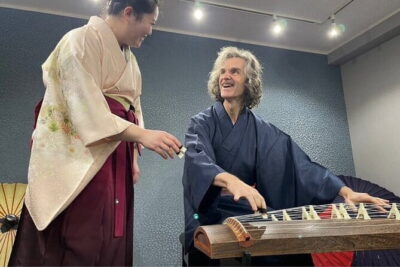
One detail I find especially charming: the aprons and small souvenirs. People mention aprons made from kimono material and small bags made from used kimonos. It’s a gentle nod to local culture without turning the class into a museum stop.
If you enjoy learning through interaction, this setup fits you. If you prefer total silence while you eat, it might feel too social. But for most people, the social exchange is the point.
Cook it yourself instead. Other kitchens in Osaka
- Sushi Making Osaka Roll and Authentic Japanese Sushi Class★ 5.0 · 1,220 reviews
- Osaka Sushi Making Experience★ 5.0 · 400 reviews
- Osaka: Ramen and Gyoza Cooking Class in Dotonbori★ 5.0 · 378 reviews
- Osaka: Sumo Stage Show with Bento or Snack + Fight & Photo★ 4.3 · 364 reviews
- Osaka Cooking Class: Okonomiyaki &Japanese cuisines experience★ 5.0 · 261 reviews
How the 2 Hours Usually Feel, From Meeting to Plate
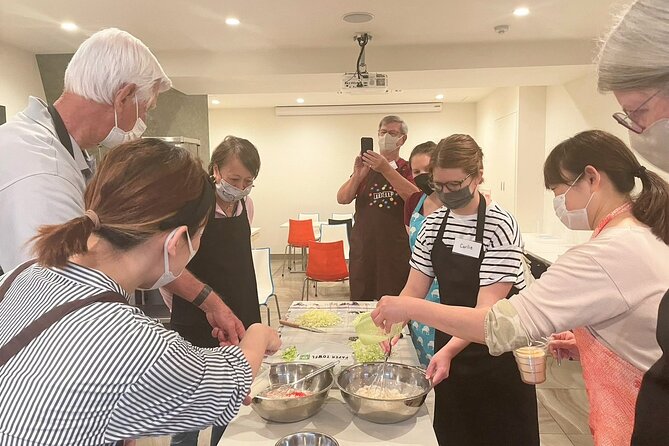
This class runs about 2 hours, starting at 4:00 pm. There’s also a mention that it can be offered at night depending on the day, so you might be able to slot it near dinner plans rather than only as an afternoon activity.
Here’s the rhythm you can expect:
- You meet at the designated point near the subway area.
- You jump into prep and cooking with your group at the hostel.
- Keiko teaches the simplest approach and guides you step by step.
- You cook miso soup alongside the okonomiyaki process.
- You sit down together to eat what you made.
The pacing sounds deliberately “easy to follow.” People describe the class as relaxed, well organized, and hands on. That matters because okonomiyaki has a few moments where timing and heat can change the texture. If someone is rushing you, you end up anxious and trying to copy instead of learn.
In this format, you get time for questions. Several notes highlight that Keiko and her team answer queries and explain not just how, but why. That’s how you end up with something you can recreate later.
Dietary Requests and Ingredient Reality Checks (Vegan, Halal, Sugar, and Cross-Contamination)
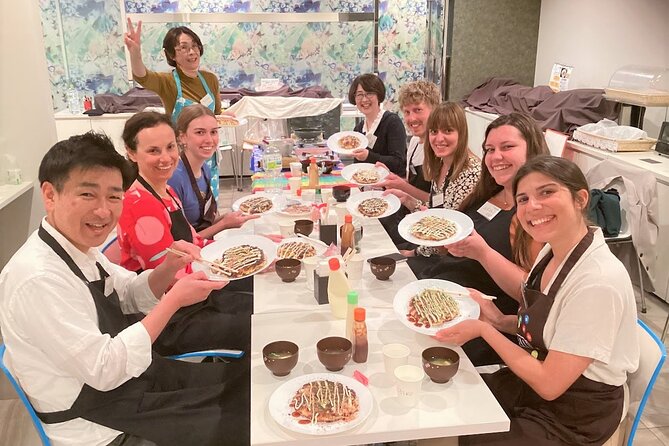
This class is flexible with food needs. The information specifically says Keiko can accommodate requests like vegan, vegetarian, and halal. That’s a major plus compared with many “cook and eat” experiences where dietary needs are treated as an afterthought.
Now the practical caution. The notes say ingredients may contain refined sugar, and there is a possibility of cross-contamination due to group lessons. That means:
- If you have a severe allergy, treat this as a prompt to ask detailed questions before booking.
- If you’re avoiding sugar for personal reasons, it’s worth confirming ingredients in advance.
Also, it’s not a lab kitchen. It’s a group class, so shared utensils and cooking surfaces can happen. The class is willing, but it’s still a shared environment.
If your needs are more about preference or general dietary fit, this looks like a solid option. Many comments directly praise vegan accommodations. Just don’t assume “special meal” means “zero risk” for cross-contact.
Price and Value: Is $49.55 Worth It in Osaka?
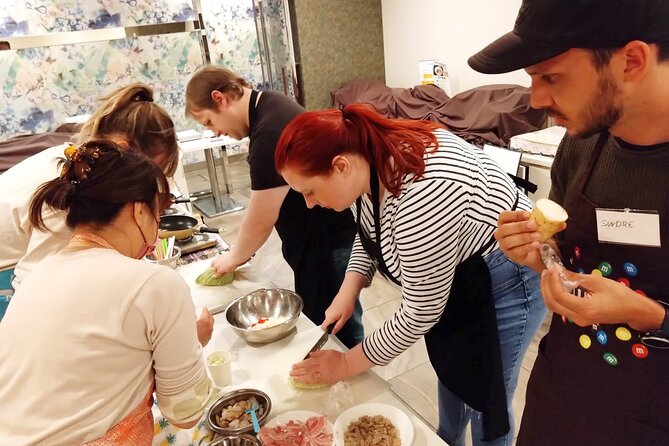
At $49.55 per person for about 2 hours, this isn’t the cheapest meal in Osaka. But it’s not priced like a restaurant either. You’re paying for three things you usually do not get together:
- Hands-on instruction from Keiko and her team
- A real meal you cook and eat, including miso soup and okonomiyaki
- Cultural exchange with locals through conversation and social time
Some people also mention receiving written information on how to make okonomiyaki afterward. That kind of takeaway turns the class into a lasting souvenir, not just a memory.
Another value signal: the group size cap at 6 travelers. If you’ve ever done food tours that feel crowded, you know how quickly a class becomes “watching.” Here, the small size is part of the price logic.
Timing can also boost value. With a 4:00 pm start, you can slot it between sightseeing blocks. It also means you’re not paying peak-time restaurant prices or settling for an awkward late snack. If you like a structured break in your day, this works well.
A small scheduling reality: it’s commonly booked around 45 days in advance. If your dates are fixed, you’ll feel better locking it in early.
Where to Meet and How to Plan Your Day Around It
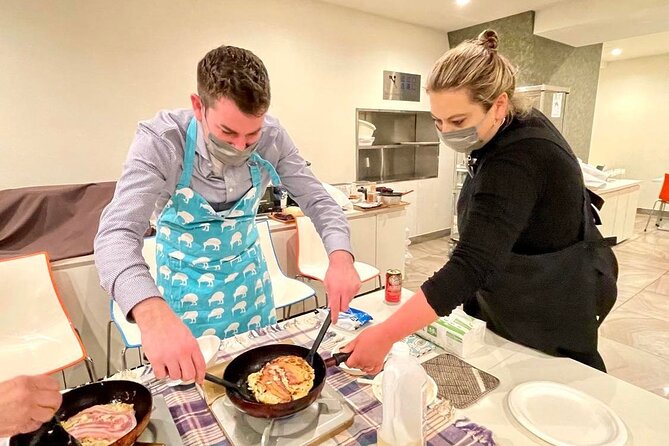
The class meeting point is clearly listed at 1-chōme-1-3 Higashishinsaibashi, Chuo Ward. It’s also described as near Nagahoribashi subway station, which is useful when you’re mapping your Osaka days.
Because it ends back at the meeting point, you can plan dinner nearby without needing a complicated transport shuffle. This is a practical benefit in Osaka, where you often want to keep moving through neighborhoods.
If you want to make the most of the 4:00 pm slot, I’d plan an earlier walk and save your big appetite for class time. Okonomiyaki tends to be filling once you stack it with toppings, and miso soup rounds it out nicely.
If you’re doing night plans, ask whether your specific day offers the night version. The information says it can happen depending on the days, so there may be flexibility.
Practical Tips to Get the Best Okonomiyaki Results
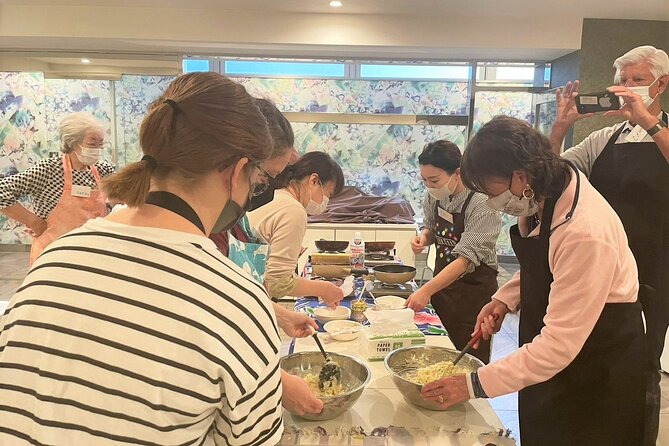
You can make this class easier on yourself with a few smart moves:
- Tell Keiko about your dietary needs at booking, including vegan, vegetarian, or halal.
- Mention your comfort level with refined sugar and cross-contact if that affects you.
- Come hungry, because you’ll cook and then eat together.
- Ask questions while you’re cooking. The class is designed for conversation, not one-way instruction.
It also helps to remember that okonomiyaki is a technique dish. The batter, the heat, and the flipping or layering moments can affect the texture. Since Keiko teaches the simplest way, you do not need to overthink it, but you do want to watch for timing cues.
People also highlight that the class is well organized and provides enough equipment and ingredients. That means you’re not hunting down specialty items. You’re learning a repeatable method using what they provide.
Finally, bring your camera energy. One person shared how their first attempt looked delicious, which hints that it’s an encouraging environment. You’ll probably want photos of the aprons too, since several people talk about those kimono-material aprons and matching souvenir bags.
Who This Class Fits Best
This experience is best for you if you want:
- Hands-on learning instead of just eating a meal
- Small group social time with Osaka locals
- A dish you can recreate at home, with simplified instructions
- A comfortable setup if you have dietary requests like vegan or halal
It may be less ideal if you are extremely sensitive to food cross-contact. The class openly notes cross-contamination possibility, and ingredients may include refined sugar. In that case, you’ll need to plan carefully and ask direct questions.
Should You Book This Osaka Okonomiyaki Cooking Experience?
Book it if you want a true skill you can take home. This is not only a meal, it’s a method. You’ll learn Osaka-style okonomiyaki basics, make miso soup, and get the social piece with Keiko, her mom, and Sachiko plus invited Osaka friends. The small group size of 6 is the big quality lever here.
Skip it or ask extra questions if your dietary constraints are strict due to sugar content or allergy sensitivity and cross-contact risk. The class is accommodating, but it’s still a shared group kitchen.
If you’re the type of traveler who likes meeting locals and leaving with something practical, this is an easy yes for an Osaka afternoon.
FAQ
How long is the Osaka okonomiyaki cooking class?
It lasts about 2 hours.
Where does the class meet in Osaka?
You meet at 1-chōme-1-3 Higashishinsaibashi, Chuo Ward, Osaka, 542-0083, Japan. It’s also described as near Nagahoribashi subway station.
What time does the class start?
The start time is listed as 4:00 pm. There may also be a night option depending on the days.
How many people are in the group?
The class has a maximum of 6 travelers.
What will I cook and eat?
You’ll learn and cook miso soup and okonomiyaki (Osaka-style savory pancakes), and you’ll eat the food together afterwards. Some extra items like dessert are mentioned.
Can the class accommodate dietary preferences?
Yes, it says they can accommodate requests such as vegan, vegetarian, and halal. Please note that ingredients may contain refined sugar.
Is there any risk of cross-contamination?
The information states there is a possibility of cross-contamination due to group lessons.
Kitchens You Can Book Into

Dotonbori, Still Hungry

Newest Osaka write-ups from the Loving Japan desk



Dotonbori and Osaka Street Food, side by side.
 ★ 4.8Shinsekai Food Tour with 13-15 Dishes at 5 EateriesFrom $532,204 reviews
 ★ 5.0Osaka Local Foodie Walking Tour in Dotonbori and ShinsekaiFrom $111985 reviews
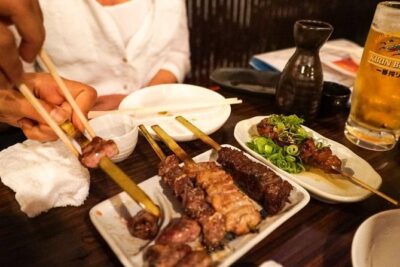 ★ 5.0Osaka Bar Hopping Night Walking Tour in Namba (3 bars, 6 tastes)From $98958 reviews
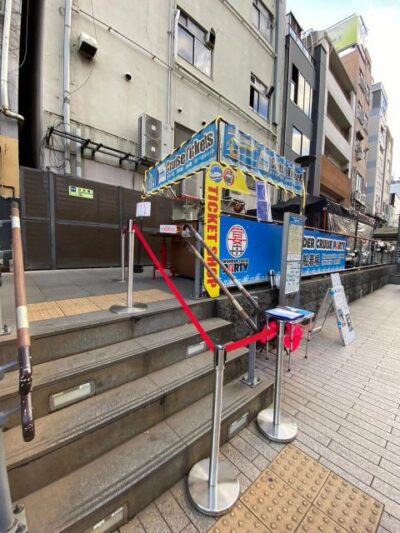 ★ 4.2Dotonbori District River Cruise with Drink DiscountFrom $12876 reviews
 ★ 5.0Ultimate Osaka Walking Tour: Castle, Dotonbori & Hidden GemsFrom $73862 reviews
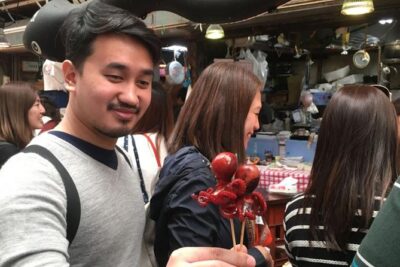 ★ 5.0Kuromon Market Food Walking Tour in Osaka (6 stops, 6 tastes)From $50550 reviews
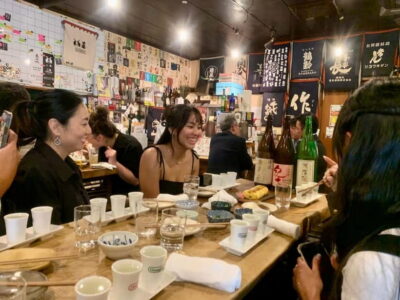 ★ 4.9Namba Pub Bar Crawl with a Local GuideFrom $30424 reviews
 ★ 5.0Ramen and Gyoza Cooking Class in DotonboriFrom $70378 reviews
Filed on these lists too