
REVIEW · ONSEN, HOT SPRINGS AND BATHHOUSES
Osaka: Solaniwa Onsen Hot Spring Visit
Torii gates meet hot water in Osaka. At Solaniwa Onsen OSAKA BAY TOWER, you get slightly alkaline spring water bubbling up from 1,000 meters below, plus the unreal calm of the Tenku Garden rooftop with torii gates and waterfalls.
I also like how the footbath area turns relaxation into a small seasonal show, with views of trees and flowers while you reset your body. The whole place has that classic Osaka onsen-town atmosphere, so it feels like fun, not just a soak.
One thing to think about first: the facility is strict about rules like visible tattoos, and you cannot leave and re-enter once you’re in. If that affects you, it can change the experience fast.
In This Review
- Key things that make this onsen visit work
- Stepping into Solaniwa Onsen Osaka Bay Tower (and why the setting matters)
- Alkaline spring water from 1,000 meters down: what you’re actually soaking
- Tenku Garden rooftop: torii gates, waterfalls, and 3,000 square meters above Osaka
- Nine bath styles and a carbonated option: build your own soak rhythm
- Footbaths, saunas, and scrubbers: how to get comfort without overdoing it
- Ryokan-style onsen-town vibe in one day: what it feels like
- Rules that can affect your experience (treat these as non-negotiables)
- Price and what you should budget (including the on-site bath tax)
- My practical tips for a smoother visit
- Who this onsen visit is best for (and who should reconsider)
- Should you book Solaniwa Onsen Osaka Bay Tower?
- FAQ
- Where is Solaniwa Onsen OSAKA BAY TOWER located?
- How much does the onsen visit cost?
- How long is the experience valid?
- What is included with admission?
- What kind of hot spring water does it use?
- What is the Tenku Garden like?
- Is there an extra cost at the facility?
- Are tattoos allowed?
- Can I leave the facility and come back later?
Key things that make this onsen visit work
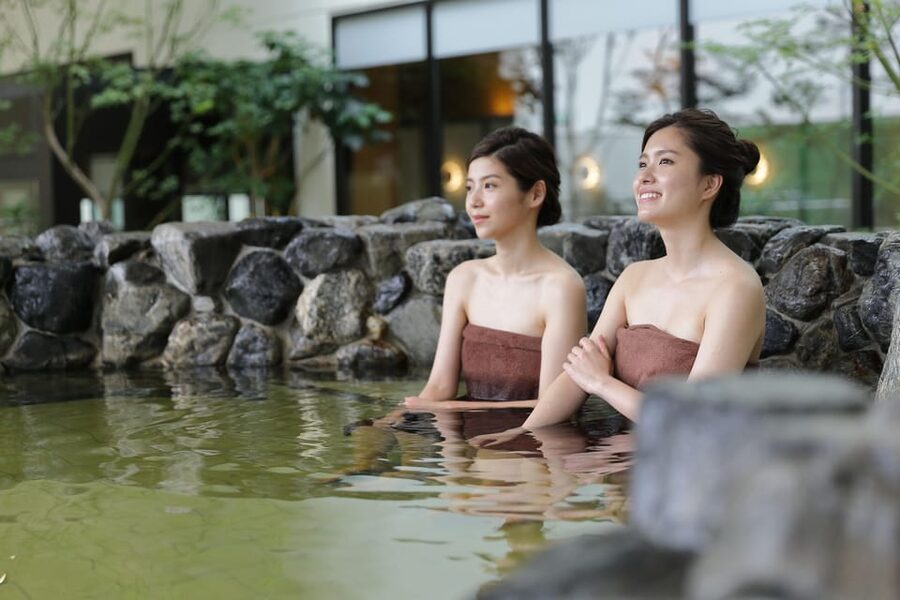
- Slightly alkaline water that comes from deep underground (1,000 meters down), with multiple bath styles to match your mood
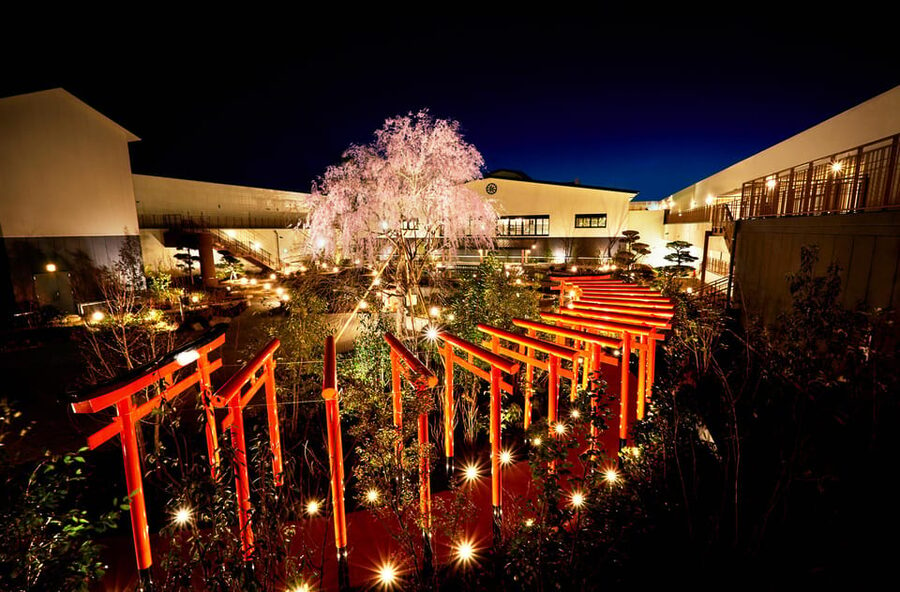
- Tenku Garden rooftop (3,000 square meters), where you can look for torii gates, waterfalls, and seasonal plants
- Nine types of baths including open-air, garden-view, and a carbonated spring option
- Saunas and scrubbers so you can build a routine instead of just standing around waiting to feel better
- A day-visit that still feels ryokan-like, more relaxing town vibe than “one-and-done” entrance
Warmer options. Baths we have been into
- From Osaka: Himeji Castle, Arima Onsen & Mt. Rokko Day Tour
★ 4.6 · 339 reviews - Himeji Castle, Arima Onsen & Mt. Rokko: 1-Day Bus Tour from Osaka
★ 4.0 · 28 reviews
Stepping into Solaniwa Onsen Osaka Bay Tower (and why the setting matters)
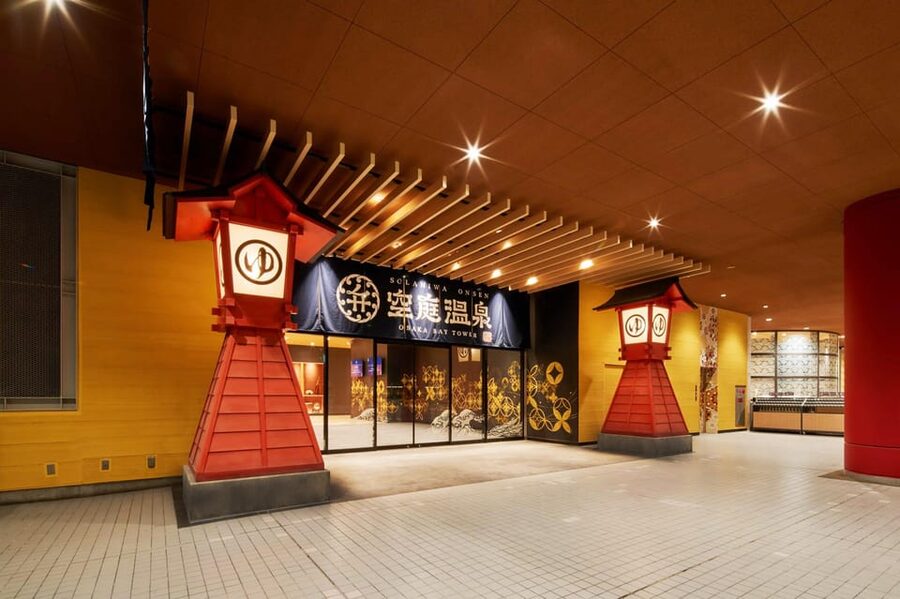
Solaniwa Onsen OSAKA BAY TOWER sits in Minato-ward, in the Osaka Bay Tower North area. The setting is part of the appeal. You’re in a big urban city, but the hot spring grounds are designed to feel like you’re getting away, which is exactly what you want after sightseeing days.
The first trick this place pulls is scale. The hot bath area is laid out like a theme park, not a cramped corner of steam. That matters because you can actually move at your own pace, switch between bath types, and give your shoulders time to cool down before you go back in.
Another smart touch is that it doesn’t feel “only for serious onsen people.” It’s approachable. You’ll find a relaxed, family-friendly atmosphere, with facilities that make it easy to settle in for the day.
Alkaline spring water from 1,000 meters down: what you’re actually soaking
This onsen is known for slightly alkaline natural hot spring water, described as Beautiful Hada no Yu. The key detail is that the water bubbles up from about 1,000 meters below the surface.
Why you should care: alkaline water is often chosen for how it feels on skin, and onsen visitors tend to notice a difference in comfort compared with plain hot bath water. Here, you’re not stuck with one soak either. The bath area gives you options, so you can start gentle and then adjust.
Also, the water experience is spread across multiple bath types. That means you can avoid getting bored of the same temperature and setting. If you like the open-air feel, you can lean into that. If you prefer something more enclosed, you can choose a different style.
Tenku Garden rooftop: torii gates, waterfalls, and 3,000 square meters above Osaka
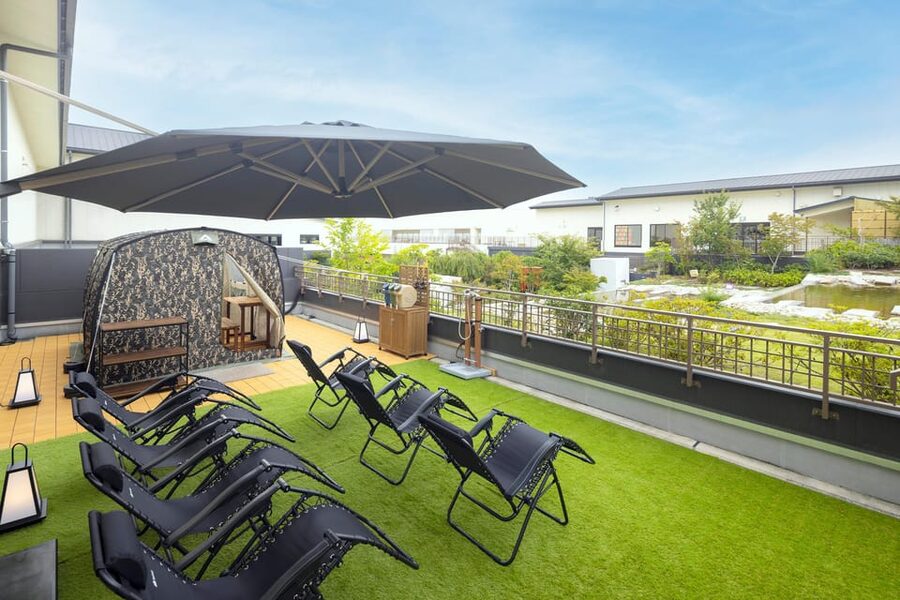
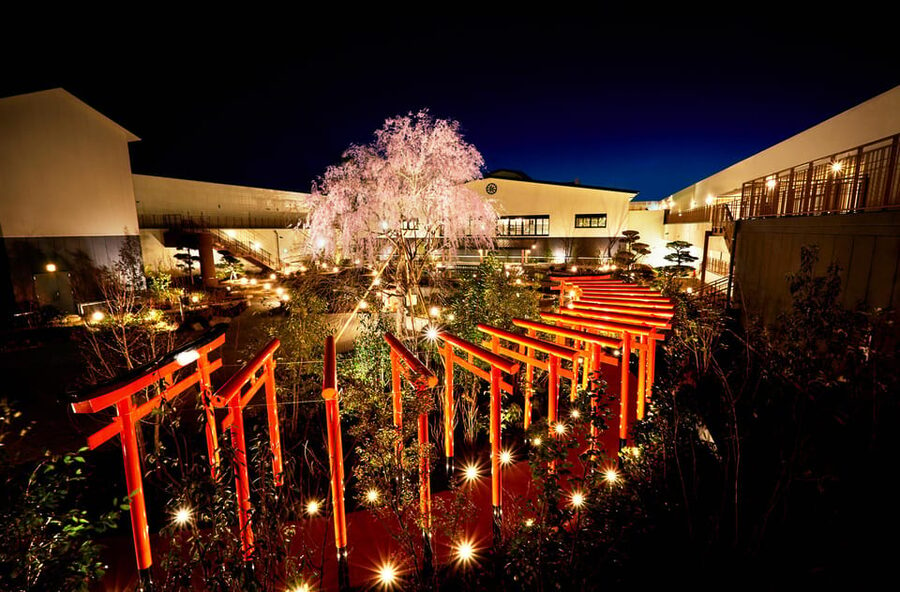
The star attraction for your eyes is the Tenku Garden. This rooftop garden covers 3,000 square meters, and it’s designed to create that “how am I in the middle of the city?” feeling.
Here’s what makes it special:
- A large collection of torii gates gives you a strong visual rhythm as you walk
- Water features like waterfalls add sound and a sense of depth
- Seasonal trees and flowers show up in the viewing experience, so the garden never feels frozen in time
The garden is also a mental reset. Even if you do nothing but stroll slowly, it changes the pace of your day. Hot spring towns are supposed to help you stop rushing. Tenku Garden does that job well.
Practical note: some areas may not be accessible during certain seasons. If you’re visiting during a period where the garden layout shifts, you might need to follow the posted paths.
- Osaka Go Karting Tour with Funny Costume★ 5.0 · 2,658 reviews
- Osaka Castle: Museum and Tower Entry Ticket★ 4.5 · 2,380 reviews
- Osaka: Shinsekai Food Tour with 13-15 Dishes at 5 Eateries★ 4.8 · 2,204 reviews
- Osaka Food Tour: 13 Dishes at 5 Local Eateries★ 5.0 · 2,149 reviews
- Hungry Osaka Street Food Tour:15 Tastings & 3 Drinks with a Local★ 5.0 · 1,727 reviews
Nine bath styles and a carbonated option: build your own soak rhythm
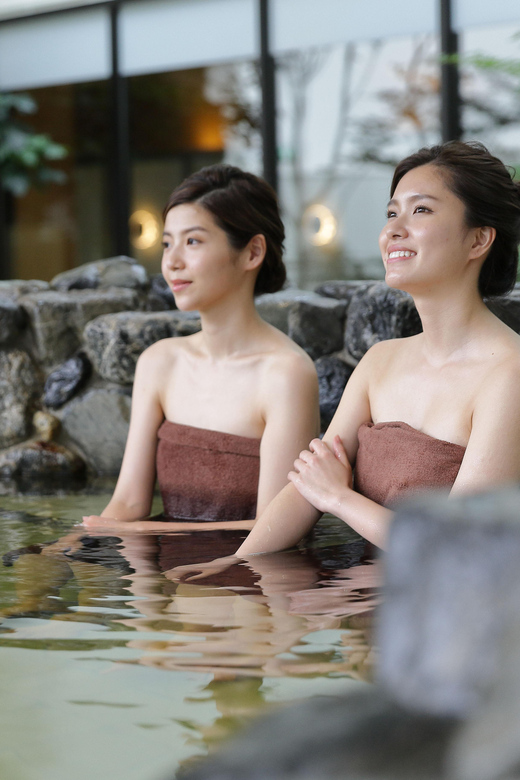
The hot bath area is where you’ll spend most of your time, and it’s set up to feel like a menu. There are nine types of baths, including:
- An open-air bath
- A garden-view bath
- A carbonated spring bath
That variety matters more than it sounds. Open-air tubs usually feel more relaxing because you can breathe the air and let your body cool around the edges. Garden-view baths add a calmer mood, since you’re not facing blank walls.
The carbonated spring bath is a fun contrast if you enjoy a more energizing soak. Carbonated baths often feel like tiny bubbles massaging your skin, and that can be a great “last step” after you’ve loosened up in the other tubs.
Then there are saunas and scrubbers. You don’t need a complicated plan, but having those choices means you can repeat the cycle that works for you:
- Soak in a bath that feels comfortable
- Step out, cool down, and reset
- Use scrubbers for skin care (if it’s your routine)
- Try another bath type, like open-air or garden-view
This place also includes a footbath area where you can relax while taking in views of seasonal trees and flowers. It’s a gentle way to start when your body is still “on sightseeing mode.”
Footbaths, saunas, and scrubbers: how to get comfort without overdoing it
If you’ve ever left an onsen feeling like you rushed, it’s usually because you treated it like a checkpoint. This onsen works better when you treat it like a rhythm.
I’d start with the footbath area because it helps you ease in. Your feet warm first, then your body follows. Pair that with the seasonal view, and you get that small, satisfying feeling of being in the right place at the right time.
Next, do one main soak before jumping around. Open-air baths and garden-view baths can both be relaxing, but your first soak sets the tone for the rest of your visit. After that, mix in the carbonated option if you want a different sensation.
Then add sauna time only if you normally like it. The facility includes saunas and scrubbers, but the best use is personal. If you’re not a sauna person, you can still have a fantastic day just using the different bath types.
One more practical thought: keep an eye on how you feel between baths. Hot water can make you relaxed, which is great, but it can also make time fly.
Ryokan-style onsen-town vibe in one day: what it feels like
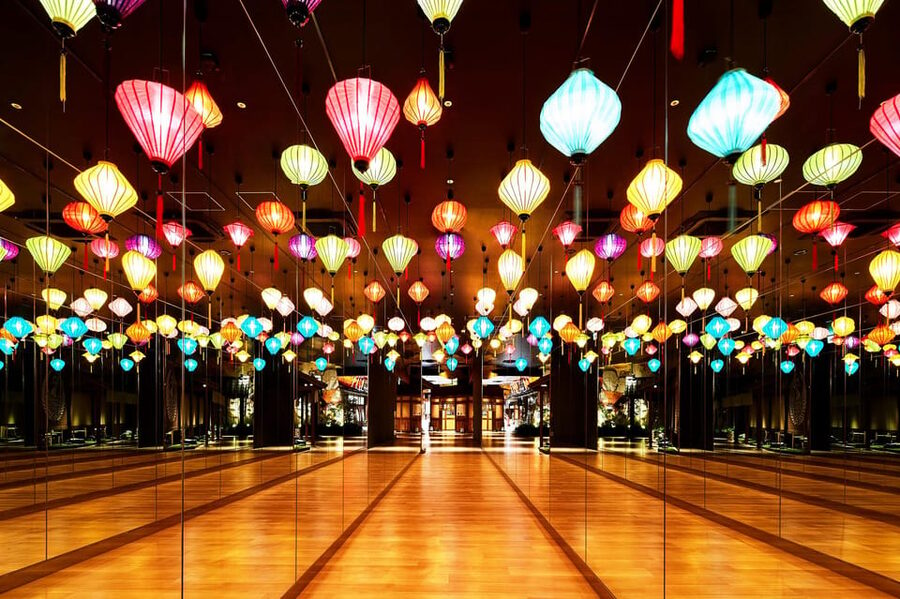
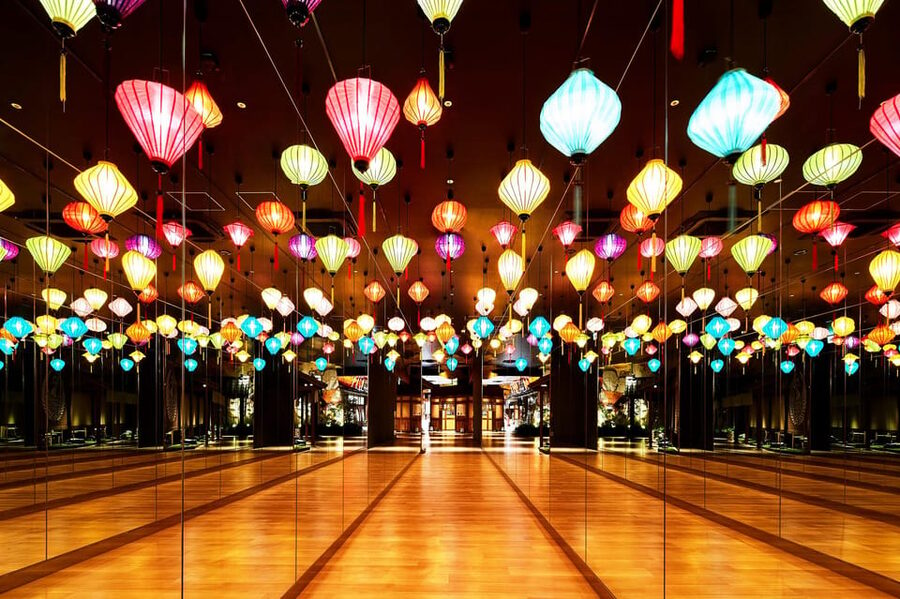
Even though you’re not staying overnight, Solaniwa Onsen is set up to feel traditional and comforting. The overall theme aims at relaxation and fun, with that Osaka hot spring town atmosphere.
This is the kind of place you’ll like if you want a “real Japan” feeling without committing to a multi-night schedule. The rooftop garden, the bath variety, and the footbath scenes all work together to create a full experience, not just a quick soak.
And because it’s a day visit, it’s easier to fit into a travel plan. You can treat it like your reset button. After a day of walking around Osaka, this is a strong way to recover.
Rules that can affect your experience (treat these as non-negotiables)
Before you go, read the rules. They’re not just fine print here. They shape how you’ll plan your day.
The big ones:
- Visible tattoos are not allowed
- Persons with tattoos, tattoo stickers/paints, gang affiliations, or under the influence of alcohol cannot use the service
- Baby strollers and baby carriages are not allowed
- Alcohol and drugs are not allowed
- No temporary exits and re-admission
The no temporary exit rule is the one people sometimes forget. Once you’re in, plan your timing so you’re not tempted to run out during a busy day.
Also, if you have a group under 16, there are time limits on use. If that applies to your plan, check your timing so you don’t run into cutoff hours.
Price and what you should budget (including the on-site bath tax)
The listed price is about $14 per person for a 1-day visit. For what you get, that’s pretty solid value. You’re paying for:
- Tenku Garden access
- Entry to the hot bath area with nine types of baths
- Access to saunas and scrubbers
That combination is the real value. Many onsen experiences offer a single soak. Here, you get a whole mix of environments: rooftop garden wandering, footbath relaxation, and multiple bath styles so you can actually tailor the experience.
One extra cost is required on-site: a 150 yen Osaka city bathing tax. It’s small, but it’s smart to budget for it so there are no surprises when you’re ready to check in.
My practical tips for a smoother visit
A hot spring day sounds simple, but small details can make or break comfort. Here are the tips I’d follow to avoid common snags.
First, plan your pace. Use the garden and footbath area as part of your relaxation flow, not as quick photo stops. Tenku Garden is large enough that slowing down makes it feel peaceful instead of crowded.
Second, think ahead about food. One review mentioned confusion around lunch tied to a ticket purchase, which led to needing to purchase it again. I’d treat that as a hint to confirm exactly where and how lunch is redeemed before you assume you’re covered.
Third, keep the rules in mind before you arrive. Tattoo restrictions and the no re-entry policy are the two biggest “day plan” breakers. If either could be an issue, handle it early rather than hoping it works out.
Who this onsen visit is best for (and who should reconsider)
This is a great match if you want:
- A full day reset with lots to do inside one complex
- Variety in soaking, including open-air, garden-view, and carbonated baths
- A rooftop garden walk that feels almost unreal in a city setting
It’s also a strong option if you like the idea of a ryokan-style atmosphere but prefer to stay flexible with a day trip.
You might want to reconsider if:
- Tattoos are part of your plan (the restrictions are clearly stated and firm)
- You rely on strollers or baby carriages
- You hate the idea of no temporary exits once you enter
Should you book Solaniwa Onsen Osaka Bay Tower?
If you’re deciding between a quick onsen and a more complete experience, I’d lean toward booking this. The value is in the combination: Tenku Garden access, a footbath area with seasonal views, and a hot spring zone with nine bath types plus sauna and scrubbers. That’s enough variety to keep the day feeling like a real outing, not just a stop.
Book it if you want a relaxing, traditional Osaka onsen feel with a rooftop garden that makes the city disappear for a bit. Skip it if the tattoo policy or the no re-entry rule would cause problems for your plans.
If you’re flexible and you like the idea of mixing scenery with soaking, this one is worth your time.
FAQ
Where is Solaniwa Onsen OSAKA BAY TOWER located?
It’s at 1-2-3 Benten, Minato-ward, Osaka-city, Osaka Bay Tower North, 552-0007 (coordinates: 34.67035789999999, 135.4595476).
How much does the onsen visit cost?
The price is listed as $14 per person.
How long is the experience valid?
The ticket is valid for 1 day.
What is included with admission?
Admission includes access to the Tenku Garden, access to the hot bath area with nine types of baths, and access to saunas and scrubbers.
What kind of hot spring water does it use?
The baths use slightly alkaline natural hot spring water known as Beautiful Hada no Yu, which bubbles up from about 1,000 meters underground.
What is the Tenku Garden like?
Tenku Garden is a 3,000-square-meter rooftop garden with elements like a thousand torii gates, waterfalls, and seasonal trees and flowers.
Is there an extra cost at the facility?
Yes. A separate payment of 150 yen for Osaka city bathing tax is required on-site.
Are tattoos allowed?
No. Persons with tattoos, tattoo stickers/paints, or related affiliations are not allowed to use the service, and visible tattoos are not allowed.
Can I leave the facility and come back later?
No. Temporary exits and re-admission are not allowed.
Baths We Have Been Into

Newest Osaka write-ups from the Loving Japan desk
Onsen, Hot Springs and Bathhouses, side by side.
 ★ 4.4Nara and Uji Day Trip with Deer Park and Hot SpringFrom $57302 reviews
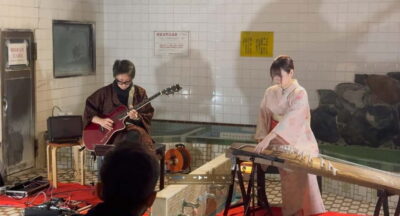 ★ 4.9Traditional Concert at Townhouse or BathhouseFrom $32224 reviews
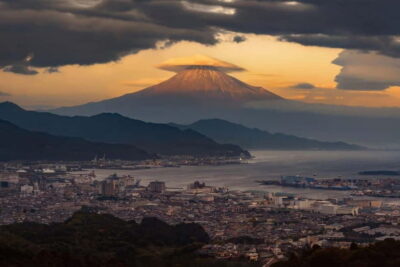 ★ 5.0From Tokyo: Private Tour to Fuji/Hakone – Onsen, Art, NatureFrom $322116 reviews
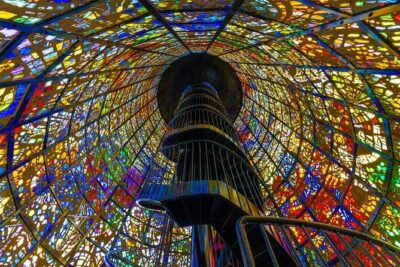 ★ 5.0Mt. Fuji, Hakone Private Tour from Tokyo – Onsen, Arts and NatureFrom $85279 reviews
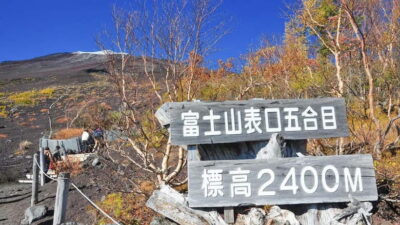 ★ 4.3Mount Fuji 5th Station & Onsen Day TripFrom $5075 reviews
 ★ 4.6From Fukuoka: Mount Aso, Kurokawa Onsen, and Shrine TourFrom $5072 reviews
 ★ 5.0Private Nagano 1-Day Tour:Snow Monkeys,Zenko-ji,Obuse,Sake,OnsenFrom $33771 reviews
 ★ 5.0Mt Takao Tour with Ramen and Tattoo-Okay Hot SpringFrom $12069 reviews
Filed on these lists too