
REVIEW · WALKING TOURS
Osaka: Walking Tour and Top Highlights
Neon Osaka starts early on foot. I like the way this route pairs Osaka Castle views with classic gardens, then lands you at Dotonbori for lights and food. The one drawback to plan for is that walking plus subway time, and key costs like castle entry, subway rides, and meals are not included.
The best part is the guide. Names like Buchi, Tony, and Minori come up again and again for clear English, fast fixes when plans change, and a hands-on approach to photos. On hot days, you can also expect real pacing help, like a water break check.
You also get a smart mix of big landmarks and everyday Osaka, from Shitennoji Temple to Kuromon Ichiba Market. Just note this is not a sit-and-look tour, so it is best if you are good with steady steps for 4 hours.
In This Review
- Key highlights that make this walk worth your time
- Starting at Namba Walk, the easiest way to avoid stress
- Osaka Castle and Hokoku Shrine, big views with a calmer pace
- Shinsekai and Tsutenkaku, retro Osaka with street energy
- Shitennoji Temple, ancient Osaka for a slower kind of wow
- Kuromon Ichiba Market, snack strategy in Osaka kitchen territory
- Dotonbori neon finish, where photos meet late-afternoon hunger
- Guide quality is the real value add, from Buchi to Minori
- Price and what you still need to budget for
- Pacing, walking comfort, and rainy day reality
- Who should book this Osaka highlights walk
- Should you book Osaka JOINER for this 4-hour walk?
- FAQ
- How long is the Osaka walking tour?
- What is the meeting point for the tour?
- What is included in the tour price?
- Are subway fees included?
- Is Osaka Castle entry included?
- Do I need to pay for food during the tour?
- Is there a matcha or tea experience?
- Does the tour run in the rain?
- Is pickup available?
- Who should avoid this tour?
Key highlights that make this walk worth your time
- Osaka Castle viewpoints plus garden time for photos that beat the usual souvenir shots
- Shinsekai and Tsutenkaku Tower for retro Osaka energy and quick photo-worthy stops
- Shitennoji Temple to balance the neon with one of Japan’s oldest temple sites
- Kuromon Ichiba Market food tasting style time with breaks for shopping and snacks
- Dotonbori neon finish so you can end with the city at full volume
Still weighing up options in Osaka? These are the ones our reviewers rated highest.
- Osaka Go Karting Tour with Funny Costume
★ 5.0 · 2,658 reviews - Osaka Castle: Museum and Tower Entry Ticket
★ 4.5 · 2,380 reviews - Osaka: Shinsekai Food Tour with 13-15 Dishes at 5 Eateries
★ 4.8 · 2,204 reviews - Osaka Food Tour: 13 Dishes at 5 Local Eateries
★ 5.0 · 2,149 reviews
Starting at Namba Walk, the easiest way to avoid stress
Most day tours fail at the start. This one tries to fix that with a clear meeting area inside Namba Walk, an underground shopping corridor.
You meet at the Osaka JOINER base in Namba Walk, located between exit B21 and B23. Look for the store placed between DOCOMO and MIZUNO shops, and if you cannot find it on one walkway, cross to the other side because Namba Walk has two paths.
Plan to arrive a bit early, about 10 minutes before start time. That buffer matters, because the guide may be moving between spots, and it helps you start as a group rather than chasing.
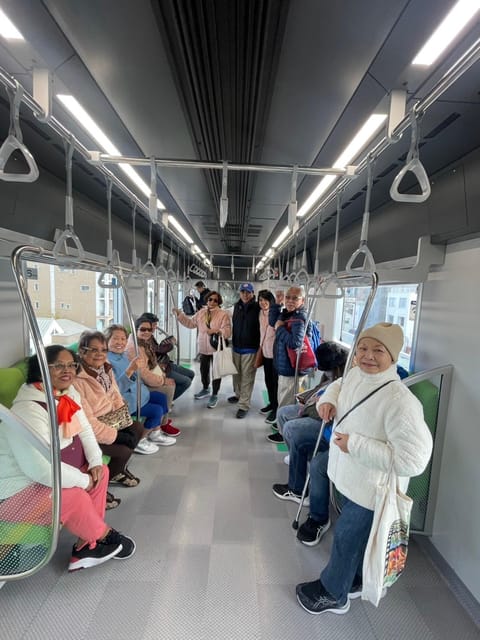
Also plan to bring comfortable shoes. You will do multiple short subway rides, but you will also walk between neighborhoods and through market areas. Rain is handled too, since the tour proceeds in rainy weather, so pack a raincoat or umbrella.
Osaka Castle and Hokoku Shrine, big views with a calmer pace
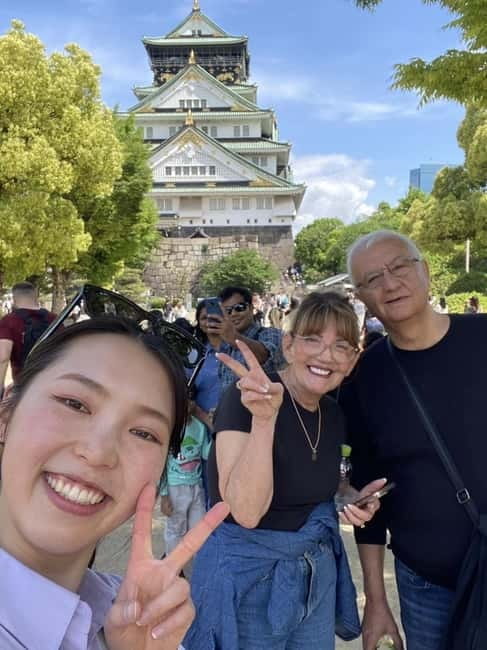
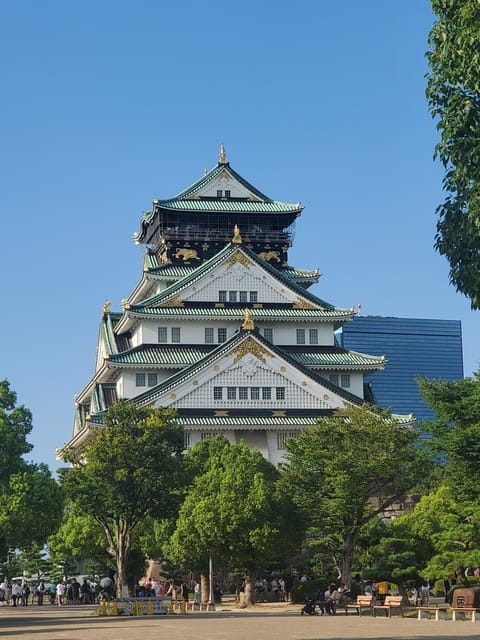
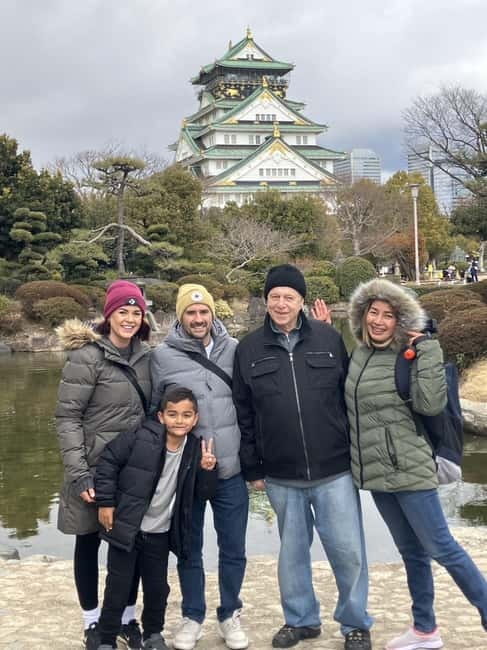
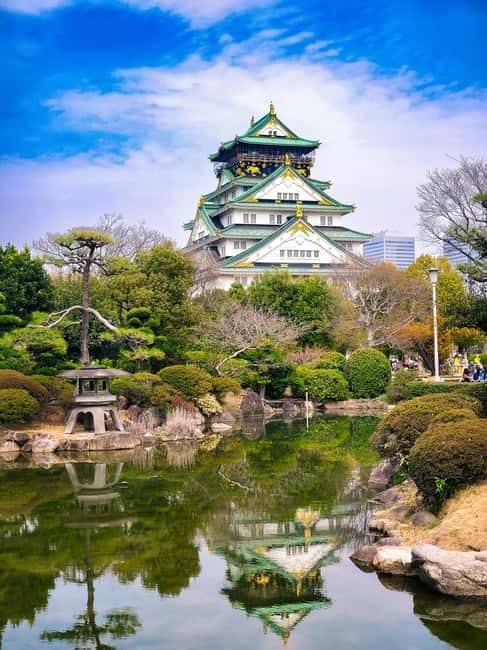
Osaka Castle is the headline, and for good reason. You get a photo stop plus time to see the grounds and surrounding park areas, which is where the classic skyline views show up when the weather cooperates.
From a practical standpoint, this stop does two things for you. First, it teaches you what Osaka wants you to notice: scale, fortification history, and the park layout people actually use. Second, it gives you a natural landmark to orient the rest of the city, since you will later bounce to districts that feel totally different.
After that, you head to Hokoku Shrine for a photo stop and a guided look. It is shorter, but it helps break the “only big monuments” rhythm and gives you a quick taste of how shrines fit into daily city life.
Castle entry is not included, so if you want to go inside the main areas, you will need to budget for the 1200 yen entry fee. If you skip the entry, you still get a lot from the exterior views and park time, but plan your expectations accordingly.
Shinsekai and Tsutenkaku, retro Osaka with street energy
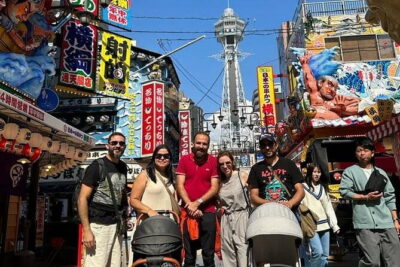
Then the tour shifts tone. Shinsekai is the place people describe as Osaka’s retro New World district, famous for Tsutenkaku Tower and the nostalgic street vibe around it.
You get a break time plus photo stop, visit time, free time, shopping time, and sightseeing, which is useful because Shinsekai is more than a single viewpoint. It is small streets, snack counters, and alley energy, and you want a little buffer to choose what to try or what to photograph.
The next anchor is Tsutenkaku Tower. Expect a photo stop and a short visit and sightseeing window. Even if you do not go all the way up, Tsutenkaku works as a “check you have arrived” moment, since it is one of the most recognizable silhouettes in southern Osaka.
Shinsekai also includes tea time at the Shinsekai Market segment, including a tea and tea ceremony experience if that option is selected. This is a nice reset point because markets and street food can wear you out fast when the weather is warm.
- Osaka Go Karting Tour with Funny Costume★ 5.0 · 2,658 reviews
- Osaka Castle: Museum and Tower Entry Ticket★ 4.5 · 2,380 reviews
- Osaka: Shinsekai Food Tour with 13-15 Dishes at 5 Eateries★ 4.8 · 2,204 reviews
- Osaka Food Tour: 13 Dishes at 5 Local Eateries★ 5.0 · 2,149 reviews
- Hungry Osaka Street Food Tour:15 Tastings & 3 Drinks with a Local★ 5.0 · 1,727 reviews
Shitennoji Temple, ancient Osaka for a slower kind of wow
After the street noise, you get Shitennoji Temple. This is one of Japan’s oldest Buddhist temples, and that age shows in the layout and the feeling of the grounds.
You get a photo stop plus time to visit and sightsee. The guided part helps here, because older temples can look similar at first glance if you do not know what to focus on. With a guide, you typically get pointers on what details matter, how the site fits into Osaka’s long timeline, and what the gardens and buildings are telling you.
The practical value is big. Shitennoji adds a cultural stop that balances out Dotonbori and Kuromon Ichiba. If you spend your whole day only chasing food and neon photos, Osaka starts to blur. This temple stop gives you a mental pause.
Also consider timing. This segment happens in the middle of the loop, so you are not only rushing toward the night crowds. That makes it easier to slow down, take photos, and walk without feeling like you are racing daylight.
Kuromon Ichiba Market, snack strategy in Osaka kitchen territory
Kuromon Ichiba Market is where you eat like an Osaka local would, in short bursts. The tour includes break time, visits, breakfast and street food opportunities, plus free time for shopping and food tasting.
You also get a guided market walk, which matters because markets can be overwhelming. Your guide helps you focus on what is fresh and what is worth trying, then gives you enough free time to actually buy things and not just look.
What I like here is the structure: you are not stuck waiting in one line or spending all your time buying. You get a chance to taste, then you can branch out for personal preferences.
Food and drinks are not included, so come with a budget mindset. If you are the type who wants to try multiple bites, you will likely spend more than if you just want one or two tastes. Either way, the included time makes it easier to sample without wandering in circles.
If you like seafood, this is a strong match for you. Even if you do not, markets still work well for non-seafood snack options because the “snack culture” around Kuromon is the real show.
Dotonbori neon finish, where photos meet late-afternoon hunger
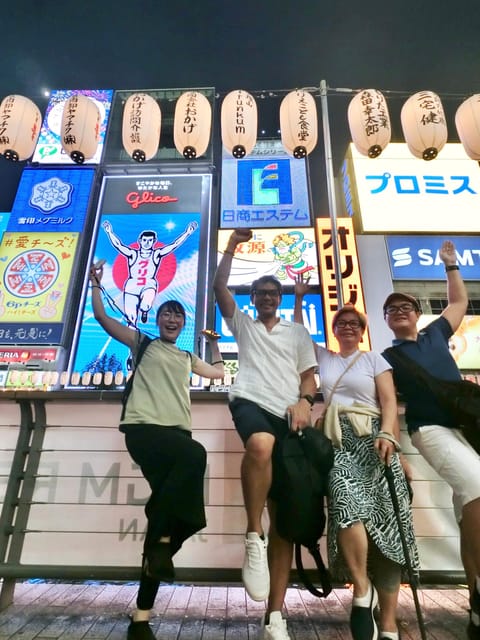
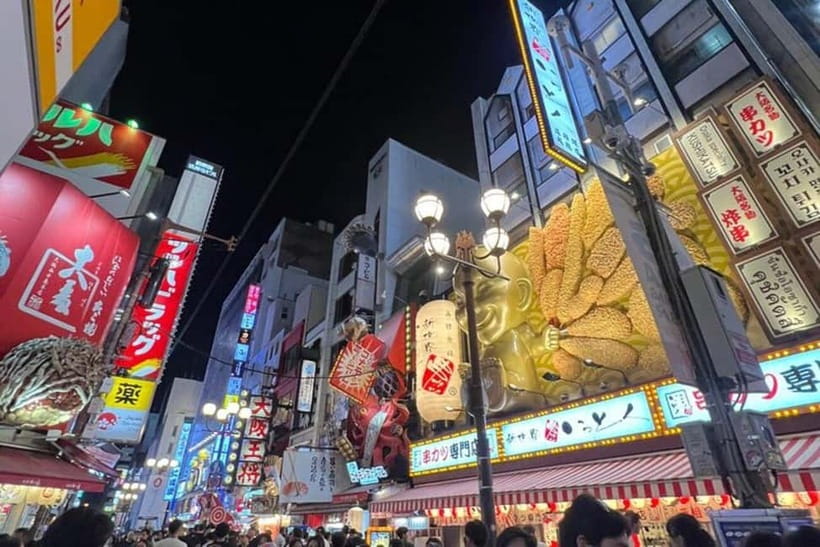
Dotonbori is the last stop, and it is the right one. The neon lights, food smells, and crowd energy make it the perfect payoff after a day of historic sites and markets.
You get a photo stop and time to visit. The key is that you end here, so you can keep exploring after the tour if you want, or just soak in the atmosphere with less pressure.
I like the way Dotonbori functions as a reset for your brain. After temples and markets, neon streets feel like a switch flips back to entertainment mode. It is also an easy place to decide what your next meal should be, because the street food options are visible and close.
One more practical note: this district is visual by design. If you are serious about photos, this is where you will want your camera or phone ready, and it helps that guides provide support for photography. People mention guides like Buchi and Tony for photo help that makes it easier to get clean shots without standing awkwardly.
Guide quality is the real value add, from Buchi to Minori
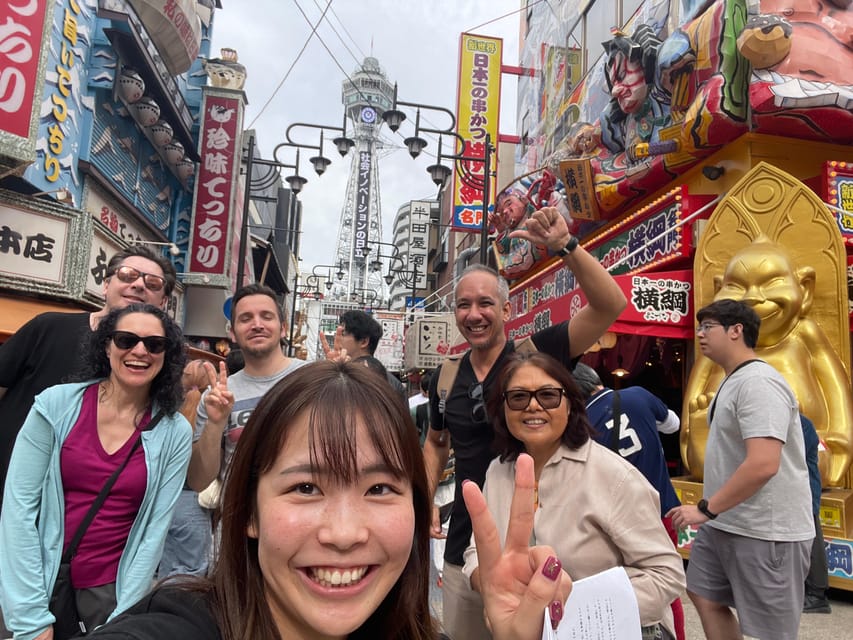
Price matters, but guide skill often decides whether the day feels like fun or like commuting.
A recurring theme in guides that people named is attention and flexibility. Buchi gets praised for being professional and accommodating, including waiting when needed, and recommending where to eat after the tour. Tony also earns strong marks for making Osaka easy to understand and for being great with questions.
Minori is mentioned for a fun, clear pace, and for checking in during hot weather. Sergio and others are praised for answering questions patiently and tailoring elements when possible.
There is also a practical “how to move through Osaka” component. One guide was specifically credited with teaching subway use, which can save money compared with taxis. Another tip that shows up in the feedback is that using an IC card like Suica can simplify subway rides on a short loop.
So even if you only care about seeing highlights, this tour can be useful beyond sightseeing. It helps you understand the city in plain terms, and then you can carry that map in your head for the rest of your stay.
Price and what you still need to budget for
The advertised price is $64 per person for a 4-hour experience. That sounds reasonable, but I would treat it as paying for guided direction, photography help, and structured time across key districts.
Not included costs are the big ones:
- Subway fees around 800 yen
- Castle entry fee of 1200 yen if you choose to go inside
- Food and drinks during market and snack breaks
There is also an optional ¥5,000 pickup near the cruise terminal for cruise passengers. Payment for the guide must be made in cash, so do not plan on paying everything by card on the day.
If you like to eat as you go, your biggest extra expense will be food. If you only do light tasting, your costs can stay under control. Either way, the tour is still good value because you save time figuring out routes and you get a guide to turn “seeing” into “knowing what to look for.”
If you are considering skipping guides and DIY, think about your first half-day. Osaka has enough moving parts that getting off track costs more time than many people expect.
Pacing, walking comfort, and rainy day reality
This is a walking tour, but it is not nonstop. You will have brief stops at major sites, plus short subway rides between neighborhoods. The schedule is built to keep you moving while still giving you real time at each anchor location.
The biggest comfort factor is your shoes. You need something that handles pavement and market floors, and you need it to stay comfortable if it is warm or wet.
Rain is handled, which helps because Japanese weather can change quickly. The tour proceeds in rainy weather, so you are responsible for bringing a raincoat or umbrella.
Also pay attention to group size. Private or small groups are available, which can make photo stops smoother and questions easier to answer. People who had only a few participants mentioned being able to ask lots of questions, and that usually translates into a better day.
Finally, plan your energy for the market and neon finish. Those last hours can feel like you are walking more than you planned, because Dotonbori and Kuromon keep pulling you sideways into snack lines and photo angles.
Who should book this Osaka highlights walk
This tour is a strong fit if:
- You are in Osaka for a short time and want the major hits in one day
- You want guided context at temples and historic sites, not just photos
- You enjoy food culture enough to want market time plus street snack options
- You like having someone support photography and help with pacing
It may not be the best fit if you have mobility limitations, or if age or medical recovery makes steady walking difficult. The tour also is not suited for people over 75 or those with recent surgeries, based on the stated guidelines.
If you love architecture and photography, the mix of Osaka Castle, Shitennoji, and Dotonbori is a great combo. If you mainly want pure food, Kuromon plus Dotonbori will satisfy you, but the temple and castle stops still take real time.
Should you book Osaka JOINER for this 4-hour walk?
I think you should book if you want a guided “get your bearings fast” day that ends with the city at full volume. You get a clear route that balances history, street culture, and food stops, and you get English support plus photo help.
You should think twice if you want a slow, low-walking day or you hate paying extra once you arrive, because subway rides, castle entry, and food are on you. Still, even with those add-ons, the structure is what you are paying for: time efficiency, guidance at the important sights, and enough free moments to actually enjoy each district.
If your goal is to leave Osaka knowing where you are and what to do next, this kind of highlights walk is usually a smart use of a half-day.
FAQ
How long is the Osaka walking tour?
It lasts 4 hours.
What is the meeting point for the tour?
The meeting point is at the Osaka JOINER base in Namba Walk, located between exit B21 and B23. The store is between the DOCOMO and MIZUNO shops.
What is included in the tour price?
Included are an English speaking guide, the walking tour, support for photography by the guide, and a matcha tea experience if the option is selected.
Are subway fees included?
No. Subway fees are around 800 yen and are not included.
Is Osaka Castle entry included?
No. Castle entry fees are 1200 yen and are not included.
Do I need to pay for food during the tour?
Yes. Food and drinks are not included, though the tour includes breaks and food tastings.
Is there a matcha or tea experience?
A matcha tea experience is included if you select that option. There is also tea time and a tea ceremony segment at Shinsekai Market.
Does the tour run in the rain?
Yes. The tour will proceed in rainy weather. Bring a raincoat or an umbrella.
Is pickup available?
Pickup is optional near the cruise terminal for an additional fee of 5,000 yen (tax included). For hotel pickup, the guide meets you holding a sign that says Osaka JOINER. Cash payment for the guide is required.
Who should avoid this tour?
It is not suitable for people with mobility impairments, people over 75 years, or people with recent surgeries.
Newest Osaka write-ups from the Loving Japan desk


Walking Tours, side by side.
 ★ 4.7Kyoto Geisha Walking Tour: Gion District & Hidden GemsFrom $253,273 reviews
 ★ 5.0Tokyo Tsukiji Fish Market Food and Culture Walking TourFrom $993,184 reviews
 ★ 4.9Gion Magical Night Walking Tour with Geisha TriviaFrom $242,393 reviews
 ★ 5.0Imperial Palace and Shogun Historical Walking TourFrom $222,251 reviews
 ★ 4.7Gion Geisha District Walking Tour – Stories of GeishaFrom $202,187 reviews
 ★ 4.5Night Walk in Gion: Kyoto’s Geisha DistrictFrom $212,003 reviews
 ★ 4.9Shinjuku Local Bar and Izakaya Guided Walking TourFrom $341,794 reviews
 ★ 5.0Tsukiji Fish Market Food and Walking tourFrom $301,724 reviews
Filed on these lists too