
REVIEW · PRIVATE
Private Highlights of Kyoto Tour
Kyoto in a single day can feel like a game of whack-a-museum. This tour is built for real sightseeing flow, with a private guide and a clear route that hits the big hitters without leaving you to figure everything out. You also get a one-day city bus pass that keeps working after the tour, so your day does not end at the last temple photo.
What I like most is the focus on the landmarks people actually come to Kyoto for, like Kinkakuji Golden Pavilion and Kiyomizu-dera, plus the option to choose a northbound or southeast-bound route. I also appreciate the small size, with a maximum of 8 travelers, so you are not fighting for attention when questions pop up. Guides named Mie, Mia, Chako, Mai, and Choc show up in the feedback, and the common thread is clear explanations and good pacing.
One possible drawback to keep in mind: it is a walking-heavy day with public transport, so if your knees are fragile or you hate crowds at famous spots, you will want to go in with your expectations set.
In This Review
- Key highlights worth planning for
- Where the tour starts: Kyoto Station, then straight into real Kyoto
- Two routes, one goal: pick northbound for Arashiyama and Kinkakuji
- Or go southeast-bound for Fushimi Inari, sake, and the Kiyomizu slopes
- Arashiyama Park, Togetsukyo, and Bamboo Forest: why this part hits hard
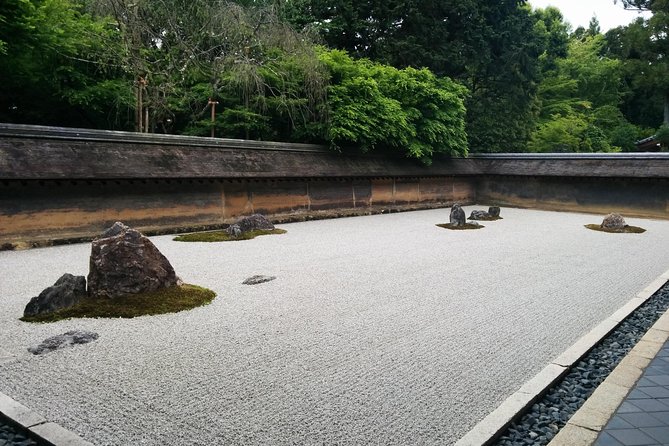
- Ryoan-ji’s rock garden: a classic that needs explanation
- Kinkakuji Golden Pavilion: gold leaf plus architecture you can actually understand
- Nijo Castle: Tokugawa-era living quarters and the feeling of power
- Nishiki Food Market option: for snacks, rhythm, and local life
- Fushimi Inari and the torii climb: the shrine that keeps changing your view
- Gekkeikan Sake Museum: a break from temples that still feels Kyoto
- Sanjusangendo: 1001 statues and a lot to look at
- Kiyomizu-dera and the Ninenzaka, Sannenzaka slope walk
- Gion finish: drop-off point for your evening plans
- Price and logistics: what you are really paying for
- Walking, crowds, and weather: the day’s real conditions
- Who this tour suits best
- Should you book this Kyoto highlights day?
- FAQ
- Where is the meeting point for the Kyoto tour?
- What time does the tour start?
- How long is the tour?
- Is this a private tour or a group tour?
- Do I get to choose between two itineraries?
- Which major sights are covered on the routes?
- What’s included in the price?
- Is lunch included?
- Do I need to pay admission at each stop?
- Is good weather required?
Key highlights worth planning for
- Two itinerary directions so you can match the day you want, bamboo and gold on one side, torii gates and sake on the other
- Private guide attention for history, layout help, and practical tips you can use all week
- An efficient mix of icons: Kinkakuji, Kiyomizu-dera, Nijo Castle, Fushimi Inari, Arashiyama, and Gion
- Included transport support with public transportation plus a reusable one-day city bus pass
- Temple-craft details that matter like Ryoan-ji’s rock garden and Nijo Castle’s Tokugawa-era interiors
- A small group cap (up to 8) that makes the day feel calmer than typical big bus tours
Still weighing up options in Kyoto? These are the ones our reviewers rated highest.
- PERFECT KYOTO 1-Day Bus Tour
★ 5.0 · 13,518 reviews - Kyoto: Fushimi Inari, Kinkakuji, Bamboo Grove 1 Day Bus Tour
★ 4.8 · 4,316 reviews - Kyoto: Tea Ceremony in a Traditional Tea House in Kiyomizu
★ 4.9 · 3,519 reviews - Kyoto Geisha Walking Tour: Gion District & Hidden Gems
★ 4.7 · 3,273 reviews
Where the tour starts: Kyoto Station, then straight into real Kyoto
You meet at Hotel Granvia Kyoto, right by Kyoto Station. The start point is the JR Kyoto Station Central Entrance, and the tour begins at 9:00am, which is a smart move if you want temples before the crush.
From there, you ride public transportation. That sounds simple, but it is the difference between seeing Kyoto like a slideshow and learning how the city actually moves. You also get a one-day city bus pass included, and it can be used continuously after your tour, which helps you keep exploring without second-guessing routes.
Two routes, one goal: pick northbound for Arashiyama and Kinkakuji
This tour is designed around two direction choices. The northbound approach threads the day toward Arashiyama and the Golden Pavilion area, then finishes in Gion.
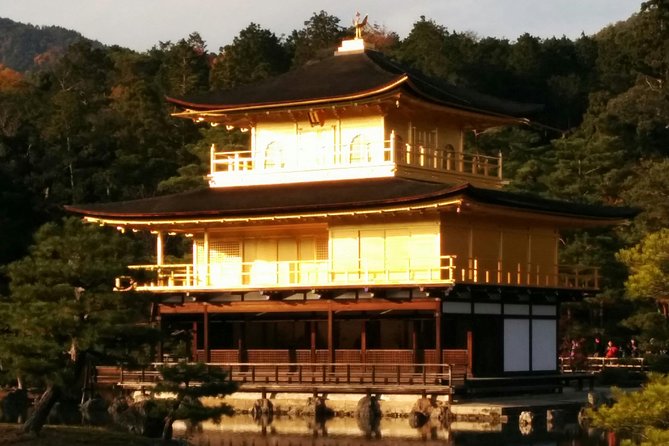
If you choose northbound, expect Arashiyama Park to show up early, along with bamboo scenery and the area’s classic photospots. You then move toward Ryoan-ji, home to the rock garden known for its famous composition and quiet, Zen vibe. Later, you will hit Kinkakuji (Golden Pavilion), the three-story pagoda covered in gold leaf and framed by forest and water views.
A second decision within the day is whether you do Nishiki Food Market or Nijo Castle around the Golden Pavilion stretch. Nishiki gives you a dense food-street experience, while Nijo Castle gives you a historical architecture hit. Either way, you still end at Gion.
Or go southeast-bound for Fushimi Inari, sake, and the Kiyomizu slopes
The southeast-bound option flips the emphasis toward shrine gates and hilltop temples. You start the day’s highlights with places like Fushimi Inari-taisha Shrine and Gekkeikan Sake Museum, then continue through major cultural stops, including Sanjusangendo and Kiyomizu-dera. Like the northbound route, it also concludes in Gion.
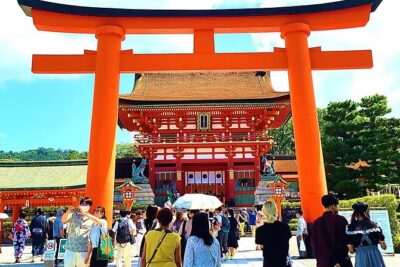
Fushimi Inari is the star here, with thousands of red torii gates climbing across the hillside. It is not just a photo stop. The gate path changes how you experience the place, and your guide can help you understand what you are looking at as you walk.
After that, you get the chance to pair shrine culture with something very Kyoto-adjacent and everyday: sake. The Gekkeikan Okura Sake Museum visit focuses on how Japan’s iconic rice wine is made and why it matters, then you shift back toward temples.
- PERFECT KYOTO 1-Day Bus Tour★ 5.0 · 13,518 reviews
- Kyoto: Fushimi Inari, Kinkakuji, Bamboo Grove 1 Day Bus Tour★ 4.8 · 4,316 reviews
- Kyoto: Tea Ceremony in a Traditional Tea House in Kiyomizu★ 4.9 · 3,519 reviews
- Kyoto Geisha Walking Tour: Gion District & Hidden Gems★ 4.7 · 3,273 reviews
- Kyoto: Tea Ceremony Ju-An at Jotokuji Temple★ 4.9 · 3,207 reviews
Arashiyama Park, Togetsukyo, and Bamboo Forest: why this part hits hard
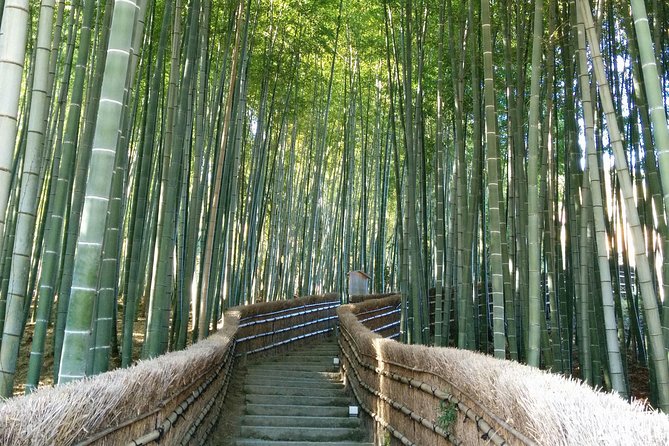
Arashiyama is where Kyoto slows down, even with crowds around. This route typically includes the famous wooden Togetsukyo bridge near the bamboo area, plus time to walk the Bamboo Forest Street.
What makes this stretch work in a guided day is not the photo you take. It is knowing where to look and how to pace. The bamboo area can be loud with people, but the atmosphere changes as you walk in, and you can still find calmer sightlines with the right timing and route.
You also get a chance to see bamboo as more than a single postcard angle. Bamboo shows up along walkways and framed views, so you start noticing Kyoto’s design logic: paths, trees, water edges, and sightlines built for strolling.
Ryoan-ji’s rock garden: a classic that needs explanation
Ryoan-ji shows up with 30 minutes in the schedule, and that is enough if you know what to focus on. The rock garden is made from 15 stones, arranged in a way that invites you to keep re-reading the view as your eyes adjust.
The practical value here is your guide’s framing. If you go in cold, you can still enjoy the place, but you may miss why the garden is famous and how it is meant to be looked at. With a guide, you get the story behind the design and the mindset behind the quiet, minimal composition.
Also, because you are on a structured route, you typically arrive at a moment when you are not stuck in a long waiting shuffle. That means you can actually sit, look, and enjoy the slow rhythm.
Kinkakuji Golden Pavilion: gold leaf plus architecture you can actually understand
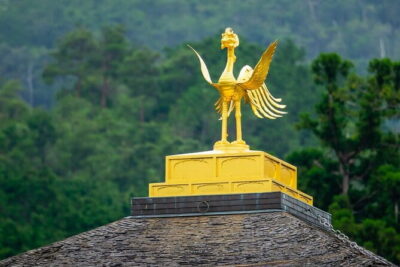
Kinkaku-ji, the Golden Pavilion, is one of Kyoto’s most recognizable landmarks. Here, the pagoda is covered in gold leaf and sits as a layered structure: pagoda tiers, water reflections, and a forest backdrop that changes the look depending on the angle.
You are given about 50 minutes for this stop, and the time matters. If all you do is rush for your first viewpoint, you miss the way the building reads from different angles. With a guide, you get the basics of why the pavilion’s design became such a symbol, and you learn what to notice in the details as you move.
There is still a crowd factor. This is a top Kyoto site, so expect people. Your best bet is to use the guide’s suggested viewpoints, then step aside long enough to let the scene settle.
Nijo Castle: Tokugawa-era living quarters and the feeling of power
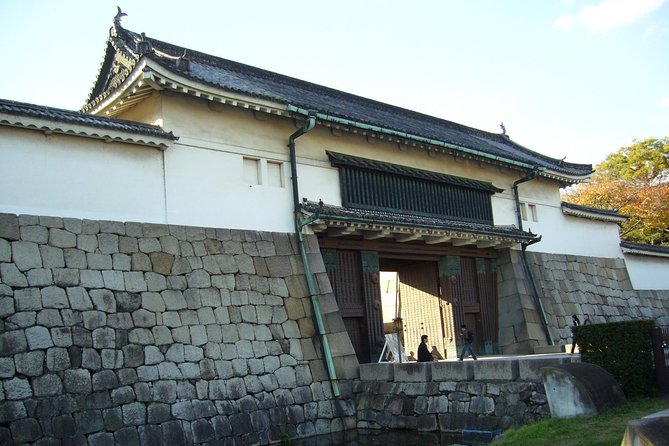
Nijo Castle is one of those Kyoto stops that rewards you for slowing down slightly. The big selling point is that it is tied to the Tokugawa Shogunate period in the early 17th century, and you tour spaces that reflect how the ruling class lived and presented authority.
The schedule gives you about 50 minutes here. That is enough to see the standout interior areas and get a sense of how the palace design controlled movement and impressions. Your guide can also point out how decoration, rooms, and layout worked together, so it is not just “rooms with signs,” it is a lived-in system of power.
If you are tempted to skip castles on a busy day, I would not. Nijo Castle gives you a different Kyoto perspective from the temple world. You get architecture built for governance, ceremony, and social order, not only spiritual contemplation.
Nishiki Food Market option: for snacks, rhythm, and local life
Not everyone wants food markets on day one. But Nishiki Food Market can be one of the best “real Kyoto” breaks in a highlight itinerary.
This is one of those places where you can sample small things without turning lunch into a whole project. Even if you do not go deep into shopping, you learn how dense and specialized Kyoto’s food culture is.
The trade-off is time. If you choose the market option, you may not get the same amount of castle time on that part of the day. Still, for many visitors, the market experience is worth it because it breaks up the temple cadence and gives your legs a different kind of movement.
Fushimi Inari and the torii climb: the shrine that keeps changing your view
Fushimi Inari-taisha Shrine is the route highlight for the southeast option. Expect 50 minutes and plenty of walking through the torii gate path.
The gates cover the hillside, and as you go, the experience becomes less about a single landmark and more about the sequence of spaces. Stone foxes and small shrines appear along the way, and a guide helps you read what is around you so the walk feels purposeful.
One practical consideration: even with a guide, this is a popular place. You will share it with other people. The secret is to treat it like a walk, not a single stop. Keep moving at a comfortable pace and pause when a view opens.
Gekkeikan Sake Museum: a break from temples that still feels Kyoto
Pairing a shrine with a sake museum works because it keeps the day human. Gekkeikan Okura Sake Museum focuses on the secrets behind Japan’s iconic rice wine, connecting cultural ritual to a product you see in everyday life.
You get about 50 minutes here, which is a good amount for learning without turning the day into a classroom. The guide can also point out what matters when you hear or see sake info, so you come away with a few takeaways you can use later when you order drinks.
If you enjoy food and drink culture, this stop is a strong value add. It also helps you reset your brain before more intense temple time.
Sanjusangendo: 1001 statues and a lot to look at
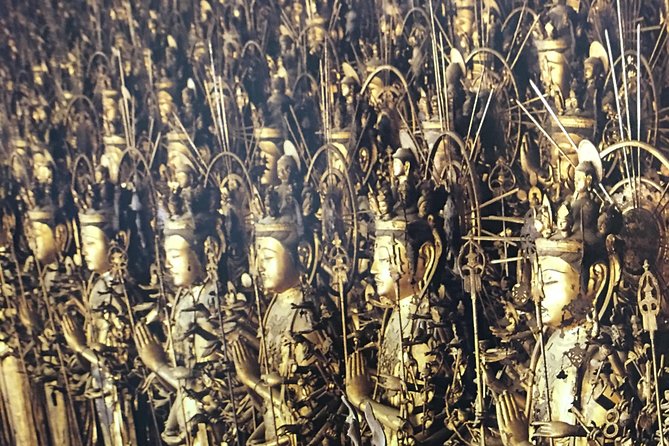
Sanjusangendo Temple shows up on the southeast-bound day, usually with about 50 minutes. The headline is the astonishing 1001 kannon statues, and the scale is hard to “get” without time to look.
This is one of those places where your guide’s job is especially useful. With the right context, you understand what you are seeing and why it is arranged the way it is. Without that, you can still appreciate the number, but you might just scan for your favorite face and move on.
You will want comfortable shoes. The inside experience is big and visually intense, so you do not want to rush.
Kiyomizu-dera and the Ninenzaka, Sannenzaka slope walk
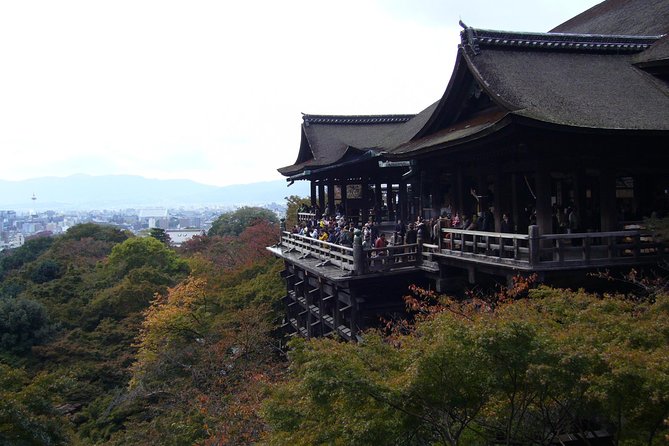
Kiyomizu-dera is a hilltop landmark dating back to the 8th century, and it is famous for its sweeping views over Kyoto. You get around 50 minutes here, plus time to ascend steep slopes through Ninenzaka and Sannenzaka neighborhoods.
Those streets are part of the experience. The viewpoint energy comes from the walk itself, not only the main temple platform. The angle changes as you climb, and that gives you a sense of Kyoto’s layered geography.
This is also where I think the guide matters most for comfort and flow. If you know where to stand, where to look for views, and how to handle crowds, the day feels smoother.
Gion finish: drop-off point for your evening plans
Both routes end in Gion. This is a useful ending because it is close to dinner options and a recognizable Kyoto atmosphere.
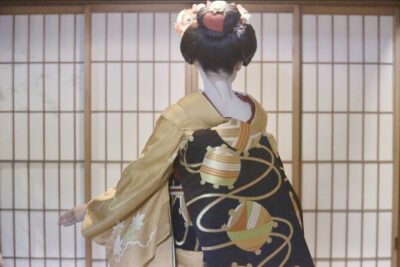
Gion is known for the geisha tradition, and while your tour ends here, your guided day still helps you understand how this area fits into the wider city. You can take a short stroll after the tour and feel like you know what you are seeing, instead of just wandering.
Also, the tour notes a separate Gion-focused option that starts later, around 6PM. If you want more time in that neighborhood, you can plan your next step accordingly.
Price and logistics: what you are really paying for
At $151.20 per person for about 7 hours, the price can feel steep at first glance. But value comes from three things you do not get as easily with do-it-yourself planning: a guide who explains what you are seeing, a structured route that saves decision time, and included support like the city bus pass.
It is also priced for a small group cap of 8, so you are not squeezed like a large group tour. That matters when you are at famous sites with questions like what a symbol means, or why an area is arranged the way it is.
Many of the stops include admission, so you avoid juggling ticket counters while still getting all the big-name landmarks. Your own lunch and food remain on you, but the guide often helps you pick an option that works with your day.
Walking, crowds, and weather: the day’s real conditions
This is a major highlights day, so it comes with a lot of movement. You will use public transportation between stops, and you will walk through temple grounds and shrine paths.
Weather matters because Kyoto’s outdoor sights are a big part of the itinerary. If the weather is poor, the experience may be canceled and you would be offered a different date or a full refund. In practice, a good guide also helps you keep momentum when conditions change, so you lose less time.
My advice is simple: pack for layers, bring good shoes, and keep your expectations flexible. You are covering a lot, so your goal is a well-paced “great hits” day, not a slow wander through everything.
Who this tour suits best
This tour is ideal for first-time visitors who want Kyoto’s signature stops with less stress. If you like history and architecture, you will appreciate the mix of temples and castle. If you prefer food culture, the Nishiki Food Market option can be the perfect break.
It can also work well for families, because guides have shown patience and a habit of keeping younger visitors engaged. If you are traveling with kids, this structure helps, because you can explain less and rely more on guided context to keep attention.
If you hate crowds, you might still enjoy it, but you will want the early 9:00am start to do its job. For people who want every detail and slow time at each stop, you might feel rushed, but that is the trade for covering this much ground.
Should you book this Kyoto highlights day?
Yes, if you want Kyoto’s biggest icons handled the smart way. Booking this tour makes sense when you are short on time, want a guided narrative, and value that small-group feel with private attention.
I would choose the northbound route if you want Arashiyama bamboo scenes plus Kinkakuji Golden Pavilion and the calmer rhythm of a day that starts with nature and ends in Gion. I would choose the southeast-bound route if Fushimi Inari and sake culture are on your must-do list, with Kiyomizu-dera and its view after.
If you are a traveler who only wants one or two major sites and hates walking, then a slower, smaller set of stops might fit better. But for most first trips to Kyoto, this is a strong, efficient way to get your bearings fast and feel confident planning the rest of your stay.
FAQ
Where is the meeting point for the Kyoto tour?
You meet at Hotel Granvia Kyoto, near Kyoto Station. The specific meeting spot is the JR Kyoto Station Central Entrance.
What time does the tour start?
The tour starts at 9:00am.
How long is the tour?
The duration is about 7 hours.
Is this a private tour or a group tour?
It is a private highlights tour with a maximum of 8 travelers.
Do I get to choose between two itineraries?
Yes. You can choose from two different routes, a northbound itinerary and a southeast-bound itinerary.
Which major sights are covered on the routes?
Depending on the route you choose, you can see places such as Kinkakuji (Golden Pavilion), Kiyomizu-dera, Nijo Castle, Sanjusangendo, Arashiyama Park, Ryoan-ji, Fushimi Inari-taisha, Gekkeikan Okura Sake Museum, and you finish in the Gion area.
What’s included in the price?
Included are a professional English speaking guide, public transportation, and a one-day city bus pass. Admission tickets are included for some stops, and some stops are listed as free.
Is lunch included?
No. Food and drinks are not included, and lunch is at your own expense.
Do I need to pay admission at each stop?
Not every stop requires payment. The itinerary lists admission ticket included for certain temples and castle stops, and some stops are listed as admission free.
Is good weather required?
Yes. The experience requires good weather, and if it is canceled due to poor weather, you will be offered a different date or a full refund.
Newest Kyoto write-ups from the Loving Japan desk

Private, side by side.
 ★ 5.0Tokyo 6hr Private Tour with Government-Licensed GuideFrom $1553,902 reviews
 ★ 5.0Private Tour to Mt. Fuji and Hakone (Fully Licenced Operator)From $4971,910 reviews
 ★ 4.9Mount Fuji Full-Day Private Tour from Tokyo (Customizable)From $3931,470 reviews
 ★ 4.8Private City Highlights Tour with Local GuideFrom $1061,433 reviews
 ★ 5.0Private Custom Tour: Tokyo in a DayFrom $1591,432 reviews
 ★ 5.0Kyoto 6hr Private Tour with Government-Licensed GuideFrom $1551,369 reviews
 ★ 5.0Tokyo Customized Private Tour: See Top Attractions in 1 DayFrom $1451,351 reviews
 ★ 4.9Hotspots & Hidden Gems Walking Tour Private or GroupFrom $331,300 reviews