
REVIEW · SAKE BREWERIES AND TASTINGS
Private Pewter Sake Cup Experience with a Kyoto Artisan
Handmade pewter, made by your own swing. In Kyoto, you craft a pewter sake cup with artisan Kanako at Craft Gallery SALUK, hammering metal into patterns you control. You also shape the rim for a comfortable drink and add letters and numbers for a keepsake that feels truly yours.
I love the hands-on pace here, because you are doing real craft moves, not watching a demo. One thing to consider is that the studio is outside central Kyoto, so plan extra travel time instead of expecting a quick, downtown stop.
In This Review
- Key things to know before you go
- Craft Gallery SALUK, and why this workshop feels human
- The pewter process, step by step, from hammering to a drink-ready rim
- Choosing your hammer and creating patterns
- Adjusting the height and beveling the rim
- What you end up with (size and capacity)
- Personalize it: stamps, initials, and dates on the base
- Why pewter makes sense for sake (and beyond)
- What you can drink in your cup
- The feel in the hand
- Price and value: what $144.96 buys you in the real world
- Getting there from Kyoto: how to plan the commute without stress
- Who will enjoy this workshop the most?
- What to expect from the class atmosphere
- Should you book this Kyoto pewter sake cup workshop?
- FAQ
- How long is the private pewter sake cup experience in Kyoto?
- Is this a private activity or shared class?
- Do I need to bring tools or materials?
- Can I personalize the cup with my name or a date?
- Where is the meeting point?
- Is the workshop beginner friendly?
- Are service animals allowed?
- What is the cancellation policy?
Key things to know before you go
- You start with hammer choices, then keep rotating the cup to grow the pattern.
- Kanako teaches in an intimate setup, so you get correction and encouragement when you need it.
- Stamping is optional, but it is one of the easiest ways to make the cup personal.
- Rim shaping is part of the class, including the finishing step done safely by the craftsman.
- Your finished cup fits real use, about 90 ml normally (more if filled to the rim).
- The studio is a calmer commute, often reached by train and a short ride from Kyoto Station.
Pour another. Breweries and tasting rooms nearby
- Kyoto Night Foodie Tour in Gion (9+ dishes + 6 Sake tastings)
★ 5.0 · 1,762 reviews - 3-Hour Kyoto Insider Sake Brewery Tour with Tastings & Pairings
★ 5.0 · 917 reviews - Arashiyama Bamboo, Temple, Monkeys, or Secret Sake Brewery
★ 4.8 · 886 reviews - Kyoto: Insider Sake Brewery Tour with Sake and Food Pairing
★ 5.0 · 704 reviews
Craft Gallery SALUK, and why this workshop feels human
This experience is not about rushing through Kyoto like a checklist. It happens in a small workshop atmosphere, in a quieter area beyond the main tourist streets. That matters, because pewter work rewards patience. When the setting is calm, your hands learn faster and your mind stops trying to multitask.
You will meet at Craft Gallery SALUK in Sakyo Ward, 35-2 Shizuichinonakachō, Kyoto (601-1122). It is described as near public transportation, and many people find it a short trip from Kyoto Station. In other words, you do not need a private car or complicated logistics. You just need to leave a little time for travel, because this is not a “walk out, walk in” type of activity.
Kanako, the artisan behind Saluk, is the face of the class. The vibe from the moment you arrive is welcoming and practical. People often mention that she keeps instructions clear and that she is patient if you hit a wobble during hammering. That makes this workshop friendly for beginners, even if you have never touched a piece of metalwork before.
The pewter process, step by step, from hammering to a drink-ready rim
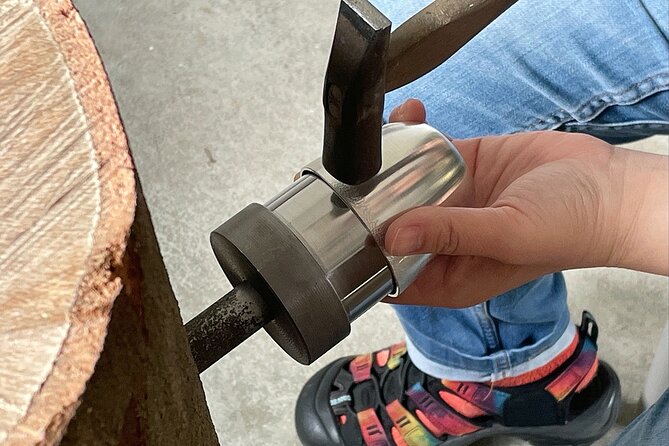
The class is built around a simple sequence, and each step has a purpose. You are learning how patterning and finishing turn a flat idea into a functional cup.
Choosing your hammer and creating patterns
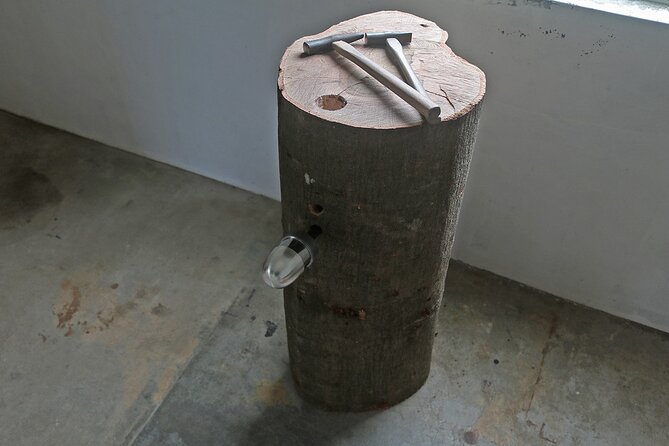
First, you choose your favorite hammer from several types. Then you place the pewter cup on the anvil. The core motion is striking metal while rotating the cup. The pattern changes based on hammer type and the rhythm and angle you use, so you get “creative control” without needing to be an artist.
You can use just one hammer the whole time, or mix hammers to layer textures. That is part of what makes the result feel different from anyone else’s. Even with the same blank starting cup, the way your hand learns the metal shows up in the final texture.
- PERFECT KYOTO 1-Day Bus Tour★ 5.0 · 13,518 reviews
- Kyoto: Fushimi Inari, Kinkakuji, Bamboo Grove 1 Day Bus Tour★ 4.8 · 4,316 reviews
- Kyoto: Tea Ceremony in a Traditional Tea House in Kiyomizu★ 4.9 · 3,519 reviews
- Kyoto Geisha Walking Tour: Gion District & Hidden Gems★ 4.7 · 3,273 reviews
- Kyoto: Tea Ceremony Ju-An at Jotokuji Temple★ 4.9 · 3,207 reviews
Adjusting the height and beveling the rim
After the patterning, you use a file to adjust the height. Then comes the rim work. You bevel the rim at an angle, which is what makes the cup feel good when you drink instead of feeling sharp or awkward.
There is also a safety logic here. The final polishing step is done by the craftsman using a rotary machine. That is not just for speed, it is for a consistent finish that keeps the rim comfortable and smooth.
What you end up with (size and capacity)
Your finished cup is about 64 mm in diameter and 53 mm in height. It holds about 90 ml, and about 115 ml if filled to the rim. So you are not making a tiny display object. You are crafting a real drinking vessel.
Personalize it: stamps, initials, and dates on the base
One of the best parts is that you can customize without stress. You get the option to stamp letters, numbers, initials, or even a date on the base.
This is a smart souvenir move. Kyoto has endless shops selling beautiful items. A handmade stamp on a cup you made with your own hands is a different category. It turns the souvenir into a memory tool. Years later, you still remember the day you sat in that workshop and shaped the design.
For couples and friends, this is also practical. You can match motifs or do totally separate styles. And because the cup is small, it is easy to pack and easy to use later, instead of turning into fragile “closet art.”
Why pewter makes sense for sake (and beyond)
Pewter has a long reputation in Japan for drinking vessels, especially for sake. The idea is not magic. It is about how pewter performs as a material for the job.
In the workshop context, Kanako explains why pewter is valued for sake. People also note that she shares how pewter can help keep water clean, which ties into traditional uses connected to flowers and arrangements. Even if you do not plan to use the cup for that kind of purpose, the point lands: this is a material with a practical track record, not a gimmick.
What you can drink in your cup
The class experience frames the cup as more than a sake-only souvenir. You can enjoy it for sake, whiskey, chilled green tea, and other occasions. One review even mentions green tea served when someone in the group does not drink alcohol. So if you are skipping sake, you still get to use your cup right away.
The feel in the hand
This cup is shaped to fit comfortably in the hand. That detail matters because a hammered cup can look dramatic but feel clunky. Here, the rim shaping is part of the learning process, so the cup aims to be both beautiful and usable.
And because the final polishing is done by the craftsman, you get the benefit of experience. Your cup is not only “your design.” It is a finished object made to be handled, sipped from, and stored without worry.
Price and value: what $144.96 buys you in the real world
The price is $144.96 per person, and it is a private experience. Duration is about 2 hours 30 minutes, and you get a mobile ticket.
On paper, that might feel like a splurge. In practice, it breaks down like this:
- You are paying for a guided hands-on craft session, not a passive sightseeing stop.
- You receive a finished, functional handmade pewter cup that you can actually use at home.
- You get personalization options through stamping.
- You also get access to a workshop setting that is usually closed to the public, which increases the value if you care about doing something less standard than Kyoto shopping streets.
The other value piece is time quality. You spend 2.5 hours learning craft moves. That is a lot more memorable than wandering through yet another crowded market. If you are the type who likes to bring home one or two meaningful items instead of ten small ones, this is a strong fit.
If you are on a tight budget, this may not beat free temple views for cost per hour. But if you want a souvenir with weight in the best way, this workshop gives you that.
Getting there from Kyoto: how to plan the commute without stress
The meeting point is in Sakyo Ward, so you are leaving the most central area. Reviews describe it as about an hour by scenic train from Kyoto Station, and the return can be quick if you plan well. Some people even mention a helpful drop-off to a more convenient station, cutting the trip back to roughly 20 minutes.
The practical advice is simple:
- Leave Kyoto Station with buffer time.
- Assume you will do some walking around the station area.
- Treat this like an outing, not a quick add-on between other stops.
Because it is near public transportation, you should be able to get there without a car. Still, if you are trying to cram multiple distant activities on the same day, this one needs room in your schedule.
Also, the workshop setting is calm. That sounds like a marketing line, but it is real in this context. Less chaos means more focus on the metalwork, and you are more likely to enjoy the process instead of rushing through it.
Who will enjoy this workshop the most?
This is one of those activities that works across travel styles, as long as you like making something with your hands.
You will probably love it if:
- You like crafts, even if you are a beginner.
- You want a Kyoto souvenir that is not mass-produced.
- You enjoy quiet, guided learning more than high-energy sightseeing.
- You are traveling as a couple or small group and want shared time.
- You want to take part in a tradition you can feel in your body, not just read about.
It may not be your best match if:
- You hate getting your hands busy, even for a short time.
- You want only sightseeing photos and no slower activity.
- You are extremely time-restricted and cannot handle a commute outside downtown.
One more note: it is described as suitable for most travelers. Service animals are allowed too.
What to expect from the class atmosphere
Even though the craft is hands-on, the mood is not tense. The instructor style people describe is patient, with clear guidance. That matters because pewter work has a learning curve. The metal answers differently depending on your strike, and there is a right balance between confidence and control.
You will start with a short overview, then get hands-on. You will likely receive coaching while you work the cup on the anvil and while you file and bevel the rim. The final polishing step is handled by the craftsman, which keeps things safe and gives you a consistent finish.
When you finish, you take home a unique souvenir. Many descriptions mention thoughtful packaging. That means you can plan to pack it without turning your travel day into a fragile-object juggling act.
Should you book this Kyoto pewter sake cup workshop?
Book it if you want one standout craft memory in Kyoto, with a practical payoff. This is not a “watch and leave” experience. It is hands-on pewter, guided by Kanako in a small setting, and it ends with a cup you can actually use for sake or green tea at home.
Skip it if you only want the fastest, most central sightseeing options, or if commuting outside the core Kyoto area will frustrate you. Also, if you dislike activities where you focus for 2.5 hours instead of bouncing between landmarks, you may find it too slow.
If you are on the fence, treat it like this: Kyoto is full of temples and streets. This workshop gives you something you made with your own hands, and that is the kind of souvenir that lasts beyond the first week home.
FAQ
How long is the private pewter sake cup experience in Kyoto?
It lasts about 2 hours 30 minutes (approx.).
Is this a private activity or shared class?
This is a private tour/activity, so only your group participates.
Do I need to bring tools or materials?
No. Materials are provided, and you do not need to bring anything with you.
Can I personalize the cup with my name or a date?
Yes. You can stamp letters, numbers, initials, or a date on the base.
Where is the meeting point?
You start at Craft Gallery SALUK, 35-2 Shizuichinonakachō, Sakyo Ward, Kyoto, 601-1122, Japan. The activity ends back at the meeting point.
Is the workshop beginner friendly?
Most travelers can participate, and the class is designed for people who are learning the process.
Are service animals allowed?
Yes, service animals are allowed.
What is the cancellation policy?
You can cancel for a full refund if you cancel up to 24 hours in advance of the experience start time. If you cancel less than 24 hours before the start time, the amount paid is not refunded.
Cups, Cellars and Tasting Rooms





Newest Kyoto write-ups from the Loving Japan desk



Sake Breweries and Tastings, side by side.
 ★ 5.0Kyoto Night Foodie Tour in Gion (9+ dishes + 6 Sake tastings)From $1631,762 reviews
 ★ 5.01-Day Snow Monkeys, Zenko-ji Temple & Sake in NaganoFrom $1511,020 reviews
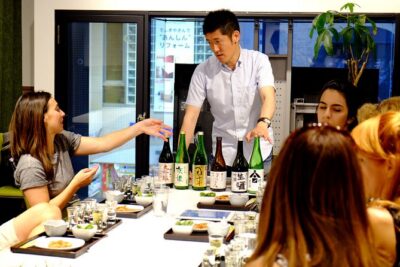 ★ 5.03-Hour Kyoto Insider Sake Brewery Tour with Tastings & PairingsFrom $84917 reviews
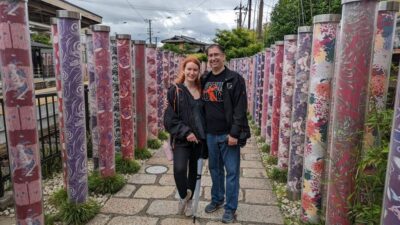 ★ 4.8Arashiyama Bamboo, Temple, Monkeys, or Secret Sake BreweryFrom $87886 reviews
 ★ 4.9Nagano: Snow Monkeys, Zenkoji Temple & Sake Day TripFrom $135833 reviews
 ★ 5.0Insider Sake Brewery Tour with Sake and Food PairingFrom $87704 reviews
 ★ 5.0Kyoto Sake Brewery & Tasting Walking TourFrom $98623 reviews
 ★ 5.01.5-Hour Kyoto Insider Sake Experience with 7 Tastings & PairingsFrom $68297 reviews
Filed on these lists too