
REVIEW · MORNING
Private Tokyo Early Morning Tour with English-Speaking Guide
Tokyo wakes up early, and so should you. This private, English-guided morning route hits Shibuya Crossing and other big sights before peak crowds, with included shrine and temple admissions so you spend less time juggling tickets.
Two things I really like: the private English-speaking guide who helps you navigate between neighborhoods, and the photo stops that make it easier to get great shots without wasting time figuring out where to go.
The only caution is the pace. This is a walking-focused tour using public transportation, plus an extra ¥900 per person transit cost.
In This Review
- Quick hits before you go
- Why this early start makes Tokyo feel easier
- Meeting at Hachiko, routing across the city, and ending in Asakusa
- Stop 1: Shibuya Crossing photos before the tide arrives
- Stop 2: Meiji Jingu Shrine, calm forest energy in the middle of Tokyo
- Stop 3: Takeshita Street in Harajuku, fashion and sweets in a tight window
- Stop 4: Kanda Shrine, prosperity vibes with a nerdy Tokyo angle
- Stop 5: Akihabara, the electric town in a 30-minute snapshot
- Stop 6: Ameyoko Shopping Street, market energy in Ueno
- Stop 7: Senso-ji Temple in Asakusa, the big finish you can extend
- Price and value: what $97.22 buys you here
- Who this private morning tour fits best
- The guide factor, and why Yukou gets mentioned
- Should you book this private Tokyo early morning tour?
- FAQ
- How long is the private Tokyo early morning tour?
- Is this tour private or shared with other people?
- What is included in the tour price?
- What is not included?
- Where do I meet, and where does the tour end?
- Is the tour mostly walking?
- Can I cancel for a full refund?
Quick hits before you go
- Start at Shibuya Station area (Hachiko Statue) and finish in Asakusa by the Tokyo Cruise Asakusa Pier
- Temples and shrines admissions are included, so Meiji Jingu and Senso-ji are simple to enjoy
- Professional photos are taken during the tour, great for memorable group shots
- Seven landmark stops in about five hours, with short, efficient time blocks
- Designed as a walking experience with public transport between neighborhoods
- Book ahead since this is typically booked around 13 days in advance
Still weighing up options in Tokyo? These are the ones our reviewers rated highest.
- Mt Fuji and Hakone 1-Day Bus Tour Return by Bullet Train
★ 5.0 · 26,383 reviews - 1-Day Tokyo Bus Tour
★ 5.0 · 14,250 reviews - Tokyo: teamLab Planets TOKYO Digital Art Museum Entry Ticket
★ 4.6 · 9,779 reviews - Mt Fuji & Hakone Cruise, Drum Show Bullet Train 1 Day from Tokyo
★ 4.0 · 7,413 reviews
Why this early start makes Tokyo feel easier
If you want Tokyo’s biggest highlights without fighting for space, the early timing matters. You start in the morning and move through several iconic areas before the busiest afternoon flow.
This matters for two reasons. First, Shibuya Crossing and popular temple approaches are much calmer earlier in the day. Second, you are walking and riding transit, so you will appreciate not doing it in peak crowd crush.
I also like that the route is built for short stops. You get snapshots of multiple neighborhoods instead of spending the whole day stuck in one area. That is a smart trade if you are only in Tokyo for a few days.
Meeting at Hachiko, routing across the city, and ending in Asakusa
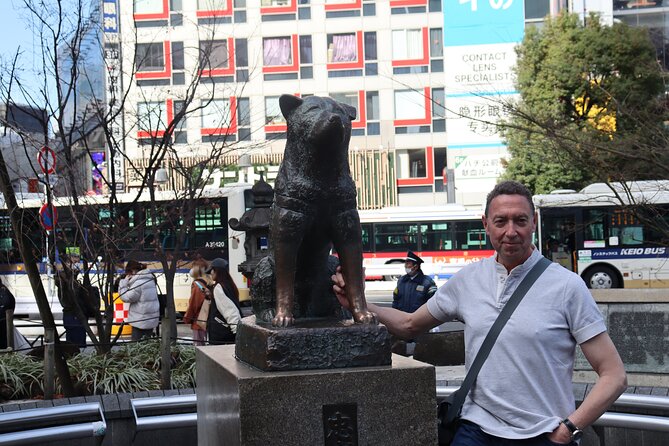
You meet near Hachiko Statue at Shibuya Station, at 2 Chome-1 Dogenzaka, Shibuya. From there, you use public transportation and plenty of walking to reach each stop, with an English-speaking guide to keep you moving the right direction.
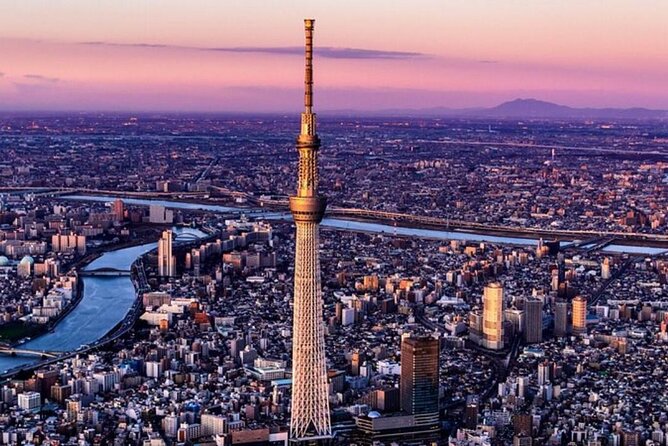
You end in Asakusa, at the Tokyo Cruise Asakusa Pier. That is a great finishing point because Asakusa is already set up for more wandering, snacks, and sights, including Tokyo Skytree nearby if you want to tack it on after the tour.
One practical note: the tour is a private experience, so only your group participates. That usually means fewer “wait, where is everyone” moments, which helps the 5-hour plan actually stay on track.
Stop 1: Shibuya Crossing photos before the tide arrives
Shibuya Crossing is one of the most recognizable street scenes on Earth, and the timing here is the whole point. You get about 20 minutes right by Shibuya Station, watching the mass of pedestrians move when the lights change.
This is also one of the best places to capture photos. With the guide there, you can focus on the moment instead of spending your time scouting a safe spot and figuring out how to position yourself for a good shot.
The potential drawback is simple: even in the morning, it is still Shibuya. If you do not like crowds at all, plan to keep your expectations realistic. You are going for the famous crossing experience, not for solitude.
- Mt Fuji and Hakone 1-Day Bus Tour Return by Bullet Train★ 5.0 · 26,383 reviews
- 1-Day Tokyo Bus Tour★ 5.0 · 14,250 reviews
- Tokyo: teamLab Planets TOKYO Digital Art Museum Entry Ticket★ 4.6 · 9,779 reviews
- Mt Fuji & Hakone Cruise, Drum Show Bullet Train 1 Day from Tokyo★ 4.0 · 7,413 reviews
- Tokyo Mt Fuji 5th St & Hakone Cruise Bus Tour w/Bullet Train★ 4.4 · 5,024 reviews
Stop 2: Meiji Jingu Shrine, calm forest energy in the middle of Tokyo
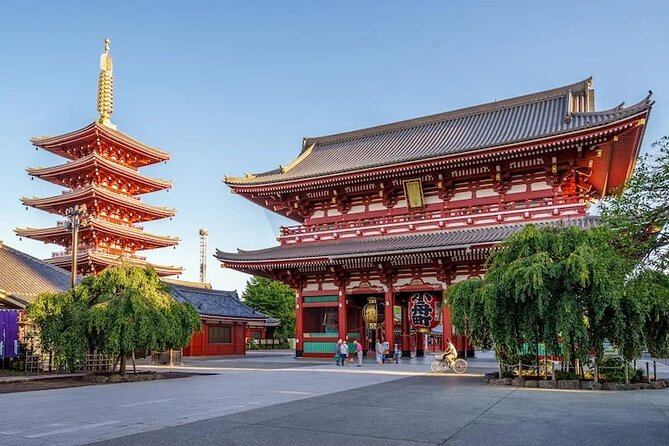
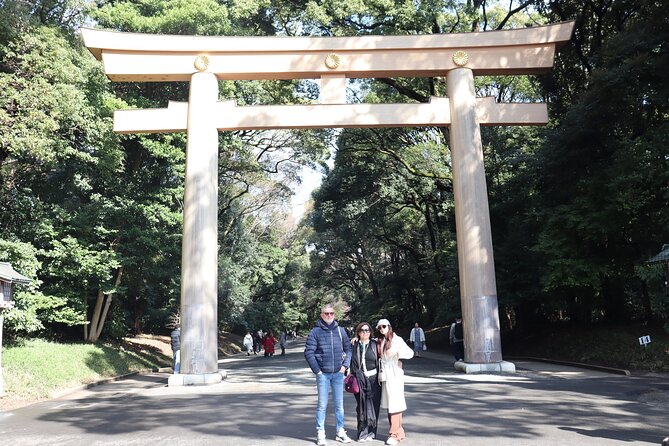
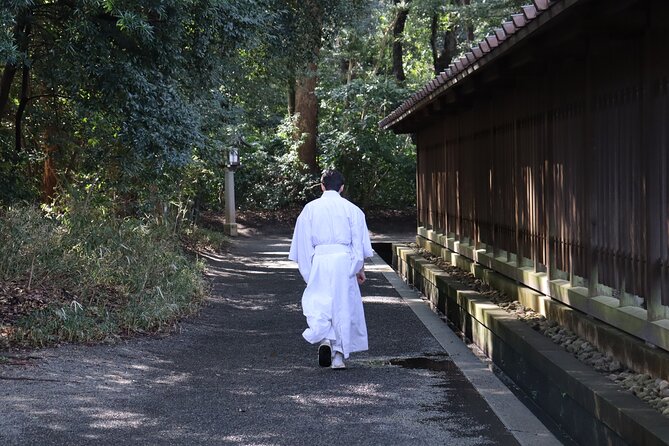
After Shibuya’s intensity, Meiji Jingu Shrine feels like a reset button. You have about one hour here, and the setting is a Shinto shrine surrounded by forest-like calm in the city.
This stop works well in the itinerary because it balances the day. You are not just chasing street scenes and shopping streets. You get a slower, more reflective atmosphere where you can actually enjoy the space.
Admissions are included, so you do not have to worry about ticket timing. I also like that your guide can help you understand what you are seeing as you walk through the shrine area, so the visit feels more meaningful than a quick photo run.
Stop 3: Takeshita Street in Harajuku, fashion and sweets in a tight window
Next up is Takeshita Street in Harajuku, where youth fashion, colorful shops, and sweet treats take center stage. You get about 20 minutes, which is short, but it matches the tour’s overall rhythm.
In this time, you can do two things well. First, you can browse the storefronts and street vibe for a quick taste of Harajuku culture. Second, you can pick one or two “must-see” spots so you do not lose your whole morning in a long loop.
The consideration here is that Takeshita Street is popular by nature. Even if you are early, it is still an active shopping street. If you prefer quieter neighborhoods, treat this as a quick look, then move on with the guide.
Stop 4: Kanda Shrine, prosperity vibes with a nerdy Tokyo angle
Kanda Shrine, also known as Kanda Myojin, is another classic Tokyo stop that adds variety to the day. You spend about 20 minutes here.
What I find useful is that this shrine has a specific audience and feel. It is known for deities of prosperity and protection, and it is also popular with businesspeople. There is also an anime connection people enjoy, which makes the stop feel a little more modern and playful than some purely traditional sites.
Admissions are free/included, so this becomes a straightforward cultural pause. It also breaks up the shopping and tech areas that come next.
Stop 5: Akihabara, the electric town in a 30-minute snapshot
Akihabara is Tokyo’s well-known hub for anime, gaming, and electronics. Your stop is about 30 minutes, which is enough time to get the general feel and hit a few highlights.
This is a fun stop if you like browsing gadget stores and collecting-style shops. You will see plenty of things tied to anime, games, and “otaku” culture, plus you might notice unique café culture in the area, too.
The tradeoff is time. Akihabara can swallow hours if you let it. With only half an hour, you will want to decide what matters to you. If you love electronics, focus on that. If you love collectibles, aim for a couple targeted shops and keep moving with the guide.
Stop 6: Ameyoko Shopping Street, market energy in Ueno
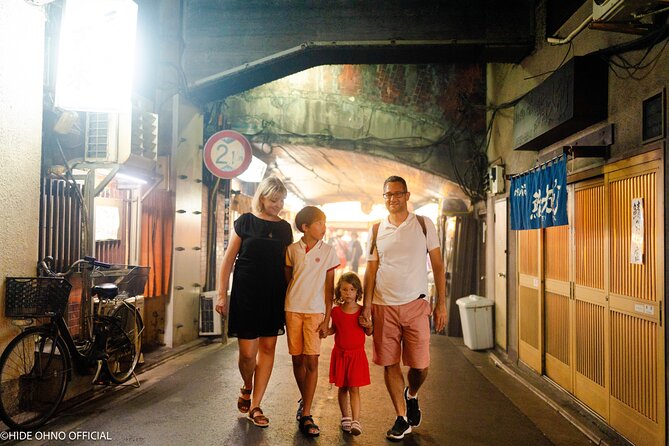
Then you head to Ameyoko Shopping Street in Ueno, also known as Ameya-Yokocho. You have about 20 minutes, and the vibe is part old and part street-market today.
This area is known for being lively and for a wide mix of things to buy or snack on. It is famous for items like fresh seafood, food-style stops, clothing, and souvenirs, and it has a reputation that dates back to a post-World War II black market history.
Since food and drinks are not included, this stop is more about walking, browsing, and choosing what you want on your own. I like that the guide gives you a structured amount of time so you can try a quick taste without turning the tour into an all-day market binge.
Stop 7: Senso-ji Temple in Asakusa, the big finish you can extend
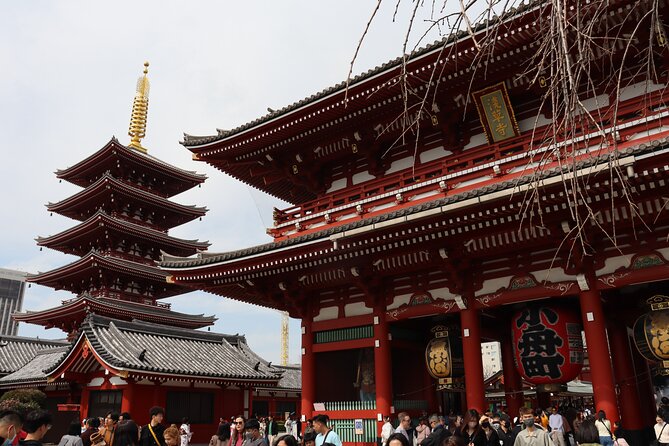
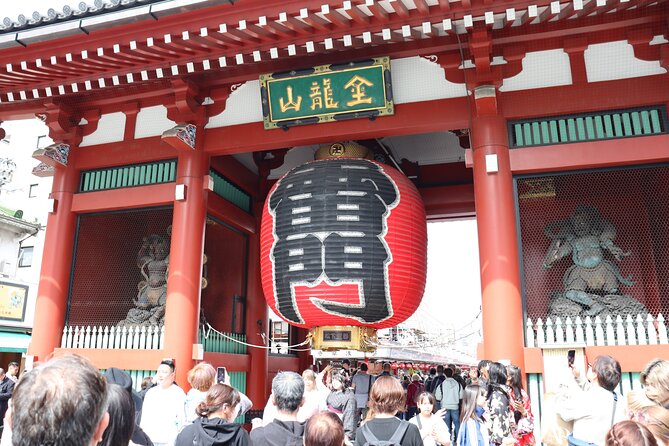
Your last stop is Senso-ji Temple in Asakusa, and it is one of the most important temples in Tokyo. You get about one hour, which is perfect for both the main sights and the approach.
Senso-ji is known for its iconic Kaminarimon Gate and the Nakamise Street lined with traditional shops. Even if you only have an hour, this is enough time to experience the temple presence and still enjoy the shopping street atmosphere.
Admissions are included, so your time stays focused on sightseeing rather than ticket logistics. And because the tour ends in Asakusa right after this stop, you can keep going at your own pace, whether that means more temple wandering, a meal, or a final round of photos.
Price and value: what $97.22 buys you here
The tour price is $97.22 per person for a 5-hour private experience with an English-speaking guide. On its face, that might look like a “guided sightseeing” cost. The better way to judge it is by what is included versus what you still need to pay.
Included value:
- Admission fees for all temples and shrines (so you do not pay separately for major stops)
- Professional photos taken during the tour
- Local English guide to handle navigation and timing
Not included:
- Public transportation fare of ¥900 per person
- Food and drinks
For most people, the decision comes down to how much you value having a private guide handle the route. With multiple neighborhoods packed into one morning, having someone guide you through the connections can save real time and reduce stress. The professional photo element is also a practical bonus, especially if you want memories from Shibuya Crossing and Asakusa without setting up your own photo plan.
Who this private morning tour fits best
I think this tour fits best if you are:
- Visiting Tokyo for the first time and want a strong highlights list
- Short on time and want several top areas in one morning
- Interested in both modern Tokyo (Shibuya, Akihabara) and traditional Tokyo (Meiji Jingu, Senso-ji)
- The type of traveler who likes structure, then free time after
It may be less ideal if you:
- Hate walking or do not handle early starts well
- Want a slow, unhurried day without transit hopping
- Prefer food-focused market time, since meals are not included
A quick note on fitness: the tour is designed as a walking experience and lists a moderate physical fitness level. If that is you, plan accordingly and wear comfortable shoes.
The guide factor, and why Yukou gets mentioned
One of the standout parts from the feedback is the guide experience. The guide mentioned by name, Yukou, comes across as friendly and helpful, and the whole point of a private tour is that someone is actively managing your flow through the city.
That human part matters on a route like this. You have several stops with different moods, and the guide helps you transition smoothly from the street crowds to the shrine calm. It also helps with timing so you can hit the planned spots rather than drifting and losing the morning.
Should you book this private Tokyo early morning tour?
Book it if you want a smart, early route that checks off multiple Tokyo icons without spending your whole day figuring things out. The mix of Shibuya Crossing, major shrine and temple time, and neighborhoods like Akihabara and Asakusa makes it a strong “one-morning highlights” plan.
Skip it if you want a long, relaxed day or if you are not comfortable with a walking-and-transit itinerary. Also factor in that you will pay the added ¥900 transit fare and you will handle your own food and drinks.
If you are deciding for July or busy seasons, the early timing is especially attractive, because getting the big sights before the worst crowds helps the whole day feel more manageable.
FAQ
How long is the private Tokyo early morning tour?
It runs for about 5 hours.
Is this tour private or shared with other people?
It is private, meaning only your group participates.
What is included in the tour price?
The tour includes an English-speaking guide, admission fees for temples and shrines, and professional photos taken during the tour.
What is not included?
You pay public transportation fare (¥900 per person), and food and drinks are not included.
Where do I meet, and where does the tour end?
You meet at the Hachiko Statue area in Shibuya and the tour ends at the Tokyo Cruise Asakusa Pier in Asakusa.
Is the tour mostly walking?
Yes. It is designed as a walking experience, using public transportation and plenty of time on foot. It lists moderate physical fitness.
Can I cancel for a full refund?
Yes, free cancellation is available. You can cancel up to 24 hours in advance for a full refund.
Newest Tokyo write-ups from the Loving Japan desk






Morning, side by side.
 ★ 5.0Kyoto Early Morning Tour with English-Speaking GuideFrom $681,427 reviews
★ 4.9Early Morning Tour with English-Speaking GuideFrom $1011,128 reviews
 ★ 4.9World Heritage Shirakawa-go Morning Guided TourFrom $77988 reviews
 ★ 5.0Nara Early Morning Tour (Kyoto or Osaka Departure Available)From $61676 reviews
 ★ 4.8Sumo Morning Practice Viewing TourFrom $81570 reviews
 ★ 5.0Hiroshima in a Nutshell: Morning Bike AdventureFrom $72524 reviews
 ★ 4.4Sumo Morning Training VisitFrom $77370 reviews
 ★ 4.6From Kyoto: Nara Guided Morning TourFrom $77335 reviews