
REVIEW · MORNING
Kyoto: Early Morning Tour with English-Speaking Guide
Kyoto can feel like a theme park during the day. This early-morning walking and public-transit tour is built to beat the crowds and still hit Kyoto’s biggest hits. You start at Kyoto Station, move through Fushimi Inari Taisha, then roll straight into Arashiyama and Kinkaku-ji, with an English-speaking guide keeping everything clear and well-paced. I like the way the tour gives you a real moment for reflection at Fushimi Inari, and I also like that you’re generally done by lunch so you keep the rest of the day for smaller streets and casual wandering.
The main trade-off is that this is a walking tour using public transportation, not a relaxed bus ride. It also is not wheelchair or stroller accessible, and the tour can run about 30 minutes longer or shorter than the planned time, so you’ll want comfortable shoes and flexible timing.
In This Review
- Key Points You’ll Feel Right Away
- Starting at Kyoto Station: The Smart Move That Sets the Tone
- Fushimi Inari Taisha at First Light: Torii Gates and a Quiet Reset
- Arashiyama Before It Gets Chaotic: Bamboo, Photos, and Time to Look
- The Hop to Kinkaku-ji: Trains, a Short Ride, and a Temples-That-Mean-It Morning
- Kinkaku-ji on the Clock: Why Guided Time Works Here
- How the Walking and Public Transit Feels in Real Life
- Price and Value: What $101 Really Buys
- What to Bring (and What to Skip) for a Smooth Morning
- Who This Tour Suits Best (and Who Should Rethink It)
- Should You Book This Early Kyoto Highlights Tour?
- FAQ
- Where is the meeting point for the tour?
- Is this tour a bus tour?
- How long is the tour?
- What are the main stops on the tour?
- Are lunch or meal stops included?
- Are transportation and entrance fees included?
- Do I need an IC card or JR pass?
- Does the guide contact you before the tour?
Key Points You’ll Feel Right Away
- Early arrival at Fushimi Inari means easier footing and a calmer first look at the torii gates
- Small group of up to 8 keeps questions from getting lost and makes meeting up easier
- Public trains and short rides give you confidence to use Kyoto transit on your own later
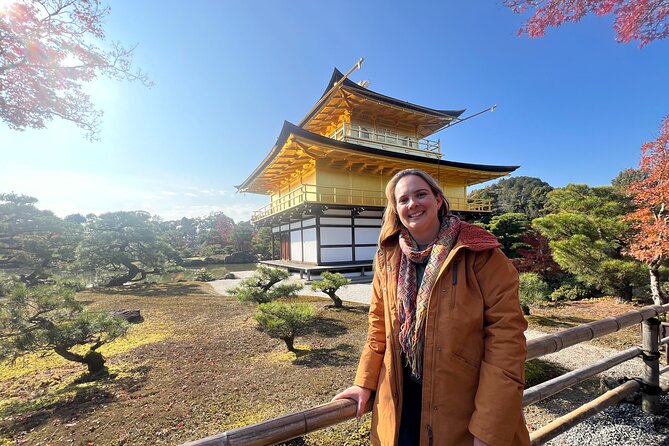
- Kinkaku-ji with an on-site guide helps you understand what you’re seeing instead of just taking photos
- WhatsApp meeting coordination reduces that anxious Kyoto first-day guesswork
Still weighing up options in Kyoto? These are the ones our reviewers rated highest.
- PERFECT KYOTO 1-Day Bus Tour
★ 5.0 · 13,518 reviews - Kyoto: Fushimi Inari, Kinkakuji, Bamboo Grove 1 Day Bus Tour
★ 4.8 · 4,316 reviews - Kyoto: Tea Ceremony in a Traditional Tea House in Kiyomizu
★ 4.9 · 3,519 reviews - Kyoto Geisha Walking Tour: Gion District & Hidden Gems
★ 4.7 · 3,273 reviews
Starting at Kyoto Station: The Smart Move That Sets the Tone
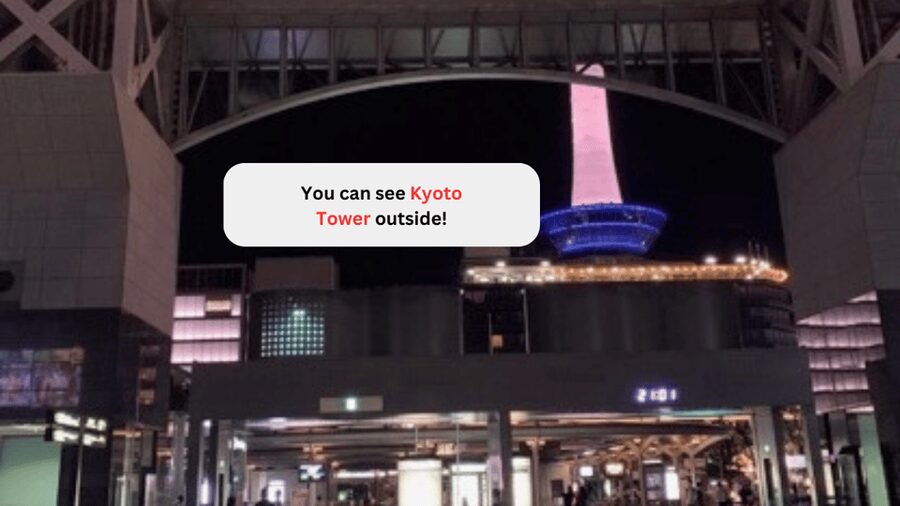
This tour begins at Kyoto Station, right at the Central Ticket Gate, by Kyoto Tower and near a 7-Eleven. You meet your guide holding a board that says GuideMe Japan. The payoff of this meeting spot is that Kyoto Station is the one place most visitors can confidently navigate, even when jet lag hits.
The early start matters more than people think. Kyoto’s top sights are famous for a reason, which also means the crowd lines tend to swell fast as the morning turns into midday. This tour is designed so you can see the major sites when the city is still in its quieter mode, then be finished by lunch so you do not feel stuck in sightseeing gridlock all day.
A detail I really appreciate: your guide contacts you on WhatsApp ahead of time to confirm the meeting point. Download the app before you go, and bring the reachable phone number you used when booking. It is a small step, but it makes a big difference in how smoothly your morning starts.
Fushimi Inari Taisha at First Light: Torii Gates and a Quiet Reset
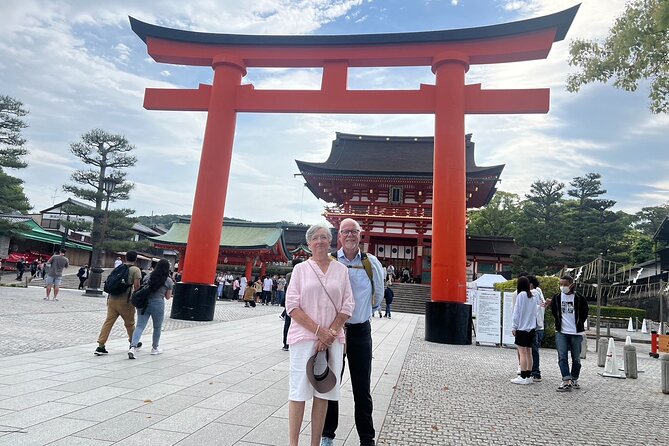
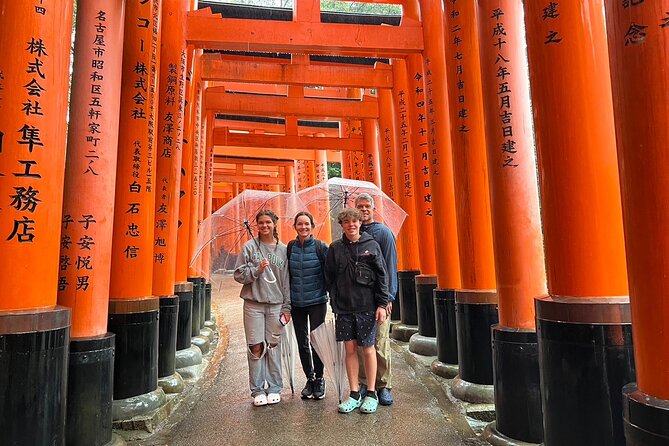
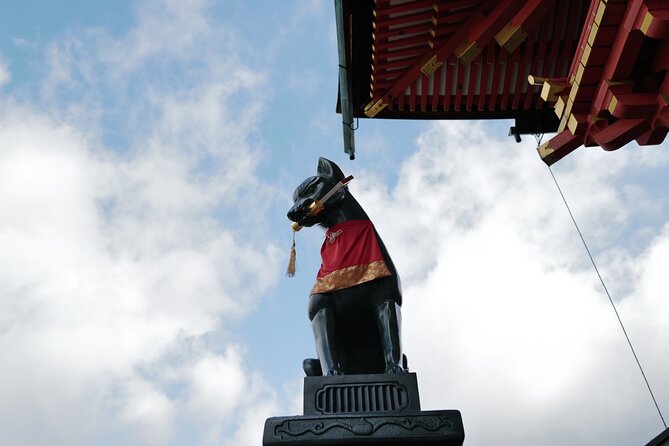
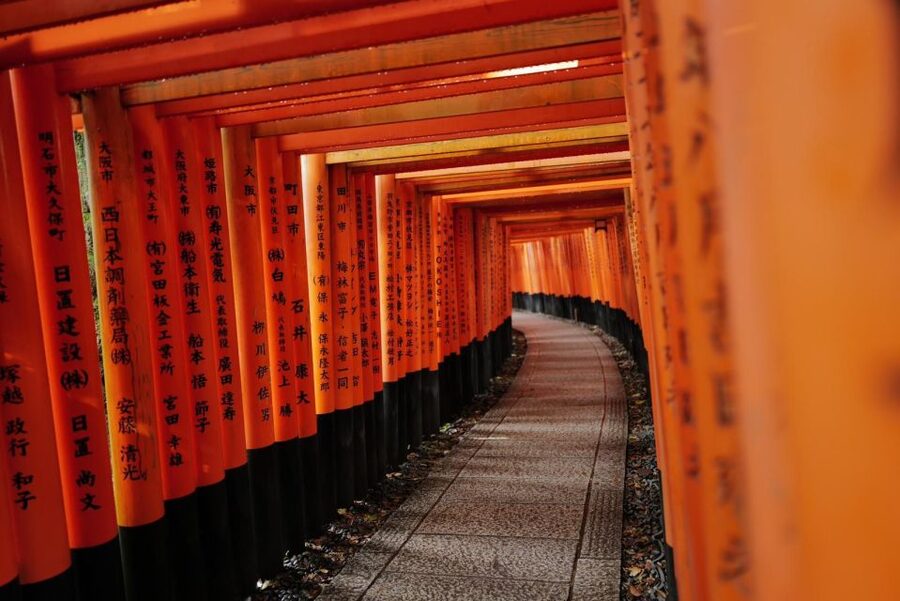
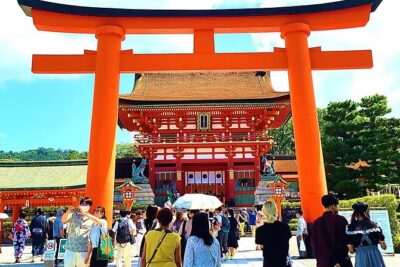
Your first guided stop is Fushimi Inari Taisha. Plan on about 70 minutes here, and yes, this is the part you do early enough to feel the atmosphere instead of fighting it. The shrine is famous for its thousands of red torii gates, but the “wow” is not just visual. It is the rhythm of walking through the gates, taking in views, then slowing down long enough to notice the meaning behind the place.
This tour explicitly builds in time for contemplation and reflection at Fushimi Inari. That matters, because most sightseeing schedules race you from checkpoint to checkpoint. Here, you can actually pause, read what you’re seeing, and let the space sink in. If you enjoy cultural context, this stop is where the guide can turn a photo moment into an understanding moment.
Because the tour uses guided pacing, you are also less likely to get turned around in the busiest sections. And if you come in on a cold morning, you may get extra seasonal vibes. One winter booking noted the magical mood when snow and winter air made the trip feel special, and it created a “worth it” energy even when crowds later picked up.
Arashiyama Before It Gets Chaotic: Bamboo, Photos, and Time to Look
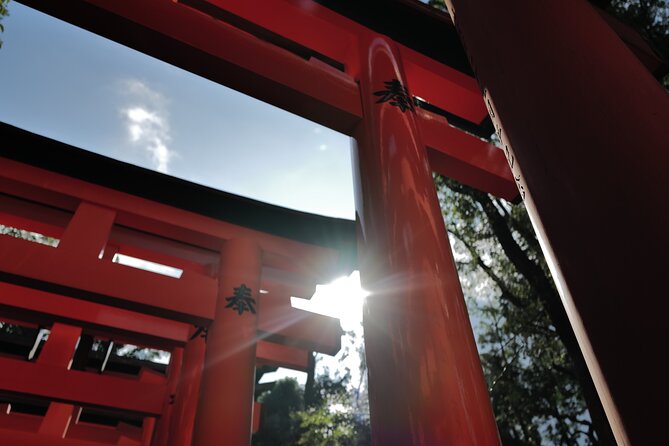
After Fushimi Inari, you head to Arashiyama for about one hour with your guide. This is where Kyoto goes from shrine intensity to nature-and-neighborhood Kyoto. Arashiyama is one of those places where the scenery and the strolling just feel good together, especially when you get there early.
This tour keeps the visit structured, but not rushed. You get a guided walk that helps you appreciate what you’re seeing and where to stand for better photos, not just the obvious shots. Multiple guides have been praised for spotting great angles and getting people the shot they actually wanted, which is a real service if you are traveling without a second camera person.
Arashiyama can be busy later in the day, but the early schedule helps. You are not just checking a box. You’re experiencing Kyoto at the hour when the area feels more human-scaled, with more time to notice details around you instead of being swept along with the crowd flow.
- PERFECT KYOTO 1-Day Bus Tour★ 5.0 · 13,518 reviews
- Kyoto: Fushimi Inari, Kinkakuji, Bamboo Grove 1 Day Bus Tour★ 4.8 · 4,316 reviews
- Kyoto: Tea Ceremony in a Traditional Tea House in Kiyomizu★ 4.9 · 3,519 reviews
- Kyoto Geisha Walking Tour: Gion District & Hidden Gems★ 4.7 · 3,273 reviews
- Kyoto: Tea Ceremony Ju-An at Jotokuji Temple★ 4.9 · 3,207 reviews
The Hop to Kinkaku-ji: Trains, a Short Ride, and a Temples-That-Mean-It Morning
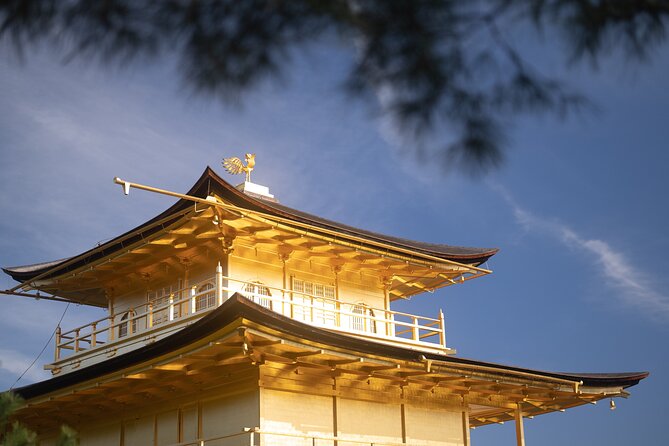
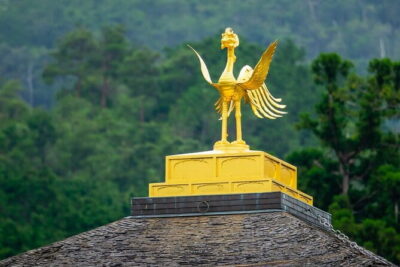
Next comes Kinkaku-ji, the Golden Pavilion. You get about one hour on site with a guide, which is a good amount of time for understanding and photos without turning it into a speed run.
Just as important, the tour gets you there using public transportation rather than a packaged bus ride. That means you’ll take a short sequence of train segments, then a bus or coach portion, and the guide handles the timing so you are not stuck figuring out platforms. Several bookings highlight how smooth this navigation felt, especially for visitors who wanted confidence using Kyoto transit after the tour.
Here’s what to budget: Kinkaku-ji has an entrance fee of 500 yen, and that is not included in your tour price. Also note there is a transportation fee of about 1240 yen that is not included either. So your all-in cost is not just $101, but the structure still makes sense when you compare it to paying for guide time plus trying to map the route yourself while staying out of peak lines.
You might encounter higher crowds at Kinkaku-ji depending on the day and conditions. One winter booking mentioned the shrine being very busy due to snow novelty. If the weather is dramatic, expect interest to spike. The guide helps you handle the crowd rhythm so you can still get meaningful viewing time.
Kinkaku-ji on the Clock: Why Guided Time Works Here
Kinkaku-ji is visually striking, but it is also layered in meaning, from the architecture to the way the site is designed for contemplation. A guided visit helps you see past the “golden” headline. With an English-speaking guide, you can connect the dots instead of just moving through with a camera and hoping you got the story right.
The one-hour block is also practical. You get enough time to slow down, look for reflection angles, and understand what makes the pavilion significant. If you are trying to do more than one major Kyoto sight in a day, this guided timing is what prevents Kinkaku-ji from turning into a time-sink.
There is also a useful pattern in how guides handle hiccups. In one winter experience, a bus issue came up and the guide arranged a taxi instead. That kind of problem-solving is exactly what you want when you are relying on public transit, because Kyoto transit can be easy, but it is not always perfect.
How the Walking and Public Transit Feels in Real Life
This is not a sit-down, bus-only tour. It is a walking tour using public transportation. That sounds normal, but the details matter for your comfort.
Plan around these expectations:
- You should bring comfortable shoes, because you’ll be on your feet through shrines and walking corridors.
- Strollers are not allowed, and the tour is not wheelchair accessible. One more detail to take seriously: it is not recommended for guests who use a cane.
- The group size is small, up to 8 people. That helps the guide keep the pace manageable and makes it easier to stay together.
The tour duration is approximately 330 minutes, around 5 hours, and can vary by about 30 minutes. That “about” is normal in real travel, especially with trains, station navigation, and crowd movement. If you have tight plans later in the day, keep them flexible.
Also, you must be on time. The meeting rule is strict: arrive 5 to 10 minutes early at Kyoto Station Central Ticket Gate, or you may not be able to join once the group starts. If you are late, there is no joining and no refund. That is not meant to be harsh, it is meant to protect everyone’s timing.
Price and Value: What $101 Really Buys
At $101 per person, this tour is priced as a guided “Kyoto highlights before noon” package. What you get included is the sightseeing tour and an English-speaking guide. What you pay separately is transportation, about 1240 yen, and the entrance fee for Kinkaku-ji, 500 yen.
So the real question is value: is it worth paying extra for a guide and organization instead of doing it on your own?
For many people, yes, because this tour solves three headaches at once:
- You get a logical flow across Kyoto’s biggest sights without you having to stitch train routes and timing together.
- You get a guide who helps you understand what you’re seeing, not just where you’re standing.
- You get the crowd-busting benefit of starting early, which is a big deal at Fushimi Inari and at Kinkaku-ji.
And from the guide performance patterns, you should expect the tour to be fun and responsive. Names like Natsuki, Hinano Yoshida, Ramu, Koi, Aya, Genki, Haruki, Rin, and Hina show up repeatedly for strong English, clear explanations, and good pacing. Guides have also been praised for adding helpful restaurant recommendations after the tour, which can extend the value beyond the morning itself.
What to Bring (and What to Skip) for a Smooth Morning
For a morning that runs about 5 hours and involves walking and transit, pack smart.
Bring:
- Comfortable shoes
- Cash
- An IC card such as Suica, ICOCA, or PASMO, or a JR pass you have on hand
Know before you go:
- The tour is meeting-based at Kyoto Station Central Ticket Gate, near the 7-Eleven and Kyoto Tower outside.
- Baby strollers are not allowed.
- Download WhatsApp so the guide can contact you about the exact meeting point.
If you want to keep the morning enjoyable, also think about your personal pace. This is not a “slow walk for seniors only” style tour, but guides do a good job keeping groups moving at a rhythm that still leaves time to look around. If you know you walk slowly, tell yourself you might need extra patience with crowds in the later stops, especially if weather or day-of-week changes crowd flow.
Who This Tour Suits Best (and Who Should Rethink It)
This tour is a great fit if you:
- Want to see Kyoto’s top sights in one morning without losing time to planning
- Prefer public transit over a private vehicle
- Enjoy cultural context from a guide, especially at Fushimi Inari and Kinkaku-ji
- Like photo guidance, not just being dropped at a viewpoint
It may be a poor fit if you:
- Have heart problems, because this is active walking with time on your feet
- Need wheelchair access, because the tour is not wheelchair accessible
- Use a cane, because it is not recommended
- Travel with babies in the youngest age group, since it is not for babies under 1 year
- Are very elderly, with the upper range noted as not suitable for people over 95
If you’re unsure, the deciding factor is your comfort with a walking morning plus public transit connections.
Should You Book This Early Kyoto Highlights Tour?
If you are in Kyoto for a short stay and you want the big sights without the “how do I get there” stress, I think this is an easy yes. The early start is the selling point, because it changes the whole experience at Fushimi Inari and helps you enjoy Arashiyama and Kinkaku-ji before the day gets thick with tour groups.
I would book it if:
- You want a guided route that uses Kyoto’s real transit
- You care about the meaning behind what you see, not just selfies
- You want to finish by lunch so you can keep exploring on your own
I would hesitate if:
- You need step-free or stroller-friendly access
- You do not handle walking and transit well
- Your schedule is too tight to absorb a possible 30-minute variation
If those boxes work for you, this tour is one of the most practical ways to get Kyoto’s highlights with less hassle and more calm.
FAQ
Where is the meeting point for the tour?
You meet at Kyoto Station Central Ticket Gate. It is the big gate near Kyoto Tower and close to a 7-Eleven, and the guide will hold a board that says GuideMe Japan.
Is this tour a bus tour?
No. This is a walking tour that uses public transportation. It is not a bus-only tour.
How long is the tour?
The tour is approximately 330 minutes, which is about 5 hours. It can vary by around 30 minutes earlier or later.
What are the main stops on the tour?
The guided stops are Fushimi Inari Taisha, Arashiyama, and Kinkaku-ji (Golden Pavilion). You return to Kyoto Station at the end.
Are lunch or meal stops included?
No, lunch is not included.
Are transportation and entrance fees included?
Transportation fees are not included (about 1240 yen). The entrance fee for Kinkaku-ji is also not included (500 yen).
Do I need an IC card or JR pass?
Yes. The tour uses public transportation, so you should bring an IC card such as SUICA, ICOCA, PASMO, or use a JR pass if you have one.
Does the guide contact you before the tour?
Yes. The guide will contact you through WhatsApp, so you should download WhatsApp before the tour.
Newest Kyoto write-ups from the Loving Japan desk

Morning, side by side.
 ★ 5.0Kyoto Early Morning Tour with English-Speaking GuideFrom $681,427 reviews
 ★ 4.9World Heritage Shirakawa-go Morning Guided TourFrom $77988 reviews
 ★ 5.0Nara Early Morning Tour (Kyoto or Osaka Departure Available)From $61676 reviews
 ★ 4.8Sumo Morning Practice Viewing TourFrom $81570 reviews
 ★ 5.0Hiroshima in a Nutshell: Morning Bike AdventureFrom $72524 reviews
 ★ 4.4Sumo Morning Training VisitFrom $77370 reviews
 ★ 4.6From Kyoto: Nara Guided Morning TourFrom $77335 reviews
 ★ 4.8Sumo Morning Practice Tour at Sumida CityFrom $116308 reviews