
REVIEW · SUMO WRESTLING EXPERIENCES
Tokyo: Sumo Morning Training Visit
Sumo morning in Tokyo is like getting backstage for Japan’s biggest sport. You get to see active professional wrestlers train up close, and you finish with a group picture that feels genuinely special because it happens at the end of a real practice session. My favorite parts were watching the intensity of keiko (training) and the chance to see the athletes as working professionals, not distant tournament silhouettes; the only real downside is that the session can be short during major tournament weeks and you spend a lot of time sitting still.
This is not a loud, story-heavy show. The format tends to be straightforward: arrive on time, sit quietly, watch the ring work, then line up for photos. One drawback to plan around, especially if you want lots of narration, is that the English support can be limited, so you may end up learning mostly by watching and by reading any rules sheet they provide.
In This Review
- Key Highlights to Know Before You Go
- Price and What $77 Buys You in Tokyo
- Finding the Stable Correctly: The Meeting-Point Trap
- Morning Keiko: What You’ll Actually Watch on the Clay Ring
- The Sitting Part: Floor Time Is Real
- Guide Support: English Help Might Be Minimal
- The Rules That Protect the Athletes (And Your Experience)
- The Group Picture: Timing and Exit Strategy
- Transfers From Your Hotel: Convenient, But With Limits
- Who This Visit Fits Best, and Who Might Prefer Another Option
- Should You Book This Sumo Morning Training Visit?
- FAQ
- How long is the sumo morning training visit?
- Is hotel pickup included?
- Do I get the exact meeting point right away?
- What should I bring to the stable?
- Are flash photos or videos allowed?
- Can I wear a hat or sunglasses?
- Is food or drink allowed during the training?
- What happens if I leave before the end?
- What if I arrive early or can’t find the meeting point?
Key Highlights to Know Before You Go
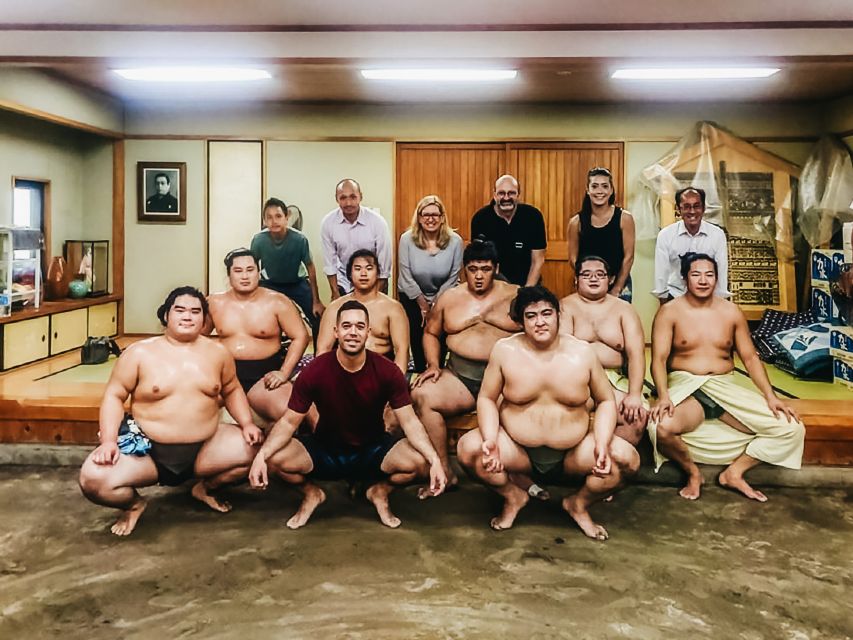
- Real morning keiko at an actual sumo stable, not a staged performance.
- Up-close training where you can see footwork, pushes, and sparring intensity.
- Group photo at the end, with no photo if you leave early.
- Timing matters: normally about 60 minutes, but around 30 minutes during January, May, and September tournament periods.
- Rules are strict inside the stable: silent mode phones, no flash, no food, no hats or sunglasses.
Morning practice or an evening show. Both reviewed
- Tokyo: Sumo Show and Dining Experience
★ 4.8 · 2,742 reviews - the SUMO show
★ 5.0 · 1,960 reviews - Tokyo Shinjuku Sumo Show & Experience with Photo
★ 5.0 · 1,750 reviews - Tokyo: Sumo Show and Experience in Shinjuku
★ 4.8 · 1,001 reviews
Price and What $77 Buys You in Tokyo
At about $77 per person for a 1-hour experience, this sits in the “special access” category. You are paying for two things: entry to a functioning stable for training observation, and a structured wrap-up moment with a group picture.
The value depends on what kind of sumo fan you are. If you want a big spectacle, this is not it. If you want to understand sumo as disciplined training, it is hard to beat for the money. Some visitors also feel it is worth it because tournament tickets can be pricey, while this gives you a close look at wrestlers even when you are not at a tournament.
The main value wobble is the length. Training is normally about 60 minutes, but during the Tokyo Grand Sumo Tournaments in January, May, and September, sessions run about 30 minutes, and the policy notes that there are no refunds for the shorter duration. So, if you travel during those months, adjust your expectations.
Finding the Stable Correctly: The Meeting-Point Trap
Tokyo does sumo with the precision of a clock, and your first challenge is simply getting to the right door on the right day. The meeting point and time are not something you should guess from Google Maps. They are confirmed by a separate email sent about 3 days before your visit, and the actual stable location on that day can differ from what appears on map listings.
Important practical tips:
- Wait for the final email and use the stable listed on the voucher.
- Check in starts at the meeting time. If you arrive early, do not ring the doorbell or enter.
- If you cannot find the place, the plan is to call the number included in your confirmation email.
Inside the stable, you also cannot wander in on your own. Entering is only allowed with the guide, which is why arriving at the correct check-in time matters. You are aiming to show up ready to settle in quickly, not to explore the neighborhood first.
Morning Keiko: What You’ll Actually Watch on the Clay Ring
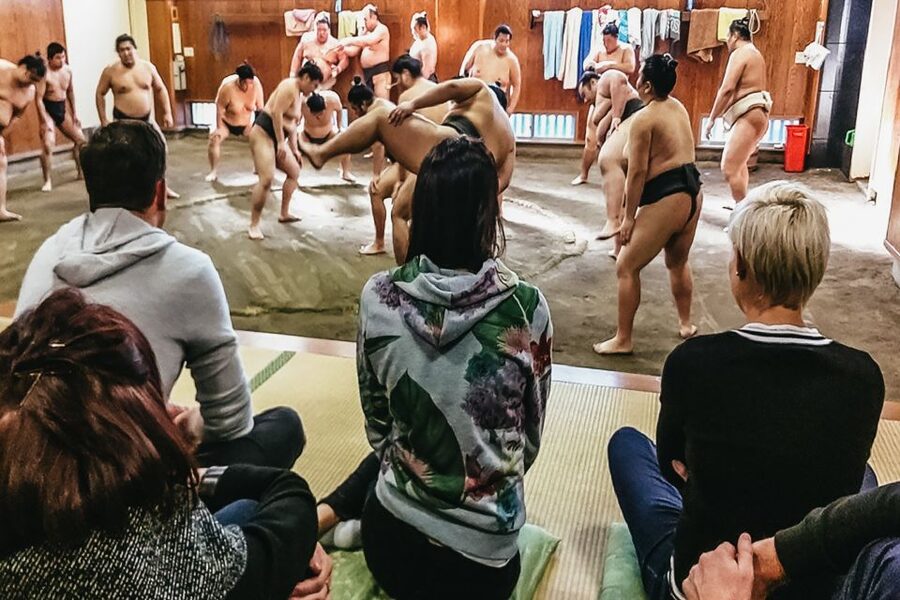
This experience is built around one core idea: you are watching a working training session. You should go in knowing it is more like a sports practice than a theatrical event.
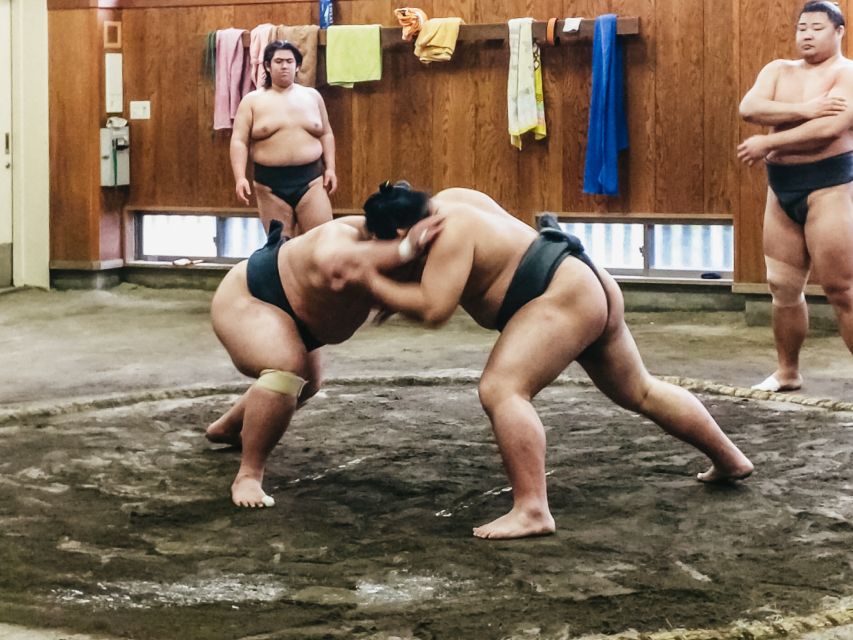
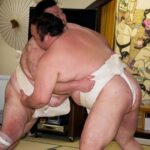
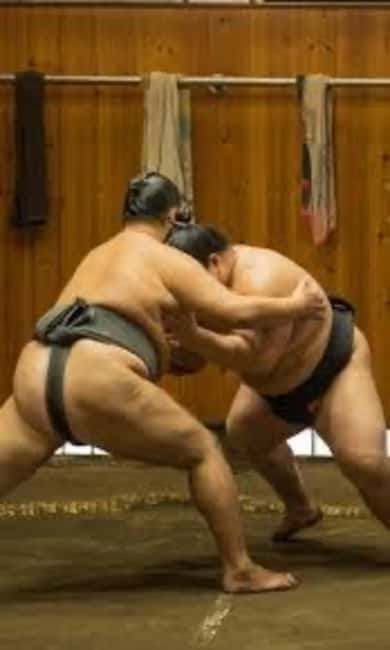
What your eyes will catch first is how serious the routines look even before anyone settles into longer work. Expect to see wrestlers moving with controlled power, repeating drills, and practicing techniques with a level of effort that looks more like athletic conditioning than performance. Several visitors note the sweat and the “going for it” feeling during training and sparring.
What you might see, depending on the day:
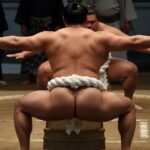
- Warm-up and drills that show stance, balance, and explosive engagement.
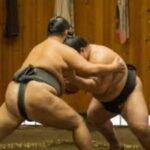
- Sparring or pushing practice across the clay ring, where technique and timing matter.
- Periods that feel structured but not like a scripted match.
A key reality check: you might not see full bouts the way you would during a tournament. That is not a failure of the experience, it is the point. You came to observe keiko, how professionals train.
Also, schedules can change. The session length and flow depend on the wrestlers’ condition, and that is normal in a training environment.
- Mt Fuji and Hakone 1-Day Bus Tour Return by Bullet Train★ 5.0 · 26,383 reviews
- 1-Day Tokyo Bus Tour★ 5.0 · 14,250 reviews
- Tokyo: teamLab Planets TOKYO Digital Art Museum Entry Ticket★ 4.6 · 9,779 reviews
- Mt Fuji & Hakone Cruise, Drum Show Bullet Train 1 Day from Tokyo★ 4.0 · 7,413 reviews
- Tokyo: Shinjuku Food Tour (13 Dishes at 4 Local Eateries)★ 5.0 · 6,603 reviews
The Sitting Part: Floor Time Is Real
One of the most consistent practical themes is that you will spend a long chunk of time sitting on the floor and staying put. Even when the session is “only” 1 hour, the waiting and the flow of training still mean a lot of stillness.
A few practical things to plan for:
- Bring a face mask or protective covering, since this is specifically listed as something to bring.
- You are asked to keep your voice down. Talking loudly and making noises is prohibited, and phones must be set to silent mode.
- Flash photography is forbidden, and video may require prior permission.
There is no mention of guaranteed cushions or chairs, and some people report the seating can be uncomfortable, especially for knee-sensitive visitors. If you have mobility issues, consider whether you can sit still comfortably for the full session length, including any time leading up to the main training.
If you arrive and quickly realize you cannot stay still, remember that leaving early can cost you the group photo.
Guide Support: English Help Might Be Minimal
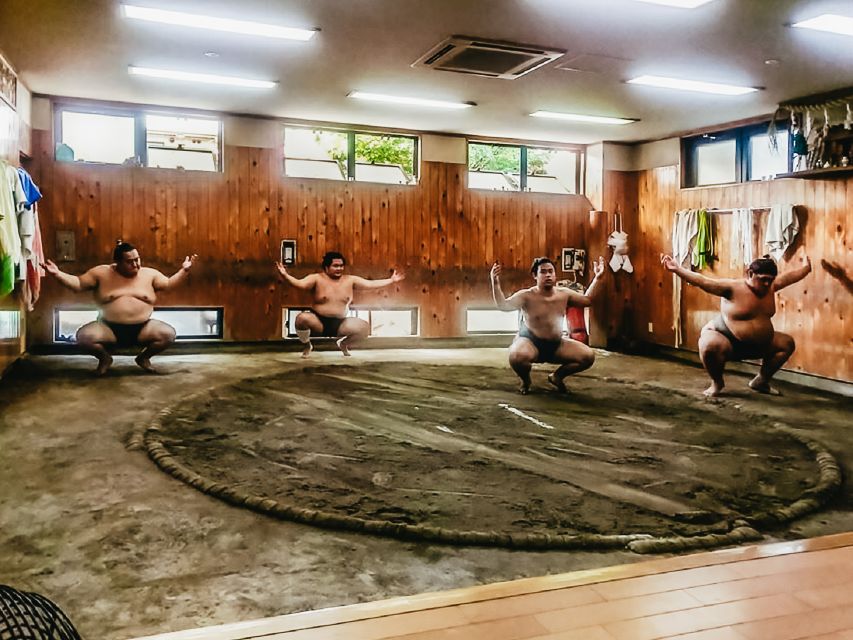
You are promised an English host or greeter, but the experience can feel more “managed access” than guided storytelling. Some people report that their guide mainly checked names, handed out rules, and kept things moving, while others note that the English level could be a bit uneven.
So I would prepare for a low-lecture format. You will learn by watching: the body language, the rhythm of training, and the discipline of behavior inside the stable.
If you want the visit to feel more meaningful, do yourself a favor before you go:
- Learn basic sumo terms you might hear or read on any rules sheet.
- Skim a short primer on how stables work and what keiko is, so you can “name what you see” when the action starts.
This way, even if the guide’s commentary is light, you still leave with understanding.
The Rules That Protect the Athletes (And Your Experience)
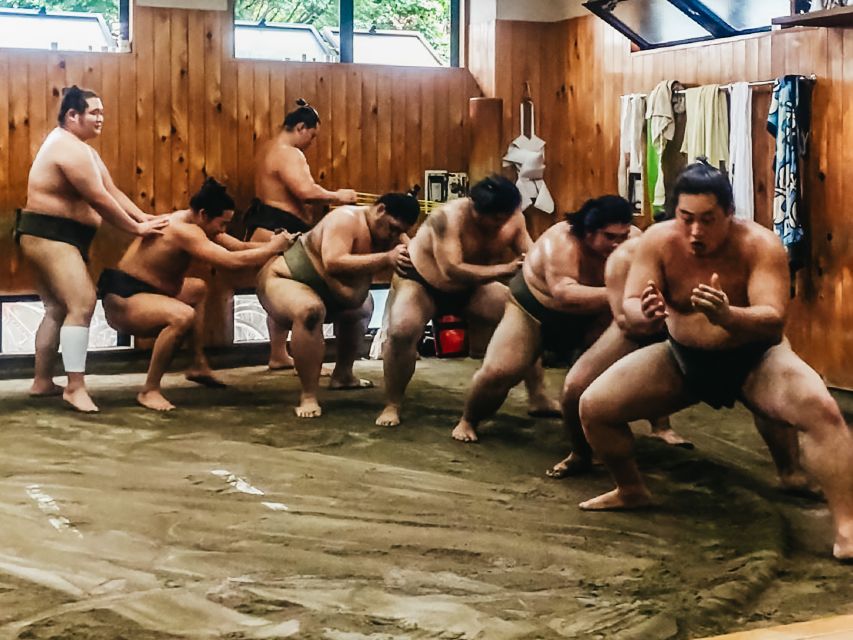
Sumo stables run on respect and quiet order, and you will feel that fast. The listed restrictions are not optional “suggestions,” they are the boundary lines that keep training calm and keep visitors from disrupting the athletes.
No hats, no sunglasses. No food or drinks. No luggage or large bags. No smoking indoors. And video and flash photography have clear limits.
Two more rules to take seriously:
- Talking loudly and making noises is prohibited, and your phone must be silent.
- Flash photography is forbidden, and videos only with prior permission.
These rules change the vibe. Instead of snapping photos nonstop, you end up watching carefully. That can be a good thing. It also means you should charge your phone fully, since you may rely more on still moments and short approved recording than constant shooting.
The Group Picture: Timing and Exit Strategy
The highlight moment for most people is the group picture with the wrestlers, and it happens at the end. The important detail is right there in the rules: if you leave earlier, you won’t receive the group picture.
So your exit plan matters. If you know you have a morning commitment after the session, build in buffer time so you do not accidentally miss the photo. On a day when the training runs short, leaving early might feel tempting. Still, the photo is tied to the end-of-visit flow.
Also remember: this is a real stable environment. The photo moment is likely run on a schedule, so don’t treat it like an open-ended meet and greet.
Transfers From Your Hotel: Convenient, But With Limits
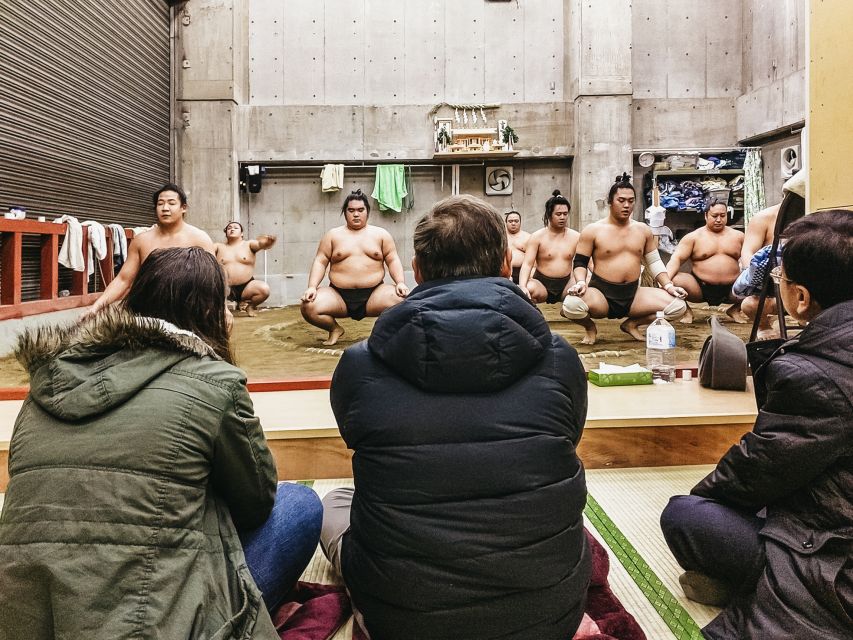
Hotel pickup and drop-off are optional. The one-way transfer, when available, has boundaries you should check before assuming it will work.
Key points:
- Pickup must be within Tokyo’s 23 wards.
- Maximum passengers is 4.
- Drivers are Japanese-speaking and do not speak English.
- Hotels without a front desk are not acceptable for pickup.
- You need to send your hotel information after booking, and the pickup time is confirmed by email.
If you are staying near major stations with a front desk, this can be a smooth way to avoid the meeting-point confusion. If you are in an area where pickup is tricky, it may be better to navigate yourself so you control arrival timing.
Who This Visit Fits Best, and Who Might Prefer Another Option
This is a great choice for:
- People who like watching sports technique up close.
- Travelers who prefer authentic training to a big performance.
- Anyone who wants a memorable Tokyo cultural moment without paying for full tournament tickets.
It may be a poor match for:
- Anyone who needs lots of guided explanation during the visit.
- Visitors who struggle with long periods of quiet sitting on the floor.
- Travelers who want a full set of match-style bouts rather than training practice.
If what you really want is tournament competition, you may get better satisfaction pairing this with proper event tickets during a tournament week. But if your goal is to understand how sumo is built day to day, this access is exactly the kind of thing that makes Japan feel real.
Should You Book This Sumo Morning Training Visit?
I think you should book it if your priority is seeing pro wrestlers train and you can handle strict behavior rules and floor seating. The combination of real stable access, close viewing, and the end group photo makes it a standout value for people who like authentic, no-frills experiences.
I would hesitate only if you are traveling during January, May, or September and you know that a 30-minute session would feel too short for your expectations. Also consider your comfort level with quiet, still sitting.
If you go in with the right mindset, you will come away with something most people miss: respect for how hard sumo looks when it is training, not performing.
FAQ
How long is the sumo morning training visit?
The experience is listed as 1 hour. Training normally lasts about 60 minutes, but during the Tokyo Grand Sumo Tournaments (January, May, and September) it is about 30 minutes.
Is hotel pickup included?
Hotel pickup and drop-off are not included. You can optionally choose a one-way transfer from your hotel, where available.
Do I get the exact meeting point right away?
No. The meeting location and time are confirmed in an email about 3 days before your experience. Google Maps may show a different location, so use the address and stable name in your email and voucher.
What should I bring to the stable?
Bring a face mask or protective covering.
Are flash photos or videos allowed?
Flash photography is forbidden. Videos may only be taken with prior permission.
Can I wear a hat or sunglasses?
No. Hats and sunglasses are not allowed.
Is food or drink allowed during the training?
No. Food and drinks are not allowed.
What happens if I leave before the end?
You may leave earlier, but if you do, you will not receive the group picture.
What if I arrive early or can’t find the meeting point?
Check-in starts at the meeting time. If you arrive early, do not ring the doorbell or enter. If you have trouble finding the location, call the number provided in your confirmation email for assistance.
Practice Rooms and Show Nights

Newest Tokyo write-ups from the Loving Japan desk

Sumo Wrestling Experiences, side by side.
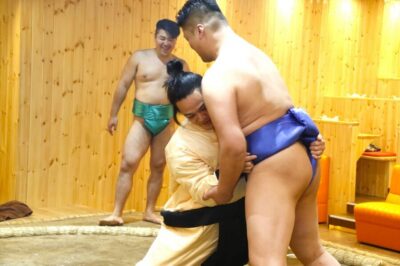 ★ 4.8Sumo Show Experience with Chicken Hot Pot and a PhotoFrom $1036,678 reviews
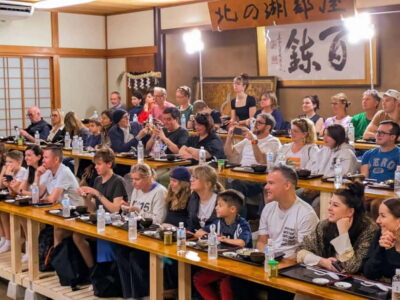 ★ 4.8Sumo Show and Dining ExperienceFrom $792,742 reviews
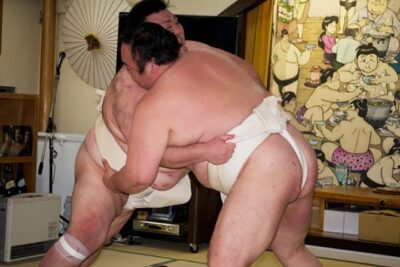 ★ 5.0the SUMO showFrom $891,960 reviews
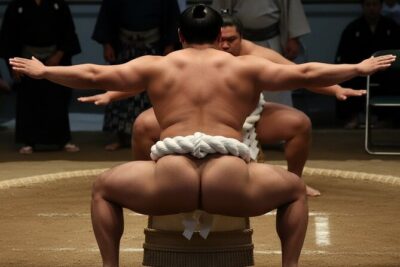 ★ 5.0Tokyo Shinjuku Sumo Show & Experience with PhotoFrom $791,750 reviews
 ★ 4.8Sumo Show and Experience in ShinjukuFrom $691,001 reviews
 ★ 4.6Sumo Tournament Tour with Chair Seat TicketsFrom $141753 reviews
 ★ 4.5Sumo Show & Experience w/ Optional Kimono & Hot PotFrom $77609 reviews
 ★ 5.0Authentic Sumo Experience in Tokyo: Enter the SanctuaryFrom $171603 reviews
Filed on these lists too