
REVIEW · DOTONBORI AND OSAKA STREET FOOD
Ramen and Gyoza Cooking Class in Osaka Dotonbori
Ramen, built from scratch, in Osaka. This hands-on class in Dotonbori focuses on making ramen and gyoza from scratch, including hand-kneaded noodles and a homemade broth. I like the small group feel and the take-home recipes, and one key consideration is that gluten-free is not available, so it is not recommended for travelers with gluten intolerance.
You get an English-speaking instructor and a practical, step-by-step approach that helps you understand why each move matters, not just what to do. The room is in a residential-style building, so once you find Cooking Sun, the vibe is more kitchen class than big tourist show.
It runs about 3 hours, starting at 1:30 pm, with the meal served at the end. If you can handle a hands-on schedule and want to recreate real Japanese comfort food at home, this is a fun way to spend an afternoon in Osaka’s food heart.
In This Review
- Key highlights that make this class worth your time
- Dotonbori, Osaka’s comfort-food address for ramen fans
- Cooking Sun kitchen class setup in a real building
- Start with ramen noodles: kneading by hand is the lesson
- Ramen broth from scratch: learn the flavor foundation
- Gyoza building: filling mix, pleats, and that satisfying fold
- Customize your dumplings and ramen without losing authenticity
- What you eat at the end, and why recipes matter
- Price and time: does $71.35 feel fair for Osaka food?
- Who should book this ramen and gyoza class
- Straight advice on booking: should you do it
- FAQ
- What time does the class start and how long is it?
- Where is the meeting point?
- Is there a mobile ticket?
- What is included in the price?
- Are vegetarian or pescatarian options available?
- Is a gluten-free option available?
- How large is the class?
- Is the class near public transportation?
- What is the cancellation policy?
Key highlights that make this class worth your time

- Handmade ramen noodles and broth, not shortcuts, plus you learn the workflow end to end
- Small class size (max 8) for real attention while you fold gyoza and cook
- Dotonbori location, easy to tie into a larger food day in Osaka
- Diet notes accepted for vegetarian, pescatarian, or no-fish (but gluten-free is not)
- Take-home recipes so you can actually cook this again after the trip
Still hungry on Dotonbori? A few more crawls
- Osaka: Shinsekai Food Tour with 13-15 Dishes at 5 Eateries
★ 4.8 · 2,204 reviews - Osaka Local Foodie Walking Tour in Dotonbori and Shinsekai
★ 5.0 · 985 reviews - Osaka: Dotonbori District River Cruise with Drink Discount
★ 4.2 · 876 reviews - Ultimate Osaka Walking Tour: Castle, Dotonbori & Hidden Gems
★ 5.0 · 862 reviews
Dotonbori, Osaka’s comfort-food address for ramen fans
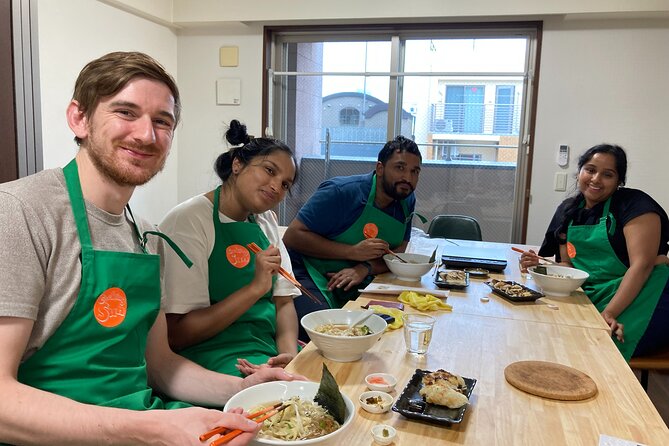
Osaka is famous for eating, and Dotonbori is where that food energy is hard to ignore. You are not just watching ramen culture from the outside. You are learning the basic mechanics behind two classics that show up together again and again in Japanese meal culture: ramen and gyoza.
The class is conveniently located in the Dotonbori area, so you can build an easy food day around it. Think “lunch first or go early,” then spend the afternoon making noodles, folding dumplings, and tasting what you made. It is the kind of experience that makes the city’s food reputation feel real instead of generic.
Cooking Sun kitchen class setup in a real building
The meeting point is Cooking Sun, located at Shimanouchi, Chuo Ward. The start time is 1:30 pm, and it ends back at the same meeting point.
A big practical plus here is the small group limit of 8. In a class this hands-on, size matters. If you have a question while you are kneading noodles or shaping gyoza, you want someone to actually respond instead of waiting your turn. The reviews also underline patience and clear pacing, which usually means the instructors can keep everyone moving without rushing the group.
Another detail I appreciate: you get all ingredients and utensils, plus an English-speaking instructor and recipes to take home. That combination is what turns a cooking class from an “event” into a skill you can repeat later.
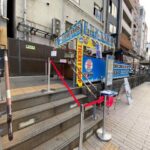
One downside to flag for planning: the venue is in a building that may take a minute to locate if you rely on a vague place name in maps. The fix is simple. Use the actual address for the building and take your time getting to the right floor.
Start with ramen noodles: kneading by hand is the lesson
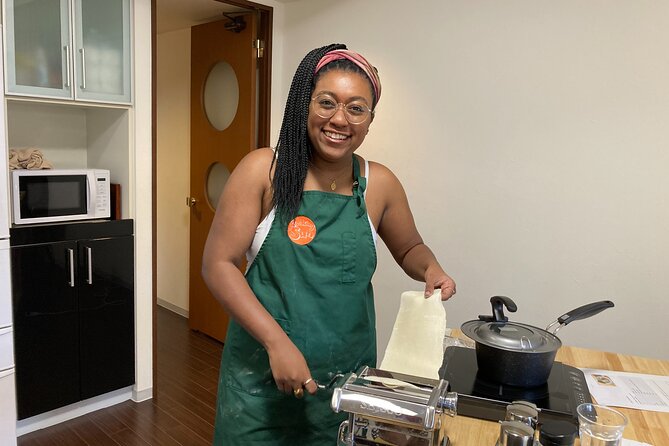
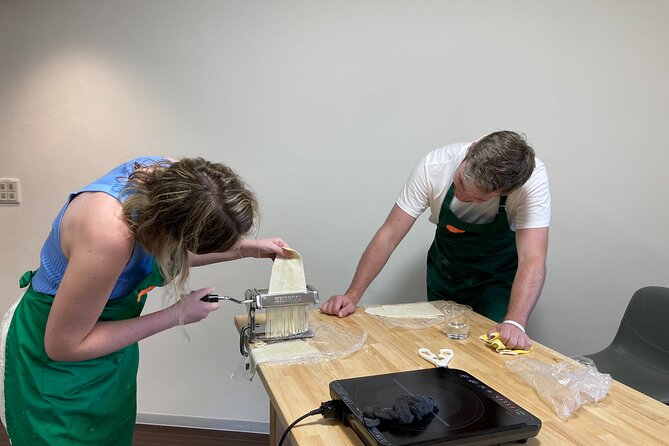
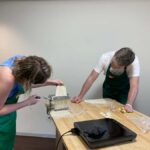
The heart of this class is the ramen. You make ramen noodles from scratch, including the part many cooking classes skip. Kneading by hand is not just a novelty step. It is where texture gets built.
In a typical ramen noodle process, you are working toward dough consistency that will handle shaping and cooking. Kneading affects elasticity, and elasticity affects how the noodles feel when you eventually cook and eat them. This class leans into that. You do the work, so you understand the result.
You will likely spend time forming and working the dough before cooking. Plan to feel busy, not just entertained. One review summed up the effort well: making ramen can be tedious, but in the best possible way, because you see the payoff when you eat your own noodles.
If you like cooking, you will enjoy this portion. If you hate waiting and messing with dough, it might feel like work. Either way, it is the closest thing to learning the backbone of ramen that a short class can offer.
Cook it yourself instead. Other kitchens in Osaka
- Sushi Making Osaka Roll and Authentic Japanese Sushi Class★ 5.0 · 1,220 reviews
- Osaka Sushi Making Experience★ 5.0 · 400 reviews
- Osaka: Ramen and Gyoza Cooking Class in Dotonbori★ 5.0 · 378 reviews
- Osaka: Sumo Stage Show with Bento or Snack + Fight & Photo★ 4.3 · 364 reviews
- Osaka Cooking Class: Okonomiyaki &Japanese cuisines experience★ 5.0 · 261 reviews
Ramen broth from scratch: learn the flavor foundation
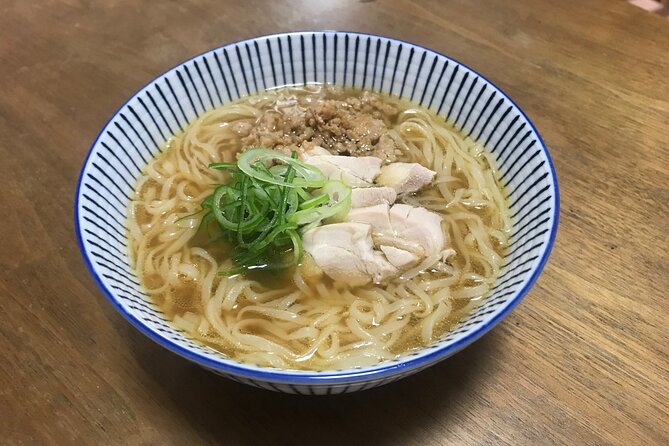
Noodles are only half the ramen story. The other half is the broth, and here you make a ramen broth from scratch.
Why it matters: broth teaches you how Japanese flavor comes together in layers. Even if you are not writing down a single “secret recipe,” you leave knowing what you are aiming for, how to balance it, and how toppings change the final experience.
The class also lets you customize ramen toppings to your taste. That part is practical for real life. You can make the base you learned, then add toppings that match what you like, from hearty to lighter. It is a smart way to connect the class to your actual kitchen back home.
If you are concerned about fish, take note of the dietary guidance. There is an option to make requests in advance like no-fish. One reviewer who generally avoids fish still found the fish/chicken base good, which suggests the broth approach can still work for people who are cautious. Still, if fish is a hard no for you, use the booking note so the instructors know early.
Gyoza building: filling mix, pleats, and that satisfying fold
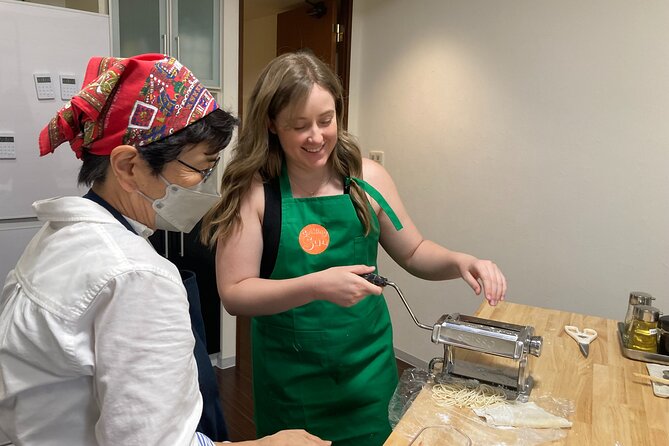
After you’ve tackled ramen, you switch gears to gyoza. You make a chicken gyoza filling and fold gyoza using wrappers provided.
This is another area where “hands-on” actually counts. Folding gyoza pleats is a skill, not just a step. You learn the motion and the structure, and the reward is visible. When the dumplings cook, the pleats and shape help create the look and texture you expect from restaurant-style gyoza.
One review highlighted that the gyozas turned out just like what you get at ramen shops, which is exactly the kind of outcome you want from a class. It means the technique is close enough that you can recreate it later.
You will likely chop and mix ingredients for filling, then assemble and fold. It can get a little rhythmic once you get the hang of it, and the instructors are there to keep you from turning your first batch into a dumpling science experiment.
Customize your dumplings and ramen without losing authenticity
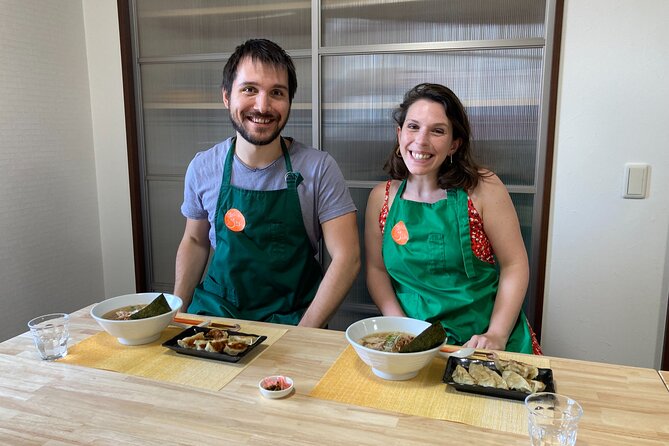
One of the best parts of this class is that it does not treat customization as a betrayal of tradition. It frames customization as something Japanese home cooks do too.
You can adjust:
- Gyoza filling based on preferences
- Ramen toppings based on taste
- And you can request substitutions based on diet notes you provide when booking
The class says you should leave a note upon booking for vegetarian, pescatarian, or no-fish options. It also states there is no gluten-free option, so if you need gluten-free meals, this one is not the right fit.
For many people, that restriction is the deciding factor. If you can eat gluten, the customization approach will feel empowering. If you can’t, you will have a hard time finding a safe alternative here, so look for a different cooking class.
What you eat at the end, and why recipes matter
The meal at the end is not just a “snack.” It is the logical result of the work you did: ramen plus gyoza, cooked with the basics you learned and served together like a proper set meal.
Timing also matters for appetite. One review notes that the session wrapped around 3:30 pm, so if you tend to get hungry fast, eat a small lunch first. This is not a full-day event, and your stomach will know the difference between 1:30 pm and 3:30 pm.
The recipes to take home are another practical win. You do not just leave with a memory. You leave with a reference you can use later to rebuild the noodles and broth process, plus the stuffing and assembly approach.
For value, recipes are huge. You pay for a skill outcome, not only for food you eat once. This class checks that box.
Price and time: does $71.35 feel fair for Osaka food?
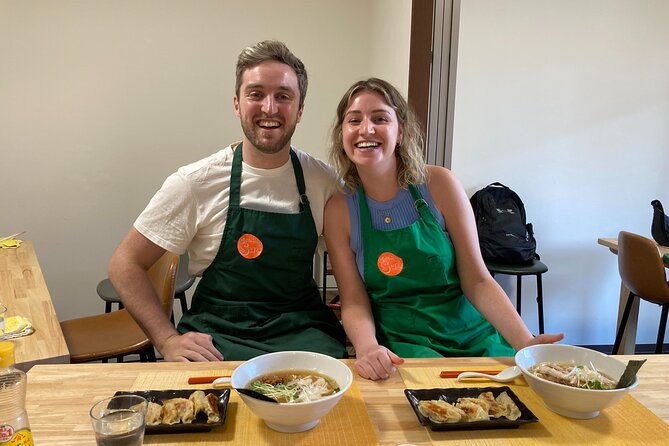
At $71.35 per person for about 3 hours, this class competes well because you are paying for a bundle:
- hands-on noodle and broth making
- gyoza assembly
- all ingredients and utensils
- English-speaking instruction
- recipes to take home
In a city like Osaka, you can easily spend money on ramen and gyoza just by eating out. The difference here is that your cost also buys a process you can repeat. You are not only tasting. You are learning the mechanics, including hand-kneading and broth creation.
Group size also affects value. With a maximum of 8, it is easier to get guidance while you cook. That reduces the odds of paying for confusion.
So for me, the value comes down to one question: do you want to cook, not just eat? If cooking is part of your travel style, this feels like a fair, even strong deal. If you hate kitchen time, the price will feel like you are paying for effort you did not ask for.
Who should book this ramen and gyoza class
This works best for:
- food lovers who want a hands-on Osaka highlight
- people who want to recreate ramen at home, not just collect photos
- couples and small families, since the class is kept small
- travelers who enjoy step-by-step instruction and kitchen teamwork
It is also a good choice for mixed skill levels. Reviews mention that even people who do not normally cook had a good experience, because the instructors guide you through each step.
You should think twice if:
- you need gluten-free options (not available here)
- you want a sit-and-watch class (this one is active)
- you are extremely rushed on timing and cannot handle a 1:30 pm start with a later meal
Straight advice on booking: should you do it
If you are aiming for one memorable Osaka food moment that goes beyond restaurant dining, I would book this. The big reason is simple: you learn ramen noodles, broth, and gyoza basics from scratch, and you bring home recipes that help you repeat it.
Choose it especially if you like the idea of customizing toppings and fillings so the results match your taste. And if fish is an issue, plan ahead with the booking note for no-fish or pescatarian, since the class explicitly supports those requests.
Skip it if gluten-free is required. Everything else is a “yes, go enjoy yourself in the kitchen” situation.
FAQ
What time does the class start and how long is it?
It starts at 1:30 pm and runs for about 3 hours. The activity ends back at the meeting point.
Where is the meeting point?
The class meets at Cooking Sun, 542-0082 Osaka, Chuo Ward, Shimanouchi, 2-chōme 9-14, 807号室.
Is there a mobile ticket?
Yes, the tour includes a mobile ticket.
What is included in the price?
The price includes all ingredients and utensils, the hands-on ramen and gyoza class, an English-speaking instructor, recipes to take home, and all fees and taxes.
Are vegetarian or pescatarian options available?
A vegetarian option, pescatarian option, and no-fish option are available if you leave a note upon booking.
Is a gluten-free option available?
No. The tour states gluten-free option is not available, and it is not recommended for travelers with gluten intolerance.
How large is the class?
The class has a maximum of 8 travelers.
Is the class near public transportation?
Yes, the meeting point is near public transportation.
What is the cancellation policy?
You can cancel for a full refund up to 24 hours before the experience’s start time. If you cancel less than 24 hours before, the amount paid will not be refunded.
Kitchens You Can Book Into


Dotonbori, Still Hungry


Newest Osaka write-ups from the Loving Japan desk




Dotonbori and Osaka Street Food, side by side.
 ★ 4.8Shinsekai Food Tour with 13-15 Dishes at 5 EateriesFrom $532,204 reviews
 ★ 5.0Osaka Local Foodie Walking Tour in Dotonbori and ShinsekaiFrom $111985 reviews
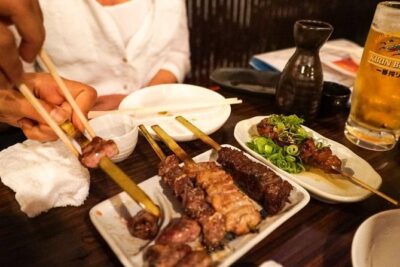 ★ 5.0Osaka Bar Hopping Night Walking Tour in Namba (3 bars, 6 tastes)From $98958 reviews
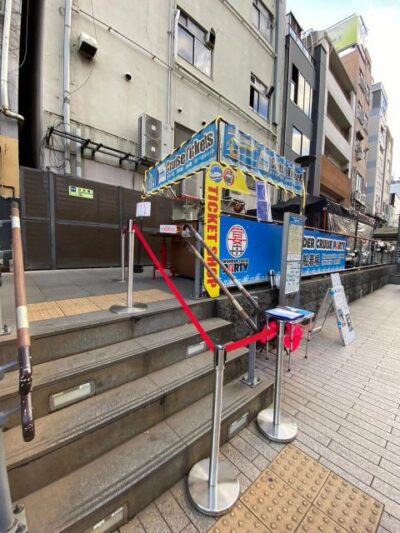 ★ 4.2Dotonbori District River Cruise with Drink DiscountFrom $12876 reviews
 ★ 5.0Ultimate Osaka Walking Tour: Castle, Dotonbori & Hidden GemsFrom $73862 reviews
 ★ 5.0Kuromon Market Food Walking Tour in Osaka (6 stops, 6 tastes)From $50550 reviews
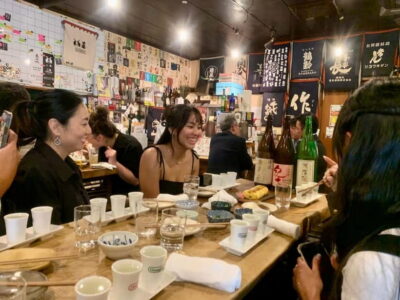 ★ 4.9Namba Pub Bar Crawl with a Local GuideFrom $30424 reviews
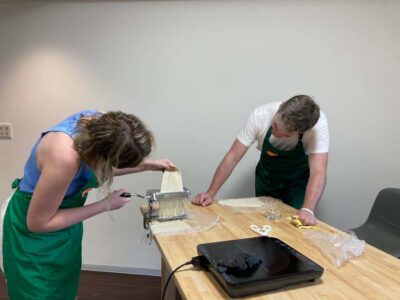 ★ 5.0Ramen and Gyoza Cooking Class in DotonboriFrom $70378 reviews