
REVIEW · MOUNT FUJI DAY TRIPS
Ramen Cooking Class at Lake Kawaguchiko (Short Course)
Hot ramen plus Mount Fuji views.
This short ramen class at Lake Kawaguchiko turns you from spectator into noodle maker, with a real noodle cooker and a chance to enjoy your bowl while you look toward Mt. Fuji. I love the hands-on pace, and you get to make decisions all the way through, from kneading to toppings.
Two things I really liked: the English-speaking instructor support (named help like Kimmy, Hiro, and Mae shows up in the experience) and the fact that you keep a bandana plus a completion certificate for your group. One consideration: it is short, about one hour, so you will move quickly and you will not linger with a long post-meal hangout.
In This Review
- Key things that make this ramen class work
- Why Lake Kawaguchiko ramen feels like a smarter use of your time
- You do real ramen work: noodles, tare, cooker, toppings
- Step-by-step: what the hour looks like in real life
- 1) Making your own noodles, not just mixing ingredients
- 2) Choosing your tare, the flavor engine of your ramen
- 3) Boiling your handmade noodles in a noodle cooker
- 4) Topping your ramen, including chasiu
- 5) Certificate moment and bandana souvenir
- The Mt. Fuji viewing part, and why it is more than just a postcard
- Instructor help and group size: when it feels hands-on
- Food tasting and what is actually included for $39.14
- What to do before and after class (so you enjoy the whole day)
- Where you meet, and why the location is easy to work with
- Who should book this ramen cooking class
- Price and logistics: what $39.14 really buys
- Should you book this Lake Kawaguchiko short ramen class?
- FAQ
- How long is the ramen cooking class at Lake Kawaguchiko?
- What is included in the price?
- What is not included?
- Where do I meet for the class?
- Will the class be taught in English?
- What group size should I expect?
- Do I get a certificate or souvenir?
- What is the cancellation policy?
Key things that make this ramen class work
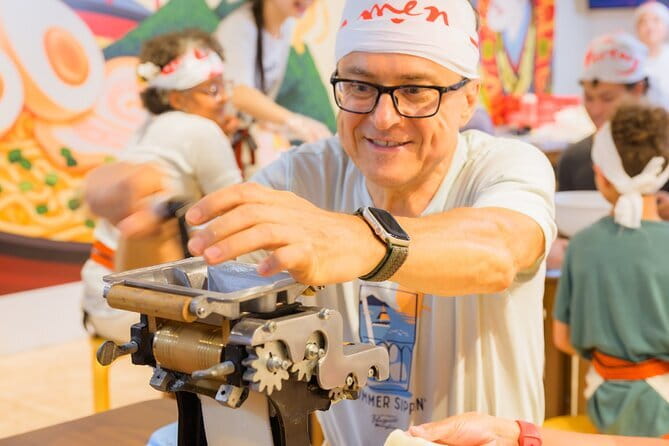
- Handmade noodles from kneading through cutting, using a noodle-making machine
- Your choice of tare, the seasoning base that shapes your ramen’s flavor direction
- Cooking your own noodles in a noodle cooker, not just watching
- Build-your-own toppings including chasiu, so your bowl feels personal
- Mt. Fuji views during the meal, which makes the whole hour feel special
- Small-group feel up to 20, and in at least one small class you could get extra one-on-one attention
Fuji from Fujikawaguchiko machi: the other approaches
- Mt Fuji Area Private Guided Tours in English-Nature up close, quiet, personal
★ 5.0 · 288 reviews - Explore Mt. Fuji Ice Cave in Aokigahara Forest
★ 5.0 · 243 reviews - Ramen Cooking Class at Ramen Factory in Mt.Fuji
★ 5.0 · 101 reviews - Early Morning Kayaking With Views of Mt Fuji at Lake Kawaguchiko
★ 5.0 · 69 reviews
Why Lake Kawaguchiko ramen feels like a smarter use of your time
If you are in Kawaguchiko, you already know you are surrounded by big scenery. The trick is finding something hands-on that still feels connected to the place. This class is built for that. In about an hour, you go from dough to bowl, and your reward is eating what you made with views of Mount Fuji.
I also like the vibe because it is not just cooking for cooking’s sake. You are learning the logic of ramen, which is why the choices you make matter. Pick your tare, boil your noodles to your level of doneness, then add toppings so your bowl matches what you want.
One more practical plus: the experience is capped at a maximum of 20 travelers. That matters in a cooking class, because it keeps the pace moving and makes it easier to get help if you get stuck.
You do real ramen work: noodles, tare, cooker, toppings
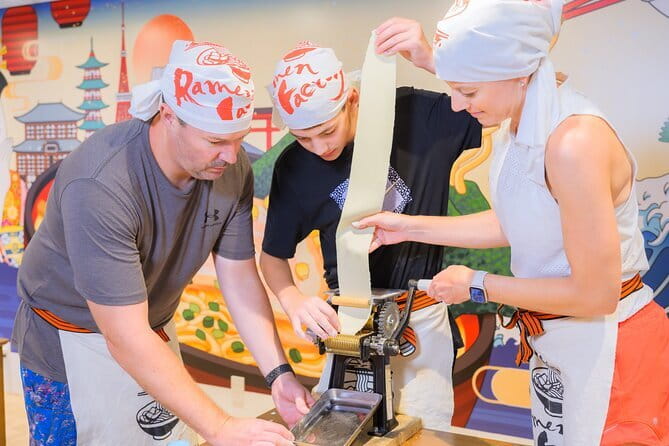
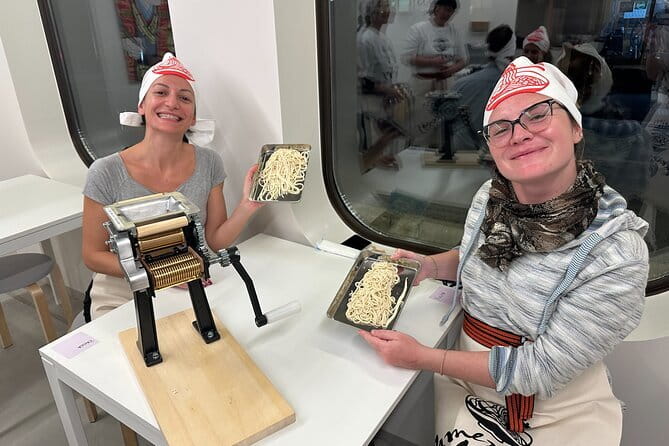
This is not a demo where someone else does the heavy lifting while you take photos. You knead dough, roll it out, and cut it on a noodle-making machine. Then you choose your soup base through a tare selection, which is the seasoning blend that gives ramen its core flavor identity.
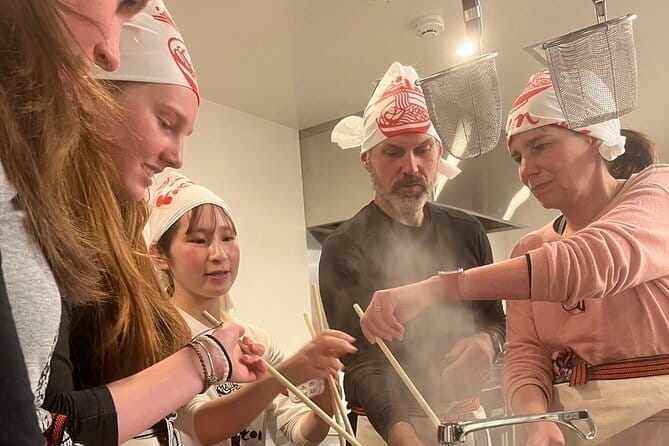
Then comes the part that makes the class feel modern and efficient. You boil your handmade noodles in a real noodle cooker. That setup helps you cook noodles at the right stage without turning your hour into a chaos experiment.
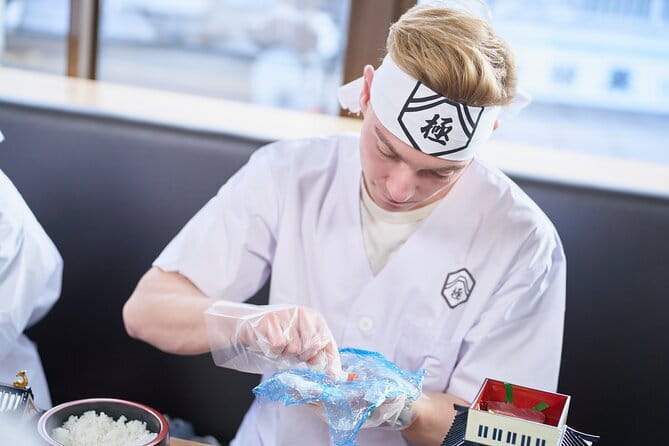
Finally, you build your bowl. You get to choose toppings, and chasiu is included as part of the topping options. Even if you are not a ramen expert, this is the step where your preferences actually show up in the result. Do you want it richer? More savory? More balanced? You get to steer.
And yes, you get a nice souvenir and keepsake angle too. You will receive a bandana souvenir, and each group gets one official certificate of completion.
Step-by-step: what the hour looks like in real life
Here is how the flow typically feels, broken down into the practical bits you care about.
- Private guided hidden gems tour by local English speaking driver★ 5.0 · 142 reviews
- Johnny’s Exclusive: Mt. Fuji Adventure from Kawaguchiko★ 5.0 · 62 reviews
- Mt. Fuji Five Lakes Area Private Tour with Licensed Guide(Kawaguchiko area Dep)★ 5.0 · 55 reviews
- Cute & Fun E-Car tour following guide around Lake Kawaguchiko★ 5.0 · 54 reviews
- Hidden Fuji drive tour with a Local English speaking guide★ 5.0 · 43 reviews
1) Making your own noodles, not just mixing ingredients
You start with dough work. You knead it, roll it out, and cut it with the noodle-making machine. This is the part where your brain learns ramen texture, because dough has a different feel once you work it yourself.
If you have never made noodles before, do not worry. The class is structured as a guided process, and you have an English-speaking instructor to keep you on track. In reviews, the help stood out with instructors named Kimmy and Hiro, plus Mae in another instance.
2) Choosing your tare, the flavor engine of your ramen
Tare is the seasoning base, the part that basically sets the personality of the bowl. You choose your preferred tare to create what becomes your ramen flavor base. It is a simple step on paper, but it is why ramen can taste so different from one place to another.
Think of it like choosing the direction before you build the rest of the meal. If you like bolder seasoning, you will want to lean that way. If you want something smoother, you can choose the tare that best fits your taste.
3) Boiling your handmade noodles in a noodle cooker
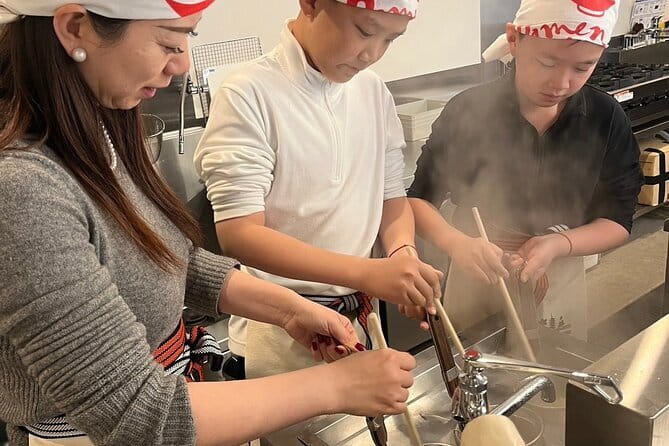
Once your noodles are ready, you boil them to perfection. The noodle cooker is key here. It keeps the process consistent so the class stays within the time limit, and it reduces guesswork.
This is also where you learn something useful for future ramen life. You start noticing how noodle texture changes based on cooking time. You will likely feel it immediately once you taste your own noodles.
4) Topping your ramen, including chasiu
Now you customize. You top your bowl with options that include chasiu. This is where you can get playful, even with a short class.
A good ramen bowl is not only flavor in the broth. It is also texture and richness from toppings. That is why this step matters, even if you are thinking about the noodles first.
5) Certificate moment and bandana souvenir
To end, your group gets an official certificate of completion. Everyone gets an original bandana souvenir too. It is a small touch, but it makes the experience feel like something you did, not something you passed through.
The Mt. Fuji viewing part, and why it is more than just a postcard
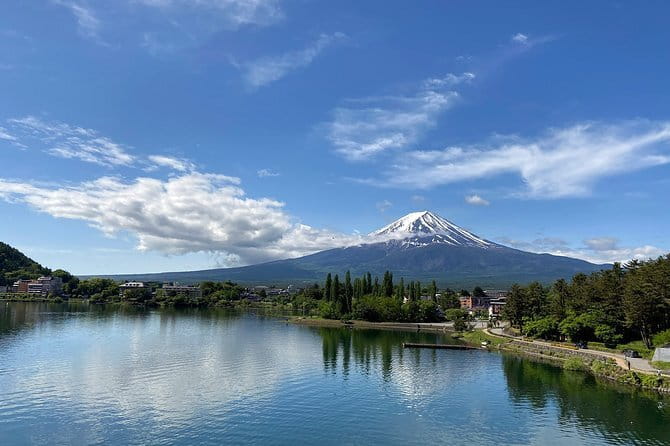
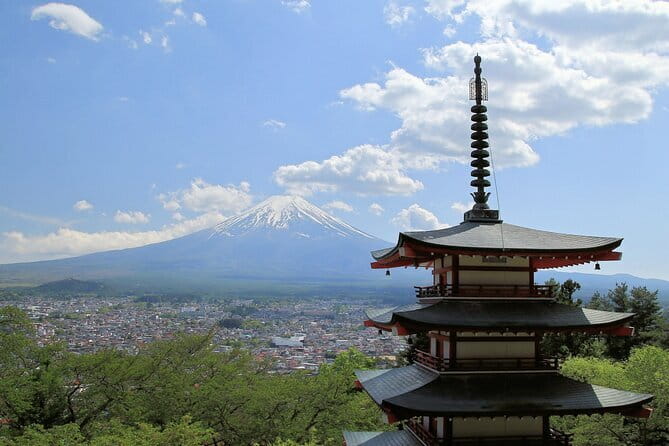
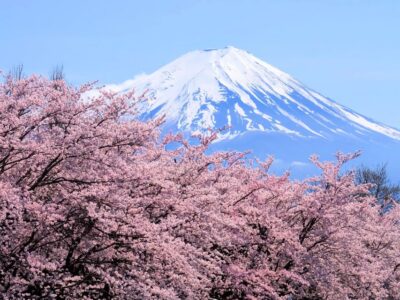
The class promises a breathtaking view of Mount Fuji as you enjoy your creation. Even when weather changes, you usually still get that special Kawaguchiko “big mountain presence” feeling.
What I like is that it is integrated into the experience. You are not just standing outside for a quick photo. You are eating the bowl you made with Mount Fuji in the background, so the scenery becomes part of the reward.
That is a big reason this class is worth doing as a short activity. You are getting both the sensory payoff of ramen and the emotional payoff of place.
Instructor help and group size: when it feels hands-on
This is where the class earns trust. You have an English-speaking instructor, and reviews highlight names like Kimmy and Hiro for helpfulness, plus Mae for enthusiastic, hands-on guidance.
The group size limit is 20 travelers max. In practice, that can mean faster explanation, less waiting, and more time for questions. In one case, a small class of just two people received one-on-one instruction from Mae. You might not always get that exact ratio, but the cap is there for a reason.
If you prefer more personal attention, try to pick a session that is likely to be less crowded. You do not need insider tips to make that work. Your booking timing and session choice can influence how many people share the station time.
Food tasting and what is actually included for $39.14
The price is $39.14 per person, and it is a short course of about one hour. At first glance, you might wonder if it is expensive. But when you break down what is included, the value starts to make more sense.
Included items:
- Everything necessary to make your own ramen
- Food tasting
- Local taxes
- English-speaking instructor time
- Original bandana souvenir
Not included:
- Drinks
- Private transportation fee
Here is the practical math: ramen ingredients, tools, and trained instruction take time and money. Also, ramen is not just one bite. You are learning multiple steps, and you get to take home a souvenir. That pushes this beyond a typical “snack experience.”
Food tasting included also helps you calibrate. You can compare what you make with the flavor direction you were aiming for, so the class feels like learning, not just labor.
What to do before and after class (so you enjoy the whole day)
Plan your day so you arrive ready to cook and eat. Since the class is about an hour, build in a little buffer so you are not rushing from transit or parking.
A few practical tips:
- Wear comfortable clothes. You will be working with dough and handling tasks at your station.
- Be ready for hot food and steam. Cooking classes can heat up the room fast.
- If you have allergies or dietary restrictions, tell the organizer in advance. They specifically ask you to let them know beforehand.
Since drinks are not included, decide ahead of time if you want to grab something nearby before you start. Keeping it simple works best. You will want to focus on the noodles, not hunt for water at the last minute.
After the class, you can keep exploring Kawaguchiko, but you do not need to rush. You already ate a full ramen bowl you made yourself.
Where you meet, and why the location is easy to work with
The meeting point is the Fuji Activity Reservation Center, address: 3487-15 Funatsu, Fujikawaguchiko, Minamitsuru District, Yamanashi 401-0301, Japan. The activity ends back at the meeting point, so you are not left figuring out your return.
It is noted as near public transportation. That is a real quality-of-life detail in Japan, because it saves time and reduces the stress of trying to line up private transport. You will also find it easier to pair this class with other Kawaguchiko stops.
You will have a mobile ticket, so have your phone ready. That small thing matters, especially if you are hopping between activities.
Who should book this ramen cooking class
This is a great fit if you want:
- hands-on cooking in a short window
- an English-friendly class
- a meaningful souvenir, not just a meal
- a Kawaguchiko activity tied to Mount Fuji views
It also works well for couples. One review example described a two-person class that felt very personal. If you like learning with less crowd pressure, this format can suit you.
You might also like it if you are a foodie who wants the ramen “why” behind the bowl. Choosing tare and cooking noodles yourself makes you feel the structure of ramen, not just the flavor.
If you are the type who gets bored watching other people cook, this class solves that problem. You do the steps.
Price and logistics: what $39.14 really buys
At $39.14 for about an hour, you are paying for more than ramen. You are paying for guided noodle-making, tare selection, noodle cooking equipment, a full bowl with toppings, and instruction in English.
Value is not only about the total cost. It is about how much you get in that cost:
- You leave with a skill. Even if you never repeat the whole process, you understand the steps.
- You get a meal that is tied to your choices.
- You get tangible takeaways: the bandana and the certificate.
The only real downside is also the benefit: it is short. If you want a slow, long cooking session with lots of chatting, this will feel time-compressed. But if you want a high-impact activity during a busy Kawaguchiko day, it fits nicely.
Should you book this Lake Kawaguchiko short ramen class?
Book it if you want a practical, memorable hour that mixes cooking skill with Mount Fuji views. The combination of handmade noodles, tare choice, and a real noodle cooker makes it more than a tourist meal. Add the English-speaking instruction and the souvenir bandana, and it becomes a strong value at $39.14.
Skip it only if you hate short classes or you prefer restaurants where you can sit back without cooking. Otherwise, this is one of the better “do something” experiences in Kawaguchiko.
FAQ
How long is the ramen cooking class at Lake Kawaguchiko?
It’s approximately 1 hour.
What is included in the price?
The price includes local taxes, food tasting, everything necessary to make your ramen, an English-speaking instructor, and an original bandana souvenir.
What is not included?
Drinks and any private transportation fee are not included.
Where do I meet for the class?
You meet at Fuji Activity Reservation Center, 3487-15 Funatsu, Fujikawaguchiko, Minamitsuru District, Yamanashi 401-0301, Japan. The class ends back at the meeting point.
Will the class be taught in English?
Yes, the class includes an English-speaking instructor.
What group size should I expect?
The experience has a maximum of 20 travelers.
Do I get a certificate or souvenir?
Yes. Each group receives one official certificate of completion, and all participants receive a bandana souvenir.
What is the cancellation policy?
You can cancel for free up to 24 hours in advance for a full refund. If you cancel less than 24 hours before the start time, the amount paid is not refunded.
Kitchens You Can Book Into
Mount Fuji, Three More Ways

Newest Fujikawaguchiko machi write-ups from the Loving Japan desk
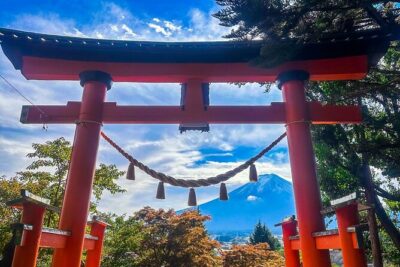
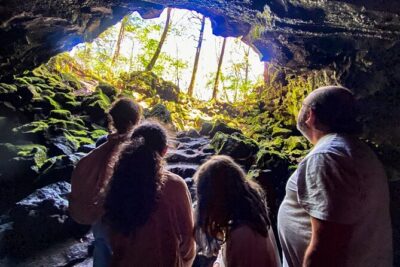

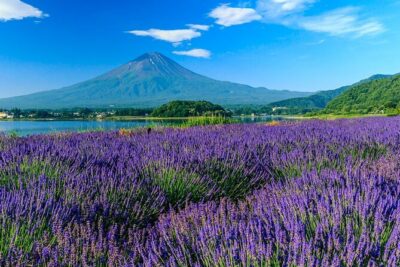
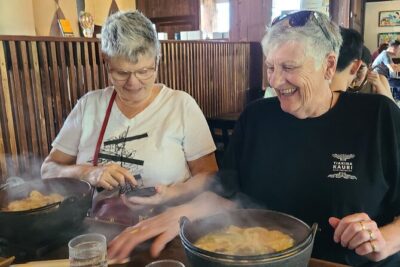

Mount Fuji Day Trips, side by side.
 ★ 5.0Mt Fuji and Hakone 1-Day Bus Tour Return by Bullet TrainFrom $16326,383 reviews
 ★ 4.0Mt Fuji & Hakone Cruise, Drum Show Bullet Train 1 Day from TokyoFrom $1497,413 reviews
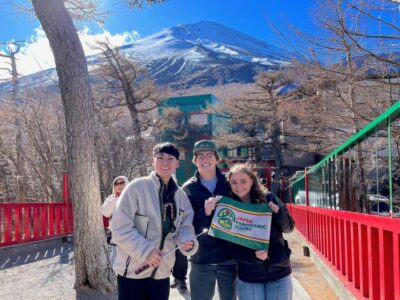 ★ 4.4Tokyo Mt Fuji 5th St & Hakone Cruise Bus Tour w/Bullet TrainFrom $1545,024 reviews
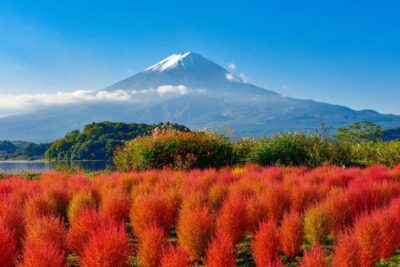 ★ 4.5From Tokyo: Mount Fuji Full-Day Sightseeing TripFrom $684,970 reviews
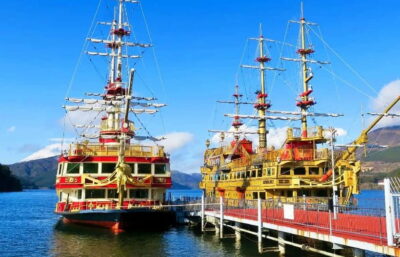 ★ 4.7Mt. Fuji Tour, Hakone Ropeway, Owakudani, Lake AshiFrom $544,002 reviews
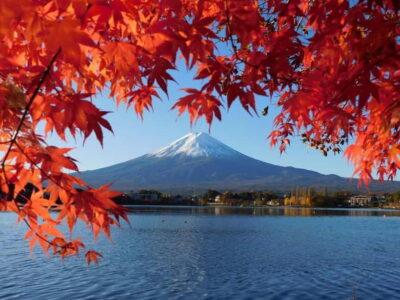 ★ 4.4Mt.Fuji,Kawaguchiko Oishi Park,Arakurayama Sengen ParkFrom $542,682 reviews
 ★ 4.2Mt. Fuji 5th Station & Hakone Cruise 1-Day Bus TourFrom $1292,381 reviews
 ★ 4.7Mt Fuji Top 5 Spots Day Tour: Arakurayama Park,Oshino HakkaiFrom $532,066 reviews