
REVIEW · SAMURAI, NINJA AND SWORD EXPERIENCES
Samurai experience: art and soul of the sword
Sword training starts with manners. This Tokyo experience uses Iaido to teach sword etiquette and bushido values before you ever cut anything. You’ll practice the disciplined flow of drawing and cutting, not flashy fighting.
Two things I really liked: the class starts with how to treat the sword with respect and clear rules, and then you get hands-on practice cutting a target. The optional upgrade, using a real sword to cut a rolled tatami mat (with extra requirements), adds a lot of intensity without turning the lesson into chaos.
One consideration: if you want the real-sword tatami option, you must be 18 or older and sign a waiver. If you’re under that age, you can still take part, but the experience is different in what you cut.
In This Review
- Key highlights you’ll care about
- Sword etiquette comes first, not sword-fighting fantasy
- Where you’ll start in Tokyo, and what to expect before training
- From dojo to samurai attire: learning the rules of the sword
- Cutting a man-shaped target, and how the lesson is paced
- The optional rolled tatami cut: real-sword intensity with rules attached
- Watching the master up close, and what that teaches after you try
- Why this class feels meaningful: bushido as restraint you can practice
- Price and value for a 1.5-hour dojo session in Tokyo
- Logistics that matter: timing, mobility, and waivers
- Who should book this Iaido experience
- Should you book the Samurai experience in Tokyo?
- FAQ
- Where is the meeting point, and what time does it start?
- How long is the Samurai experience: art and soul of the sword?
- Is a mobile ticket used?
- What are the age requirements for the real-sword rolled tatami option?
- What do you actually do during the lesson?
- Is the group size limited?
- What is the cancellation policy?
Key highlights you’ll care about
- Etiquette-first training that frames swordwork as restraint and responsibility
- Small group size (max 10) so you can learn the process, not just watch
- Hands-on cutting of a man-shaped target, with an optional rolled tatami upgrade
- Close-up master demonstration after you’ve tried the movements yourself
- Certificate of completion to mark the experience in a satisfying, simple way
- Moderate physical fitness needed for the movements and handling during practice
Blade work and stagecraft, other sessions
- Tokyo: Samurai Ninja Museum Guided tour and Experience
★ 4.6 · 1,010 reviews - Tokyo: Samurai Sword & Archery Class from Samurai Descendant
★ 5.0 · 603 reviews - Best Samurai Experience in Tokyo
★ 5.0 · 458 reviews - Ninja Experience (Family Friendly) at Samurai Ninja Museum TOKYO
★ 5.0 · 441 reviews
Sword etiquette comes first, not sword-fighting fantasy
A lot of people think samurai training is all about fighting. This experience flips that expectation fast. The lesson begins with how to handle the sword properly and the etiquette that surrounds it, so you’re not just learning motions. You’re learning the mindset that makes those motions mean something.
That matters because Iaido is not about brawling. It’s about controlled movement, timing, and decisive action as a last resort. Even if you’re a total beginner, the structure nudges you toward calm, focus, and restraint. You quickly understand that the “strong” samurai image is more about discipline than aggression.
If you like experiences that feel authentic and specific to Japan, this is a strong match. You’re not doing generic “samurai cosplay.” You’re stepping into a dojo culture where the sword is treated with seriousness from the first minutes.
Where you’ll start in Tokyo, and what to expect before training
You meet at Kuramae Station (2-chōme-3-1 Kuramae, Taito City, Tokyo 111-0051). The session begins at 9:00 am, and the activity ends back at the meeting point. That morning start is useful if you want the rest of your day free to explore Asakusa and the surrounding areas.
Because this is a dojo-based experience, you should expect a simple, practical flow: you arrive, get oriented, and then the training portion takes over. The tour uses a mobile ticket, so have it ready on your phone before you show up.
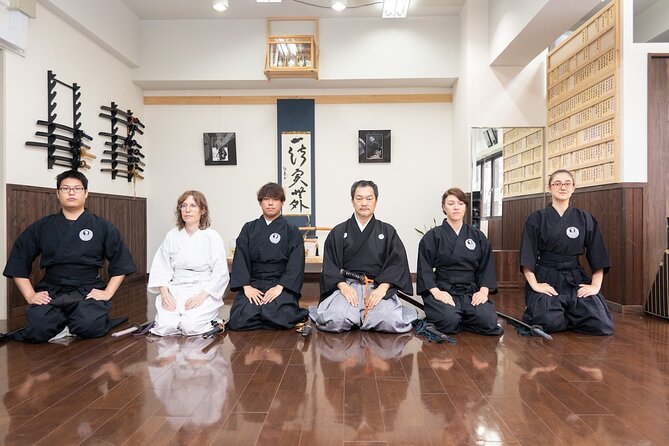
The group is capped at 10 travelers, which usually makes a big difference in how quickly instructors can correct you. You’re less likely to feel like a number. More likely, you’ll feel the pace of a real class.
And yes, there’s a physical component. The experience asks for moderate physical fitness, so be ready for standing practice, controlled movement, and holding your posture while you learn the sequence.
From dojo to samurai attire: learning the rules of the sword
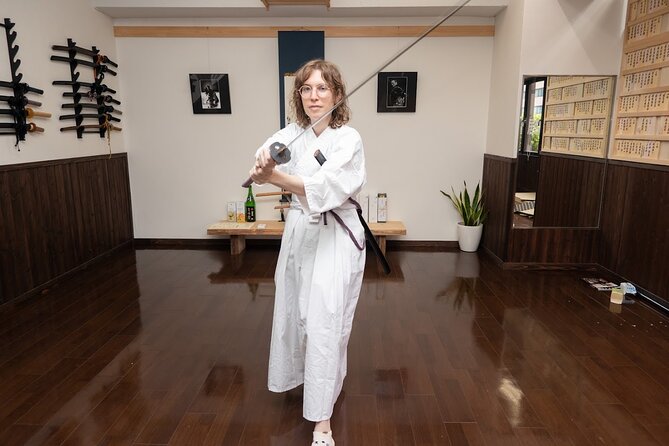
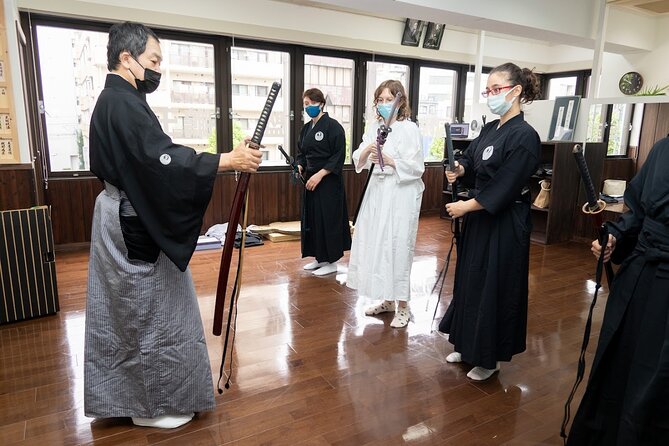
After you arrive at the Iaido dojo, you change into samurai attire and a sword is part of the setup. That moment is more than a photo-op. It helps you take the training seriously, because the clothing and the gear create a different body awareness. You’re not just watching technique, you’re performing it within the rules of the space.
Then the master focuses on the fundamentals of bushido and how courtesy and discipline connect to sword practice. In plain terms, you learn that the sword is not an excuse to act first. It’s a tool paired with self-control, and it comes with responsibilities that shape your behavior even when you’re not swinging anything.
One of the most useful parts of this early segment is how it reframes the whole idea of “drawing” and “cutting.” Instead of treating it like a movie sequence, you learn a flow that’s supposed to feel deliberate and respectful. That changes how you move, because you’re aiming for clarity, not speed.
It’s also a good way to shake off any beginner nerves. You’re not thrown into fighting. You’re taught structure, so you know what you’re supposed to do next.
- Mt Fuji and Hakone 1-Day Bus Tour Return by Bullet Train★ 5.0 · 26,383 reviews
- 1-Day Tokyo Bus Tour★ 5.0 · 14,250 reviews
- Tokyo: teamLab Planets TOKYO Digital Art Museum Entry Ticket★ 4.6 · 9,779 reviews
- Mt Fuji & Hakone Cruise, Drum Show Bullet Train 1 Day from Tokyo★ 4.0 · 7,413 reviews
- Tokyo Mt Fuji 5th St & Hakone Cruise Bus Tour w/Bullet Train★ 4.4 · 5,024 reviews
Cutting a man-shaped target, and how the lesson is paced
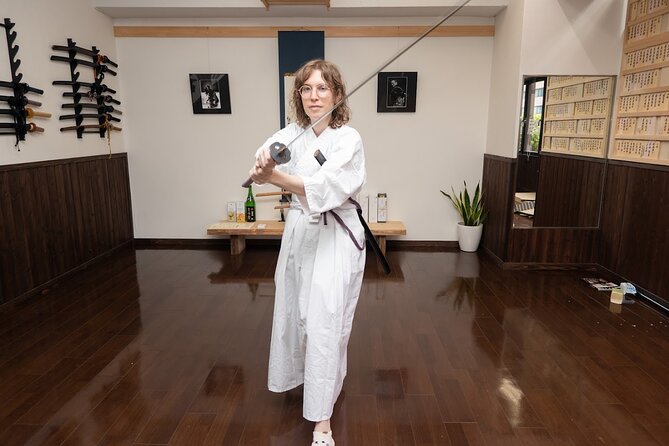
Once you’ve practiced the basics and the etiquette, you’ll move into cutting. The core hands-on part involves slashing a man-shaped cardboard target with a sword. This is where the experience becomes real, fast.
The pacing is important. If you go in expecting constant action, you might be surprised that the cutting happens in a controlled, step-by-step way. You’re not just flinging the blade. You’re learning the sequence and then applying it to the target while staying within the dojo instructions.
That’s exactly why this works for beginners. A cardboard target gives you a safe, clear reference point for learning form. You can focus on your draw and your cut without the added pressure of more advanced targets.
The experience also makes room for close guidance and adjustment. Because the group is small, you’re more likely to get corrections that help you understand what you’re doing wrong right away, instead of just continuing with shaky technique.
The optional rolled tatami cut: real-sword intensity with rules attached
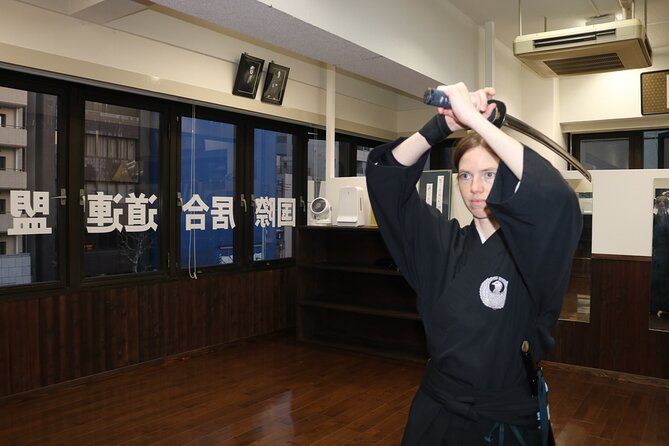
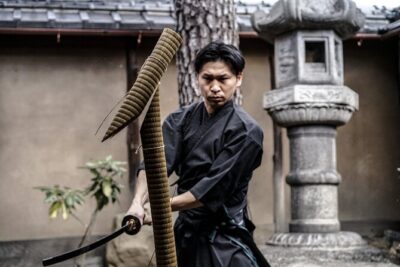
Here’s the upgrade most people ask about: the chance to try cutting a rolled tatami mat with a real sword. This is described as an enhancement option, and it changes the feel of the class because it demands more precision and commitment.
But it comes with clear restrictions. You must be 18 or older on the day of the experience to take the real-sword tatami option, and you must sign a waiver before training. You also need to follow the master’s instructions at all times, which is exactly what you want from a responsible training environment.
If you don’t choose the real-sword option, the minimum age is 5, so younger participants can still join the experience. That means families can consider the class, but the “real steel” tatami upgrade is not for everyone.
Practical advice: decide early which version you want. If you’re eligible and curious about the upgrade, plan your mental focus for it. If you’re not eligible, treat the cardboard cutting and etiquette portion as the real value. It still trains the same philosophy and core Iaido flow.
Watching the master up close, and what that teaches after you try
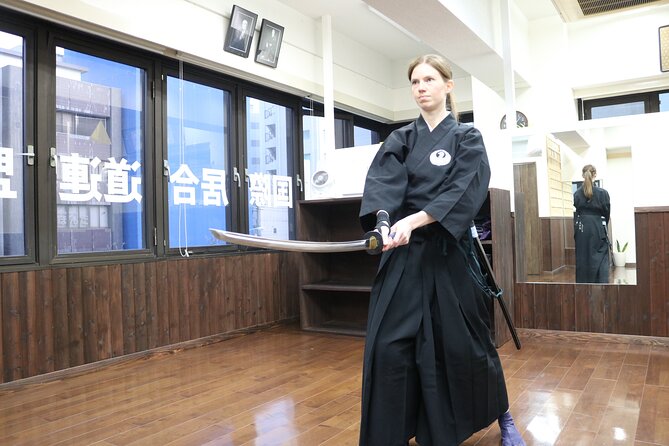
After your hands-on session, you’ll observe the master’s solo demonstration up close. This is one of the most satisfying moments because it reframes what you just practiced.
When you do the movements yourself, you only see your own execution and your own mistakes. Then you watch the master, and suddenly you understand what control looks like in practice. The demonstration connects the dots between etiquette, discipline, and effective technique.
It also gives you a “before and after” feeling. You go from trying to get the sequence right to seeing the sequence become natural. Even if you never become a sword student after this, you leave with a clearer mental model of what Iaido is aiming for.
I like that the demonstration happens after you’ve trained, not before. It turns the solo cut into comprehension, not just spectacle.
And at the end, you receive a certificate of completion, which is a nice, concrete finish to a short but focused class.
Why this class feels meaningful: bushido as restraint you can practice
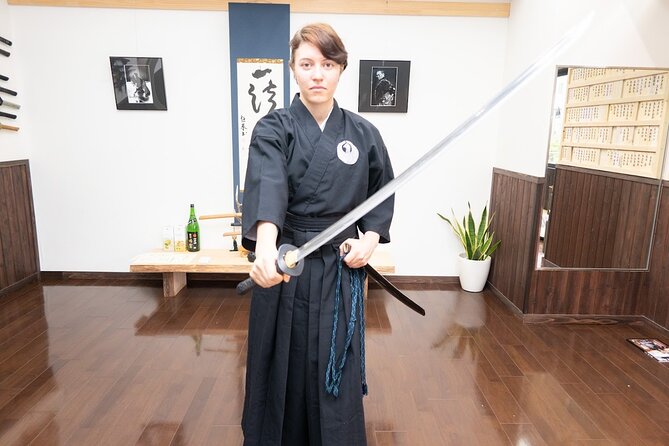
What makes this experience stand out emotionally is not the target or the attire. It’s the way the lesson links the sword to character.
The idea of bushido can sound like a slogan if you only hear it. Here, you practice it through procedure. The etiquette portion teaches courtesy around the sword. The discipline portion teaches patience and control. The pacing teaches restraint, because actions are structured and deliberate.
Even the way you learn about “strong” behavior is practical. You realize the sword is not about impulsive dominance. The framing is that a true warrior resolves problems through discussion, and only uses force when it is truly necessary. That’s not just philosophy for a wall. It changes how you interpret every instruction you receive.
If you’re the type of traveler who likes to connect history to lived behavior, you’ll probably appreciate this. You’re not studying samurai as a distant legend. You’re learning a system of behavior built around self-control, and you’re doing it under direct instruction.
Price and value for a 1.5-hour dojo session in Tokyo
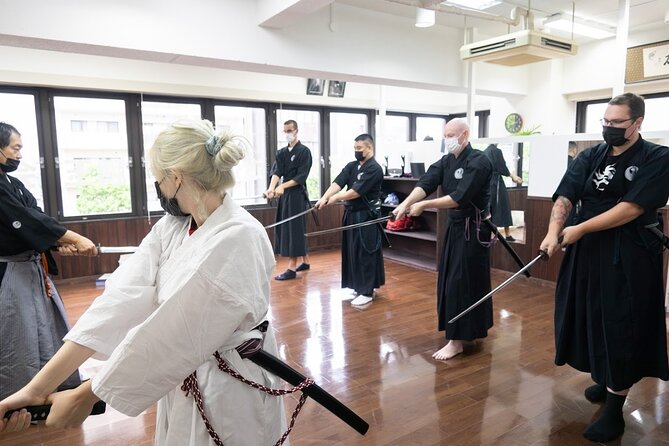
At $216.86 per person, this isn’t a cheap “activity add-on.” So it helps to look at what you’re paying for.
First, the class includes hands-on instruction in Iaido principles, not just observation. Second, you’ll get a structured lesson that begins with sword etiquette and bushido fundamentals, then moves into cutting. Third, group size is capped at 10 travelers, which supports more direct attention than you’d expect from larger group tours.
Fourth, the experience includes a close-up master solo demonstration and a certificate. Those aren’t huge in time, but they make the experience feel complete.
Finally, the optional real-sword tatami upgrade adds extra intensity, and it’s governed by safety rules like waivers and age requirements. That tells you the pricing likely reflects instructor responsibility and training care, not just access.
Bottom line: if you want a brief, high-focus cultural activity that treats swords seriously and teaches real discipline, this can feel like good value. If you only want entertainment, or you want a long afternoon, you might feel the cost is steep for the time.
Logistics that matter: timing, mobility, and waivers
This experience lasts about 1 hour 30 minutes. It’s short, but it’s built to pack in etiquette, practice, and a demonstration without turning into a full-day commitment. The start time is 9:00 am, so plan your morning accordingly.
You’ll be near public transportation, and the meeting point is specific, so it’s straightforward to find once you’re at Kuramae Station. The use of a mobile ticket means you should be comfortable showing your voucher on your phone.
If you plan to do the real-sword tatami cut, note the extra requirements: 18+, a waiver, and strict adherence to the master’s directions. Even if you choose not to do the upgrade, you should still expect to follow instructions carefully throughout the session.
Who should book this Iaido experience
I’d point you toward this experience if you want more than a themed photo. It’s ideal for travelers who:
- like structured cultural learning with hands-on practice
- care about Japanese values and discipline, not just props
- prefer small-group instruction (this one maxes at 10)
- are comfortable with moderate physical participation for an hour and a half
It can also work well for families, since the minimum age without the real-sword option is 5. Just be aware that the most intense upgrade is limited by age and waiver requirements.
If you’re someone who gets nervous in safety-heavy activities, don’t ignore that. This class places emphasis on etiquette and rules. That’s good news if you want a serious environment, but you should still be ready to listen, follow, and act with care.
Should you book the Samurai experience in Tokyo?
Book it if you want an Iaido class that teaches the values behind swordwork. The best part is how quickly you learn that this is about courtesy, restraint, and disciplined movement, not rowdy sword play. You also get a close-up master demonstration right after your own practice, which makes the learning feel real.
Consider skipping or choosing a different activity if you’re mainly chasing high-action thrills. The cutting is there, but the lesson starts with etiquette and bushido fundamentals, and it keeps a controlled pace. Also, if you want the rolled tatami cut with a real sword, double-check the 18+ rule and waiver requirement ahead of time.
If you match those needs, this is the kind of Tokyo experience you’ll remember for its seriousness and clarity, not just for looking cool in a costume.
FAQ
Where is the meeting point, and what time does it start?
You’ll meet at Kuramae Station (2-chōme-3-1 Kuramae, Taito City, Tokyo 111-0051, Japan). The start time is 9:00 am, and the activity ends back at the meeting point.
How long is the Samurai experience: art and soul of the sword?
The duration is approximately 1 hour 30 minutes.
Is a mobile ticket used?
Yes, the experience includes a mobile ticket.
What are the age requirements for the real-sword rolled tatami option?
You need to be 18 or older on the date of your experience, and you must sign a waiver. If you do not opt for the real sword option, the minimum age to participate is 5.
What do you actually do during the lesson?
You change into samurai attire with a sword, learn the fundamentals of Iaido and bushido, practice the flow of the experience, and slash a man-shaped cardboard target. You can optionally add cutting a rolled tatami mat with a real sword.
Is the group size limited?
Yes. The experience has a maximum of 10 travelers.
What is the cancellation policy?
You can cancel for free up to 24 hours in advance for a full refund. If you cancel less than 24 hours before the start time, the amount you paid is not refunded.
Blade Work and Stagecraft



Newest Tokyo write-ups from the Loving Japan desk






Samurai, Ninja and Sword Experiences, side by side.
 ★ 4.5Samurai Restaurant Show Ticket with 2 DrinksFrom $551,307 reviews
 ★ 5.0Kyoto Samurai ExperienceFrom $1191,294 reviews
 ★ 4.6Samurai Ninja Museum Guided tour and ExperienceFrom $271,010 reviews
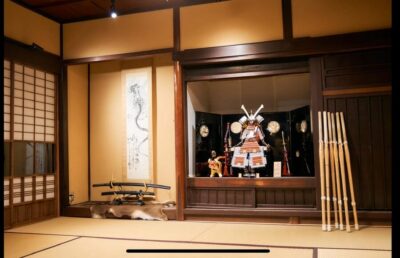 ★ 4.9Kendo and Samurai Experience with Uniform and GearFrom $103815 reviews
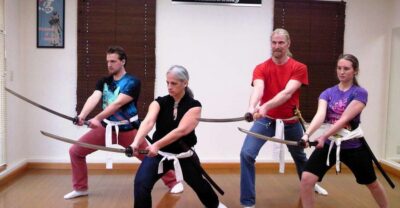 ★ 4.9Samurai Sword Class by Experts in Traditional ArtsFrom $64657 reviews
 ★ 4.5Skip the lines Basic Ticket at SAMURAI NINJA MUSEUM KYOTOFrom $28632 reviews
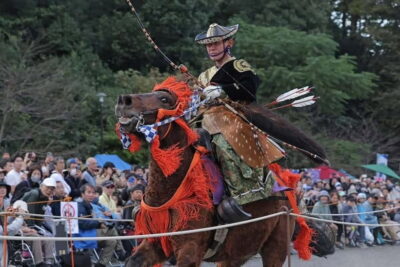 ★ 5.0Samurai Sword & Archery Class from Samurai DescendantFrom $193603 reviews
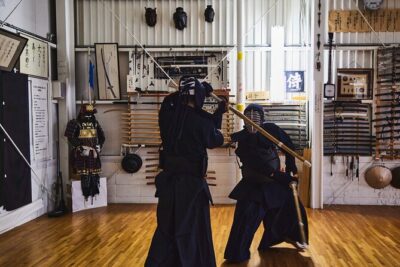 ★ 5.0Samurai Training Experience KENDO in OsakaFrom $131515 reviews
Filed on these lists too