
REVIEW · SAMURAI, NINJA AND SWORD EXPERIENCES
Samurai Experience Mugai Ryu Iaido in Tokyo
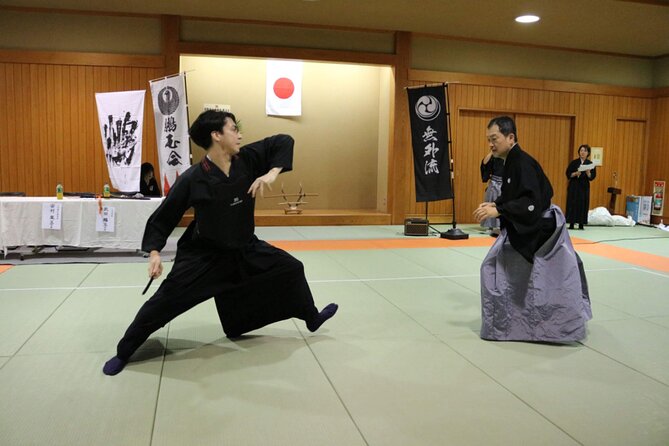
A samurai session in Tokyo feels hands-on and respectful. In Kuramae, you train in Mugai-ryu iaido with Master Takeda and an English-speaking instructor, and you get to try the motions yourself, including tameshigiri.
I love the small-group setup, max 8 people, because you get real coaching instead of watching from the edge. I also like how they pace things with safety basics first, so you can actually follow the flow.
One thing to plan for: there is no hotel pickup, and it’s a tight 1-hour class once you arrive.
In This Review
- Key things I’d circle before you book
- Mugai-ryu iaido in Kuramae, Tokyo: what you’re really signing up for
- The 60-minute flow: changing into hakama and learning the “shape” of iaido
- Mock katanas, safety, and tameshigiri: the part you’ll remember
- Watching real iaido kata at the end: why the final demonstration matters
- What you get beyond the sword: attention, photos, and the culture angle
- Price and value for $151.92: is it worth it?
- Getting there in Tokyo: Kuramae logistics that affect your comfort
- Who this is best for, and who should maybe skip
- Should you book Samurai Experience Mugai Ryu Iaido in Tokyo?
- FAQ
- Where is the meeting point, and do we return there?
- How long is the Samurai Experience Mugai Ryu Iaido lesson?
- How much does it cost?
- How many people are in the group?
- Is this booking issued as a mobile ticket?
- What’s included in the price?
- Are real swords used?
- What do you do during the 60-minute lesson?
- Is there hotel pickup or drop-off?
- When do I get confirmation, and can I cancel for a refund?
Key things I’d circle before you book
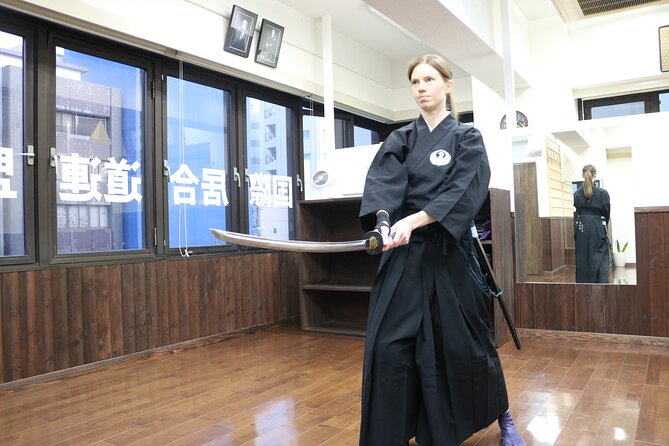
- Master Takeda Hougyoku teaches the Mugai-ryu flow, with a final look at real iaido kata.
- Mock katanas keep the lesson focused and safer while you learn draw, grip, and sheathing.
- Tameshigiri practice lets you try a core iaido skill type during the session.
- Hakama rental included, so you can dress the part without bringing anything.
- Max 8 travelers means better attention and more chances to ask questions and take photos.
Blade work and stagecraft, other sessions
- Tokyo: Samurai Ninja Museum Guided tour and Experience
★ 4.6 · 1,010 reviews - Tokyo: Samurai Sword & Archery Class from Samurai Descendant
★ 5.0 · 603 reviews - Best Samurai Experience in Tokyo
★ 5.0 · 458 reviews - Ninja Experience (Family Friendly) at Samurai Ninja Museum TOKYO
★ 5.0 · 441 reviews
Mugai-ryu iaido in Kuramae, Tokyo: what you’re really signing up for
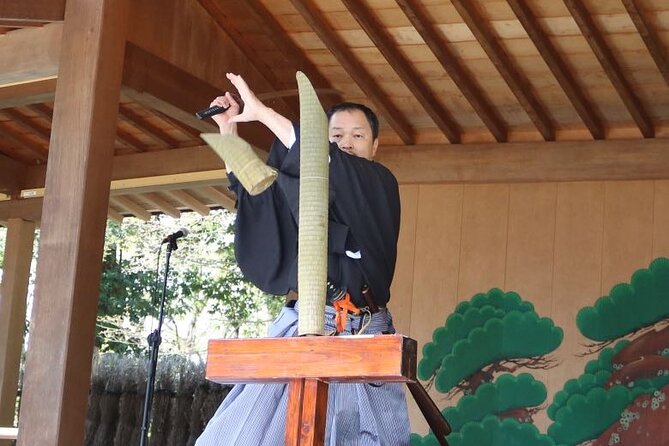
This isn’t a casual show. It’s structured training. For Mugai-ryu iaido, you’ll spend about an hour learning how to move, how to hold the sword, and how to perform set patterns called kata. The goal is not just to look cool in photos, it’s to understand the choreography, especially the start and finish, drawing and sheathing.
The magic here is the teacher. You’ll be guided by Master Takeda Hougyoku, described as the head of the International Iaido Organization Hougyoku-kai, and an instructor tied to the 340-year-old spirit of Mugairyu. Even if you know nothing about iaido, you’ll feel the difference between a lecture and a living martial-art lesson.
And because it’s small group instruction (maximum 8), you’re not stuck in a long line waiting for someone to notice you. You get time. That matters for first-timers, and it also matters if you’re an experienced traveler who hates tours that feel like a conveyor belt.
The 60-minute flow: changing into hakama and learning the “shape” of iaido
The session is tightly packed, but it follows a logical progression. You’ll start by changing clothes into the rental hakama. That’s not just for costume points. It helps you experience how the outfit supports your movement and posture during training.
Next comes the explanation: you’ll get an overview of what iaido is, led by Master Takeda and the instructor. After that, they lay out the flow of what you’ll do during the lesson. This is where you learn the safe handling basics, especially how to use the sword imitations they provide.
You’ll go step-by-step through fundamentals such as:
- How to draw and sheath the sword (using the imitation)
- How to hold the sword properly
- Basic patterns that connect the movements
For me, the best part of this segment is that it gives you structure. Even if you can’t “master” anything in one hour, you walk out understanding the order of actions and what each movement is meant to accomplish.
Mock katanas, safety, and tameshigiri: the part you’ll remember
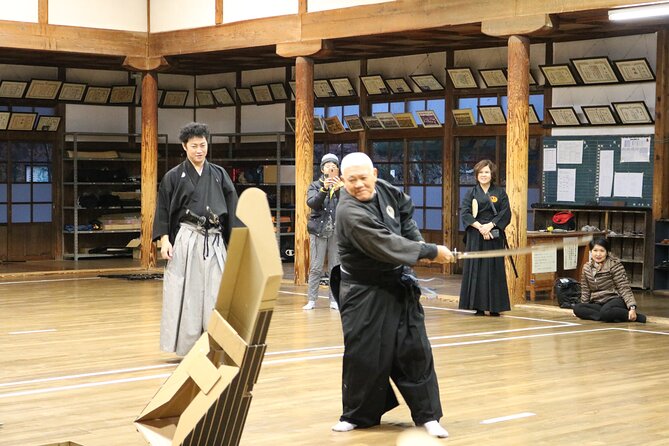
Worried about safety? You should be comfortable here. The experience uses mock katanas, not live blades. That makes the training feel more accessible while still letting you practice real technique patterns.
Then you hit one of the most exciting components: tameshigiri. In the lesson, tameshigiri is described as samurai practice where a swordsman uses the sword to actually cut something. Even with imitation weapons, this is the moment where the class stops being only about “pose” and becomes about timing and commitment within the drill they set up.
Important practical note: I recommend you treat your first attempt like a form exercise, not a performance. The instructor attention is there for a reason. If you go in trying to look perfect, you’ll miss the cues that make your movements safer and more accurate.
After your hands-on practice, you also get to watch Mugai-ryu kata. Kata here are predetermined patterns of attack, which means you’re seeing the logic behind the movements you practiced. This contrast between doing it and watching it land cleanly is a big reason people leave feeling like they got value, not just a photo op.
- Mt Fuji and Hakone 1-Day Bus Tour Return by Bullet Train★ 5.0 · 26,383 reviews
- 1-Day Tokyo Bus Tour★ 5.0 · 14,250 reviews
- Tokyo: teamLab Planets TOKYO Digital Art Museum Entry Ticket★ 4.6 · 9,779 reviews
- Mt Fuji & Hakone Cruise, Drum Show Bullet Train 1 Day from Tokyo★ 4.0 · 7,413 reviews
- Tokyo: Shinjuku Food Tour (13 Dishes at 4 Local Eateries)★ 5.0 · 6,603 reviews
Watching real iaido kata at the end: why the final demonstration matters
The session ends with a chance to see real iaido kata before your eyes. That final viewing is more than entertainment. It helps you connect what you felt during your own practice to the bigger picture: how this martial art organizes movement into repeatable sequences.
Seeing the kata while you’re still “warm” from training makes a difference. You’re not just learning random techniques. You’re learning patterns, and kata are the backbone of that system.
It also helps with context. During the lesson, you hear the explanation of what Mugai-ryu is aiming for, and then you watch it applied as a complete set. That’s where the experience becomes memorable, because it turns the hour into a story with a beginning (safety and fundamentals), a middle (practice), and an end (real kata).
What you get beyond the sword: attention, photos, and the culture angle
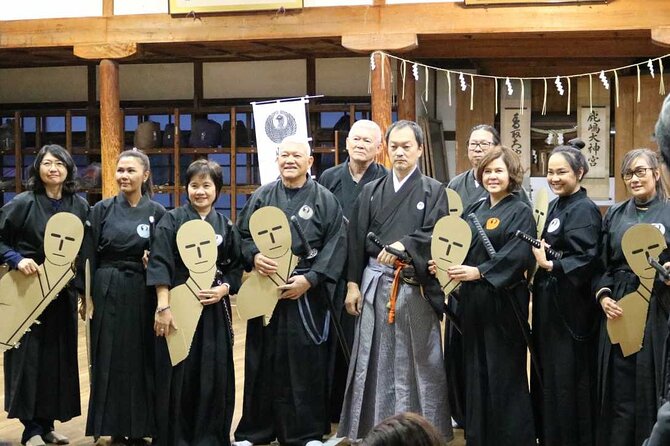
A lot of Tokyo activities can feel interchangeable. This one has a specific cultural focus: learning the martial art approach to sword drawing and sheathing, with Mugai-ryu emphasized as practical. That theme matters because it shifts the experience away from movie-style swordplay and toward technique and discipline.
You’ll also have plenty of opportunities to take photos. In my experience, photo moments work best when the instructor flow is calm and you’re not interrupting. Here, since you’re in a training environment with short segments, photos fit naturally during breaks or positions when the group is set. Still, keep your camera ready but don’t rush the moment when someone is demonstrating form.
The other cultural layer is the small-group coaching style. You’ll be learning under the experienced eye of the instructors, and one review highlight that really matches the vibe of the class is the way the teachers are described as welcoming and professional, with a strong desire to pass on the art. That kind of attitude makes it easier to ask questions, even if you feel awkward at first.
Price and value for $151.92: is it worth it?
At $151.92 per person for about an hour, this isn’t a budget activity. But value depends on what you’re comparing it to.
Here’s what you’re getting for the price:
- Instruction in English
- A small group (max 8)
- Rental hakama
- Japanese sword rental
- A focused lesson that includes both practice and a kata viewing
- Teaching led by Master Takeda Hougyoku
If you’ve been in Tokyo long enough to notice that many “experiences” are short on coaching and long on waiting, this one looks built for actual technique. The included rental gear also reduces friction. You don’t need to hunt down proper clothing or bring equipment, and that saves both time and hassle.
Where the price may sting is the duration. It’s only about 60 minutes, so you’re not buying hours of training. You’re buying a high-quality introduction and a hands-on taste of Mugai-ryu. If that matches what you want, it feels like a solid spend.
Getting there in Tokyo: Kuramae logistics that affect your comfort
This session starts at 4-chōme-20-10 Kuramae, Taito City, Tokyo 111-0051, and it ends back at the meeting point. There’s no pick-up or drop-off at hotels or tourist attractions, so you’ll want to plan your own route on public transportation.
Because you change clothes on site, it’s smart to wear comfortable basics to start. Think easy layers that you can remove and put back, and footwear you can stand in for a while.
Also, arrive with time to spare. When you’re switching into hakama and settling into the training space, being rushed makes everything harder. Give yourself a buffer so you can get your bearings fast and focus on learning.
The booking uses a mobile ticket, and confirmation is received within 48 hours of booking, subject to availability. That’s usually fine for Tokyo planning, but if you’re traveling close to your dates, don’t leave it to the last minute.
Who this is best for, and who should maybe skip
I’d point this toward:
- First-time visitors who want one very Japanese, very hands-on cultural activity beyond temples and food lines
- Frequent Tokyo travelers who have already done the “usual hits” and want something skill-based
- Anyone curious about martial arts but nervous about safety, since mock katanas are used
You might pass if:
- You strongly dislike changing clothes in the middle of a schedule
- You want a longer multi-hour training session, because this is tightly timed at about an hour
- You need hotel pickup or a fully guided walking tour component, since there’s no pick-up or drop-off
Should you book Samurai Experience Mugai Ryu Iaido in Tokyo?
If you want a real, structured introduction to Mugai-ryu iaido, I think it’s an excellent pick. Master Takeda Hougyoku’s presence, the small group attention, and the mix of fundamentals, practice, and kata viewing create a complete experience in a short window.
Book it if you like hands-on learning and you’re curious about how Japanese martial arts are taught as repeatable patterns. Skip it if you’re looking for a long deep training session or you need door-to-door transport.
My bottom line: for an hour in Tokyo, this gives you a memorable way to experience tradition through technique, not just observation. And that combination is hard to find when you’re trying to fill days with meaning, not just checkboxes.
FAQ
Where is the meeting point, and do we return there?
The class starts at 4-chōme-20-10 Kuramae, Taito City, Tokyo 111-0051, Japan. The activity ends back at the same meeting point.
How long is the Samurai Experience Mugai Ryu Iaido lesson?
It lasts about 1 hour.
How much does it cost?
The price is $151.92 per person.
How many people are in the group?
The experience has a maximum of 8 travelers.
Is this booking issued as a mobile ticket?
Yes, it uses a mobile ticket.
What’s included in the price?
You get rental hakama, an instructor (English speaking), and Japanese sword rental.
Are real swords used?
No. Only mock katanas are used during this small-group experience for safety.
What do you do during the 60-minute lesson?
You change clothes, learn what iaido is, get an overview of how to safely handle the imitation sword, practice basic patterns including draw and sheath, try tameshigiri, and watch a demonstration of Mugai-ryu iaido kata. You also get a chance to see real iaido kata at the end.
Is there hotel pickup or drop-off?
No. Pick-up and drop-off at hotels and tourist attractions are not included.
When do I get confirmation, and can I cancel for a refund?
Confirmation is received within 48 hours of booking, subject to availability. You can cancel for free up to 24 hours before the experience start time for a full refund.
Blade Work and Stagecraft



Newest Tokyo write-ups from the Loving Japan desk



Samurai, Ninja and Sword Experiences, side by side.
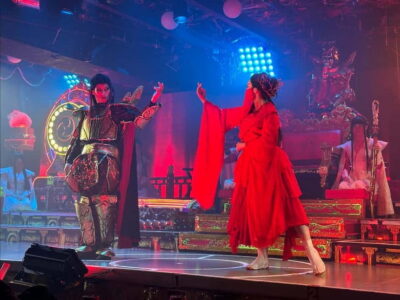 ★ 4.5Samurai Restaurant Show Ticket with 2 DrinksFrom $551,307 reviews
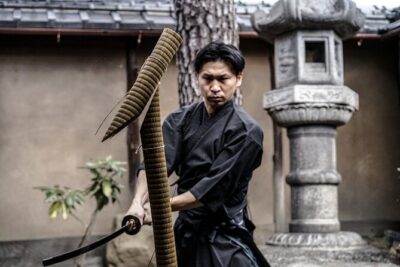 ★ 5.0Kyoto Samurai ExperienceFrom $1191,294 reviews
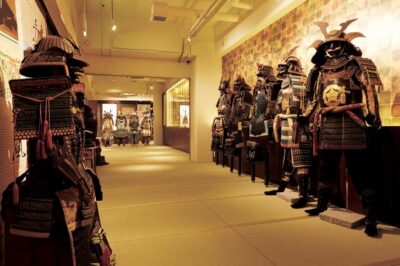 ★ 4.6Samurai Ninja Museum Guided tour and ExperienceFrom $271,010 reviews
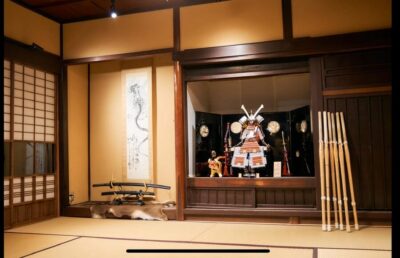 ★ 4.9Kendo and Samurai Experience with Uniform and GearFrom $103815 reviews
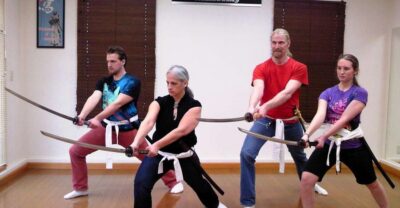 ★ 4.9Samurai Sword Class by Experts in Traditional ArtsFrom $64657 reviews
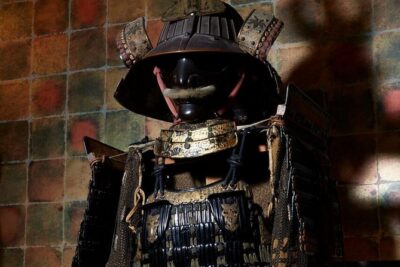 ★ 4.5Skip the lines Basic Ticket at SAMURAI NINJA MUSEUM KYOTOFrom $28632 reviews
 ★ 5.0Samurai Sword & Archery Class from Samurai DescendantFrom $193603 reviews
 ★ 5.0Samurai Training Experience KENDO in OsakaFrom $131515 reviews
Filed on these lists too