
REVIEW · KYOTO TEA CEREMONIES AND MATCHA
Tea ceremony experience with simple kimono in Okinawa
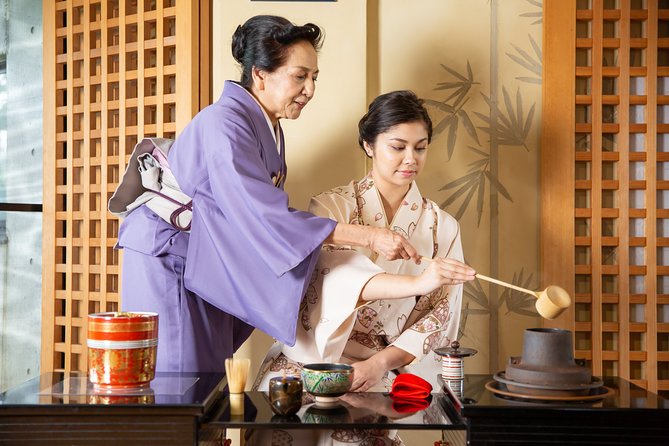
A tea room and a kimono in Okinawa. This experience at Sasagirian turns tea ceremony basics into something you can actually do, not just watch. You’ll wear a simple kimono, learn how to move through the small tea-room entrance, and get hands-on with the tools.
What I like most is the calm, detailed setting, from the hanging scroll and flowers to the care for each utensil. I also like that the format uses tables and chairs in the Ryu-Rei-style room, so it’s easier to join even if you cannot sit up the way some traditional setups require. A small consideration: it depends on good weather, and the group stays small, so you may need to plan ahead for the date you want.
In This Review
- Key highlights you should care about
- Sasagirian in Onna-son: a calm setting that feels made for tea
- The simple kimono moment, and how you actually step into the room
- Tea-room manners: scrolls, flowers, and how to look without rushing
- Moving to Ryu-Rei-style tables and chairs, and tasting Okinawan sweets
- The tea tools routine: cleansing, cloth handling, and respectful care
- Making your own green tea and tasting matcha you prepared
- The gold folding screen photo, then changing cloths
- Price and value: what $85.39 buys you in real terms
- Who should book this tea ceremony (and who might not)
- Weather and timing basics for Onna-son
- Should you book this Okinawa tea ceremony at Sasagirian?
- FAQ
- Where does the tea ceremony take place?
- How long is the experience?
- How much does it cost?
- Is it a mobile ticket?
- How many people are in each group?
- When should I reserve?
- What are the main steps during the ceremony?
- Can I participate if I cannot sit up?
- Are there age limits?
- What if weather is bad?
Key highlights you should care about
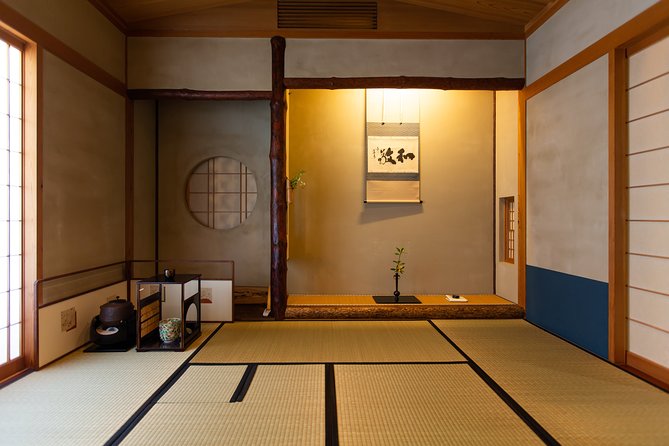
- A real tea-room setup with a guided walkthrough of manners, scroll, flowers, and utensils
- Simple kimono included, plus time to change clothes during the class
- Ryu-Rei-style seating with tables and chairs, and help for people who cannot sit up
- Tasting before you make it, with Japanese and Okinawan sweets before bitter tea
- Hands-on matcha, where you add matcha and hot water and taste your own cup
- Photo moment in front of the gold folding screen
Still weighing up options in Onna son? These are the ones our reviewers rated highest.
- Snorkeling in the Blue Cave area【Okinawa Prefecture: Free feeding & photo images!English and Chinese speaking guide available!
★ 4.5 · 249 reviews - [Okinawa Blue Cave] Snorkeling with Private Guide+ Free Photos
★ 5.0 · 127 reviews - Blue Cave Area Experience Diving!Free feeding & photo images Chinese guide available!1 group with a dedicated instructor
★ 4.5 · 89 reviews - Blue Cave Private Snorkeling with Photoshoot
★ 4.5 · 49 reviews
Sasagirian in Onna-son: a calm setting that feels made for tea
This tea ceremony takes place in Onna-son at the Japanese Cultural Experience Facility Sasagirian, a straightforward meeting point you can reach by public transportation. The class runs about 1 hour and 15 minutes, and the ticket is a mobile one, which makes day-of logistics easy. The group size is capped at a small number, and the minimum is 2 people, so you’re not treated like a faceless crowd.
Sasagirian matters because it is set up as a real traditional tea space, not a quick show-and-tell. You’ll be guided through the experience step by step, including how to enter the tea room, what to notice, and how to handle the tea tools. Reviews also point to the atmosphere feeling peaceful, with attention paid to small visual details, including nature-inspired elements.
One practical thing to know: the experience requires good weather. If it’s canceled due to weather, you’ll be offered a different date or a full refund, so don’t wait until the last minute to book if your Okinawa days are tight.
The simple kimono moment, and how you actually step into the room
The tour starts with a kimono change. You’ll put on a simple kimono first, then move through the tea-room routine with the instructor. This matters because tea ceremony is not just about flavor. It’s about how you arrive, how you sit or position yourself, and how you treat the space and objects in front of you.
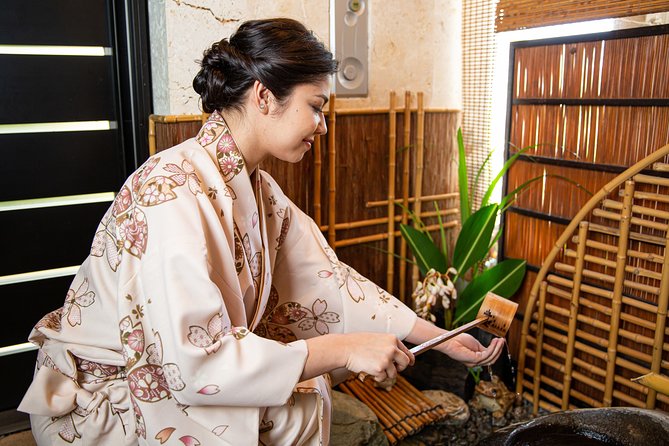
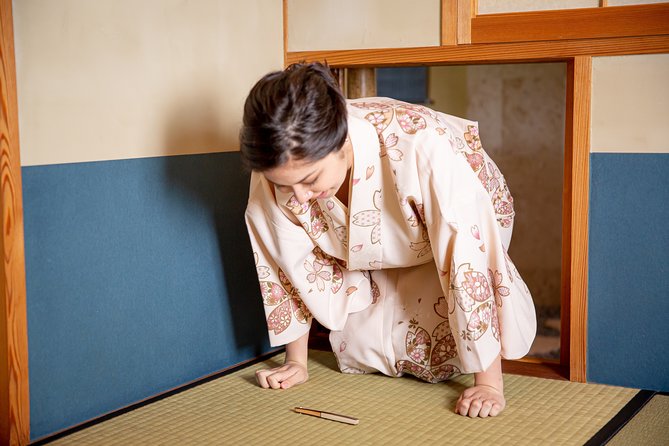
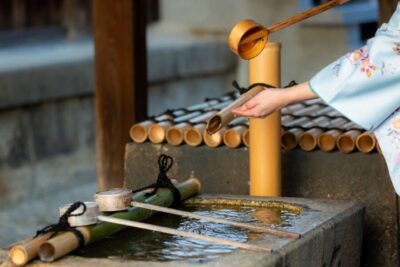
Next comes hand cleansing. It’s a short step in the flow, but it sets the tone for what follows: quiet focus and respectful movement. You’ll learn how to enter through the small entrance of the tea room, which is one of those details that instantly makes the experience feel different from a normal cultural talk.
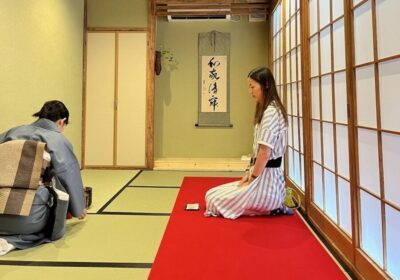
Then you’ll slow down to notice what’s inside. The instructor introduces the hanging scroll, the flower arrangement, and the tea tools. It sounds small, but it’s exactly what turns tea ceremony into a full sensory lesson. You’re guided to appreciate the arrangement instead of rushing past it for a photo.
From a comfort standpoint, the class is designed so most people can participate. And if you cannot sit up in the traditional way, you can still join. That single point makes this a lot more realistic for families and multigenerational groups.
Tea-room manners: scrolls, flowers, and how to look without rushing
One of the most praised parts is the reverence you feel in the tea room. The instructor doesn’t just tell you what to do. You’ll also learn how to observe the room, including the hanging scroll and flowers, and how to regard the tea tools as important objects.
That guidance matters because many visitors expect tea ceremony to be mostly tasting. Here, the pacing is the point. You’ll learn manners for entering and being present, then you’ll appreciate the tools and visual details before you move on to tea at the table.
There’s also a photo-friendly moment later, but the lesson encourages you to first understand what you’re seeing. That order makes the place feel less like a backdrop and more like a functioning ceremony room.
- Blue Cave Introductory Dive–Private Guide, Boat Tour&Free Photos★ 5.0 · 34 reviews
Moving to Ryu-Rei-style tables and chairs, and tasting Okinawan sweets
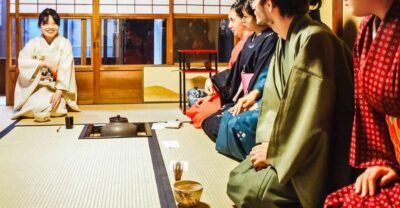
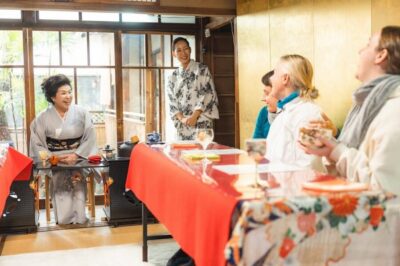
After the initial tea-room section, you move to a room arranged in the Ryu-Rei-style setup. This is where tables and chairs for the tea ceremony are used, which is a big deal for accessibility. The itinerary is built so you’re not forced into an awkward posture. You’ll still go through the ceremony flow, just with a seating style that is easier for many people.
At the tables, you’ll enjoy tasting sweets first, including Japanese and Okinawan sweets. The order is important: sweets come before the bitter tea. That shift helps you adjust your palate and also makes the experience feel like a real sequence rather than random bites.
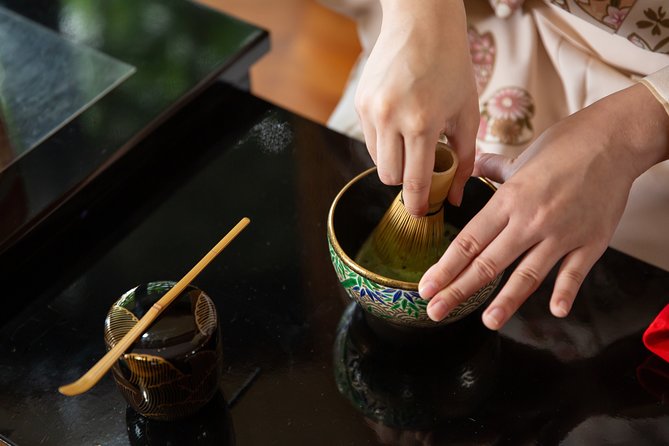
Then you’ll learn how to handle the silk cloth and cleanse the tea tools. This is the part that turns matcha from a drink you buy into something you understand as a process. It’s also where a good instructor makes the difference. The Tea Master and her translator are mentioned as kind and attentive, and you can expect clear guidance, including support if something is unclear.
If you’re bringing kids or visiting with relatives, this “learn the steps, then taste” format is usually easier than a fast lecture. The ceremony has enough structure to keep people engaged, but still moves at a calm pace.
The tea tools routine: cleansing, cloth handling, and respectful care
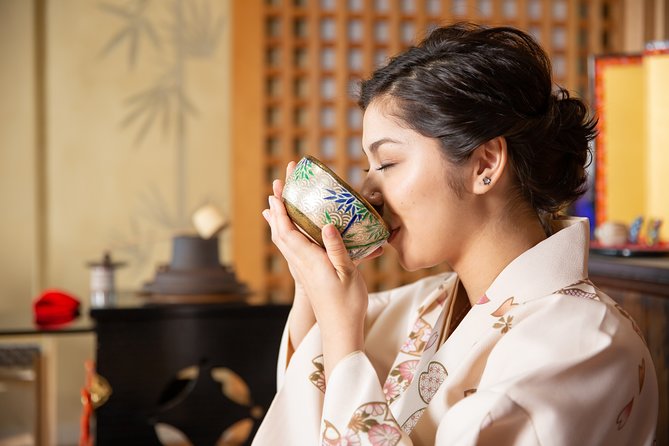
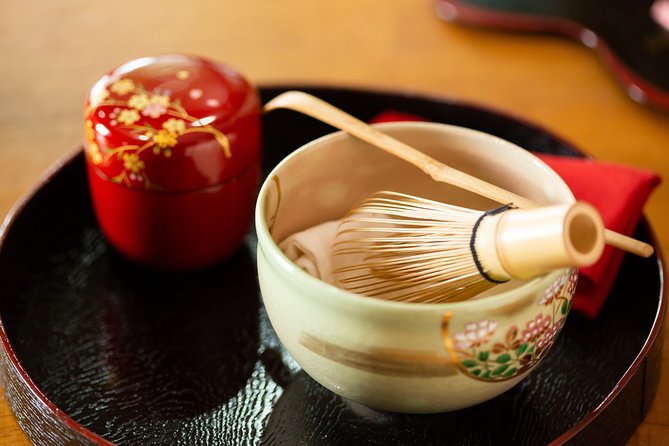
Tea ceremony is hands-on, but not in a messy way. You’ll learn how to handle the silk cloth, and you’ll practice cleansing the tea tools as part of the ritual. This isn’t just performative etiquette. It’s part of how the experience teaches respect for the objects you use.
It also helps you avoid the most common mistake visitors make during cultural demonstrations: treating objects like props. Here, you’re taught to slow down and handle tools properly, and that makes the tea feel more meaningful when it’s finally yours.
I like that the instruction includes the tool-cleaning steps rather than skipping straight to making matcha. It makes the process feel complete, not shortened for convenience.
Making your own green tea and tasting matcha you prepared
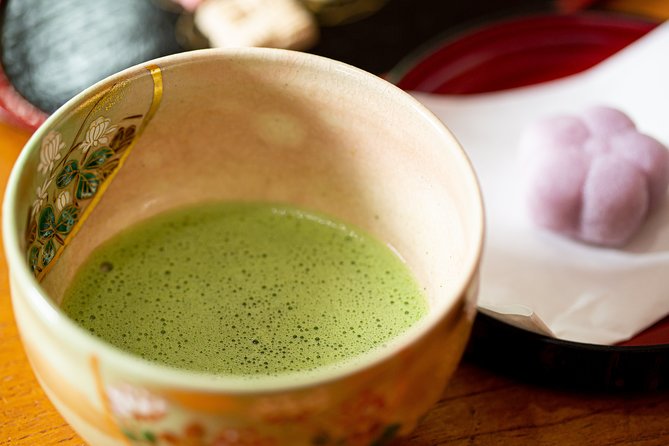
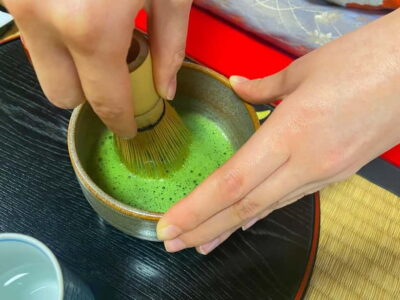
The highlight is making your own green tea, including matcha. You’ll add matcha green tea and hot water into the tea bowl, then make your own tea and taste it. It’s a very practical skill you leave with, even if you never recreate the exact ceremony at home.
This part is also where the class feels most satisfying. You don’t just watch someone else perform. You get to handle the key actions in the sequence, and you get the payoff of tasting what you made.
That taste is tied to the earlier lesson. Because you already learned about the tools and the flow of sweets before bitter tea, your cup doesn’t feel random. It feels like the final step of a guided experience.
And yes, you’ll also enjoy the tea you make. If you’re worried about getting it wrong, the structure takes care of that. You’re guided through what to do, then you taste the result.
The gold folding screen photo, then changing cloths
There’s a built-in photo moment at the end of the ceremony. You’ll take photos in front of the gold folding screen. It’s a simple detail, but it’s timed so you get a nice keepsake after the experience has already sunk in.
Then you’ll change cloths again as part of wrapping up. This matters if you’re thinking about your day after the class, since it reduces the chance you’ll feel stuck in kimono for the rest of your outing.
The activity ends back at the meeting point, so you’re not dealing with a confusing drop-off or long walk afterwards. At about 1 hour and 15 minutes total, it also fits well into a morning or afternoon buffer.
Price and value: what $85.39 buys you in real terms
At $85.39 per person, this isn’t the cheapest thing on an Okinawa day. But for what you get, it’s fair value.
You’re paying for:
- A traditional tea-room experience rather than a generic class
- Kimono wear, plus the change-in and change-out flow
- Guided instruction that covers manners and handling tools
- Tastings that include Japanese and Okinawan sweets and bitter tea
- Hands-on matcha preparation, not just observation
- Small-group teaching, with a Tea Master plus a translator
If you compare this to a typical cultural activity that is only a short demo or only a tasting, the difference is participation. You make your own tea, and you get a guided sequence from entering the room to tool care to tasting.
Also, it’s booked on short-to-mid lead time, with many people reserving around a few weeks ahead. If your dates are fixed, planning early helps.
Who should book this tea ceremony (and who might not)
This is a strong pick if you want something peaceful, structured, and culturally detailed without needing special skills. It’s also ideal for families, because it welcomes a wide age range, including children over 4 years old. The group stays small, which helps the instructor keep things organized and friendly.
It’s also a good choice for visitors who want the tea ceremony style but need comfort in seating. Since you can participate even if you cannot sit up, the Ryu-Rei-style tables and chairs are a real advantage.
That said, there is an age limit in place. Children under 3 cannot participate, and that’s worth factoring in if you’re traveling with very young kids.
Finally, if you prefer activities that are fast-moving, loud, or heavily outdoors, this might feel more quiet than you expect. Tea ceremony is meant to slow the day down.
Weather and timing basics for Onna-son
The big planning variable is weather. Since the experience requires good weather, you should keep some flexibility in your schedule. The good news is that if it gets canceled due to poor weather, you’ll either get a different date or a full refund.
The class itself runs around 1 hour and 15 minutes, so you can pair it with other nearby activities in Onna-son. The meeting point is clearly set at Japanese Cultural Experience Facility Sasagirian, and the tour ends back where you started.
Should you book this Okinawa tea ceremony at Sasagirian?
Book it if you want a calm, respectful cultural experience where you do real parts of the ceremony, including wearing a kimono and making matcha yourself. The combination of a structured teaching flow, small-group attention, and the added photo moment at the gold folding screen makes it feel complete for the time you spend.
Skip it if you’re traveling with children under 3, or if you hate weather-dependent plans. Also consider your expectations: this is not a quick tasting bar, it’s a guided ceremony that asks you to slow down and pay attention to details.
If your goal is a memorable Okinawa cultural stop that feels authentic and personal, this one is a solid choice.
FAQ
Where does the tea ceremony take place?
It starts and ends at Japanese Cultural Experience Facility Sasagirian (笹桐庵), 1765-8 Nakama, Onna, Kunigami District, Okinawa 904-0401, Japan.
How long is the experience?
The duration is about 1 hour and 15 minutes.
How much does it cost?
The price is $85.39 per person.
Is it a mobile ticket?
Yes, it’s listed as a mobile ticket.
How many people are in each group?
The experience has a minimum of 2 people and a maximum of 8 people, and it is also stated to have a maximum of 6 travelers.
When should I reserve?
Reservation is required at least 3 days before the experience.
What are the main steps during the ceremony?
You change into a simple kimono, cleanse your hands, enter the tea room, learn manners and appreciate the hanging scroll, flowers, and tea tools, taste sweets, move to the Ryu-Rei-style table room, learn tool and silk cloth handling, make matcha by adding matcha and hot water, taste your tea, take photos in front of the gold folding screen, and then change cloths again.
Can I participate if I cannot sit up?
Yes, you can participate even if you cannot sit up.
Are there age limits?
Children over 4 years old can participate. Children under 3 cannot participate.
What if weather is bad?
The experience requires good weather. If it is canceled due to poor weather, you will be offered a different date or a full refund.
Newest Onna son write-ups from the Loving Japan desk





Kyoto Tea Ceremonies and Matcha, side by side.
 ★ 4.9Tea Ceremony in a Traditional Tea House in KiyomizuFrom $493,519 reviews
 ★ 4.9Tea Ceremony Ju-An at Jotokuji TempleFrom $293,207 reviews
 ★ 4.345-Minute Tea Ceremony Lesson ExperienceFrom $222,378 reviews
 ★ 5.0World Heritage Kyoto & Nara Uji Authentic Matcha ExperienceFrom $1291,573 reviews
 ★ 4.9Tea Ceremony ExperienceFrom $251,426 reviews
 ★ 4.9Table-Style Tea Ceremony at a Kyo-MachiyaFrom $451,211 reviews
 ★ 4.8Kenrokuen Tea Ceremony ExperienceFrom $351,139 reviews
 ★ 5.0Kimono Tea Ceremony at Kyoto Maikoya, NISHIKIFrom $65911 reviews
Filed on these lists too