
REVIEW · KYOTO TEA CEREMONIES AND MATCHA
Kyoto: Table-Style Tea Ceremony at a Kyo-Machiya
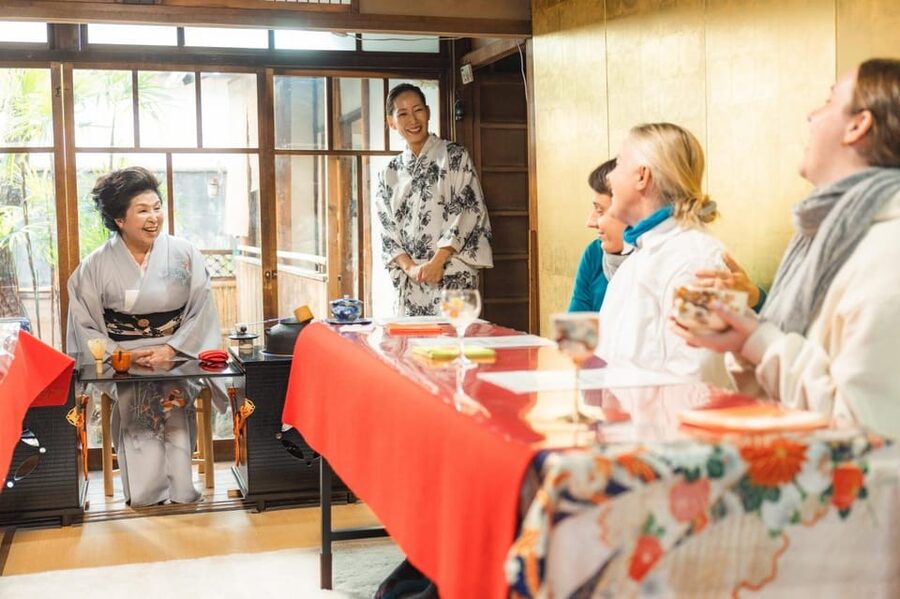
Kyoto tea, no floor sitting required. This table-style tea ceremony in a traditional Kyo-machiya is built for comfort, so you can focus on the ritual, not your legs. You start with a garden purification moment, then move into a nostalgic townhouse setting where you’ll sip, whisk, write, and even dress for photos.
What I love most is the chair-and-table comfort, which makes the ceremony feel doable even if you are not into kneeling. I also like how hands-on it is, from making creamy matcha with a bamboo whisk to writing your name in Japanese calligraphy.
One consideration: this experience is not suitable for wheelchair users, and it involves moving through a historic house and garden spaces.
In This Review
- Key points at a glance
- Entering a Kyoto Tea Ceremony That Fits Your Body
- The 100-Year-Old Kyo-Machiya House and the Purification Step
- Welcome Drinks, Traditional Sweets, and Thick-Tea Latte Art
- Whisking Creamy Matcha With a Bamboo Chasen
- Learning the Manners and the Japanese Spirit Behind the Steps
- Calligraphy: Writing Your Name in Kanji or Hiragana
- Tea-Ceremony Flower Arranging in a Kyoto Townhouse
- Photo Time in Kimono, With Props That Feel Period
- Price and Value: Does $45 Really Add Up?
- Getting There in Southern Kyoto, and Pairing It With Fushimi Inari or Uji
- Who Should Book This Kyoto Tea Ceremony?
- Should You Book This Table-Style Kyoto Tea Ceremony?
Key points at a glance
- Chair-and-table Kyoto tea ceremony so you skip the usual floor seating
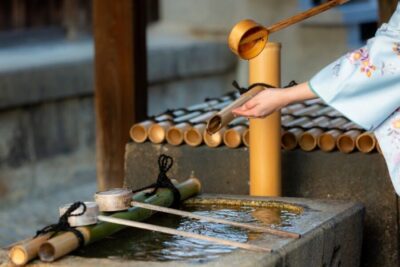
- Garden purification at a stone basin, shrine-style, before the tea begins
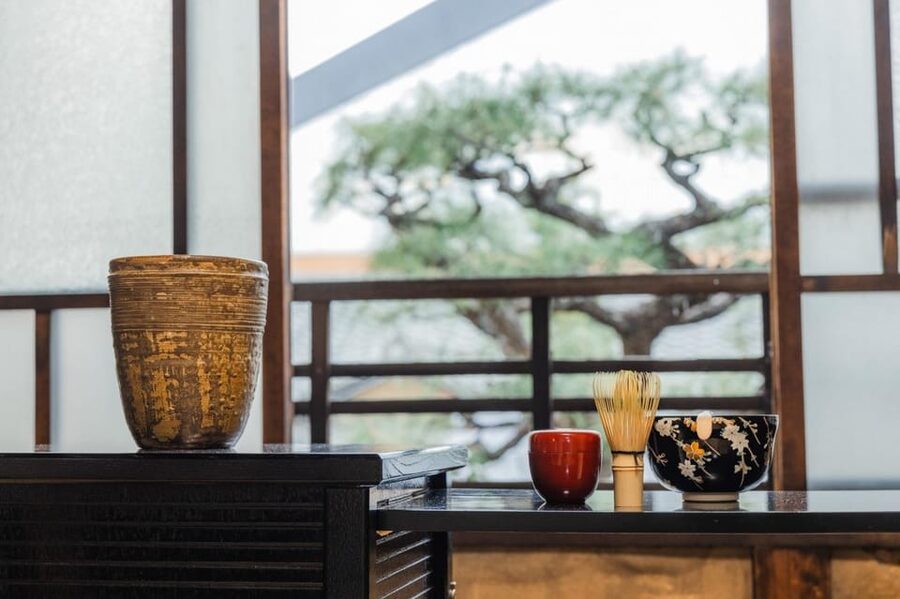
- Hands-on matcha with a bamboo whisk, aiming for that creamy foam
- Calligraphy with your name in kanji or hiragana, plus a keepsake scroll or envelope
- Tea-ceremony flower arranging (ikebana-style) as part of the program
- Kimono option for extra fun, plus photo time with period props like folding fans and katana-style props
Sit down somewhere quieter. Other tea rooms we booked
- Kyoto: Tea Ceremony in a Traditional Tea House in Kiyomizu
★ 4.9 · 3,519 reviews - Kyoto: Tea Ceremony Ju-An at Jotokuji Temple
★ 4.9 · 3,207 reviews - Kyoto: 45-Minute Tea Ceremony Lesson Experience
★ 4.3 · 2,378 reviews - Kyoto: Table-Style Tea Ceremony at a Kyo-Machiya
★ 4.9 · 1,211 reviews
Entering a Kyoto Tea Ceremony That Fits Your Body
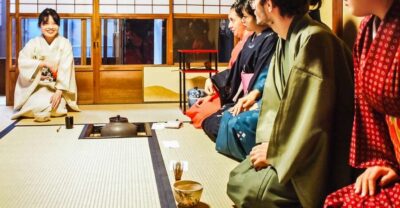
If you’ve ever wanted to try a Kyoto tea ceremony but worried about the floor, this is the version you want. Instead of sitting on tatami in seiza, you sit comfortably at a table with chairs. That simple change matters more than it sounds. It lets you actually watch the guide closely, copy the steps, and enjoy the pace without counting down minutes until your legs go numb.
You also get the feel of ceremony without the intimidation factor. The experience is led in English, and the flow is structured so you understand what you are doing and why, not just how to do it. In a lot of culture activities, you end up with a “perform the steps” vibe. Here, it’s more like you are learning a set of manners and gestures you can carry home with you.
Finally, this one is set in a 100-year-old traditional house, not a modern studio. That gives your photos better texture, but more importantly, it makes the whole thing feel like it belongs in Kyoto’s everyday life.
The 100-Year-Old Kyo-Machiya House and the Purification Step
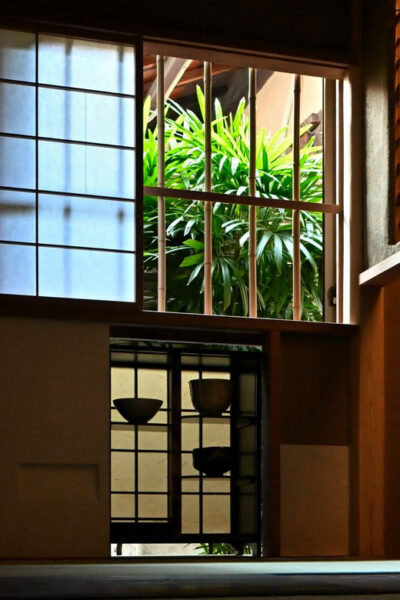
You will meet on the outskirts of Kyoto, then arrive at a traditional townhouse with old-world atmosphere. Think Kyo-machiya architecture, small corridors, and a house that feels lived in. One of my favorite parts is that you do not just sit and drink. You get time to explore the townhouse space, including viewing antiques and old altars connected to Buddhist and Shinto traditions.
Before the tea, you also experience a purification ritual in the garden at a stone basin, similar to what you might see at shrines. The idea is simple: clear the mind, then step into a calmer mode. Even if you do not fully know the background, you can feel the shift. It acts like a reset button, and it gives the ceremony a sense of occasion.
This setting also helps with comfort. Because the ceremony uses chairs, you can take in the house, move where you need to, and still keep everything relaxed.
Quick reality check: this is a historic property. That is great for authenticity, but it means the spaces may involve stairs and uneven areas. If you have mobility concerns, plan for extra care.
Welcome Drinks, Traditional Sweets, and Thick-Tea Latte Art
Tea ceremony is not only about matcha. You start with a welcome drink, and the options include sake or juice. That first sip matters because it sets the mood. It also makes the experience feel like hospitality, not a scripted class.
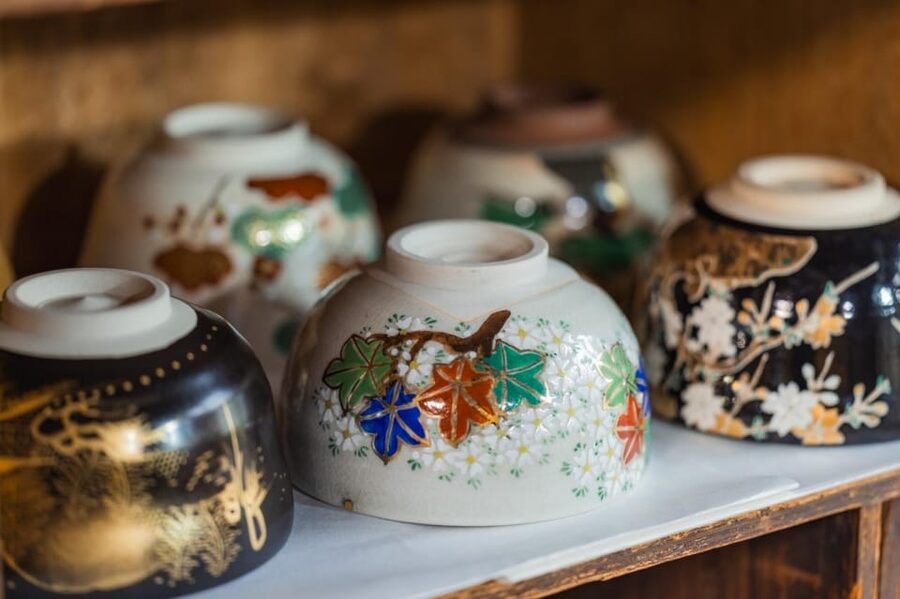
You will also be served traditional sweets designed for the tea. These usually taste intentionally understated, so they do not overpower the matcha. The pairing is part of the point. You taste sweetness, then you taste the bitter, grassy matcha, and your palate gets trained to notice small differences.
One fun twist is the latte art using thick tea. It’s not the same as the barista foam art you see in cafes, but it brings a playful element to the ceremony. It also gives you something visible and memorable while you are learning the more formal steps.
And yes, you will have chances to take photos and videos. The experience even builds in photo moments using props such as umbrellas and folding fans, plus katana-style sword props. You are not just standing in one spot. You can capture the townhouse and garden vibe too.
- PERFECT KYOTO 1-Day Bus Tour★ 5.0 · 13,518 reviews
- Kyoto: Fushimi Inari, Kinkakuji, Bamboo Grove 1 Day Bus Tour★ 4.8 · 4,316 reviews
- Kyoto: Tea Ceremony in a Traditional Tea House in Kiyomizu★ 4.9 · 3,519 reviews
- Kyoto Geisha Walking Tour: Gion District & Hidden Gems★ 4.7 · 3,273 reviews
- Kyoto: Tea Ceremony Ju-An at Jotokuji Temple★ 4.9 · 3,207 reviews
Whisking Creamy Matcha With a Bamboo Chasen
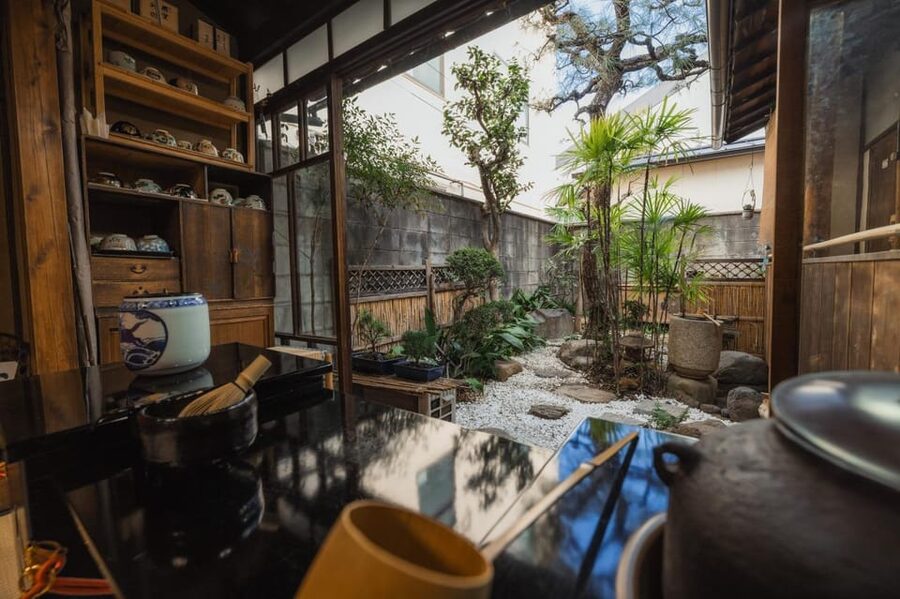
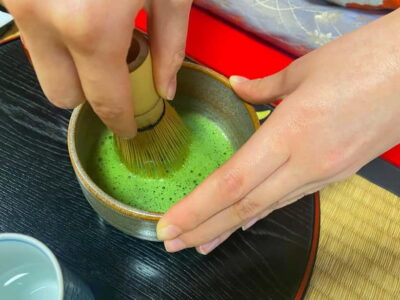
The matcha moment is the main event, and you do it yourself. You will learn how to prepare matcha using a bamboo whisk, the tool the ceremony is famous for. The goal is not just “mix it.” The guide teaches you how to whisk so it becomes creamy and frothy.
Why that matters for you: if you have only ever tasted matcha in a sweet drink, you might think matcha is one-note. Proper whisking changes everything. Foam texture affects how it feels on your tongue, and the way you mix can influence how well flavors blend.
You also get guidance on how to enjoy your matcha as part of the manners of the ritual. It’s one thing to drink it, another thing to actually taste it with intention. That is where the ceremony becomes more meaningful than a novelty.
A practical tip: if you are bringing friends, this is a great “together” activity. You can compare your whisking effort, share sips, and laugh at the inevitable early foam mistakes. The guide flow keeps you on track.
Learning the Manners and the Japanese Spirit Behind the Steps
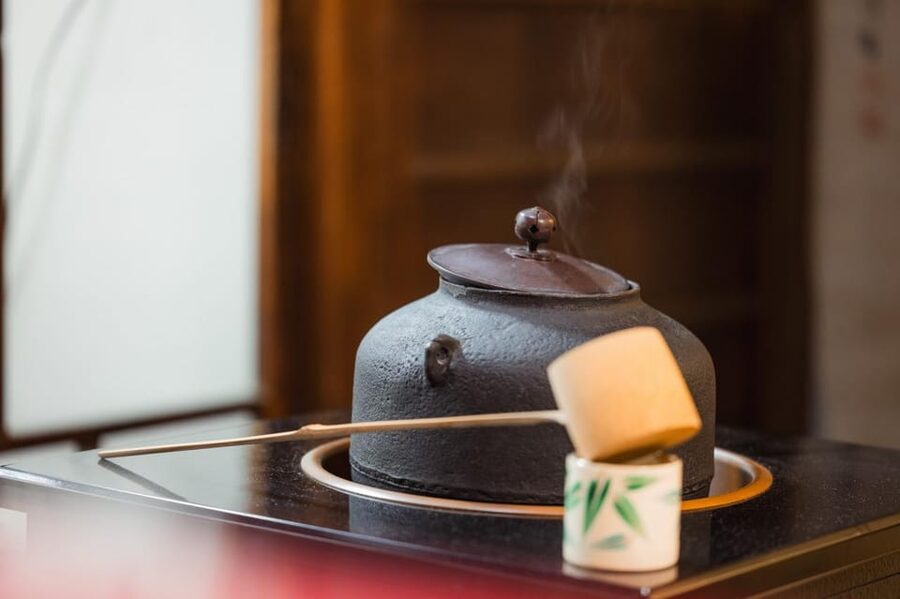
A good tea ceremony is basically etiquette you can taste. In this experience, you learn the reasons behind the motions, not just the motions themselves. You will watch an English presentation, shared via PowerPoint, that explains how the tea ceremony developed in Japan and the spirit of manners tied to it.
This part is valuable because it stops the whole thing from becoming only a photo op. You start to understand why the guide moves the way they do, why timing matters, and why the quiet parts are not filler.
You also have plenty of time to ask questions during the session. That helps if you are a curious traveler, or if you brought a teen or partner who wants the “why” behind the “what.”
One more thing: the hosts tend to keep the energy warm. Many reviews highlight that they are patient and proactive, and they treat small groups like real guests rather than just ticket holders. In practical terms, that means you get help fast if something feels confusing.
Calligraphy: Writing Your Name in Kanji or Hiragana
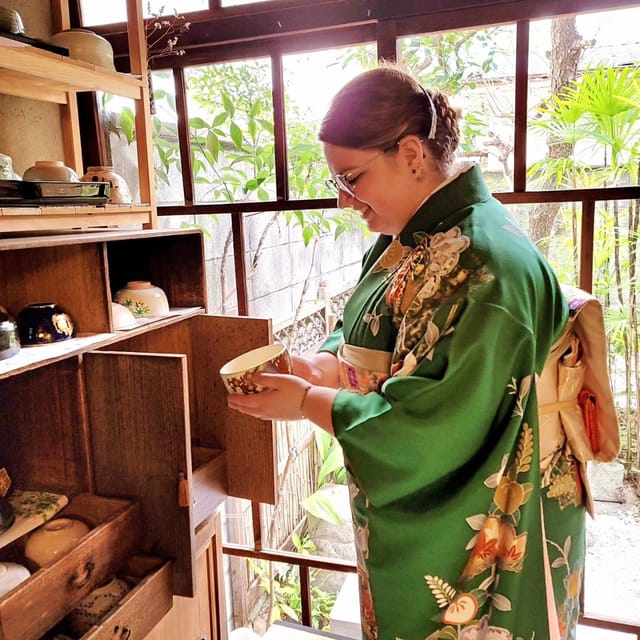
If matcha is the taste lesson, calligraphy is the focus lesson.
At the end, you write your name in Japanese characters. You can choose kanji or hiragana, depending on what is offered in your session. You then receive a hanging scroll or an envelope with your name written in Japanese. That makes this one of the few Kyoto activities where you take home something personalized, not just a photo.
Why I think calligraphy is worth it here: it reinforces the theme of attention. You slow down. You shape strokes carefully. It turns “I learned something about Japan” into “I made something connected to Japan.”
Also, this keeps the ceremony engaging for people who do not plan to remember every tea gesture. You still leave with proof of participation.
Tea-Ceremony Flower Arranging in a Kyoto Townhouse
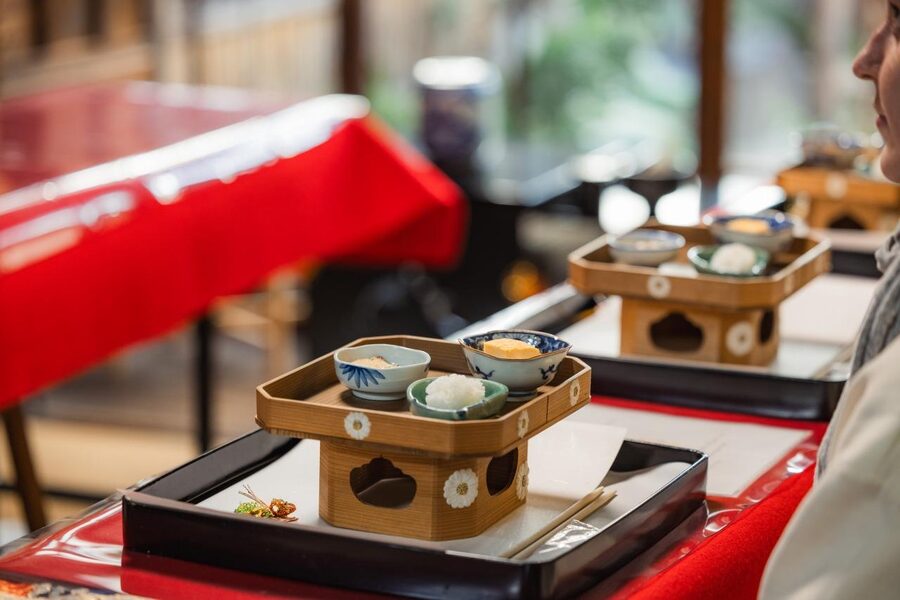
You also try tea-ceremony flower arranging, which is closely related to ikebana. In other cultural crafts, flower arranging can turn into a vague arts-and-crafts moment. Here, it’s tied to the ceremony atmosphere. The result is that the flowers feel like part of the room, not a separate workshop.
Even if you have never handled flowers before, the guide instruction makes it approachable. You learn how to compose something that looks intentionally simple. That simplicity is the point. In tea spaces, the goal is harmony, not flash.
This portion is a great second highlight if you are the type who wants a mix of hands-on making and quiet cultural appreciation.
Photo Time in Kimono, With Props That Feel Period
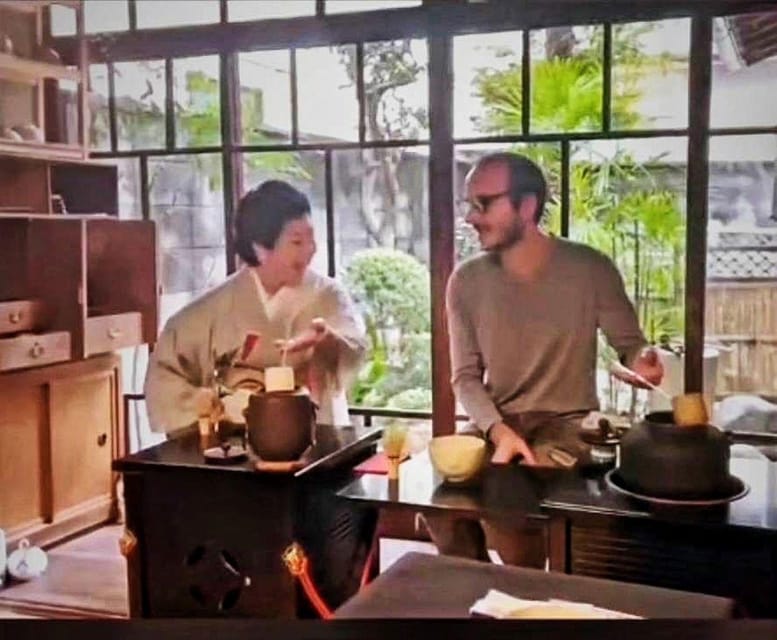
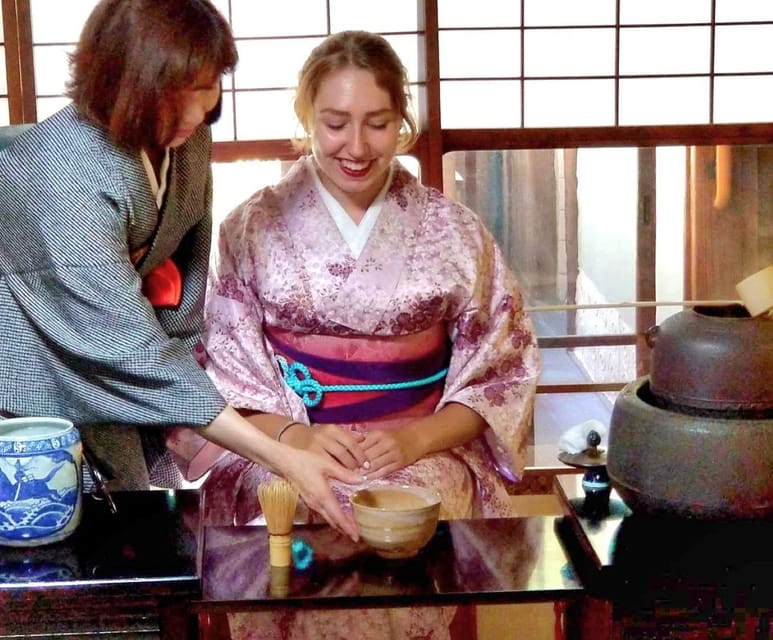
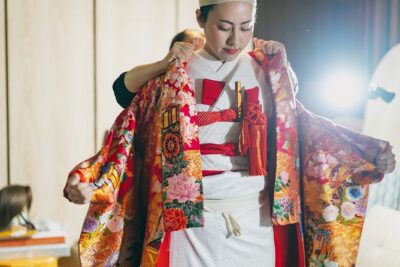
If you choose the kimono rental option, you should expect the experience to feel even more special. You will be dressed and styled for the ceremony, and you get time for photos with the townhouse and garden backdrop.
Many people love this part because it changes how you move. Kimono guidance can be practical too, especially since traditional clothing can affect how you sit and hold yourself during the ceremony.
Two photo-related notes for you:
First, the experience includes photo moments with props like umbrellas and folding fans. Second, you can use video and photos without it feeling like an interruption.
If you are traveling light, bring a small bag for your valuables. You might want to keep your phone or camera accessible during the photo parts.
Important timing note: if you select kimono, you need to arrive 30 minutes before the start time. That is not optional, since dressing and preparation take time.
Price and Value: Does $45 Really Add Up?
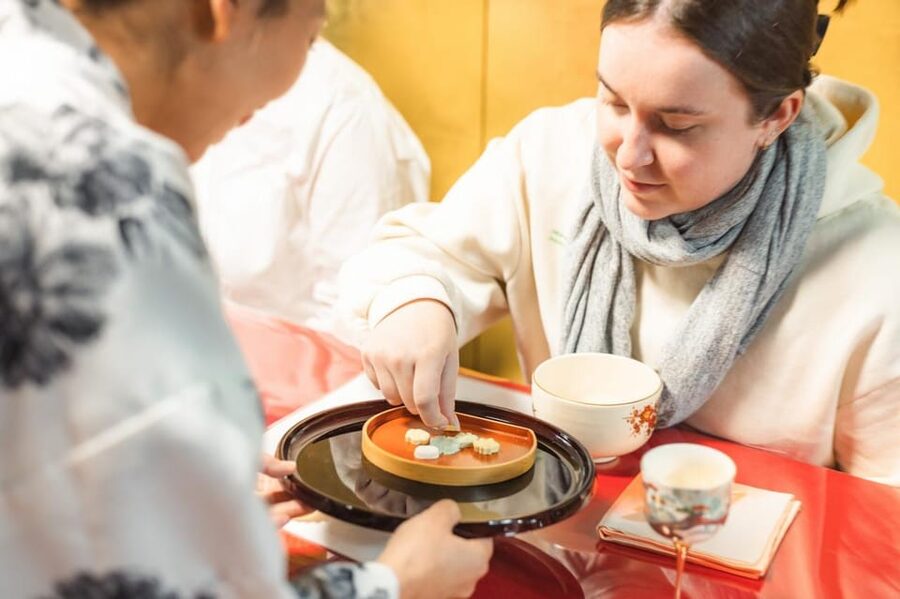
$45 for a 90-minute guided tea ceremony might sound straightforward until you list what you actually get. At this price point, you are not paying just for matcha sipping.
Included elements you can expect:
- the tea ceremony experience
- traditional sweets
- welcome drinks (sake or juice)
- latte art using thick tea
- calligraphy experience
- a hanging scroll or envelope with your name written in Japanese characters
- optional kimono rental if that option is selected
- tea ceremony flower arranging experience
Even before you count the experiences, you are also paying for the setting, a 100-year-old traditional townhouse, plus the guidance, translation, and step-by-step coaching. Add in personalized calligraphy keepsakes and hands-on matcha preparation, and the value becomes clearer.
What you get is not “sit quietly and watch.” It’s a structured cultural experience with multiple skills, all taught in English, in a small group or private format when available.
One small caution: if you hate timed activities, this might feel like a lot in 90 minutes. But the schedule is paced to keep it fun, with breaks for photos and hands-on making.
Getting There in Southern Kyoto, and Pairing It With Fushimi Inari or Uji
This experience is based on the outskirts of Kyoto, about 20 minutes by train from major areas. That means you get a more local-feeling pocket of the city compared with the most crowded tourist streets.
Getting there depends on which station you start from. One route is:
- From Kintetsu Kyoto Station, take an express train about 15 minutes to Kintetsu Momoyama-Goryo-mae Station.
- Walk west on the Otesuji shopping arcade for about 3 minutes.
- Turn right at Mizuho Bank or the Rakuten mobile shop.
- You will see a historic Kyoto townhouse with a blue curtain.
Another route works if you start near Gion-Shijo via Keihan:
- Get off at Fushimi-Momoyama Station.
- Head west on Otesuji arcade and follow the same right turn near Mizuho Bank or the Rakuten mobile shop.
If you arrive at Momoyama Station (JR), the directions include passing a shrine called Gokogu on the right about 300 meters, then continuing along Otesuji arcade and turning right again near the bank or Rakuten mobile shop. After about 2 minutes, the blue-curtain townhouse should be visible.
Why this matters for you: you can combine this with a half-day plan. The area is in southern Kyoto, known for sake, and you can add casual dining and shopping before or after.
Also, you can link it with:
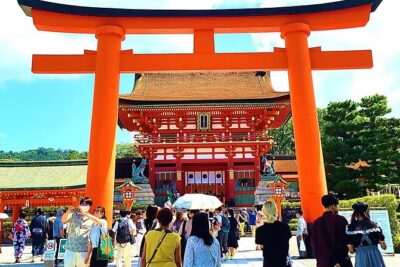
- Fushimi Inari Shrine, roughly 15 minutes from Keihan Fushimi Inari Station
- Uji City, a tea town, about 20 minutes by train
- Osaka by express train, about 40 minutes
- Nara, about 50 minutes
If you like efficient itineraries, this is a great cultural stop in the middle.
Who Should Book This Kyoto Tea Ceremony?
This experience is best for people who want a real Kyoto tea ceremony but need accessibility in the most practical sense: chair seating. It is also a strong choice if you like making things, not just watching. You get matcha whisking, calligraphy, and flower arranging, plus photo time.
It’s also ideal for small groups and couples. Many reviews emphasize that the hosts treat participants like guests, with lots of patience and room for questions. If you want a “you are taken care of” feeling rather than a factory-style tour, this is a good match.
Consider skipping the kimono option if:
- you are pregnant (the experience requests you avoid wearing kimono for health and safety)
- you are uncomfortable with the idea of dressing time before the ceremony
And consider choosing a different activity if:
- you need wheelchair access. The experience is not suitable for wheelchair users.
Should You Book This Table-Style Kyoto Tea Ceremony?
Book it if you want a Kyoto tea ceremony that feels authentic, teaches you the meaning behind the manners, and still respects your comfort. The table-and-chair format is a big deal, and the hands-on mix of matcha making, calligraphy, and flower arranging makes it worth the 90 minutes.
Skip it only if your mobility needs make traditional house movement difficult. Otherwise, this is one of those Kyoto experiences where you leave with both memories and a keepsake you made with your own hands.
Kyoto by the Bowl

Newest Kyoto write-ups from the Loving Japan desk

Kyoto Tea Ceremonies and Matcha, side by side.
 ★ 4.9Tea Ceremony in a Traditional Tea House in KiyomizuFrom $493,519 reviews
 ★ 4.9Tea Ceremony Ju-An at Jotokuji TempleFrom $293,207 reviews
 ★ 4.345-Minute Tea Ceremony Lesson ExperienceFrom $222,378 reviews
 ★ 5.0World Heritage Kyoto & Nara Uji Authentic Matcha ExperienceFrom $1291,573 reviews
 ★ 4.9Tea Ceremony ExperienceFrom $251,426 reviews
 ★ 4.8Kenrokuen Tea Ceremony ExperienceFrom $351,139 reviews
 ★ 5.0Kimono Tea Ceremony at Kyoto Maikoya, NISHIKIFrom $65911 reviews
 ★ 5.0Arashiyama Bamboo Forest, Monkeys, Matcha & Temple TourFrom $53759 reviews
Filed on these lists too