
REVIEW · WALKING TOURS
The Dark Side of Osaka Walking Tour
Osaka gets real after dark. I love the small-group focus on social history, and I love how the walk takes you to places like Tobita Shinchi that most first-timers never even notice. The downside: the first parts can feel rough and gritty, so if you want glossy sights only, this may not hit.
This is the Osaka Night Free Walking Tour in the 5:30pm time slot, guided by local storytellers like Jay, Matt, or RICO (those names show up often in the feedback). The route traces Osaka’s darker corners, including Shinsekai’s old-school mood and the area known for its red-light district over many decades.
You’re looking at about 2 hours on foot, with a max group size of 15, and everything runs as a mobile ticket experience. Wear comfy shoes, bring your curiosity, and be ready for a side of Japan that is not trying to impress you.
In This Review
- Key takeaways from the Dark Side of Osaka walk
- What this 2-hour night walk is really about
- Meeting at Mega Don Quijote, then setting the tone in Shinsekai
- Nishinari Dobutsuen-mae: working-class Osaka on ordinary streets
- Jan Jan Yokocho: a short alley stop that changes the mood
- Tobita Shinchi: red-light district context, architecture, and rules
- Tsutenkaku Hondori shopping street: the fun finish at the tower base
- Price and value: is $25 worth it?
- Who should book, and who should skip
- Practical tips to enjoy the darker side of Osaka
- Should you book the Dark Side of Osaka Walking Tour?
- FAQ
- How much does The Dark Side of Osaka Walking Tour cost?
- How long is the tour?
- What time does the tour start?
- Where do I meet the guide?
- Where does the tour end?
- Is admission included for the stops?
- Does the tour require good weather?
- Is there a limit on group size?
Key takeaways from the Dark Side of Osaka walk
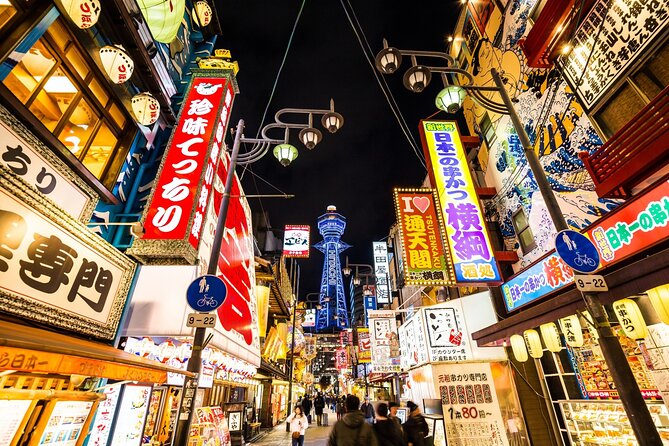
- Shinsekai after sunset: a classic Osaka neighborhood vibe, anchored around Tsutenkaku.
- Nishinari street life: an up-close look at working-class Osaka and its everyday rhythm.
- Jan Jan Yokocho alley time: a short hop into a retro shopping-and-dining lane.
- Tobita Shinchi context: history and how the area’s “rules” shape what you see.
- Tsutenkaku Hondori arcade: a fun finish that balances the darker themes with street energy.
Still weighing up options in Osaka? These are the ones our reviewers rated highest.
- Osaka Go Karting Tour with Funny Costume
★ 5.0 · 2,658 reviews - Osaka Castle: Museum and Tower Entry Ticket
★ 4.5 · 2,380 reviews - Osaka: Shinsekai Food Tour with 13-15 Dishes at 5 Eateries
★ 4.8 · 2,204 reviews - Osaka Food Tour: 13 Dishes at 5 Local Eateries
★ 5.0 · 2,149 reviews
What this 2-hour night walk is really about
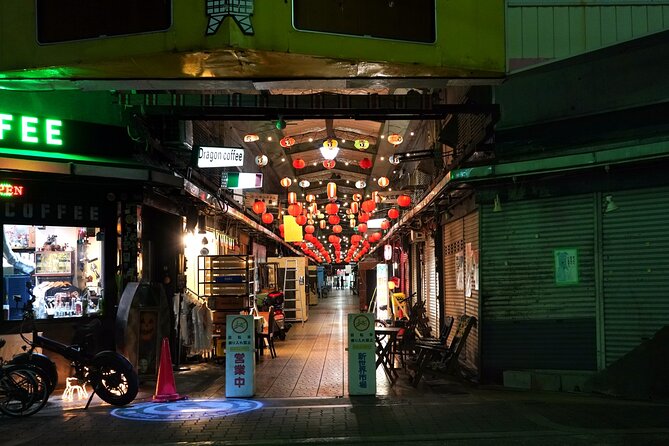
This tour is built around one big idea: Osaka did not only grow into cute signs and food alleys, it also has corners shaped by labor, inequality, and nightlife for generations. The guide does the heavy lifting, using local stories to help you understand what you’re seeing, not just where you’re standing.
You’ll cover a compact area near Shinsekai and Tsutenkaku. That matters, because a focused route means less time lost crossing town and more time paying attention to details on the street. You also get a maximum of 15 people, which usually means you can actually ask questions instead of shouting into the dark.
One more important point: it’s called a night free walking tour, but the cost is listed as $25 per person. For me, that signals something practical. You’re not just getting a wander. You’re paying for a guide to connect the dots between neighborhoods that can look similar at first glance, but feel very different once someone explains the context.
Meeting at Mega Don Quijote, then setting the tone in Shinsekai
You start at MEGA Don Quijote Shinsekai, right by the action around Naniwa Ward. It’s a handy meeting point, because the area is built for foot traffic and easy night navigation. The walk begins at 5:30pm, so the light is fading, shops are waking up, and the “after dark” tone makes sense fast.
The first stop is Shinsekai, a neighborhood that blends old-school nostalgia with real local life. It’s tied to the retro culture around Tsutenkaku, and the area’s design dates back to the early 1900s. That timeframe helps you understand why Shinsekai feels like it has two faces: it’s familiar, tourist-friendly in small ways, and still very much part of everyday Osaka.
What I like about starting here is psychology. Shinsekai is easier to read than the darker parts, so you get your bearings fast. You learn the local “vocabulary” for what you’re about to see next, without the tour suddenly throwing you into the deep end.
A quick consideration. If you’re sensitive to loud nightlife and street-level chaos, Shinsekai can feel intense early. It’s not violent or unsafe by default, but it is not a quiet museum walk either.
Nishinari Dobutsuen-mae: working-class Osaka on ordinary streets
Next you head into Nishinari, specifically around Dobutsuen-mae Deep Osaka Street. This is where the tour’s theme becomes clearer. Nishinari is known for a more raw, everyday atmosphere, tied to working-class history and the kind of neighborhood life that exists beyond the photo-friendly zone.
In a tour like this, the guide’s job is to translate what you see into what it means. You’ll likely notice street details that you might otherwise skip: how storefronts operate, how people move through the area, and how the community has changed while still keeping its core identity.
The value here is perspective. Osaka, like any major city, includes places where economic struggles are part of the landscape. Walking through these blocks with someone who can explain the background helps you avoid two traps: turning it into a scary “documentary,” or ignoring it like it doesn’t matter.
The drawback I’d flag, based on the mixed feedback: if you’re hoping for constant big sights, this section can feel like walking and observation more than “look at this landmark.” For the right mindset, that’s the point. For others, it can feel slow.
- Osaka Go Karting Tour with Funny Costume★ 5.0 · 2,658 reviews
- Osaka Castle: Museum and Tower Entry Ticket★ 4.5 · 2,380 reviews
- Osaka: Shinsekai Food Tour with 13-15 Dishes at 5 Eateries★ 4.8 · 2,204 reviews
- Osaka Food Tour: 13 Dishes at 5 Local Eateries★ 5.0 · 2,149 reviews
- Hungry Osaka Street Food Tour:15 Tastings & 3 Drinks with a Local★ 5.0 · 1,727 reviews
Jan Jan Yokocho: a short alley stop that changes the mood
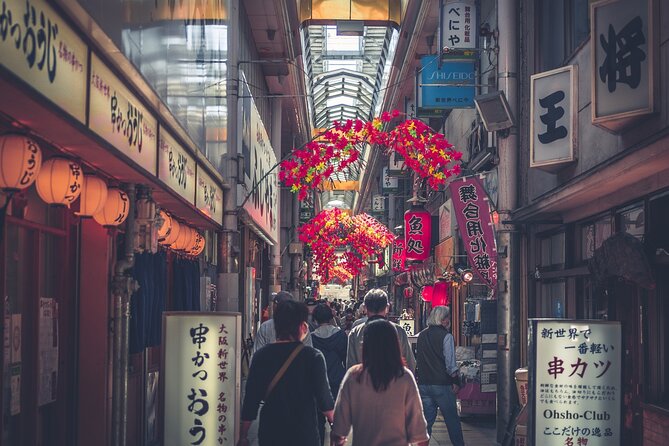
Then you get a breather at Jan Jan Yokocho, also known as Nanyodori Shopping District, in the Shinsekai area near Tsutenkaku. This narrow lane is designed for old-school vibes, with retro energy and plenty of small dining and shopping stops.
Why this stop works even though it’s brief. It’s a tonal shift. After streets that can feel heavy, you see how nightlife and food culture keep people connected to the neighborhood. You also get a chance to practice “reading” the street. Even if you do not buy anything, you can watch how people choose food, where they linger, and how the alley works as a social space.
The tour description notes it as a charming, nostalgic alley. In practice, it’s also a reminder that the so-called dark side is not only about nightlife venues. It’s about the full street ecosystem, including the places where people relax, snack, and meet friends.
One practical note: snacks are not included. If you want to taste something, plan ahead. A small bite here can turn the walk into a more complete night out, instead of just a cultural tour.
Tobita Shinchi: red-light district context, architecture, and rules
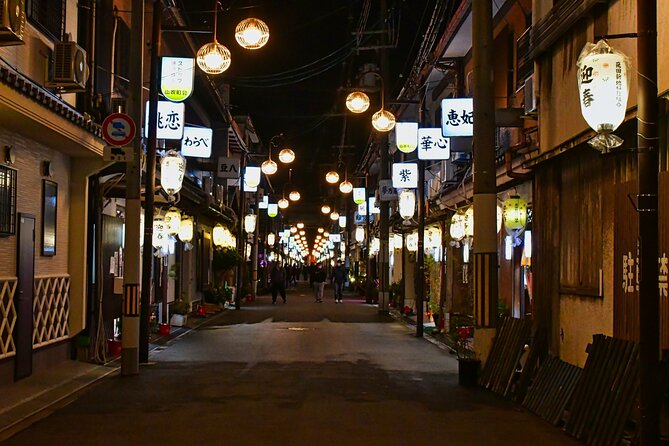
The centerpiece stop is Tobita Shinchi, Osaka’s famous and larger red-light district with a history stretching back over a century. This is the part many people come for, but it’s also where the tour needs the most careful framing.
What you’ll get is not just a walk past neon. The guide focuses on how the area functions, including its tightly regulated environment and the unique architecture that you can spot once someone points it out. That guidance matters because if you walk through alone, it’s easy to interpret what you see in the wrong way, or turn it into a sensational spectacle.
This is where names like Jay and Matt stand out in the feedback. People praised the guides for being thoughtful with social history and for answering questions. In other words, you’re not left with uncertainty. You get context, plus local tips on how to behave and what to notice.
A balanced caution. This is still a nightlife district. Even when it’s structured, it can feel intense for some visitors. If you’re uncomfortable with adult entertainment themes, decide ahead of time how you want to handle it. You can enjoy the tour for its history and city sociology angle, but be honest about your own boundaries.
Tsutenkaku Hondori shopping street: the fun finish at the tower base
The tour ends around Tsutenkaku Hondori Shopping Street, at the foot of Tsutenkaku Tower, near the 1-chōme-18-6 Ebisuhigashi area. This finish is smart. After the darker themes, you land in a place that’s more playful and street-level.
Hondori is described as a lively arcade with eclectic shops and a retro vibe. Even if you do not plan to shop, it’s a good place to get your next steps sorted. You’ve got a strong reference point, and you’re in an area that makes it easier to find your way back to dinner plans.
If you’re the type who likes to turn tours into itineraries, this ending helps. You can use Tsutenkaku as your anchor for the rest of the night, rather than trying to navigate from scratch after a long walk.
The only drawback, honestly, is crowds. Arcade areas can get busy at night, so go at your pace. Don’t let the press of people steal your attention from the vibe shift the tour just delivered.
Price and value: is $25 worth it?
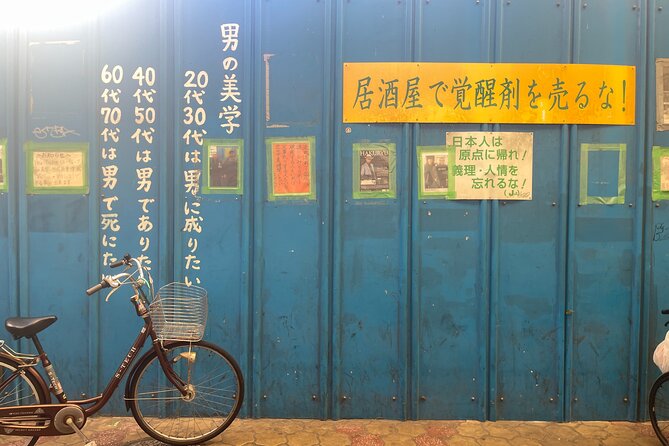
$25 for a 2-hour guided walk in Osaka is a decent price point, especially because the stops are listed with free admission and the tour includes all fees and taxes. You’re not paying for museum entries. You’re paying for interpretation, pacing, and local knowledge.
The real value shows up in two places:
- You get a guide who can explain the social history behind the neighborhoods, not just point at buildings.
- You move through several distinct zones without planning or guessing.
The rating data is also strong, with an overall score of 4.9 out of 5 and about 98% recommending the experience. That doesn’t guarantee you’ll love it, but it does suggest consistent quality, especially around guide performance and how the tour flows.
Is it worth it for everyone? Not automatically. If your travel style is mostly “landmark sightseeing,” you might feel the walk is more observational than dramatic. But if you like cities the way locals experience them, and you want to understand the reasons behind what you see, the $25 makes sense.
Who should book, and who should skip
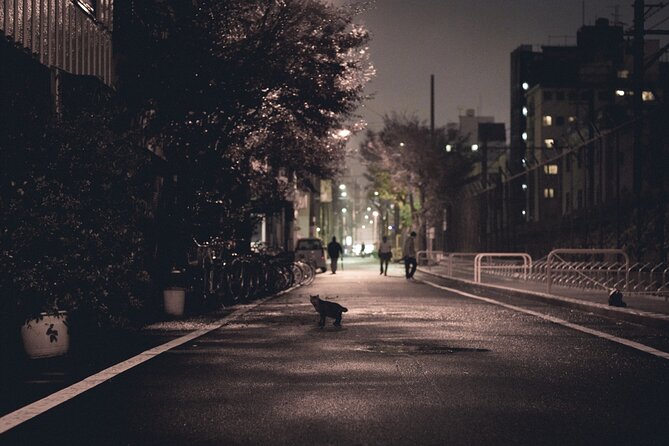
Book this tour if you want Osaka with context. You like night neighborhoods, street-level stories, and you enjoy learning how cities work socially. It’s also a good match if you appreciate small-group walking, where you can ask questions and keep a conversational pace.
You should skip it if you dislike gritty areas or you want constant spectacle. One review flagged that the first half can feel like wandering through slums or less developed streets, and that the tour did not offer enough visible “stuff” to look at. That’s exactly the kind of mismatch to watch for.
Also consider your mood. This is not just a spooky gimmick. It’s about darker social layers, adult-nightlife districts, and how regulation affects what visitors experience. If you come prepared to be respectful and curious, you’ll likely have a great night.
Practical tips to enjoy the darker side of Osaka
Start with shoes. The tour is about 2 hours, and it’s a walking-heavy route through several neighborhood blocks.
Next, bring your questions. The feedback repeatedly praises guides like Jay, Matt, and RICO for answering questions and offering tips. If you’re curious about etiquette, history, or what you’re seeing in plain terms, this is the moment to ask.
Plan for snacks. Snacks are not included, so if you expect food, bring a small option or plan to eat right after the tour ends near Tsutenkaku Hondori.
Finally, set expectations for tone. You’ll see the parts of Osaka that don’t exist to be photographed. That’s not a bad thing. It’s the point. The tour is at its best when you treat it like a guided street reading lesson, not a checklist of sights.
Should you book the Dark Side of Osaka Walking Tour?
I’d book it if you want to understand Osaka beyond the usual highlights. The strongest reasons are the guided social history and the fact that the route hits both Shinsekai’s retro charm and Tobita Shinchi’s nightlife context in one compact night walk. The $25 price also feels reasonable given the guided pacing and free admission stops.
I would hesitate if you prefer polished, photo-perfect scenery only, or if you get uncomfortable with the heavier side of nightlife districts. In that case, you might still learn a lot from the guide, but the street-level tone could drag.
If you do book, go in with the right mindset: curiosity, respect, and comfortable shoes. You’ll end the night with a much clearer picture of how Osaka grew, how it organizes its nightlife, and how everyday people move through it after dark.
FAQ
How much does The Dark Side of Osaka Walking Tour cost?
It costs $25.00 per person.
How long is the tour?
The duration is about 2 hours.
What time does the tour start?
The start time is 5:30pm.
Where do I meet the guide?
You meet at MEGA Don Quijote Shinsekai, 3-chōme-4-36 Ebisuhigashi, Naniwa Ward, Osaka, 556-0002, Japan.
Where does the tour end?
The tour ends at Tsutenkaku, 1-chōme-18-6 Ebisuhigashi, Naniwa Ward, Osaka, 556-0002, Japan.
Is admission included for the stops?
Yes. The tour includes all fees and taxes, and the stops are listed with admission ticket free.
Does the tour require good weather?
Yes. It requires good weather. If it’s canceled due to poor weather, you’ll be offered a different date or a full refund.
Is there a limit on group size?
Yes. The tour has a maximum of 15 travelers.
Newest Osaka write-ups from the Loving Japan desk



Walking Tours, side by side.
 ★ 4.7Kyoto Geisha Walking Tour: Gion District & Hidden GemsFrom $253,273 reviews
 ★ 5.0Tokyo Tsukiji Fish Market Food and Culture Walking TourFrom $993,184 reviews
 ★ 4.9Gion Magical Night Walking Tour with Geisha TriviaFrom $242,393 reviews
 ★ 5.0Imperial Palace and Shogun Historical Walking TourFrom $222,251 reviews
 ★ 4.7Gion Geisha District Walking Tour – Stories of GeishaFrom $202,187 reviews
 ★ 4.5Night Walk in Gion: Kyoto’s Geisha DistrictFrom $212,003 reviews
 ★ 4.9Shinjuku Local Bar and Izakaya Guided Walking TourFrom $341,794 reviews
 ★ 5.0Tsukiji Fish Market Food and Walking tourFrom $301,724 reviews
Filed on these lists too