
REVIEW · TAIKO DRUMMING AND TRADITIONAL PERFORMING ARTS
Tokyo: Karate Experience with Former All-Japan Champion
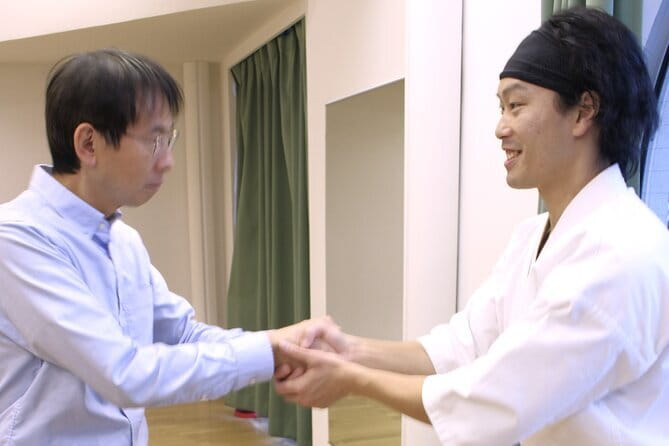
Karate in Tokyo feels personal fast. You train with Ryo-sensei, a former Kyokushin all-Japan champion, and your first moves are about respect, bowing, and calm focus before pads start flying. One thing to consider: the class ends with non-contact kumite, so it is training for skill and timing, not full-impact sparring.
What I like most is the clear, step-by-step way techniques click. You practice punches, blocks, and kicks in manageable pieces, then put them together for self-defense application without chaos. And since Ryo can teach in English and Japanese, even first-timers can follow along and keep up with the rhythm of karate.
In This Review
- Key Takeaways Before You Go
- Why This Tokyo Karate Session Feels Worth Your Time
- Meet Ryo, the Kyokushin Competitor Who Teaches Like a Coach
- The First Minute: Bowing and Belly Breathing
- Warm-Up for Real Bodies: Legs, Hips, Shoulders, and Chest
- Punches, Blocks, and Kicks, Broken Into Learnable Steps
- Kata Demonstration: Patterns That Teach More Than Moves
- Non-Contact Kumite: Defense Training Without Physical Contact
- What You Actually Get: Pads, Water, and a Gi Option
- Price and Value: $58 for Coaching You Can Ask Questions To
- Where It Fits in Your Tokyo Day, Especially Around Asakusa
- Who Should Book This Karate Experience With Ryo
- Should You Book This Tokyo Karate Session With Ryo?
- FAQ
- How long is the Tokyo karate experience?
- Where does the experience start?
- What karate techniques will I practice?
- Is there sparring with physical contact?
- Does the class include kata?
- Do I get a karate gi?
- What’s included besides the lesson?
- What languages does the instructor speak?
- Is this for beginners or only advanced students?
- Is free cancellation available?
Key Takeaways Before You Go
- Former Kyokushin champion coaching with real competition pedigree, not a casual demo
- Bowing and belly breathing first, because karate starts with mindset and manners
- Step-by-step technique building for beginners, with corrections for experienced students too
- Non-contact kumite training, focusing on defense and precision while staying safe
- Kata demonstration so you see how patterns connect to real movement
- Pads, water, and option for a gi so you are not scrambling for basics
Still weighing up options in Taito City? These are the ones our reviewers rated highest.
- Tokyo Asakusa: Miu Kimono Rental and Optional Photoshoot
★ 4.9 · 54 reviews - Tokyo: Karate Experience with Former All-Japan Champion
★ 4.9 · 46 reviews
Why This Tokyo Karate Session Feels Worth Your Time
This is the kind of Tokyo experience that does not try to entertain you. It teaches you. In 1 hour to 90 minutes, you get the structure of karate training: mindset, warm-up, basics, then controlled practice that helps you understand how the techniques actually function.
Ryo’s style is practical. You do not just “watch a master do moves.” You learn how to stand, how to breathe, and how to generate power from your body. You also learn the cultural part that many tourists skip, like the etiquette of starting and ending with a bow, and the calm control that karate expects from students.
Another reason I’d pick this session is the safety angle. You will learn sparring concepts through non-contact drills, so you can push your effort without worrying about getting hurt. And because Ryo adjusts instruction for both beginners and people with karate experience, you do not have to feel like you are either behind the class or stuck teaching yourself.
Meet Ryo, the Kyokushin Competitor Who Teaches Like a Coach
Ryo is not just an instructor with a fun side hustle. He has spent decades inside Kyokushin karate, including competition at a high level.
A few credibility points worth knowing:
- Dedicated to Kyokushin karate for 20 years
- Competed internationally, placing 3rd at the KWU World Karate Championship (-75kg) in Bulgaria (2013)
- Became All-Japan champion of Kyokushinkan International (-80kg)
- Teaching since 2010, and promoted to 2nd Dan in 2020
- Also taught at an international camp in Cape Town in 2023, 2025, and 2026
- In January 2026, he took 1st place in a kata competition organized by Kyokushin Kenbukai
That competition background matters because you feel it in how he runs the session. Corrections are about form and efficiency, not style points. When you do a technique wrong, he can spot it and fix it in a way that helps your next rep. If you already train, you will also notice he can explain differences between karate approaches, including how Kyokushin emphasizes realism and full-contact fundamentals (even though your session is non-contact).
The First Minute: Bowing and Belly Breathing
Karate training starts with manners, not workouts. In this session, Ryo begins with the basics you might not expect to matter, but they do.
You learn:
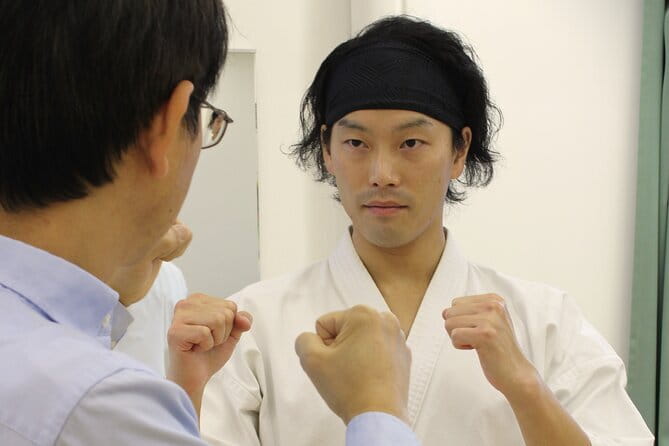
- How to bow properly because karate etiquette follows a start-with-bow and end-with-bow rhythm
- How to breathe from the belly to steady focus and calm the mind
This sounds simple, but it changes how you move. When you breathe low and controlled, you stop “holding your shoulders up” and you get more stable for kicks and blocks. It also helps beginners stop panicking about getting everything right at once.
I also like that the breathing piece is paired with respect and attention. It sets a tone. You feel like you are joining a real training space, not hopping into a gimmick workshop.
Warm-Up for Real Bodies: Legs, Hips, Shoulders, and Chest
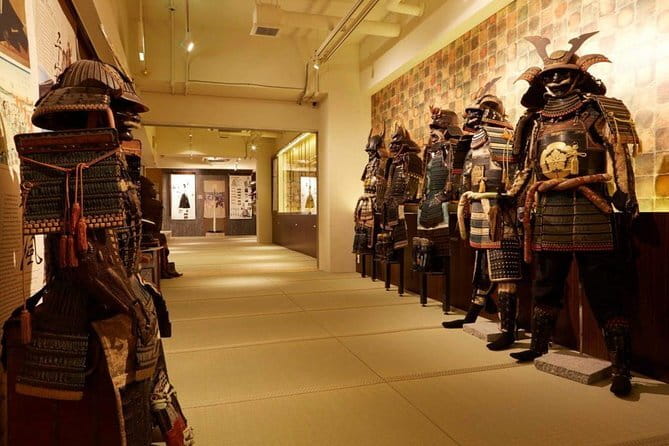
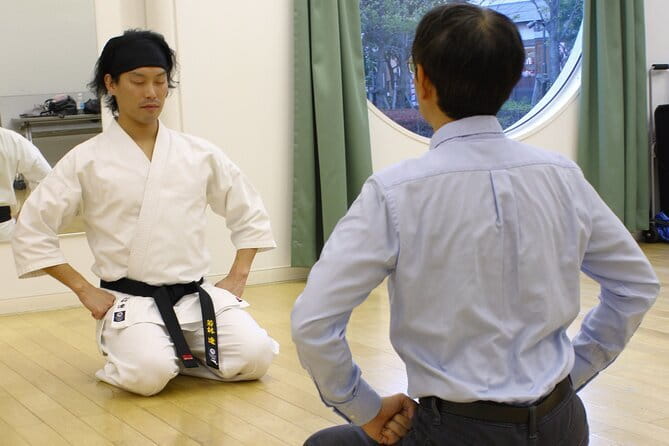
Next comes stretching and mobility. The session includes warm-up work for major areas like:
- Leg muscles
- Hip joints
- Shoulder blades
- Chest
Why this matters: karate basics use your whole chain. Kicks come from hips, stances require leg control, and punches depend on shoulder position plus upper body alignment. If your shoulders are tight or your hips do not move well yet, even “perfect technique” falls apart under fatigue.
The warm-up also functions as an entry ramp. You get loosened up and used to the training pace before learning strikes. That helps a lot if you are traveling, a bit stiff from walking Tokyo all day, or if you are bringing kids who need to ease into the rhythm.
Punches, Blocks, and Kicks, Broken Into Learnable Steps
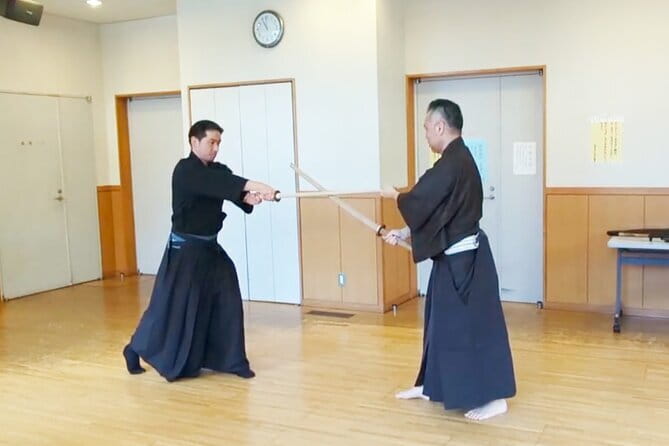
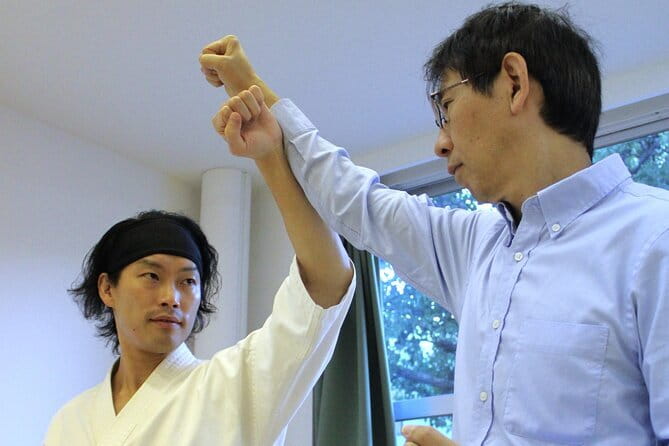
After warm-up, you move into basics: punches, blocks, and kicks with a proper stance. Ryo teaches techniques in sequences that get easier to handle because they are broken into parts.
Expect the lesson to feel like skill-building:
- Each technique is split into a few moves, so you can practice the sequence without getting overwhelmed
- Ryo demonstrates and gives tips when you need them
- You repeat enough to start feeling the shape of the technique, not just memorizing it
If you are experienced in another karate style, you may spot differences right away. One strong theme from student feedback is that Ryo explains the logic behind what you do, not just the physical shape. For example, a Shotokan practitioner may appreciate seeing how Kyokushin training priorities can change the angles, timing, or emphasis in fundamentals.
And if you are a complete beginner, do not worry about keeping up perfectly on your first try. The class is designed to work for first-timers and for people who already train.
Kata Demonstration: Patterns That Teach More Than Moves
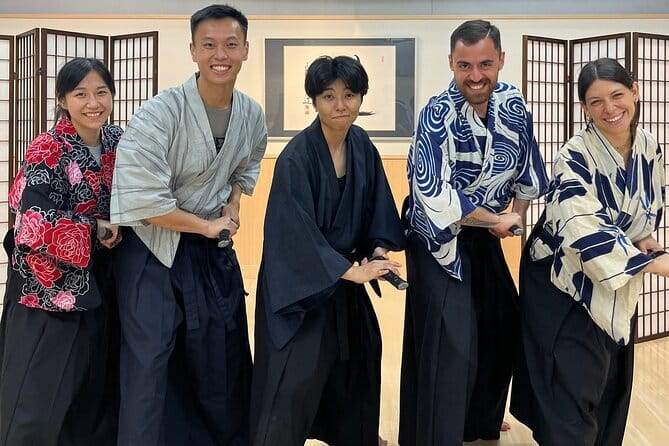
This session includes a kata demonstration. Kata are patterns, but they are also karate’s way of training timing, stance, distance, and how power flows through your body.
Even if you do not run kata yourself in this short session, you still get the point of them. Seeing patterns demonstrated helps you understand how the techniques you practiced connect into a coordinated “story.” That makes the basics feel more meaningful, instead of like random punches and kicks.
If you already do kata, you will likely appreciate the contrast as Ryo is tied to Kyokushin karate. If you are new, kata can feel intimidating, but a demonstration is a low-pressure way to see structure without the full commitment of learning an entire form.
Non-Contact Kumite: Defense Training Without Physical Contact
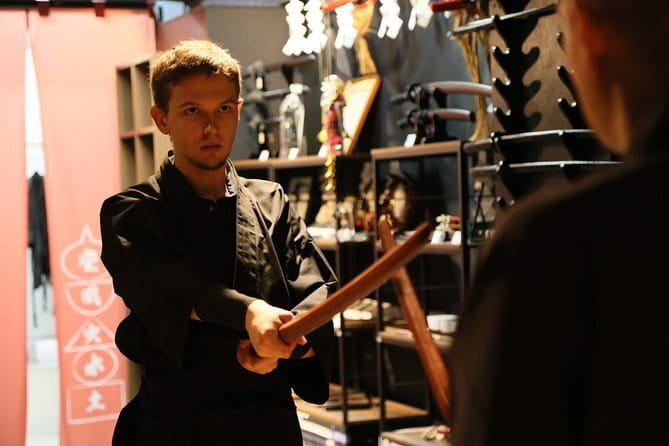
The climax of the experience is training the essence of kumite, sparring, without physical contact. This is one of the biggest reasons the session works well for families and mixed-skill groups.
You practice defensive concepts for situations like:
- Defending against punches
- Defending against front kicks
- Defending against low kicks
How it usually feels in class is controlled and deliberate. You learn how to respond with maximum precision and efficiency, but you do not take impacts. That means you can focus on footwork, distance, and the quality of your defense instead of bracing for force.
For parents, this is a big deal. For adults, it means you can participate and improve without walking away sore in the wrong places.
And in case you are wondering about “the fun part,” one beginner mentioned a board break as a personal favorite. That is not listed in the core included details you can rely on, but it does suggest the session can include practical, empowering challenges. If that is something you want, ask in advance so you know what your specific session includes.
What You Actually Get: Pads, Water, and a Gi Option
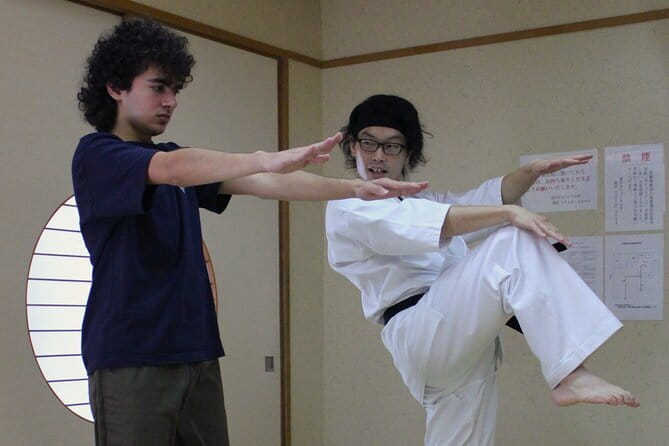
Included in the experience:
- Punching/kicking pads
- A bottle of water
- Kata demonstration
- An interactive karate lesson with the instructor
Uniform matters. The included list specifies a karate uniform (gi) with an option you choose at booking: Private/90min Session with Karate Gi.
So, plan based on what you book:
- If you choose the gi option, you should have the uniform for training.
- If you do not, bring comfortable workout clothes you can move in and that you can sweat in.
One student also noted confusion about gi being provided for the 90-minute format. The safe play is simple: check which option you selected at booking, so you do not arrive expecting a gi and then have to improvise.
Price and Value: $58 for Coaching You Can Ask Questions To
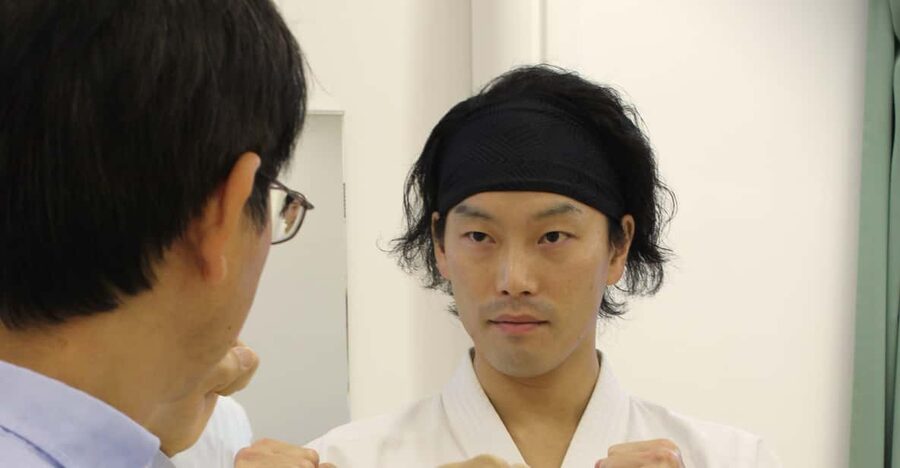
At $58 per person, this is priced like a guided specialty experience, and it makes sense because you are paying for direct coaching, not just a pass-through activity.
Here’s what you are effectively buying:
- Instruction from Ryo, with real Kyokushin competition and teaching experience
- A full warm-up plus fundamentals practice, including punches, blocks, kicks, and defense concepts
- Safety-focused non-contact sparring training
- Pads and water included
- Kata demonstration during the session
You also get structure. Many “martial arts experiences” are short and vague. This one runs through core karate components in a logical order, with explanation and correction as you go. If you are the type of traveler who wants to learn something you can use right away, it is a strong value.
The only “value mismatch” to watch for is expectations about contact. If you want full-contact sparring with impact, this setup is not built for that. But if you want an authentic karate lesson with real fundamentals and self-defense application, the price feels fair.
Where It Fits in Your Tokyo Day, Especially Around Asakusa
The class takes place in Tokyo’s Asakusa area, which is a practical spot for visitors because you can combine it with an itinerary day focused on traditional neighborhoods.
This session works best when:
- You are already spending time in the Asakusa area
- You want an activity that is active but not overwhelming
- You want something culturally grounded that is not just sightseeing photos
Timing-wise, you get 1 hour to 90 minutes, depending on the option and availability. Shorter sessions are great if you are juggling jet lag or a packed schedule. If you can choose a longer session, you will usually get more reps and more time for personalized corrections.
Who Should Book This Karate Experience With Ryo
I think this is a great pick for:
- First-timers who want to learn karate fundamentals with clear coaching
- People with karate experience from other styles who want to compare how Kyokushin approaches fundamentals and self-defense
- Parents bringing kids, because the non-contact format and step-by-step teaching helps younger students feel comfortable
- Anyone who wants an authentic Japanese martial arts experience without needing to join a full dojo program
It is also a good choice if you prefer an activity that is hands-on and focused, rather than passive entertainment. You will do the work, and you will leave with a better sense of how karate moves from manners and breathing into technique and defense.
Should You Book This Tokyo Karate Session With Ryo?
Yes, if you want a real karate lesson in Tokyo, guided by someone with serious Kyokushin credentials and a teaching style built for beginners and mixed experience levels.
I’d especially recommend it if:
- You care about proper etiquette, not just fighting moves
- You want non-contact kumite and defense training that feels safe
- You like exercises that improve flexibility and strength, while also teaching control and precision
Only skip or reconsider if your main goal is full-contact sparring with physical impact. This session is built around safe practice and skill clarity, so you will get better technique, not bruises.
If you book, double-check whether you selected the gi option for the 90-minute private session, wear move-friendly clothing otherwise, and come ready to follow directions and breathe low. That combo is where the “magic” of karate training starts.
FAQ
How long is the Tokyo karate experience?
It lasts 1 hour to 90 minutes, depending on the option and availability.
Where does the experience start?
The meeting point can vary based on which option you book.
What karate techniques will I practice?
You will practice basic punches, blocks, and kicks with a proper stance, plus non-contact kumite defense training.
Is there sparring with physical contact?
No. The kumite training is without physical contact, so you can practice without injury risk.
Does the class include kata?
Yes. There is a kata demonstration, showing patterns of karate techniques.
Do I get a karate gi?
A gi is included only with the booking option labeled Private/90min Session with Karate Gi.
What’s included besides the lesson?
You get punching/kicking pads and a bottle of water, plus the interactive lesson and kata demonstration.
What languages does the instructor speak?
The instructor teaches in English and Japanese.
Is this for beginners or only advanced students?
It is designed for both beginners and people with karate experience.
Is free cancellation available?
Yes, you can cancel up to 24 hours in advance for a full refund.
Newest Taito City write-ups from the Loving Japan desk
Taiko Drumming and Traditional Performing Arts, side by side.
 ★ 4.0Mt Fuji & Hakone Cruise, Drum Show Bullet Train 1 Day from TokyoFrom $1497,413 reviews
 ★ 4.0Mt Fuji & Hakone Cruise, Drum Show Bus 1 Day from TokyoFrom $1221,287 reviews
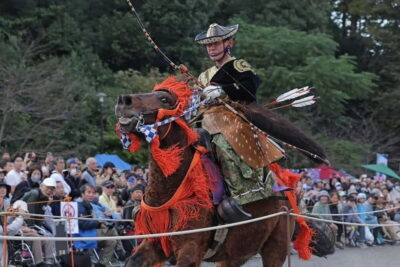 ★ 5.0Samurai Sword & Archery Class from Samurai DescendantFrom $193603 reviews
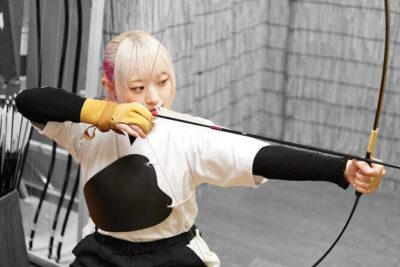 ★ 5.0Japanesel Archery Experience HIROSHIMA CASTLE SHARAKUFrom $43387 reviews
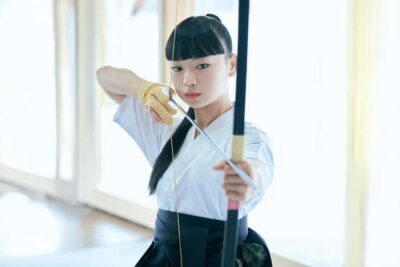 ★ 4.8Traditional Japanese Archery ExperienceFrom $41351 reviews
 ★ 5.0Mt Fuji & Hakone Cruise, Drum Show Bus 1 Day from Tokyo Sta. AreaFrom $123295 reviews
 ★ 4.8Nishiki Market Tea Ceremony with Koto PerformanceFrom $56294 reviews
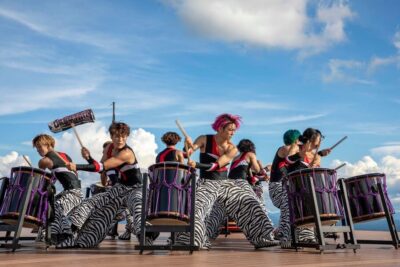 ★ 4.8Open-air theater “Tao- no-Oka” Drum TAO Live performanceFrom $30191 reviews
Filed on these lists too