
REVIEW · RAMEN AND NOODLE TOURS
Made from flour in 30min! Ramen-noodle Making Experience!
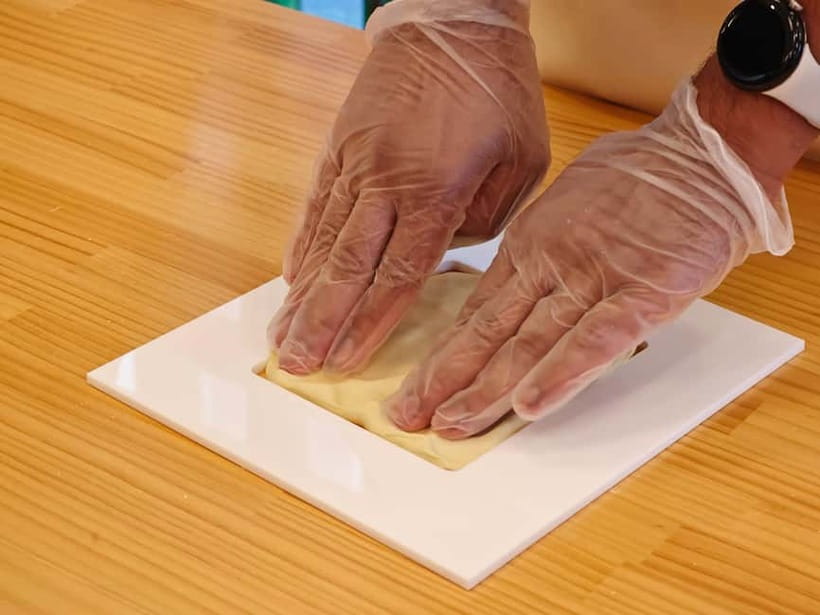
Knife skills meet ramen in 50 minutes. This hands-on workshop at SOBAGIRI-RAKUJYO turns flour into noodles using a large, specially designed knife, then you sit down to eat what you make. It is set inside a bright, clean Asakusa studio in the Kappabashi kitchenware district, so it feels more like a modern cooking class than a back-room food shop.
I especially like the time performance: about 30 minutes to make the noodles and about 30 minutes to dine. The other thing I really like is that you are not stuck with one flavor, you can pick from soy sauce ramen, miso, shio, and even vegan options. That makes it easier to match your taste, even if you are coming as a mixed group.
One drawback to plan for: this is not a sit-and-watch activity. You need to participate and order a meal, and there are a few restrictions like no participation for buckwheat allergy and it is not suitable for people with gluten intolerance.
In This Review
- Key Things You’ll Notice Right Away
- From Flour to Thin Strips in 30 Minutes
- A Bright, Open Studio in Asakusa’s Kappabashi Street
- The Flow: Arrive Early, Wash Hands, Cut Noodles, Eat
- Ramen Choices That Make Everyone Happy
- The One Free Drink and Snack Spread
- Timing That Fits Asakusa and Kappabashi Shopping
- Safety, Rules, and Comfort Considerations
- Who Should Book This Ramen Noodle Workshop
- Price and Value: What $57 Really Buys
- Practical Tips to Make Your Session Smoother
- Should You Book SOBAGIRI-RAKUJYO?
- FAQ
- How long is the ramen noodle making experience?
- What is included in the price?
- What should I do when I arrive?
- Are there different ramen flavors?
- What dietary restrictions should I know about?
- Can I just watch the workshop without participating?
Key Things You’ll Notice Right Away
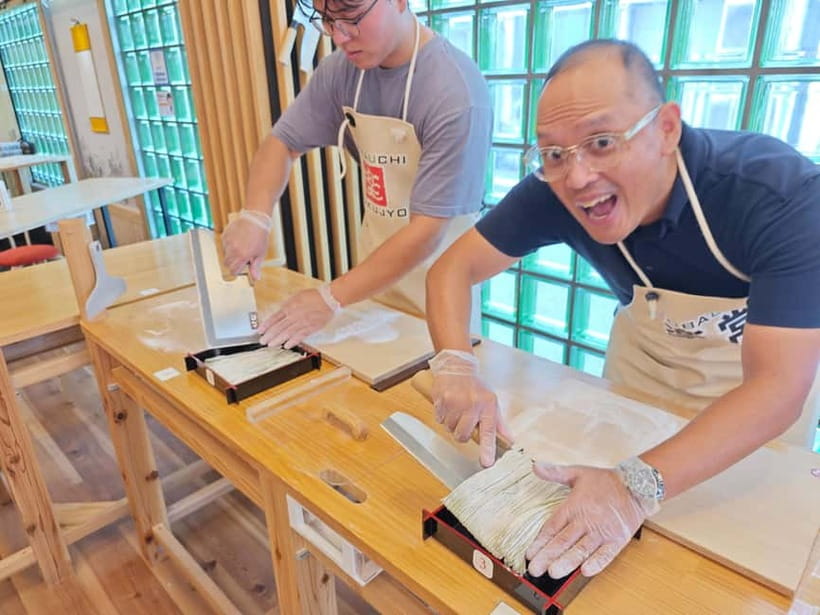
- Manual knife-cut noodle training that teaches the thin-strip technique one-by-one
- A clean, photo-friendly open-kitchen space right on the first floor
- 30-minute noodle making so it fits tight sightseeing days in Asakusa
- Multiple ramen styles including miso, shio, soy sauce, vegan, and vegan soup curry
- One free drink plus all-you-can-eat snacks during the eating time
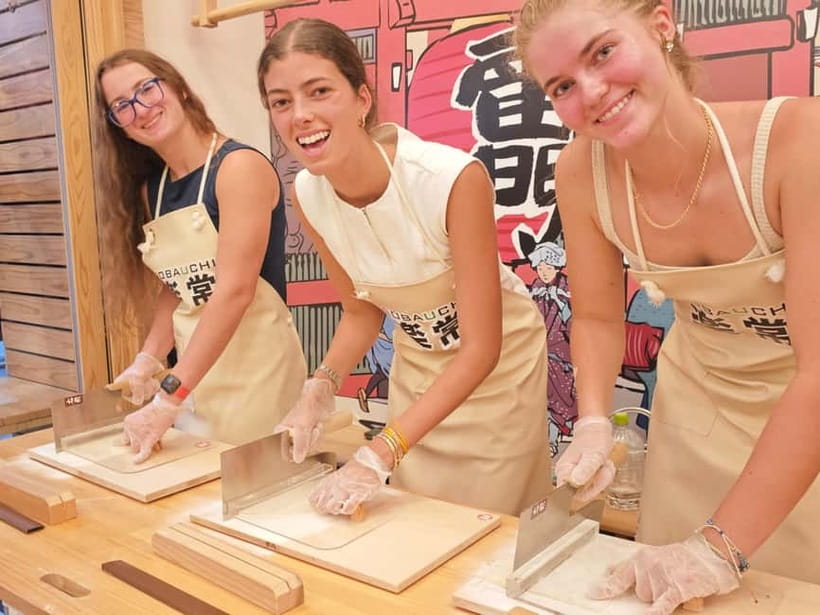
- Small group of up to 6 for better instruction and less crowding
Still weighing up options in Taito City? These are the ones our reviewers rated highest.
- Tokyo Asakusa: Miu Kimono Rental and Optional Photoshoot
★ 4.9 · 54 reviews - Tokyo: Karate Experience with Former All-Japan Champion
★ 4.9 · 46 reviews - Made from flour in 30min! Ramen-noodle Making Experience!
★ 4.8 · 24 reviews - Tokyo : Kimono Rental in Asakusa Provided by KanoWafuku
★ 4.4 · 18 reviews
From Flour to Thin Strips in 30 Minutes
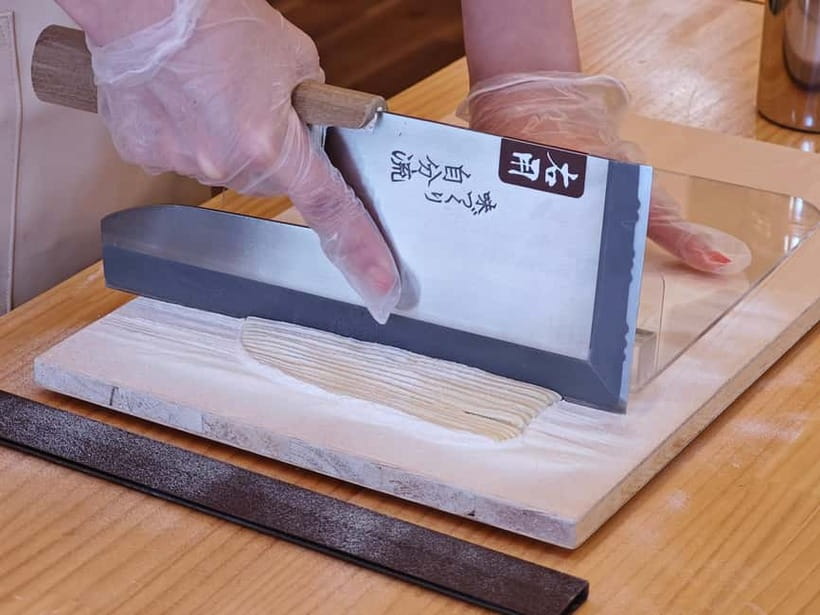
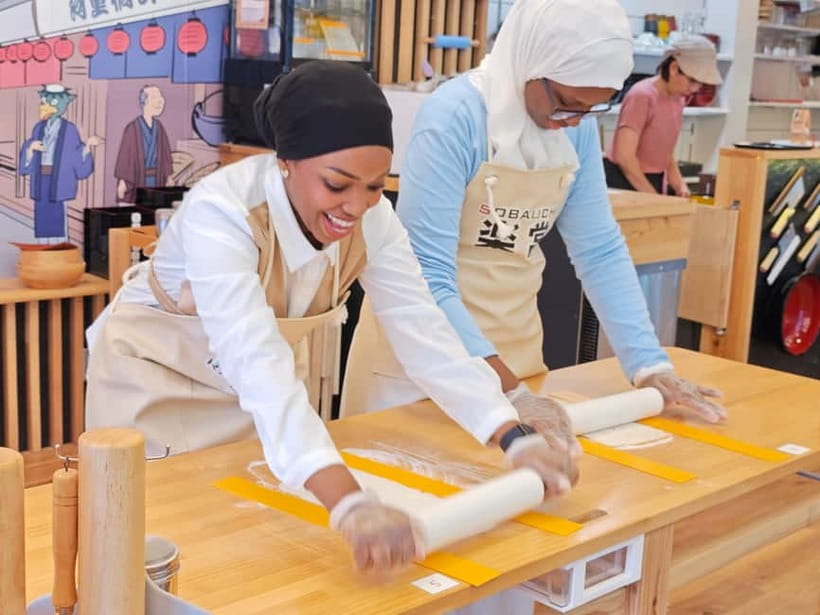
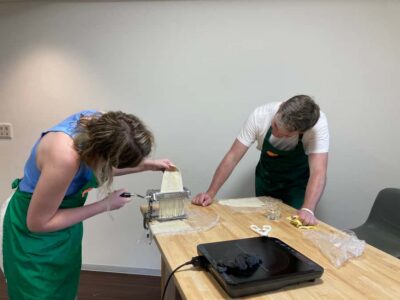
The core of this experience is learning how to cut ramen noodles completely by hand. You start with flour and water and work through the noodle preparation steps, then you practice the cutting technique with a large knife built for noodle work. The whole thing is designed to be doable in one session, not a multi-hour project.
A big reason I like this format is that it turns a process people usually watch from afar into something you actually control. Instead of admiring noodle machines, you learn the feel of the dough and the rhythm of cutting. And because it is a 30-minute noodle-making window, the class does not stretch into the part of your day where everyone gets tired and cranky.
The workshop also leans into safety and technique, with careful instruction for people who are new to heavy cutting tools. You will likely feel a bit clumsy at first, then suddenly you understand what good noodle strips look and feel like. That quick learning arc is part of the fun.
A Bright, Open Studio in Asakusa’s Kappabashi Street
Location matters here, because this does not feel tucked away and messy. The studio is described as bright, clean, and stylish, with plenty of space inside, and it runs as an open-kitchen setup on the first floor. The interior is also considered spacious and photogenic, which helps if you like documenting your food experiences.
There is also a practical side to the setting. It is not a dark, powdery workshop vibe, so you do not feel like you are squeezing into a cramped corner. That matters when you are handling flour and cutting tools, because you want working space you can actually move in.
One of the smartest touches I noticed from what people highlight is that staff handle the photo moment professionally during the workshop. Instead of you trying to hold a phone at awkward angles while flour is flying, they take photos and share them by QR code afterward. Some photos even include simple edits, so you end up with keepsakes that look like they belong in a travel album, not a blurry accident.
The Flow: Arrive Early, Wash Hands, Cut Noodles, Eat
Plan for a smooth sequence that keeps things moving. First, you check in at reception about 10 minutes prior to your reserved time. You will wash your hands, then you jump into the noodle-making portion that runs about 30 minutes.
During the cutting and noodle prep, staff guide you through the process step-by-step. This is not just about handing you dough and hoping for the best. The instruction is aimed at people from all over the world, and the tone is described as gentle, careful, and a little amusing. That matters because the first time you use a large knife, you want confidence more than bravado.
After you finish making the noodles, staff cook and prepare the ramen for you. Then comes the second half: meal time, described as free time for dining. This is where you sit down, taste your creation in an actual bowl, and use the rest of your session at a comfortable pace.
- Japanese paper Notebook and Mizuhiki Belt Bookmark Workshop★ 4.9 · 14 reviews
Ramen Choices That Make Everyone Happy
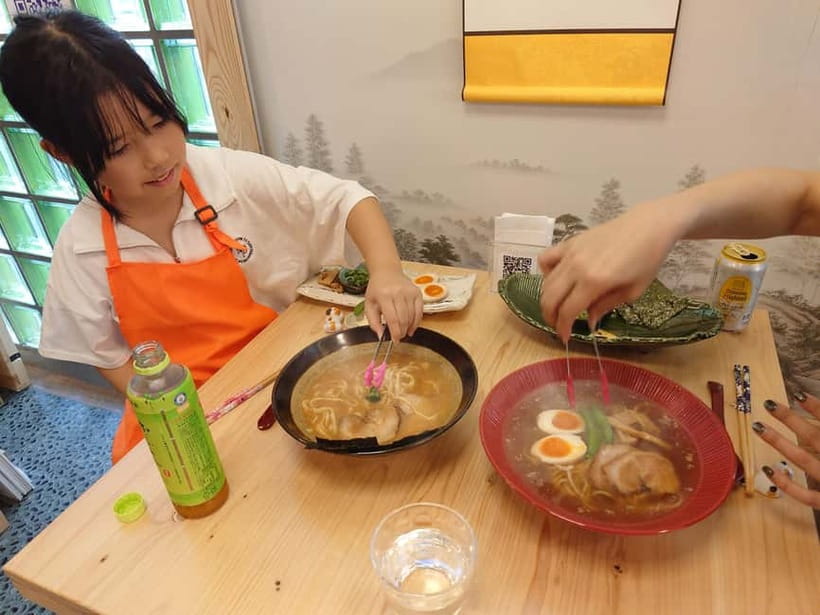
Your noodles are not just for show. You eat them as ramen, and the menu includes several styles. You can choose among soy sauce ramen, miso ramen, shio ramen, and there are also vegan options. One special mention is vegan soup curry ramen, which gives plant-based eaters a route that does not feel like an afterthought.
From people’s descriptions, the soy sauce version can include classic toppings like egg and pork. If you are in a group, this variety is handy because you can split choices without the whole table needing to agree on one flavor.
This is also where the class becomes a proper meal experience, not just a cooking activity. You are taught the noodle craft, but you get to taste it in multiple ways, which helps you understand how sauce and broth change the final impression of the same basic noodles.
The One Free Drink and Snack Spread
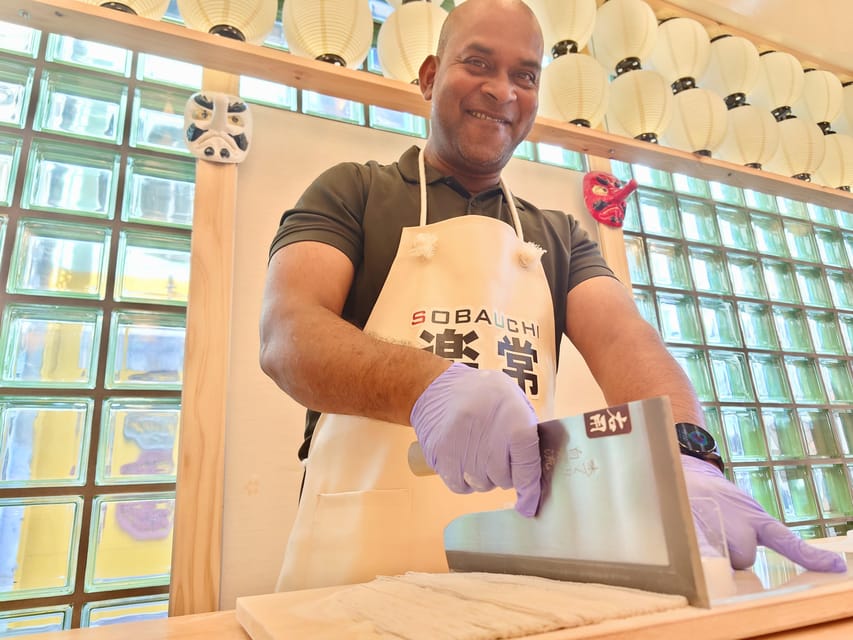
A lot of ramen experiences stop at the bowl and call it a day. Here, you get more structure. You receive one free drink during the meal portion, with options including beer, highball, lemon sour, juice, and non-alcoholic beer. That choice is useful because it lets you match your mood, even if you are not drinking alcohol.
There are also all-you-can-eat snacks in the eating area, described as from proud Japanese manufacturers. You are not just sitting down to a single plate and moving on. You can nibble while you wait for your ramen or enjoy the snack selection between sips.
In practical terms, this improves value and keeps energy up, especially if you are squeezing this between sightseeing stops. Flour activity can make you hungry fast.
Timing That Fits Asakusa and Kappabashi Shopping
This workshop earns points for being built for real travel days. Your noodle-making time is about 30 minutes, and then you get about 30 minutes to eat, so the total is listed at 50 minutes. That makes it a good slot when you want something hands-on but still need time to walk around.
The location is also convenient. It is in Kappabashi, Asakusa, and it is about 25 minutes from Sensoji Temple on foot. If you are doing the common Asakusa loop, this can slot in as your food-and-activity stop while you browse Kappabashi kitchen tools and street shopping.
The meeting point is precise, which helps if you are already in the area. You should look for a place diagonally across from a food sample specialty store with a large beetle objet d’art on Kappabashi Kitchenware Street. If you like to arrive a bit early, this kind of landmark-based meeting point makes your life easier.
Safety, Rules, and Comfort Considerations
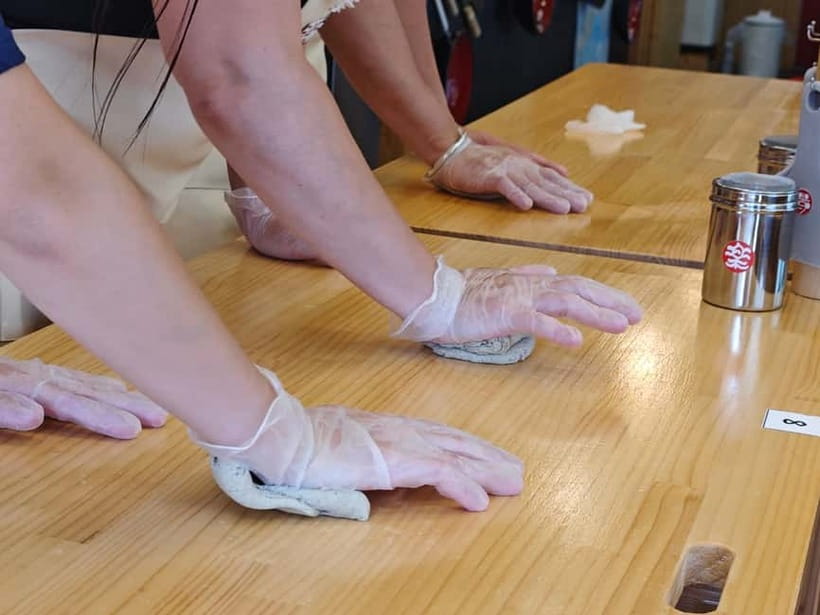
This experience has rules, and they matter because you are using a large heavy knife. The good news is staff focus on safe and delicate fine cutting techniques, and the environment is set up like a professional studio rather than a chaotic kitchen.
Still, you should take the restrictions seriously:
- People with buckwheat allergies are not allowed to participate.
- It is not suitable for people with gluten intolerance.
- Parents are responsible for children, and solo kids need the ability to knead and use a large heavy knife by themselves.
- If a child cannot comfortably handle the knife, they will be paired with a parent.
- The experience is not suitable for children under 2, and there are also age minimums listed for under 3 and babies under 1.
- People with a cold are listed as not suitable.
There is also a note about injuries: if something happens, it is the participant’s responsibility. That is standard for hands-on classes, but it is worth acknowledging so you go in with the right expectations.
Seating is managed too. One rule says three participants per table will not be allowed, so you should expect the staff to organize tables based on your group size and flow.
Who Should Book This Ramen Noodle Workshop
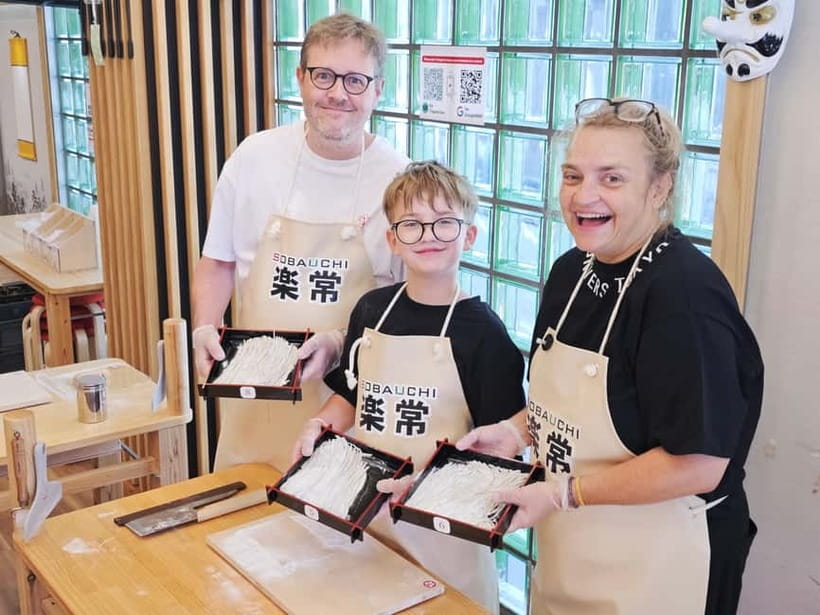
This is a strong match for a few types of travelers.
Families can enjoy it because the noodle-making portion is short enough to keep kids engaged, and the studio is described as spacious and clean. Reviews and descriptions also emphasize that the workshop works for all ages when kids meet the requirements. If you are bringing a young child, read the knife ability guidance carefully, because solo participation is not automatic.
Couples and friends should like it because the class stays social, but it is still structured enough that you do not feel lost. The small group size of up to 6 participants helps keep attention on you.
Food lovers will like it for the simple reason that you get both the process and the payoff. You learn noodle cutting and then immediately eat the results. That is different from a lot of culinary demos where you watch, smile, and leave hungry.
If you are someone who cannot participate due to allergies or gluten intolerance, you should skip it. The restrictions are clear, and the menu options do include vegan choices, but the allergy and gluten rules still apply.
Price and Value: What $57 Really Buys
The price is listed at $57 per person, and the value is not just the ramen. You are paying for instruction on noodle cutting, a guided flour-to-noodle process, and a meal that uses the noodles you made yourself.
On top of that, you get:
- Dining on your own ramen noodles
- One free drink
- All-you-can-eat Japanese snacks
Once you add up those components, it becomes more like a short cooking workshop plus a curated meal, rather than simply buying lunch. If you are traveling on a tight schedule, the 50-minute duration also matters, because you are buying time efficiency alongside the food experience.
If you have attendants or additional people who are not participating, note that meal cost for attendants is not included. Also, observation-only is not possible, so plan to order if you want someone to stay in the space with you.
Practical Tips to Make Your Session Smoother
A few small choices can make this go from good to great.
First, arrive 10 minutes early. The reception timing is set, and washing hands takes a moment too. If you are running late, you risk shrinking your time for the hands-on part.
Second, go in with a mindset that this is a technique lesson. You do not need to be good with knives already. The instructor-led approach focuses on safe cutting and building thin strips step-by-step, so your goal is to learn and participate, not to win a noodle-cutting contest.
Third, be ready for flour mess. The studio is clean, but you are working with dough. Dress in comfortable clothing that you do not mind getting a little dusty.
Fourth, if you care about photos, you can relax. Since staff take photos and share them afterward by QR code, you can focus on learning rather than worrying about phone placement.
Finally, if you are picky about drinks, skim the options in advance so your one free drink matches your style.
Should You Book SOBAGIRI-RAKUJYO?
I think you should book if you want a hands-on ramen experience that does not eat your whole day. The 30-minute noodle-making format is ideal for tight Asakusa itineraries, and the fact that you eat the noodles you cut keeps the experience feeling real and satisfying.
You should also book if you like food that is both practical and interactive. Learning the manual cutting technique gives you something you can explain and remember long after the bowl is finished.
Skip it if you have buckwheat allergy, gluten intolerance, or if someone in your party cannot meet the participation requirements for kids. And if you want a pure observer experience, this is not that kind of workshop, because you are expected to order and participate.
One last note for peace of mind: there is at least one case where a schedule was canceled after arrival by the owner. That is rare based on the overall pattern, but it is a good reason to keep backup plans for your day, especially if you are traveling on a strict timeline.
If you want a quick, fun, very Asakusa kind of food activity, this is a strong pick.
FAQ
How long is the ramen noodle making experience?
The total experience is listed as 50 minutes. You spend about 30 minutes making noodles, and then you have additional free meal time after staff cook the ramen.
What is included in the price?
Included are the ramen noodle making experience, dining on ramen made from the noodles you cut, one free drink, and all-you-can-eat Japanese snacks.
What should I do when I arrive?
You should arrive 10 minutes before your reserved time. There is a reception period, then you prepare by washing your hands before the noodle making starts.
Are there different ramen flavors?
Yes. You can make and eat noodles as different ramen styles, including soy sauce ramen, miso ramen, shio ramen, and vegan options, such as vegan soup curry ramen.
What dietary restrictions should I know about?
People with buckwheat allergies are not allowed, and the activity is also listed as not suitable for people with gluten intolerance.
Can I just watch the workshop without participating?
No. As a rule, it is not possible to enter the restaurant for observation only, so you should plan to order a meal and take part in the experience.
Newest Taito City write-ups from the Loving Japan desk

Ramen and Noodle Tours, side by side.
 ★ 5.0Ramen Cooking Class at Ramen Factory in KyotoFrom $1311,937 reviews
 ★ 5.0Eat and Drink Like a Local: Tokyo Ueno Food Tour-Taverns&RamenFrom $95957 reviews
 ★ 5.0Ramen & Gyoza Cooking Class in Tokyo with Local Supermarket VisitFrom $122823 reviews
 ★ 4.9Ramen Cooking Class at a Ramen Factory with SouvenirFrom $127532 reviews
 ★ 5.0Ramen, Gyoza, and Onigiri Cooking ClassFrom $90445 reviews
 ★ 4.9Ramen Tasting Tour with 6 Mini Bowls of RamenFrom $122432 reviews
 ★ 4.7Five Must-See Highlights Walking Tour & Ramen LunchFrom $56411 reviews
 ★ 5.0Ramen and Gyoza Cooking Class in DotonboriFrom $70378 reviews
Filed on these lists too