
REVIEW · MORNING
Tokyo Morning City Tour with Pick-up Service from 28 Hotels
Tokyo wakes up early, so do you. This half-day city sampler strings together iconic sights without making you figure out transit first, with hotel pick-up and a licensed English-speaking guide. You get a calmer start at Meiji Jingu, then a photo-and-views moment at Tokyo Tower, and later a relaxed break in Ginza for your own lunch plans.
I really like that the tour builds in time for both meaningful stops and a personal lunch pause, not just a race through photos. I also like the practical help you get afterward, since your guide shares ideas for what to do next. The main catch is you do not get hotel drop-off, so you’ll need to handle getting back on your own.
In This Review
- Key highlights at a glance
- Hotel pick-up at 8:30am: how the tour actually feels
- Price and value: what you’re paying for in this $52.26 tour
- Meiji Jingu Shrine: forest calm and Shinto atmosphere
- Shibuya Crossing pass-by: the world’s loudest intersection, from the bus
- Tokyo Tower: skyline photos and the 150-meter viewpoint
- Imperial Palace loop and the 1936 political landmark
- Ginza at the end: shopping streets and your lunch window
- Guide style, group size, and how to get the most out of 4 hours
- What to wear and expect outdoors, plus the reality of traffic
- Should you book this Tokyo morning tour?
- FAQ
- Is lunch included in the tour?
- Does the tour include hotel drop-off at the end?
- How long is the tour, and when does it start?
- What stops are included in the morning route?
- Is Tokyo Tower admission included?
- Is the tour good for families?
Key highlights at a glance
- Hotel pick-up from many Tokyo hotels, sometimes by taxi, so you start without stress
- Meiji Jingu Shrine on a free admission visit with walking through a forested approach
- Tokyo Tower (150 meters up) with included entry and time to take skyline photos
- A Shibuya Scramble Crossing pass-by for the world-famous chaos, seen from the bus route
- Imperial Palace loop drive plus commentary, then a final stop in Ginza
- Smallish group size up to 40 with a National Licensed Guide-Interpreter
Still weighing up options in Tokyo? These are the ones our reviewers rated highest.
- Mt Fuji and Hakone 1-Day Bus Tour Return by Bullet Train
★ 5.0 · 26,383 reviews - 1-Day Tokyo Bus Tour
★ 5.0 · 14,250 reviews - Tokyo: teamLab Planets TOKYO Digital Art Museum Entry Ticket
★ 4.6 · 9,779 reviews - Mt Fuji & Hakone Cruise, Drum Show Bullet Train 1 Day from Tokyo
★ 4.0 · 7,413 reviews
Hotel pick-up at 8:30am: how the tour actually feels
This tour is built for people who want a smart first morning in Tokyo. It starts at 8:30am, and the total time is about 4 hours, including pick-up and travel time between stops. That matters because Tokyo traffic can be unpredictable, and the schedule is designed to keep moving even if the streets slow down.
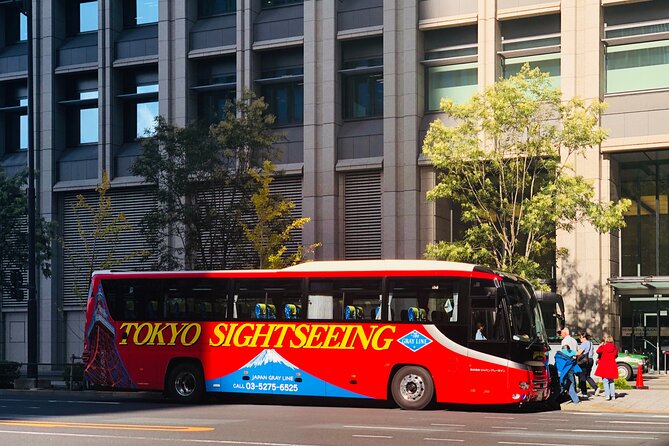
You’ll get a pick-up service at designated hotels in Tokyo. The day is handled by Japan Gray Line, and you use a mobile ticket. A note that’s worth taking seriously: the guide might not accompany you during pick-up, and a taxi may be used for certain hotel locations. In practice, that means you should be ready at the meeting spot near your lobby and keep an eye out for the pick-up instructions.
Also, know the rhythm. The bus loops you through several areas, which is efficient, but it also means there are stretches where you’re riding and watching landmarks from the roadside. One common disappointment with short, bus-based sightseeing is feeling slightly rushed at a stop, or wishing there was more time to linger. The route is meant to be an overview, not a slow, deep visit.
Finally, plan for the end of the tour: there is no drop-off back to your hotel. That’s not a deal-breaker, but it changes the logistics. If you’re the type who hates navigating train lines early, you may prefer to schedule this near areas you already want to explore later, or plan to pay for a taxi if needed.
Price and value: what you’re paying for in this $52.26 tour
At $52.26 per person, this is a value-priced half-day with multiple built-in benefits. The cost covers a few things that are hard to DIY in one smooth morning: a certified guide- interpreter, pick-up, and entry to at least one paid landmark (Tokyo Tower). Meiji Jingu’s visit is listed as free admission, so you aren’t paying twice just to see it.
The value is really in the time savings. For first-time visitors, Tokyo can feel like a maze, and the biggest cost is usually mental effort plus time spent coordinating transit. A morning like this hands you an organized route plus a human who can explain what you’re seeing, not just point at it.
One more value angle: Tokyo Tower includes time for photos of the skyline, and that’s the kind of sightseeing that benefits from someone timing the moment and guiding you where to stand. If you like having a clean “first set of photos” to start your trip, that’s a real perk.
What you should not assume is that lunch is included. The schedule includes a lunch time buffer and an opportunity to enjoy Japanese-style food, but lunch is listed as not included. So treat the tour as “sightseeing with a lunch window,” and budget for the meal separately.
Meiji Jingu Shrine: forest calm and Shinto atmosphere
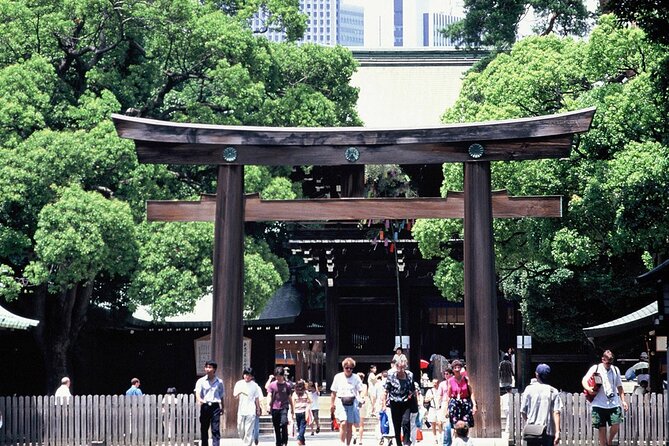
The day’s first major stop is Meiji Jingu Shrine, with about 40 minutes on-site. This is one of those Tokyo places that feels like a reset button. You arrive to an expansive setting with traditional Shinto-style architecture and a forested atmosphere that contrasts with the city noise outside the gates.
What I like about starting here on a morning tour is the pacing. Tokyo morning light tends to be kinder, and you get the most peaceful part first. If you care about religious sites, this is a strong introduction because your guide can explain the meaning of the shrine and Emperor Meiji’s role in ending the Samurai era, which gives the whole place context instead of just being background scenery.
A practical tip: expect outdoor walking. The tour guidance specifically suggests sneakers or comfortable shoes and rain gear just in case. Meiji Jingu is not an all-indoor stop, and you’ll want grippy shoes if the path is damp.
Drawback to note: with only 40 minutes, you won’t have time for a deep, slow wander of every corner. You’ll see the core experience, then you move on. If you want to linger for photos and calm reflection, you can always add extra time afterward on a separate day.
- Mt Fuji and Hakone 1-Day Bus Tour Return by Bullet Train★ 5.0 · 26,383 reviews
- 1-Day Tokyo Bus Tour★ 5.0 · 14,250 reviews
- Tokyo: teamLab Planets TOKYO Digital Art Museum Entry Ticket★ 4.6 · 9,779 reviews
- Mt Fuji & Hakone Cruise, Drum Show Bullet Train 1 Day from Tokyo★ 4.0 · 7,413 reviews
- Tokyo Mt Fuji 5th St & Hakone Cruise Bus Tour w/Bullet Train★ 4.4 · 5,024 reviews
Shibuya Crossing pass-by: the world’s loudest intersection, from the bus
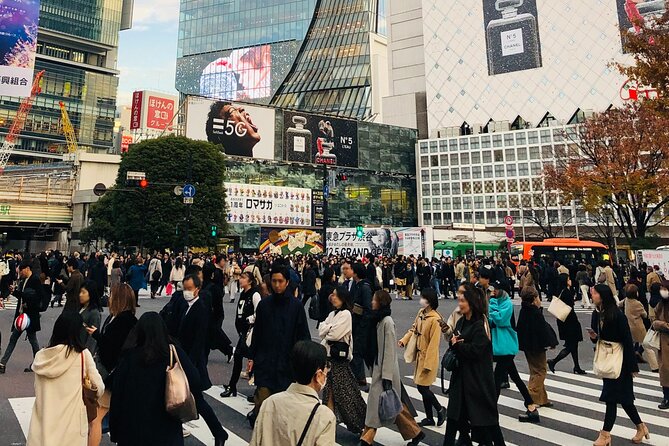
Between major stops, the bus route passes Shibuya Scramble Crossing, also called the Shibuya Crossing. It’s famous because it’s one of the busiest pedestrian crossings in the world, and seeing it in person helps you understand why Tokyo has a reputation for controlled chaos.
Here’s what to expect realistically: since it’s a pass-by, you’re not getting a full time block to cross and explore nearby streets. You’re getting the impact of the place from the route, which is still useful for first-timers. It also helps you decide whether you want to come back later for a more hands-on experience.
If you’re planning photo angles, keep your expectations grounded. From a moving bus you won’t get the kind of low, tripod-stable shots people make from a fixed spot. Think “wow factor check-in,” not “perfect long-exposure project.”
Tokyo Tower: skyline photos and the 150-meter viewpoint
The biggest “you must see this” moment is Tokyo Tower. This stop includes admission and gives you about 40 minutes. The main observation deck is listed at 150 meters above ground level, and that height is the point. From up there, the city’s grid, traffic flow, and dense neighborhoods start to make sense as one connected place.
I love how the tour builds in time to snap souvenir photos from the tower. You’re not stuck hoping the timing works with crowds or finding your way once you’re there. The guide’s job is to help you get to the right viewpoints quickly so you can spend your time looking, not figuring.
One practical note: Tokyo Tower can get busy. Your best photos often come from being ready to move when your group arrives. Wear comfy shoes and keep your phone charged. If you’re traveling with family or you’re a solo traveler wanting a clear set of travel pics, this is the type of stop where a good guide pacing makes the difference.
Also, note that this is the stop with listed entry value. If you’re comparing DIY vs tour, this is one of the places where the tour price feels more justified.
Imperial Palace loop and the 1936 political landmark
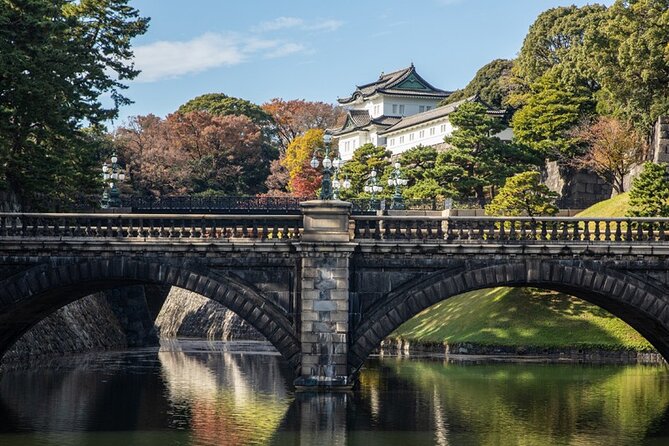
After Tokyo Tower, the bus takes a 20-minute loop around the Imperial Palace. The Imperial Palace area was formerly the Shogun’s castle until the mid-19th century, and the guide provides commentary during the ride. Even though you aren’t walking the palace grounds here, the drive-by format helps you orient where the palace sits within central Tokyo.
This is also where the tour becomes more “learn as you ride.” The bus route includes views and explanation for a major political landmark built in 1936, described as surviving wartime and serving as Japan’s political heartland. You may not remember every detail, but you’ll remember the feeling of seeing modern Tokyo’s power center after visiting religious and commercial icons earlier.
If you’re someone who loves context, you’ll probably appreciate this section. It’s less about stepping out, more about understanding the map of the city and how different Tokyo “themes” sit next to each other.
Trade-off: this segment is time in the bus, and traffic can affect the pace. If you’re sensitive to long rides, bring a book, download offline maps, or just lean into the sightseeing view window.
Ginza at the end: shopping streets and your lunch window
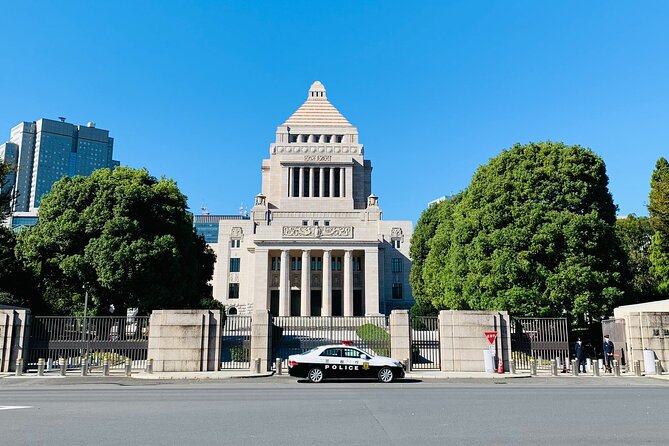
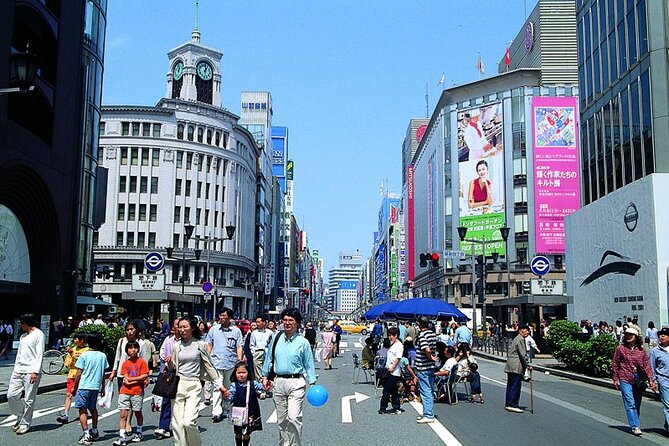
The final destination is Ginza, Tokyo’s upscale and sophisticated shopping district. You get a chance to take a leisurely stroll through refined shopping streets, and there’s time set aside for a Japanese-style lunch.
This is the part where you control your pace. Because lunch is listed as not included, you’ll decide what fits your budget and cravings. The good news is Ginza has lots of choices, so you’re not stuck hunting for something that’s hard to find. Even if you don’t shop, walking here is a nice contrast to the shrine quiet and the tower views.
A small but important logistics point: since there is no hotel drop-off, Ginza can be a smart place to finish if you want to keep exploring afterward. If your hotel is far away, you might find it easier to jump onto trains from this area than to start from a random spot.
Guide style, group size, and how to get the most out of 4 hours
This tour runs with a certified English-speaking guide, described as a National Licensed Guide-Interpreter. That’s a big deal in Tokyo, where small details matter. You get cultural context for Meiji Jingu, practical orientation around central Tokyo, and guidance on what to do next after you’re back on your own.
Group size is capped at 40 travelers. That’s large enough to make it efficient, but small enough that the guide can usually keep track and help people regroup. In short, you’re not lost in a sea of people.
For photo lovers: the tour specifically highlights souvenir photos at Tokyo Tower. If you want good pictures without chaos, this is where you can get the most value. Be ready to move when the group moves. It sounds obvious, but it’s the difference between a relaxed photo set and “I missed my moment.”
You can also use your guide strategically. Ask what neighborhood fits your interests, not just what’s famous. Tokyo is big, and a guide who knows your preferences can help you avoid wasting time on a generic checklist.
What to wear and expect outdoors, plus the reality of traffic
This is a morning tour with a good amount of outdoor walking. The tour guidance is clear: wear sneakers or comfortable shoes, and prepare rain gear like an umbrella or raincoat. Even if the day starts sunny, Tokyo weather can change.
Timing is another reality check. The schedule says heavy traffic, weather conditions, or operational reasons may cause itinerary changes or even substitutions, and the fare may not be refunded. In my mind, that’s not a reason to avoid the tour. It’s a reason to keep your expectations flexible and treat it as an overview that adapts.
Finally, remember the total duration includes pick-up and travel time. That means each on-site moment is shorter than a full-day itinerary. If you want more time at the shrine grounds or more time exploring around Ginza, this tour is the sampler. It’s a good first morning, then you build your own second day.
Should you book this Tokyo morning tour?
If you’re visiting Tokyo for the first time and want a clean, efficient overview with hotel pick-up, this is an easy yes. It’s especially good if you want a fast mix of religion (Meiji Jingu), modern spectacle (Shibuya Crossing pass-by), a major viewpoint (Tokyo Tower), central orientation (Imperial Palace loop), and a finish in a neighborhood where you can choose your own lunch and keep exploring.
You should think twice if you strongly prefer a guided tour that returns you to your hotel. The lack of drop-off can be annoying if you’re not comfortable using public transit, or if you’re traveling with someone who gets tired navigating steps and stations.
It’s also a good match for people who enjoy photo stops and short guided explanations. If you want long time to wander slowly at each location, you may feel a bit rushed.
If you book it, do two things: wear comfy shoes, and plan your return from the end point area rather than assuming you’ll be dropped back at your lobby.
FAQ
Is lunch included in the tour?
The schedule includes a lunch break and time to enjoy a traditional Japanese lunch in the Ginza area, but lunch itself is listed as not included. Plan to pay for your meal.
Does the tour include hotel drop-off at the end?
No. The tour includes pick-up from designated Tokyo hotels, but it does not include drop-off service back to your hotel.
How long is the tour, and when does it start?
It starts at 8:30am and runs for about 4 hours total, with that time including pick-up and travel between stops.
What stops are included in the morning route?
The route includes Meiji Jingu Shrine, a pass-by of Shibuya Crossing, Tokyo Tower (with admission included), a loop around the Imperial Palace by bus, and a final stop in Ginza.
Is Tokyo Tower admission included?
Yes. The Tokyo Tower observation deck visit is listed with admission included.
Is the tour good for families?
Children up to 5 years old may join for free, but bus seats and lunch are not free. If seats or lunch are needed for a child, a child fare applies. The tour also notes it involves outdoor walking, so comfortable shoes and rain gear matter.
Newest Tokyo write-ups from the Loving Japan desk






Morning, side by side.
 ★ 5.0Kyoto Early Morning Tour with English-Speaking GuideFrom $681,427 reviews
★ 4.9Early Morning Tour with English-Speaking GuideFrom $1011,128 reviews
 ★ 4.9World Heritage Shirakawa-go Morning Guided TourFrom $77988 reviews
 ★ 5.0Nara Early Morning Tour (Kyoto or Osaka Departure Available)From $61676 reviews
 ★ 4.8Sumo Morning Practice Viewing TourFrom $81570 reviews
 ★ 5.0Hiroshima in a Nutshell: Morning Bike AdventureFrom $72524 reviews
 ★ 4.4Sumo Morning Training VisitFrom $77370 reviews
 ★ 4.6From Kyoto: Nara Guided Morning TourFrom $77335 reviews
Filed on these lists too