
REVIEW · SAMURAI, NINJA AND SWORD EXPERIENCES
Tokyo: Samurai Adventure! Authentic Sword Action Experience
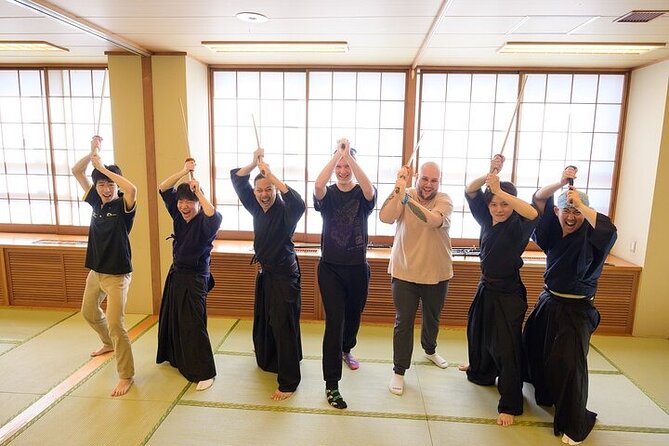
Samurai training in central Tokyo, in one hour. This hands on workshop pairs a quick intro to samurai culture with real physical practice using training swords, led by Dai and Kume, instructors with serious action performance experience. I love that it works for beginners, and I also love the way the class includes both watching skilled technique and trying it yourself. The one drawback to plan around is that it does not include kimono dressing, so your photos will be more workout focused than costume focused.
Tokyo makes it easy to fit, because it is based in central Tsukuda and is reachable from areas like Tokyo Station, Ginza, and Tsukiji. The total group size is capped at 15, so you are not lost in a giant crowd. You can choose a group format, with aspiring Japanese performers joining in, or go for a private lesson if you want more direct attention.
In This Review
- Key things I’d bet you’ll notice right away
- What happens during the 1 hour Samurai Adventure in Tsukuda
- Meet Dai and Kume: performance background, friendly teaching
- Learning the fundamentals: grips, holds, and controlled swings
- The demo then your turn: where the workshop clicks
- Group class vs private lesson: pick your comfort level
- The action scene moment and the end photo session
- Safety, equipment, and what you should actually expect
- Getting there from Tokyo Station, Ginza, and Tsukiji
- Price and value: is $32.84 worth your time
- Who this samurai workshop is perfect for
- Who might want to skip it
- Should you book Samurai Adventure with Tokyo Samurai Experience ICHI?
- FAQ
- How long is the samurai workshop in Tokyo?
- Is this activity safe and suitable for beginners?
- What is included in the price?
- Is kimono dressing included?
- Where does the activity meet?
- What is the cancellation policy for a full refund?
Key things I’d bet you’ll notice right away
You practice, not just watch: there is a warm up, then you learn grips, holding, and swinging before you pair off for an action moment.
Safe equipment and movements: you use wooden training swords and follow guided form work.
Action actor energy, real instruction: Dai and Kume teach with performance discipline, not just hobbyist enthusiasm.
Group class can feel like a mini set: in the group option, aspiring Japanese actors learn samurai action alongside you.
Photos are part of the finale: you get a photo session with the samurai instructors at the end.
Short, focused timing: at about an hour, it is easier to schedule than half a day commitments.
Blade work and stagecraft, other sessions
- Tokyo: Samurai Ninja Museum Guided tour and Experience
★ 4.6 · 1,010 reviews - Tokyo: Samurai Sword & Archery Class from Samurai Descendant
★ 5.0 · 603 reviews - Best Samurai Experience in Tokyo
★ 5.0 · 458 reviews - Ninja Experience (Family Friendly) at Samurai Ninja Museum TOKYO
★ 5.0 · 441 reviews
What happens during the 1 hour Samurai Adventure in Tsukuda
This is a fast, physical workshop. Expect about an hour from start to finish, and expect the pace to move. The sequence matters because it starts by getting your body ready, then it teaches you the basics you need to understand what you are doing.
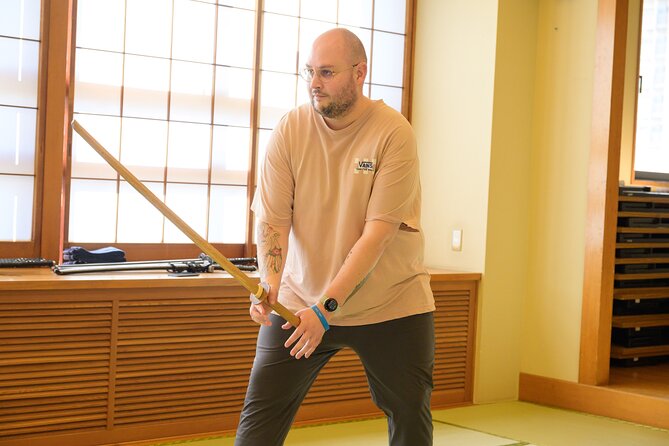
First, there is a warm up. After that, the session shifts into fundamental sword technique: how to grip, how to hold the sword correctly, and how to swing it with control. This is not about trying to look like a movie hero on your first try. It is about getting you to move safely and confidently enough to participate in the action segment later.
You also get live training demonstrations as part of the flow. Watching them right after learning the fundamentals helps you connect what the instructor is doing with what you just practiced. For people who freeze up when they are asked to perform, this structure is surprisingly forgiving, because you learn, then you try, then you adjust quickly.
Meet Dai and Kume: performance background, friendly teaching
A big reason this class earns top marks is the instructors themselves. Dai and Kume show up as polished and genuinely welcoming, and they teach like they care about how the movement looks as much as how it feels. In the reviews, their style comes up again and again, especially their professionalism and friendliness.
They are not there to just run you through steps. They seem to treat the experience like a real training session for samurai action, complete with timing, form, and energy. If you are nervous about looking awkward, that matters. When the teacher is calm and encouraging, you focus on the technique instead of worrying about your rhythm.
One detail I really appreciate from the way they run things is that the session can include a practical cultural layer. Some sessions include a short follow up where they share traditional places to eat and offer snack ideas. That is not guaranteed every single time, but it is a good sign if you want more than just a workout.
Learning the fundamentals: grips, holds, and controlled swings
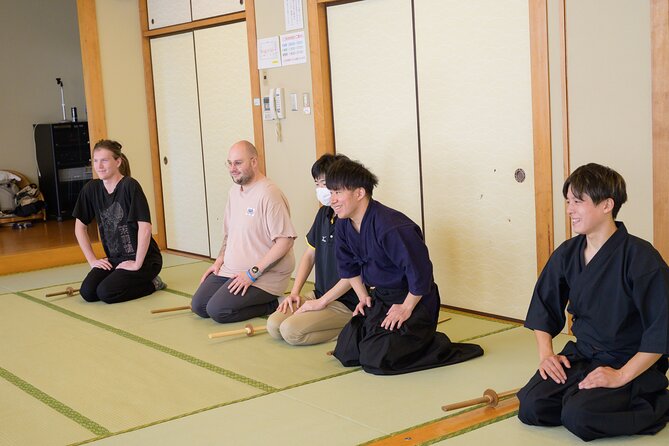
The core of the class is basic swordsmanship movement, taught step by step. Even if you have never held a sword before, you are welcome. The key is that it is taught as form, not combat.
You start with basics like:
- Grip and hand position so your motion is stable
- Holding the sword so you can move without flailing
- Swinging practice focused on control and repeatable technique
The session uses training swords, and that changes everything. You are not fighting for real, so the lesson becomes about precision. You learn the mechanics, then you see how the mechanics connect to dramatic action.
It also helps that the workshop includes a brief introduction to samurai history. This gives your practice a little context. You are not just mimicking movements, you are learning why these forms mattered and how they fit into the samurai tradition.
- Mt Fuji and Hakone 1-Day Bus Tour Return by Bullet Train★ 5.0 · 26,383 reviews
- 1-Day Tokyo Bus Tour★ 5.0 · 14,250 reviews
- Tokyo: teamLab Planets TOKYO Digital Art Museum Entry Ticket★ 4.6 · 9,779 reviews
- Mt Fuji & Hakone Cruise, Drum Show Bullet Train 1 Day from Tokyo★ 4.0 · 7,413 reviews
- Tokyo Mt Fuji 5th St & Hakone Cruise Bus Tour w/Bullet Train★ 4.4 · 5,024 reviews
The demo then your turn: where the workshop clicks
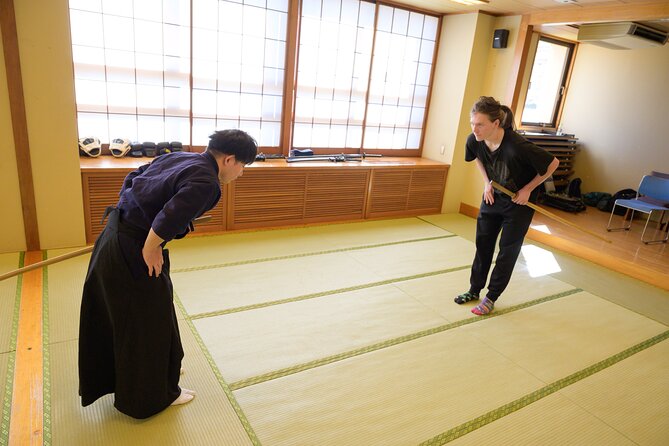
There is a deliberate rhythm to how the instructors teach: watch a technique, practice it, then watch again. That pattern is what makes a one hour workshop feel like more than a one time photo op.
You will see live training demonstrations close up, then you try similar movements with the guidance of the instructors. For most people, this is the turning point where it starts to feel fun instead of intimidating. You realize you are not guessing. You are learning a system.
This is also where the group dynamic helps. In a small group, you can pay attention to others without it becoming distracting. You can compare your movement with what you just watched and make small corrections fast.
Group class vs private lesson: pick your comfort level
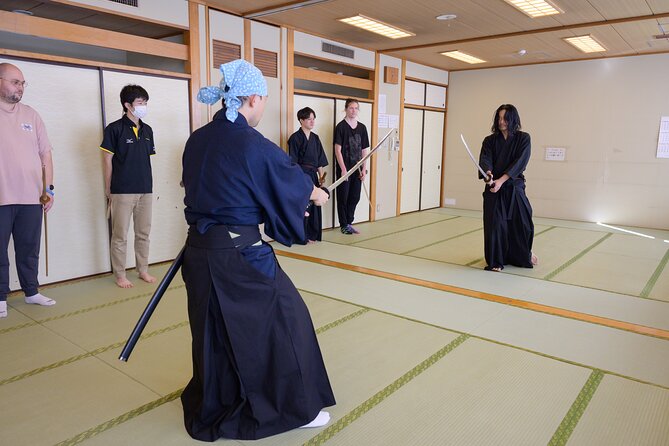
You can choose between a group session and private lessons. Both options use the same general structure, but the feel is different.
Group class is the more social option. It includes an interactive vibe where you practice alongside Japanese students and aspiring Japanese actors who are learning samurai action. If you like energy and you enjoy learning in a setting with others, this is a strong choice.
Private lesson is best if you want focused attention. If you have mobility concerns, strong timing nerves, or you simply prefer one on one coaching, private makes sense. In a private setting, you can usually refine your form more quickly because the instructor can watch your technique without splitting attention.
If you are traveling with family, a private lesson can also reduce friction. You all share the experience, but each person gets coached based on their comfort level.
The action scene moment and the end photo session
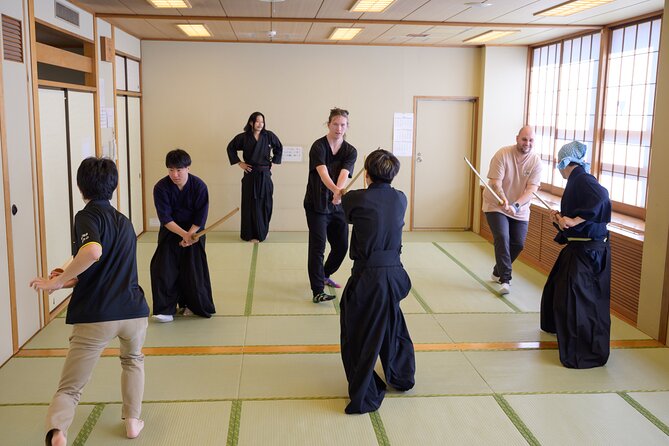
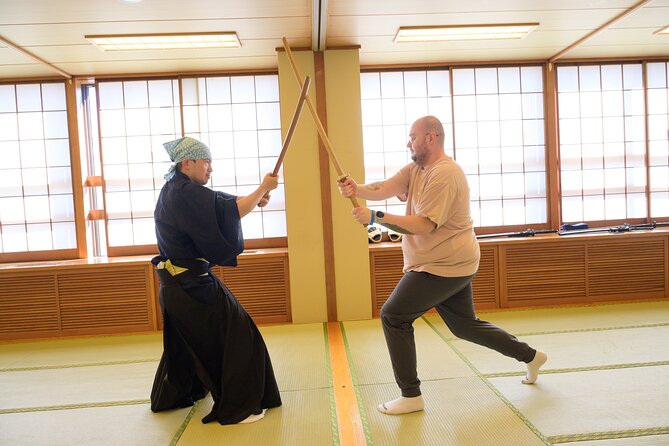
One of the most exciting parts is the action packed segment where you pair up with a professional samurai. That means once you have practiced the basics, you move into a dramatic scenario that uses the movement skills you just learned.
There is also a powerful samurai demonstration you can see up close. Even if you are not planning to go beyond beginners level, this part is worth it. It gives you a chance to see how the forms come alive when a trained performer uses them with confidence.
When you finish the practice, you end with a photo session with the samurai instructors. This is not just a quick selfie and leave. The photo moment is positioned as a wrap up, so it feels like you earned it by participating.
Safety, equipment, and what you should actually expect
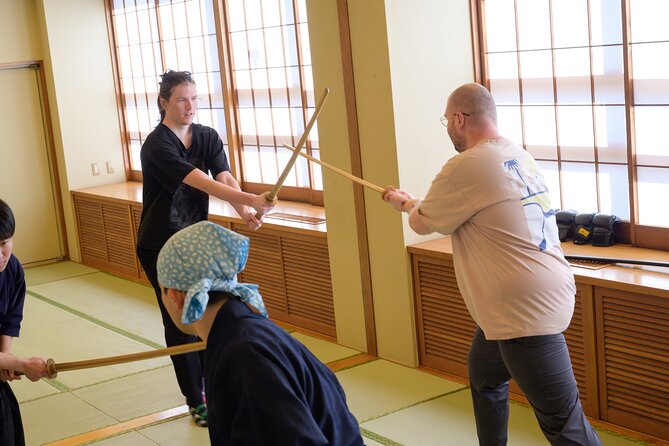
This is hands on training, but it is not real fighting. The workshop uses wooden training swords and focuses on safe practice of samurai movements. You will learn how to handle the sword in a controlled way, and the instructor coaching is what keeps it safe and approachable.
The good news: beginners can join, and the session is structured so you do not need prior experience. The other good news: because it is training focused, you can concentrate on learning the mechanics without the fear that comes with anything more dangerous.
The not so subtle truth: it is still physical. Your arms and shoulders will feel it if you take the swinging practice seriously, especially if you are not used to repetitive movement. Wear comfortable clothes that allow movement, and plan for mild soreness like any short training session.
Getting there from Tokyo Station, Ginza, and Tsukiji
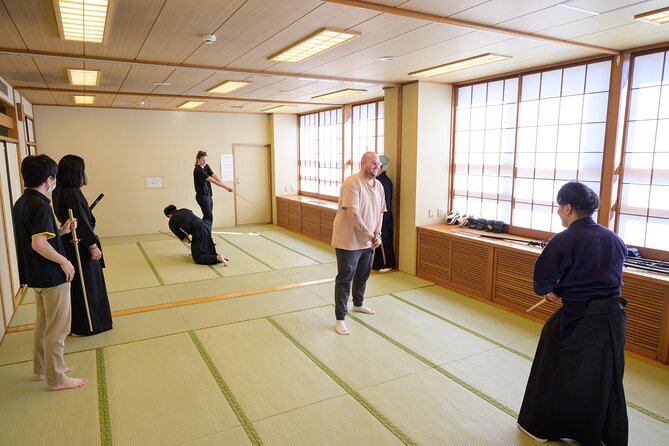
The meeting point is 2-chōme-15-3 Tsukuda, Chuo City, Tokyo 104-0051, Japan. The activity is in central Tokyo and is described as easily accessible from Tokyo Station, Ginza, and Tsukiji. It is also near public transportation.
Here is the practical move: arrive with a little buffer. You want time to get oriented in Tsukuda without rushing. A one hour class punishes late arrivals, not because staff are strict, but because you do not want to miss warm ups and early technique.
If you are staying around Ginza or near Tokyo Station, you can usually fit this between other plans. Just remember you are going to practice, so you do not want to schedule it right before something that requires you to dress up.
Price and value: is $32.84 worth your time
At $32.84 per person, this works out as a value pick if your goal is a hands on Tokyo experience. The price buys you more than watching a performer.
You get:
- an introduction to samurai history
- live samurai training demonstrations
- hands on swordsmanship practice with provided training swords
- photo session with the samurai
- an optional group dynamic that includes aspiring Japanese actors
What you do not get is just as important. Meals and beverages are not included, and transportation to and from the workshop is on you. Kimono dressing is also not part of the package.
So the value question becomes: do you want a focused, hour long physical workshop with photos and coaching, or do you want a full day cultural production with costume elements? If you want the first, this price makes sense. If you want the second, you may feel like something is missing.
Also, group discounts and mobile tickets are listed, which usually means less friction on the day. The class size is capped at 15, which typically helps maintain coaching attention compared to huge groups.
Who this samurai workshop is perfect for
This is ideal if you want a real activity in Tokyo that is short enough to schedule and structured enough to feel rewarding. It is a strong fit for:
- beginners who want safe sword basics
- people who love Japanese performance culture and action choreography
- couples or small groups who want a memorable shared activity
- anyone who prefers practical learning over museum time
It is also a good choice if you like the idea of watching skilled technique up close before you try it yourself. That watch then practice pattern is built into the session.
Who might want to skip it
Skip this if your main goal is an extended, multi hour experience with costume dressing like a full kimono fitting. Skip it if you want meals included, because food is not part of the package. Skip it if you are expecting real steel or sparring. This workshop is explicitly about safe training movements with provided practice swords.
And one more quick filter: if you hate any form of physical practice, even mild swinging and holding drills, you might not enjoy it as much. It is not a passive show.
Should you book Samurai Adventure with Tokyo Samurai Experience ICHI?
If you want one hour of hands on samurai sword movement in central Tokyo, I think this is an easy yes. The instructors, Dai and Kume, are the kind of teachers who make a physical activity feel welcoming, and the class structure makes it approachable even if you start from zero.
Book it if you:
- want an experience with both watching and doing
- like small group settings capped at 15
- care about a guided practice that ends with photos
Skip it if you:
- need meals, kimono dressing, or transport included
- are looking for a full day production
- expect realistic combat rather than training drills
FAQ
How long is the samurai workshop in Tokyo?
The experience runs about 1 hour.
Is this activity safe and suitable for beginners?
Yes. Beginners are welcome, and you practice safe samurai movements using training swords provided by the workshop.
What is included in the price?
The included items are an introduction to samurai history, live training demonstrations, hands on swordsmanship practice, practice wooden swords, and a photo session with the samurai.
Is kimono dressing included?
No. Kimono dressing is not included.
Where does the activity meet?
The meeting point is 2-chōme-15-3 Tsukuda, Chuo City, Tokyo 104-0051, Japan, and the activity ends back at the same meeting point.
What is the cancellation policy for a full refund?
You can cancel up to 24 hours in advance for a full refund. If you cancel less than 24 hours before the start time, the amount paid is not refunded.
Blade Work and Stagecraft



Newest Tokyo write-ups from the Loving Japan desk






Samurai, Ninja and Sword Experiences, side by side.
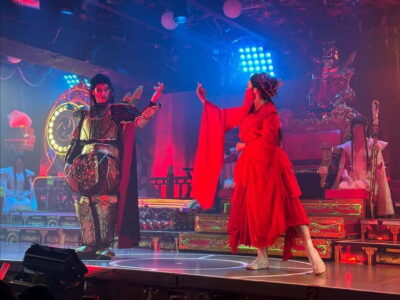 ★ 4.5Samurai Restaurant Show Ticket with 2 DrinksFrom $551,307 reviews
 ★ 5.0Kyoto Samurai ExperienceFrom $1191,294 reviews
 ★ 4.6Samurai Ninja Museum Guided tour and ExperienceFrom $271,010 reviews
 ★ 4.9Kendo and Samurai Experience with Uniform and GearFrom $103815 reviews
 ★ 4.9Samurai Sword Class by Experts in Traditional ArtsFrom $64657 reviews
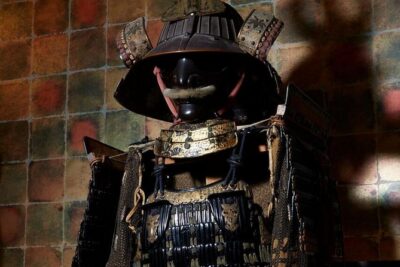 ★ 4.5Skip the lines Basic Ticket at SAMURAI NINJA MUSEUM KYOTOFrom $28632 reviews
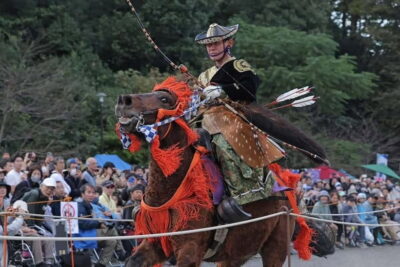 ★ 5.0Samurai Sword & Archery Class from Samurai DescendantFrom $193603 reviews
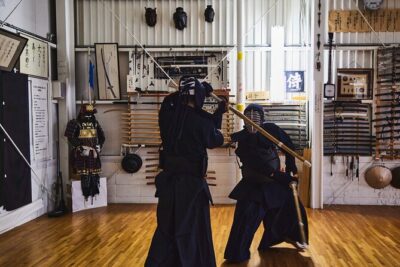 ★ 5.0Samurai Training Experience KENDO in OsakaFrom $131515 reviews
Filed on these lists too