
REVIEW · PRIVATE
Treasures of Kyoto: Geishas & Traditions Private Tour
Kyoto makes sense in a two-and-a-half-hour walk. This private tour puts you on the streets of Gion with a local host, so geisha culture clicks into place instead of feeling like a blur of photos and facts. I especially like how the guide connects what you see, the etiquette around it, and the meaning of the places you pass.
I also like the mix of performance roots and spiritual stops for the time you’re spending. You’ll see the Statue of Izumo no Okuni (kabuki’s early origin) and visit Minamiza Theatre, both described with free entry.
One consideration: this is a walking tour with several short stops and some stairs, so bring a moderate fitness level and comfortable shoes, especially around temple steps.
In This Review
- Key highlights to look forward to
- Reading Gion Like a Local Host, Not a Crowd
- Paying $135.45 for 2.5 Hours of Direction (and Why It’s Worth It)
- Start in Kawabatacho, Finish Near Yasaka Kamimachi: Logistics That Stay Simple
- Izumo no Okuni and Minamiza Theatre: Kyoto’s Performance Roots
- Gion and Shinbashi Dori: Where the Geisha District Makes Sense
- Tatsumi Daimyojin Shrine and Chion-in: Shinto, Buddhism, and Stair-Step Views
- Yasaka Shrine, Shijo Dori, and Nene-no-Michi: Street Names With Deep Clues
- Second Yasaka Shrine Stop and the Yasaka No To Pagoda Finish
- What It Feels Like: Relaxed Pace, Photo Stops, and Real Q&A
- Practical Tips Before You Go
- Who Should Book This Kyoto Geisha and Traditions Private Tour?
- Should You Book It?
- FAQ
- How long is the Treasures of Kyoto: Geishas & Traditions Private Tour?
- What does it cost per person?
- Is this tour private or shared with other people?
- Where do I meet, and where does the tour end?
- What’s included in the tour?
- Is hotel pickup or drop-off included?
- Can I cancel for a full refund?
Key highlights to look forward to
- Kabuki origins at Izumo no Okuni, linked to the roots of theater in Kyoto
- Minamiza Theatre with Edo-period context, so the building is more than a landmark
- Gion and Shinbashi Dori orientation, with details on the old entertainment district layout
- Tatsumi Daimyojin Shrine’s Shinto-Buddhism blend, explained clearly as part of daily belief
- Chion-in steps and garden views, plus a calm walk toward Maruyama Park
- Yasaka Shrine and Yasaka pagoda views, with a scenic finish near a local cafe
Still weighing up options in Kyoto? These are the ones our reviewers rated highest.
- PERFECT KYOTO 1-Day Bus Tour
★ 5.0 · 13,518 reviews - Kyoto: Fushimi Inari, Kinkakuji, Bamboo Grove 1 Day Bus Tour
★ 4.8 · 4,316 reviews - Kyoto: Tea Ceremony in a Traditional Tea House in Kiyomizu
★ 4.9 · 3,519 reviews - Kyoto Geisha Walking Tour: Gion District & Hidden Gems
★ 4.7 · 3,273 reviews
Reading Gion Like a Local Host, Not a Crowd
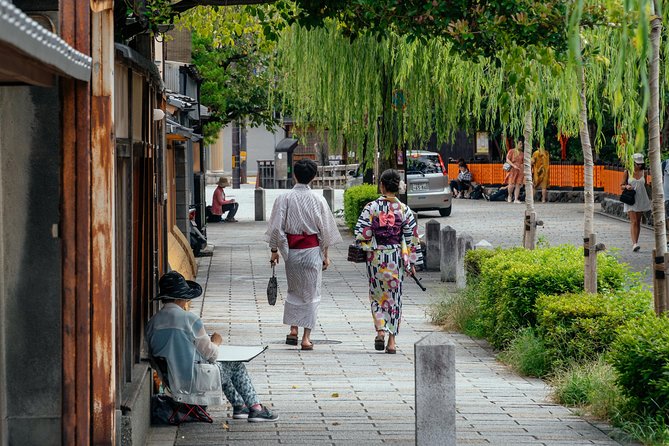
Geisha culture in Kyoto is famous, but it can also feel hard to “read” if you’re just wandering. This tour works because it treats Gion as a lived neighborhood, not a theme park. As you move street to street, you learn what certain buildings and lanes were for, and why people still respect the rhythms of the district today.
I like that the local host puts the focus on understanding and respect. You’re not pushed into awkward photo moments, and you get the context behind the dress, the customs, and the everyday look of the area. Guides you might be paired with, including names like Ted, Ahmed, Shohei, Maha, and Kako, are repeatedly praised for explaining the traditions in a way that feels human and practical, not like a lecture.
Another big win: you also get the spiritual side of Kyoto that sits next to the geisha world. The tour ties together Shinto and Buddhism through what you see on the ground, so the city feels coherent instead of split into separate categories.
Paying $135.45 for 2.5 Hours of Direction (and Why It’s Worth It)
At $135.45 per person for about 2 hours 30 minutes, you’re paying for three things: private time, a local host’s interpretation, and saved effort. In Kyoto, “saved effort” is real value. If you’re short on hours, a guide helps you choose what to see and, just as important, what order makes sense.
This tour also keeps cost predictable in a small but helpful way: the listed stops are marked as free admission tickets. That means you’re not juggling surprise entrance fees while trying to follow a route.
Two more details that matter for value:
- It includes a local guide and is described as carbon neutral.
- You get mobile ticket access, which is convenient when you’re moving on foot through Higashiyama.
If you’re traveling in a party, private tours can also work out better than you might expect compared to piecing together separate tickets and guides for each stop. And if your group benefits from group discounts, it can feel like even more time per dollar.
Start in Kawabatacho, Finish Near Yasaka Kamimachi: Logistics That Stay Simple
You’ll meet at Kawabatacho, Higashiyama Ward and end at Yasaka Kamimachi, Higashiyama Ward. The ending point is near Yasaka no To (the pagoda area), which is a nice way to close the walk with views and a sense of arrival.
There’s no hotel pickup or drop-off, so you’ll want to plan your own way to the start. The good news: it’s near public transportation, so you’re not stuck with a long transfer.
For your day plan, think of this as a focused Higashiyama stroll. Since your end point is close to the Yasaka Shrine area, it’s easy to follow up with dinner nearby without backtracking.
- PERFECT KYOTO 1-Day Bus Tour★ 5.0 · 13,518 reviews
- Kyoto: Fushimi Inari, Kinkakuji, Bamboo Grove 1 Day Bus Tour★ 4.8 · 4,316 reviews
- Kyoto: Tea Ceremony in a Traditional Tea House in Kiyomizu★ 4.9 · 3,519 reviews
- Kyoto Geisha Walking Tour: Gion District & Hidden Gems★ 4.7 · 3,273 reviews
- Kyoto: Tea Ceremony Ju-An at Jotokuji Temple★ 4.9 · 3,207 reviews
Izumo no Okuni and Minamiza Theatre: Kyoto’s Performance Roots
Stop 1 is the Statue of Izumo no Okuni. Okuni is tied to the origin of kabuki theater, and this stop is a quick way to connect Kyoto’s cultural “stage” history to something concrete. It’s only about 20 minutes, but it sets a theme for the rest of the walk: Kyoto didn’t just become artsy by accident. The city has roots in performance, entertainment, and public life.
Stop 2 is Minamiza Theatre, with its roots traced back to the early Edo period (1596-1615). Even if you’re not a theater person, I find this moment useful because it reframes what you’ll see later around Gion. Entertainment is not an isolated topic here. It’s woven into the way neighborhoods developed, and into how people gathered.
Practical tip: spend the time here asking your host what to notice in the surrounding area. With a guide, you’re more likely to spot architectural cues and understand why particular streets and districts formed when they did.
Gion and Shinbashi Dori: Where the Geisha District Makes Sense
Stop 3 is Gion, specifically framed around preservation areas. Shinbashi (north side) is designated as a traditional business preservation area, and the area south of Shijo Street is a historical scenery preservation area. In plain terms, these designations help explain why the streets still feel like Gion, instead of turning into a generic shopping strip.
Stop 5 is Shinbashi Dori, outside traditional banquet buildings where geisha would have entertained customers. This is one of the most memorable parts of the tour because it connects buildings to behavior and social life. You’re not just looking at facades, you’re learning the “why” behind them.
One note: this area is also where many people like to take photos. Your host’s job is to keep you respectful and keep your route sensible, including steering you away from the densest crowds when possible. That makes a difference, especially if you’re traveling in the afternoon light when Gion is busiest.
Tatsumi Daimyojin Shrine and Chion-in: Shinto, Buddhism, and Stair-Step Views
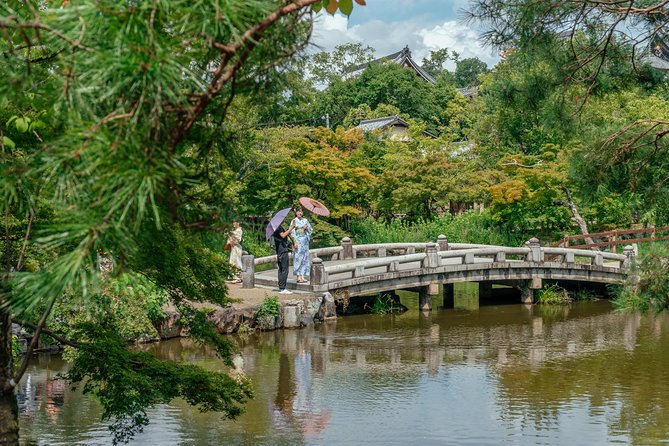
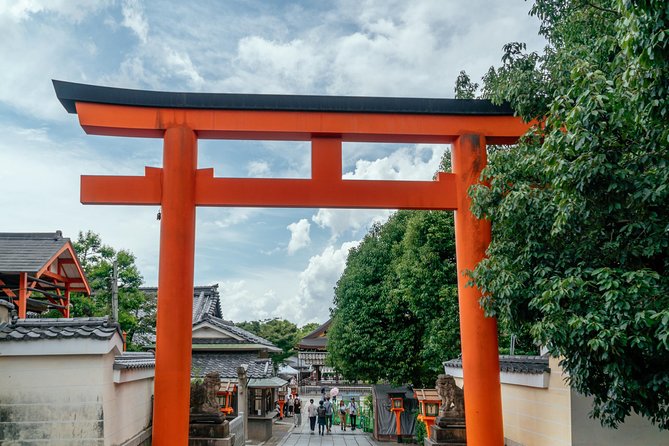
Stop 4 is Tatsumi Daimyojin Shrine, described as a blend of Shinto and Buddhism. That matters because Kyoto’s spiritual life doesn’t always divide neatly into two boxes. Seeing how beliefs overlap helps you understand what you’ll notice later at other shrines and temples, including the way visitors move through sacred spaces.
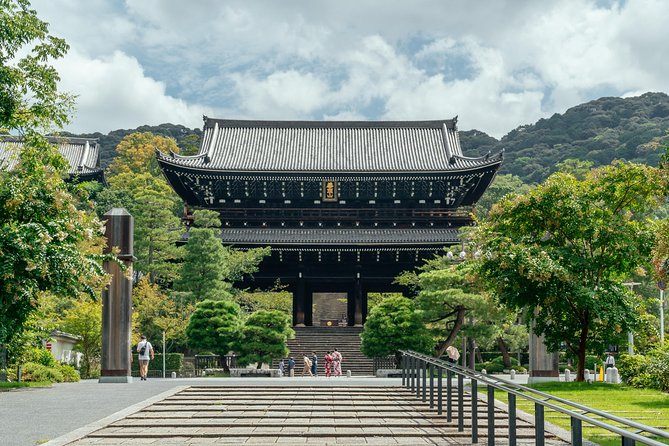
Stop 6 is Chion-in Temple. You’ll spend about 10 minutes and you’re encouraged to walk up the steps for a better view. There’s also a garden area you can see from your path. Even though it’s a short stop, it gives you a classic Kyoto temple experience without eating your whole morning.
Stop 7 is Maruyama Park, reached by walking from Chion-in toward the park area. This is a good pacing break. After shrines and buildings, the park stop gives your legs a breather and offers a more open environment where you can reset and take in the neighborhood atmosphere.
Yasaka Shrine, Shijo Dori, and Nene-no-Michi: Street Names With Deep Clues
Stop 8 is Yasaka Shrine, with a legend placed far back in time, possibly before the Heian era. The point of this stop is not memorizing dates. It’s learning how stories anchor the places you’re walking through, and how those stories still guide meaning today.
Stop 9 is Shijo Dori, where the name literally means Fourth Avenue of Heian-kyō, the ancient capital. This is one of those “small” stops that I love because it turns a street name into a map. Suddenly you’re not only walking through Kyoto, you’re following a line back into how the city was once planned.
Stop 10 is Nene-no-Michi. This lane is named for Nene, and it’s connected to Kodaiji Temple, which was built in 1605 at her request. If you’ve ever wondered why some Kyoto street names feel like they refer to people, not just directions, this stop clears that up quickly.
A practical takeaway: by the time you reach these street-name stops, your host will have helped you look at the city like a system, not a set of individual attractions.
Second Yasaka Shrine Stop and the Yasaka No To Pagoda Finish
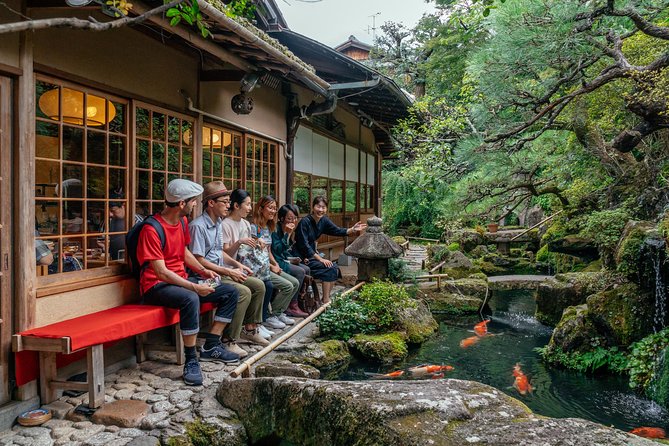
Stop 11 brings you back near Yasaka Shrine, and the emphasis here is the scenic finish around the five-story Buddhist pagoda area with sweeping views from the top. You’re also told you’ll finish the tour in a local cafe nearby, which is a smart way to keep the experience relaxed and not instantly exhausting.
This ending sequence works well for time-tight travelers. You get the spiritual landmarks earlier, the neighborhood orientation in the middle, and the visual payoff at the end.
If you want to stretch the moment, this is also where you can ask last questions. A good host will help you connect the dots so you can keep exploring after the tour ends.
What It Feels Like: Relaxed Pace, Photo Stops, and Real Q&A
This tour is structured as a series of short visits, each around 10 to 20 minutes, with walking between them. That might sound tight, but the best part is that it prevents decision fatigue. You don’t have to worry about where to go next, and you can spend your mental energy on what to notice.
People who book this type of private walk usually want two things: clear explanations and enough breathing room. This experience tends to deliver both. A good local host will slow down when you have questions, and keep your route moving when you’re ready to press on. There’s also a family-friendly note in the way some hosts handle questions for younger travelers, so if your group includes kids, you’re not locked into a slow, adult-only monologue.
One other detail that comes up with this kind of guided Gion route: your host helps you avoid the most chaotic pockets. Even if the streets are still active, it can feel calmer when someone who knows the area is guiding the timing.
Practical Tips Before You Go
Here are the things I’d do if I were booking this for a Kyoto afternoon:
- Wear comfortable walking shoes. You’ll do multiple short hikes up and down steps and along lanes.
- Bring a light layer. Temple steps and open park areas can feel cooler than you expect, depending on the day.
- Keep your phone charged. The route includes exterior landmarks and street-name photo opportunities.
- Have questions ready, especially about geiko/geisha traditions and the Shinto versus Buddhism connection. That’s where the host can add the most value in the least time.
- If it’s raining, expect a slower rhythm. The stops are short, but you still need safe footing near steps and uneven pavement.
Who Should Book This Kyoto Geisha and Traditions Private Tour?
This is a strong match if you:
- Want a private Kyoto experience without spending time planning an efficient route
- Are curious about geisha culture and want it explained with context, not just sights
- Like walking but do not want a long all-day temple marathon
- Appreciate learning how Shinto and Buddhism show up through specific places
It may be less ideal if you:
- Want one or two huge museums or major attractions with long interior time
- Prefer tours that focus on shopping, food, or nightlife
- Need fully step-free access, since you’ll encounter stairs at places like Chion-in
Should You Book It?
I’d book this if you’re in Kyoto for a short stay and you want your time to feel guided, coherent, and respectful. The combination of Gion orientation, geisha district context at Shinbashi Dori, and religious landmarks that explain the Shinto-Buddhism blend makes it more than a casual neighborhood walk.
If you’re the kind of traveler who likes to ask why something looks the way it does, this tour is built for you. The private format, the free-admission stop list, and the practical end point near the Yasaka pagoda area also make it a smart fit for an afternoon when you still want to explore on your own afterward.
FAQ
How long is the Treasures of Kyoto: Geishas & Traditions Private Tour?
It runs about 2 hours 30 minutes.
What does it cost per person?
The price is $135.45 per person.
Is this tour private or shared with other people?
It is private and only your group participates.
Where do I meet, and where does the tour end?
You start in Kawabatacho, Higashiyama Ward, Kyoto, and end in Yasaka Kamimachi, Higashiyama Ward, Kyoto, near Yasaka no To temple.
What’s included in the tour?
Included are the private tour, a local guide, and that the tour is carbon neutral. A mobile ticket is also provided.
Is hotel pickup or drop-off included?
No, hotel pickup and drop-off are not included.
Can I cancel for a full refund?
Yes. Free cancellation is available, and you can cancel up to 24 hours in advance for a full refund.
Newest Kyoto write-ups from the Loving Japan desk

Private, side by side.
 ★ 5.0Tokyo 6hr Private Tour with Government-Licensed GuideFrom $1553,902 reviews
 ★ 5.0Private Tour to Mt. Fuji and Hakone (Fully Licenced Operator)From $4971,910 reviews
 ★ 4.9Mount Fuji Full-Day Private Tour from Tokyo (Customizable)From $3931,470 reviews
 ★ 4.8Private City Highlights Tour with Local GuideFrom $1061,433 reviews
 ★ 5.0Private Custom Tour: Tokyo in a DayFrom $1591,432 reviews
 ★ 5.0Kyoto 6hr Private Tour with Government-Licensed GuideFrom $1551,369 reviews
 ★ 5.0Tokyo Customized Private Tour: See Top Attractions in 1 DayFrom $1451,351 reviews
 ★ 4.9Hotspots & Hidden Gems Walking Tour Private or GroupFrom $331,300 reviews