
REVIEW · JAPANESE COOKING CLASSES
Vegan/Vegetarian Ramen and Gyoza by Bentoya cooking
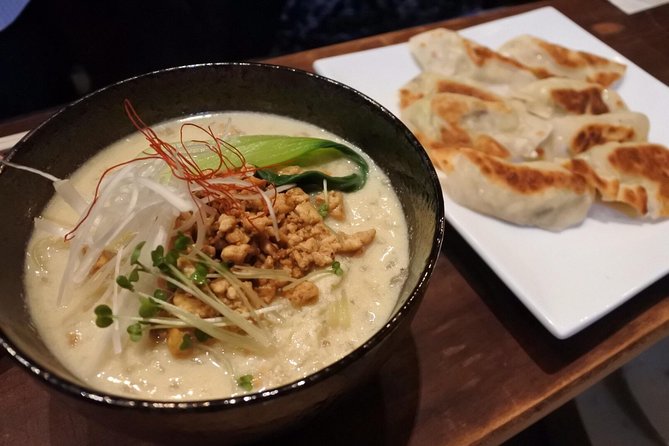
Vegan ramen in a real Tokyo kitchen. This small-group class by BentoYa Cooking teaches you to make vegan/vegetarian ramen and gyoza from scratch, and it tackles the biggest Japanese flavor hurdle: dashi, traditionally made from fish. You start with a look at everyday Japanese ingredients, so the lesson does not end when you wash your knife.
What I like most is the pairing of a local supermarket run plus cooking instruction. You get help picking the right basics, and you also get practical, repeatable technique for slicing, seasoning, and presenting what you make. I also appreciate that the class works in a compact group (up to 6), so questions about ingredients and process do not get lost in the shuffle.
One consideration: you are learning a dashi-free (or dashi-alternative) mindset, not classic fish-stock ramen. If you only want the traditional version, this will taste different on purpose, and it may take one extra cook at home to nail your exact preferences.
In This Review
- Key moments that make this class worth your time
- Why dashi is the real star of this vegan ramen lesson
- Komae Station start: a small-town Tokyo feel, good transport, and focused time
- The supermarket stop: how to buy Japanese ingredients like a cook
- Ramen soup from scratch: hands-on broth building you can repeat
- Gyoza with minced stuffing: dumpling skills that improve with practice
- Small-group coaching with friendly local instructors
- Price and value: what $75 buys you in Tokyo
- Who should book this vegan ramen and gyoza class
- Weather, timing, and what to plan for on the day
- Should you book BentoYa’s Vegan Ramen and Gyoza?
- FAQ
- Where does the class start?
- Where does the class end?
- How long is the cooking class?
- How many people are in the class?
- What will you cook during the class?
- What happens if the weather is bad?
- What is the cancellation policy?
Key moments that make this class worth your time
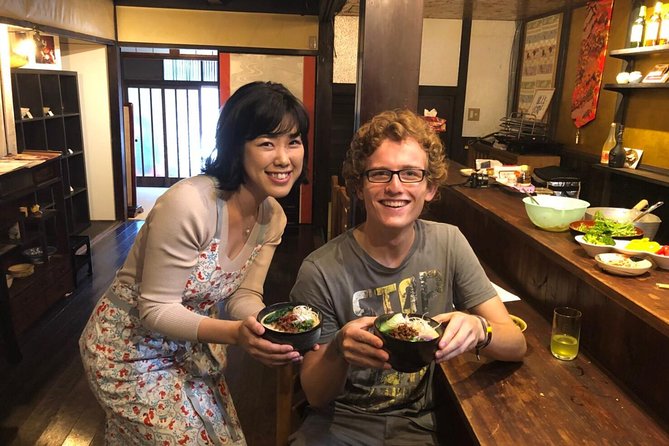
- Vegan/vegetarian ramen soup from scratch, built with Japanese pantry logic, not shortcuts
- Gyoza with minced stuffing, taught in a hands-on, skill-first way
- Supermarket guidance that helps you recognize ingredients beyond the English labels
- Small group (max 6), which keeps the coaching personal
- Instruction files after class, so you can recreate the meal at home
Why dashi is the real star of this vegan ramen lesson
Japanese ramen is famous for its broth, but the “secret” often starts with dashi. In Japan, dashi is commonly made with bonito flakes and other fish-based inputs, and that is exactly why vegan and vegetarian ramen can feel hard to pull off at home. This class specifically calls out that challenge, so you know you are not just learning a recipe, you are learning the idea behind the flavor.
In practice, that matters because you want your broth to taste deep, not flat. You will focus on how ramen soup can be made with vegetarian-friendly ingredients and how to balance seasoning and taste as you go. Expect a lesson that treats ramen like cooking, not like following a card.
And once you understand how the broth flavor is built, your gyoza pairing gets easier too. The dumplings are not an afterthought. They are the second half of the meal, and you cook them alongside the ramen, so everything fits together as a system.
Komae Station start: a small-town Tokyo feel, good transport, and focused time
The class starts at Komae Station (1 Chome-7 Motoizumi, Komae, Tokyo 201-0013) and ends back at the meeting point. It is set up for easy transit, and the location is close enough to public transportation that you should not feel like you are fighting Tokyo logistics just to learn dinner.
This is also a class with tight timing: about 2 hours 30 minutes. That duration is important. It is long enough to shop, cook, and eat what you make, but short enough to fit into a day without steamrolling your whole schedule.
Another practical plus: the group is limited to 6 travelers. In cooking classes, that changes everything. You get more chances to ask why something works, not only how to do it. If you want to leave Tokyo with skills you can actually use, small groups tend to make that happen.
The supermarket stop: how to buy Japanese ingredients like a cook
Before you hit the stove, you will go over to a supermarket to learn what to look for and how Japanese basics show up in real packaging. The class is clear that this is part of the experience, not a quick photo break.
This step is where you gain value you cannot get from a recipe blog. Japanese supermarkets are not just stores, they are ingredient education. You learn how basic items are labeled, what brands and product types commonly exist, and how to recognize what matters for cooking.
For vegan and vegetarian Japanese food, this matters even more. Many convenience-ready items sneak in fish-based components or hidden dashi flavors. With the guidance here, you can start building a shopping routine that helps you avoid guessing later.
If you are someone who usually buys ingredients and hopes they work out, this is the corrective. You will leave with a clearer picture of what “normal Japanese pantry” ingredients look like, and how to assemble a meal without hunting down specialty shops.
Ramen soup from scratch: hands-on broth building you can repeat
You will learn how to make ramen soup from scratch as a vegan or vegetarian version. The experience is designed around technique and understanding, and the results should be something you can recreate after you leave.
From the teaching style described, expect focus on:
- cutting and prep skills that matter for texture
- seasoning choices and tasting along the way
- ways to present the final bowls so they look like ramen, not just noodles in soup
A good ramen class makes you pay attention to balance. Saltiness, aroma, and richness all need to work together, especially when you are not using classic fish dashi. You will likely spend extra time understanding how to build that depth using vegetarian-friendly inputs and how to adjust to taste.
Also, you get guidance that goes beyond the moment. The experience provides instruction files afterward, so you can refresh your memory when you cook at home. That is a big deal. Without notes, many cooking classes turn into a fun lunch with little follow-through.
Gyoza with minced stuffing: dumpling skills that improve with practice
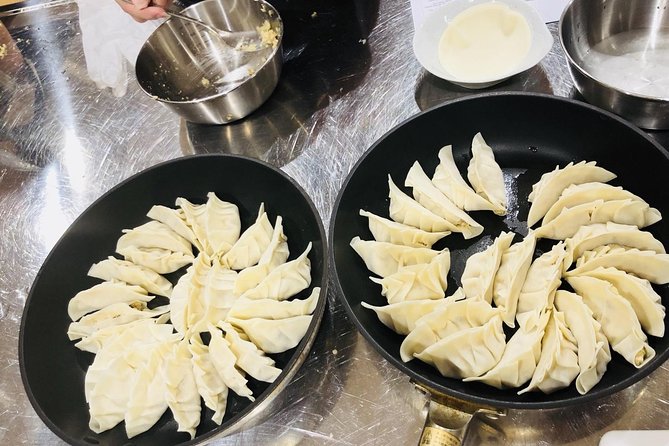
Then you move to gyoza. The class frames gyoza clearly: a dumpling made with minced stuffing. That matters because dumplings are about more than the wrapper. The filling is where flavor and texture come from.
In your session, you will learn the basics of gyoza making, including how to handle the filling and how to cook the dumplings as part of a complete meal. Even if you have folded dumplings at home before, getting Japanese instruction in a real kitchen can tighten up your technique fast.
And because the class is teaching you with a finished meal in mind, gyoza is not taught as a lonely project. It is cooked to pair with your vegan/vegetarian ramen. That pairing is the kind of practical thinking that helps your home cooking go from “I made something” to “this tastes like a meal.”
Small-group coaching with friendly local instructors
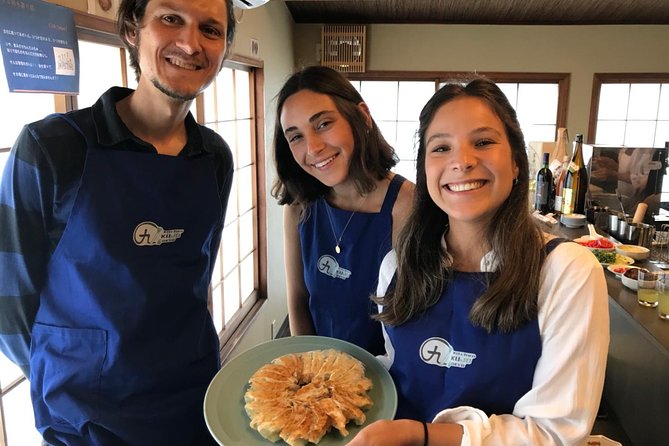
The experience is run by BentoYa Cooking and described as led by local certified instructors. In real terms, you should expect a warm, welcoming classroom vibe. Names that come up include Kaori, Miwa, and Rina, and multiple people note strong English and an organized lesson flow.
Why this matters: ramen and gyoza have plenty of small steps where timing and seasoning make a difference. When your instructor can answer questions clearly, you avoid the common mistake of guessing your way through. You learn faster, and you end up more confident for your next attempt at home.
It also helps that the class seems designed for real visitors, not only food professionals. The focus on basics, technique, and clear instruction files supports you if you are new to Japanese cooking methods.
Price and value: what $75 buys you in Tokyo
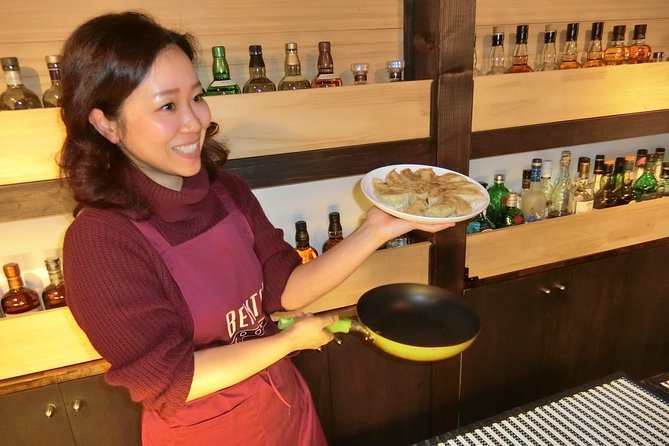
At $75 per person for a 2.5 hour session, you are paying for three things at once:
- teaching by a local instructor
- hands-on cooking time (not just watching)
- a supermarket ingredient introduction
In Tokyo, you can find plenty of cooking experiences. The best ones justify the cost by giving you a repeatable skill set and the ingredients knowledge to reproduce it later. This class is built around that. You learn the ramen soup approach and gyoza making, then you leave with extra support via instruction files.
Also, demand is real. The class is booked on average about 27 days in advance, so if vegan ramen and gyoza are on your food-hit list, you will want to reserve earlier rather than later.
Who should book this vegan ramen and gyoza class
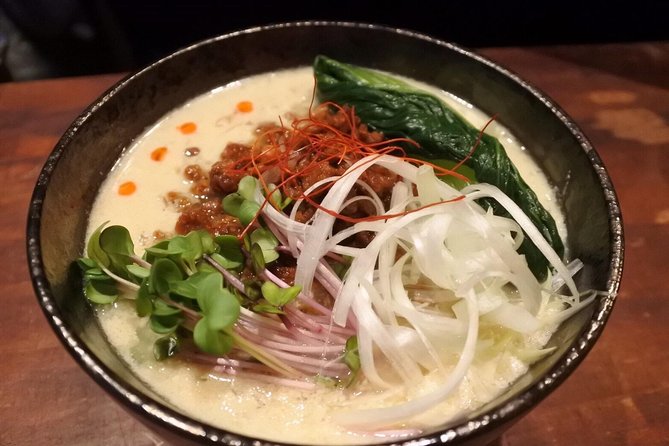
This class is a strong fit if you:
- want to cook Japanese vegan or vegetarian meals that go beyond basic salads
- care about learning how ingredients work together, not only copying a finished dish
- enjoy structured cooking with ingredient shopping guidance
- want a small-group experience with time to ask questions
It is also ideal if you already like ramen and gyoza but you feel stuck with two problems. First, classic Japanese ramen often relies on fish-based dashi. Second, shopping for vegetarian-friendly ingredients can be confusing. This class directly addresses both with instruction and grocery context.
Weather, timing, and what to plan for on the day
The experience requires good weather. If it is canceled due to poor weather, you will be offered a different date or a full refund. Since the lesson includes a supermarket segment, this kind of weather requirement makes sense.
The session runs in the late morning window listed as 10:00 AM to 1:00 PM, and the total duration is about 2 hours 30 minutes. You will want to plan your day with enough buffer before and after so you can get there relaxed and hungry enough to enjoy what you cook.
Should you book BentoYa’s Vegan Ramen and Gyoza?
If your goal is practical Japanese cooking skills, I think this is an easy yes. The combination of supermarket guidance, ramen soup from scratch, and gyoza made with minced stuffing gives you more than a one-time meal. You leave with a system you can repeat, plus instruction files to help you rebuild the flavor at home.
Skip it only if you are strictly chasing the exact taste of traditional fish-stock ramen. This class is designed around vegan and vegetarian versions, including the dashi challenge, so the flavor direction is intentionally different.
FAQ
Where does the class start?
The experience starts at Komae Station, 1 Chome-7 Motoizumi, Komae, Tokyo 201-0013, Japan.
Where does the class end?
The activity ends back at the meeting point.
How long is the cooking class?
It lasts about 2 hours 30 minutes.
How many people are in the class?
The class has a maximum of 6 travelers.
What will you cook during the class?
You will learn how to make vegan or vegetarian Japanese food, including ramen soup from the scratch and gyoza made with minced stuffing.
What happens if the weather is bad?
If the experience is canceled due to poor weather, you will be offered a different date or a full refund.
What is the cancellation policy?
You can cancel for a full refund up to 24 hours in advance of the experience start time.
Japanese Cooking Classes, side by side.
 ★ 5.0Sushi Making Tokyo Roll and Authentic Japanese Sushi ClassFrom $593,971 reviews
 ★ 4.9Roll and Authentic Sushi Making Class in AsakusaFrom $581,957 reviews
 ★ 5.0Ramen Cooking Class at Ramen Factory in KyotoFrom $1311,937 reviews
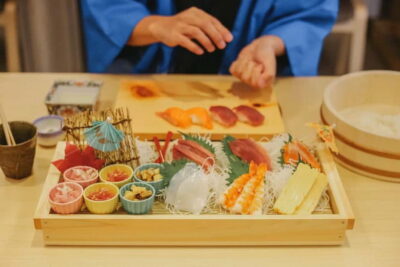 ★ 4.9Sushi Making Class in a Happi Coat near a Famous SpotFrom $421,377 reviews
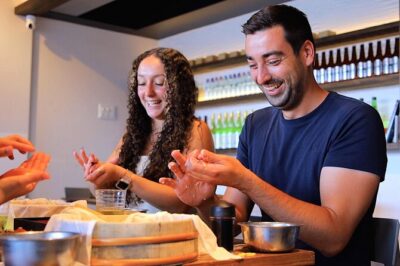 ★ 5.0Sushi Making Osaka Roll and Authentic Japanese Sushi ClassFrom $311,220 reviews
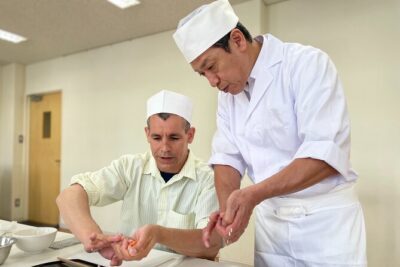 ★ 5.0Tokyo Sushi Making Class in Tsukiji with Professional ChefFrom $491,177 reviews
 ★ 5.0Ramen & Gyoza Cooking Class in Tokyo with Local Supermarket VisitFrom $122823 reviews
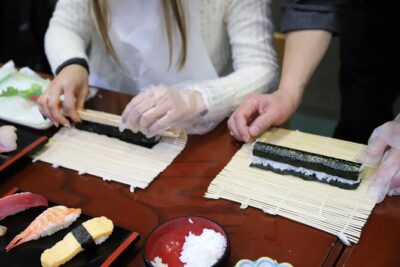 ★ 5.0Tsukiji Fish Market Guided Tour and Sushi Making with Pro ChefFrom $104775 reviews
Filed on these lists too