
REVIEW · CYCLING AND E-BIKE TOURS
Best of Kyoto: Ginkakuji & Path of Philosophy E-Bike Tour
Two wheels make Kyoto easier. On this Best of Kyoto E-bike tour, you move through historic spots with less stopping and less backtracking, so the day feels like a real “Kyoto loop.” I love the Ginkaku-ji Zen garden focus and the calm, garden-first pacing, and I love that the guide talks about Shinto and Zen in a way that actually helps you notice what you are seeing. It is an easy-to-understand way to get Kyoto context without turning your day into a cram session.
The only real drawback is the bike part. The guide may end the tour if they are concerned about anyone’s safety, so you need to be a confident cyclist and comfortable riding in a group around busy temple areas.
In This Review
- Key highlights worth planning for
- The $69 value of an E-bike temple day in Kyoto
- Meeting up at Kyoto Bike Rentals, then getting oriented fast
- Ginkaku-ji: Zen garden calm with a guide that helps you see it
- Pedaling the Philosopher’s Path area without turning it into a marathon
- Nanzen-ji Temple: big temple energy, built into your ride rhythm
- Heian Shrine: Shinto lessons you can feel, not just hear
- What the guide really adds: Zen and Shinto explained in plain language
- How long is the day, and how hard is the riding?
- Rain plans and timing, so your Kyoto day stays on track
- East side vs the longer Wild West option
- Who should book this tour, and who should reconsider
- Final call: should you book the Ginkaku-ji and Philosopher’s Path E-bike tour?
- FAQ
- How long is the tour?
- How much does it cost?
- What’s included in the price?
- Is lunch included?
- Where do I meet the group?
- What languages are the live guides?
- What happens if it rains?
- Do I need to be an experienced cyclist?
Key highlights worth planning for
- E-bike assist helps with gentle hills, so you can keep your energy for gardens and shrine time.
- Ginkaku-ji Zen gardens plus garden entry fees are part of the included visit, not an extra cost surprise.
- Philosopher’s Path time gives you a classic Kyoto walking mood, but from the speed and freedom of cycling.
- Nanzen-ji and Heian Shrine add big temple and Shinto shrine atmosphere in the same ride day.
- Guides like Salomé, Philippe, Phillip, Kevin, Tim, and Niall show up in past groups and clearly shape the day with stories and pacing.
Cover Kyoto on two wheels instead
- Arashiyama Bamboo Forest & Hidden Gems Bike Tour (Early Bird)
★ 5.0 · 613 reviews - 5 Top Highlights of Kyoto Full Day Bike Tour (E-bike option)
★ 5.0 · 511 reviews - Full Day Biking Tour Exploring the Best of Kyoto
★ 5.0 · 498 reviews - E-Bike Tours of the highlights of Kyoto!!!
★ 5.0 · 291 reviews
The $69 value of an E-bike temple day in Kyoto
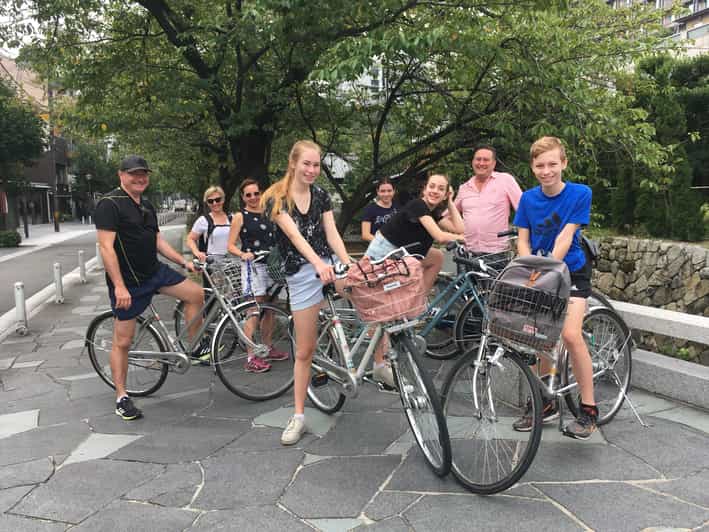
At $69 per person for about 210 minutes, the big value is what you get bundled in: E-bike rental, a tour guide, helmets, and entry fees to the gardens. In a city where bike rentals, admission, and a guide can add up fast, this format keeps the budget sane.
Also, the time is well used. You are not spending half the day commuting, and you are not walking every single stretch. That matters in Kyoto, where the distance between “must-see” places can feel longer than it looks on a map. With pedal help, you can keep your day moving while still slowing down when it counts, like at garden stops.
Meeting up at Kyoto Bike Rentals, then getting oriented fast
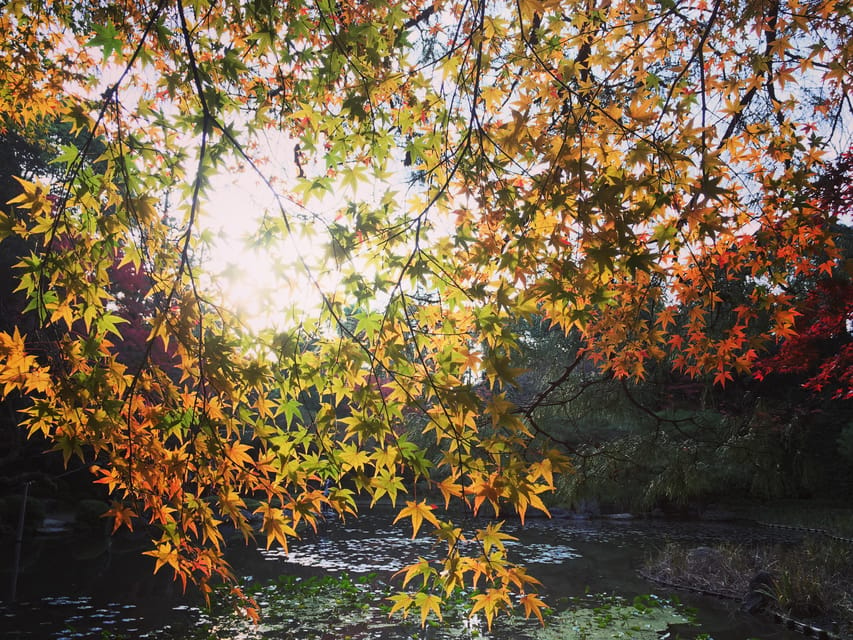
Your meeting point can vary depending on the option booked, but one start location is Kyoto Bike Rentals, 222 Koyamachō. Either way, plan to arrive a few minutes early so the group can get fitted, grab helmets, and settle in before you start rolling.
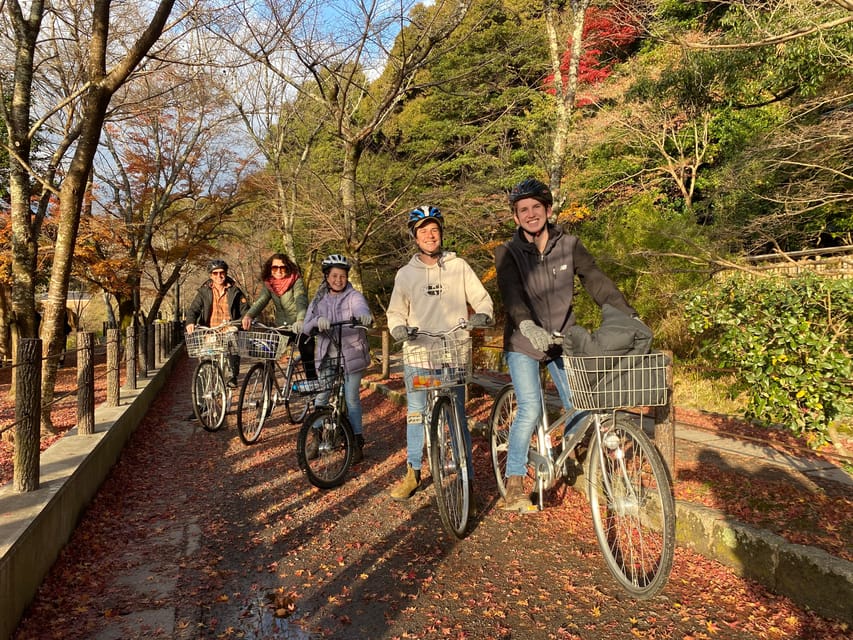
The tour is designed for real riding, not just standing around. The E-bike assistance is there for Kyoto’s gentle hills, which means you spend your effort on enjoying the streets and the atmosphere, not on fighting the bike.
From past rider comments, the route often feels manageable. One guest described it as easy biking and another said it was almost all flat ground thanks to the bike setup and pacing. That is exactly what you want for a cultural day: steady movement, fewer fatigue traps.
Ginkaku-ji: Zen garden calm with a guide that helps you see it
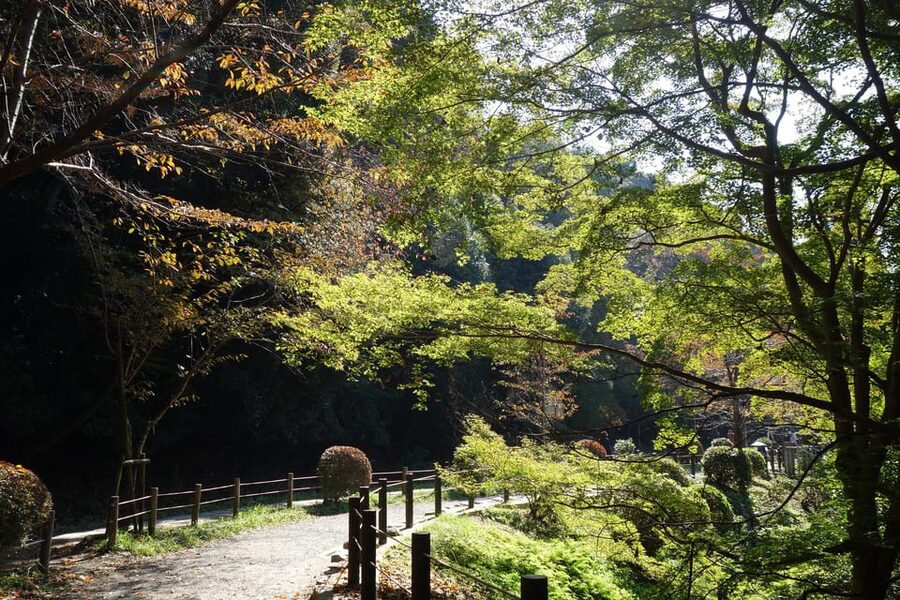
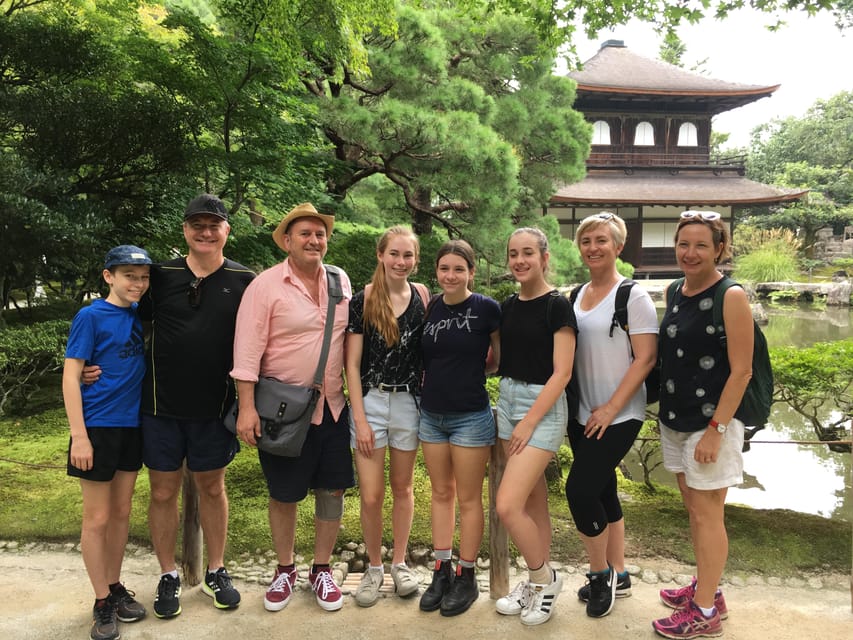
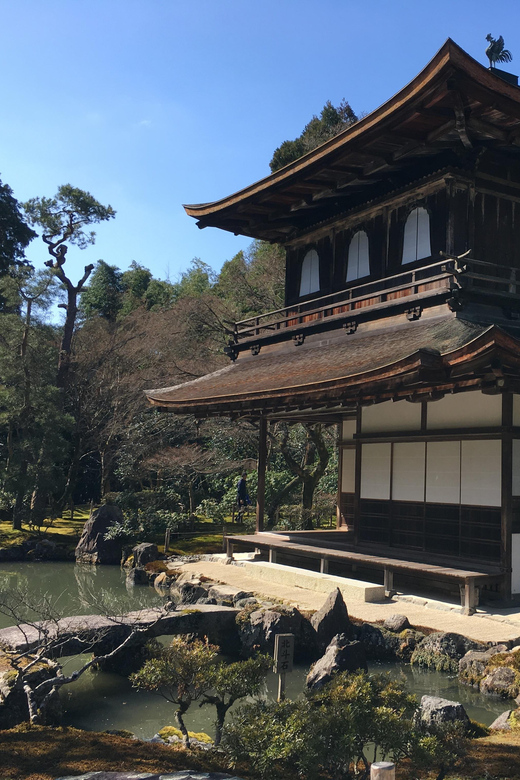
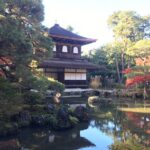
You start with Ginkaku-ji Temple, including a guided portion and the ride time that gets you there. This is the centerpiece stop, and the tour is built around that garden mood. If you like temples where you can slow down and notice textures, light, and silence, this is your kind of stop.
What makes Ginkaku-ji work especially well on an E-bike tour is that it gives you a “slow visual rhythm” right after motion. You are cycling, then you are standing in a Zen garden setting where the day’s pace naturally drops. That change helps you actually take in details instead of rushing from one landmark to the next.
You are also not just collecting photos. The guide frames the experience with context tied to Zen and Shinto. Even if you are new to Japan’s religious language, you will leave with a better sense of how these ideas show up in how people behave at shrines and temples, what they notice, and why a garden can feel like a lesson.
- PERFECT KYOTO 1-Day Bus Tour★ 5.0 · 13,518 reviews
- Kyoto: Fushimi Inari, Kinkakuji, Bamboo Grove 1 Day Bus Tour★ 4.8 · 4,316 reviews
- Kyoto: Tea Ceremony in a Traditional Tea House in Kiyomizu★ 4.9 · 3,519 reviews
- Kyoto Geisha Walking Tour: Gion District & Hidden Gems★ 4.7 · 3,273 reviews
- Kyoto: Tea Ceremony Ju-An at Jotokuji Temple★ 4.9 · 3,207 reviews
Pedaling the Philosopher’s Path area without turning it into a marathon
After Ginkaku-ji, you head into the Philosopher’s Path zone with E-bike riding time. The Philosopher’s Path is a Kyoto classic, and the tour uses it in a practical way: you get to experience the area’s calm vibe while the bike does the “getting there” work.
This is where the E-bike matters beyond convenience. On foot, it is easy for these sorts of routes to turn into stop-and-go walking, especially if you are trying to beat crowds. Cycling helps you maintain a steady pace, then you can slow down where the guide suggests attention points.
This portion also tends to feel like a sweet spot in the day. You are already oriented, and you have gotten your first major temple garden out of the way, so now it is about enjoying Kyoto streets while the guide keeps you connected to what you are seeing. It’s not only “look at that,” it is “notice why it matters.”
Nanzen-ji Temple: big temple energy, built into your ride rhythm
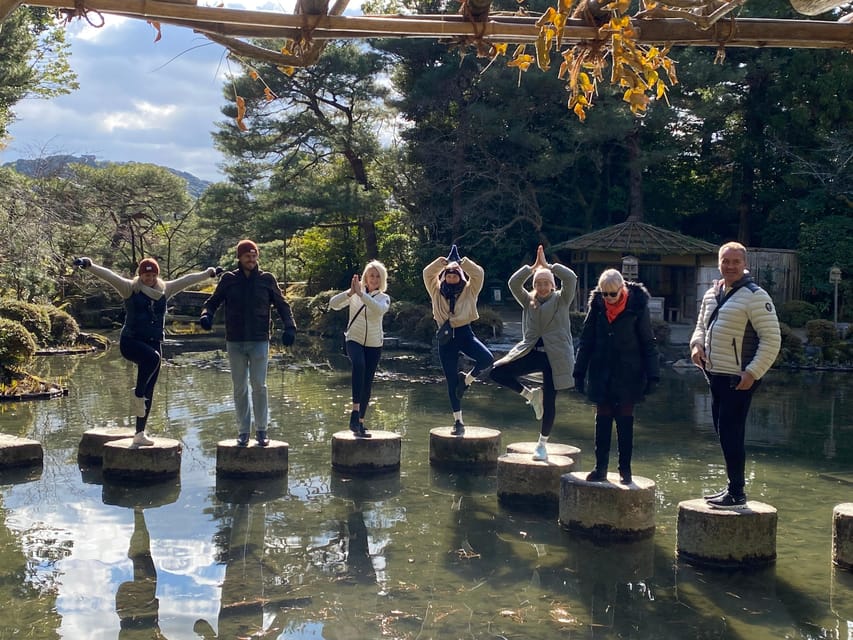
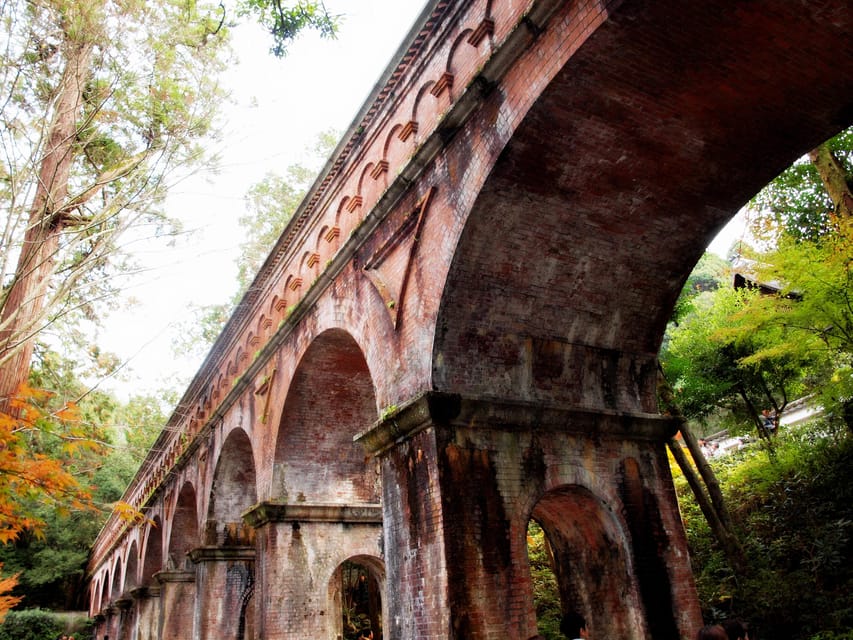
Next up is Nanzenji Temple for a visit window. This stop is a nice change of pace. After a Zen garden center and the Philosopher’s Path area, you get a more “temple day” feel, where you can take time to wander and absorb the atmosphere.
One strength of the tour design is that you are not rushing between stops. The ride time and the visit time are balanced, so temple time stays temple time. That gives you space to step back from the “what is next” brain mode and just watch how the place feels.
If you are trying to build a Kyoto day around variety, Nanzen-ji adds that. It keeps the day from becoming all garden, all the time, while still staying in the general theme of temples, shrines, and the quiet side of Kyoto.
Heian Shrine: Shinto lessons you can feel, not just hear
Then comes Heian Shrine with a guided tour. This is where the tour’s religion framing gets more practical. You are not just seeing another landmark. You are getting help understanding how Shinto shows up in shrine design, in everyday behavior around the grounds, and in the overall tone of a visit.
If you like the quieter side of Japan, a shrine visit can be the emotional reset your day needs. You are moving all morning and early afternoon energy, then you land in a Shinto setting that tends to feel more still and intimate than the biggest tourist hubs.
In past experiences shared by riders, the guides keep the explanation friendly and paced. One guest specifically noted learning about religion and beliefs in Kyoto without feeling bombarded. That style matters here, because shrine visits are easier to enjoy when you understand what you are looking at, but you are not stuck listening for every second.
What the guide really adds: Zen and Shinto explained in plain language
The tour includes live guidance in English and French, and the best part is that the guide’s job is not only “lead the group.” The guide turns the ride into understanding.
Past groups mention guides like Philippe and Phillip for deep, practical storytelling, and Kevin for being flexible and relaxed with pacing. One rider even described the experience like biking with a friend, with the guide sharing knowledge without turning it into a lecture. Another mentioned that even in rain, the guide kept things calm and enjoyable.
So what should you expect to learn? The tour is explicitly set up to cover Shinto and Zen, and you will get explanations tied to the places you visit. That means when you are at a Zen garden, you are not just thinking pretty rocks and plants. You are thinking about how the setting supports the ideas behind it. When you shift to a shrine, you get a clearer sense of what changes between religious spaces in Kyoto, and how people behave differently.
How long is the day, and how hard is the riding?
The stated duration is 210 minutes. That is long enough to feel like you did something meaningful, but short enough to keep your Kyoto day from disappearing completely.
As for effort level, the tone from past riders is encouraging. E-bikes help with the gentle hills, and the ride is often described as easy or mostly flat, depending on the route and the group. One guest also mentioned the biking distance was around 9 miles, which gives you a realistic sense of what to expect in motion.
Still, keep the safety rule in mind: the guide can end the tour if they worry about safety. That rule is there for a reason. If you do not ride often, you might feel stressed around other people. If you do ride comfortably, the E-bike turns this into a fun, doable cultural day.
Rain plans and timing, so your Kyoto day stays on track
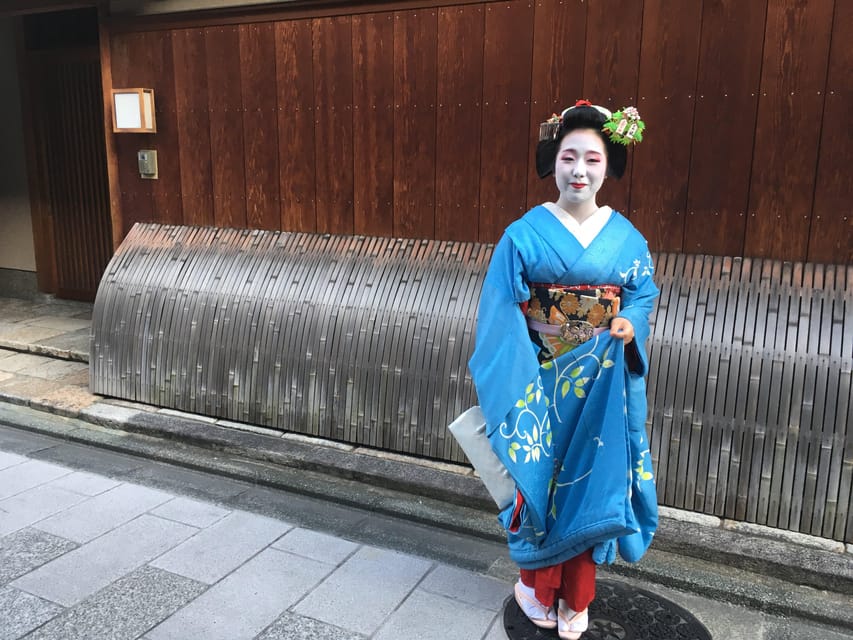
Japan weather can be unpredictable, and this tour has a simple approach. For light rain, you can try to reschedule, switch to a walking tour, or continue with a poncho. If the weather gets heavy, the provider may cancel the tour with a full refund.
What this means for you: pack a rain layer you can move in, and keep your schedule flexible. If you are the type who hates getting wet, double-check your day plan so you are not dependent on this tour being the only way to hit your temple goals.
East side vs the longer Wild West option
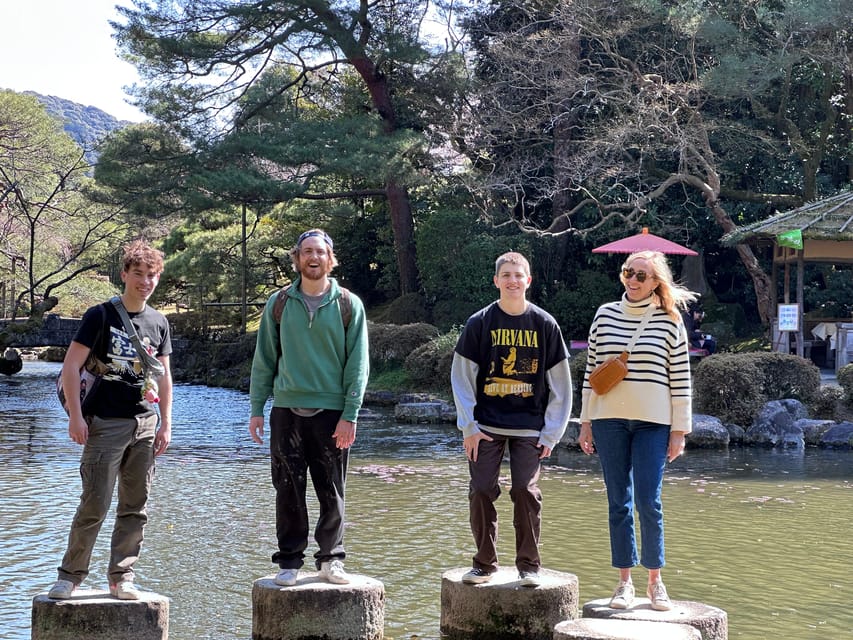
This “Best of Kyoto” setup also offers different route options. The East Side approach centers on Ginkaku-ji and the Philosopher’s Path. A Wild West option is longer and includes big hitters like the Arashiyama Bamboo Forest, the Golden Pavilion, and Ryoanji Rock Garden, with a longer time commitment.
If you want the theme of gardens plus Shinto and Zen learning with a calmer half-day feel, the East Side course fits. If you want more classic Kyoto icons crammed in, the Wild West option might be your better match. Just remember, longer rides mean more time exposed to crowds and weather.
Who should book this tour, and who should reconsider
Book this if you want:
- Temple and garden time without spending the whole day walking
- A guide who explains Shinto and Zen in a practical way
- A half-day style plan that still feels like you covered real Kyoto ground
- An E-bike day that helps with gentle hills and makes the ride more fun than work
Reconsider if:
- You are not a confident cyclist in a group setting
- You plan a super tight schedule with no flexibility for weather
- You expect lunch to be included, because it is not included
Final call: should you book the Ginkaku-ji and Philosopher’s Path E-bike tour?
If you have ever looked at Kyoto on a map and thought, I want to see the sights, but I do not want to walk until my feet revolt, this tour makes sense. The E-bike + guided garden focus is the real deal. You get a structured route with included garden entry fees, and you get context on Zen and Shinto that makes the stops more than just scenic.
I would tell you to book it if you want a calm, thoughtful Kyoto day that still moves. I would tell you to skip it if you are uncomfortable riding, because safety matters and the guide can end the tour for that reason.
If you are ready to ride, you’ll come away with a Kyoto rhythm that feels local, not frantic.
FAQ
How long is the tour?
The duration is listed as 210 minutes.
How much does it cost?
The price is $69 per person.
What’s included in the price?
You get an E-bike rental, a tour guide, entry fees to gardens, and helmets.
Is lunch included?
No, lunch is not included.
Where do I meet the group?
The meeting point may vary depending on the option booked. One listed start location is Kyoto Bike Rentals at 222 Koyamachō.
What languages are the live guides?
The tour guide is available in English and French.
What happens if it rains?
For light rain, you can try to reschedule, change to a walking tour, or continue with a poncho. If rain is heavy, the provider may cancel the tour with a full refund.
Do I need to be an experienced cyclist?
You should be a confident cyclist. The provider can end the tour if they are concerned about anyone’s safety.
Bicycles and E-Bikes We Have Ridden

Newest Kyoto write-ups from the Loving Japan desk


Cycling and E-Bike Tours, side by side.
 ★ 5.0Hidden Kyoto E-Biking tourFrom $1161,843 reviews
 ★ 5.0Tokyo Guided Small-Group Biking TourFrom $1061,250 reviews
 ★ 5.0Tokyo Great Cycling TourFrom $99811 reviews
 ★ 5.0Tokyo Top Highlights 3h Guided E-bike TourFrom $63714 reviews
 ★ 5.03h Tokyo E-Bike Tour: Hidden Gems, and Local Life with guideFrom $63670 reviews
 ★ 5.0Arashiyama Bamboo Forest & Hidden Gems Bike Tour (Early Bird)From $106613 reviews
 ★ 5.05 Top Highlights of Kyoto Full Day Bike Tour (E-bike option)From $172511 reviews
 ★ 5.0Full Day Biking Tour Exploring the Best of KyotoFrom $119498 reviews
Filed on these lists too