
REVIEW · TSUKIJI AND TOYOSU FISH MARKETS
Classic Tsukiji Food Tour
Tsukiji feels like Tokyo at breakfast speed. This 3-hour walk through the outer Tsukiji area starts at Turret Coffee Tsukiji and strings together coffee, a full seafood-style breakfast, and market tastings with stops that explain why this place still matters.
I also like that the group stays small (max 10) so your English-speaking guide can slow down for questions. One heads-up: have cash ready, since credit cards are not generally accepted for snacks or souvenirs, and the menu is not recommended for vegans or anyone avoiding seafood.
In This Review
- Key things I’d plan around
- Why the outer Tsukiji market still hits different before 10am
- Morning logistics: 8:30 start, a 3-hour loop, and a small group
- Stop 1, Turret Coffee Tsukiji: start with coffee and market momentum
- Tsukiji Hongan-ji: a quick pause that adds context
- Tsukiji Outer Market: where the seafood vendors still make Tsukiji itself
- The Tsukiji Fish Market area: why “moved wholesale” still leaves a reason to go
- Namiyoke Inari Shrine: the blessing stop and the sweet finish
- The included breakfast: what you’re really paying for
- Price and value: why $231 can make sense for Tsukiji
- What to expect day-of: market rules, weather, and substitutions
- Who this tour suits best, and who should skip it
- Quick tips before you go
- Should you book the Classic Tsukiji Food Tour?
- FAQ
- How long is the Classic Tsukiji Food Tour?
- Where does the tour start and end?
- What is included in the price?
- Do I need to bring cash?
- Is the tour suitable for vegans or no-seafood diets?
- Can I cancel and get a full refund?
Key things I’d plan around
- Outer-market focus: you explore areas that remain lively even after the wholesale operations moved.
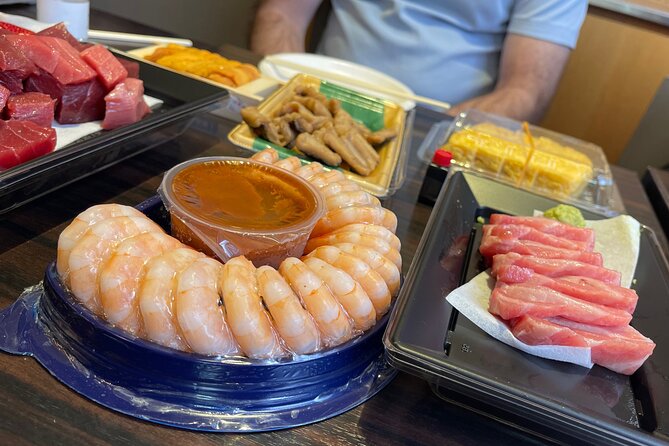
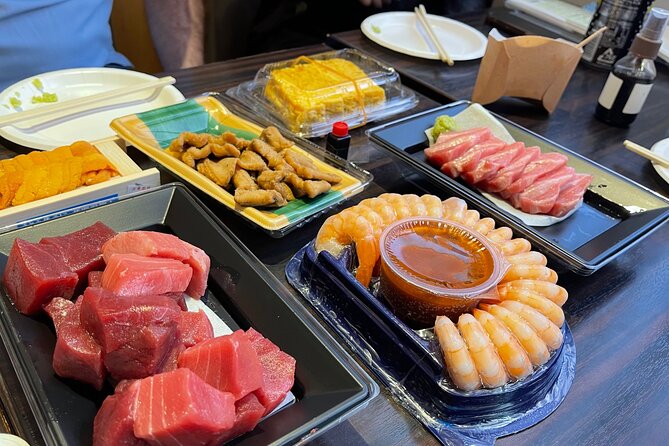
- Breakfast is included: you get a full Tsukiji specialty seafood breakfast plus one included drink.
- Food plus faith stops: you’ll pause at Namiyoke Inari Shrine for a moment of local tradition.
- Small group pace: up to 10 travelers, which makes asking questions way easier.
- Seasonal tasting breaks: you’ll sample seasonal bites during the outer market portion.
- Diet-friendly, with limits: vegetarian, pescatarian, and gluten-free are accommodated, but vegans and no-seafood diets are not a fit.
Hungry earlier than that? Other market breakfasts we tried
- Tokyo Tsukiji Fish Market Food and Culture Walking Tour
★ 5.0 · 3,184 reviews - Tokyo: Tsukiji Fish Market Food and Walking tour
★ 5.0 · 1,724 reviews - Tokyo: Tsukiji Fish Market Guided Walking Tour
★ 4.9 · 1,397 reviews - Tokyo Sushi Making Class in Tsukiji with Professional Chef
★ 5.0 · 1,177 reviews
Why the outer Tsukiji market still hits different before 10am
Tsukiji is famous, but the real magic is how quickly it becomes a living food neighborhood rather than a museum. This tour is built for that morning feeling: you walk the parts of Tsukiji where people still go to buy and eat, not just to take photos.
What I love most is that it’s not only about seafood stalls. You start with coffee, then shift into breakfast mode, and only then do you move through the market atmosphere. You get food, plus the reasons behind the habits, from the vendors’ perspective.
The other big plus is the human side. A good market guide changes how you experience it, because they can point at what matters and explain what you’re seeing in plain language. This tour includes a local English-speaking guide, and the tone tends to be warm and family-like, with guides such as Asami, Jordan, and Asha showing up on the departures I’ve heard about.
Morning logistics: 8:30 start, a 3-hour loop, and a small group
You meet at Turret Coffee Tsukiji (2-chōme-12-6 Tsukiji, Chuo City, Tokyo 104-0045). The tour starts at 8:30am, lasts about 3 hours, and ends back at the same place.
That timing matters. Tsukiji is at its most useful for hungry people in the morning, when you can actually taste and ask questions before the day crowds show up. You’ll spend a lot of the time on your feet, so comfortable shoes are non-negotiable.
This runs with a maximum of 10 travelers, which keeps it from feeling like a cattle line. It also helps if you want to slow down for explanations, photos, or clarifying what something is and how locals eat it.
Stop 1, Turret Coffee Tsukiji: start with coffee and market momentum
The tour begins at Turret Coffee Tsukiji, and that opening move is smart. Coffee first gets you awake and gives you a shared starting point, so the rest of the morning feels organized rather than chaotic.
You’ll taste local specialties right away, including things you may not find outside this area. That early taste helps you understand the logic of the market as you walk, because you already have the flavors in your head when you meet vendors later.
Also, the tour includes one drink. Since the first stop is the coffee shop, that drink usually makes practical sense here. If you’re picky about sweetness or milk, it’s worth noting your preferences at the start.
- Mt Fuji and Hakone 1-Day Bus Tour Return by Bullet Train★ 5.0 · 26,383 reviews
- 1-Day Tokyo Bus Tour★ 5.0 · 14,250 reviews
- Tokyo: teamLab Planets TOKYO Digital Art Museum Entry Ticket★ 4.6 · 9,779 reviews
- Mt Fuji & Hakone Cruise, Drum Show Bullet Train 1 Day from Tokyo★ 4.0 · 7,413 reviews
- Tokyo: Shinjuku Food Tour (13 Dishes at 4 Local Eateries)★ 5.0 · 6,603 reviews
Tsukiji Hongan-ji: a quick pause that adds context
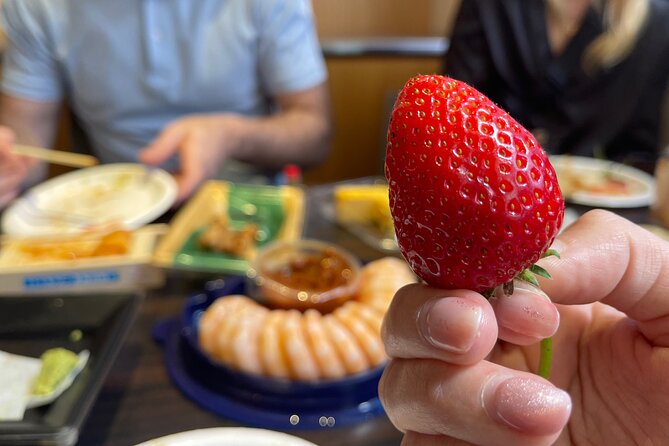
The itinerary includes Tsukiji Hongan-ji, a short stop that gives the morning a cultural backbone. Markets are food, yes, but they also exist inside neighborhoods with their own routines, beliefs, and rules of respect.
This kind of stop works best when you treat it as a breather. You’re shifting from eating and buying energy into a moment of observation, then you return to the market with a better sense of why people behave the way they do.
You also learn about local food traditions that trace back more than a hundred years. You don’t need a textbook for that. You just need someone connecting the dots between what you taste and the customs behind it.
Tsukiji Outer Market: where the seafood vendors still make Tsukiji itself
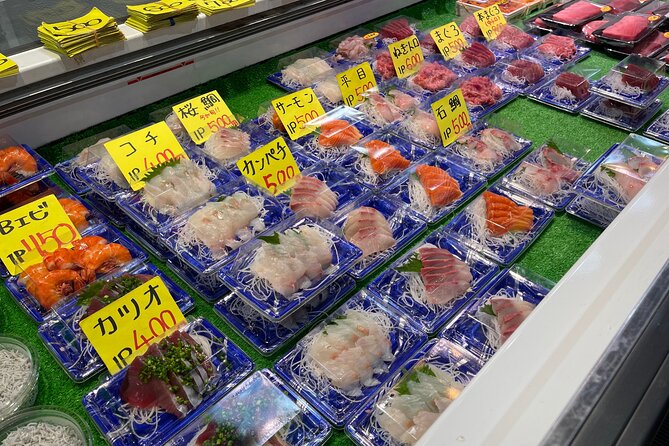
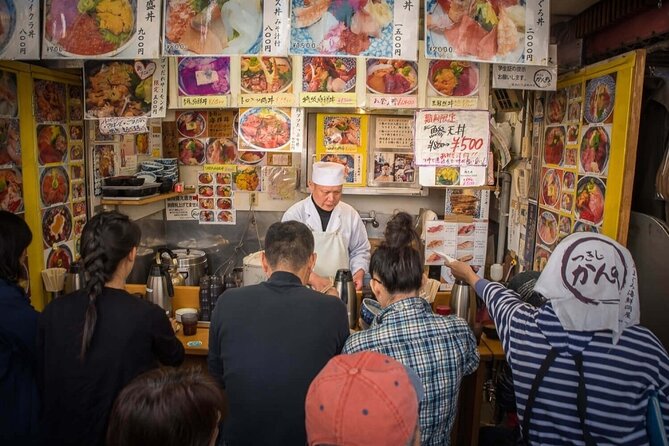
Next comes the Tsukiji Outer Market, and this is where the tour earns its name. You tour the outer sections with seafood specialists who help keep Tsukiji world-famous, including vendors that chose to stay in this area rather than move.
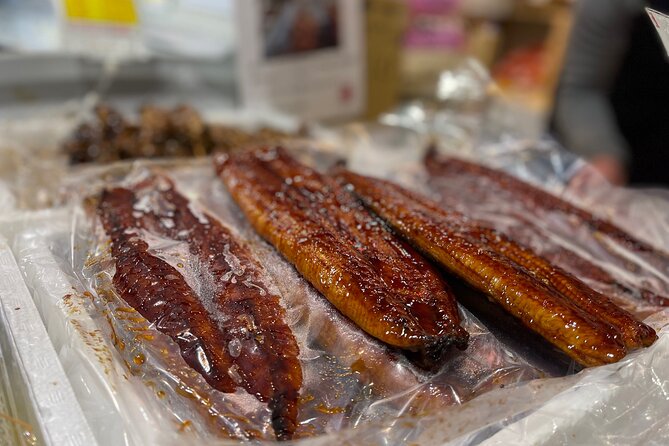
You’ll get a special tasting break with seasonal bites, which is one of the better ways to avoid the all-too-common first-timer mistake: walking around, seeing food you can’t identify, and then leaving unsatisfied because you ordered the wrong thing.
The outer market is also great for understanding variety. Even when two stalls sell similar items, the way vendors prepare, present, and explain their food can be very different. With a guide, you get help spotting quality cues that are hard to see on your own.
One practical drawback is that you’re eating and walking in the same morning stretch. If you’re easily overwhelmed by crowds and standing, you’ll want to pace yourself. Take your time, and save your most ambitious curiosity for when you have a clear mind and an empty stomach.
The Tsukiji Fish Market area: why “moved wholesale” still leaves a reason to go
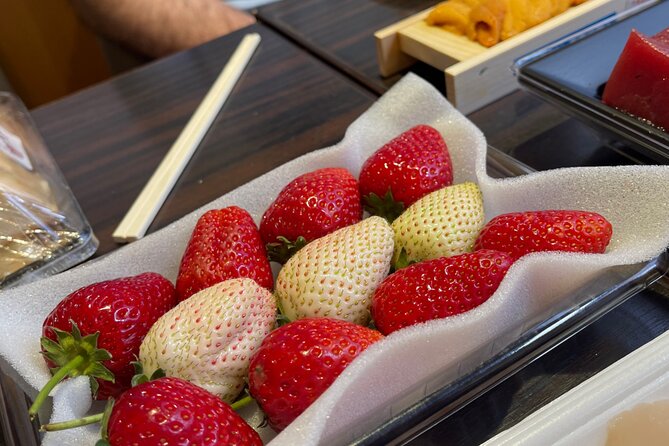
The itinerary includes a stop at the Tsukiji Fish Market area. You might have heard the wholesale vendors moved, and that’s true in a broad sense, but the key is that Tsukiji still functions as a major food zone.
This stop focuses on the area’s continued food identity: delicious restaurants and market shops nearby, some with long roots in the neighborhood. Even if the wholesale centerpiece has changed, the surrounding ecosystem still feeds people, and it still shows you how seafood culture looks on a real Tokyo morning.
The guide also helps you interpret what’s in front of you. Markets can feel like a blur if you don’t know what to look for, so the explanations matter. You’re not just passing stalls, you’re learning what the trade is about and how it shapes what ends up on plates.
Namiyoke Inari Shrine: the blessing stop and the sweet finish
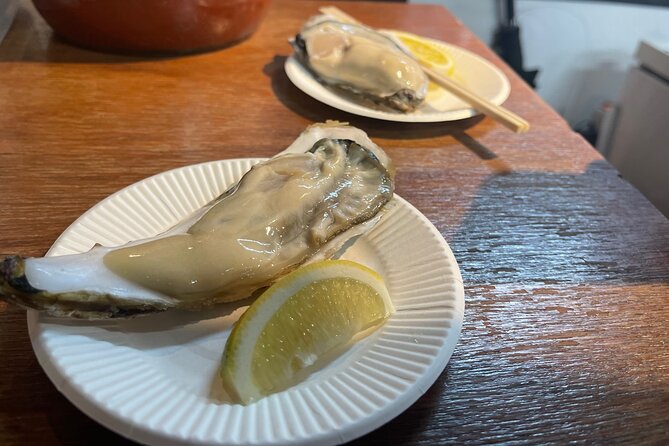
You’ll visit Namiyoke Inari Jinja for a short stop and a blessing moment. This is a nice reset, especially after you’ve spent time surrounded by seafood sights and smells. It gives the tour a rhythm, and it helps you understand that this is a working neighborhood, not only a food stage.
Then you finish with a sweet Japanese snack. Ending with something small and sweet is a smart way to land the experience, because you get a final taste that feels like a closing note rather than a rushed afterthought.
If you care about photos, this is also the stop where your camera can rest. You’ll get a change of pace, and you won’t feel like you’re constantly dodging movement and elbows.
The included breakfast: what you’re really paying for
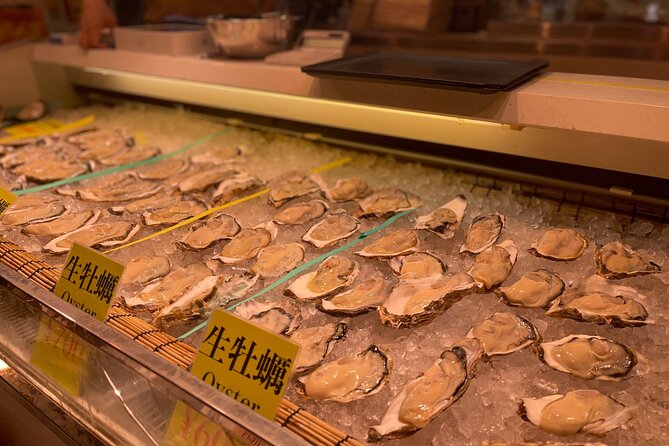
The big ticket item in this tour is the full Tsukiji specialty seafood breakfast, plus the included drink. That matters because the price includes more than “a guide walking with you.” You’re paying for curated food time and access to people who know what they’re selling.
A seafood breakfast in Tsukiji isn’t just breakfast. It’s a chance to taste how the area thinks about freshness, seasonality, and the idea that morning eating can be a real ritual. The tour also includes learning about traditions that go back more than 100 years, which helps the meal make sense instead of feeling random.
If you’re traveling with dietary needs, the good news is that the tour lists support for vegetarian, pescatarian, and gluten-free guests. It also says it’s not recommended for vegans and no seafood diets. That’s a clear boundary, and it’s worth respecting so you don’t end up hungry.
If you’re gluten-free, plan to communicate needs early. The tour states gluten-free is possible, but market food can still be tricky, so it’s smart to speak up.
Price and value: why $231 can make sense for Tsukiji
At $231 per person for about 3 hours, this isn’t a cheap add-on. So the question is whether the tour replaces what you would otherwise pay and how much time and confusion it saves you.
Here’s the value logic I like:
- You get breakfast included, which removes the hardest part of planning Tsukiji on your own. You won’t have to guess where to go for a proper morning meal.
- You get an English-speaking guide for the full walk, which helps you order and taste with confidence.
- You get a structured route across meaningful stops, including shrine time and outer market tastings.
Could you do Tsukiji solo? Sure. But “solo” often means searching, guessing, and walking until something finally clicks. Paying for a guide is buying time, plus buying better decisions at stalls where the menu language might not be easy.
Also, this tour caps group size at 10. Small groups usually cost more per person, but they also make the experience feel personal instead of rushed.
What to expect day-of: market rules, weather, and substitutions
Tsukiji has its own calendar, and the tour notes that spots can change based on schedules, public holidays, weather, and other unforeseen issues. When that happens, you’ll get substitutions rather than a total scramble.
Weather matters here. You should expect the experience to be sensitive to poor conditions, and you may be offered a different date or a full refund if canceled due to weather.
Bring realistic expectations, too: it’s a market neighborhood, not a climate-controlled attraction. You’ll get a working-food atmosphere that can be noisy and close. If you want a totally frictionless morning, you might prefer a seated food experience instead.
Who this tour suits best, and who should skip it
This is a strong fit if:
- You’re a first-timer to Tsukiji and you want a smart route without overthinking
- You like learning while you eat, not after you’ve already ordered
- You want a morning plan that ends back where it started
- You’re traveling with someone who enjoys food explanations, not only tasting
It’s less ideal if:
- You don’t eat seafood and you’re looking for a fully no-seafood meal plan, since it’s not recommended for no-seafood diets
- You prefer paying for everything with cards, because cash is advised and credit cards are not generally accepted for purchases
- You have trouble standing and walking for a couple hours, since the tour requires moderate physical fitness
It’s also family-friendly, with children needing to be accompanied by an adult. For kids 10 and above, a passport information copy is required.
If you’re a solo traveler, you can still do it, and you’ll want to email the provider ahead of time as suggested.
Quick tips before you go
I’d treat this like a tasting sprint, not a slow stroll. Eat breakfast as part of the plan, then keep room for the tour’s included seafood breakfast and the snack at the end.
Have cash ready. Market purchases often run on cash, and the tour explicitly warns that credit cards are not generally accepted.
Wear shoes you can move in for a few hours. You’re walking through working stalls and foot traffic, and the early start means you’ll feel the time on your legs.
Should you book the Classic Tsukiji Food Tour?
If you want a structured Tsukiji morning with breakfast included, small-group energy, and cultural stops that explain what you’re eating, I think it’s a solid choice. The strongest selling point is that it turns a famous market into an understandable food experience, not just a place to wander.
I’d skip it only if your diet rules are strict beyond what’s listed, especially vegans or no-seafood needs. Also, if you hate mornings and don’t want to carry cash, plan for frustration before you even reach the first stall.
Overall, at $231 you’re paying for food you wouldn’t easily nail on your own, plus a guide who helps you read the market fast. For many first-timers, that’s exactly what makes Tsukiji click.
FAQ
How long is the Classic Tsukiji Food Tour?
It runs for about 3 hours.
Where does the tour start and end?
You start and end at Turret Coffee Tsukiji, 2-chōme-12-6 Tsukiji, Chuo City, Tokyo 104-0045, Japan.
What is included in the price?
The tour includes one drink, a full Tsukiji specialty seafood breakfast, and a local English-speaking guide.
Do I need to bring cash?
Yes. If you plan to buy souvenirs or food, bring cash because credit cards are not generally accepted.
Is the tour suitable for vegans or no-seafood diets?
No. It is not recommended for vegans and people who want no seafood.
Can I cancel and get a full refund?
You can cancel for a full refund if you cancel at least 24 hours before the experience’s start time. If you cancel less than 24 hours before, the amount paid will not be refunded.
Market Mornings We Have Reviewed


Newest Tokyo write-ups from the Loving Japan desk


Tsukiji and Toyosu Fish Markets, side by side.
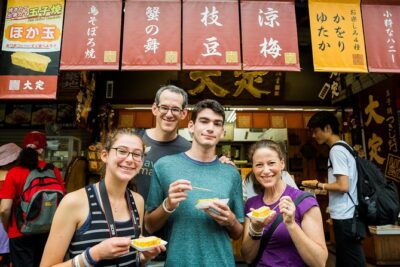 ★ 5.0Tokyo Tsukiji Fish Market Food and Culture Walking TourFrom $993,184 reviews
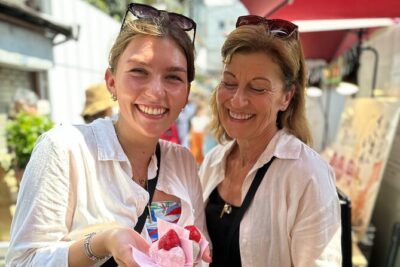 ★ 5.0Tsukiji Fish Market Food and Walking tourFrom $301,724 reviews
 ★ 4.9Tsukiji Fish Market Guided Walking TourFrom $221,397 reviews
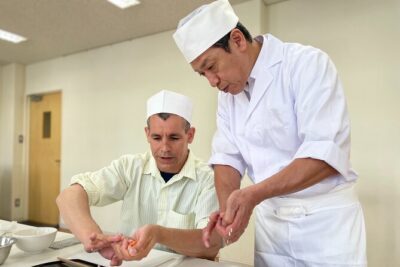 ★ 5.0Tokyo Sushi Making Class in Tsukiji with Professional ChefFrom $491,177 reviews
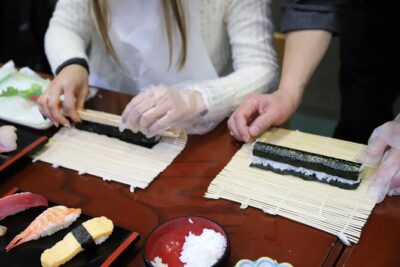 ★ 5.0Tsukiji Fish Market Guided Tour and Sushi Making with Pro ChefFrom $104775 reviews
★ 4.7Tsukiji Fish Market Food and Culture Walking TourFrom $96757 reviews
★ 5.0Tsukiji Fish Market Guided Tour and Sushi Making with Pro ChefFrom $104775 reviews
★ 4.7Tsukiji Fish Market Food and Culture Walking TourFrom $96757 reviews
 ★ 5.0Tsukiji Fish Market: Street Food & Culture Walking TourFrom $33669 reviews
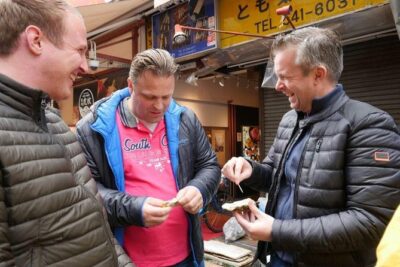 ★ 5.0Tsukiji Fish Market Small-Group Food Walking TourFrom $87621 reviews
Filed on these lists too