
REVIEW · TSUKIJI AND TOYOSU FISH MARKETS
Tokyo: Tsukiji Fish Market Guided Walking Tour
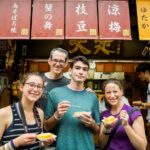
Tsukiji can feel like organized chaos, but this guided walk turns it into a clear food-and-culture route. You get the temple intro first, Tsukiji Hongan-ji, then the Outer Market, where your guide steers you through stalls you would easily miss on your own. It is a fast two-hour loop that makes Japan’s food world make more sense.
I like how this tour is built around a small group of up to 10, so you can ask real questions while you are standing in front of the stuff you came for. I also like that the experience mixes street-food energy with practical explanations, so you are not just eating, you are learning what different ingredients actually do in Japanese cooking.
One drawback to plan for: food and drinks are not included, so the tour price is only part of what you will spend. You also need cash, and if seafood is a deal breaker for you, the market will still tempt you, even if your guide steers you toward other options.
In This Review
- Key things to know before you go
- Tsukiji in two hours, with real value for $22
- Starting at Tsukiji Station Starbucks, then walking with purpose
- Tsukiji Hongan-ji temple stop: carvings, calm, and context
- Tsukiji Outer Market: how your guide turns a maze into a route
- Eating and spending: cash, pay-as-you-go ordering, and smart budgeting
- The best part is the guide: names behind the praise
- Should you book this Tsukiji Fish Market guided walking tour?
- FAQ
- Where do I meet my guide?
- How long is the tour?
- Is the tour in English?
- Is food included in the price?
- Does the tour include entry fees for the market and temple?
- How big is the group?
- What should I bring?
Key things to know before you go
- Meet at Starbucks in front of Tsukiji Station, then walk as a group (your guide stands by the bench).
- Tsukiji Hongan-ji first, with a guided visit that sets the tone before the market noise.
- Tsukiji Outer Market is the main event, with guided shopping time split into two blocks.
- Food is pay-as-you-go, not a set menu, so you control what you buy.
- Photos are included, which is a nice bonus in a super crowded place.
- English live guide with a max of 10 people, meaning less waiting and fewer mix-ups.
Hungry earlier than that? Other market breakfasts we tried
- Tokyo Tsukiji Fish Market Food and Culture Walking Tour
★ 5.0 · 3,184 reviews - Tokyo: Tsukiji Fish Market Food and Walking tour
★ 5.0 · 1,724 reviews - Tokyo: Tsukiji Fish Market Guided Walking Tour
★ 4.9 · 1,397 reviews - Tokyo Sushi Making Class in Tsukiji with Professional Chef
★ 5.0 · 1,177 reviews
Tsukiji in two hours, with real value for $22
For $22, you are not paying for a banquet. You are paying for a guide to get you into the rhythm of Tsukiji, plus an efficient route through the highlights, and included entries. That is the value.
The math is simple: the tour itself includes the guided walking time, photos, and entry into Tsukiji Fish Market areas and Hongan-ji Temple, and the food is your choice at the stalls. That set-up actually works well in Tokyo, where prices and items vary from shop to shop, and where you do not want a one-size-fits-all set menu.
If you have limited time in the city, this is a smart pick. Two hours is enough to cover the cultural warm-up at the temple and then hit the Outer Market’s most memorable snack stops, without burning your whole morning.
Starting at Tsukiji Station Starbucks, then walking with purpose
Your morning begins at Starbucks Coffee in front of Tsukiji Station, with your guide standing by the bench. It sounds small, but I love meeting points like this because Tsukiji gets busy fast, and clarity at the start saves you stress later.
From there, you walk a short distance to Tsukiji Hongan-ji. The tour then transitions into the Outer Market in a couple of quick walking segments, so you are not stuck in long transfers or waiting around. You get moving, then you get station-to-stall guidance.
Also keep in mind the practical stuff that matters most in a market: cash. Food is not included, and you will order what you want at each stall. Having cash ready keeps you from pausing mid-line while you figure out payment.
Tsukiji Hongan-ji temple stop: carvings, calm, and context
Before you hit the seafood and snack frenzy, you visit Tsukiji Hongan-ji Temple for about 15 minutes. This stop is not just decoration or a quick photo break. It gives you a cultural frame for why this area became such a fixture in Tokyo’s food world.
In the temple, you get a guided look with attention to the space, not just the surroundings. One of the reasons this works is timing. When you start at the temple, the market later feels less like random shopping and more like a place with tradition behind it.
A small but meaningful detail: because the temple entry is included, you are not juggling extra tickets while everyone is trying to get through a schedule. It makes the morning flow cleanly.
- Mt Fuji and Hakone 1-Day Bus Tour Return by Bullet Train★ 5.0 · 26,383 reviews
- 1-Day Tokyo Bus Tour★ 5.0 · 14,250 reviews
- Tokyo: teamLab Planets TOKYO Digital Art Museum Entry Ticket★ 4.6 · 9,779 reviews
- Mt Fuji & Hakone Cruise, Drum Show Bullet Train 1 Day from Tokyo★ 4.0 · 7,413 reviews
- Tokyo: Shinjuku Food Tour (13 Dishes at 4 Local Eateries)★ 5.0 · 6,603 reviews
Tsukiji Outer Market: how your guide turns a maze into a route
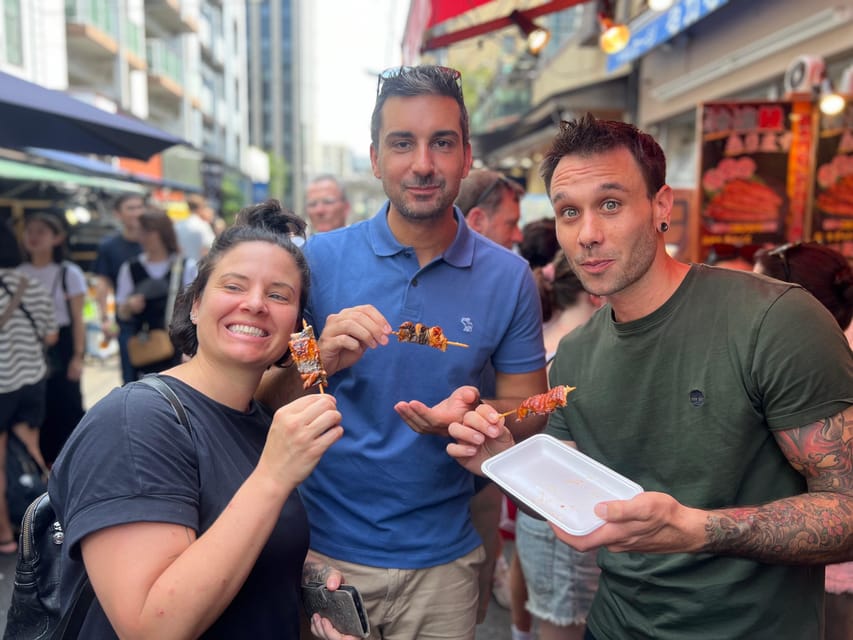
After Hongan-ji, the Outer Market is where the tour earns its keep. You spend about 50 minutes, then you get another guided shopping block of around 50 minutes, so you are not rushed through the good parts. This is enough time to taste, compare, and still feel like you saw the range of the market.
What you will notice right away is how your guide helps you navigate the crowd without playing guessing games. Many people come to Tsukiji and get stuck in the loudest lines or the most obvious tourist stalls. With a guide, you get pointed to places where you can actually order, try, and move on efficiently.
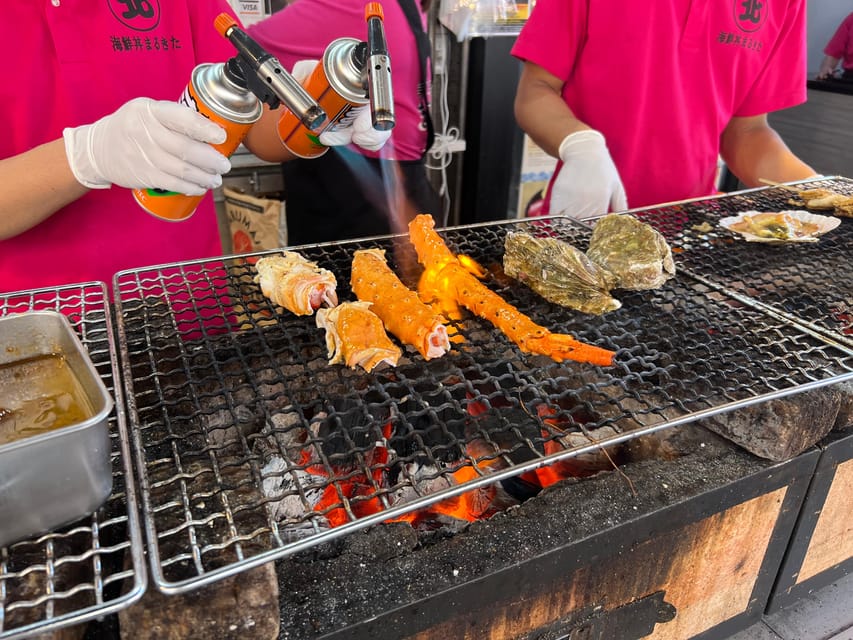
You also learn what is behind the counters. Your guide explains ingredients essential to Japanese cooking, including seafood options and specialty items you might not recognize elsewhere. That matters because the market is not only about eating. It is also about understanding what makes certain foods prized, how they are used, and why they show up again and again in Japanese meals.
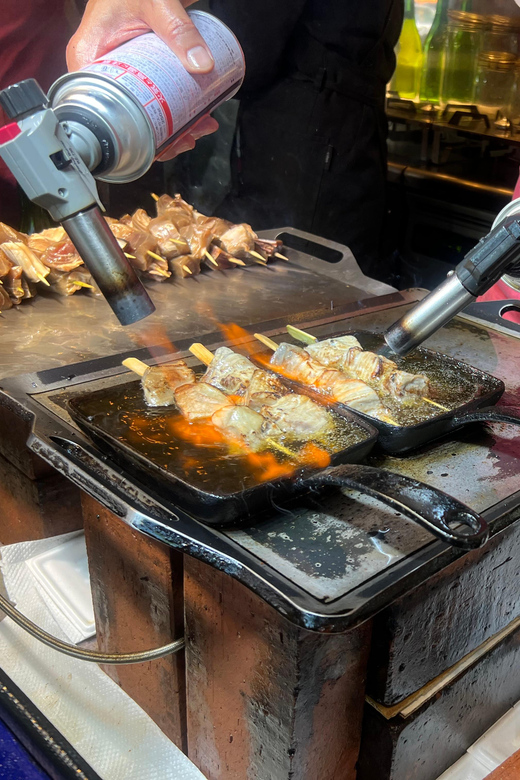
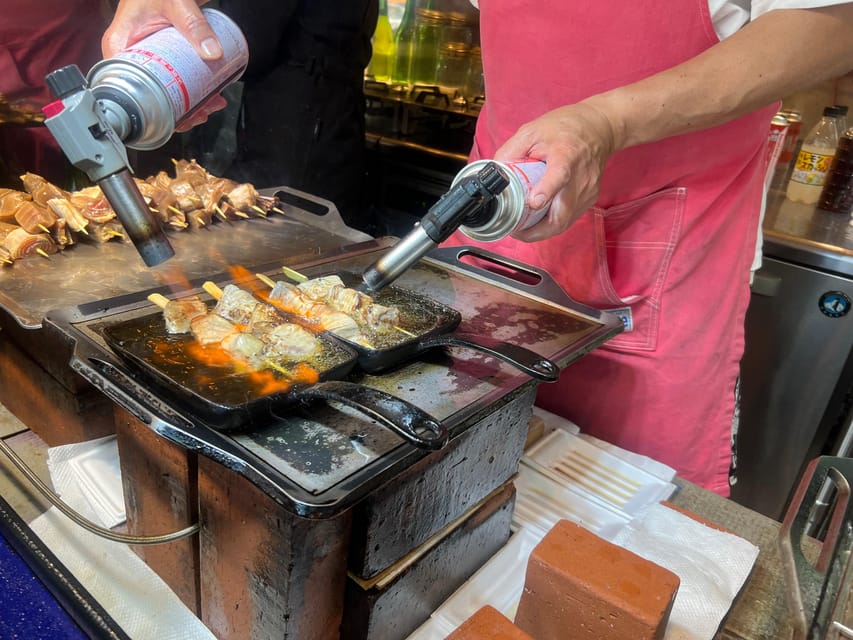
From the food examples people tried on this type of tour, you might come across:
- Tamago and other egg-based snacks
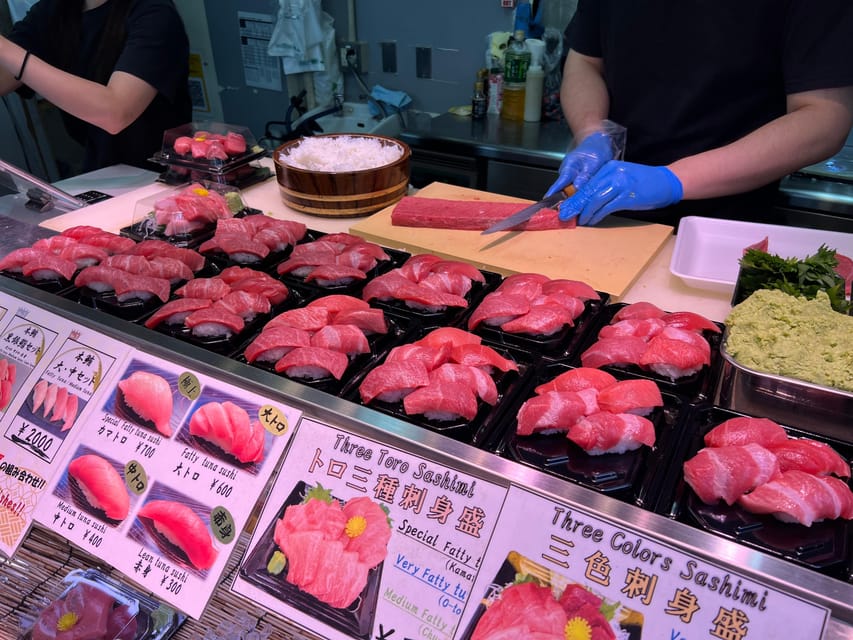
- Oysters, sushi, and seafood bites
- Wagyu beef skewers or tastings
- Unagi eel options
- Dried goods like dried fish and other market staples
- Sweets and matcha-style treats
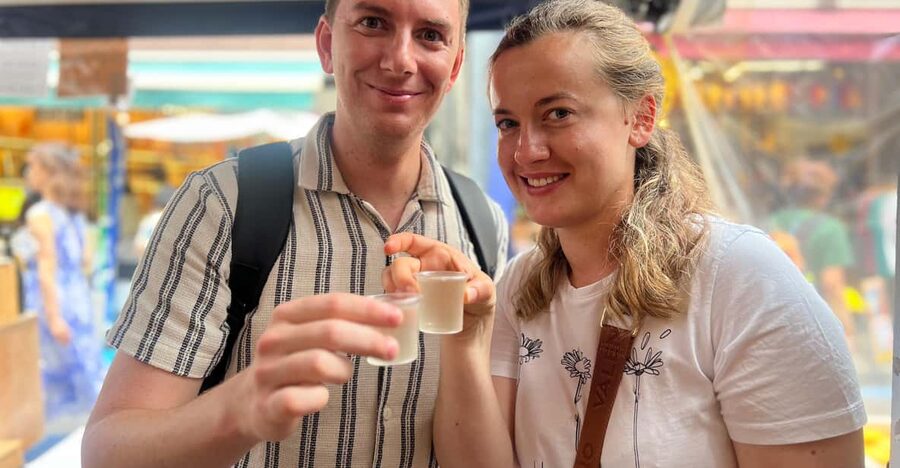
- On some tours, even sake as an end-of-walk drink ritual
A key advantage here is that you can order what you want. The tour is not locked into one set of items, so your preferences and allergies can be easier to manage.
Eating and spending: cash, pay-as-you-go ordering, and smart budgeting

Food not being included is the one thing I would tell you to plan for up front. The tour fee covers the guide, included entries, and photos, but every snack you buy is on you. That is also why the tour tends to feel flexible: you choose what you taste.
You will likely spend your money in multiple small bites. People describe sharing small plates and tasting several items across the Outer Market. That approach is often better than trying to buy one huge meal in a place built for quick stops.
Bring enough cash, because market prices add up quickly when you are tasting multiple vendors. Several guides are praised for helping guests order smoothly at stalls, including working with vendors for what to try and how to pay. One review even mentioned a stop at a convenience store for water beforehand, which is a practical move in a crowd.
If you are not a seafood person, you should not automatically skip. One reviewer said they do not like seafood but still tried a few things with guidance and found highlights anyway. The better strategy is to tell your guide what you do not want, then use the rest of the menu options to build your own tasting plan, including egg snacks, beef, eel, sweets, and matcha.
The best part is the guide: names behind the praise
This is the kind of tour where the person leading you really changes the experience. The most consistently praised guides include Jim, Yayoi, Rie, Nicolas, Haydn, Minori, Sayaka, Shino, and Joe, along with Kiwa mentioned in one standout pairing.
What people loved was not just that the guides could point out food. They were praised for:
- Explaining history and culture, not just facts shouted while walking
- Showing the best tasting spots and helping avoid places that feel like an easy trap
- Helping guests navigate ordering in the moment
- Adding conversation, including cultural context from living in Japan, in some cases speaking as expats who understand how visitors think
- Keeping the pace comfortable, especially for groups of eight or so
This matters because Tsukiji is famous, and fame brings crowds. A guide’s job is to help you move with confidence and eat with less guesswork. If you are the type who wants to know what you are tasting and why, this tour leans that way.
Also, small group size helps. When you have fewer people, you spend less time waiting your turn, and your guide can adjust the route to what the group likes. That is a big deal in a market where the line at one stall can swallow 20 minutes if you are stuck behind the wrong choice.
Should you book this Tsukiji Fish Market guided walking tour?
I think you should book if you want a smart introduction to Tsukiji that mixes Hongan-ji Temple context with a guided, pay-as-you-go snack route through the Outer Market. At $22, you are getting more than walking, you are getting navigation help, included entries, and photo coverage, which is real value in a crowded place.
Skip or reconsider if you are hoping for the food to be included, or if you do not want to carry cash and make quick purchasing decisions at stalls. This is also not the best fit if seafood is something you truly cannot stand, because the market will still be surrounded by seafood culture, even if your guide steers you toward other options.
If you have never done a market tour in Tokyo, or you want to make Tsukiji feel understandable instead of overwhelming, this is one of the easiest ways to do it.
FAQ
Where do I meet my guide?
You meet your guide at Starbucks Coffee in front of Tsukiji Station. The guide stands in front of the bench at Starbucks.
How long is the tour?
The tour runs for 2 hours.
Is the tour in English?
Yes. The tour has a live English guide.
Is food included in the price?
No. Food and drinks are not included, so you order what you want at the market stalls.
Does the tour include entry fees for the market and temple?
Yes. The tour includes entry to the fish market areas and Tsukiji Hongan-ji Temple, and the entry fees are listed as free.
How big is the group?
This is a small group tour limited to 10 participants.
What should I bring?
Bring cash, since you will be purchasing food and drinks at stalls.
Market Mornings We Have Reviewed

Newest Tokyo write-ups from the Loving Japan desk


Tsukiji and Toyosu Fish Markets, side by side.
 ★ 5.0Tokyo Tsukiji Fish Market Food and Culture Walking TourFrom $993,184 reviews
 ★ 5.0Tsukiji Fish Market Food and Walking tourFrom $301,724 reviews
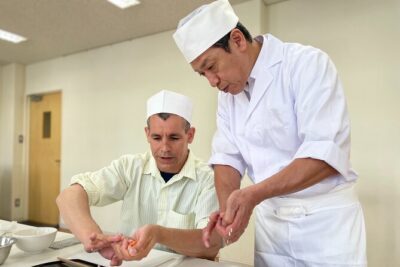 ★ 5.0Tokyo Sushi Making Class in Tsukiji with Professional ChefFrom $491,177 reviews
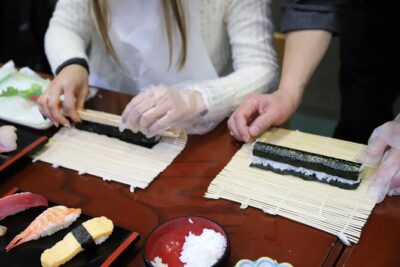 ★ 5.0Tsukiji Fish Market Guided Tour and Sushi Making with Pro ChefFrom $104775 reviews
★ 4.7Tsukiji Fish Market Food and Culture Walking TourFrom $96757 reviews
★ 5.0Tsukiji Fish Market Guided Tour and Sushi Making with Pro ChefFrom $104775 reviews
★ 4.7Tsukiji Fish Market Food and Culture Walking TourFrom $96757 reviews
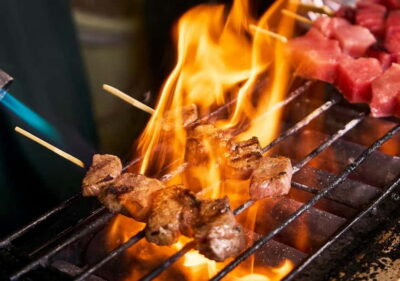 ★ 5.0Tsukiji Fish Market: Street Food & Culture Walking TourFrom $33669 reviews
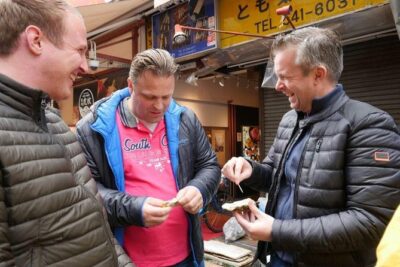 ★ 5.0Tsukiji Fish Market Small-Group Food Walking TourFrom $87621 reviews
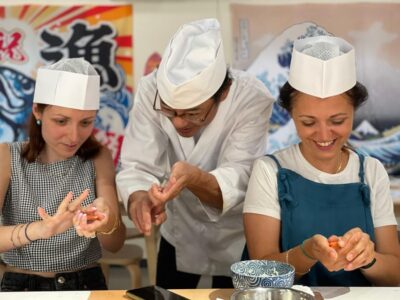 ★ 4.9Tsukiji Fish Market Sushi Making Class with Pro ChefFrom $63506 reviews
Filed on these lists too