
REVIEW · FUSHIMI INARI AND THE TEMPLES OF KYOTO
Crowd-Free Kyoto: Fushimi Inari, Nijo Castle & Kinkaku-ji
Three Kyoto icons, before the lines form. This private route is built around early starts and a guide who helps you enjoy the sights at a relaxed pace, not a sprint.
You’ll see the red torii paths of Fushimi Inari-taisha Shrine, the UNESCO-listed rooms of Nijo Castle, and the gold-leaf glow of Kinkaku-ji. One thing to plan for: only Fushimi Inari is free, while Nijo Castle and Kinkaku-ji entry fees and your own food and drinks are not included.
In This Review
- Key reasons this tour feels easier than DIY
- How the crowd-free Kyoto loop works in about 5 hours
- Price and value: what you’re really paying for at $91.96
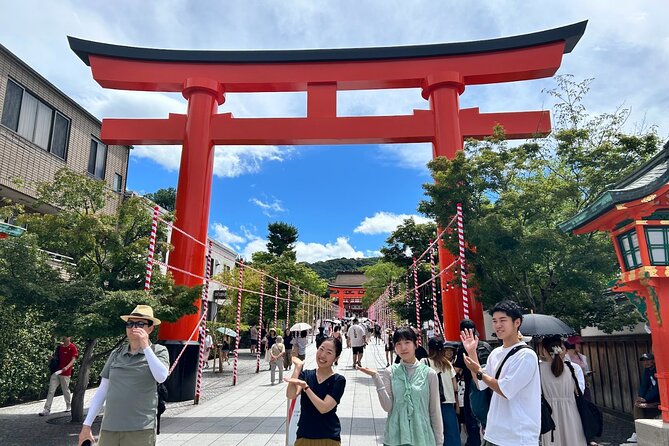
- Fushimi Inari-taisha: seeing the torii path before it turns loud
- Nijo Castle: UNESCO palace time at a calm pace
- Kinkaku-ji Golden Pavilion: gold-leaf drama with weather in mind
- Why a private guide makes these three stops feel different
- Meeting point and ending point: what it means for your day
- What to do with the rest of your time in Kyoto
- Who this crowd-free Kyoto tour is best for
- Should you book Crowd-Free Kyoto with Fushimi Inari, Nijo Castle, and Kinkaku-ji?
- FAQ
- How long is the Crowd-Free Kyoto tour?
- Is this tour private or shared?
- Which attractions are included?
- Are admission tickets included in the price?
- Where do I meet the guide?
- Where does the tour end?
- Are food and drinks included?
- What happens if the weather is bad?
- What is the cancellation policy?
Key reasons this tour feels easier than DIY
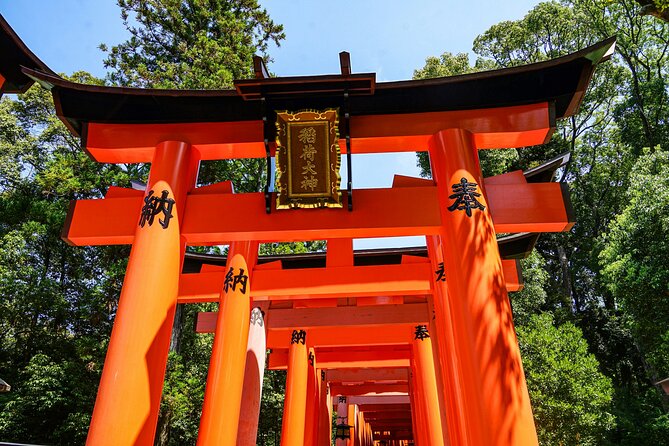
- Early-timed Fushimi Inari: you get a great shot of the torii before it turns into shoulder-to-shoulder tourism
- Private guide, flexible feel: you move at a calmer pace than shared group tours
- Stories that fit the place: guides like Tom, Ryu, Kazuya, and Maki are praised for making each stop make sense
- Three major Kyoto hits in one run: Fushimi Inari, Nijo Castle, and Kinkaku-ji, all in about 5 hours
- Mobile ticket for smoother entry: it helps keep the logistics simple while you’re on the move
Which temple to give the morning to, reviewed
- Kyoto: Fushimi Inari, Kinkakuji, Bamboo Grove 1 Day Bus Tour
★ 4.8 · 4,316 reviews - Kyoto: Tea Ceremony in a Traditional Tea House in Kiyomizu
★ 4.9 · 3,519 reviews - Kyoto/Osaka: Nara, Fushimi Inari Taisha, Arashiyama Bus Tour
★ 4.7 · 1,275 reviews - Kyoto: Nijo-jo Castle and Ninomaru Palace Guided Tour
★ 4.7 · 1,020 reviews
How the crowd-free Kyoto loop works in about 5 hours
This is a classic Kyoto highlights day, but the structure matters. The big idea is simple: start early enough that the most famous spots do not feel like a theme park. You meet at the South Square in Kyoto Station, then you work through Kyoto with a local guide, finishing at Kinkaku-ji.
That 5-hour window is a sweet spot for a first-time Kyoto visit. You get the major landmarks most people come for without turning your whole day into transit and line-waiting.
One more practical win: it’s a private tour, meaning only your group goes along. That matters because it’s easier to ask questions, pause for photos, and keep your walking pace under control, especially at places where crowds can make every step feel rushed.
Price and value: what you’re really paying for at $91.96
At $91.96 per person, you’re not just buying entry tickets. You’re paying for three things that are hard to replicate on your own:
- A guide to steer timing so you hit the busiest sights earlier
- Local context that turns landmarks into stories you can remember
- A smoother day flow since you are not piecing together the route and pacing yourself
The tradeoff is also clear. The tour includes a local guide, but it does not include food and drinks, and only Fushimi Inari is marked as free admission. Nijo Castle and Kinkaku-ji explicitly have admission fees not included.
So, treat the listed price as the cost of the guided plan, not the cost of every temple door you pass through. If you budget a little extra for those entry fees and plan your own snacks and water, the value feels much more fair.
Also note: the experience includes a mobile ticket, which can make check-in and movement feel less fiddly when you are hopping from stop to stop.
Fushimi Inari-taisha: seeing the torii path before it turns loud
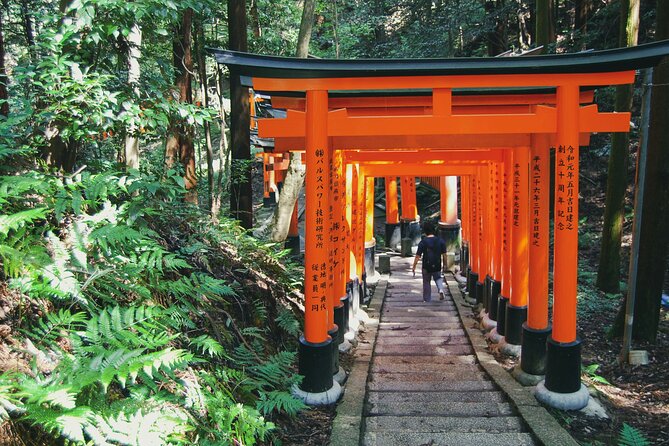
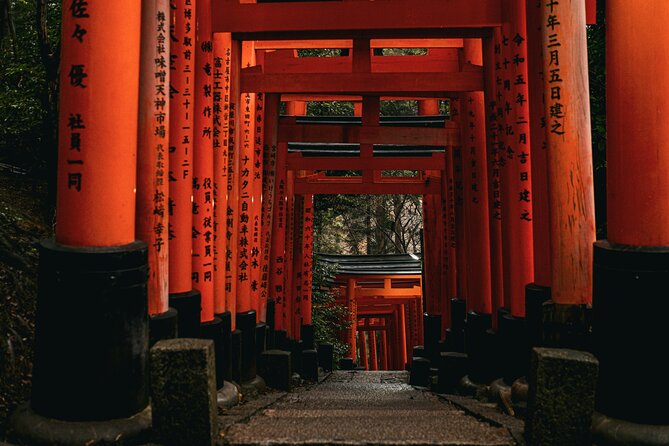
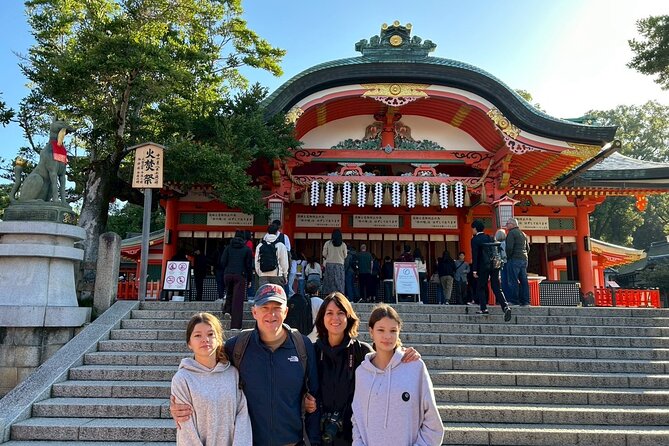
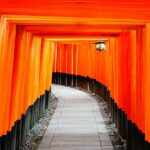
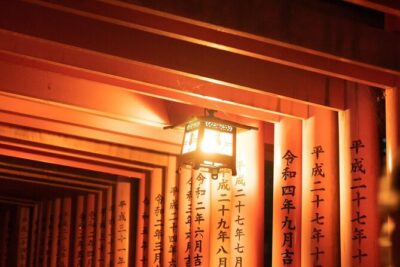
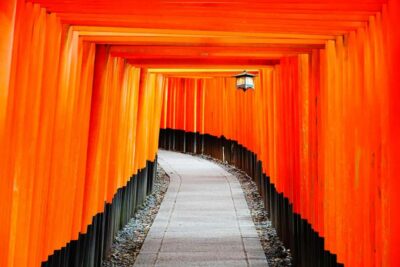
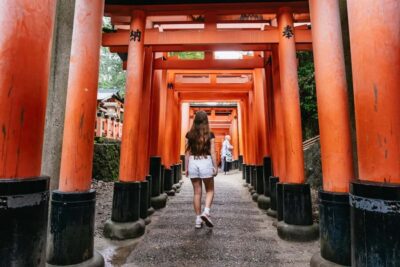
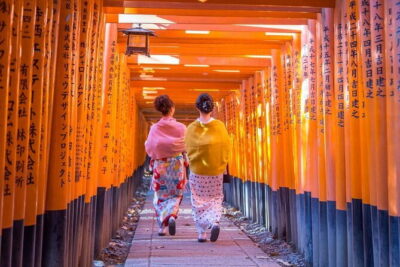
Fushimi Inari-taisha is Kyoto at its most iconic. The star feature is the senbon torii, those thousands of red gates that climb and curve up the hillside. Even without overthinking it, it’s easy to understand why people lose hours here, because the path keeps changing as you walk.
This tour schedules the first stop to help you catch Fushimi Inari before the busiest times. That timing is a big deal. When you arrive earlier, you can actually take in the scale of the torii rather than spending the experience dodging crowds.
The visit is about 1 hour, which is enough time to see plenty of the torii corridor and get a sense of the climb. One highlight people talk about is reaching higher views. If you want the satisfying payoff of the upper stretch, a private guide helps you pace it without burning out your legs too early.
Practical notes for you:
- Wear comfortable shoes. This is walking, and parts of it are stair-heavy.
- Bring a small water plan. Food and drinks are not included on the tour, and you will likely want water in warmer weather.
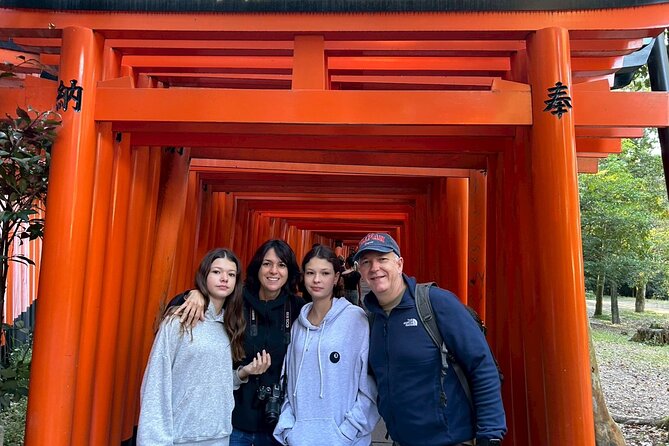
- If you love photos, early timing gives you better angles with fewer bodies in the frame.
The emotional payoff is real: Fushimi Inari has that mix of spiritual atmosphere and visual drama. With a guide explaining what you’re seeing, it turns into more than a pretty climb.
- PERFECT KYOTO 1-Day Bus Tour★ 5.0 · 13,518 reviews
- Kyoto: Fushimi Inari, Kinkakuji, Bamboo Grove 1 Day Bus Tour★ 4.8 · 4,316 reviews
- Kyoto: Tea Ceremony in a Traditional Tea House in Kiyomizu★ 4.9 · 3,519 reviews
- Kyoto: Tea Ceremony Ju-An at Jotokuji Temple★ 4.9 · 3,207 reviews
- Kyoto: 45-Minute Tea Ceremony Lesson Experience★ 4.3 · 2,378 reviews
Nijo Castle: UNESCO palace time at a calm pace
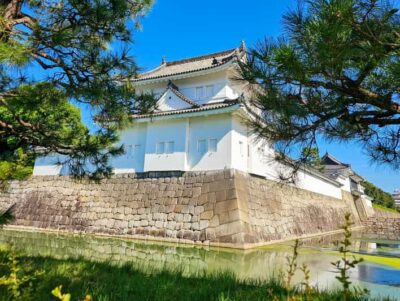
After Fushimi Inari, the focus shifts from sweeping views to palace rooms and historical power. Nijo Castle is a UNESCO World Heritage site, and you spend about 1 hour here.
What I like about this stop in a half-day format is that it is structured. You are not wandering randomly through a huge site and hoping you find the important parts. The tour takes you into the Ninomaru Palace, described as the former residence of the Tokugawa Shogun.
People also tend to call Nijo Castle a highlight of the day, which makes sense. It’s one of Kyoto’s places where you can feel the weight of political history while still appreciating the architecture and layout.
A couple things to remember for your visit:
- Admission is not included for Nijo Castle, so budget for the entry fee.
- Plan for some walking inside and around the palace grounds.
- If you like history tied to specific locations, a guide adds a lot, because palace spaces can feel harder to interpret without context.
Guides such as Ryu and Maki were mentioned for being friendly and entertaining, and that kind of explanation matters here. It helps you connect the spaces you see with why they mattered.
Kinkaku-ji Golden Pavilion: gold-leaf drama with weather in mind
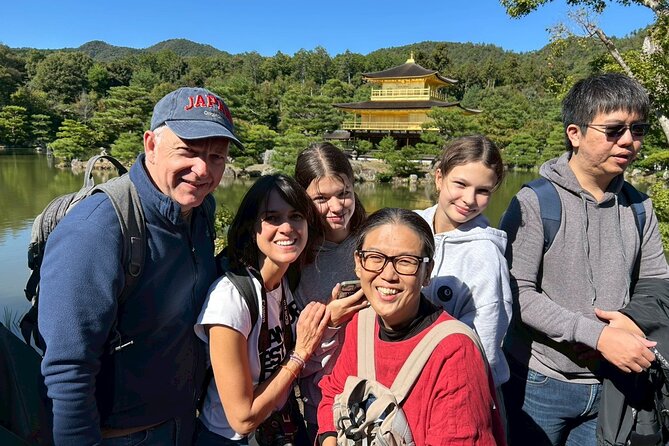
Then you reach the finale everyone recognizes from postcards: Kinkaku-ji, the Golden Pavilion. This is where Kyoto turns extra photogenic. The temple is described as covered in gold leaf, and the effect is all about light and reflection.
Your time here is about 1 hour, and the listing notes that the experience depends on weather. That’s fair. If it’s rainy or too gloomy, the visuals and reflections can feel less magical, so build some flexibility into your expectations.
Also, like Nijo Castle, Kinkaku-ji admission is not included. If you’re budgeting ahead, you’ll save yourself the last-minute stress of figuring out what needs to be paid on site.
What’s great about ending here is that Kinkaku-ji is easy to treat as a finish line. You get the biggest payoff sight at the end of the day, and then you’re done. Ending at Kinkaku-ji also means less backtracking to get out of the area.
If you want the best experience, aim to take a slow moment at the main viewing area. Don’t rush through the pavilion like it’s just another photo stop. The value is in noticing how the gold leaf catches changing angles as you move.
Why a private guide makes these three stops feel different
Kyoto can be busy in a way that surprises you, even if you’ve studied photos beforehand. A big advantage of a private guided plan is that you are not stuck reacting to crowds. The schedule is designed to avoid the busiest times, at least where needed.
But timing is only half the story. What makes people say the tour is worth it is the way the guide connects the sites. In multiple accounts, guides were praised for:
- being friendly and entertaining
- answering questions on the spot
- explaining details that you might not find quickly on your own
Names that came up in the guide chatter include Tom, Kazuya, Ryu, and Maki. The common thread is that they helped visitors understand what they were looking at, not just where to stand for a picture.
I also like the practical side of private pacing. With shared group tours, you often feel pushed into a timetable. Here, the tour is described as more relaxed, which is especially important when you have one stop that involves a climb like Fushimi Inari.
Meeting point and ending point: what it means for your day
You start at South Square, Kyoto Station Building (near Kyoto Station). That’s a smart start for visitors because it’s a well-known hub and easy to orient around.
You end at Kinkaku-ji in Kita Ward. Ending at the attraction gives you freedom after the tour, whether you want to continue sightseeing or simply call it a day.
Because the tour is near public transportation, it’s also easier to adjust if you need to change plans. Just keep in mind the tour is planned as a set route, so you’ll get the most value by treating it as one coherent half-day.
What to do with the rest of your time in Kyoto
Even though the tour is only about five hours, it still touches three of Kyoto’s anchors. That makes it a strong first visit option, or a way to balance a heavier temple day later.
If you have energy after, you can use Kinkaku-ji as a springboard. If you do not, you’re not stuck in transit from an attraction far away. Either way, you leave the day with three “must-see” memories handled.
For your planning:
- Bring a plan for food and drinks, since they are not included.
- Expect walking. This isn’t a sit-down tour.
- Weather matters. The experience notes it requires good weather, and the tour may adjust if conditions are poor.
Who this crowd-free Kyoto tour is best for
This tour fits best if you:
- want top Kyoto sights without trying to manage everything yourself
- care about timing and avoiding peak crowds at the big three
- prefer a calmer pace than shared-group chaos
- like learning through explanations rather than only reading signs
It’s less ideal if you want to linger for hours at just one temple, or if you already know these sites well and just want to wander. Also, if your schedule is ultra tight, the half-day format is great, but it means you should still be realistic about walking and entry fees.
Should you book Crowd-Free Kyoto with Fushimi Inari, Nijo Castle, and Kinkaku-ji?
I’d book it if you want a stress-reduced, guide-led highlights day that prioritizes early access. The value comes from the combination of a private guide, planned crowd avoidance, and seeing all three big icons in about 5 hours.
I’d think twice if you hate adding extra on-the-spot costs, because Nijo Castle and Kinkaku-ji admission fees are not included, and food and drinks are also on you. But if you plan for that, the experience is one of the most efficient ways to get the Kyoto “greatest hits” without losing your day to lines.
FAQ
How long is the Crowd-Free Kyoto tour?
The tour duration is listed as approximately 5 hours.
Is this tour private or shared?
This is a private tour. Only your group participates.
Which attractions are included?
You visit Fushimi Inari-taisha Shrine, Nijo Castle, and Kinkaku-ji (Golden Pavilion).
Are admission tickets included in the price?
Fushimi Inari-taisha Shrine admission is listed as free. Admission for Nijo Castle and Kinkaku-ji is not included.
Where do I meet the guide?
The meeting point is South Square, Kyoto Station Building.
Where does the tour end?
The tour ends at Kinkaku-ji.
Are food and drinks included?
No. Food and drinks are not included.
What happens if the weather is bad?
The experience requires good weather. If it is canceled due to poor weather, you will be offered a different date or a full refund.
What is the cancellation policy?
You can cancel for free up to 24 hours in advance for a full refund. If you cancel less than 24 hours before, the amount paid will not be refunded.
Which Kyoto Temple Gets Your Morning


Newest Kyoto write-ups from the Loving Japan desk
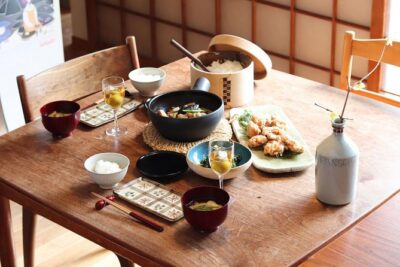
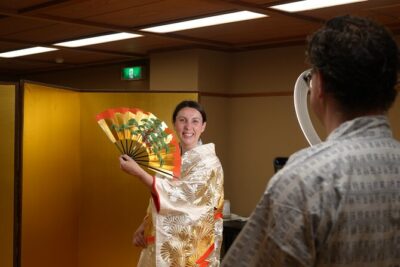
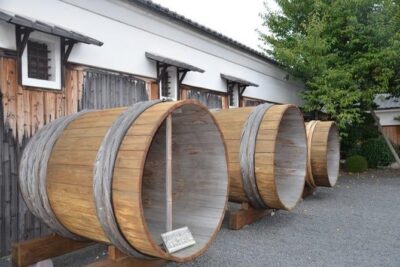
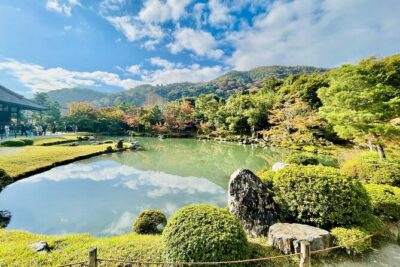
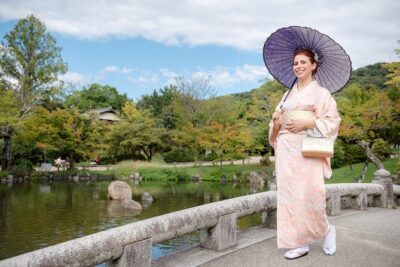
Fushimi Inari and the Temples of Kyoto, side by side.
 ★ 4.8Fushimi Inari, Kinkakuji, Bamboo Grove 1 Day Bus TourFrom $1224,316 reviews
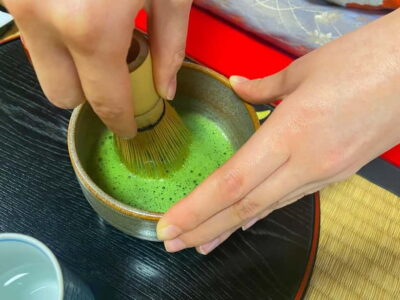 ★ 4.9Tea Ceremony in a Traditional Tea House in KiyomizuFrom $493,519 reviews
 ★ 4.7Kyoto/Osaka: Nara, Fushimi Inari Taisha, Arashiyama Bus TourFrom $521,275 reviews
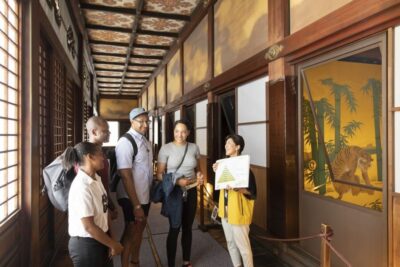 ★ 4.7Nijo-jo Castle and Ninomaru Palace Guided TourFrom $161,020 reviews
 ★ 4.4Osaka/Kyoto: Arashiyama, Nara & Fushimi Inari Shrine w/LunchFrom $61754 reviews
 ★ 4.7Nijo Castle, Kiyomizu & Fushimi Inari Guided TourFrom $54700 reviews
 ★ 5.0Nijo, Kinkaku-ji, Arashiyama, Kiyomizu & Fushimi InariFrom $51699 reviews
 ★ 4.7Imperial Palace & Nijo Castle Guided Walking TourFrom $49453 reviews
Filed on these lists too