
REVIEW · JAPANESE CRAFT AND CALLIGRAPHY WORKSHOPS
Ecotourism and Woodcraft with a Mountain Artist Near Tokyo
A forest craft day beats another Tokyo museum. In Hannō, you’ll walk into a working private forest and learn how Nishikawa timber ties to Tokyo architecture. Then you’ll cut a log and write a kanji on an Edo Castle wood piece that turns into a smartphone stand.
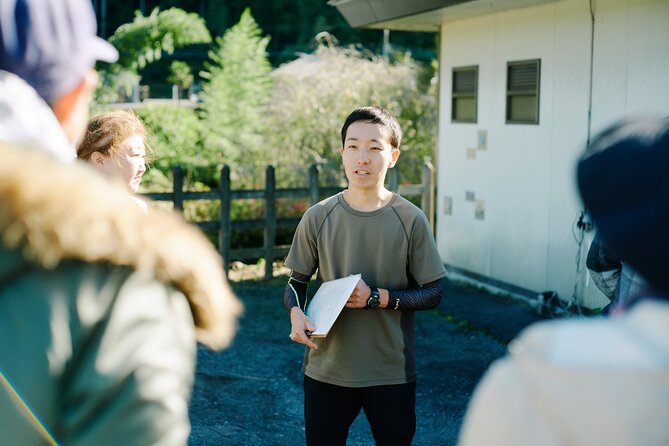
I especially loved two parts: the calm, hands-on forest time with safety gear and real instruction, and the woodcraft payoff at the end. The guide, Shun, explains what “mountain artists” do when they manage the forest for centuries, and the whole group stays small, max 8.
One thing to consider is that this experience depends on good weather, and the log cutting is not just a photo op. You should expect some physical effort, and lunch is not included.
In This Review
- Key points before you go
- Why Hannō, Saitama feels like a real reset from Tokyo
- Meeting at Higashi-Agano Station and heading to the activity site
- Kirari woodworking studio, the mountain artist lecture, and Nishikawa timber
- The private forest walk, wood aromas, and the practice of forest thinning
- Log cutting practice: what you do, what you learn, and why helmets matter
- Choosing your kanji and making an Edo Castle smartphone stand
- Time on the ground: 2 hours 30 minutes that stays focused
- Price and value near Tokyo: is $93.93 worth it?
- Who this is best for (and who should skip it)
- Should you book this woodcraft forest tour?
- FAQ
- How long is the experience?
- Where do I meet the guide?
- How many people are in the group?
- What is included in the price?
- What is not included?
- Is the tour accessible by public transportation?
- Does the tour require good weather?
- Can I cancel for a full refund?
Key points before you go
- Small group, max 8 people, so you get guidance during both the forest walk and craft time
- A private forest area normally closed to the public, with a focus on sustainable management
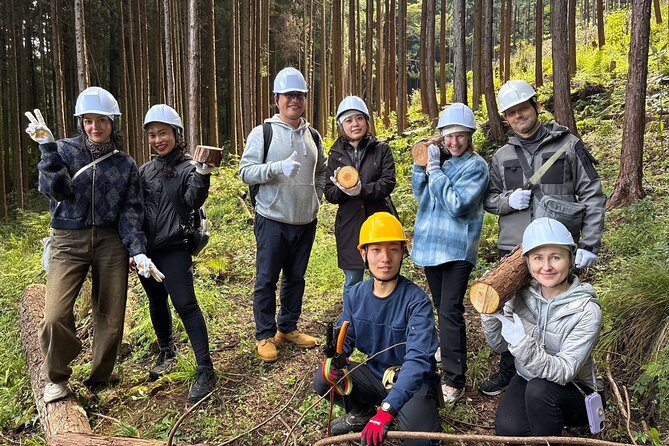
- Hands-on log cutting with helmets and gloves for safety
- Pyrography with a kanji of your choice on a wooden Edo Castle shape, made into a smartphone stand
- Forest walk with forest-bathing style quiet time, plus wood aroma comparisons
Still weighing up options in Saitama Prefecture? These are the ones our reviewers rated highest.
- Mt. Fuji and Hakone Private Tour with English Speaking Driver
★ 5.0 · 22 reviews - Ecotourism and Woodcraft with a Mountain Artist Near Tokyo
★ 4.5 · 21 reviews
Why Hannō, Saitama feels like a real reset from Tokyo
Hannō is one of those places that makes Tokyo feel less like the whole world. You can reach it in about an hour by train, and once you’re there, the pace slows fast.
This tour is also well-positioned for day-trip stacking. If you still want big-city highlights after, you can easily add nearby stops like Chichibu, Kawagoe, or Moomin Valley Park on the same trip.
Meeting at Higashi-Agano Station and heading to the activity site
Your day starts at Higashi-Agano Station. After you exit the ticket gates, you’ll meet your guide holding a placard and you’ll link up with the rest of the group.
From there, you’ll ride in an air-conditioned vehicle to the forest and studio area. That matters more than it sounds: when you’re in the city heat, shaving off extra transfers makes the whole experience feel smoother, especially with a 2.5-hour total time.
This is a short tour by design. Stop durations are brief, and most of your time is spent actually walking, cutting, and crafting, not waiting around.
Kirari woodworking studio, the mountain artist lecture, and Nishikawa timber
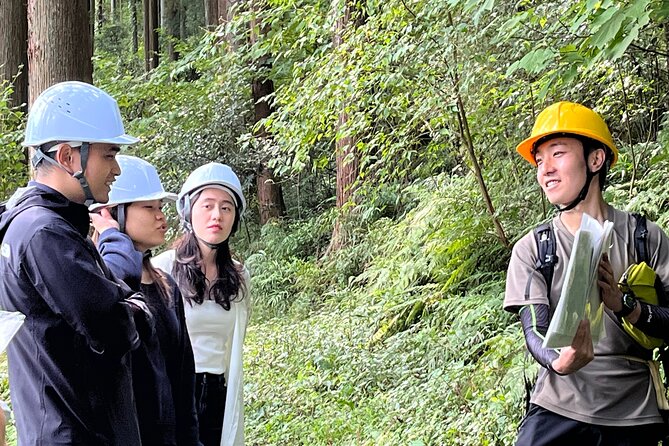
The craft happens at 木楽里, kirari, a woodworking studio where you get a lecture from a forestry master. This person is part of the local tradition of foresters who are sometimes described as mountain artists, people who shape the forest through careful, long-term work.
You’ll learn what Nishikawa timber is and why it mattered. The key idea is that Nishikawa wood was once considered premium material used in Tokyo’s architecture, with a name linked to roots west of the city.
If you care about design or materials, this is where the whole day clicks. You’re not just making an object, you’re learning why wood species, growth patterns, and forest practices affect what gets built and how long it can last.
The private forest walk, wood aromas, and the practice of forest thinning
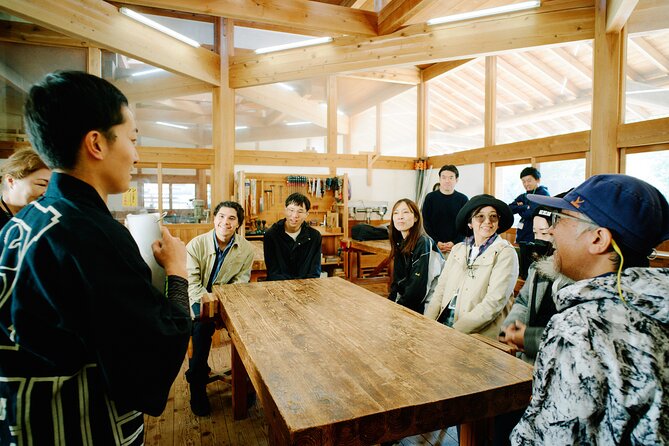
After the talk, you head into the forest area and you’ll get a strong dose of sensory learning. The experience includes aromas from three types of wood, which is a fun way to slow down and pay attention while you walk.
You’ll also hear how thinning works. Thinning is one of those forestry practices that sounds technical until someone explains it plainly: it keeps forests healthier by managing density, supporting growth, and reducing stress on trees. You learn that forest care is not a one-time event, it’s an ongoing craft.
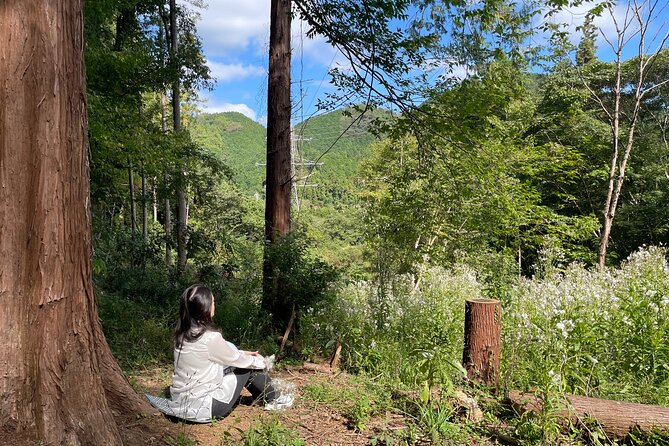
This walk has a quiet rhythm. The guide encourages you to relax under the canopy and take in a still moment. It’s not a strenuous trek, and that makes it a good option if you want nature time without committing to a full hike.
From what you’ll notice during the walk, cedar and cypress are central here. You get a chance to closely observe and touch living trees, which is a rare feeling when most people only see wood as a finished product.
Log cutting practice: what you do, what you learn, and why helmets matter
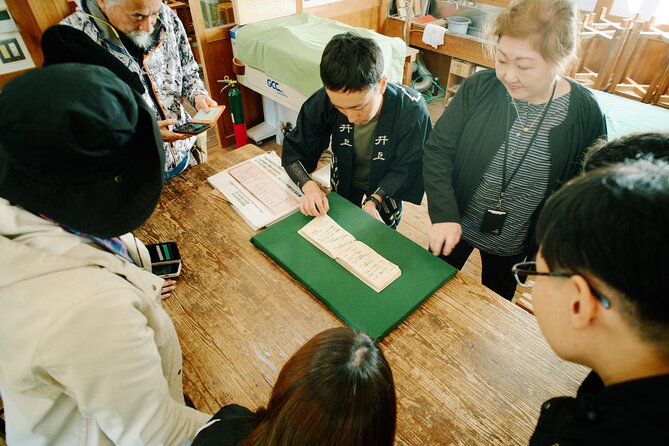
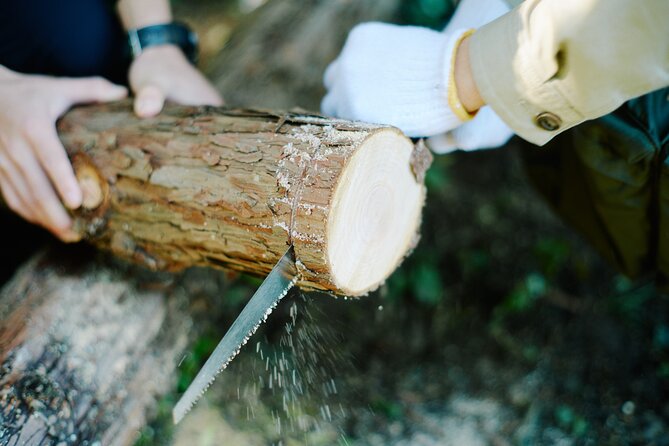
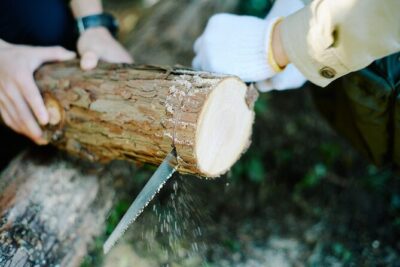
The hands-on highlight is log cutting. This is where you go from learning about wood to feeling its resistance.
They provide helmets and gloves, and that is a big deal. You’ll see the guide set up safe procedures, and you’ll feel why the forest craft tradition treats safety as part of respect for the work.
Expect the moment to be humbling. Many people assume cutting wood will be easy until they try. The feedback from past participants points to a common reality, the saw doesn’t move through wood as effortlessly as you might expect, and it takes technique, pressure, and patience.
That’s also why it’s valuable. You come away with a better sense of energy and method behind something as simple as lumber. You don’t need to be strong, but you do need to be willing to follow instructions and try.
Choosing your kanji and making an Edo Castle smartphone stand
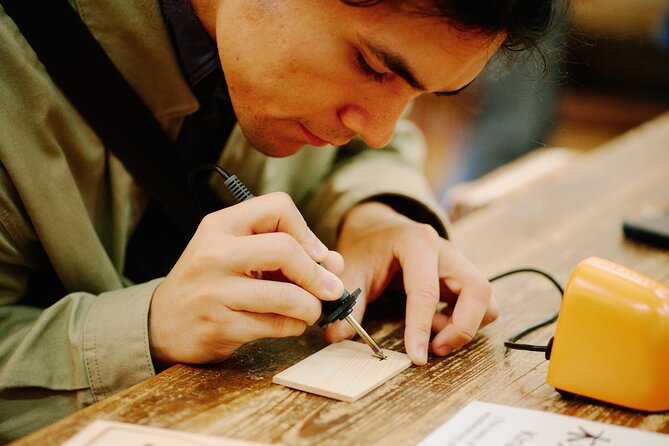
Once you’ve worked with the forest, you shift into a creative workshop moment at kirari. Here you use a pyrography pen to inscribe a kanji of your choice on a wooden piece shaped like Edo Castle.
This is one of those crafts that hits the sweet spot for most skill levels. The tool does the heavy tech work, you guide the design. And since you’re choosing your own kanji, your souvenir feels personal right away.
You’ll also likely find the pace relaxing. Pyrography is slow by nature, and the process encourages focus. The final object doubles as a souvenir and a daily-use item: the finished piece becomes a smartphone stand.
For value, this is a strong end cap. You leave with something you can show and use, not just a certificate or a bag of materials.
Time on the ground: 2 hours 30 minutes that stays focused
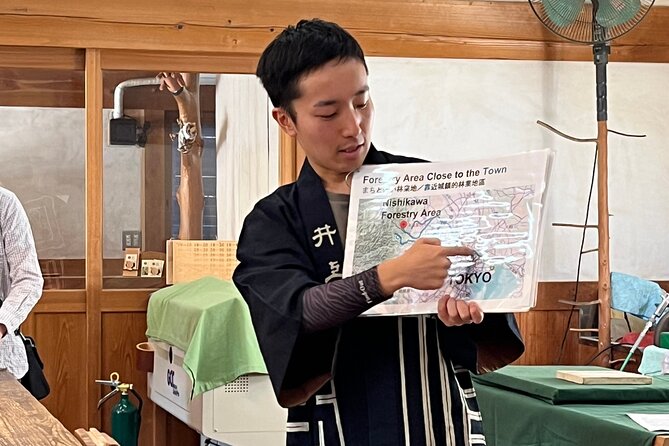
Total duration is about 2 hours 30 minutes. That’s a sweet spot for people who want meaningful hands-on content without giving up a whole day.
The schedule is structured but not rushed. You spend time meeting at Higashi-Agano Station, then most of your day is on the guided forest and studio activities, and you finish back at the meeting point.
Because lunch is not included, you’ll want to plan what you’ll do afterward. The guide returns you toward Higashi-Agano Station, and around lunchtime you’ll be near Hannō Station as well, where you can eat at local places the guide recommends.
Price and value near Tokyo: is $93.93 worth it?
At about $93.93 per person, this is not a cheap activity. But in terms of what you’re getting, the value is solid, especially if you care about authenticity and hands-on learning.
You’re paying for a full experience, forest access, instruction, safety gear, and a guided craft with tools. The admission tickets are free in the sense that ticket fees are handled as part of the experience, and the tour includes an air-conditioned vehicle to and from the activity site.
The small group size, max 8, also supports the price. With that many people, you’re less likely to be stuck waiting for instructions, and you get more individual attention during the log cutting and the pyrography work.
Two practical notes. First, lunch costs extra, so build in that budget. Second, weather matters, so you’re best off booking with enough flexibility in your schedule.
Who this is best for (and who should skip it)
This experience is a great fit for you if you like nature, wood, and learning how things are made. It’s also excellent if you’re interested in architecture or materials, since the day connects Tokyo design with forest management.
It’s also ideal for you if you want a near-Tokyo nature reset. Hannō is close enough to feel convenient, but the forest setting makes it feel like you left the city behind.
You might skip it if you want a purely scenic, low-effort walk. Log cutting is hands-on, and even with gloves and helmets, you’ll be actively doing something. It also helps if you’re comfortable with a short day, 2 hours 30 minutes, because that’s the format.
Should you book this woodcraft forest tour?
If you want an experience that feels real, not manufactured, this is an easy yes. You get the story behind Nishikawa timber, a sensory forest walk with quiet time, practical log cutting with proper safety gear, and a craft you take home as a usable souvenir.
Book it if you’re coming to Tokyo and want a day that actually teaches you something tactile. And if you’re sensitive to weather changes or dislike hands-on activities, pick your date carefully and consider the physical side of the log cutting.
FAQ
How long is the experience?
It lasts about 2 hours 30 minutes.
Where do I meet the guide?
You meet at Higashi-Agano Station in Saitama, Hanno (Hiratto, 平戸220).
How many people are in the group?
The tour has a maximum of 8 travelers.
What is included in the price?
The price includes the air-conditioned vehicle to get from Higashi-Agano Station to the activity site. Admission tickets are listed as free as part of the experience.
What is not included?
Lunch is not included.
Is the tour accessible by public transportation?
Yes, it is near public transportation.
Does the tour require good weather?
Yes. The experience requires good weather, and if it is canceled due to poor weather, you will be offered a different date or a full refund.
Can I cancel for a full refund?
Yes, free cancellation is available. You can cancel up to 24 hours in advance for a full refund, and cancellations less than 24 hours before the start time are not refunded.
Newest Saitama Prefecture write-ups from the Loving Japan desk
Japanese Craft and Calligraphy Workshops, side by side.
 ★ 5.0Tokyo Shinjuku Chopsticks Making ClassFrom $201,763 reviews
 ★ 4.8Chopstick Making Workshop in GinzaFrom $251,366 reviews
 ★ 5.0Chopsticks Making Workshop in Gion with Engraving OptionFrom $15958 reviews
 ★ 4.8Tokyo Sumo Experience: Chanko & Mochi with a Former ProFrom $103567 reviews
 ★ 5.0Kintsugi Experience: Art of Golden Joinery in TokyoFrom $59467 reviews
 ★ 5.0Tokyo Chopstick Making Workshop with ArtisanFrom $26466 reviews
 ★ 4.9Matcha Making Experience with Mochi Sweets in AsakusaFrom $22388 reviews
 ★ 4.8Authentic knife making experience at a blacksmith in KyotoFrom $154350 reviews
Filed on these lists too